Building Trust and Embracing Change with Jordan Boesch
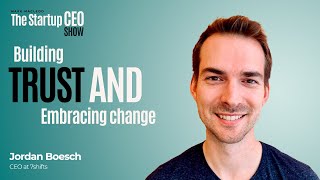
Jordan Boesch, CEO of Seven Shifts, talks about moving from developer to CEO and building trust across a growing team. He describes how COVID forced the company to furlough 25% of staff, then rehire most of them, and explains why he treats the office as a rendezvous point rather than a mandate.
Questions this video answers
February 5, 2024
Over 400 people
Saskatoon; about 300,000 people
About six months of revenue (the business was put back six months)
About 40 people, roughly a quarter of staff at the time
Chapters
All those behaviors that you champion, but you're going to tolerate some slippage. But the outcome of that slippage is your culture. And I think that resonated with me a lot.
Welcome to the Startup CEO Show. I'm your host, Mark McLeod. In this episode, I sit down with Jordan Bush, co founder and CEO of Seven Shifts over the past 10 years from Saskatoon, a town of 300,000 people, Jordan has quietly built his company to over 400 people, and he has no signs of slowing down. In this episode, we talk about the journey from developer to CEO, the benefits of being a big fish in a small pond, the importance of gratitude, leaving space to make big decisions, and many more topics. I hope you enjoy this episode, Jordan. It's a true pleasure to be with you here today. Welcome to the Startup CEO Show.
Thanks for having me, Mark.
Yeah, we had a couple of minutes to chat before. Hadn't seen your face in some time. And yeah, this is really great. As I mentioned when we were chatting before, startup CEO shows, all about real talk for CEOs. The CEO role is the toughest role out there. It's the only role with no kind of gradual path to get there. Right. Like, I was a CFO for a long time, but there was a path to get there. There was like a body of knowledge I studied, and then I had gradual roles leading up to it. You just started a company. This is your second one. I know you had one before, but now you were CEO and so place where I'd love to start. Like, first of all, maybe just. I'd love it if you told listeners what seven shifts is for those who don't know, but my first question really is like, developer to CEO. You've clearly made this transition. You know, how did you go about making it? What were those first steps? Like, how did you figure it out? Yeah, anything you care to share on that?
Yeah, of course. So first, first of all, for folks that don't know seven shifts. So we're an all in one HR team management platform for the hospitality industry, restaurants specifically. So everything from the moment someone's hired at a restaurant, trained, scheduled, paid, and then effectively retained, that's what we cover and that's how we define our world. Which is more the employee journey in terms of that transition to developer to. To.
To CEO.
And, and what I do now, I think it was never. It wasn't. I don't know that it was really a smooth transition, but I love coding. There's no two ways about it. I love building things and I think that that showed in the early days when I was doing a lot of the design, development, server stuff, marketing, everything as one does in the early days. But there is just kind of this high that I personally get from shipping things and getting things out into the world. And there's no, there's no amount of money you could pay me to that replaces the feeling that you get when someone uses your product and really loves it. Like, I mean, gives you feedback, compliments and how it's saving them tons of time. And so I was sort of addicted to this feeling of people giving positive, you know, or negative feedback around the product because I would just, you know, so badly want to make it better and fix it. And I think the journey to kind of get to where I was, it was a lot of doing the coding and I almost break it up to like three different phases. Maybe like there was like the. In the code, there was like the. In the business, there's like. And then there's like the. On the business, just what comes to mind right away. But the development I kept doing until we were probably 20, 20 people or something. And then it's, it's your, your focus sort of shifts to the next most important thing that you need to solve for the business. So I think I had enough engineering power, we had enough power on the, on the team that they could kind of like for the most part build really great products and ship things. And then I would transition to marketing for a little bit and then I would transition to other functions that needed some, some support. But I would say largely my head and my value to the company has been mostly product. And so I tend to even still over index on spending time there. But I think from doing all these functions you sort of learned, I always say you learn enough to be dangerous. You're not the best head of marketing, you're not the best head of product, you're not the best engineer, but you know enough to identify who the best could be. And then it was at that point where you know, because you can kind of smell bullshit like from someone that's not really great like you. But if someone is really great, they really start to like, you can see because they're, you can understand the language as opposed to like the challenge that non technical founders have with hiring a technical person. Like it's, it's very challenging. And so I felt grateful in that I knew enough to be dangerous, but I wasn't the best at that thing. And so it was a series of iterations of getting those people on, on board and really just kind of growing, growing from there and then understanding. I think the other part is understanding when people are feeling stretched. You have that VP or you have that director, and yeah, your company doubles in size. And what are those early indicators of someone being stretched and having a hard time getting to that next level? Because those are those moments that you want to get in front of as much as you can. And I think being able to see and spot those signs, they don't really change as you grow the business. They're the similar signs. So I think that there's a lot of rinse and repeat of that type of process. And yeah, here we are, much bigger company, but with a lot of smart people around the table that I have the good fortune of working with every day.
Amazing. I love that. Are you allowed to contribute code anymore or are you banned and you don't know the dev server login?
Actually, funny story. I wrote a comment on GitHub being like, hey, like, we should, like, did we use this library? Blah, blah, like, it should have been this. And it was a total joke. Like, I was referencing it like an old legacy library that, like, we should be using this. And one of the developers, I found out later was like, hey, is Jordan serious? And all the, all the devs were like, what's going on? And then they got up to our head of engineering and she goes, jordan, I just want you to know that, like, people are so confused by that comment. You. And I think it's funny, but that's. It was super confusing to them. By the way, your GitHub access is turned off, effective immediately. And I was like, that's awesome. And I just, I sort of said like, that's fair, that's fair. You know, I, I get it. And, but I mean, when you, when I told the devs that it was just a joke, that, you know, they thought it was funny, but because I'd never interacted with them on that level, and I'm coming in for the first time saying something, everyone's like, is he serious? Anyway, so that, that's when I got my access revoked was from me just like trolling the devs on a code review.
Is humor a part of your culture? Like, with people. People even know to, to just expect you to be humorous in a situation?
Yeah, I think, like, the look, I think prior to the, I would say prior to the pandemic, yes. But I would say, like, because half the company's remote, it's really hard to spend time with people or bump into people in the hallways. And you kind of have that small chit chat and in those micro interactions you're building trust and they're getting to see you and you're getting to be more human. But when I just slack someone saying like, hey, I have some questions, can we hop on a huddle? It's like, oh my God, what does he want to talk about? And then you get in the huddle and it's like nothing crazy, but I feel like. So I would say that prior to the pandemic, like very much so. And then I would say post pandemic, it's been challenging for me and I think others like just given the type, the nature of the work and I think a lot of people miss those in person interactions and trust building.
Yeah, I think, yeah, for sure. A lot of my CEOs really wish everyone was back under one roof or other roofs if they're too big to be under one roof. But yeah, everyone thinks that nothing beats the in person interaction.
The office doesn't necessarily need to be the place where work happens. It's more about what is that kind of rendezvous point, that jumping off point where people can come together, whether it's an event, whether it's for team building and then either do it there at the office or go somewhere else. But I think that that's where we think is the real potential is around those moments of seeing, not seeing the office is like you need to work here. But like, look, if you have a team event later on that night and a bunch of people are in the same city, like, yeah, it makes sense to go to the office and work together for the day and then after you go to that event. But I think we all value the flexibility and understanding how to strike that balance is really important I think for the future of work.
Do you exercise that flexibility yourself?
Yeah, I do.
Good.
I think. Look, in Saskatoon, which is where I'm based, everything is 15, like at most is a 15 minute drive from the office and I live a 20 minute walk from work. And some days I'll stay at home, some days I'll come to the office. Like it doesn't, it doesn't really, it doesn't make a huge difference. But some days I, I, I, I would say most days I do like to just spend time in the office cause it just gives me a different place to work. But again it doesn't need to be for work. It's just, that's just how I use it.
That's great. That makes sense because I see many, like a lot of Employees love the flexibility, but then the CEO is kind of in the office, and so there's just a disconnect in behavior. Right. So good to see that there's, you know, consistency.
I think we're, see, I think talking to other companies too, there's a lot of challenges around, you know, hiring junior folks that are starting remotely and having a harder time kind of ramping and getting like good senior mentorship and. And I know of a bunch of companies that just stopped hiring junior folks because it's too challenging. Because A, not everyone's good at working remote. And I think that's just a good thing to call out. And B, some companies don't want to take that risk on whether or not that person will be good. And then C, it's compounded with that person is completely new to this field and they're going to need good mentorship, good leadership along that journey to get them to pass their probation. And so it's really doing them a disservice if you're not able to provide that because, like, they don't want to fail. Right. But you also need to give them support so they don't. So, and understandably so that people are concerned about how that works in a remote environment because it is more challenging. It's not to say it's not possible, it's just more challenging.
No, I totally agree with that. And you know, when Covid happened, I was still running my investment bank, SurePath, and you know, we went remote. And I noticed a real difference by call it, let's call it age and life circumstances. I was the oldest guy. I went remote. I had a beautiful home. I had like a dedicated home office. I was like, fully set up. My. One of my analysts, you know, he's using his kitchen table, sharing it with his roommate who's an analyst for cibc. And they're both there pounding, trying to figure out how to be on conference calls at the same time. Like, it was just hard to be remote if you didn't have a great home office setup. And then of course, it just also requires a decent amount of self discipline. And if I completely generalize, like that's something that comes with age, you know, So I think it's harder going back to your point about junior folks, they may not have the right home setup and they may not have the right maturity level yet. And that sort of just is what it is.
Totally not for everyone.
When you were talking about your path from the developer to CEO, you touched on a really important subject, which I think Every management team struggles with and every CEO struggle with, which is signs that the leaders who were once great are no longer great and are not keeping up with growth. Those. That wasn't the exact words you use, but you, you know, you talked about the sign. So I would love it if you could decode if you have I guess, a shareable formula. Like how have you figured that out, you know, for your company?
I think it compounds in ways that it kind of manifest. It depends on the. Some roles. It's like that are very quota driven roles. It's like, you know, targets are being missed and those are like, like sort of like outcomes or. Sorry. That's like those are the outputs of some of the behaviors that you, you can maybe look for. But I would say like stress is kind of a good early indicator too where folks are like stressed about hitting the big numbers or do you actively.
Ask people about stress levels?
I don't, but I think it's a good question to be asking people. I think, I think even just how they're feeling right. Like with, with the upcoming year and what's exciting for them and what's terrifying for them. And I think me sharing openly as well, I think that might be a good trust building thing. So thank you for the idea, Mark.
You're welcome.
Yeah, I would say kind of it manifests its way in some emotions and I would also say like some of the biggest challenges is when folks aren't hiring people better than them. Right. I think those are. Or better than they once were in that role. And, and I think that you, you can, you can tell a very, it's a very big difference in terms of folks being able to say like, you know, I'm bringing this person on and that person doing like a 10x, you know, or not 10x but like massively stepping up and accelerating that function, maybe that department and, and making that leader look really good. And I think like a lot of the more leaders that feel stretched and maybe are hitting a bit of a ceiling start to almost like spend more time too deep in their teams of like micromanaging, the lack of great people that are kind of pushing their whole team forward. And so in their mind they're like, well, I'm so busy. Like I, like I'm so busy. I'm always working. But you're working on kind of pulling up maybe people that aren't performing to the level you need them to perform and you're just constantly picking them up and you don't want to be in a state where you're constantly picking people up. You want to be in the state where these people are being proactive and they're over exceeding and they're delivering against what you hire them for so that you can look good. Ultimately it's a reflection on you leader, on how your team is performing and how well you managed and hired up on that team. And so. But yeah, I do think that, I do think those are some really key signs that at least I typically look for is kind of like the stress, the kind of deep worry, but then also how they're setting their teams up and do they know what to do next? Are they thinking about the next, you know, six months, 12 months and you know, what, what, what do they think is going to come around the corner? And I think there is a level of, you know, attempted predictability that people go through in their head of what, what should I need, what do I need? And, and it's all I ask is I think that you do the exercise. Like you don't, it doesn't have to be perfect. Like, no, it's not like you're going to get a, you're not going to hit 10 out of 10. But do the work. And the more times you're right, the more trust you build and you accumulate. Much like founders, the more decisions you make that are the right decisions, the more trust you get at the board level and the more freedom and flexibility you're going to get. I think ultimately we're just trying to build trust through a great track record and how you do that is important.
Sounds like Toby's concept of the trust battery. Are you familiar with that?
Yeah, yeah. When they come in, they've got kind of half of half the amount of battery and he spends time with them kind of divulging the information of that function and kind of getting their arms around it as quick as possible and then letting them kind of flourish. And I'm a big believer in that. That's kind of how I like to manage is when a new executive comes in. Like, look, I have a lot of context and I'm not saying the decisions that I made are right, but if at least you can come in with knowing what I know as fast as possible and married with the skill sets that you are going to bring in, then I have infinitely more trust that you are going to run quicker than you know. Otherwise you shouldn't have to learn the same things that I already know. Like it's not going to be a great use of anyone's time.
Yeah, the key Word for me is leverage. You know, like anyone you like, you've recently hired, I know you brought on Paul Marshall, who's a friend recently. Like, anytime you bring in a direct report like that, it should be leverage. It should move the leadership team, should move you to another level. Yes, you have to invest. You have to onboard, Paul. You invest in that relationship, and that theoretically slows you down. But it is an investment. Right. It's going to actually pay in terms of leverage and momentum and speed. And the same is true all the way down. So that's the big thing I look for. And, you know, you talked about those leaders being busy and be like, look how busy I am. I actually find that part of that busyness is to avoid facing the truth, which is that I'm failing to keep up. And if so, I'm keeping busy in this comfort, this stuff that is at the wrong altitude, but it's comfortable. So I'm just going to stay there versus going out of my comfort zone. Like, those are the signs that I. That I look for.
Yeah, very, very true.
On this stress thing. Back to more free ideas. I know some leadership teams that when they meet for their weekly meeting, they just go around the table and be like, I'm a three out of five on stress. I'm like, I'm a five out of five. Each person, just like, even before anything else, we just do a temperature check on where they're at. And so now we know if Joe blows a five out of five, and he said so at the beginning of the meeting, and then he's getting hot and bothered in the meeting, we know why. You know, we have a bit more compassion for him.
That's very. That's very true. And yeah, I may steal that idea as well and think, are there any other questions? Is it royalty free? Is there. Is there any other questions that they ask? Or is that kind of the primary one to gauge that was it.
That was it. Just a check in? You know, where are you at today?
I see.
That's it.
I actually know that other teams do that, but not my first team. So I think that that's a super interesting call up.
Yeah. Yeah. Cool. You know, you talked about some of the changes that Covid brought on, Notably now half of your company is remote. The restaurant industry wasn't a great place to be during COVID I wonder if you could just tell us about that and how you came out the other end.
Yeah, Covid was a horrible time for the restaurant industry. Restaurants closed in droves. Medi didn't recover from this kind of blow. And I just saw a ton of resilience though at the same time. And as horrible as it was, it did something positive for the industry and it allowed a lot of folks to pivot pretty quickly because the restaurant industry has always had a hard time adopting and adapting to new technology. And I'm not convinced it's because they thought it didn't exist. I just don't think they put the energy into understanding it because it was always like a cost. And when you're operating in a, in a, in a landscape with such low margins, everything that costs money, you're just, you're kind of just turned off to. And many large brands and CFOs of these brands and VP of Operations, like they get it because they have, they work in a spreadsheet all day and they're just kind of like crunching numbers. But that is not what the average independent is doing. And, but, but I do think that we saw a bit of a shift as folks adopted more Delivery services like DoorDash or skip the Dishes or Uber Eats or any of those delivery services. You know, those folks had a heyday like 3x their business, like overnight it was just, you know, they were having a great time. But we did see more folks that were willing to explore what's out there. What else could, what else am I missing that can integrate with this tool that I just bought or that can save me more time and money that's going to help with my bottom line. And I was really energized and optimistic that this is going to change the industry for the good. And yeah, people that were kind of riding the red and the black, like, yeah, they went out of business but like some of them shouldn't have been in business because they just failed to adapt. And I think that there was the next wave of operators coming in are just so much more tech savvy and they're kind of leading with like, what does my stack look like? How do I optimize this? And it's, it's a pretty refreshing feeling. But yeah, it sucked. Like they all got punched and kicked, you know, a lot during, during COVID And in terms of how we navigated, like we, we lost about six months of revenue. Like it put us back about six months and so. But then after that, like we had to furlough a quarter of our staff at the time, which was 40 people. And yeah, it was, it sucked. But then after that six month mark, we got to bring people back. Like we, we got to we brought like 90 some percent of those folks back. We, we didn't raise prices, obviously. I think that'd just be a very slimy thing to do during your time. Like, if the restaurant industry is going down, like, we're going down, like, I don't know, like, you know, but we believed in restaurants long term. So long as people are going to be social and need to eat, then we believe in restaurants.
That's not changing. That is not changing.
I don't think you're gonna change, like, millions of years of evolution and, you know, to be social in. In like a year. And so I think we just did right by our customers. We offered them discounts, we gave them, you know, the task. The task management product that allowed them to do sanitary checklists and all these things that would help them operate more effectively. We saw an uptick in messaging where people were sending out forms, government forms that employees could get some reimbursements on for their wages. And we saw a lot of good behavior and the app used for that primarily. But all things considered, it made me so grateful more than anything to have the team that I had around me that were so resilient and. And we're sort of like. I could just see, like, they were just like, rolling up their sleeves, like, virtually. They were just like, what do we need to do? Like, we got this and everyone banding together, even like the leadership team all the way down were sort of like, we got this. Like, there was no. Even though this crazy turmoil was happening around us, I never felt that way within my team. We were having board calls every week. Like, it was just. Yeah, I mean, it's just constant checking in on how the business is doing. But not once did I feel like there was like, doom and gloom. I felt like so fortunate just having people around me.
Oh, that's amazing. You brought up such a powerful word, gratitude. And, you know, I've dealt with founder CEOs for 24 years now, and if I stereotype often, they have such a clear vision of the future that is so far away that they're not actually really happy or grateful today because they're just so dissatisfied at the gap between here and the vision.
Are you in my head right now? You were totally in my head.
And my thesis is like, well, gratitude is deeply powerful. And like, every day there's something to be grateful for. Even if it's on the hardest days, it's like, well, I made it through today. Tomorrow's gonna be better. Just wondering, like, how does gratitude live for you? And Do? Is it a thing? Is that a muscle you need to develop? And then also just the power of praise. Right. Especially from a CEO. And do you. Do you take time to acknowledge the good things that you see along the way or are you just kind of so hard focused on. On the vision that again, is still so far away?
And Mark, I'm bad at both of those things, to be honest. And starting with gratitude, like, I. It is a feeling of sort of you're kind of just chasing this invisible unicorn into a rainbow that you can see, but like, it's just, you're always chasing it. And, And I'm guilty of not stopping to smell the flowers and just being like, wow, this, like, this is a nice flower. Like, I've been told that before and it's so true. And it's something that I do need to personally work at and get better at. And even with the praise side of things, it's like I don't give as much praise as I should. And a big part of this, I think, has to do with like, that just doesn't motivate me. And the mistake is that that doesn't motivate others. And it is a mistake. And because I'm. I'm sort of like, maybe you can almost bring it back to like, you know, even like the five love languages. Right. In terms of like, how people feel that, that they're being appreciated. You know, is it gifts? Is it words of affirmation? And. And I think me spending more time doing that, it's so easy to do and like, can mean a lot for someone. And. But admittedly, I haven't been good at it for many years because of, again, because that's not how I get motivated when someone says like, good job, Jordan, like, I don't really doesn't register. It just kind of, it just floats away. And so now maybe you can make it, maybe make an argument that I should learn to internalize that and maybe there is some. Something there instead of me kind of focusing on the next thing that we need to do and feeling like there's like kind of a never ending list.
Yeah, I mean, to me you're 10 years in, you have 400 employees. You talked about losing six months of revenue during COVID having to get rid of a quarter of your staff. By my very quick back of the napkin math, you've more than doubled in that short time. And so I think there's a lot to be grateful for. And you know, this is actually a business that you could theoretically run in perpetuity I think it'd be mathematically impossible for you to run out of addressable market. And so you could keep doing this for a very long time. In which case I would say gratitude. And. Yeah. Just acknowledging where I'm at might, in fact fuel me to keep going in perpetuity.
Yeah.
You know, versus it just, you know, at a certain point, that slog and the destination's always like, there's always a desert to cross.
Yeah.
At a certain point, you're just like, oh, man, I'm just done with sand. Like, I'm over. It's over. Right. I guess I sit on a beach and be in real sand. You know, I'm. I'm.
I'm. I'm done pounding sand.
Yeah. And then. And then a buyer just happens to show up at that moment of weakness, and you're like, screw it. I'll take it. You know, it happens. Like, number one reason, as a guy who sold a lot of businesses, number one reason why founders choose to sell. There's different than when you have no choice but to sell is because they're burnt out and they can't actually sort of separate themselves from the business. Theoretically, it's an asset. I could just replace myself and I. It's now a thing that goes on and lives without me. But very often they're just like, I'm done. Let's just find a home. And so I actually think that gratitude is a powerful antidote to. To not burning out. You can't be grateful and unhappy at the same time. This is not about brainwashing. It's just acknowledging. It's reframing. There's always something to be grateful for.
Should I cancel my appointment with my counselor tomorrow? Because this is good stuff and I'm getting your. It's all great free advice, but it's. Yeah.
Is there a couch behind you? If you want to lie on a couch, we could just keep this going.
I've got a drum set in the corner, so.
Oh, you know.
You know, that's. That's like my. My way to kind of just like, reset and recharge is actually, is through music. And so really, I came here last night actually at like 7pm and just kind of wailed away on the drums. Anyway, side sidebar.
But fun fact. This is. In high school, I was a drummer in a rock band. This was blissfully before social media, because I had long permed hair and I had lumberjackets where I would cut off the sleeves so you could see how big my arms were. And they Weren't big. I had like, leather studded wristbands. Anyway, it was a shit show. It was so bad. But anyway, we're both drunk.
Let's dig up some of those pictures. Yeah. And Mark's gonna put them on the screen right now for everyone to see.
No.
No.
All right, there we go.
He's gonna edit them on the screen. Perfect.
No, he's not.
Yeah, I. But, yeah, no, I think that that's very true. I think I've definitely experienced moments of. Of like exhaustion and burnout and, and like. And you know, it's a. It's an interesting thing where even I've even had investors, you know, say, like, just go take a vacation. And I still am struggling with the best way to kind of get through those moments. Because the, the feeling is. Is kind of like the best feeling is like overcoming them. Right. And going away to a destination. They're still on your mind unless you become really good at like, shutting them off. But for me, it's like, it's. It's that blessing of the curse of like, it's. It lives there until I deal with it. And then it's only when I deal with it that I don't feel the burnout feelings anymore. And I sort of almost relate it to at times when you're just like sometimes worried that you, like, you, you're.
You.
You have anxiety and around like having a confrontation with someone or, or you're like, the obstacle is normally the way, like whatever standing in front of you is what you have to do. You have to tackle it head on. And you're not going to get through life if you're not having confrontation and where it needs to happen in a healthy way to try and get to the root of things if you're bottling everything up. And so I've been always a believer of just taking things head on. And that's been my way of coping with a lot of weight of things is just deal with it, get through it, plan what you need to do. And that period after that thing is dealt with is actually like way more liberating. And I'm not in a tropical destination, but my mind is in a such a better place.
Yeah, listen, I see both sides of it. I agree with what you said. The obstacle is the way. I feel like that should be a book title.
Maybe.
It is already.
It is. It is actually.
And certainly certainly sounds stoic. And I can clearly picture, okay, I get through that obstacle and then now I take the break. Now I can fully relax. But what you described that notion of like it's just churning in my mind. I can't relax until I deal with it. It's just illustrating not being present. There's always going to be an obstacle. And then I would argue by taking time to kind of charge, refresh regularly, you're going to, when you tackle the obstacle, you're going to be far better, you know, able to do it. You know, I always talk about CEOs of venture backed startups are like professional athletes, right? You have the same expectations on your shoulders, right. You've raised a meaningful amount of capital. There are return expectations attached to that capital. And you look at pro athletes, what do they do more than anything else? They rest, they come in, they crush it, they rest, they come back, crush it. You know what I mean? Now, slightly different thing. This is, you know, it's not a physical thing, but you're a mental athlete. And so it's the same thing. You have to, especially for a CEO, right. If you actually look back, there's probably a small number of really big moments or really big decisions that move the needle. The more clarity and crispness that you have in your mind at those moments, the better those decisions are going to be, you know, the easier they are to make. And so that's not to sit around and get massages every day and work four hours a day. But I think most CEOs over index on grinding and under index on kind of investing in themselves and recognizing that they are mental athletes.
I, I agree. I think like my ability to tap into the, the kind of the, the mental like present in the moment and being able to almost like compartmentalize things in a way so that you can kind of be present is so hard. So hard. And yeah, I've definitely struggled with that personally. I think now having two kids, you know, a three year old and a five year old, it's even more important now that than it ever was because you get home, you want to play with your kids, you don't want to think about, you know, the three fires that you need to put out at work, even though, and there's nothing you can do in that moment either. Like it's, it's, you can't do anything there anyway. So I, you're right. I mean it is like a, I would love to figure out how to develop that, that muscle a little bit better. And part of it to me that I've actually like learned about myself over the years is, is, is because I like there's a problem. I like to go Solve it. Actually, sitting with that problem for multiple days is an interesting challenge for me. And, and I've done it a few times now, and it's been so helpful because the way I would have tackled that, if I would've reacted too quickly, would've caused so many other ripple effects within the business. And I've been there, I've done that, and it's not great. And I'm like, you know, if I'd have taken a couple days to just like, really think about what is the best course, I would've done that totally differently. So the downside is, okay, I'm living with that feeling, and I don't like that feeling. That's why I always want to do it. But it's, it's like being comfortable with that feeling and getting, getting that comfort was like a really big thing for me that once I did it a few times, I started to be like, oh, like, I can perhaps teach myself how to do this and, and, and, and be better for it. So early days. But I'm finding there's a bit of that that's happening now.
So many of us operate with brute force. We're just going to clear that inbox. We're going to respond to every slack message, everything that comes in, we're just going to pound it. But then, first of all, our brains aren't designed to work that way. And second, we're only actually using our rational brain. The thing that happens when you sit with these problems for, especially overnight, is you give space for your intuitive brain to go to work. And that's why when we go on a hike or we're in the shower, we have these aha moments because we've actually given that space. And our intuitive brain is so much more powerful than our rational brain. Like, our intuitive brain just knows. And so when the solution comes, it's obvious, you know, So a big. It is actually super helpful to create that space. But you're absolutely right, it's uncomfortable. And we have trained ourselves, I'm speaking about society at large now, to have instant kind of hits, instant dopamine response. I'm guilty of myself. Like, I'm writing an article and just like, oh, let me go check the price of Shopify stock, or let me see who's like, I interrupt myself, you know, and this is a guy who's got like a daily yoga and meditation practice. And I still do it. So we actually have to create, you know, good mental habits. And so it's super hard. You know, like, meditation is a thing Even if it's five minutes a day, you don't have to go into a cave for like a day at a time or something. Just the five minutes just trains your brain to know what it's like to sit in space. I now obviously we all. Well, I work at home now. I found if I would finish my work day and bring my phone with me, I'd just keep checking it. And so now I just leave it here in my office unless there's an emergency, it's off when. You know what I mean, when I'm off. And I've certainly found that there are very few things that are so urgent. Like if a CEO's got an issue, they're going to text me, I'll hear the ding, all my devices will ding. I don't need to go and proactively check and see if there's an issue. So I've learned through creating that space that, oh, it's a, actually the world doesn't fall apart, you know, so it's just little things that I've done. But the big thing that I think comes from that space that you've created, you know, where you sit on problems, is tapping into all of your capability. Not just that rational, you know, short term processing power, if that makes sense.
Totally, totally.
You've kind of very quietly gone about building a 400 person company. You know, you're in Saskatoon, which, you know, I've never had the pleasure of going to. You know, like, and you talked about these three phases. You were in the product, in the business, on the business. Like any other keys to your success? How have you gone about. Yeah, how, how have you done this?
I think if I were to boil it down, like, really, you know, have a passion for the space. I have a passion for solving customer pain points. Like, I care deeply and I always wanted to build something in a place where like people didn't think you could build something. And there's a bit of like prairie pride in building here that I, that I have. And because, because there's advantages, there's inherent advantages around the community aspect. Like this is a city of 300,000 people. Like there's, there's like, yeah, and there's like, you know, people know us at the university and the engineering programs and you know, this, there's good, good, great talent that we could, you know, have access to coming out of there. I think also, you know, when we, when we raise money or when we do something, like it's a big deal in the community and, and people take note And I think that, you know, you can. We've chosen to almost be like a, a big fish in a small pond. And I think with that comes some, some interesting opportunities. And I, I fundamentally believe in giving people opportunities. And I think that there's a lot of folks here. There are a lot of folks here that work really, really hard, but they've just never done that thing before. And, and I think that there's a. There's something admirable about this, like, prairie grit that you see where it's like, you know, everyone's parents were like, farmers and, you know, you just got in there and you got. You got shit done, right? And I think that. I just love that about the people here and I think that we're just trying to use that to our advantage. It's like, okay, well, you've never done that thing before, but you work insanely hard and, you know, you put in the time and the energy to do it. And let's, let's build that together. Let's learn. Like, you're going to learn, you're going to grow faster than you've ever grown in any other career you probably could have taken on. And also let's build that community in the process. So let's bring people here, let's fly them out, which we're going to get back to doing more of this upcoming year. We used to fly out speakers from Shopify or Skip the Dishes, and it was really great because I love when an ecosystem thrives and can continue to learn. And similarly, in some aspects, we have a hub in Saskatchewan and we have a hub in Toronto. And I think, you know, there's an opportunity to continue to win by solving customer pain points, hiring great people and kind of making it a place where they want to work and do some of their best work. And so that's, I would say, I don't know if it's a good or bad thing that we're, you know, low profile in the Prairies, but I do tend to think that, you know, the good is that is all those reasons I mentioned. The bad is that, man, flying out of Saskatoon sucks. Getting anywhere, like, it just sucks. There's no.
No direct.
No, it's like. So, I mean, Toronto is normally where we do our board meetings, we do all our, like, a lot of events and leadership planning because it's a direct flight for a lot of the folks that are leaders in the US So. But yeah, we, we think there's tremendous potential to build here.
Hearing your answer there made me actually think About Shopify in the early days. Shopify is dispersed now, but for years they actually viewed being in Ottawa as a strength because they quickly became the tech employer of record. Right? If you were a computer science grad, you just wanted to work at Shopify. Eventually they were forced to expand a just through a sheer availability of talent. But the weak link was actually on the leadership. Right? They've been there, done it, got the T shirt. People who truly understood scale just lived elsewhere. And that's why they had kind of Craig and Toronto, like different, you know, they built around different folks. It sounds. You're describing a similar journey, but I definitely see the benefits of being a big fish in a small pond, that's for sure. I want to switch gears as we kind of get into the tail end and talk about. I want to selfishly bring up Danny Meyer as a guy who's been in the service business for a long time. I read his book Setting the Table many, many years ago and have tried to model. I didn't run a restaurant, but how I delivered service around that. And it struck me that was a very values driven approach and very high standards. I'm just wondering, has there been any impact in your company from dealing with his company? Has that values or service orientation rubbed off or what drew you to him? Anything you care to share on that experience?
Getting investment from Danny Meyer for our series B was the highlight for me, was being able to work with him on what we're building. And I think that I personally value a lot of his thinking around teams and around culture and the importance of your frontline. And I think that he is not above anyone in the way that he comes across. I just admire that style of leadership and I think that a lot of folks can learn a lot from his humility and how he approaches it. And also just some of his sayings. As a former software developer, when he talks about what culture is. Culture is the sum of all the behaviors you celebrate minus the ones you tolerate.
Ooh.
I was like, that is so good and it's so true. Like all those behaviors that you champion, but you're going to tolerate some slippage, but the outcome of that slippage is your culture. And I think that resonated with me a lot. I also love his analogy of the salt shaker. Like putting the salt shaker back in the middle of the table. When folks are not demonstrating the right behaviors, you know, they, they talk about in restaurants when the servers come in, the busters come in, like clear the table and wipe it down and well, you need to put the salt shaker back in the middle of the table because it got pushed everywhere. And, you know, his management philosophy is very much, you know, if, if, if you do notice a behavior that is not aligned with our values, put the salt shaker back in the middle of the table. And that really resonates with me as it relates to our radical candor value of like, care, personally challenged directly. And that to me is really the salt shaker analogy. And so those are some of the big things that I really took away that I talk about very frequently in the company. And I think they're really critical.
Love it. That's. That's powerful stuff. I talk about values a lot with my CEOs. I actually, I think for most companies, values are not fully lived. If we were in offices, they'd be hollow sayings on posters that are not really lived. I actually think they're so important that any disagreement, any lack of alignment can be traced back to an unarticulated. Unarticulated or unlived value. So that's just how I see them.
Yeah, I think everyone should. What's interesting is, like, when the culture's strong and people are displaying the values on a regular basis, it's like palpable. Like, you just, you feel it. And when someone gets thrown into the mix that isn't a values fit, that is not aligned, they just like get repelled by the company. I've seen it happen. And it's just like, it's like oil and water. Like, it's just. It's crazy. And so I think, I think to Danny's point, when you allow a lot of the things, if you tolerate too much, the water becomes gray and murky, and then no one really can call each other out on not displaying the values because you let too much, you let too many behaviors ride. And now no one knows what to do. And so adhering to those on a regular basis, celebrating them, like we call them out at All Hands because people are submitting them in real time. They're always submitting stories. And so we believe the best way to reinforce our values is me curating, going and reading all these core value stories that people submit every month to, like the public Slack channel, grab the ones that are like the best demonstration of that value and then read them and celebrate that person at All Hands and, And read that story and tell people why. And because. Because you can get different interpretations of that value. And we try to make them behavior based so it's more clear. Like, we avoid Words like respect. Like, that's not. It's not a bad thing to respect people. What does respect mean? Like, can you. Like, what are you trying to get at? Well, you know, I want people to respect when I'm talking to me. It's like, okay, so you care that they're a good listener. Okay. And then for us, we would. We would say, well, the value is being a great listener. And so we're trying to, like, dissect those large, ambiguous terms that, like, big corporations use down to something that is actually the behavior, and then defining that behavior and then telling stories about that behavior and reinforcing it has been helpful.
There's so much more that I could ask, but we're running out of time, and you have a company to run. Maybe. Final question, advice to your younger self. You know, you're 10 years in. You kind of figured this out as you went. If you were going back in time with all of the capability that you have today, but it was 10 years ago, how. What advice would you give yourself to operate differently?
I would say trust your gut more. I think that, like, my gut's been pretty right over a lot of things, and I sometimes I doubt it because I want to sit on more data, get more stuff. And, you know, there are. There are time and places for that. But I think that generally, I think trusting my gut more, I think also just not being afraid to make changes and, And. And stand behind them and be clear and communicate the why and then repeat it 10 times. Yeah, yeah. And I think as you grow.
Right. The, The. The repeat is so key. As you grow.
Yes, yes. And again, people, People. I think people appreciate more direction than ambiguity and, and direction without explanation or transparency is not going to be well received. But if you are really transparent and you are really articulated, are you articulating as to why? Look, people still might disagree, but at least feel like they have the full context.
Awesome. Jordan, thank you so much for making the time. It's a pleasure. And I'm so thrilled that the company is doing so well. I meant what I said. You could run this thing forever, and I kind of hope that you do. Thank you so much.
Thanks, Mark.
Hey, thanks for listening to the Startup CEO show. If you'd like to connect with me, be sure to visit my website at markmcloud me or follow me on LinkedIn at the Mark McLeod or Twitter arkmcleod. And if you want to tune in again next week, be sure to subscribe on YouTube, Spotify, Apple, or wherever you get your podcasts. We'll see you next time.
La.
More from Mark





The Burnout Breaking Point - How Strategic Breaks Actually Increase Productivity


Emotional Debt - How Avoiding Hard Conversations Compounds Into Company Killing Resentment


The Death of the Specialist - Why AI Is Creating a New Professional Class Called Scalers