Conscious Investment and Startup Growth with Amar Varma
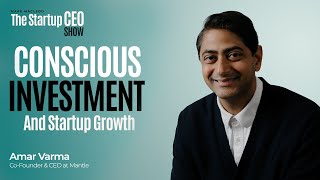
Amar Varma, CEO of Mantle, talks about rebuilding private asset tracking with AI and why being both investor and operator matters. He advises angel investors to look for founders with enduring DNA, warns that power laws mean most startups fail, and argues the Bay Area still matters for networks despite remote work.
Chapters
I am an AI optimist, but as I look through the. Let's go back to my Bond villain analogy, right? Like transportation, energy, media, space travel, those were all in movies, all controlled by one person. Now we're seeing somebody else who's in media with a really big baton in AI, who has had a really good track record over the last decade of really creating a lot of social problems for a generation of people. Right? And it wasn't so much that person's fault, it's the platform and how it evolved and how we started using the platform.
Welcome to the Startup CEO Show. I'm your host, Mark McLeod. This week I sit down with my good friend Amer Varma. Amar is co founder and CEO of Mantle. This is either his fourth or fifth startup. I can't even keep track anymore. He's been a vc, a prolific angel. Just so much experience to learn from. In this episode, we talk about starting a new company in a crowded space. The lessons that he's learned from being an angel in the VC and how that's made him a better operator. His thoughts on AI and many more topics I hope you enjoy. And if you like the episode, I hope you subscribe to Spread the Word. Amar, welcome to the Startup CEO show. It's a real pleasure to have you here today.
It's a pleasure and honor to be here. This is a long overdue conversation.
Yes, it is. So Amar and I have actually known each other for a very long time, but only kind of really reconnected when I moved out of the city to the country where Amar has a country place. And now we play tennis together all the time, which is super important, but not why we're here today. So let's move on from that. And before we get started, Amar maybe just tell folks what Mantle does.
Yeah. So Mental is a brainchild of a group of us that have been working together over the last. Call it a dozen years or so on just reimagining how people should track private assets, including cap tables, funds and fund of funds.
When you first talked to me about that, I was like, oh, isn't that like Carta? It's like a solved problem. How did you think about that? Where was the white space that you saw?
Yeah, you know, before I started this company, I had also thought it was a salt space. You know, I'll give credit where credit's due to start to. The incumbents have created a really nice market opportunity here. And just by virtue of us starting a dozen years later being able to reimagine what's happened, what's transpired, and start fresh. We've been able to really come up with a fresh approach on how things should work. Data model, seeing what's unfolded and then really the tailwinds of AI have really picked up in the right direction for us at the right time. And it wasn't so much that there's any problem with the existing incumbent apps. It's really. Sometimes you end up with a lot of input that's not correct or not perfect, and it comes out the other end not correct or not perfect. So it's not the platform's fault. Sometimes it's just a lot of the workflows have become disparate relative to the actual platform and you end up with transcribing information and inherently you make errors in doing that. And it's not the platform's fault, it's just the thought concept, how it should work and how it's evolved.
Yeah, super important to get right, that's for sure. I don't know what it is, by the way, about Canadians in this space, but there was a company in Calgary called Solium or something. I think they got bought for $1.1 billion.
Yeah. So Marcos at Solium, I met him early on in my journey through this company. And he goes, you're nuts. So I won't tell whether he's bang on or. Or he was just, you know, I'd been through the journey once. It's kind of the same thing I tell people who want to do cloud software or vehicle software or apps. You know, I've been through it. I could tell you all the scars, all the journey. There is an inherent need to get this information not close to right, but right. And you've been through a lot of this domain over decades as well. And it's never perfect. It's never, it's never perfect. And it shouldn't be something that's incredibly complicated. It should be something that everybody's able to work together on, collaborate around and just have it fit like a glove versus you the other way around, where it's trying to fit to you.
What is the nature of your market opportunity? Like, are you. Is this about taking market share away from Carta? Are you expanding the market in some way? Is there like a new angle here?
Yeah, I think this is really, you know, Carta, to their credit, has created a great moat. They're really the number one player in this space. People talk about number two. There's no, in my opinion, there's no number two yet. Cap tables is an expansive market. What used to be a file on your drive or in your drive back in the day has become a really professional piece of software that's incredibly complex, is operated by professionals that are highly powered, highly paid. And what was a startup stack piece of software has evolved into more of an enterprise type software where the different Personas are people who are either your professional executives that you bring in, professional service providers you bring in. And it has that sophistication that. But it also has to have that elemental elegance and simplicity for founders to jump in. Right. And that's kind of the trick that we've started to uncover. It's the evolution from product led growth item to something that's really enterprise driven by the folks that recommend these products, whether it's law firms, accelerators, you know, other other types of influencers.
Does that inform how you go to market? Are you going to market kind of through referrers, influencers, that kind of thing?
Yeah, I think for this product to be successful it has to have the mind share of people anointed as experts. And the people anointed as experts are generally a C level executive through experience or a repeat founder or somebody in the finance or treasury function that's used a product or the law firm that's working with you day in and day out. That's really important to have their mental buy in. I think the opportunity for this space is substantial. It starts with cap tables and from cap tables you get a trusted wedge in your enterprise which allows you to have a lot of other trusted conversations. And that's where I think you'll see the TAM start to really explode and grow. Examples in the enterprise that you see that have done this well is rippling. They've gone and started with annual enrollment of benefits once a year and then they've created a series of products that end up annual, quarterly, monthly, weekly to like it systems that are always open as a dashboard on your desktop. And they've done a really good job of that in the enterprise. And then in terms of the equity management as you go through the canonical flow of company ownership to funds to fund the funds, there's really not been a substrate layer that's been laid over time for each of those groups to have a transparent view of what's going on. As an example, I was asking what was my ownership exposure to private company ABC pick Figma. Now that it's back on the table, I had to go through and do a bunch of work. Or SpaceX you have to go through and was I Direct, did a company sell to them? Which funds were my end, which rounds were they in? And if you can't answer what your cost basis is for these private assets and what your actual value is today, there's, there's a reason for that. There's a lot of friction and we're really trying to eliminate a lot of that friction through the.
Yeah, I love it. Now when I think of founder product market fit this or founder market fit rather, this feels like something you have because you've been a prolific investor, you've been a vc, you have a very long list of angel investments. And I guess I'm really curious to.
Learn.
How has being such an experienced investor made you a better operator and also vice versa?
Oh, this is a great question. I think, I don't know, maybe 16 years ago now, a long time I'm aging myself, but I kind of went on this mandate of if you're going to be an investor, you also need to be not just a previous operator potentially, but also an active operator to really understand the market dynamic. The market forces the challenges. And I really took that to heart. So first, starting companies and funds at the same time made a ton of mistakes, didn't really know what I was getting signed up for, which was part of the fun part of the work, part of the downside of a few things, but no regrets on that. And it's been an exciting journey. I feel like whether in distinct periods of time you're an investor or you're an operator, or you're a big company executive, or you're an independent board member, you just get better at all these things by reps and you see them and when the important decisions percolate up, you're able to instantly identify them and go. That requires instant. That's timely and urgent. If you do that two by two matrix, it's one we've got to tackle now and we gotta really think through the outcomes and then you're able to kind of filter out the stuff that's like, okay, that'll get resolved. I don't know when, I don't know how, but I have a sense that it's blast radius is understood. We can go take a look at that, right? And I think there's just a constant tightening of and readjusting of the, you know, whatever system, whether it's a suspension on a vehicle, whatever analogy you want to use that you're getting by having these different Personas. Because there's no guessing game of like, huh, what are the investors thinking? What's the independent board member thinking? What's the entrepreneur thinking? What's the hired gun CXO thinking? You know, what's the exec sponsor who's buying the company thinking? Like we're going public. How should we think about, like having been in all of those roles and thinking through them. I don't have a perfect crystal ball in all of them, but I have a pretty good feel for the, the pressures and, and the pain points that people are going through in all of those decisions. And it's been very helpful for me in my career. Hopefully helpful to the folks listening to this and hopefully helpful generally to people that we collectively talk to. Because I know you've been through a lot of the similar journey.
Yeah, it's funny with angel investing. The joke with angel investing is the way to make a million bucks is to start with 3 million bucks. I also read a study once that if you have a portfolio of less than 10 angel investments, your statistically probable return is zero. So there's definitely a numbers aspect to it.
I, I will, I will say the art of doing this has always been an apprentice. And I think, and I've seen a lot of people apprentice and it's taken them a long time to earn real profits because they took time to learn and they've made a bunch of mistakes, systemic mistakes, oops, mistakes. And then I saw a decade where you couldn't make a mistake and that was great for returns. It was great to see everybody do well. And that was peacetime. Zerk. Whatever, whatever it was that you want to quantify it as. And now I'm watching people go through this and we're in a different time period. You could really see those, you know, what they were doing when they did, you know, some of the trimming last year, understanding what to do, you know, maybe, maybe reducing their scope a bit. But then sometimes you see mistakes being repeated. I'm watching a lot of the wallets open, a lot of the inbound interest we're getting on, on our company on like, you know, let's do it, man. Whatever, whatever it is. And I'm grateful for it. I love, I love the greed I share, the opportunistic greed. And it's really, it's really about building something sustainable and long term. And I just want to make sure that everybody's understanding what they're getting into in this angel investing, that it's not something that turns itself next year, next quarter, it's something you're going to give time and patience to.100%.
Yeah. My oldest investment is 15 years with no sign of selling. Just installed a new CEOs just reset the clock. It's like, yeah, we're loving life. This is great.
You know, the best one is the one that never sells, probably, right? I'm just talking about the data, right?
Yeah, yeah. It's like the perfect venture fund investment is one that you make in month, one year one, and you sell it in month 12, year 10. And it just compounds every year since. Right? Like at least 35% a year to hit your minimum target threshold and you're good.
You know, I don't want to underestimate luck and timing for myself either. You know, my first few investments I had, I had, I had. In the first year I had two exits that were meaningful. Right place, right time invested during the, the piano's falling of a financial crisis. And when things turn, they turn quick. And people were looking for assets and people to create strategic value. And I just happened to be at the right place, right time. So like Electronic Arts, Facebook, Apple, Salesforce, you know, just, there's just a bunch of these. And it was just, you know, I'm grateful for it, but was it skill? Was it luck? You know, there was, there was, there was probably a bit of both.
Yeah. Yeah. Luck and timing are huge elements. I would argue timing is the single biggest factor in the outcome of a company. You could have a great team, great product, but if you get the timing wrong, it's just not going to work.
I think to your credit, I've been watching your posts and your content that you've been putting out in the various social media streams. It's pretty awesome.
Thank you.
Some of it is reminder of obvious things that you should never forget because you're operating without a seat belt if you forget them. And then there's some really, really insightful pieces where you're like, huh, Right. Like I'm thinking of like, you know, don't run out of cash. Is, is the, in the first bucket. And then how to turn your board, your board meeting into a board meeting or something that you, you put out, right? Where it's like, keep people engaged, get them active, get them involved. Right. It was just these are, these are things you hear all the time. And like I'm reading them from your, your feeds and I'm like, right. You know, and because I'm, I'm. I'm like, I'm. I'm reminded of some of this stuff I'm learning some of this stuff new and you're always learning and doing These roles, whatever they are, and you don't know when you're reading something who you're reading it from, but I definitely take note of the stuff you're putting out there. And it's. It's been. It's impressionable on me and our team because we, we actually do take time to look at it.
I appreciate that, man. No, that's great. First of all, I'd say two things. First of all, any wisdom that you experience, it's not me, it's the beard. I'm just channeling the wisdom of the beard into the keyboard and letting it happen. But I actually did start with a new CEO recently, and he told me he had sent, I don't know, however many posts to himself with all caps implement this, and then finally said, well, why don't I just get this guy as a coach? And you brought up a key thing, which is learning. That's the thing I love most, actually about coaching is like, you learn on every single call because there's like infinite layers to the human onion. And like, every startup has its own unique context and place and time and challenges and opportunities. So it's fascinating stuff.
Yeah, I think I shared with you. I'll share it again broadly. You know, I think over time, we all change. We become more. More of who we are. Our stripes get less and less likely to change in some domains as we get older. So after my time off after the last company, I wasn't sure what I was going to do. And then I took this assessment of, like, myself, and if you knew me a long time a decade ago, I would never have listened to anybody's assessment. I'd be like, what are you talking about? Right. I got this. So we don't always have things. So I went and did the assessment. And the beauty of it was, is I was like, I'm willing to hear anything good, bad and ugly, because I know there's perfection and imperfection. And I just wanted to see what some of the framework and results were. And it was really fascinating to go through it with a mind that's open to hearing it and being able to process it with an open mind. And that was really something in terms of, like, anybody who's a founder in a company or an executive, anybody in any of these companies really should do these assessments, whether it's self assessment or professional assessment, potentially working with a coach, whatever it is, just to make sure you're being true to yourself. Like, one of the key takeaways in the assessment for me was there are things that I'm very good at and very well suited for. And those were obvious to me in the moment, to the assessment. There were things that I thought I was maybe better than I was at that needed improvement. And the beautiful one was the ones that I'm not good at, that they're like, statistically you're not going to get good at these things. And that was the like, okay, play to your strengths, build around some of the folks, some folks that can really help augment those areas. That is their strength. So as a team and collectively, you have a strength around all of the items. And that was really eye opening for me. And it was kind of the first time I had taken a quantitative look at it. You know, we'd done qualitative looks at it over the years, whether it was at Extreme Labs or Autonomic or Pivotal or VMware, wherever it was, or Ford, we qualitatively knew a lot of this stuff. But when we put it in actual brackets and buckets, it felt more like trading cards or. I was a Transformer fanboy as a child and I had the decoder bar of all the graphs and charts. It was really good to understand that. And in this point in my journey, I understood what most of it meant. And then I was able to kind of interpret the pieces I didn't really understand and kind of grind through and make the progress. And you know, I've gone back and done the assessment again a period later and you could see improvements in some of the areas where I needed improvement. You could see some of the stuff that I wasn't good at, still not good at. Right. And some of the stuff that I'm really keen and tying into and dialing in were there. Right. And it was just really helpful to see the conscious small things can mount to something that's quantitatively different.
Yeah, I love that. There's so much, there's so many good things about that. First of all, I love that you had an open mind. Brings up a Zen proverb for me which is, in the beginner's mind there are many possibilities and in the expert's mind there are few. So I love that you did that. And then just highlighting, well, self awareness. Right. And humility, which are two absolutely key ingredients for, for anyone to exceed in life. But certainly a CEO of a high growth company, right. You have to be constantly learning, constantly open to feedback. Yeah, I, I really like that.
And I know you, you do this professionally, so it must bring you a lot of joy to do that with people like just Watching somebody go through it and seeing the smile on their face as they're going through the. Like, really, you know, it's. It's quite something.
At FreshBooks, every team member had to do a strength finder assessment. So it's kind of like a light version. But then the. The purpose of it was to, like, here's how you communicate with Mark. Here's how you could communicate with Amar. It was pretty accurate. And we all had them because this was back when people were in offices and like, your desk had your strengths finder, like, right on it. Yeah.
And I think. I think over time I've gotten to know my. I don't know if what you want to call it API or how I do things better. So I'm far more. I don't know if it's a transparency or I'm just more vocal about how to interface or how I work on things, how I make myself a bill. And it's like repetition of communication, consistency and repetitions of what you're doing so people can see and understand. And also asking that question back to people like, you know, like, I'm an instant now on a few of these hot topics, like, how do I get you into my instant now domain? And so you're thinking, this is instant now stuff versus, hey, I just said this. This is like a. You know, we need to think about it. We need to have like a conscious plan around it. We need to think like, those are different types of things. One's a kind of fire drill ones. And now, like, we need to get on this thing. And one's a. Okay, we need to think about putting that post in place as we're marching.
Through this journey thing that stood out for me about this story, and I'm really glad you shared it, is. How do I put this? The benefits of getting a little older. Right. Younger Amar would have had the force fields up the defense. Like, no, no, I'm not open to that. I'm fine. Like, but now you have no fucks to give. You're like, I'm good with who I am. It's all good. And therefore, you're open and you're receptive. Right. So that's a great part of the human journey.
You've given me a lot of insights on these, on these types of phrases over the last time period. So it's been nice to hear them and just. I'll encourage everybody listening and watching. It's kind of one of these things of, like, if I could go back 20 years and tell myself some Advice it would be like, be far more open to people's opinions. You don't have to agree with everything, but give it a once over, you know, because there's been times and maybe even just part of my personality DNA or even recently, maybe not in work context, but other contests, like no. Right. Like, but I should, I really, everybody should.
Yeah. It's all input. You don't have to act on it, you don't have to accept it. But take the input. Why not? I want to go back to angel investing for a moment just because I think it might be really interesting to many people who maybe are masochists and aspire to become angels one day. And of course you've been a VC and you're a limited partner in a number of venture funds as well. What are your biggest lessons from, from your investing career? Like that insights like back to your 20 year younger self. If you knowing all of this, I guess how would, would it change how you invest or you feel like, hey, it's been great.
Yeah, I think, I think when the psychology around this generally is, you know, people get excited because they get into this domain and it's a privileged domain. If you're in this domain, you're a privileged person in our society.
That's right.
So, so yeah, be, you know, be mindful of the privilege of being part, part of this domain. That's 1, 2. You know, you always want your first one to be the big hit. Sometimes it is, sometimes not, Most often it's not. And then you get, you go through this jaded, like, well, that didn't work. None of them are going to work. Or you know, or you do one and you're like insta regret. Right. Like you kind of go through all of these arcs. I think what I would tell people is, you know, you want to look for people who've had, who have the DNA. And when I say the DNA, it's like they will be here in 10 years. They will have given every ounce of their effort to do it and they're very conscious on how they win. It's not just about winning. When you combine those two things of process, of how to do something in the process of doing something. I found over time that is a way to identify winners and that's just kind of some of the DNA I've seen. And it doesn't matter whether it's somebody in their 20s, 30s, 40s, male, female, it never, it never changed. Like I'm looking at some of the entrepreneurs that I've backed multiple times. They've been successful multiple times because they followed those two things. And that's my framing of it. I'm sure they have a different framing for themselves, but that's something I've seen, tried and tested. And then the second piece I'll say is everybody talks about power law, and for sure, the institutional venture capitalists have a power law rule because that's governing the returns, governing how they raise their next fund. That's not your law as a smaller investor or even a smaller institutional investor. If you're a large fund, absolutely. If you're a smaller fund, it's really around. You're not in control of the exits. So it ends up being your. You're kind of taking along for the ride. And either it ends up being a slugging percentage game because you get a few really good exits, or you get one really great exits. And usually the great exits come later. So it's really one of the things where the game is different if you're doing it for yourself versus a large fund. And you should be fundamentally aware of what the differences are. And you should be fundamentally aware of how fickle people could be along the spectrum of small investor all the way to large investor.
Right? Yeah, those are huge points. You know, maybe I'll click into a couple of them. Like, first of all, on, like, finding that right founder, you know, you. You have a technical background. Back in my operating days, you know, the reason why I never started a company is I felt like I needed to either be a product person or a technical person, and I'm neither. There are clearly examples of people who are neither who have built great companies. Marc Benioff from Salesforce stands out as an example. But I still believe an accountant wouldn't start a law firm. A lawyer starts a law firm. And I kind of feel a technology firm should be run by a technologist. Do you agree with that? Even though there are exceptions? Do you just gravitate towards people who have a technical or product or design background?
I think there's a few Personas. People can be very successful. I think people who are obsessive over details are generally. Those come in the. Those come in a few flavors, right?
Yep.
Deeply, deeply passionate people around tech, Deeply passionate people around product and experience, and deeply product. Deeply passionate people around the details of how things work. I've seen them be all of the above in the software era we've seen in the last dozen 15 years. I think the verdict is out there. It could have been any of those from there where I started my career in Semiconductor chip development. You actually needed to be deep in the tech of chips to actually start a chip company. That was one of the deep domains, ended up needing to be people from those domains and that's kind of had a half life over things. But in software, you know, I've seen, you know, companies you've worked at, companies I worked at where the founders were deeply technical and have been incredibly successful. Then you see product people who've led companies be incredibly successful. Then you see sales and marketing people start companies that have been incredibly successful. Right. So it's like there's some, there's some traits in DNA to the, the passion and you know, just the delivering. Living, living in it and living through it, right?
No, for sure. I never told people back in my operating days that I had an mba. I figured it would be a super negative. I was like, you're just going to keep that on the down low.
Interesting. Why? I'm not.
I know it's your show attached to it. You know, I got an MBA because I never felt like I was a traditional CPA and I didn't want to be pigeonholed. So I was like, oh, I think I need an mba. It turns out I didn't need it, but this is when I was getting ready to leave the CPA world and go into operating. But yeah, then I get into the startup world where it's just like MBAs were bad. And so, you know what's interesting is.
I think this might be the first time I knew you had an mba.
There you go, see?
Amazing. So what's interesting to me on this comment is I think as a bias, we have a bias of ourselves and some people will bias to be accurate, some are biased about other skis leading back of their skis. Whatever the analogy is, back to my age has helped a bit. I know what I'm good at and whether it's because I have a background in something or whether I've gotten to a certain point by a virtue of events and activities and experiences, I'm here, right? It's like I'm not going to be something I'm. I'm not going to pretend to be something I'm not. Like, I just, there's just some, there's a, there's a real authenticity to it now. And I've never been tied to outcomes of journeys. I've been tied to the experience in the journey and then the outcomes, you know, knock on wood, they've been great. But it's like that's been a result of just Being conscious of every day, building on the experience and how it's done and working with like minded people, whether they have an mba, a cpa, CS engineering, marketing, whatever, whatever it is, it's just you kind of attract birds of a feather of passionate people, are particular about how to do things. And I know, I know you, you talk about sometimes your experience of one of the founders you work with that was just obsessive over the details. Right. And we've all worked with somebody like that and they leave an impression on you. At the time, it might feel like handcuffs or a deuce, but when you're walking away from me, you're like, oh, they had, they had something right in there.
That was my boot camp. Yeah, yeah. 18 months of terror. That made me a far better operator, that's for sure. You know you brought up an inherent misalignment between angels and VCs, right. VCs have funds. Funds these days tend to be quite large. They're shooting for those power law home runs. You're not. Do you ever try and get off the bus part way? Like if a liquidity event comes up, you'll take it?
This is tough for me to make general statements on because everybody's in a different predicament. If you ask the number of people who are institutional investors who've made carry in their fund, it's an alarmingly small number.
Agreed.
And if you ask those people, hey, when there were ZIRP deals going around, should you have taken some money off the table? Can you go back and do it? You can't. But these are some of the. You don't know the outcomes till the, till later. Right. And then if you did something, were you later in the game? Right. Or early in the game? So I tell people who are in earlier, earlier in their career in this stuff, if you have an institutional or some kind of like organized capital, if you return your first fund, you're guaranteed to raise the second fund. I know it's a passionately dispassionate thing to say, but if you get a chance to take a 1.2x, like it's almost a mechanical thing, like you should. Unless you think you have like the next, next breakthrough in science. And I think about it in like Bond villain characters. Is that the next Bond villain character? Do they have fusion? Right. Like, are they that group? Right. Are they taking us somewhere we haven't been? Right. Like that's the kind of thing. So I think of that advice for people. I never had the opportunity to do that. They just came organically through exits over time as an individual. Now it's different because, you know, if you've been doing it for one year or 10 years, you'll have different scatter plots of outcomes and data points. I have the, I have the benefit of being in like eternally patient on stuff, but I, I, I think people should look at somebody else's greed and figure out whether they're aligned with it or not. Right. Investors came in and overpay for a lot of companies over time. I'm still seeing it. And when that secondary email comes or the founder calls you, you should really be conscious about like, why like, and it's not a gotcha game. Like, you win, they lose. That's not what's happening here. It's somebody else's spreadsheet needs to work. So they're not, they're asking you not because they're, they're trying to get something or win something from you. It's that they've given you an opportunity. You don't have to say yes, but if you do say yes, know why you're saying yes and be, be, be very happy with the outcome. Like, we have, we have probably a few mutual friends and a few mutual companies where people did take some secondaries and it materially changed their life. If it's the first time for you donking off a serious amount of capital for yourself and it changes your trajectory in your financial life, you can't fault yourself for that. Right. Like, you know, am I upset that I sold some Nvidia a decade ago? No. Right, right. Am I looking at it today as we go through it saying, well, that would have been nice? No, I don't have any regrets on it because at the time it was important to me and now, now it's just in a different space.
Totally agree. Yeah. I sold a little bit of my Shopify shares to Omers pre ipo. And obviously if I look at now, I know it's been not a straight line up into the right the last two years, but generally massively up. If I think about the opportunity cost of that. Well, I just don't think of it. But I bought a farm like with like and it was a beautiful. And I had years of memories there. So no regrets.
You know, I think, I think people, people try and optimize for like the big win so they can put it on a dart board and advertise it. And I go, nobody, nobody's keeping that score except you.
Yeah.
And if I said, hey, you could have 10x today, and not have the experiences that you had over that decade in the farm property. I know what the answer is.
Yep, exactly.
That's why I'm trying to get you to put in the tennis court.
Yeah, well, I got to convince someone of that. But on that note, I'm getting her to sign up for tennis lessons. So making progress.
There you go.
Last big topic, you know, on this whole notion of the next Bond villain. So you and I were around for the birth of the Internet and the dot com boom and bust. We were around when mobile was its own category. And now we have AI. And, you know, you come from a deeply technical background. There's AI built into Mantle. I would love your thoughts on AI. Where are we. Where are we going? What does your crystal ball say?
Oh, it'd be a bit of a blowhard to say I have a crystal ball, but I have an opinion.
Okay, good.
Yeah, it was funny. I was telling my oldest son last night, I picked him up after his basketball game from school. And he goes, he was talking about the game. Double overtime. They made the playoffs. Yeah, that was super exciting. Then he asked me a question that blew my mind. He goes, how was work today? And I said, oh, my goodness, this is amazing. I was like, I don't. I was. After I contemplated how to, like, take the question, I was like, okay, this is really a good opportunity. I said, son, something's happening today in 2024 that I've not seen since the last 25 years. He's like, really? What's different? Because he's starting to understand differences in time. Like, I talk about the. The Raptors championship parade. I go, better enjoy it. It'll be a time we get another one. Right. It's been a long time since we had a parade, right? Like, stuff like that. He's already starting to understand that. I'm like, there is something happening in AI that I haven't seen since the. Whatever number of industrial revolution. The. The Internet was where digitization of information unlocked an experience that we've uncovered, we've seen over the last decade that's just been life changing. I'm watching AI do something similar. So I went to a talk. I think it would have been 2000, maybe 2001. I was living in the Bay Area at the time. Scott Cranes, he was the CEO of Juniper Networks at the time. And I remember explicitly him talking about this. I remember it so vividly. He talked about the evolution of time and technology and what it really did. He goes, it has shrunk business cycles. Each time and it shrunk the time and it swung the amplitude higher highs and lower lows. And he goes, so as you're going through steady state business cycles, as innovation comes in, it shrinks the time and it increases the amplitude and increases the down. So the area under the curve curves or above the curves end up being the same, but they shrink in time. And I'm just watching AI with that lens of like, it's shrinking a bunch of time of doing something and it's increasing the upside so great and increasing the downside so great. Like, I was just watching an interview yesterday, you know, Adobe came out with, with its, its modern version of Clippy. Sure. Old enough to remember Clippy. It's way more valuable in my opinion. But the times are different. And I'm, I'm like, huh? Last week, just last week, people are like, Adobe left for debt. There's this like sora product from OpenAI. And I'm like, oh, yeah, yeah, I haven't tried that last week. What are we talking about? They, like, the creative folks are on Dobie. They're here. Like, it was just one of these things in a week. People were like, leaving them for dead, lurching them for dead. And I'm like, no, right? So there is a fundamental change of how we're thinking about doing things. And if you think about tech, each time, they became a component of something. So Internet became a component of something. Internet security became a component of something. Mobile became a component of something. Cloud became a component of something. AI is a component of something. But over time, what you see is each of those individual point innovations becomes stitched into the fabric of these things. Everything's inherently got security, everything is inherently mobile, everything's inherently built on top of the cloud. Now everything's inherently going to have AI in it, right? So these are the types of things we're seeing stitched in. And I think it's a really exciting time to be involved with this stuff, which is why I'm doing it, because it's fun. And as I'm watching the impact on this for my kids and some of the tools we're using to create stories for some of the younger kids in the house and things, it's like, I am truly amazed at some of the stuff that's out there and possible. And remember, I was a chip designer. I worked on graphics cards. I thought this was all about image rendering and projections. It was all about matrix multiplication in parallel.
Who knew? So it's fair to say you're an AI optimist I'm an AI optimist.
But as I look through the. Let's go back to my Bond villain analogy, right? Like transportation, energy, media, space travel, those were all in movies, all controlled by one person.
Yes.
Now we're seeing somebody else who's in media with a really big baton in AI, who has had a really good track record over the last decade of really creating a lot of social problems for a generation of people.
So true.
And it wasn't so much that person's fault, it's the platform and how it evolved and how we started using the platform. We really need to keep a check on these people around, like, what is the impact we're allowing these people to have? I'm just watching this, this whole notion now of there being a sovereign superpower of AI, your country should administer who can use AI and who can do AI. And I'm like, okay, like, we're making this a national, A national pride issue. A national, national globalization of national capability on AI. Interesting. I would have thought DNA replication might have been ahead of that, but like, these are just the types of things that maybe are intertwined with AI. And you know, I, I've been personally involved with AI for a long time. And then, you know, I've been watching the, the research chair we have in AI and what they've been doing the last number of years, and it's just been amazing and fascinating to watch that, the progress. And everybody talks about it getting in the wrong hands and stuff like that. It's like, I don't know that there is a sustainable wrong hands thing, but you always have to be mindful of playing with somebody in a sandbox where they have nothing to lose. And that doesn't mean they have nothing to lose from a physical or monetary standpoint. It could just be they play with the attitude of nothing to lose. And that's the one that's the most scary for me.
They heard cheers. Oh, man. This could be an entire episode in and of itself. So maybe I won't bite. But maybe. Last bonus question. So you brought up living at SF for a while. And, you know, back when I was a vc, which was a long time ago, geography mattered a lot more than it does today. And I would go down to SF and always come back feeling like I need to go harder. I'm not moving fast enough. And I would always encourage my CEOs to go down for that exact same reason and just plug in and feel what it's like to be at ground zero. And I'm just Wondering what impact did living there have on you? And you know, did you walk away with similar conclusions? Did it make you better at what you do?
It's a really great question. I actually had a chance to process this as a, a dialogue with a classmate of mine. We worked at the same company out of school and decades later he's a CEO of a different company and I've got this one and it was very interesting. So we agreed on the following. We said, going to a place where you see somebody's level of achievement be substantial and break the mold of what you think success is. You know, when a founder led company goes public, that's an accomplishment on a domain that's much greater than an executive. Taking a company from 1x to 10x the size like that's just for me and maybe not for everyone. That's how I feel about it. Being able to work in that environment and see those types of people do those things was mind blowing for me and set an expectation early in my career that there is no ceiling other than the ceiling that is dealt to you by environment or the ceiling you put in through the effort and things you're willing to do. With that said, as a executive, as a founder, whatever your role is, you absolutely owe it to yourself, the company, your family, your team to at least once a month be out there in a domain, whether it's, whether it's an epicenter of the Bay Area, whether it's New York, if you're in Fintech, whether it's Toronto, if you're like wherever it is and give yourself exposure to that, go see a rocket launch in Austin, go be part of one of these events a month so that you're starting to see people who've done these things, you realize it's not impossible and you start to really. Birds of a feather flock together is my philosophy here. And people start to go, okay, how do we work together to not 10x but 100x? And you start getting that mentality. And that's what the Bay Area has done over decades. And it's not replicated in anything in my mind. Maybe I'm putting it on a pedestal, it doesn't deserve to be. But I do take that. And for my entire career, every company has bought me, has either been in the Bay Area or we've had an office in the Bay Area. I've been there every month. So I do agree there is some connectivity tissue to that if you're in tech, but there's also connectivity tissue to other, other domains if you're into other things. Like, I'm sure if I was in oil and gas, I'd be in Calgary every week or something.
That's right. That's right.
I. I don't know the answer to these questions, but, like, there is some analogy, whatever industry you're in, and then there's. There's just, there's just opening your eyes every month. Do something that. That's different. Make yourself uncomfortable. Go do it. Get on that plane, you know, like, do it.
Yeah, that's great advice and I think a great way to wrap up right? Just like, especially for that CEO. Right? Go out there, get inspired, get that stimulation, and then bring it back and feed it to your team. That's awesome. Amar, thank you so much for making the time. This could have been a much longer conversation. It'd been great if we were just sitting in smoking jackets, like sipping a single malt by the fire, having this, but this was awesome. Thank you so much.
Thank you. And I'm privileged to be here and thank you for doing this for everyone.
Sweet. Thank you. Hey, thanks for listening to the Startup CEO Show. If you'd like to connect with me, be sure to visit my website at Mark McLeod me or follow me on LinkedIn at the Mark McLeod or Twitter arkmcleodore. And if you want to tune in again next week, be sure to subscribe on YouTube, Spotify, Apple or wherever, wherever you get your podcasts. We'll see you next time.
More from Mark





The Burnout Breaking Point - How Strategic Breaks Actually Increase Productivity


Emotional Debt - How Avoiding Hard Conversations Compounds Into Company Killing Resentment


The Death of the Specialist - Why AI Is Creating a New Professional Class Called Scalers