DocSend's Roadmap: From VC Funding to Dropbox Acquisition with Russ Heddleston
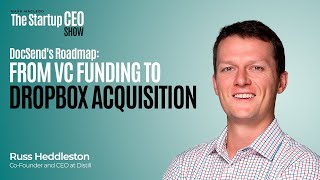
Russ Heddleston built DocSend from a document analytics tool into a $165 million acquisition by Dropbox in 2021. He pivoted twice: first to sales enablement, then to product-led self-serve focused on fundraising and data rooms. He kept burn low, relied on word-of-mouth, and now runs Distill, which uses LLMs to auto-update professional profiles.
Questions this video answers
Launched in 2014 at TechCrunch Disrupt.
$2 million seed in 2013.
$8 million Series A from August Capital (preemptive).
A little less than $15 million total.
Around $15 million ARR at acquisition in 2021; acquired at about 11× ARR.
Chapters
Consumer is something that each generation will kind of pick their own and there is more disruption there. And then people do try to copy each other and there's kind of like multiple consumer social networks with professional networks there's really just LinkedIn. But I think a lot of that has to do with it's you can't use a different network than your parents generation because those are the people you're working for.
Welcome to the Startup CEO Show. I'm your host, Mark McLeod. In this episode, I sit down with Russ Heddleston. Russ is a multi time founder. He sold companies to Facebook and he sold companies to Dropbox. He's best known for being the founder of DocSend, a product that probably many of you have used for fundraising. In this episode we unpack the whole DocSend journey and he offers really practical and actionable advice for somebody looking to sell their startup. I really hope you tune in and hope you subscribe. Russ, welcome to the Startup CEO Show. How are you doing today?
Great, Mark, thanks for having me on. Nice to see you.
Yeah, it's good to see you. We were chatting a little bit before and the world's changed since we saw each other last, that's for sure. And you've done a bunch of things which I'd love to get into, but obviously I think what you're most recently known for is DocSend and, and so I'd love to spend a bunch of time exploring that journey. And I don't know if you know this, but like Most of the VC VCs that I know had a love hate relationship with Docsen because it allowed me, you know, I don't say VCs rely on this, but there's kind of an information and power asymmetry, especially in the early stage between founders and VCs and that DocSend product which we used on all of our deals at SurePath, enabled us to see which VCs which private equity investors were engaged versus not and where they were spending time. And I think the investors didn't want us to know that. Right. Because then we knew who to focus on. So it kind of reduced that asymmetry a little bit. But yeah, I don't know if we ever got that feedback, but that was definitely something I heard, you know, since day one.
I'll tell you an entertaining story about the starting of DocSend, which is we released it as a horizontal product, you know, from the beginning and. But you gotta get started somewhere, right? So I gave it to friends to use in their own Fundraising, because this is my second company. It raised money for the first and it's always been a great product for that use case. And immediately people did not like Docs and the investors because they would like to have all the power, as you pointed out. And they. Or just like, send me the PDF. You know, send me the PDF.
I got that request all the time. First.
Yeah, first year at like the holiday Christmas parties for VCs in San Francisco, because I've always had a lot of friends in vc. People ask like, hey, what are you working on? I'd be like, oh, I just started this company called DocSend. And they'd be like, DocSend, I hate DocSend. And someone else would hear me, DocSend. They'd come over, you guys talk about DocSend. I hate DocSend. And then when people would ask me, like, why did you start this company? And my cheeky response was, I just wanted to annoy as many venture capitalists in parallel as possible and this was the best way. And then people would look at me being like, are you joking or not? Because I can't.
That's right, because you actually achieved that.
That's true. But most VCs, you know, as you know, came around to it because it's hard to raise money and there's a power imbalance. And generally speaking, you're just flipping through the deck. It's a pretty short view. And you're giving a compliment to the person on the other side of this, like, hey, I just spent time on this thing, which is nice. And so if you're treating them like, you know, just a person you would keep up with and have respect for, it's like, fine for them to see you reading it. And even if you don't like it, it's such a convenience for the founder in what's otherwise such an annoying process that, like, just let them have it. So most VCs are like, this is fine, I get it. You know, and they also all use it for their own fundraising. But that journey took quite a while. And it's interesting that it's ongoing still where still a fair number of people who don't like the being tracked part. And I think that kind of comes with the territory. You can always turn on downloading, you can go back to PDF. But generally speaking, like, the DocSend model is one that has a lot of conveniences. Yep.
Like I say, it was. It was central to our workflow at surepath. It was really good to know who was engaged and who Wasn't. And which slides are like the key slides. Right. You know, you think about selling your business, it's the ultimate enterprise sale. And knowing who to focus on and like what questions to ask was. Was invaluable, you know?
Definitely. Yeah.
I'm curious. Was. So I only. I came across Docsen in that particular use case, but did you have. Were you actually ultimately a horizontal product or you were really kind of focused on a few use cases like that?
There are like three phases to DocSend. The first one that we launched in 2014 at TechCrunch Disrupt was document analytics. That's just what our website said, Document analytics. And our view is like, if we can add enough value to the sender and make it as easy for the recipient to click on a link as it is to click on an attachment, we can just get people to send links and not attachments. Because attachments clog up your inbox. You can't change them after you send it. Like there's just all these problems. Like people would send a keynote file and the recipient can't open the KeyNote file or PowerPoint doesn't let you embed fonts, for example. And so people don't realize that you're sending a PowerPoint file to their side and so they open it and it just looks totally different. Anyway, attachments are not great in my opinion. So we were very general document analytics and that was okay, but it was like not growing that fast. And then we sold a couple like 50k deals. So the second phase was us pivoting to sell up market into sales enablement. And then our website just said sales enablement. But even though we were only selling to sales, people would still use DocSend for all sorts of stuff. So like they would ask our support team, are you the services as blah blah, blah. And then support would be like, yeah. And they'd be like, cool. And they just put in a credit card. So selling to sales was expensive. I also didn't realize that we had been building for the end user, not the economic buyer. And so our upmarket competitors were building for the economic buyer. And so I learned a lot. It was a great crash course and how to do sales, like what it's like to do mid market versus enterprise. And so then we decided to focus on what was working just fine and just decided to like optimize it better. The self serve stuff, but interviewing hundreds of our users. What I realized was that like DocSend is a pretty horizontal product, but you get way more bang for your buck. If you describe the value of DocSend in terms that a specific user can understand. So we, the third version was a horizontal product that we marketed vertically. And so with that in mind, yeah we leaned more into the fundraising use case because it's not like we weren't like a fundraising company tool, like that wasn't the, the company. But you know, you have thousand plus seats of like on Docsend at you know like big companies. And so you know there were a lot of like bigger companies would use it, people would use it in all sorts of cool things. And I didn't want to discourage that. And so we're pretty early I think in doing that, which you know, a lot of other companies have then you know, since done that product fed growth companies where you'll have like a template library or airtable and you got to like tell people how to use the thing. So that third phase like worked the best for us specifically because we could lean into the founders using it. And it was I mean like less than 30%, you know, even when you consider like VCs raising money and all the different flavors of fundraising. But yeah, it's always like a pretty interesting spread of situations where DocSend was, was useful.
So did you ultimately end up coming back down market? Like the business at at exit was more of a self serve business than a sales led business?
Yes, but I'd say even during the period when it was like we were desperately trying to do like outbound sales, it was expensive. We hired up you know, a dozen plus salespeople, VP of sales and you know, we were closing 50k deals. But then those are expensive, you got to do a cold outbound. And so when we pivoted back to the self serve stuff, we didn't fire our upmarket customers. We had you know, OAuth like SAML we had like tens of teams. We had like a lot of enterprise features by that point. So those customers were fine. We just decided to like lean into the thing that was working better. And so we changed our pricing, packaging and positioning for DocSend, added the advanced plan which was much more security oriented. And then that just started to like take off. It converted better and then we had this like pretty easy to follow kind of cadence where we would go build more features for the users that were paying us the most. And those users were not dissimilar from fundraising. I called it eccs where someone's sending a document that's external, it's custom, it's, you know, it's critical. Like it Matters a lot. And if it's sensitive, like, you don't want it to go beyond the intended audience. So if it's those four things, there's nothing better than doxing on the planet. And so, you know, we were able to just monetize better. But the kind of. Yeah, like, it was after we pivoted that third phase, we didn't bother doing outbound anymore. It was 100% inbound, it was 95% self serve. So we only ever needed like three AES to close inbound deals. And then most of it was just people converting in the product. We just made it easier to buy. We also made the value prop easier to understand. And so when you went through the product, you're like, cool, I get it. I get what it does. For me, it's like somewhere between 22 and 25% of signups would convert to one of our paid plans, which is a really high, like, conversion rate to paid. So. And also, word of mouth was always our number one channel for acquisition. Just people telling other people specifically, did.
You have a K factor? Like, did you track that? Was it actually viral?
It's hard to track K factor unless you have a company and product that's specifically viral. Like a Hotmail style thing. The recipients convert to being the users themselves. And what happened with Docsend, and what's generally hard with word of mouth is that people just type in DocSend.com and then pay us. But you're like, where did you come from? You just typed this in. There's no, like, clicked on an ad. It didn't like, convert from a content piece. So the K factor for us, which is hard to track, would be even in the early days, like, for example, an investor. For every investor that, you know, didn't like DocSend, I thought, I have the PDF. There were way more investors who were like, oh, this is really smart. I should get my other founders to use this tool so that they have an advantage in their fundraising. So investors were actually big advocates for DocSend, even though the people who didn't like it are just always more boisterous than the happy, quiet people. But yeah, like, that's like a. It skipped a. It skipped a step. So it wasn't. It was viral, but, like, not in. The recipients became senders themselves model. Because people who receive documents don't necessarily send them, but people who receive documents generally receive documents from other people too. So they ended up being like this channel for us.
Yeah, it makes sense. I mean, that's how I Heard about it. Right. The startup sent me a deck in Docsend. I was like, this is a really great tool. I want to use this for all of my deals. I'm guessing. Yeah, that was that. Just being exposed to it through someone else. I'm sure that was just a giant channel for you. Just makes sense.
Yeah, it was. And to give you a sense of some of the scale like Dropbox was, they shared our kind of ARR. When they bought the company in 2021, we were at like 15 million ARR and so they bought it for 11x ARR. We're profitable. And when we did that third kind of pivot back to the kind of self serve stuff like horizontal product market vertically, we had about like 5 million in ARR. We made the decision when we were like around like 4 million in ARR, made like 2 million in kind of like what I called like kind of outbound or enterprise revenue and then like 2 million in like self serve. But when we got to 15 that like 2 million in like enterprise went to like 3 maybe and then that 2 of self serve went to 12. So you know, you just saw like an explosion in like the conversion. We also didn't realize how much money we were leaving on the table by charging 10 bucks a month. A lot of people didn't convert because it wasn't expensive enough. So we got into data rooms and when people are buying for data room software they're like, it has to be really expensive because otherwise I just don't think it's what I'm looking for. So conversion went up when we increased our pricing, which was fascinating. But so yeah, that like 12 to 3 versus 2 and 2 gives you a sense for like. I think that was the right call on our part.
Yeah, you6x that other segment over what time frame? Two years?
Yeah, basically two years.
That's amazing. Yeah, that's huge. And you were pretty capital efficient on that business as well, right?
Not on purpose, but yes, yes we were. What happened was we raised a 2 million seed in 2013, which at the time was normal in 2013. We then launched it in 2014. It's kind of taken off. We got an 8 million Series A from August Capital, who's now lobby Capital and it was a preemptive Series A. We didn't really have the stats to raise the Series A, but our main partner there just believed in me and our team and so I'm really happy we raised that 8 million. We then spent three years basically in that selling up market phase to you know, like mid market sales teams and I don't think that was the best time spent. So then you know, once we got to that point I was mentioning where we were like oh, I don't think this is their good mark model. We actually couldn't raise a lot because we were kind of a weird story. It was like formulated ARR. It's like half self service, half mid market. It's like which are you type of thing. And so I did actually get a term sheet for 20 million which is great. But I instead took a term sheet for five from a friend of mine, Kyle Louie, who was at DCM at the time and that was like great. We didn't end up spending that much of the five. One of the problems with product line growth is it's hard to promise how much you're going to grow because you know when you have a sales team you can just like dump money in and get more money out. Versus with DocSend, you know, talking to our investors they're like how much are you going to grow next year? And I'm like I don't know but like we grew a lot last year so probably will continue. And they're like well how do you know? And then like if you build these features like how do you know if they're worth it? I was like I don't. I just think that good things will happen because everyone's asking for this. So like, like very hard to predict. And so we raised a little less than 15 million total for docs End which was very capital efficient. But yeah, it was kind of interesting how that played out between those, you know, basically three rounds of funding that you know, taking that five was really just to have a little more balance sheet. But what we did was just really focus on what we'd figured out was working and then we ended up being accidentally profitable. It's like a little bit more in vogue now to be profitable. But at the time, especially as a product led growth company, like just my view, my co founder's view is that if you grow your engineering team too fast it like kind of becomes chaotic and you don't know who's working on what and like it's hard to onboard people. So like we didn't really want to grow our headcount more than 50% a year and our revenue was growing faster than that. So revenue just kind of passed costs but we were still kind of growing the team at the rate we thought was as fast as we could to kind of be that optimal kind of get people trained and onboarded so that you know, we're still like making progress in the product as well as hiring more people. Because otherwise you're like just fully in hiring mode and it can be kind of a mess. Or if you're not hiring at all only in building mode, then you're kind of reducing your future ability to have more output. So anyway, and it's been accidentally profitable and you know, so then, then we didn't need more capital.
How about that? That's perfect. I love it. We've probably talked about a bunch of this already, right? In terms of trying to move up market and then the decision to make it more self serve. Identifying this use case around fundraising, what were the other kind of either big milestones or key moments or big decisions for you? Like if you were to do a retro, maybe you did this like a retro on the success of DocSend, what would be in that?
Yeah, it's a great question because I have often gotten from people to such a great product. It's just a really good product. And my thought has always been like what does that mean? You know, is it like very pretty? Is it that it's like, you know, like what exactly does that mean? I think in the case of Docsend what it means is that it's like really good at something specific but then it's like flexible enough to be like useful for other things too. And that's generally viewed now as like oh, product led growth company. You need to be good at self serve onboarding where you're more like a consumer business than like a B2B business. But the kind of first thing I think we did right at the beginning of the company was just be laser focused on doing something specific very well, which is just send the document as a link and see what happens to it. And we had to spend a lot more time than anyone assumed being really good at document processing and being really accurate at tracking stats, which isn't like horribly difficult. But it does mean that we supported further back in IE than like Microsoft did at the time because like you know, banks are still using really old versions of IE and then every browser version has different notifications they give you if you like flip tabs or you're in focus or out of focus. So just being really good at those details. And then like there's just PDF JS is a lot better now but at the time like it it wasn't. And so there's just all sorts of like edge cases to understanding the PDF spec and taking you know, first it's just PDFs, but then taking Word documents, PowerPoints, keynotes, and turning those things into the exact same thing in a browser as you'd have in the document. And that was actually hard. It's, you know, not giant, but it's like way bigger than people thought. And I think if we hadn't been great at that, we would have lost trust. Also, if Docsa never went down, you just stop using it, you'd go back to an attachment. So we always had to be up. We could never, like, have any downtime, and we had to be like flawless with converting documents. And it had to be incredibly simple and clear, like what the utility of the product is. So I think even from the beginning when people would try to use DocSend, even if they didn't care about that value prop we had, it was still pretty easy to understand what is it and how do I use it? So as we added more complexity to the product with like E Signature or Data Rooms, the idea we had was that it's easy to get started, but there's room for mastery and there's complexity that's hidden and is there when you want it, but doesn't get in the way of like a new user getting onboarded with the product. So, yeah, other key moments, I'd say, like the pricing and packaging discussion we had where we launched our advanced plan and sales teams didn't usually care about security, but we found all these users who would be paying us 10 bucks a month and they would care so much about it and they wanted more security. So basically we figured out what sub segments of our users had the highest urgency with our product. And then launching a plan that was 150 bucks would be paid annually a month, or 250 bucks month to month. I still don't know if that's the right or best pricing, but it was close enough that it was great. And when you compare $10 a month to $150 a month, like, that's a big difference, especially in the minds of the target user. Like, that wasn't still that much money. It wasn't that meaningful to them. You know, if you're an investment banker that's representing a business and selling it for hundreds of millions of dollars, like, you really don't care about that expense. You know, if you're any professional, you know, you're raising your venture fund, your founder raising capital, it's like not that much money. So get. Getting the pricing and packaging correct was like another really big moment for Us. I'll pause there. There are some other ones. But yeah, it is fun to look back in retrospect and be like what mattered. Of all the things we spent time.
On, you definitely masked a lot of complexity. I totally, I'm not a developer, but I totally appreciate that. Just even I've tried to like import PowerPoints into Google Slides and they mess something up. Right. Or a keynote into Google Slides. Right. So even just that and it has to look good again for us, we were using it for multimillion dollar transactions. Right. We have to put our best foot forward. Presentation has to be bang on and yeah, it always was. I'm curious, you know you talk about product LED growth. I don't remember when that became sort of a category and everyone started writing about it, but I feel like you were early. So like how did you, did you know that that's what you were doing? How did you educate yourself other than just putting the reps in? Whether resources you could turn to back then or you just were figuring it.
Out yourself, There weren't any resources. In 2013, when we started the company, my co founders, Dave and Tony, we all went to Stanford together. We all studied computer science together. We were influenced by like the design school thinking there and just I did my master's in Human Computer interaction, which is like the fluffy CS degree at the time at Stanford. And I don't know, my view has always been that most things can be built, it's just a question of should they be built. And so when we started Oxen, we wanted to build a product that was really great for the end user because it's fun for us to design the product that way. But yeah, it wasn't called product led growth at the time and we had to figure out a lot of things on our own. We did a case study with Harvard Business School last year and hearing the first class like discuss it, it was one very hard for me to just sit there. And to your point, a lot of the people in class didn't realize that when we started the company that wasn't a thing back then. So students would say things like, well, it's very clearly a product led growth company, so why didn't they do these things? But we were figuring out things out as we went because it's not quite the consumer playbook and it's certainly not the enterprise B2B playbook. So a lot of trial and error, a lot of just kind of following the thread. But yeah, there were a lot of like inefficient paths we went down. I always kind of felt like if we did it over again, we could have done it in half the time type of thing. But that's probably true for founders generally, with the benefit of hindsight.
Maybe. Last question here, and then let's move on and talk about the acquisition. But when I think about, again, that use case of raising capital, it's almost like a campaign. I need it for a short time and then I don't. So did you experience that? Was it episodic use and people would churn out and then come back in 18 months? Or did you find maybe they discovered through using it for that fundraise that they could use it more broadly and so they stuck around?
Yeah, that's a great question. Like, when I talk to founders now, I'll usually, like, urge people to go aim for something that's high urgency, even if it's small, even if it's episodic, because it's better to be useful for someone than to be, like, generally useful for no one in particular type of thing. And that was like, the episodic nature of fundraising is why we didn't kind of, you know, do that initially or focus on it. And that's also why we focused on sales for a while, because that's a never green use case. But when we went back to being a, you know, horizontal technology, but marketed vertically, the benefit of fundraising that we only saw after some period of time was that a founder would, even if they raised or didn't raise, they'd go on and remember it and they go use it in other things, they'd take it with them. And we had a lot of people would use it churn, then use it again, and then churn. So our resurrected revenue was really high. And so part of the thought process we did was what else could we get them to use this for? And part of that was just telling them what else they could use it for. Like, use it for sales, use it for your investor reporting. But then part of it was like, what are the adjacent things we can build into the product to make it stickier? And that was a lot of why we added E Signature into the product. And that's also why we added whether either data rooms or like deal spaces or like, send a folder, like more kind of inside know basic terms. But those are all things we added to the product to be able to, like, acquire someone in one use case and then convert them to other use cases of DocSend. So, like, in the beginning, yeah, if you looked at our cohorts like there'd be pretty steep drop off, but then it was as fascinating that people would like kind of resurrect over time. What we couldn't track automatically anyway was that people would like come back to us with a different email address for their next company or as they switch jobs. Right. You wouldn't see that in the cohort, but then you would see in the cohorts they kind of like bottom out after a couple of years, then come back again because the episodic users were gone. And then there's some core of like the founder gave it to their sales team afterwards and then their sales team kept growing or you know, they found some other use for the thing. And so the courts are actually like an enterprise. You want to see it be like this huge expansion over years, right? So you can buy a stacked layer cake that, you know, kind of that whole playbook and ours didn't look like that. But what I always told investors and companies like, yeah, but our cohorts are free. You know, this is amazing. Like we're not spending that much. So as we got retention up and we got people to use docs in other use cases, then yeah, there was more of a stacking effect to the product. But yeah, the, the episodic use case wasn't a kiss of death. I think is is often believed. It's certainly not ideal, but it was great that people got the value prop and then they recommended it to other people. It like solved a specific need very well and then it gave us the opportunity to go broaden out from there.
This episode is brought to you by Thello. Tell me if this sounds familiar. You wake up, you take a look at your calendar and you see it's filled with meetings, standups, weekly check ins, one on ones, town halls. And those are just your internal meetings. Some are productive, but some are definitely slowing you down. Be honest with yourself. How many times have you thought this meeting could totally have been an email? Now consider that in the US alone, there are 55 million meetings each day and 85 to 90% of those don't have an agenda. Velo is on a mission to solve the meeting problem by offering the only AI meeting management solution that covers every part of your organization's meeting workflow. And As a startup CEO show listener, you get 300 free minutes of AI recordings if you sign up to go to fellow app CEO to start your free trial and start having better meetings. When I look at SaaS, I see sort of two broad value propositions. I see products that help Me save time and products that help me make money. And I would put Docsend very firmly in the latter category. And I think that's super helpful in terms of conversion and retention. Right. If it was just like if something's like the number one competitor for the apps that just save me time is status quo where like Google Sheets or Excel. Right. And so those are very hard to retain, especially when times are tough. So I think it helped a lot that you were in the critical path of, well in this case raising the money that would pay for everything. Right. So very high value use case.
Yeah, same with sales. You got to keep selling products. If it's critical of sales, great. But if it's not, then you're on the chopping block and that's problematic. But yeah, it was definitely proven out post acquisition that even when the kind of SaaS market declined, evaluations came down and a lot of other companies, SaaS companies that were especially selling to other SaaS companies had their revenue collapse a lot. Docsend just grew right through it. So it was pretty cool to see.
So tell us about the Dropbox acquisition. How did that come about? I know you interned there back in the day, so I don't know if you were just went through the back door like walk us through that whole thing because obviously Dropbox is a tier one company. Probably everybody uses it, so it's kind of fascinating to learn more about it.
These stories are all so different. It was fun to go run around and ask other founders for advice who have been through something similar and you know, to hear the other stories. And every, every startup is a little bit of its own snowflake, especially if it's successful. And then acquisitions like really vary a lot. But the, you know, I guess backstory to selling Dropbox was that in 2018 when we, you know, selling the sales wasn't working as well as we were hoping. It was too expensive, it was too slow. You know, that was like a, like a not great year for us because you know, it's like we needed to kind of figure out something that was working a lot and you know, it was hard to raise money. I went around and wanted to see if anyone would buy the company and no one was really that interested. For 4 million in ARR, that's like, kind of like not enough to be that interesting. But that gave me a lot of like, you know, little fire under me to like make a great business out of this thing. And so then when we double down on self serve, you know, our investors were like it's just not going to work out for you because it usually doesn't. But our credit stuck through it and, like, figured it out and, like, just started to grow. And our investors, you know, a year later, like, wow, like, this is, like, working. Like, people probably don't know that you're doing this well. And so we hired a banker more as a coach. Not because I was going to run a process to sell the company, but just to get some advice from when we passed 10 million in ARR. And then we had a. Like, not that long after, at the end of 2020, we had one of the people I asked a couple of years before that if they would buy the company, and they said, nah. They came back and were interested because they're like, my board wants me to do something different. And so, like, I like to buy it now. And I'm like, well, we will not be as cheap because we have figured out some stuff here. So shared the numbers. And he's like, ah, yeah, you guys are doing pretty well. So. Because I had a relationship with Dropbox from interning there way back in business school in 2010 when there was like 20 people. So I tracked down Drew and, like, you know, convinced him I wouldn't be a burden for the summer. So the PM intern, which is a lot of fun, but I went back and there's an exec there at the time who I kind of asked him, like, hey, very close with this other offer, wasn't quite enough, but, like, are you guys interested? I kind of, like, looked internally and they're like, yeah, and they got a little bit higher. And I asked our banker like, hey, what do I do? I asked our investors, hey, what do I do? Like, this is. I wasn't really. I'm not running a process, but, you know, kind of responding to these things. And I always think it's a wise thing to know the other players in your space and kind of be on good terms with them just in case. I know it's also just more fun that way, but so, you know, for both of these companies that made offers, like, I've known them for a while, and the investor's view was like, wow, we thought you weren't doing well, so this is pretty good. You know, we'd like to take it. The banker's view was like, well, if you. You have, like two offers here and, you know, if we try to run a process, one of those might not convert, and if we get a rushed yes from someone else, we might not be able to trust it. And that's fair. I think in retrospect, I probably would have run a process, but the other things that we were considering were that we'd been at it for eight years and it is hard to know how fast something will grow with product like growth, because you can't dump money in and get more money out. And one of the fears we had was like, oh, maybe Dropbox will compete with us. Maybe that's the thing we should be worried about. In retrospect, I don't really think that was a realistic concern. Another concern was like, oh, maybe it'll kind of top out. And we're only 15 million ARR. So getting to 100 million ARR, that's a long time in the future. If we're going to ipo, then we have to have a couple other things go real well for us. And then it is true that as you are more successful as a business, there are fewer companies that are potential buyers for it. And what do you do with the thing? I have more nuance to use on this now, again, having learned from the experience, but this is what was going through our head at the time. So Dropbox got to kind of like the minimum amount that we thought we would take. And I had offers to raise money at 2x valuation without really shopping around much because it was kind of like, obviously hockey sticking. This is like working like, wow, this is pretty cool. So, you know, but it was one of those things where it's a personal decision, was something I heard a lot and I think it was reasonable decision for us to say, like, sure, you know, we'd only raised 15 million. You know, our last post money valuation was 50 in a million, you know, raising 5 million basically 10x ARR at the time in 2018. And so this was 11x arrow, you know, and so we said, sure. But I do feel good that we didn't have to say yes to this offer. And it was right on the border for, you know, like, what we would have considered. I think knowing what I do now, I probably would have been more patient just gone with it, gone for it. But these things are so hard to know at the time. And then also, you know, there are other constituents for me to keep in mind just with my fiduciary obligation, like, what do my investors want, what my co founders want, what's good for our employees type of thing. So it was, it was a reasonable decision for Dropbox. The go to market motion made sense to Drew because, you know, Dropbox kind of expanded organically, you know, in Its kind of like hypergrowth phase. And so for him it's like, like, yeah, that makes sense. You know, this thing is just a good buy, you know, for him it's like, yeah, it's a no brainer. So. And know we knew that we were selling it for cheap at the time, especially relative to like what we could raise at. And then as during the rest of 2021, like valuations went way up and you know, we basically sold for the public SaaS multiple at the time. Although fast forward today, the public SaaS.
Multiple multiple today 11x people would be very happy.
The flip side of that though is we grew way faster than we thought we would have. Like, we just kept going and like profitable. So we definitely left money on the table by selling it when we did. Even if we had just sold it to a private equity company later, that would have been a bigger outcome for us. But I mean to your point about it being a blue chip company, it looks really good. It's a nice story. We all made money on it and I think these were all great aspects to it. But it is funny that some people have assumed that, oh my God, you are so lucky to sell your business. And it's like it was just a really good business and we sold it for half off. So you know, like sometimes people are a little confused by that. Like why would you sell it for half off? And it's like, I wouldn't recommend that. But it is as a private home company, like hard to sell your business. Like do you know Anyone who has $165 million in cash type of thing?
Yeah, exactly.
You know, so it's like, it's interesting to see the different angles that you can kind of look at this through. But yeah, I'm like really proud of what we built with Docsend and it was like a great business. So if we had not sold Dropbox, we would have been fine. But it was a great purchase on Dropbox part. So credit to Drew and the team for being like, yeah, this is going to do great. We should definitely buy this. So it was a great purchase for them. I don't know if they still talk about in their earnings, but for first few years it's still performing very well and they always brag about how well it's doing. Although they haven't announced or released the kind of ARR numbers for docs and post acquisition.
Got it. Fascinating. Well, first of all, congrats. Honestly, that's amazing.
Thanks.
A great outcome whether you left money on the table or not. Right. Tough to say. You probably did, but like, never know.
With these things, like, you know. So I think it's very hard to say.
Yeah. I'm curious, back when you first reached out, back in, when you were doing the sales, move out, markets not going well, did you approach corporate development? Did you just go to product leaders? Like, who did you go to? Because many people listening to this face that issue, right? They've got companies that are underperforming, they're too small to be banked, they can't run a process, so they've got to figure out how to land this thing themselves.
I mean, the thing that worked for me was Talking to the CEOs of the companies that were of interest because you need like an executive sponsor, typically, like if you're selling to some company.
So you went direct to the CEO.
Yeah. Or in some cases like an executive at the, at the company. And it was great for me because I would just be able to trade notes with them. Like, like, while I worked at Meta, before Docsend, like, I would have founders coming to me, asking me for advice and you know, they were often cagey about what they're working on. And man, like a PM at Meta. And like, my view is always like, I would be so bad at my job if like your idea, you know, sparked me to be like, drop everything, everyone, we gotta go do this thing. You know, it's like the founder has way more to gain by sharing information to understand what is on the big company's roadmap and how the big company thinks about that value proposition. Because there really aren't like new ideas. It's more like execution, timing, details matter, that sort of thing. So I was always very open with people I caught up with at these companies that could be either competitors or acquirers of the business. And that was nice. I learned a lot out of it. And then those relationships, you know, even in 2018, allowed me to go get like a real no and like a fast no of like people who mattered. So I didn't have to like get all excited about, oh, I got a meeting with Corp Dev, I could go have a conversation.
Exactly.
Like, I don't know, it's still kind of small. I don't really know. It's like a feature. I did inspire some other companies to try to clone Docsend and then a couple of companies found out that it is harder to clone than you might think. And it's also hard to compete with simplicity. So none of those other competitive products ever really mattered or took a Dent at a docsend's growth. But it is worth noting that if you do, if you are open like I was, you might inspire someone else to just try to clone you. So to the extent that is. But it matters, like that's good to be aware of. I just never had luck with corp dev, although I did learn from corp dev people. Like a couple on them had just great conversations and I thought they were great just to educate me. I wasn't trying to get a real answer on like would you buy me? But like I was talking to a corporate person who was very kind to spend time with me and that business was like more of like a sales driven business. And he was very, very kind to explain to me that they only like to buy things. They're public company and they only like to buy things where they can have a business case for like selling it through their channel. And he's like, your product, like you can't even sell it. You tried for a while, but you just told me that it was like hard to sell. So he's like, why would I try to go sell that? And then like all the evidence of what you have is working is like this thing that doesn't require salespeople, which is cool for you. But like I don't really know how I would buy your company, plug it into our company and then you know, like, you know, accelerate the revenue. And I was like, oh, fascinating. So there's like not a great go to market fit there. So that kind of informed me as well where I was like, yeah, maybe it's not worth it to try to go talk to companies that have a different go to market fit from like what's working for us. Because there's just like it's going to be hard to make a business case for toxin at that company. So I don't know, I think it's worth talking to whoever will talk to you, but I do think it's much more effective to either be talking to an executive who can sponsor an acquisition or just the CEO of the company if you can do that.
Now you knew Drew from before, but were you literally just cold contacting other people, like trying to figure out their email and just emailing them or are you getting referrals?
Generally not, although it has happened for me like cold emailing a corp dev person or just like, you know, adding them on LinkedIn and they'll respond because their job is to kind of know what's going on in the market. So it's often not like terribly hard to go get on the corp dev person's radar if you know what you're doing seems relevant if what you know is incredible as a team type of thing. But no, generally asking for introductions is the best way. It was also like, for me, I'd already have a pretty good background, Stanford for undergrad and grad, computer science as a business club at Harvard. And so I was able to get some connection to the person.
I was going to ask you about that. In hindsight, obviously, I'm sure it was good education and you learned a lot. But, you know, a big value proposition of Ivy League is the network. So like, for folks who are maybe earlier in their career thinking of doing a master somewhere, when you look back, like, having that access, was that kind of really important for you?
It's so hard to say because, you know, when people ask me, like, is it worth going to business school? And in the short term, no. Like, you know, you're taking two years out, big opportunity cost, you know, the long term, maybe, and it depends because, like, the network is great. Like, I've made so many good friends. There's all these intangible things. So there definitely was benefit to me for sure, because those Sanford and Harvard people go off and do interesting things. There's definitely like some unfair advantage there. Stanford's just so embedded in tech though. I feel like that's kind of unique. And then Harvard Business School also has a lot of people now that go into tech, especially like venture capital. So they're pretty well connected. I don't think you need it, though. The reason that people would kind of spend time with me or respond is generally just based on the credentials I had is like, the product we're building, the company we're building, like, the way we are thinking about something. And so, you know, it's interesting to share notes with a founder who is thoughtful about something and like building an interesting product. So, you know, those kind of credentials definitely were what mattered. And name brand helps to get in there. But if I didn't know what I was talking about, if our product wasn't that interesting, having the background that I have, like, wouldn't have gotten me that far. Like, frankly, it's not going to compensate for real value. And it's kind of the same with the relationship with Drew. Having him look at, you know, Docsend, it's like, even if Docsend wasn't doing very well, like, sure, he would have taken a look. But to spend that much money requires that the company is just like a really great company. So our financial statements just stood for themselves. It's also worth noting that as a startup, it's useful to be well run. It's useful to have your finances in order to have an accounting firm do them, to have some business intelligence systems in place. One, so you can observe your own company. But then two, it's so much easier to either raise money or sell the business. So you know, at one point in Dropbox's kind of diligence, they were asking me for what I considered to be too much. So I just said it's, you know, like take it or leave it. Like we'd be happy to, you know, not have you buy the company. If you need any more information, like that's fine, we're not going to give it to you. And then they said, great, we'll buy the company, we're done. You know, so because it's like they had everything they needed. It was like pretty clear, like everything was through stripes. It's like you could like, you know, double check our retention numbers. It's like they had all the data, you know, so everything matched up. It's like weren't really any skeletons in the closet as a, you know, company. That's always a concern on the buyer side. So yeah, having, having the content of like a well run business can't be kind of really covered up if you're selling the business. And I also think with like making, getting intros and talking to people, if you're a founder just like being smart about what you're working on and thoughtful like that, that is also what counts for the most.
Yeah, I really love that you brought that up. Music to my years, obviously as a former banker, I was preaching that to my clients all the time. And I coach CEOs through deals now and I tell them all the time. I don't know if I buy shares in Alphabet today, I can change my mind tomorrow and sell them. I buy Docsend, I'm stuck with it. So you're selling trust every step of the way. And so being well run, being able to respond to diligence requests in a timely manner and have it be accurate, all of these things just are adding layers of trust. So such an important point that you brought up maybe last. I don't want to end without talking about your new thing. So tell us about your new company. And also let's presume you could just decide to not work. So just tell us about the motivation to get back in the ring and go back to the beginning again.
Yeah, great question. Happy to chat about that. Yeah, it was, it is nice to have the, the freedom. Like the first company I had, we sold to Meta. It was a talent acquisition, but we had good timing getting there before it was public. And so that was nice for some, like financial freedom and then, you know, certainly tucks in, did well. So, you know. Yeah, to your point, like I could retire, that I could go get a PhD in something or pursue some other passion. I feel fortunate that I like software. It's fun. Like I wasn't, I was never in software because I just wanted to make money at it. It's always been something that's interesting to me. It's fun. Software is very scalable. I like building well designed products. It feels a little like arts and crafts, you know, in a way. And it's fun. I like it. So as I did some soul searching after leaving Dropbox, I'm like, do I want to be an investor? Do I want to go be CEO at some other company? Do I want to go be an exec somewhere? And kind of came back to the no. I was really proud of building a product that people liked and that made a difference. And yeah, it felt really good. And so I was like, I'll just do that again. Especially now with LLMs on the scene, it's like, whoa, these are different, this is new. So I'm still on great terms with my co founders from Docsend, but they're both still taking some time off. So last year I found a new co founder, Tin Su, who's also at Stanford, also about the same age. It's also his third company. So that makes us a good fit with each other. We spent all the last year playing around with LLMs. We built four different prototypes of things being like maybe this thing. And then, you know, for various reasons, we decided it wasn't a fit. We still want to build for the end user, not the economic buyer. We want to do something B2B oriented. We want it to be something that like, wasn't possible before LLMs. And then the company I'm working on now we got to at the beginning of this year and couldn't prove it was a bad idea. So we're building it out and all these boxes, you know, like, I think it'll do well, I'm excited about it. But yeah, you describe it as like failing to prove it's a bad idea.
Yeah, yeah.
Because the only way to prove it's a great idea is to go build it. So I like to try to poke around it to like all the reasons why it might be a bad idea first, and the idea in this case is to use LLMs to go gather all the information on a person or company, all the unstructured data that's in articles, interviews, go find it all and put it in one spot and then make a profile out of it. Which sounds easy, but you know, how many Mark McLeod's are there? Probably more than one. And before LLMs, it was very hard to reliably figure out is this the right mark or not. So the entity disambiguation problem is something we can use LL to solve and using that property and like a back end system, we can actually create like pretty interesting unique profiles. It's kind of like a Wikipedia for everyone else or you know, it's like this is a kind of like new thing and it's, it's fun, it's interesting. If Docsend was solving the kind of boring problem of like getting rid of attachments, I would say that Distill is solving the problem of like no longer needing to Google for the person to learn something else about them.
Sounds like I could use it to learn about podcast guests.
Yeah, that's certainly a great use case. It's so cool to see what it turns up. Hobbies, you know, the LinkedIn obviously has a lot of information, but people don't update it and it doesn't have everything. And so you end up finding all this cool stuff that is not there. And so it is a professional identity tool. We are catering more to the person doing the lookups than we are to the person who has the profile. It's still like a neutral, positive profile. We don't want to be in the business of saying bad things about people. And as the person who you know the profile is about, you have agency to go influence it to make it look better. Like we want people to be proud of them and they generally are. They look really good. It's this auto updating thing that makes you look great, generally speaking. So yeah, it's been a really fun problem to kind of dig into and build another product around. It's not, it's totally different value proposition than Docsen, but kind of go to market and some of the other properties are similar.
Fascinating. Super early and probably maybe too early to say, but do you think it could disrupt LinkedIn?
I don't think that's certainly not our goal. I do think in the same way that TikTok hasn't destroyed Instagram. They're both out there, they're alive. Instagram is trying to catch up. I think having worked at Meta for a while as well, I have a view on this. But consumer is something that each generation will kind of pick their own and there is more disruption there and then people do try to copy each other and there's kind of like multiple consumer social networks. With professional networks there's really just LinkedIn. But I think a lot of that has to do with it's you can't use a different network than your parents generation because those are the people you're working for. So those are the people you need to network with. So LinkedIn will always be there, always do. Great. The difference with Distil is it's kind of a different model, right. It's not the person telling you what they want to about themselves. It's this third party system that's giving you more of like a consistent view on a person. It's an auto updating profile on them where if they make an outrageous claim like I am the world's smartest human, we might say they are quite self confident in their intelligence. Like we're going to like play things down that are aggrandized and then you know, we're going to. A lot of famous people don't put anything on LinkedIn so like we'll go find information and fill it in so it's like more complete than you might otherwise find. So I think in that regard, like no, won't be LinkedIn but I do think there's a lot of room in the market for another professional identity product and certainly one with these characteristics.
Amazing. Well, listen Russ, first of all, it's been great to catch up and congrats again on the outcome of DocSend. Super happy for you and really excited to see where you take Distill. It sounds really promising. Thanks so much for making the time today.
Yeah, it's great to be here. Thanks again.
Thank you. Hey, thanks for listening to the Startup CEO show. If you'd like to connect with me, be sure to visit my website at markmcloud me or follow me on LinkedIn, Mark MacLeod or Twitter @Mark McLeod underscore. And if you want to tune in again next week, be sure to subscribe on YouTube, Spotify, Apple or wherever you get your podcasts. We'll see you next time.
More from Mark





The Burnout Breaking Point - How Strategic Breaks Actually Increase Productivity


Emotional Debt - How Avoiding Hard Conversations Compounds Into Company Killing Resentment


The Death of the Specialist - Why AI Is Creating a New Professional Class Called Scalers