Execution Over Ideas: Mark Ang's Philosophy of Startup Success
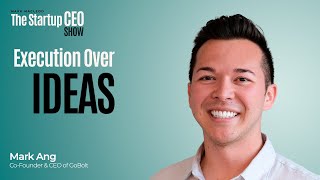
Mark Ang, CEO of GoBolt, discusses building a logistics startup from a university side hustle into a sustainable delivery company. He emphasizes execution over ideas, hiring for stage-fit, and one of his company values: "get shit done." GoBolt has accumulated roughly 8,000 five-star reviews with a 4.7 aggregate rating.
Questions this video answers
2017; started as a valet storage company run as a university side-hustle.
Raised a $500,000 seed round (reported in the interview).
Named to Forbes 30 Under 30 (mentioned by host).
About 8,000 five-star reviews and an aggregate rating of roughly 4.705 (as stated).
Investor Michael Hyatt (credited with saying every day you're not doing sales you're costing us $10,000).
Chapters
We were always encouraged to hire people who have been there and done that. Absent a rigorous structure to evaluate, develop, manage, which as a younger company, you often don't have that, the reason why you might be coached to bring on these people have been there and done that is to install that very thing that you don't have. It's hard to then evaluate that person. And so you're left in this sort of like, unknown, unknown, where it's like, oh, is this what someone who's been there and done that looks like? Because, I mean, technically, the fact that I'm here, I've been, I'm here and I'm doing it. And so what does it look like on the other side? I don't actually have a view.
Welcome to the Startup CEO Show. I'm your host, Mark McLeod. In this episode, I have the great pleasure of sitting down with Marc Ang, co founder and CEO of GoBolt. If you live in the cities that they serve and you've ordered something online, there's a meaningful chance that the package was delivered to your home by Mark's company. What began as a side hustle in university is now a massive business. Mark just got named to the Forbes 30 under 30 list. Despite his tender years, he is full of wisdom and insight. I really enjoyed this conversation, and I hope you do too. If you enjoy this, please consider liking and subscribing to spread the word. All right, Mark, welcome to the Startup CEO Show. It's a true pleasure to have you here today.
Other Mark, thank you for having me.
I look forward to reading the transcript. Actually, Mark said this. Mark said that it'll be confusing as.
Hell, but we'll make it work.
Yep, totally confusing. Well, I'm going to jump right into this, but maybe, like, let's start with, you know, for folks who don't know, just tell us what Bolt is, what it does, and maybe also just tell us a little bit about kind of how you got here, because the business you're running today is not the business you started.
Yeah. So the business started in 2017 as a valet storage company. So Heinrich and I were both students at U of T. We had a bunch of friends who were international students that would always go home in the summer until their next semester. And so we came to understand that they would pay an outrageous amount for summer storage. Be like 80 bucks a box to store for the summer, which was fucking egregious. And we're like, there's gotta be a better way to do that and do it in a more inexpensive way. And the thought was that we would start this as a side hustle. I was meant to be a management consultant. He was meant to be a product manager at a health tech company. So there's no way we were really intending to really disrupt the storage industry in a big way. So what we did was we used the rest of our printing credits because we were both in fourth year. And we printed colored flyers to paste inside of bathroom stalls and in front of urinals. And we used 100 bucks of Vistaprint printing credit to break into dorm room buildings and slide these business cards under dorm room doors. Customer meet solution. And literally inside of two weeks, we had grown to 20k of monthly recurring revenue like that. And we were like, this is probably going to become bigger than we thought. Maybe we should contemplate not starting full time. And I should mention that this was an asset light operation. Like I had contracted a file storage company to do all the pickups and drop offs and the storage. And so we had zero operations to worry about. And this is highly relevant for what we then decided to do later. But on our busiest day on April 28, this file storage company calls us and says, hey, like, you guys have grown way too quickly. Our team is burnt out. They don't want to do any of the work. You're on your own. And Heinrich's in an exam at this point, I'm about to go into an exam and we're like, holy fuck, what do we do? And so what we ended up doing was Heinrich went to get a U haul in the far reaches of Scarborough, went back to Mississauga to pick up these boxes, came back downtown to meet me. I'm already like slugging boxes down five flights of stairs because these old dorm buildings at U of T don't have, didn't have elevators. And we worked until 4am to do all customer pickups. And we did that for the next three days. And we said, okay, if we're gonna do this business, we're gonna have to do it ourselves. And. And we raised a 500k seat round, launched the business in a more meaningful way. Three years later, reinvented ourselves because we didn't want to tell our grandchildren one day that we help people hoard their stuff more efficiently than the next guy. And we started a end to end logistics business that has a sustainability focus. And we now service Fortune 500 brands to scale up companies and everything in between, managing the North American logistics from fulfillment to mid mile to last mile delivery.
That is wild. You know, I can think of at least one other business that started in the college dorms and grew pretty big. Man might have heard of Facebook.
Started by another mark.
Yeah, exactly. Another mark. Oh, my God, that's right. I didn't even connect that dot. Yeah, there's a pattern here. So I should clearly invest in any mark entrepreneur who has not yet graduated. I should just like troll the campuses like some weird creepy guy. Like, is there any Mark who's like, entrepreneurial? Can I meet him?
Take out, take out billboards and maybe do the, the break into dorm building thing that we did before we move.
On from the company? Because I wanted this to be mostly about you. I'm curious about the sustainability angle. You know, I'm aware that there are electric cars, but I actually didn't think fleets existed that could, you know, qualify as sustainable. Like, how does that work when we.
Set out to pivot the business? I mean, Mark, as a former CFO yourself, you know that Excel can be a lot of fun with numbers and you can drag them out to infinity and see, oh, this would be cool to be at this size one day. And I think we had dragged out the model till 2026 or 2027, and we're like, we might have thousands, potentially tens of thousands of trucks on the road daily guzzling gas and just spewing emissions. And so we said, that doesn't feel like a prudent social or economic decision. And as we were kind of really hung up on reinventing ourselves to make a business that we'd be proud of, to tell our grandchildren one day, it was a holistic reinvention. And so you're right. At the time, there was basically zero option that was commercially viable. In many cases, we got the first vehicle off the line from these OEMs. And so you can imagine how many problems they had. But we stuck with it for a good 24 months. And I'm happy to say that after a few years into this journey, we're at a place where major advancements have been made. There's still more to go, but we feel like we are paying tuition into this mindshare and this proprietary approach to managing electric vehicles. And it's well worth it. And as a smaller company with a more innovative culture, it's easier to digest that investment and that tuition. And so we are, we are blazing a trail and electrifying the last mile as we do so.
Yeah, I completely love it. Is that a barrier to scaling for you just the supply of electric vehicles?
You know, I think it was because, you know, you were Rate limited by how well and how quickly these companies both innovated on their own product and then could produce it reliably. And so we had to diversify our supply base but also tolerate, you know, an uncertain supply stream. We've now been able to work in, align with partners and share forecasts and become more sophisticated. And so now we don't think that that's a barrier to scale, partly because we are either the top customer or one of the top customers of these OEMs. And we've clearly said to the world that, you know, every vehicle that we procure will be an electric one.
And how important do you think that has been for the growth of the business? Is this a major reason why customers want to do business with you, why employees want to work for you? Is it a magnet?
Yeah, it's definitely a magnet for. It creates an identity. And whenever you wear your identity very publicly and outwardly, you will attract whoever else identifies with that same thing. And certainly from a team basis, we've had team members join us strictly because of our sustainability commitments, which is awesome because the team, as you can imagine, would be that much more motivated to solve problems, core business problems that just make us more effective and make us win at the same time. We've had a ton of merchants come to us that really care about this and this is part of their ethos. And we're fortunate enough to then be woven into that, the DNA, the fabric of their DNA as they present themselves to the world. And so they become very sticky, honest and partnership relationships versus, like, vendor clients, which is awesome. And so, yeah, and I think long term the industry is going to be going in this direction by hook or by crook. And so we think it's a fleeting moat. It's not one that we expect to sit on for a while. And so it'll come down to cost, benefits, genuine customer experience, advantages, scalability. But we do feel like this is a wedge for us to capitalize on from a business standpoint and get as big as possible quickly. Speaking.
Speaking of big, you know, you're just referred, first referred to yourself as a small company, but you're actually not, you know, so this is your first gig out of university. I don't know if you've. I've never gone back. I don't know whether you've actually worked for other people or not. But in any event, it's your first gig. You just hit the Forbes 30 under 30 list. You run a company with hundreds of people, which makes me ask, like, how do you Think about age. You know, is it a thing for you? How do you think your team members think about it? Like, is it. Is it a factor at all?
Yeah, I think the thing with a bias or subconscious bias is that it doesn't really register. And because I would be on the side, that would cause somebody to have a reflex of sorts, and I'm not. So to say it this way, when we started the business, I was 21, and so anyone that I met was just who was 20 or 21 kind of in my age bracket. I didn't really think anything of it. I would have understood similar social references, colloquialisms, and social norms for our age bracket. Didn't really care about it. And that just kind of continued as the business grew. And I think the relatability factor to younger folks was obviously quite high. As I was younger and worked in my dad's business, I was exposed to older folks, whether they're lawyers, accountants, architects, real estate agents, et cetera, in his business, where I ran a small part of it. And so I also got to work and create this level of relatability with folks that were traditionally older, further on in their career, et cetera. And so I never really viewed myself as being in this age bracket. And so when people say, oh, you're so young for and done XYZ and like, oh, my God, that's so great, great. I actually feel really uncomfortable. It. It makes me feel super weird because I don't know where to take that. It's. It's like, I obviously say thank you and appreciate the. The. The kind words, but it's never been something I've dwelled on or I've, you know, walked around like, oh, my God, I'm like the youngest guy here. Or, you know, it's never been something that's been a psychological barrier for me where.
How does imposter syndrome show up for you, if at all? And is it less now? Is it. Was it ever a thing?
I don't know. Not yet. And maybe it needs to be professionally diagnosed for me, but I don't think it has shown up. And probably because I think there's so much more for us to accomplish. So I don't really view ourselves as, like, having done something that's unthinkable yet. I think there's a lot more for us to do as a business. I think when you are running hard at a problem and it's an unsolved one, there's nothing to feel to be an imposter to. We've not arrived at the solution, in my view, because the solution isn't putting out a service. It's, for me, I think it's a, it's a level of scale. And until we reach that, I don't think it causes pause for me or for, for Heinrich, my co founder, to say, oh, wow, look at what we've done. Because it's not about it working, the business works. It's about a certain scale that we've yet to achieve and I don't know. And it's not a tangible one though, too, Mark, as we've talked about before, it's one that's further out in the future and more of a probably ideology of what should be the case and what Gobolt should look like 10 years from now.
How was the transition? It was you and Heydrich to start. You clearly have product market fit. Literally instantly you're starting to scale, you know, as you brought on leaders, just staying on this notion of age and, you know, like, presumably at some point you decided, I'm going to hire the folks who've been there, done it, got the T shirt, you know, how did that sit with you? How was it to lead these people and manage these people? Any thoughts on that?
Yeah, this goes back to the notion of why, you know, I think people have to qualify that they're not giving like, financial advice or things of this nature. Now, I try not to give financial advice to friends or family because I might say, hey, this is a great stock buy today, but I'm not going to index to say, I got to go back to Mark and tell him that that is now no longer a good buy. Sell it immediately. And so when it inevitably tanks or there's a cycle change and it goes down, I don't want to be held responsible. Now the reason I say that is because I think of like, talent in terms of a cycle as well. And there's a time and place for different types of talent and at different levels of scale. And because we were a younger founding team, Heinrich's a couple years older than me, we were always encouraged to hire people who have been there and done that. And absent a rigorous structure to evaluate developers, manage, which as a younger company you often don't have that. And the reason why you might be coached to bring on these people who have been there and done that is to install that very thing that you don't have, it's hard to then evaluate that person. And so you're left in this sort of like, unknown, unknown, where it's like, oh, is this what someone who's been there and done that looks like because I mean technically the fact that I'm here, I'm here and I'm doing it and so what does it look like on the other side? I don't actually have a view. And so we've hired folks who have been quite senior who have run very large multibillion dollar businesses and the entire sector of that area that we've hired them for and they've not succeeded because it's actually not about someone who's been there and done that at the biggest company you can imagine and want to be like it's the best person for this point in time of the businesses curve which I break into three buckets. Like you need agents of chaos, early days who just make something out of nothing. You need people that build process to start to create some sense of normaly. And you need people that are comfortable living in process. That's probably like not to stereotype but a government agent who just like comes to work and they know exactly what the 9 to 5 is going to look like every day. And there's very different people for every one of those journeys. If you like said, hey Mark, like you're going to graduate university and go like staple paper all day, I'd blow my brains up.
Absolutely.
You'll know what you're going to do. You're going to you know, staple X papers an hour and you're going to do this for seven and a half hours a day and take a 30 minute lunch break and Bob's your uncle. But you know, for us we made the mistake of hiring people that could either live like live in process to build process or live in process to be agents of chaos or build process when we need agents of chaos. So it just has been incongruent with where the business stage is at. And I think the harm in a founder not listening to their gut is pretty significant. And I've not listened to my gut at very distinct moments in our journey and I've always been fucking wrong and I think it does well to explore. So firstly you need an ecosystem, you need advisors that you're comfortable sharing that your gut feels weird about and they don't snuff that they try to pull out. Why? Because you should have the most context about the business. And so why does Mark feel weird or why does his gut tell him this is the wrong move? We didn't like quite seek that out. I wasn't always comfortable talking about that, you know, I didn't as you know, we've only started, you know, exact coaching, even between us a few years ago. And so I would have probably benefited from that earlier days where we were on an even steeper curve so we could avoid some of these like really costly mistakes, which are often a year or two years in the making.
Yeah, I can absolutely see having a sounding board who can hang with you, who can take your context and feedback. I'm hearing this like not everyone can do that. I can see that being valuable, but also just the reflection time, right, because you're going to meet with an advisor on some frequency, but it's going to be infrequent, whereas you're with yourself all the time and you're making decisions every day. And I think there's a real stereotype, particularly with startup founders. And I realize Bolt is kind of part startup, part not, but nevertheless, let's stay with that ethos that we just need to grind, right? It's just like back to back meeting, meeting, meeting, pound emails, pound slack. And we don't actually build in time for reflection. Do you, do you do that?
I've been doing it more recently and it's a weird feeling like if I ever leave the office and there are still people in the office, I feel guilty. I feel like I'm like, wow. Like I'm letting these people down because there's something that they're grinding on that maybe I can help with or I feel like I might be signaling that, you know, I feel like I can leave them hanging or in the trenches and not be there to support. And I think it's just reminding yourself that. And I do a fucking terrible job of this, but it's reminding yourself that you have a different level of accountability to the entirety of the organization that doesn't always manifest in a work product today, right now. And that's hard to reconcile. Like I'm not. I can articulate that, but I know I don't do it well and I don't know when I will do it well, but I know it's not right now. And so I think over time I hope to get better at that. But I think it's like when your business hits certain milestones, like I think for a lot of companies last year, it's getting to profitability or creating a path to profitability, getting unit economics. Right. Just getting back to normaly. And I think some businesses that didn't create that and chart that path, you know, probably floundered and have not succeeded and others that have, I think are able to now Understand that there's value in creating long term plans and ensuring that everyone's marshaling their resources towards that. And so I'm getting more and more convinced that that's the right use of time by the day. And you need time to consider something. Like, if you've ever been faced with a big life decision, you got to think on it for a minute or two.
Absolutely, yeah, yeah. And then obviously important to remember, like, your relationship with Bolt is different than that person who's still grinding if you leave before them, you're working on the business, you're not cranking out deliverables. Right. You're not signing up customers, you're not delivering packages, although you've certainly done lots of that. And I do want to talk about deep diving, but if you look back on the last 12 months, I'll bet you can boil down there's lots of things you've done every day, but there's probably a few big moments that really move the needle and having the time to truly show up for those with the best clarity and make the best possible decision, communicate in the clearest way so that the folks who are then going to grind implementing those decisions have the clarity and the context, that's actually what matters. And so it's not a luxury to take that time, I guess. But so many founders feel like it is. It's like it's indulgent to take the time or go for a walk so I can process stuff, you know?
Yeah, yeah, that's a good way to frame it. And I think having time with other founders and being able to just shoot the shit and trade notes, that's when you really realize that there's a ton of value in just even sharing those joint experiences. Because we might be at different points in our journey, they might have encountered things I haven't and vice versa. And it just accelerates the development of the business. And so it makes it better for that person who's grinding it out to then have. Because you got to pave the way for growth opportunities. And you only can develop that if you're growing as a business to create organic opportunities. So, yeah, yeah, no, I'm with you.
That chatting with peers, is that a thing you systematically do? Like, are you part of a formal group or have you built kind of your own informal thing?
Yeah, it's informal. I think. It's hard to do the formal ones, I find, because authenticity, I feel, is like, important in those relationships.
And absolutely, it's the only reason to do it.
The thought of like every Third Thursday of the month, we're going to meet and if you don't come for three meetings, we're going to kick you out. It's like, fuck, that seems harsh. And so it just doesn't feel right. And so I have a small group of folks that similar stage, business earlier stage, some later stage. And it's, you always know you can kind of pick up the phone, call them and get quick, quick input. And so, yeah, I really value that and something that I've been able to kind of build more this year for sure.
So when I think of kind of businesses that I would like to run, Bolt is not top of the list. It's just like operationally complex. You're moving atoms, not bits. So many details. You know, if a piece of software is a little bit buggy, we tolerate it. But like, if you deliver something and it's broken or you're missing a box, like, I'm really going to be upset, you know, like, how do you navigate all of this? How do you stay at the right altitude, go in the weeds, make sure that, you know, the business is a smooth, repeatable machine? Like, how do you think about all of that?
Yeah, I think it's about having the right feedback loop set up. And that's not always reliant on formal feedback loops in that you expect to get reports, production accounts, one on ones, team meetings, et cetera. Some of these things will naturally surface, but sometimes forcing unnatural surfacing of issues is helpful. And so this is, you know, we have a slack channel that gets every single review that we get online to it. And most of them are fives, fortunately, which is abnormal for a logistics company. And so we have 8,000 five star reviews. We have a 4.705. Like, we're very proud of that because most of like your favorite restaurants probably have that because it's easy to create a good experience or something that's going out for a meal. It's hard to do that in logistics at scale, doing it tens of thousands of times a day. And so when a negative one comes in, that's particularly bad. I like to like assume I had the time, like deep dive that, like, what happened? Why? Where were the gaps? Where's the, like where's the hole in the bucket? And how can we bridge it? And does it need to be bridged operationally, systematically? It's a cross functional effort. So that's one way which, you know, I think is tough for the team because they will probably have naturally caught that themselves anyway. And it just really Depends on how egregious do I feel that experience was as the shopper. And I'll have a different bar for that probably than the average person. And so that's one way. The other way is that I frequently go to sites unannounced, announced, and I chat with the team on the ground who's managing production. And it's helpful you hear improvements that can be made to make them more efficient, to make their day go by faster, easier, and be more profitable. Therefore, we can be more competitive for our merchants. I go on the road and experience what it's like to actually run our route, talk to customers, and recently have become extremely involved with our account management team. So I can listen and work with our actual merchants directly, which is something I did up until maybe a year and a half ago where it became like the business really exploded and we were launching in the US And I was really spending a lot of time doing that. So I'm excited to come back to the merchant voice because that's our customer. We view the shopper equally as a customer, but ultimately, if the merchant didn't choose to use us, we wouldn't have that opportunity to work with that shopper. And so we're doing a lot to reorient resource allocation to solving our merchants most pressing problems now, but more importantly, looking out in the future. And I think adding that into the equation just helps us stay grounded in why we're actually doing what we're doing.
Yeah. You know, when I think about your company, you're right. You do have two customers. You have the merchants and then the end consumer. And from the point of view of the end consumer, your org chart is actually inverted. The fulfillment staff are the ones who are closest, and yet in a normal org chart, they'd be at the bottom. How do you think about that in terms of. Is it just what you do, that kind of spot, showing up and removing all barriers between you and them or other things that you do to kind of, I guess, first of all, ensure a really great delivery experience and make sure that everyone appreciates, I guess, the importance of delivery, because that's where you earn your money. It's the purpose of the company.
Yeah, that's a cash register, as we say. So it's. I mean, one of our values as a business is ideas over hierarchy, which is that our frontline is directly in the production path every single day. They are the recipient and biggest power user of our technology that we build in house. They interface with product that's coming in and both going out and they have the most facetime with our shopper. And so we need to open our ears and close our mouths sometimes to listen to that and create a systematic way to do it, but also encourage it to be surfaced. And so every single site does a stand up every day. It's an open forum. Whenever I go to site it's the one thing I always participate in and invite feedback to come through. Every single person is on Slack and so they have a direct access to me, they have my cell phone, they could call me if they wanted to, they can send me an email and I've taken these calls and it's like, hey, I'm so and so from this site. We haven't met yet, but this is my thought and we'll go and action it. And by actually doing something about it tells the market that you're, you're willing to listen, respond and it encourages because that's going to become a story and then they're going to encourage their friends in the, in the site to, to do likewise. And it becomes a bit more of a snowball effect. And so if you really live the value, it'll come alive and it'll, it'll kind of self fulfill its own prophecy. And so I try to be an example for that and encourage the rest of the team to do likewise.
It'd be awesome to talk about values for a second. Right? You know, you're hundreds of people now. It's somewhat kind of just natural and fluid to form values when you all fit in one room. How have the company's values changed over time? And you know, as especially as you went through rapid scaling and I guess are you satisfied with how deeply the company is living the values? Yeah.
When we started the business we had no values up until 2019. It was just through osmosis and really just we would never ask someone to do something we would not do ourselves. And so it was easy to kind of be there shoulder to shoulder and show them how and you know, the mentality of how we would go about doing something. Today we have evolved. So we adopted three ballots in 2019. We then evolved them into six values which were done through consensus. We just hired those been there, done thats, you know, heads of XYZ Org that, that are household names. And we sat in a boardroom for like a week and we hammered out these values.
That's a commitment.
Yeah, it was a big commitment along with like vision, mission, et cetera. And that's just not how it's meant to be. It and I because values of a.
Business.
You don't reverse integrate it. You decide what values made you successful and will continue to make you successful. And you put them up on a wall, you get them tattooed on your arm and you live and breathe them every single day. And just it was an uncomfortable process that yielded a bad result. It was like things that sounded cool, but like, it's like, what do they actually really mean? And so we stripped those down and we redid them and Andrich and I just said like, what are the values that, you know, if someone were to ask us what made us successful and what makes us unique, we would say. And so we just started from the top and went down and we came up with a list of six new values that we felt, you know, best represented us as founders and how we built this business. One of them has profanity in it. And so if we wanted to go public, I'm told that we need to change that value, which I'm a bit torn about, but I also understand. So get shit done may not be on our company page, but you know what's crazy, Mark? It's the one value that no matter which site I go to, who I speak to in the business, it's the one value that they always mention because people join a startup to get shit done. If you want to just come in and punch, punch out, you can go join a scaled organization where you know exactly you're doing from nine to five and you're just, you're stapling paper. And we feel like we create an environment where we give the autonomy and purpose to folks to really make an impact. And so I'm torn because on the one hand I'm like, yeah, we can't probably have profanity in our, in our value set as a public company one day, but on the other hand, why the not. And so I'm really grappling with that. I'm really grappling with that.
Well, I guess that's a future decision, but rules exist to be broken. I followed the Shopify IPO process pretty quickly back whenever that happened several years ago. And they broke some rules. They recorded a video instead of doing hundreds of in person pitches. You know, they did it in their style. So maybe it's time in whatever year you go public to inject a little profanity.
Yeah, I, I will commit to not having any interesting metrics such as community adjusted, EBITDA, etc.
Etc.
We won't, we won't bend those.
We'll break new accounting ground.
Yeah, Exactly. Yeah.
You got it back to operational complexity. You're the only CEO I've ever met who talked about having a daily bogey for enterprise value creation. And that completely blew my mind. It is the job of a CEO to create enterprise value. Right? You raise money and there's expectations attached to it. The assumption is valuation is going to go up. But I've never met anybody who's distilled that down into like, well, here's what needs to happen each day for us to create value and here's the amount of enterprise value we need to create each day. So I would love it if you could tell folks about that because I think it's fascinating.
Yeah, I think I went through the mental math and I did so because we have this, our very first investor, his name is Michael Hyatt, he's a tech entrepreneur that's in Toronto and really kind of bet on us early and has continued to bet on us since then. And he said, mark, every single day you're not doing sales and meeting new customers, you're costing us $10,000. I was like, no, I'm not. Like, we only do a couple multiples of that per month in revenue. So how, how am I not, how am I costing the business that. And can we just always repeat the same thing? You know, that's, you know, as any good investor, founder, good friend will do, they'll just be a broken record on the things that you need to hear. And I, I sat down one day and I said, okay, we've raised one or two rounds of equity. You know, evaluations increase from this to this. And if we want to achieve this outcome in this amount of time, what would that need to mean in terms of equity value creation on a daily basis? And because we operate seven days a week, I gave myself the, you know, the more easy target of a seven day workweek versus a five day work week. And I said, okay, we need to produce this much enterprise value. And so what makes our business valuable? Like, if we think of the multiples that we will sell for, whether it's a revenue and EBITDA with a kicker or premium for growth rate or proprietary technology, what needs to be true to ladder into this target? And you can start to break it down by pipeline creation, which rolls up to a meeting books number, which rolls up to like a number of leads sourced on the sales side of the house, it can work into an operational efficiency metric on the kind of core production side of the house, and it can work towards a output of production on the Technology side of the org. And it's not a perfect science, but directionally it will help barometer, like create a barometer for are you underwriting the right investments to create that outcome in X amount of years? And it just for me, kept me grounded on there's so much more to do. And you know, you might kind of pace below plan but then spike when something happens. And that's normal because you're probably just not accounting for all the kind of steps in the process that are actually really building value behind the scenes. And I think I envision when we are a bigger business that we will have instrumentation that will better define our enterprise value creation day by day. Not by like public market standards or like a stock ticker, but by like our own standard of what we know to be true based on normal comps and what our business is producing daily. And so yeah, it was just a way for me to synthesize the challenge at hand and what we're committing to.
Yeah, there's so much I love about it. Like, first of all, every day matters. And this is especially true for companies that are burning money because, well, money is blood. You raise it to burn it, it's intentional. But eventually you can die.
Right.
If you don't get to the next big value creating milestone. And then all else being equal, getting to the same place faster tends to be more valuable. Right. Single biggest driver evaluation of a company is the rate of its growth. And that rate of growth is the magnet that attracts customers, partners, ambitious talent, investors, companies wanting to buy you. It's super strategic. And so actually building that into how the company executes every day, I don't know, to me is pretty massive.
Everyone wants to be part of a winning team. And I remember when we tried to poach talent from competitors and we were not branded, go bolt. And we were small and we had a small client set. They'd be like, who are you and why should I even talk to you? And like, they'd ignore you, they'd cut the meeting short. And interestingly, some of those very same people will reach out years later and say, hey, like you always said that you were going to do xyz, you've now done it. And I'd love to re, you know, I'd rekindle our conversations and pick up where we left off. And you know, it's. People qualify themselves out of opportunities because I still believe that we need talent that can take risks and, you know, feel like they can be part of something bigger and cause that bigger thing to happen. Versus someone that's wants to only join when you've arrived. And so, and by no means have we arrived. And so obviously if someone's like dismissing you earlier days, you know, the fact that they're re approaching now at some sort of new scale is. Causes me some pause. But yeah, everyone wants to be part of a winning team. So if you can post up what that means and then clearly articulate it to the business, I think it just helps it really kind of move.
I'm guessing Covid was a net very positive for you just due to the growth of E commerce.
Yeah, it was our consumer business. We had just decided to wind it down. So we were sitting on all this dormant storage. I was just printing money. And then we had all these truck assets and experienced teams that we could redeploy for last mile delivery. And it all sort of just worked in concert quite, quite nicely actually. And that is a moment where we definitely got, I would say luckier than we are good at executing. And it was just a moment in time that no one could have predicted.
Back to when you spent that week in a conference room creating values and setting vision, et cetera. I'm guessing very few of the people who are in that room are at the company today other than yourself and Heinrich. Is that true?
There's two others actually. But the other two who are really driving the process are not.
You know, a lot of startups try to portray themselves as family and I've always considered that to be bullshit, especially with the expectations that are attached, like you're a sports team, like you're going to move talent in and out all the time. It's not about loyalty to someone. It's not that you don't care about them, you do, but like they're here to perform, especially your leaders. Right. And if they can't actually meaningfully move the needle and bring the business to the next level, then they need to go. So I'm just wondering how you think about, I guess first of all evaluating that upfront and evaluating the Runway that a leader has and then how do you nurture that? You know, how do you know when to make the move if someone's not going to work out like this? I think every CEO struggles with, with these topics.
I am very conscious to never say like, we're family, because early days, I remember someone saying once in passing that when a company says that they're just trying to take advantage of you and make you work harder for nothing. I'm like, that doesn't. That's not really true. So I'm like, okay, I better not say that, because I don't want that to be the impression that we give off. And so definitely, like, align with the idea of you're here to perform and you're part of a team and there should be some synergies. And, you know, a really good player that plays this position may actually be detrimental to the broader team because they have a certain kind of trait about them that doesn't just play well. And so you need to think about changing that out. And so then, as my job is both player, coach, but in this case more of a coach, I need to identify that. And it comes with a level of trust. And I think this is where taking moments to actually understand who you're working with, create bonds and kind of decompress that side of work together is helpful because then you create the relationship and the dialogue to be able to have those conversations. And always, you know, when we. When I first had to fire a team member, I remember being so nervous about it. I was like, oh, my God, how are they gonna feel like. I feel, like, feel terrible. I don't want to, like, ruin their, you know, X amount of time. Like, they joined us from this other business, and now we're having to part ways prematurely. Like, that's what a terrible outcome. And I think people need to know that that is an op. That is a potential outcome going into any opportunity, and athlete knows it as well. I think where I've gotten a lot better is being clear on what's expected of them. Like, Kawhi Leonard, you're going to join the Raptors, and we're going to expect you to be the single biggest score every single game and carry us to a championship. And if you don't, and if you don't do that, we might have to trade you. And so I've just gotten better at one, understanding the needs of the business better with respect to that role, being able to directly communicate it and assign values and targets to it up front and then do a much better job communicating that throughout the journey so that there's no surprises. And over time, I think the best example was, hey, totally get it. I kind of saw this coming. You've signaled that XYZ and no hard feelings. And as of late, as we've had to, you know, part ways with amazing, super talented, smart people, not because they're not good at what they do, it just didn't fit in the team that we were building or had built, they've been very amicable Partnerships in part ways. And so, and we still stay connected today. And I think that is, you know, it doesn't need to be adversarial. I think is the, the big thing. Even though it's an unfortunate outcome, it doesn't need to be an unfortunate conversation or point in time in the relationship long term.
Yeah, nobody wants to do a bad job. We spend most of our waking hours working and it sucks to work at something, you know, you're not crushing at. And they know. Right. So yeah, it's actually a compassionate thing to do. Everyone I've let go back in my operating days, like at a leadership level, moved on to like, you know, crush it in their next role because they found the thing that was the right fit. And then back to what you were saying earlier about not trusting your gut. Every time I finally made that call, because I was also guilty of waiting then the people who worked immediately for that person were like, well, thank God you finally like recognize like, you know what I mean? They knew because they were right there. And it's. No, it's not. Not. I don't mean to be disparaging, but not everyone can keep up with the growth of a company. And that is most evident to the people who work directly with or for that person who's struggling.
You know what I found too is that it's not necessarily about those who go, it's who stays and potentially who comes in the place of the person who's left. And there is an expectation that's unspoken. I think that whoever fills this role, you better get it more right than you got it wrong that time because you've just got a real life play by play of how it did not go to plan. And I think I can self assess that we've gotten better, I've gotten better at placing the next role, whether it's a seniority level or a particular role in a, in a specific department. Because you can now be more practical in your interview and stress test the things that you know will go wrong in the context of your business. And, and that's okay. And I think we've, it's not even like a matter of just being, not having the energy for it, but you go from not just trying to sell someone because thank God we could get someone to potentially work with us in this like little company. And it goes to be like, look, you're going to make a big career decision, we're going to make a big investment. We both want this to work out. And working out means not you saying yes and Getting an offer and joining the team, working out might be like, hey, you're not the right fit and you should probably go do this because it's a self discovery for the candidate as well. And so yeah, I think just looking at processes differently is sort of like has been afforded to me as I've been able to grow the business. My perspective has changed quite a bit.
So startups, you know, can begin scaling rapidly when they have like the ICP nailed. They know exactly what their ideal customer is. Do you have an archetype for, here's the profile of a leader that is going to be successful in this company. Like have you boiled it down to a kind of set of attributes that you can go and search for and test for?
Yeah, I think so. And I think there's overarching ones for the team and then there's obviously specific ones by role. Right. Like you want your probably your finance team to be highly analytical and well.
Versed, good at details, anal, you know.
Maybe, you know, specialize in graphic design, only artistic and they're like what's Excel? And so, and vice versa. We would not want someone that's purely an actuary in our design team because maybe they're not as versed, all things equal. So I think, yeah, we've come to realize that folks that are successful at Gobolt are just highly self motivated because we don't have a massive PNC team, we don't have like programs and badges and award ceremonies every court. Like we don't have a huge function for our kind of corporate roles, rightly or wrongly. And you know, I think it's an area of development for us. So what we found is that people that come here to truly flex their entrepreneurial muscle, whether they're in our legal team or whether they're in our sales team or our marketing team or you know, finance, et cetera, you need to like be super curious and like down to roll up your sleeves and just solve the problem. One thing that like frustrates the hell out of me is when we start to get like circular emails because it's like throw this over the fence, throw that back over the fence. It's like, sorry, who wants to raise their hand and just solve the fucking problem. If, if I were to join that thread somehow I'm like, why?
It'd be a short thread.
Why is it 25 emails deep? Everyone get on a call in 15 minutes. Like we're gonna just like quickly bang this out in 10 minutes. And, and you often do because you need to be able to feel comfortable making a decision right like back when we started the feedback loop was was zero like 100 and I would just talk or I would just think about it and we would just do it and so in order to move as quickly as we did then relatively and hire people that open to making decisions bets and making risk being honest working when it's not and so overarching biggest that will make people success or not it's if you're not able to sell make decisions both today and then to stop doing not not for global so.
Where we kind of begin to wrap up here we remember being it was so long ago near your wisdom self awareness nor did I have those right you know you went into this you know you weren't born with all of that it's a cycle right Other than just hanging dear life and the growth of this how do you in yourself stay ahead of it.
I don't have.
A good answer like are you a big reader you know you've got your group know you've got a coach like what are the things that it's it's.
A private I'm not a big reader will be the first guy to buy that you recommend I will read partly because when I make the time it's more to it's actually to read yet it's and like I reach that level and that frontier is that you've been able to create the space reflect on the business and your actions and what you need to be have accomplished seek inspiration from others in the form I think the biggest thing honestly Mark plug for you but it's it's working with you as because you can hold up a mirror that's happening and well that just deserves a firm in the face conversation we had.
That day we were.
45 minutes and it you know a semester of managerial strategy all in one because you've done you've got people that support and so you've got good surface area for pattern recognition and you know what works in different scenarios and so you can prompt me to try different things and so it when we meet it forces me to think about the business and it creates it it's a forcing function to make time and so I actually think that's probably as I reflect it was one of the hard like as you recall I was extremely stingy when we started and it's because I couldn't reconcile the value creation and and I certainly can now so it's that's probably the biggest thing but I recognize that's not always possible. And so when you're an earlier stage company, we wouldn't have been able to afford this. And so it's being at a certain stage and early days, there should be peer groups that are helpful. And so I try to do my part on weekends in spare time, give back when founders need support and help give them guidance as I can, where I can because I know how important it is and that it's not always accessible.
Yeah, I love that. Well, really glad I asked that question. You know, I've only recorded a couple of these interviews because this is new and I have asked the previous folks for the advice they would give to their younger selves. So I'm not going to do that here. But maybe I'll just ask you what is the biggest misconception that either you had about the CEO role or that you think people have about the CEO role?
I think that people think that you fly private, that you have the cushiest lifestyle, you have an unlimited ability to use the corporate card for whatever you want and you have zero stress because you have people that deal with it for you. And that could not be further from the truth.
Yeah, none of that is true.
Like you're flying in the shittiest seat to save like the extra 500 bucks that, like that see what the extra legroom would have cost. You're like probably spending your own money for the business so that you can keep as much off the P and L as possible and is reasonable. You are probably taking all the stress on primarily in the early days because you don't have a team that's robust enough to be able to help shoulder some of those. And it's not rainbows and butterflies. And I think from outside looking in, if a company is very well covered, gets awards, is in the media really easy to be like, wow, that's a really successful company. I'd love to be that company. And then like you open the hood and you're like, oh my God, like you can take, you can take it. I don't want anything to do with that. And so it's, it's just, you know, not always what it appears to be and it's, it's a really long and hard journey. And I think that's where you know some of one of the favorite quotes from one of our advisors, I think everyone says this is that, you know, I'm a 20 year overnight success and that particular investor literally took 20 years to have, you know, a multi hundred million dollar outcome. But everyone thought it was overnight and it's just like, how can that be? And it's just because people aren't there for the journey. They're there for a moment in time, and then they move on with their life.
Fascinating. I love it. Totally agree with that. Well, Mark, thank you so much. I know how busy your schedule is, and I really appreciate you taking time for this today. Thank you.
Thank you, Mark. Really appreciate it.
Hey, thanks for listening to the Startup CEO Show. If you'd like to connect with me, be sure to visit my website at Mark McLeod me or follow on LinkedIn at the Mark McLeod or Twitter arkmcleodore. And if you want to tune in again next week, be sure to subscribe on YouTube, Spotify, Apple, or wherever you get your podcasts. We'll see you next time.
More from Mark





The Burnout Breaking Point - How Strategic Breaks Actually Increase Productivity


Emotional Debt - How Avoiding Hard Conversations Compounds Into Company Killing Resentment


The Death of the Specialist - Why AI Is Creating a New Professional Class Called Scalers