From 49 Cents to Millions: Beehiiv's Incredible Startup Journey
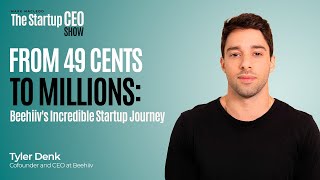
This is a March 24, 2025 YouTube interview with Tyler Dank (co‑founder & CEO of Beehiiv) conducted by Mark MacLeod. Tyler explains Beehiiv's origin (building internal newsletter tooling at Morning Brew), the product positioning (an all‑in‑one platform for website + newsletters + monetization/ad network), go‑to‑market and customer mix (from independent creators to enterprise like Time), and operational practices (remote-first hiring, transparent weekly/monthly investor updates, focus days). He also discusses AI features in the editor, views on the creator economy, fundraising (Series A and Series B led by NEA and Lightspeed), and tactics for scaling culture and communication.
Chapters
That's not to say like there's other types of content in newsletters and publishers who maybe their value prop is like they read in all of the information about crypto or business or AI or politics and they can summarize that and if there's a way to summarize it in a manner that is good enough and the value to the reader is I just want a single source that I trust that tells me everything that happened in politics in the past 24 hours. I'm sure there are plenty of use cases where AI could be perfect for that and the end reader doesn't really care. So as is with anything, I think it's kind of like it depends on what the value prop of the publisher is and like what they're trying to accomplish.
Welcome to the Startup CEO Show. I'm your host Mark McLeod. In this episode, I sit down with Tyler Dank, co founder and CEO of Beehive. In a few short years, Tyler and his team have built Beehive into one of the leading platforms for creators and brands to help them grow their audience and business. He's attracted top tier investors like NEA and Lightspeed. This episode is full of actionable tips. You're going to want to take notes. I hope you enjoy. Tyler, welcome to the Startup CEO Show. It's a true pleasure to have you here. How are you doing today?
Doing great, doing great.
Well, I've wanted to have you on for some time. When I launched my newsletter, I was a very early Beehive customer and kind of just following along the journey and I'm sure everyone knows what Beehive does, but maybe just for those who don't, just tell us and then also curious like about the origin story. What was it that made you think like, hey, you know what, email's been around forever but I see an opportunity to build a big company here.
Yeah. So Beehive helps people create and distribute content, grow their audience and monetize are kind of like the three pillars that I'd say that we primarily focus on. The impetus was I joined Morning brew back in 2017 as the second employee there where I kind of led product growth engineering in a hybrid type role. Essentially what that means was anything we could build to help grow the newsletter faster or streamline our operations is where I spent my time. So started off by building a referral program which helped us grow quicker, which led me to building a content management system for our writers to actually create the newsletter and build the newsletters on a day to day basis and then My now co founder, then engineer, Direct Report. We built an ad management platform that helped facilitate ad inventory placements, monetization, reporting, like the whole nine yards of like an end to end workflow for our sales and copywriting team. And at the end of the day, what that ultimately meant was we had this totally bespoke ecosystem at Morning Brew which allowed the writers to do what they're best at, the sellers to do what they're best at, the growth team to have tons of first party data and dashboards. And when you put it all together, it allowed us to grow very quickly and just have very efficient operations. And so that's kind of like what was under the hood at Morning Brew, which led to eventually an acquisition by business insider in 2020. And through that experience, I just learned a lot by doing and building different solutions for this, like, newsletter specific product. And what I gathered from a lot of our readers who reached out asking, how do you build this newsletter? How did you grow so quickly? What data are you collecting and leveraging? Like, I knew the answer to all of that because I had built those solutions. So it kind of told me two things. One, that there was a huge market, an interest for other publishers, hobbyists, creators who wanted to leverage these types of tools to build a successful newsletter. And that there wasn't necessarily a solution out there in the market that had the all inclusive, like bespoke platform that Beehive offers today. And so that's kind of what got us to launching this product.
Amazing. It sounds like you were almost like a co founder at Morning Brew. Seems like you were everywhere. So much impact, right?
That's how it feels, right?
I'll come back to Morning Brew because I'm curious, obviously very visible success and curious about what you learned there. And you've touched on some of that already. But before we leave the origin, what does the name Beehive mean? I know what a beehive with an E is, but what was the inspiration to the actual name?
Yeah, transparently, like not a ton of inspiration. It was we needed a name to get going. I, for whatever reason at that point in time, loved the idea of like a hive of followers, kind of like creator economy, or writing your content and finding like your tribe almost. And in classic startup fashion, the domain that we wanted was already taken. And so you add a few double letters, drop a letter, switch it around, find an available domain. And I was just so anxious to start building. For me, like, having a name and having a logo is like a placeholder to build on top of the rest of the platform, I just wanted to get going.
So, yeah, listen, a brand is what you make of it. It's not the thing itself. Right. It's what you do with it. So for what it's worth, I think it's a cool name. So super memorable, easy to type. So email's been around forever. I think as marketers, often we're looking for what's the newest thing, what's the latest trend, but we keep coming back to email. And so what are your thoughts on it? Some of the biggest outcomes, I think Mailchimp bootstrapped a $12 billion exit in the email category. I helped sell a company called Privy, which was email marketing for e commerce merchants for, you know, in the hundreds of million, well, $110 million, you know, a few years ago. Like, there's clearly big companies to be built, you know, what do you think people get right and wrong about email as a category?
Yeah, I think the fact that people get so many emails through and like, some of, like, I go through probably like dozens of spam, cold outreach, whatever, that people can't distance themselves from, like, hey, I occasionally get emails from people I don't really give a shit about and who are trying to sell me things with the actual utility of email of, like, how great of a medium it is, both from like, the content creator and like, publisher standpoint and just as like a flow of information that you opt into typically to receive. And so I think a lot of people conflate the two. And I'd also say because email, both a pro and a con, has such a strong association with work that people who is like a large percentage of population who just, like, don't love their job, view email as like an ongoing to do list of. They have to check their email as part of their job. So it's hard to separate the value that you would derive from that. For me, you can almost split that to, like, everyone wants to proclaim that email is dead or will die, but you need it for so many things, work included.
Right.
Like, I probably spend an hour and a half to two hours of my day through working through email. And so I think that's part of the bull case of very difficult, what do you call it, the Lindy effect or whatever. The longer something's existed, the longer it will exist or the lower the likelihood that it goes away. And so I just think there's so many important workflows and transfers of information via email, but there's also so many different types of email. I think I Broadly categorized three mass communication forms of email. There's like content based which is where Beehive spends the majority of its time. I'd say that is newsletters, roundups like blogs, whatever sent via email. There is transactional emails which is if you sign up for an app or you need to hit like forgot password or whatever. Like being able to send different types of transactional emails that are like event based would be the second one. And then the third category of email I'd say is E commerce. Some E marketing. So whether a rag and bone has a sale, they're sending a new product line, there's 20% off this week. E commerce basically runs on email is one of the most effective channels. So there's the three buckets and then personal emails suffered and cold outreach and whatever. I think there's plenty of multi billion dollar companies that have built a solution in each of those three verticals. So I think there's a ton of opportunity in email. Otherwise I don't think I'd spend all my time working in it.
No, clearly not. No. It's not going anywhere. Slack hasn't replaced it and then especially so many people are remote. So asynchronous communication is a thing. It's not going anywhere. Is it safe to say you're more focused on emails that feel like they come from a human that's more authentic versus a brand XYZ that's sending me programmatic emails? Or is it? Or is it both?
We do a little bit of both and I don't think we necessarily discriminate whether it's brand led or person led. Right. Like I think there's plenty of big brands. Like going back to the Morning Brew example, right. Like what we initially did was we actually never even listed out the authors and the writers of the newsletter. Like it was fully brand led. But as a publisher and that's since changed but yeah, we have like independent writers, we have independent journalists, we have big brands, we even have totally non content related businesses who just send emails to their community for updates or whatever else. And their platform of choice to send a bulk campaign is via bi. So I think we've evolved quite a bit as the platform has grown in terms of the different use cases you can use.
I'm curious because this is sort of a long established category at a bunch of players, you know, some new, some old before you showed up. What is your go to market strategy? Like how do you stand out and get people to choose you?
Yeah, I think when you, when you consider what I would call email 1.0. It is what you named in Mailchimp. Constant contact. Like, I could, I could write off 20 more of these companies, but I'd catch myself just like maybe a bunch of whatever. They send emails. Like their whole purpose is they have a drag and drop editor that hasn't been updated in a very long time. They're built on antiquated tech. You throw together a few drag and drop items, you send an email campaign and then you get metrics back and stats. And like that is just for email sending. They don't help you grow, they don't help you monetize, they don't handle your website. They'll do automations. And depending on which platform it is, some have better automation software than others. But for the main purpose, they help you send emails. Which means if you are what Morning Brew was or an independent journalist, you need to build your own website. You need to build your own workflows and CMS systems. So when you create and publish content, it goes both to your website and to your email newsletter. You need to connect the data to know when someone visits your website, then subscribes to your newsletter, then clicks on these three things. Like that all feeds into the same dashboards, not as two separate systems. If you want to grow and you have and you need like dashboards or whatever, that's like a separate tool that you're now installing. On top of both of these, if you want a referral program, you're either like building that yourself or you're using a third party. And if you want to monetize, you either hiring your own sales scheme or you are using a banner ad and that pays a fraction of a penny, or you're setting up Stripe and Memberful and all these other softwares and plugins to kind of monetize your audience, whether it's ads or subscriptions. And like that, like hodgepodge of like software connecting plugin ecosystem is kind of like the way things have been for the past, you know, decade plus. And like that is like what I did at Morning Brew was basically build our own solution for all of that. That was like under one roof. And what I've come to realize is a lot of these independent journalists who write about sports or politics or tech or even small publishers or even large publishers like Time. There's a lot of benefits to having a consolidated system that speaks to each other, where like one click, you can add the advertisement and it flows with all of your data from your website and your newsletter and all of the above. And so long winded way of saying like kind of what we bring to the market and what our go to like value prop is, is we have a website and you just launch like a brand new website builder that's extremely powerful to compete with like a WordPress or a webflow or a framer. We have newsletters like best in class. Everything you ever need to run and grow a newsletter like that's our bread and butter. So now you have distribution to your audience and then we have monetization. And whether you monetize via paid subscriptions and you charge your readers $10 a month or you want to leverage our ad network and we have brands like Netflix, Roku, Nike, HubSpot, et cetera, you can monetize with premium sponsors without ever leaving the platform or ever talking to the marketing team at Nike. And so that kind of is like the pitch is all in one solution. To be able to create content, to grow and to monetize a lot of.
No, it sounds really powerful. And like when I think about all in one and then I think about positioning, that suggests to me kind of more SMB long tail creators. Whereas the bigger brands might just want best in class. You know, something integrates with Marketo, HubSpot, et cetera. Is that fair or do you try and cater to different segments of the market?
I'd say we are definitely trying to cater to both sides of that market that you described. I think as most disruptors come in, they start at like the lower end of the market and start very niche, right? Like we serve newsletters like independent journalists, writers, publishers, ranging from myself, who has a weekly newsletter to Arnold Schwarzenegger to Time magazine. Time magazine is one of our more recent enterprise publishers. Like we didn't start there from day one, but over the past three years we've launched tons of API integrations, tons of automation tools and are now getting to the point where if you are a massive corporation, you can plug into your Salesforce or HubSpot instance and seamlessly work within our ecosystem without disrupting your workflow elsewhere. So it's been a gradual thing, but our goal is to be able to serve a very wide range of customers and do it. Which I think the common misconception and not always a misconception, is the all in one solution is sometimes better. But it might be like if there's five constituent parks, all of them are six out of 10. And so you decide, you find five separate solutions that are 10 out of 10 and put them together or do you settle for one that does it all. But they're all six out of 10. I think that's somewhat of a false dichotomy. I think we could do an all in one where all of them are 8, 9, 10 out of 10 solutions. And that value prop, I think is very strong and what we've been working towards.
Yeah, no, this makes sense to me for sure. I'm curious. It sounded like at Morning Brew with a very small team, maybe even just yourself, you built a ton of stuff. You're building a tennis stuff here. If you're either like a super badass coder or like, I'm wondering what role AI is playing in helping you build more faster and just get more leverage with a small team.
Yeah, so I hadn't touched the code base in two years, which is probably a good thing. Early days like that is like, you know, before we have a product or a team or meetings or growth strategy, like, the only thing to do is to build. So me and my two co founders are all engineers and so the first, I'd say 12 months of the business was a lot of me coding alongside of them. I am definitely the worst coder of the three and now of like the entire engineering team by far. So I don't actually touch the code. As far as, like, AI tools, we are spinning up some new initiatives internally and externally to launch more AI native features and even just leverage AI to streamline some of our workflow. It's early and we don't have like a company policy per se, of like, you have to be using cursor to code faster. It's kind of like different engineers are testing and trialing different software to see what works best for them and then like open communication, sharing kind of feedback and how they're streamlining their workflow. But yeah, I mean, I mean, I'd also like to take credit that our team is super small. We've grown a bit. We're approaching 90 employees now as we are in our third year.
That's pretty fast.
Yeah, I'd say.
So I'm curious what your thoughts are about the role of AI, like on the actual content creation side. Like, you know, lots of people complain like, oh, this is an AI generated email. It's crap. Like, what do you know? What are your thoughts on that? Is that something you're working on to help creators generate content?
Yeah. So like a year and a half ago, we launched like an AI writer and like image generator within the editor, which is like, okay. I think as is true of anything with AI, it's Evolving and getting better so much quicker, like month over month. The change in output and quality is pretty great. So both from how we implemented it, I think the user interface that's to be expected has changed a lot over the past year and a half. And then even the models and the output and what are the different parameters to change things, I think we can probably improve a good bit. That being said, it depends on the content strategy and I don't think there is a simple one size fits all. I write my weekly newsletter about like the stories and philosophies and strategies of how we build the company. I'm like, these aren't things that I think AI can write themselves. They're not sitting in my seat understanding how I think about the business, how we're thinking about strategy. So like, is there a point where maybe they sit in every meeting, they can gain contests and gain context and then suggest different topics and write about them? Maybe. But I think the value prop like my newsletter and where I stand out as a content creator is that it's fair, fairly unique insights, totally bespoke to us. And I have a lot of strongly held opinions of how we can build this business that other people think are interesting. That's not to say like there's other types of content and newsletters and publishers who maybe their value prop is like they read in all of the information about crypto or business or AI or politics and they can summarize that. And if there's a way to summarize it in a manner that is good enough and the value to the reader is I just want a single source that I trust that tells me everything that happened in politics in the past 24 hours. I'm sure there are plenty of use cases where AI could be perfect for that and the end reader doesn't really care. So as is with anything, I think it's kind of like it depends on what the value prop of the publisher is and what they're trying to accomplish.
So often when I'm chatting with my CEOs, competition will come up and I encourage them for the most part to run your own race. Don't spend too much time thinking about competition.
It's a little different.
I don't know if you're in a winner takes all market. Like if you serve Fortune 500, well, guess what, your Tam's 500. It's a bit of a land grab. And then maybe in kind of pure AI companies, the pace of innovation is kind of scary and you're trying to disrupt yourself before you get disrupted. So maybe there you spend time on competition. But for the most part I tell folks just to run their own race and I'm curious, it seemed like you and Kit have, well, don't love each other and so like, I don't know, paying attention to each other. I'm just curious what you think about that rivalry and. Yeah. The extent to which it motivates you. Yeah, I'd just love to get into your head a little bit on that.
Yeah. I think there's probably two things to say about it. One, as far as like competition goes, like I'm more in your camp of I don't think about it. I have not. I don't have a ConvertKit account nor have I ever logged into the platform. Maybe since 2020. Same with any of our other competitors. I genuinely don't go to them for inspiration to see what they're doing. There's definitely features we built, whether it's automations or whatever, where someone on our product team has looked at 10 different competitors to see how they're solving it. But as far as I'm not necessarily keeping tabs on the competition, I think we're kind of on our own path and I actually try to take inspiration from companies well beyond anyone that we're competing with today. I think like what our North Star is going back to, the monetization engine is like Facebook and Meta is who I see as a competitor for the ad network. I want brand advertisers and marketers to say we have $100,000 to spend in March and like I'm going to put 10% into Google and put 50% into Metta and like I want Beehive to take part of that market share and be at the advertising budget for these different companies. So like that is where I'm looking too. And like when I'm thinking about how we're scaling the ad network, it's how do we build NL solutions to build this automated provisioning process that's constantly optimizing and like that's what I want to go up against. I think a lot of the competitors we're often compared to today is like a time and the place because we are a smaller company today and we're younger and like that is like head to head who we go with. So I don't necessarily like spend a lot of time looking for competition, are paying attention to what our competition today is. As far as like the ConvertKit thing, I think everything from tribalism and everything else having a Tom and me that people can rally by is great for the team in general as far as remaining focused, having something that a benchmark that we are trying to surpass. And I guess I could say that to anyone or like any competitor really. But yeah, I don't think too much about it. I think anyone who pays attention to numbers and trends and momentum and trajectory, like, I think we should surpass them in revenue later this year and then it's on to the next bigger player that I'm sure someone will compare us to and we'll just have like another milestone to, to achieve.
Well, I love how broadly you're thinking about that notion of competition. There's a super old book called Good the Great by Jim Collins and he kind of broke down the attributes of companies that kind of became, you know, great enduring companies. And one of them was that they had a worthy adversary, you know, like someone who kind of, you know, like Microsoft versus Apple as an example. So there's some role for that.
I mean, even just like going down to like my day to day, like where I spend my time as like a CEO of a 90 person remote company, I think a lot of people and a great product and engineering and design and growth is like where I like to spend my time. But a lot of the job is figuring out how do you motivate 90 people to see the big picture of what we're building towards? How do we get everyone swimming in the same direction with the same intensity and keep that momentum going? And there are tons of different strategies and ways to do that. But having a benchmark or a competitor or an adversary that you're kind of looking at is a strategy to motivate people and have we want to win because it is like a game of like free market competition in a way. So again, there's a bunch of ways to do that. But yeah, I think I agree with that sentiment broadly.
But you brought up a really, really important topic, right, which is like, yeah, how do I, you know, you as founder and CEO, you have all the context, it's all here in your skull. And then as the company gets bigger, it's harder and harder to communicate, especially in a world where you're growing rapidly and then there's a new IC who hasn't heard from you. So I'm curious. And then you're about to cross a threshold, like in my experience, somewhere between 100 and 150 employees. The way internal communication happens historically just completely breaks down and now you have to think about organizational design. So yeah, just I'm curious about like what tools and tactics have you employed to give people that context so that they make decisions kind of consistent with how you would.
One thing to call out that you mentioned around the 100 to 150 team size is where you start thinking about the organizational breakdown of communication and processes. My goal is not to get to 150 for as long as we can. I think we're seeing that in general, it's become much more popular in the past six months to praise these AI native companies who've gone from 0 to 30 million in six months with 10 people on their team. And maybe that's because it's AI native. I'm sure it plays a pretty big part of it, but I've been on that train for years. People are like, I can't believe you have 60 employees. And I'm like, I wish we had 20. And it's not that I dislike anyone on the team, it's just like the more that you, the more people you have, the more processes and organizations you need to create, which is the more time spent not on the most important thing, but not fictitious problems, but problems that don't solve customer problems. And so I was listening to a podcast the other day and someone said something along the lines of like, at the very beginning, 100% of the CEO and leadership's time is just focused on solving customer problems. And as the company grows, more and more time is spent solving other problems. Whether someone wants a raise, someone wants to change their role, someone doesn't like the way that someone else is communicating on the team. And like a lot of my time, not a lot, but say maybe 30, 40% of my time is now solving non customer related problems. Just as like teen problems. And so like trying to shift back towards how do we get the entire company focused on 100% of. We're only building, focusing, putting effort into things that make the customer experience better. Which at the end of the day is like, what we are here to do. So didn't necessarily answer your question, but my goal is to have as small as a theme as possible and to answer your question more directly, like, how do we do that? Today, everything is transparent. So I share all of our metrics. Every employee knows how much money we're making, how much money we're spending, what the top 10 initiatives are, what each team is responsible for launching on like a day to day or week to week basis. I spend a couple hours every Sunday writing like a pretty long email of like, here's literally everything we are doing this month. Down to this week, down to Monday, Tuesday, Wednesday, Thursday. So like, people are well aware, like, this is what the expectation is. I know what the growth team is working on. I know what the design team is working on. And it's more honestly for me of like a brain dump of I have so many things going on in my head and it's become more and more of a complicated business. So how do I put that on paper so everyone else can understand what's going on? So just like very, very transparent and frequent communication of everything going on in the business has been like the secret weapon for us, I'd say, to keep everyone on the same page.
Yeah, I'm with you on the transparency. It's so powerful. It builds trust. And with you on the frequency as well. Right. Like, basically you're repeating the same stuff over and over. Right. And you know, I'm curious, like, were you. Are you remote due to. Is that a legacy of COVID or. That's an intentional choice.
We were born out of like 2020, so like, we were all remote when we started the company. And like I was in Los Angeles, I had a co founder in Denver, co founder in South Carolina building the company. We're all engineers, which is like building as quickly as possible. Like, at that point already, we're only three. Granted, we could have chose like, hey, let's meet in Austin or SF or Denver to build this company, and we didn't. And like, I don't know, we all had our own lives in our own places. And like, I felt like that was like a very archaic model. And then as I'd grown the company, the fact that we put up a job listing to say we're looking for a product designer and we have a very specific profile of what we're looking for, and the fact that our doors are open to anyone located in the US or Europe or Asia or South America or anywhere is like, very powerful. And then for that specific case, the best designer we found for that job was in. Indeed. And so just being able to hire the best person for the job sounds so intuitive and like, the way it should be. And it blows my mind when companies that are trying to compete in a global market, like the Internet is global, it's just about building the best solution that anyone in the world can find and use. But you're going to restrict your talent for design or engineering or product to within 20 miles of Cincinnati so they can come to the office. And that just seems like such an archaic way of building a business. I won't Discount. Like there's definitely something special when you have everyone in an office. You have momentum, you're whiteboarding, you're building things. But I think tools are getting really good at being able to replicate a lot of that. And a lot of our tasks are like heads down work where you can like meet with the other few engineers and like your little pod to build a feature. You find alignment and you start building and you screen share when you need to. But like the need to be next to someone with all the trade offs of having to be in a specific location and have to commute and everything else that goes along with having to like have a workforce in a very specific city. I just don't see the upside there.
Are you still taking your own meeting notes? Let me tell you about an AI tool that I'm using to take meeting notes for me.
It's called Fellow.
It's an AI meeting assistant. It takes human level AI notes, it tracks my action items and decisions and keeps everything in one place. Built with security and privacy at its core, Fellow is the only AI meeting assistant that leaders trust to capture meeting notes and recordings while keeping your data safe. Thousands of organizations are consolidating tools and relying on Fellow to capture their meetings. The team at Fellow is so confident that you'll love it. They're offering an insane deal to startup CEO listeners. 90 days of unlimited AI powered note taking and recording, completely free. Visit Fellow App CEO to sign up today and experience the AI meeting assistant trusted by leaders everywhere. Something that struck me as you were describing, first of all, the email that you prepare on Sundays. And then this system is that. And this is a feature, not a bug, but it's very execution oriented. It's almost like you're a CEO and a COO wrapped into one. And then There are some CEOs who are maybe a little more on the visionary side who would probably struggle to implement that system. So it's like a real effort on your part. That sound like a fair description?
Yeah, I think just like baking, transparency, accountability and like seamless operations. Like there's not enough time in the day to do what we need to do. And like the big like that's why I wake up at 5am when I'm on the west coast as well. Because like there's people in Europe and there's people on the east coast that have their day started. And as a founder, the worst thing I can possibly do is have those people unsure of what they should be spending the first two to three hours of their day and like, me sleeping till 8 o' clock is not a good enough reason to have them blocked on anything. So I make sure I'm up and I'm unblocking as many people as possible. And that's part of what the Sunday email is for as well. Just to ensure that everyone is fully aligned and knows what they are responsible for.
I'm curious, have you started to build a leadership team around you so that some of this can be done for you versus by you?
Yeah. No. We have a leadership team of six now. We have a coo, she's amazing. We're bringing on a chief of staff, we have a cto, we have a head of growth. So like we have like the primary leadership positions in place already. I kind of enjoy doing it.
Right.
Like, for me, I am very aware of the complexities of the business and I constantly have different ideas. I'm keeping track of how different projects are pacing. So me saying that I spend a few hours every Sunday writing an email to reorient the company is just as much as it is for me as it is for the team. Like, it's a way for me to get all my thoughts on paper and really understand where we are as a company.
Switching topics. If I think back on all the outcomes that I've been a part of that worked out over the decades, I'd say with all humility that luck and timing was at least 50% and your journey's not done yet. But it seems like even though email's been around for a long time, there's this thing called the creator economy. It's now like a term people talk about it. And so that's like a meta trend that I'm guessing you're leveraging and so I guess, yeah. Curious your your thoughts on that. Is that a thing? Is that a driver for your business? Should people be paying attention to that? Yeah. What are your. What are your thoughts on the creator economy?
Yeah, I mean, timing and luck is a huge part of like anything, especially in business.
Right.
Like, you can't swim upstream in a small market or like, you know, riding the wave of a massive trend is like something you want to do and it makes even the most mediocre businesses have success. If you're part of a larger wave, the creator economy, like, I like to distance ourselves a bit from it in a way. Like, yes, we play into the creator economy. We have tons of like quote unquote creators, but we also have massive organizations, huge media companies, independent journalists, like a little bit of everything. So I wouldn't say we're a pure play creator economy platform. But there's also, there's always changing trends and different like for example, AI, right? AI is probably the most fundamental shift in consumer behavior, expectations and business use cases that I've ever seen. And I think even in the past 12 months we've seen a huge transition from what used to be. Launch the smallest AI feature, put AI on your landing page, post about it on social media, and you get a bunch of like buzz and hype just for being like an AI company. Even though you're not up until very recently, we're seeing use cases where you can mimic entire code bases and companies and functionality and mobile apps within, you know, 20, 30 minutes you can have a working prototype that you can hand off to an engineer. And I think we've kind of crossed the chasm a bit in terms of like real utilitarian use cases for AI. And I think we're still very early in figuring out what that means for a bunch of different industries.
So it also makes sense that you would have a weekly newsletter. Being CEO of a company that enables people to send newsletters. But I see many CEOs building personal brands and of course newsletters are one kind of tool in that or one part of building a personal brand. What are your thoughts on that? Is the CEO, does the CEO need to be the chief marketer? You know, is it a thing that people follow humans versus brands? Like, yeah, what, like, what's your advice there for other CEOs?
I don't think there's like a hard and fast rule that like a CEO needs to be the face of the brand. And like, that was never my intention. I launched my newsletter a year ago, which is like three years into the business. So it wasn't like the plan from day one. But I think what you said is pretty spot on of like, I think people want to follow stories, narratives and people more than they want to follow a faceless brand. And so there's been countless studies of a brand account post. One thing, the founder posts more or less the same exact thing. And the difference in engagement is like pretty noticeable on average for most of those, like, comparisons. And so I do think again, like I shared last night kind of like on, on Twitter and LinkedIn, my bank account before I started the company, I had 49 cents in my bank account. Right? And so like you can't like, I mean, yeah, the company when it first formed at C Corp. Had $0 in as well. But like, that doesn't resonate as much as like the story behind me being in my parents basement with 50 cents in my bank account after a failed startup and like deciding to bet on myself yet again to try to build this company. And so I think you know the same reason why books and movies and every other form of media is so interesting. Like there has to be a story and a narrative. I think it's a lot easier to make and personify the business through the lens of the founder as a way of like. But again, like not every company needs to be building in public and sharing the story because we play in the media space and we do what we do. It works really well, but it's definitely not required.
I'm curious, are you extroverted? Like is this a struggle for you or does it come naturally?
No, because that's like, I mean I'm somewhere in the middle, right? Like I've always been extroverted. Growing up in my entire life and now with the business. Like I don't know if I've changed from being an extrovert. I find myself working a lot more and being inside and like prioritizing. Like I'm either heads down building the business or I'm exhausted and I just want to be alone and relax and like recharge so I can continue building the business. But like people ask like, where do you get the content ideas from? And it's me jumping from meeting to meeting. I see on Twitter someone's using our platform for like a use case I never considered and like light bulbs are going off every time I'm looking at these things. It's like, oh, I should write about that. That's an interesting angle. This is a good narrative. We can build something on top of and continue to reiterate like this is how this feature is being used. So the one thing I have not run into is running out of ideas to write about or talk about.
That makes sense, honest. And I mean I post every day and um, writing for me clarifies my thinking. Like I learn through the process of writing, always have. But like you, I mean all of my content ideas come from coaching, like speaking to CEOs, talking through issues. So it's, it makes sense that this would come from running your company. You know, maybe just let's stay on, I guess the business case for CEOs, you know, maybe doing this like you mentioned, obviously humans are going to get way more engagement than faceless brands. Like I don't need to know any specifics, but I'm curious, like how has the business benefited from you writing the newsletter, like bringing in more customers, more employees, like, you know, just any, any anecdotes you could share?
Yeah, all the above. Right. So like me sharing different things on Twitter and LinkedIn is great. It's like short form, they're quick hitters. But like, you don't get a lot of depth out of reading my, like, tweet about what feature we just launched. The newsletter is more of like a long form medium to allow me to go deeper, explain the strategy, the reasoning. I add stories behind it, and it's led to. It's probably been one of the highest ROI things that I've done as the CEO, in a sense that I now have 90,000 people who subscribe to this newsletter. I get upwards of 50 to 60 replies every week directly from readers. And the overlap of people who are also users of Beehive, it makes me feel much more approachable to them to respond with. Like, here are features that I want. Here's something that doesn't work well, here's something that I had an issue with, but you fixed, like, it's just like personifying again the business in a way that people will feel comfortable sharing alpha with me and feedback and what they want more of or what they want less of. And then I posted this the other week in my newsletter. But Time magazine, which is one of our largest enterprise customers, literally became a lead in our pipeline because their CTO reads my personal newsletter. So he like kind of followed the journey and found out who we are, what we do, what we stand for, who are the people behind the company, which he clearly resonated with and then ended up reaching out to our sales team. And now they're one of our larger users and there's probably at least a few dozen customers and clients that have come inbound from the newsletter that I'm aware of, I'm sure countless more. So I think it's just like the classic saying of expanding your lux surface area. Like the more you put out there, the more opportunities that people will grasp on to and resonate with what you're saying, what you're doing. And I think just having a long form content medium that goes out weekly has been a huge net positive for both myself and the business.
I noticed you started putting, or maybe it's an ongoing practice, but I just noticed it putting investor updates out. And I'll say for what it's worth as a longtime angel, that I correlate investment success very highly with the frequency of CEO updates. So I love that. And just curious to encourage more CEOs to do that because not everyone does. What benefits have you gotten from that practice?
Yeah, you can probably tell from the through line of a lot of these answers is like getting my thoughts onto paper, making it transparent from employees, colleagues, investors and even the public and users. And continuously doing that has been tremendously helpful. We do like the Sunday emails that I hit on. I write a monthly investor update where I share top line revenue growth, user growth. Like every key metric is shared on a month to month basis along with like a full digest of what we tried, what worked, what didn't work, what we're building now, my hypothesis of how these different pieces will fit together to make us a better company in the future. And we, and so I send that to probably 350 people every month. All of our employees get it, all of our investors get it, investors who passed on us get it. And just like people that I'm like nurturing the relationship with get it. And so very tangibly what it has done is it sounds like a lot of work, it saves a ton of time. People don't have to reach out to me asking like what are the latest updates? Like they get them every month in their inbox. So like I don't have to talk to like investors a bunch, which is great. And also because in nurturing relationships with investors, there were investors who wanted to invest that I just didn't take calls with. But rather than taking like a 30 minute coffee chat, I just added them to our investor update email list and they started getting investor updates. So when it came time for us to raise our Series A, we probably had like 30 investors who had been following for the past six months every single monthly update. They feel comfortable with how the business is growing, they understand how I think about the business, how I communicate, what we're prioritizing, and they've seen the growth. And that led us to raising our Series A in six days and then our Series B in two weeks.
Come on, six days, that's bonkers.
So it's been like super helpful to be able to do that and like that's like a huge advantage. And then quarterly we have board meetings, which we didn't have until our Series A. But board meetings are 90 slide decks of every number you could possibly imagine from every single team and business unit. And like if you wanted to know how is the company doing, what's working, what's not working, show me numbers and then quantify everything that is like what our board deck is. And I send that obviously to our investors, but also to our entire employee base every quarter as well. So just constant, like having in place the ability to track the most important numbers routinely and then being able to effectively communicate what those numbers mean and like where we're doubling down and where we're pulling back has been extremely helpful for us.
Wow, that's huge. I really love it. I, I saw, I forget which round it was. I feel like it was the most recent one, but you reserved a portion of it for your customers. I would love it if you could just talk about that because I thought it was a really cool idea.
Yeah. So we used a company called Wefunder and somehow we ended up in their pipeline and it really just started out with them emailing me every single week like, hey, like, raise from your users. And I was like, cool, we're not raising right now. And so I was just like in their pipeline, which I mean shout out to like, you know, being very persistent with sales. Like they planted that seed so many times of reaching out for I think like a year and a half that when it was finally time for us to raise our Series B, I was like, we really lean in to customer centric community. Like we are very active, like the whole building in public thing. Like I could, I could name off our 20 most active and critical users on Twitter and LinkedIn because they respond to literally everything. And so I think we've really leveraged like this community led like user led growth strategy from the very beginning. And so when it came time to raise our Series B, I was like, why not make $1 million available for like our most loyal active users to invest? And for me, investing is always like, startups are so hard to succeed. You just want as many people in your corner vouching for you. So when they're at a dinner party with other startup founders, whatever, they're like, oh, if you send a newsletter, it's got to be on the hive. And I guess they're now financially incentivized to say that because they're an investor, but you want as many of those people to have financial upside in your success because again, expanding the luck surface area of who can help me on this very difficult journey. And having as many people as possible vouching for you and helping you succeed is in our best interest. And so having, I think maybe 250 to 500 users invested anything from 1,000 to $20,000 and we just tagged it on. So the round itself was 33 million. I told the investors who were leading, which was NEA and Lightspeed and a bunch of others like, hey, whatever we are going to do, which is carve out 1 million, they were like, we've never done this before, but sounds smart, we're down to give it a try. And so we just raised 32 from institutional investors and then saved one for users and a pretty easy process and definitely recommend it.
I love it. And I'm certain that the churn on that investor cohort will be lower than your overall churn because they're true fans and they're literally invested in your success. So, you know, it's interesting, right? You've got NEA and Lightspeed there, which are two tier one firms and looking for outliers. They have large funds only kind of giant outcomes are going to move the needle for them. And then I'm hearing lots of ambition, but I'm also hearing like, hey, I don't really want to have 150 people. So do you think there's any kind of lack of alignment there? What? Yeah. What are your thoughts on that?
No, because I think the goal is the same. The goal is to build. I think what I tried and maybe poorly communicated earlier was like, I want the company to be as large as possible. Not from an employee standpoint, from like a revenue and impact standpoint. And I think we're seeing with like this newer wave of small teams, AI, native companies, or different solutions that allow you to do more with less or just like not falling into the same traps that so many companies do. That's like, oh, now that we're a series B company, we need an events theme that hosts like these quarterly events and does webinars and IRL stuff. Like, I think a lot of startups and company building is lazy pattern matching of what other people have done before just to do it and follow that same path. And I try to, as hard as I can to stay disciplined on like, first principle thinking of like, is this making the product better? Is this bringing in more users? Is this making the user experience better so they stick around longer and everything else is kind of tangential to that or like, not necessarily needed. And so we're pretty lean. We're like one of the few companies, like, where our quarterly goal is like, let's keep our headcount under this number. There used to be a time where people found satisfaction and power and success in a growing team. And I've seen what that does. It's a lot of headaches, it's a lot of problems. It's a lot of people stuff. I just want to Build. And so I think the ultimate outcome is the same that Lightspeed wants and NEA wants and I want and every investor along the way wants, which is how do we build a one of one company that can do the combination of websites distribution and email and monetization in a way that no other platform has done. Those three together before. And I think that would create a lot of very happy outcomes. And I don't think we need a 350 person team to do that.
Amazing. I. I truly love it. A final, final question, Tyler. There's been a lot of really actionable insights here that I think listeners and viewers are going to love. And you know, I'm hearing you didn't use this term, but I'm, I'm hearing that you have blocks of deep work, like there's this time on Sunday, but you're creating, you're synthesizing. So I'm just worried, like many CEOs just go from meeting to meeting to meeting. And so I'm curious, like, how do you create boundaries? Like, do you have explicit boundaries for deep work? Like, yeah, how do you think about that?
Very early on we used to do something called focus days, which every Wednesday, no meetings. And it's very easy, like an engineering led company when you have 10 employees, eight or engineers. We just want to build things, so it's easy to do that. Then as the company grows, like, we're doing things and like, the common theme everyone would say is like, I love Wednesdays. It's the only day of the week that we get everything done. Like when I finish my day on Wednesday, I feel like I accomplished more than I have. Like Monday, Tuesday, Thursday, Friday combined. And so like literally a drop of a pen, I go, we're making two focus days, Tuesday, Thursday, now. And so we doubled focus days. We have no meetings internally or externally. With a caveat, I'm assuming sales. Probably take sales calls and demos and everything else on Tuesdays and Thursdays. But I try, I respect it and I try to encourage as many other people to respect it. Like no meetings, internal, external, Tuesday, Thursday. And so those are the days where Monday you have a bunch of meetings, you get a bunch of things on your to do list, you get super stressed out. And Tuesday is the release valve of just getting it all done. Same thing on Thursdays. And then I typically work every weekend as well. So Saturdays are probably the day where I try to get out of the house and do a little bit. But I usually spend my mornings on Saturday working. And Sunday is pretty much a Work day for me and I kind of like view that as like a non negotiable. There's just so much to get done. And balance, I think, is a bit of a human construct for like different types of people. But for like, as big as our ambition is, balance is not what I'm looking for. Like, I'm all in on this right now. And like, when I try to pull away and like find balance, I end up just being more stressed out because the opportunity cost is I'm not working what I actually want to be working on. And I'm like forcing myself to do something differently. So deep work. To answer your question, Tuesday, Thursdays, and I think Sundays are. And the weekends are just like the real time to get stuff done.
Yep. Yeah, I love it. And yeah, yeah, like you're right. People talk about work, life, balance. Nobody who's truly elite at anything is a balanced human. Right. No professional athlete, you know, musician, like they're the best of the best and that just takes putting the reps in for sure.
Yeah, you never see like, you know, Kobe Bryant or any of like the great athletes. It doesn't have to be one of the best in the league. Any professional athlete, they didn't get there by carving out their schedule to find balance. Where they do things outside of playing basketball or out playing football, like there's recovery, there's like, you have to take care of like physical mental health for sure, but like they weren't going out of their way to pull themselves away from what they actually wanted to build and accomplish. And so I think there's a place for balance. And I think there's different times in life for roles, responsibilities, where it makes perfect sense. And balance is a great thing, but for what we want to accomplish, what I want to accomplish, balance to me is a distraction and not where I focus any of my time.
Yeah. Amen. Well, perfect place to wrap up. I've learned a lot on this discussion, Tyler and I know our listeners well as well. So thank you so much for making the time.
I really enjoyed it.
Hey, thanks for listening to the Startup CEO show. If you'd like to connect with me, be sure to visit my website at markmcloud me or follow me on LinkedIn at the Mark McLeod or Twitter arkmcleodore. And if you want to tune in again next week, be sure to subscribe on YouTube, Spotify, Apple, or wherever you get your podcasts. We'll see you next time.
More from Mark





The Burnout Breaking Point - How Strategic Breaks Actually Increase Productivity


Emotional Debt - How Avoiding Hard Conversations Compounds Into Company Killing Resentment


The Death of the Specialist - Why AI Is Creating a New Professional Class Called Scalers