From $50B to $1 Trillion: Wealthsimple's Vision | Mike Katchen The Startup CEO Show Full Podcast
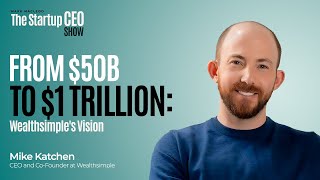
Wealthsimple CEO Mike Katchen on hitting C$50B in assets under management and the plan to reach C$1 trillion. The company added C$20B+ in the last year, is expanding into banking and private markets, and aims to help 10 million Canadians become investors over the next 50 years.
Questions this video answers
Around the time of the interview (host notes the company 'just celebrated their 10th anniversary').
Wealthsimple 'just crossed C$50 billion in assets under management.'
Mike says they 'added north of C$20 billion in the last 12 months of net new deposits.'
Clients with more than C$1 million in assets (fastest‑growing segment).
About 1,200 people (referred to in the interview).
Chapters
If you approach the rules from first principles, you can often find novel ways of doing things and showing the regulators new ways of doing things for the right reasons and bringing them along in that journey. So I think unlike a lot of fintech companies that I think have a reputation of shirking regulation or working at odds with regulators, we've always tried to partner deeply with our regulators here. We have a history of innovating in the regulatory landscape to change the rules because often they are antiquated or don't make sense and kind of of a digital modern era. But it's always been from this philosophy, like, how do we approach it from the intent of these rules and do business the right way.
Welcome to the Startup CEO Show. I'm your host, Mark McLeod. In this episode, I sit down with Mike Katchin, Co founder and CEO of Wealthsimple. Wealthsimple just celebrated their 10th anniversary, and Mike's goal is to turn Wealthsimple into Canada's largest financial institution. They just crossed 50 billion in assets under management and added about half of that just in the last 12 months. So they have huge momentum. In this episode, we unpack the journey for both his company and for itself. We talked about his thoughts for entrepreneurship in Canada and much more. I really hope you enjoy this episode and I hope you subscribe for more. Mike, welcome to the Startup CEO Show. It's a true pleasure to have you here today.
How are you doing? I'm great. It's great to see you. Thanks for having me.
Great to see you. It's been a long time. I was trying to remember before this when I first met you, and I think it was at Metabridge in like 2017, like lifetimes ago, and we all got off of some event and I feel like you were there waiting for us with like, wealthsimple marketing materials. And I was just like, this dude's hustling. I don't know, I was just instantly impressed. And. And that was maybe, yeah, three years into your journey and here you are, just celebrated your 10th year. And so there's. There's so much I want to unpack. And I'd love to start by discussing, you know, your ambition to become Canada's largest financial institution. When I think about. When I think about the Canadian economy, I think about financial services and resources. I don't, other than Shopify, think about technology, and that's an issue. I think that has to be the third leg of the stool. But let's focus on financial services because we're here. So you just crossed 50 billion in assets under management, by my math, to be the biggest, you got to 22x that and beat RBC. So just tell me about your ambition to become Canada's largest financial institution.
I actually think it might be closer to 40x. It's a big number. Whatever it is that we have to.
Whatever we have to achieve, it's a big number. Yeah, yeah.
I mean, I think that both your assessment of Canada's economy and tech is similar. We gotta fix what's really broken about Canadian business. We do two things, we don't even do them all that well. We can't really build any new mines and resources, even though we entirely depend on resources as our economy today. And we have a desperate need, I think, to diversify and technology being the best bet to do that. But in the areas where we're strong, like financial services, it's bred this oligopoly that has made Canadians complacent. We've come to just accept subpar experience, egregious fees. And that's not just in banking, it's in several different industries. Canadians are very familiar with it. And I think that it's a shame. And I think what we're trying to do at wealthsimple is transform that, build the kind of firm that I think Canadians deserve, which gives them the very best experience in the world when it comes to their financial services and managing their money really fair and low fees that help them get ahead and compound and build real wealth and the long term ability to take care of themselves and their families. And I think we're fortunate we're having a good go at it, but we have a long way left to go.
When I think about the big five banks and how they intersect with technology, because other than being a personal client, that's been my only kind of exposure to them. Given that I've only been in this tech industry for as long as I can remember, I would describe them as reluctant innovators. So we say we're doing things, but we don't really want genuinely to do things. And I have to imagine that wealthsimple is very firmly on their radar screen now. So how does that manifest for you? Are they sending you hate mail? Tell me about your relationship, if any, with the big five banks.
It's a weird industry where on the one hand we are fierce competitors, on the other hand we depend on the banks for a lot of what we do. And so there's this also very robust commercial partnership where we work together on a whole bunch of different things, but on the competitive Side, I would say that probably for the first eight or nine years, I think the general attitude of the industry was, that's cute, but we don't really need to take wealthsimple all that seriously. And if they ever really make it, we'll either crush them or buy them, and so it'll be fine. And I think something has changed pretty dramatically in the last 24 months where the numbers are rivaling those of the banks. The best metric we care about is net deposits. It's like, how much new money are Canadians trusting us with every year? We're in the business of trust. We ask people for their life savings. And so it's. It's the best measure of are we doing well on that dimension? And I think we will crack the top five institutions in Canada this year for the first time on that metric. So that's a huge milestone for us.
That's amazing. Congrats. That's huge.
Thank you. Thank you. It's. It's super exciting. I mean, we want to be number one. So, you know, I think that it's one of those funny things. You achieve something you never imagined you would, and then all you can think about is just how much farther you have left to go. So we're really obsessing about how do we go from top five to number one as quickly as we can.
I'm always fascinated with CEOs mindset. Do you stop and smell the roses at all, or are you just continuously focused on the gap and what you haven't achieved yet?
The latter. Yeah. It's funny. We just celebrated our 10th anniversary last month, and we were doing a little panel of the founders with the whole company, and people were asking all these interesting questions, and someone asked, hey, Mike, does it ever get to your head? And I said, first, I really hope not. And B, I really don't think so. And I think the best reason I could give you is I think the culture of Allsimple actually, in some ways is a reflection of my dad. People joke that you grew up with a dad and you've come home with an amazing mark on an exam. Their question is like, well, what happened to the last 1%? Or whatever it was? But now I don't ever remember my dad complimenting me growing up. And I took him. It was his 75th birthday a couple years ago. We were a little delayed, but I took him on this golf trip to celebrate earlier this year. And we had this amazing father son day. Golfing, fishing, ending the day with a scotch over sunset. It was just an Amazing moment. And he turned to me at sunset and he was like, looks at me and he says, you know, Mike, I'm really proud of you. It's the first time in my life that, like, he actually said something like that. And then he decided to continue and said, you know, as a child, you really didn't show any signs of leadership. Wow.
Backhanded compliment.
That's fire. And it was just like, I told the story to the team and I said, I really apologize to all of you. We've done some amazing things, and I hope I do a better job of complimenting how well we've done, but really, all I can think about is how much farther we have left to go. Yeah.
Yeah. Well, I don't think you're alone there. I think that's the curse of entrepreneurship. In some ways, it needs massive optimism out of the gate to, like. And naivety. I mean, to think about the challenge you set for yourself. Like you said, the Canadian financial industry is an oligopoly. At a certain point, if you were going to achieve your vision, you knew you were going to be competing against deeply entrenched competitors. So it takes a certain naivety and optimism to even begin that journey. But then once you're into it and you. Your vision can actually be real.
Yeah, you're.
I don't know everyone I speak with or I had Toby from Shopify on this podcast in September, and I asked him the same question. And even though they're that clear market leader, he's focused on the gaps.
I think that's kind of what it. You know, what it takes. And I think that, you know, Bezos used to say it with the day one or day zero in his shareholder letters deeply resonated. Always is the moment you think you've made it is like a fast path to irrelevance because the world changes and you've got to constantly change. I mean, we tell this story at Wealthsimple. As you build a business, I think it's important you're trying to build these mythologies as you scale that people can internalize and really makes the culture and the values come to life. And one of them is we were fortunate that I think maybe even 2017, maybe that was the year when you and I met. We also won our very first Webby Award, which is like, the Webbies are like the Oscars of the Internet. So it was a nice thing. We won. The best financial services website in the world goes to wealthsimple. It's like a really fun, you know, evening. And Recognition. And what did we do? Well, the next day we came back to the office and decided to tear down the website and start from scratch.
Oh my God.
You know, I think most you get something that tells you you're the best in the world at something. Don't do that. You rest on it. Maybe change the homepage to say, Webby Award winning website. But this idea that there is no such thing as done and even the best in the world has to evolve and constantly change for fear of becoming irrelevant.
So let's talk about AUM assets under management. So obviously, hugely important metric for you. Shortly after Paul Tashima joined your company, he and I were just kind of exchanging on LinkedIn and he made this comment about like, dude, you should like, I'm happy to chat with you anytime and tell you about what we could do for you. And my perception was, well, I'm not wealthsimple's target customer, right? Like I am, I'm older, there's more complex needs. But when I now kind of put myself in your shoes and now think about playing the AUM game, you clearly have, you know, the biggest pockets of AUM are with people who were not necessarily your original demographic. So maybe talk to me about that. Like, does going after them take you away from this notion of simplicity? Is it? And I can still serve the people at the beginning of their financial journey. But I know you've got private markets, products. Just tell me about that evolution and are you now chasing the big holders of aum?
I mean, I think the way we've always approached our business is to be, you know, our first and most important value as a company is the client, client, client. And it is always being driven by our clients, what we build, how we serve them. And when we started the business like, our clients were me and my friends and we were like, you know, I was 24 or 5 years old at the time, just getting started on my financial journey, had a little bit of money to invest, but not that much, had very simple needs, was a boring, passive, long term diversified investor. What we found as we've grown and built a brand that now millions of Canadians trust is our client base has evolved and broadened. And those clients that first trusted us 10 years ago are now 10 years deeper into their lives and financial journeys and have more complicated needs tried to evolve with them. And I think as a result, we're now getting into a place where our fastest growing segment of clients is people with more than $1 million. With Wealthsimple, they're at this phase in Their careers where they're entering or in their prime earning and kind of accumulation of assets, maybe starting to inherit wealth from their parents and grandparents. And so by necessity, I mean those clients, we never wanted to ever have to leave wealth simple. And so we've introduced ways to serve them better. And so we really ramped up the financial advice and access to financial planning capabilities that we have. We've started to make the investment offering more sophisticated. So access to private equity, venture capital, private credit, alternative investments that frankly unless you have a family office, you really in Canada in particular there isn't anyone but wealthsimple I think offering the breadth of alternatives that we are, which can be really helpful building blocks for a long term portfolio. And then obviously if you're doing it yourself, like just a much more robust, sophisticated, low fee offering to help people manage their own money. And so I think we've seen a lot of success going up market. Are we trying to serve people that have tens of millions? We do, I think, you know, we have clients that I think have upwards of 100 million with us or so like very substantial assets. But I think we're really trying to help people that are in those kind of formative years of growing their assets with wealthsimple and building the tools they need to see us as their trusted financial partner for life.
Some of the private banking today and it's great because I need something done and I just send an email and it gets done. But of course to your point, I pay significant fees for that. Do you see yourself playing in that world as well?
For sure. I mean our, you know, our banking business is a pretty new business in, in our history but extremely fast growing and extremely important to the future of the company. I mean the number of people that are now cutting a cord, cutting their cord with a traditional bank and moving their full banking relationship to wealthsimple is pretty exciting for us. And I would say we have a long way to go to feel like we have a fully future, you know, capability, you know, things like wire payments and the things you, if you're a private, if you're a bank, private banking client, often you're like emailing your private banker to do a wire for you. That is the primary use case.
That's exactly the primary use case. You're absolutely right.
I think that like we will be able to compete with that very soon I would say. And so I'm pretty excited about our trajectory on that front.
That's really cool. I'm curious all these innovations, like you recognize, hey our core Client is getting more sophisticated, accumulating more wealth. Did these innovations come from the clients or was more you just trying to project and put yourself in the shoes of the client and imagine what they would need?
I mean we have a real strong affinity for the concept of dog fooding, which is eat your own cooking. And so I think that that's like something we feel really strongly about. I've always struggled with businesses where, you know, they might be wonderful businesses, but you're building some B2B software in an industry you know nothing about because the concept kind of seems interesting to you. I much prefer businesses where you are a customer of the core product because you know what you want. You see the failings and gaps every day and you desperately want to close them. Not just because you want to build a better business and serve your customers, but because people are selfish too and you want people to be self motivated and interested to fix those problems. And so I think by nature of that that's been a lot of what's driven our innovation is what are the things we want to see. And I think we're now in this interesting spot where we have this collection of products that we offer that gives us the chance to actually do things that are quite different than anyone else in the world. I don't know of any other fintech company that does investments, banking, tax filing, crypto mortgages. And we actually think the future of our industry is how you make these products work together so that the value of doing something with wealthsimple gets better the more and more business you choose to trust us with. Like one thing we're trying to do is if you do all your investing with wealth and all your banking with wealth and pool, shouldn't we be able to automate tax filing for you? And that's something like I think we're going to unlock in the not too distant future. And no one is asking us to automate the tax filing for them. But I think like, how amazing would that be? Tax filing sucks. No one likes walking the taxes. I think we can make it go away for people. So like that's, that's the kind of thing that I think we're now in a pretty, pretty cool position to tackle.
I have to say the simple tax product is really good. I used it for years because they were a partner at FreshBooks before you bought them. And I still use it to do my wife's tax return every year. Yeah, it's a really great product. So maybe let's zoom out. You just kind of posted about your 10th anniversary this year. Like, let's take a look back. What were the from your vantage point as founder and CEO, what were the key moments, the key decisions, Inflection points. Just give us the highlight and low light reel.
Yeah, I mean, I don't know. There's a million. I mean we got started, everybody said it would never work. Banks have monopoly on trust. The first few years were all about hustle. Why would anybody trust us? We had no track record. We were kids. We had never worked in the industry before. The product was still pretty janky. Even though it's like a lot of hustle to overcome those barriers. I think we realized early on that Canada has some unique challenges in financial services. Other markets, especially the US by nature of its size, has this layer of the industry where you have these infrastructure providers. So if you want to launch an investment service, you just build on a set of APIs that someone else has built for you. You want to launch a credit card, great. You just plug into someone's set of APIs. Simple. Canada had none of that. And so one of the first major turning points for Wealthsimple was the decision to buy our own custody and back office provider. We did that super early. It was a company that was, I think 10x or more our size at the time we bought them. But we realized that if we really wanted to deliver something that was just 10x better than the incumbents, we had to own the full stack capability. And that proved itself many, many times over, but was a pretty scary and not typical sort of startup decision.
Picturing a snake unlocking its jaw to swallow something much bigger than it.
Yeah, yeah, yeah.
I'm curious on that decision.
That was a big one.
Presumably this company had other clients and you didn't necessarily value that other business. So how did you think about valuing that? Did you continue serving those clients? Tell me about that.
We did continue serving those clients for many years until we felt like our own product was sufficiently capable of serving them too and asked folks to transition over so we didn't have to support both of them in perpetuity. It was important to us to do right by those clients. Yeah, I mean valuation, it was an old school business valued very differently than a technology company. I think it was an all cash deal at the time or 50, 50. It was like, you know, very doable even. Even though we were much smaller scale. Scary, but doable and ultimately a very good choice in hindsight.
More highlights and low lights.
Yeah, we, you know, we were for the first several years of our Business only in wealth management. This long term, you know, diversified investing strategy. I remember we had a very big internal debate about launching more products because typical startup advice is do one thing and focus and don't ever get distracted. And we decided to launch Wealth Simple Trade, our brokerage business. And it was extremely controversial internally with the board at the time. No one wanted us to do it, but we felt strongly that our version of innovation will be launching new products and trying to build a more fulsome relationship with our clients. And so we did. And that totally changed the trajectory of this company. You can imagine we did that a couple years later was Covid Meme stocks. We were at the absolute center of that very bananas time in the markets. And it was a roller coaster where it was just crazy up and we had to do everything we could to hang on and make sure that the systems didn't melt. Because we were growing so fast and every brokerage across North America was going down, we were managing to stay up and it was just like a question of can we hang on? And then the opposite happened. Post Covid markets crashed. That business totally nose dived, volumes collapsed. It was a brutal kind of reality. It set in because we'd made the same mistakes that so many tech companies at the time had done, which was like over hire, got way out over our skis and then revenue was collapsing at the same time. So we had this moment of wow, we've actually got reset on how we're thinking about building the business, the resilience of the business model, how we're driving growth. That was a brutally difficult period where well before I think even in its own right, but especially well before the kind of technology sector started to kind of course correct on over hiring, we decided to do it I think a year in advance. And doing a RIF was absolutely one of the hardest things we've ever had to do as a company. And it felt super lonely at the time because no one else had kind of started doing it. And so we were concerned how do we do it right? How do we take care of our employees that are going through this really brutal period and then on the other side of it, how do we rebuild the company? Because we were in this very precarious position and I think it was like a couple years of just trudging through the mud. And to be now on the other side of it, to have rebuilt the business, the growth being more robust than ever before, to be profitable and achieving the kind of scale in numbers that we are, is remarkably rewarding. And Exciting. But it definitely hasn't all been straight up and to the right.
It never is. And if it is, it's for a very short period of time. This episode is brought to you by Fellow. Tell me if this sounds familiar. You wake up, you take a look at your calendar and you see it's filled with meetings, stand ups, weekly check ins, one on ones, town halls. And those are just your internal meetings. Some are productive, but some are definitely slowing you down. Be honest with yourself. How many times have you thought this meeting could totally have been an email? Now consider that in the US alone, there are 55 million meetings each day and 85 to 90% of those don't have an agenda. Fellow is on a mission to solve the meeting problem by offering the only AI meeting management solution that covers every part of your organization's meeting workflow. And As a startup CEO show listener, you get 300 free minutes of AI recordings if you sign up today. Go to Fellow App CEO to start your free trial and start having better meetings. I'm curious, you know you referred to yourself as a startup, but you're also a financial institution and with all the compliance and dotting of I's and crossing of T's that comes with that. So I'm curious, like what is your management team's mindset? Are you still able to think like a startup or are you forced to compromise and think in a maybe more institutional way?
I think there's a balance. I mean, we definitely see ourselves as a startup and I think that's something I feel very strongly about preserving because yes, we are a larger company now and have some real scale, but we are so far from how big we want to be and the impact we want to have that if we set ourselves up to simply protect what we have, we will fail to reach the ambitions that I think we as a team share about what the opportunity is at wealthsimple. So I think startup in my mind just means growth. I think Paul Graham talks about that and it's always resonated. A startup is growth. We have to grow for a very long period of time if we have any hope of achieving our mission and the impact we hope to have. So I think that's super important. I think part of the job of a founder as you scale is to beat back the natural pull towards bureaucracy that just creeps in as you grow. It's like it's so easy to just hire people to tell you here's how it's done and here's how we've seen it A million other places. And here's the playbook and here's the policies that you need to introduce to cover every little use case in the business. And I think you have to introduce some of that because there's a lot of people here now and people have to know kind of the rules of engagement and how to make their lives easier. And so there's like it's not just chaos, but I think part of the job is try to beat back too much bureaucracy on the compliance front. To me we operate in financial services. There's a compliance burden that exists. But our philosophy has always been there's a good reason that compliance and regulation exists. It exists from first principles to protect investors and everyday people and to ensure fair and free capital markets. And while there are specific rules that are sometimes antiquated or you know, out of date, if you approach the rules from first principles, you can often find novel ways of doing things and showing the regulators new ways of doing things for the right reasons and bringing them along in that journey. So I think unlike a lot of fintech companies that I think have a reputation of shirking regulation or working at odds with regulators, we've always tried to partner deeply with with our regulators here and we have a history of innovating in regulate in the kind of regulatory landscape to change the rules because often they are antiquated or don't make sense in kind of a digital modern era. But it's always been from this philosophy how do we approach it from the intent of these rules and do business the right way?
Yeah, I love it. Going back to the journey when wealthsimple first came on my radar, I feel it's like when you did the series A with Power Corp. And I don't pretend to be a journalist, I don't fact checked everything but I feel like maybe you sold over 50% of the company in that round. Just tell me about and you've clear that you've built a thing that's working and you were working with power out of the gate and now you have more institutional kind of diversified shareholder base. But clearly power played a huge role in helping get you go because when I think about the Canadian venture market, there's really no appetite for consumer stories at all. So I don't know, just tell me about that series A process and kind of the relationship you built with power. But you know, like that decision you said to kind of own our own back office I think presumably depended on having a partner like power. So just. Yeah, I'm curious to hear about that.
Yeah, I mean, we did a very weird wacky deal that, you know, I think is another great example that almost like in the last 10 or 15 years, you feel like there's this new, this playbook that has come out about this is the way to build a company, and every great company is built this way. But then you peel back the, you know, the layers and you realize actually, like, so few companies have ever actually followed that playbook to a T. And everybody has their own twists and turns and unique story.
If there was a playbook, I wouldn't have a coaching business. So I'm glad there's no playbook.
Yeah, exactly. So, like, I think, you know, that we were trying to build this business and no one really believed in it. You know, got rejected from YC Venture Capital, didn't really get it. Canada is too small. What the hell do you know about this industry? You've never worked in it before. And I met, you know, we got going anyways. We put together a small seed round from some people that, you know, were just incredible partners that believed in what we were doing. And shortly thereafter, I met Paul Deborah iii, who's currently the chair of our board, and became our kind of advocate within Power to make the deal happen. And over a series of months, getting to know each other kind of realized we had a very similar vision about the future of the industry. And we had a team that they would have never been able to assemble at Power. And they had the capital that we were sorely unable to access. And, you know, we kind of agreed to a very wacky deal where they. They essentially became our exclusive capital provider for a number of years, put up hundreds of millions of dollars, you know, and we were a tiny, tiny business. See, just seed funded at the time, but it gave us the ability to build with confidence, knowing that we would be able to, you know, have some serious capital behind us to do things like buy our own back office and build on top of it, build a brand, which for a number of years we were building a brand that people loved. People would always comment on, wow, wellsimple has this incredible creative brand. I love it. But our CAC looked bananas. If we were raising traditional venture, folks would have never underwritten the strategy we pursued around building a brand. But I think now, 10 years into building the company that is now a deep differentiation that will be hard for others, I think, to. To replicate or overcome. So we did a wacky deal. It worked really well for us. You know, Power took control of the business. They always had kind Of I think maybe that's not entirely accurate, but they have a minority economic stake today in the 40s, but we did give up control. But they've been incredible partners.
Yeah, you could have never done this the traditional way, selling a little bit at a time. You know, from my vantage point, they feel like the perfect partner because a, they were able to do a deal that probably no one else would do. And I actually feel like it is good that if you think of, you know, again, the big banks, kind of old establishment power actually old establishment like they actually understand that world. Right. Like so they can navigate. They were able to talk to you and your startup context, but they also understood the world you were going up against.
Totally. And they've been incredible partners. And we've worked hard over the last few years to bring in other shareholders, which has been really helpful. Some incredible more traditional VC investors, growth stage folks that have joined the company, a few of them have joined the board who have, I think at this stage of the business really helped us think about where we're going next. Everything is like a series of iterations including the cap table. And people don't realize it's like.
You.
Know, there's no such thing as done. You always kind of have to figure out for the next stage what's going to work and figure out how to get there.
So many follow on questions. You know, this is your first CEO role. I think, well, simple is now over 1200 people. How have you personally kept up with the growth of the company and what do you do to make sure you're always the best CEO for the business?
I work hard at it. I tell everybody, I tell every onboarding class. I still spend an hour with everybody in their first month as a group and I tell them this is my first time ever as a CEO. I work really hard to earn the seat I'm in. It's possible there will come a day where I'm no longer the right person, but until then I'm going to work really hard to try and earn the seat. But my philosophy is I don't know how we're going to get from here to there. You know, when I, when all new folks come on, I tell them it's kind of your job, it's why you're here is to help us figure it out. And it's a little bit of my management style is to try and constantly be bringing in really sharp people who make us better, who I would work for, who help us, you know, get to where we want to be and so I'd say one is like recruiting amazing people is how I try to keep getting smarter and burning the seat. Worked with, you know, personally with coaches over the years, which I found to be quite useful and really, really helpful. And I think one of the things that's very, has been important to me is I try to find space to think. I have a morning ritual which, which I find is very useful. I try to spend the first two hours of every day in a coffee shop with a book and a notebook and no, you know, distractions. And I would say I am a little less consistent today than I would like to be. But for a long time I was very, kind of very rigid about that time. And it's been one of those rituals that's been super, super helpful.
Good for you, man. I love that because it would be so easy to just let this job happen to you and just get pulled in. Now I'm along, I'm surfing this company and I'm getting pulled into everything to actually create the space to think. I really love that because at the end of the day, if you look back on a year, yes, you make decisions every day, but there's a few that kind of move the needle and the more presence and mental clarity you have for them, obviously the better decision you're going to make. So I really, really love that. I'm curious, two things. One, you brought up first principles a couple of times. Is that a methodology that you use for decision making often? I can think of one other highly successful first time CEO who uses first time principles thinking which is Toby from Shopify. So that's definitely an endorsement for it. I'm also curious.
What role.
You know, you're still young and semi Invincible but 10 years less young than when you started. So I'm curious.
Got a lot less hair than 10 years ago.
Makes you feel what role physical fitness plays in your performance. Is it a thing you focus on?
Interesting. I would say I have been historically inconsistent. I love sports. I played sports all the time growing up. And then I'd say I really fell off the bandwagon for a number of years when we were getting going and starting family. And in the last year I have really become much more serious about it and I am really loving it. I'm finding it's both like just physically feeling fit and healthy is really a great feeling. It's like I have more energy, I feel like I'm sharper. But I also really love the feeling of I've been going to the gym. I always hated the Gym, really hated the gym. But I've been going, I see a trainer twice a week now. I go one day with my dad at my way to force him to come and take care of himself with me.
Does he still go on about how you demonstrated no leadership potential back in the day?
Of course I do. Like an amazing set of something. He's like, yeah, you know, no, I'm making him sound too harsh. He's a wonderful dad. But I find the physical activity has been a great introduction and really, really helpful for me.
Love it. So important. Right. Again, you know, you're a mental athlete and the expectations that are on your shoulders are not dissimilar to the expectations that are on a professional athlete's shoulders.
Right.
And so you think about a professional athlete, they surround themselves with a team to make them peak themselves.
So.
Do you do any of that? Like, do you think about, okay, I need. You mentioned you've worked with coaches in the past. You know, maybe therapists. Do you have someone like, I'm gonna outsource my meals, so I just get nutritionally macro balanced meals. Do you, do you think about surrounding yourself with support resources or. Not so much.
I've thought about nutrition. It's not, it's not something I have seriously explored yet, but I could imagine that being something I introduce in the next year. I have explored therapy in the past in particular. It can be a pretty brutal job at times. And there was a moment in particular where stress. I'm a very even keeled person and naturally I think benefit from that disposition. But there was one moment in particular where stress got the better of me. I came down with the shingles. I was really, really in a brutal, brutal mental state. And my partner pushed me to explore therapy, which for that was helpful, but has not been something that I've stuck to. But I think there's a lot of value. I mean, my mom's a therapist, a psychologist and both my in laws are psychiatrists. Been around a lot of mental health professionals my whole life and I see a tremendous amount of value to it. But for me it was kind of an acute moment which was quite helpful rather than an ongoing practice.
I love that you went for that when you. The CEO role is actually very lonely. Even though you have a leadership team, the difference between you and that team is you can fire them, they can't fire you. And like ultimately every issue in the business is your fault. So it's like. And then of course, the bigger the business gets, the more everybody wants a piece of, you know, and so, I don't know, some CEOs just want to go and crawl under a rock so it can be a really lonely role.
Totally.
On that morbid note, let's carry on. So more numbers. I feel like, correct me if I'm wrong, maybe like 2/3 of your AUM have showed up in the last 12 months. Is that so? And kind of what's causing all this momentum?
Well, we definitely, I think we've added north of 20 billion in the last 12 months of net new deposits. And then the markets had a really great year. So I wouldn't be surprised, I don't actually know the real number, but I wouldn't be surprised if that's. If, you know, we're at lower to 50 now and 30 of that has been in the last year. I mean the growth has been pretty remarkable in the last 12 months. So. And what to attribute to it, I think what's exciting is it's really coming from a whole bunch of different places. There's no one thing that's really the story. I think we've made the product better. So we've really focused on going deeper in the wealth management. We talked about adding alternatives and just building a much more sophisticated offering. Really leaning into financial advice and planning so we could help clients really think more holistically about their future goals and help them get there on the brokerage side, filling in gaps that have existed in our product for a long time. You know, it's a new business. It just takes time to actually build the stuff that, you know, people really want in terms of account types, features like margin options and all sorts of things that people need to build portfolios and manage their own wealth. Banking has gotten better and so I think it's like both a completion of what we're doing, really focusing on serving clients better. So if our first seven or eight years was getting people started with wealthsimple, the last two years have been about how do we figure, how do we help people start living their entire financial lives on wealthsimple, creating it, making it more rewarding, delivering more value, the more and more you trust with us. And that formula seems to be working really, really well. So I think it's been that orientation just how do we go deeper with the clients that we're serv. Because we want to be the only financial partner they need to navigate all of life's kind of myriad of financial choices.
And so, you know, you mentioned, right, you were just a one product company out of the gate. Now you're a multi product Company. I'm just curious how you structure that. Do you have like a mini CEO for each product and they have a revenue responsibility or a P and L responsibility or is it more you have product leads and there's somebody who's overall responsible for the P and L. I'm.
Not sure that we've cracked the code on this, but what we have works for us. And you know, we have product leaders who are product managers that drive the roadmap. They work with, you know, counterparts across the business and engineering and regulatory and compliance and marketing and advice and service. And so you know, to deliver and own kind of the product experience, we then have like you know, company level priorities, so call it four to six of them that we kind of stand up a year as the core overarching ones. And the P and L is a little bit baked into those priorities. And rather than have a single leader which would be typical advice, we actually usually have two or three that have it's a cross functional group that own that priority and have responsibility for delivering against it. And we found that to be helpful because when we've experimented with single leaders on things and often the challenge they faced was they felt accountable to a metric but didn't own all of the cross functional resources required to make it happen. And so when there were cross competing priorities, really got frustrated that they couldn't control their destiny. And we found by getting the right group of cross functional leaders to own a priority collectively it actually has made things a lot smoother for us. So that's kind of been our philosophy. It's worked quite well. But I'm sure we'll change it again in the future.
It's smart. I haven't operated a consumer company but I think back to my operating days. I always take FreshBooks as an example. Most important metric for an SMB SaaS company, or actually any SaaS company, is churn. And Churn is a multi headed beast. You know, if I appointed the head of customer success to own Churn, well a bunch of churn issues are in product, a bunch are in pricing. Like it's like it's, there's so many layers to that onion, right? So yeah, it kind of makes sense.
And you know, I think one, one tier I have which is super important for us is I actually think one of the reasons the banks will struggle to ever compete with us properly is because they have these extremely well defined business units around products. And the mortgage business doesn't talk to the credit card business which don't talk to the banking Business or the wealth business. And so unless you have a private banker that sits on top of all those things and fights for you as the customer to get the best pricing or whatever, it's as if you're a new customer every time you try to open up a new account at the bank. And so for us it's very important that we don't ship an org chart and we work backwards from the customer experience and deliver this like incredible value proposition. Everything works really, really well together. It's seamless. And if you start to create these artificial lines that kind of make sense in the business context, but not really from a customer standpoint, I think you introduced this friction that actually can make you get in the way of delivering something awesome.
Yeah, no, totally. You don't need these like fiefdoms right where it's all about that. That's more important. Growing my little empire versus serving the customer.
Totally.
When I was reading the 10 year anniversary letter, I loved to see that the business was robustly profitable. And when I think about companies that are big enough to go public and it feels inevitable that you're going to ring the bell at some point, one of the biggest issues is like they have the scale, but they don't have the profitability. And so I love that you've crossed that already. And so I'm just curious, you know, what it's like to run a high burn business. Presumably you could still burn because each of your customers are profitable annuities and so it could be strategic for you to acquire more and more of them, even though it means burning. So what are your thoughts on the trade offs between kind of burning versus now running a profitable business?
I think that the most important thing for a CEO or founder to do is to figure out whatever the right answer is for you and kind of tune out the noise. I think the problem in our industry is it kind of moves in packs. It was fashion to burn a ton of money for the sake of growth and then all of a sudden it was out of fashion and it was fashion to be profitable. And I have find that VCs who are often writing the rules of this industry, they move as a herd. There's not much independent thinking in the advice that they give. And that whiplash can cause a problem for you if you're trying to build a business. And I think the most important thing is to figure out what makes sense for you and have conviction in it. The problem, it could be totally the right answer to run up, burn and try to grow. But if you're going to do that, you better just not be naive about what's on the other end of it because fundraising sucks. It's a brutally difficult environment now. And what you had is people who were naive that just always be able to raise the next round. It doesn't matter, burn it all, grow fast, only to find out that there was no market. And as a result they put their business in this precarious position where they had no control, no out because they built up the cost base to such a place where there was just no way to get back home again if that round never materialized. So I think the question is less like is there a right or wrong answer? It's just think it through and make sure that you are in control of your destiny. And if you're going to burn, then at least if you're not able to put together the round, know what you will do and by when. The number of calls I got in the last year from founders who were like weeks away from out of cash, that had real businesses. Like I remember I talked to companies that had $50 million north of 50 million in revenue that were weeks away from out of cash because the round never materialized. You can't put yourself in that sort.
Of position, first of all, you can't even do an orderly wind down at that point. Like it's actually.
Well, that's the point. That's the point. It's like be thoughtful, be thoughtful, run the strategy that makes sense that you have conviction in. But don't be overly naive. And I would say that if you could choose, you would of course 1000% choose to be a high growth, profitable business. Which is, we find ourselves in that position today. And that is an extremely, it's luxurious position to be in. But wow, that is awesome because you feel like you have control. You can choose how much to dial up or down your investment. And that's a really, I think exciting place to shoot for.
If I think about kind of what topics coming up with my CEOs a lot outside of a lot of the topics we've discovered but just discussed already. But one big one is AI. And some folks love it and are leaning into it, some folks are scared shitless by it. And I'm just curious what role AI plays in your business. And you know what, what role do you think it could play in I guess financial services overall in the future?
I'm pretty bullish on AI as I think most people ought to be. My favorite though analogy for how to think about it comes from Benedict Evans, who, you know, kind of analogizes some of these new AI tools to. It's not some new platform that is like mobile or the desktop, but it's more like Microsoft Word. It's like this massive productivity tool that really does change the game. And when I think about the use cases that are showing the most, at least early promise at this early stage of the AI cycle is productivity enhancements. And so really focusing on how do we help the team adopt tools, whether that's in engineering or CS or just in composing content, to make you much more productive and faster and more efficient at doing it. In our customer experiences, where are the areas that are still administratively heavy where a productivity enhancement could just make it that much less friction filled and faster? Those have been the kind of early use cases that we're seeing really awesome gains in. And I'm trying to invest quite heavily in. And we're still pretty excited about even bigger ideas that are coming down the pipeline. But I for one am not a doomsday AI believer. I think that this is an awesome step change in productivity and that people would be wise to embrace that productivity gain both personally in how they run their day to day and then also in their businesses.
So you're not watching Terminator and chewing your nails or anything like that?
Not yet. And maybe I'm wrong, but yeah, well, we'll find out.
We'll find out. So you recently launched Simple Ventures. Tell me about that.
Simple Ventures was born from a few passions. One is early stage companies. You know, while simple is not the super small scrappy team that we were when we started, and I really love super small scrappy days of a startup, so selfishly, you know, was looking for a way to get more engaged in helping founders at that stage of their journey. Two is Canada passionate about Canada and deeply, deeply worried about our future. And so it was, you know, I get asked to speak on panels every week about how Canada needs to be more entrepreneurial and more productive. And you know, Canadians really like to talk about issues. And I just kind of was fed up talking about the issue and said, what can I possibly do about it? And so this idea of let's start companies, let's just start more companies kind of came out of that idea of like, what can I possibly add to this, this, this issue in Canada? So we're trying to do three to five companies every year focused on the Canadian market. The insight we have is that as much as we love Canada, Canada is a deeply unloved market. And so Canadians miss out because some of the best companies around the world just write off Canada and they never come here. And so the very best products never make their way to Canada. Why don't we fill that gap? Because a, we actually can de risk starting a new business. You don't have to do product market fit. You know, the company, the product has achieved some level of validation. You can cherry pick the ones you think have the best business model that can work in the market, our size structure and you can make life better for Canadians along the way. So it's kind of what we're doing. I have this amazing co founder who's the CEO of Simple Ventures, Rachel Zimmer. We've launched three companies today and we're having a ton of fun.
Are you familiar with Rocket Ventures?
Yeah, very.
You reminded me of them when you were describing this. Right. For anyone listening or watching. Right. Rocket is a was or is. It's a while since I've been in touch with them. An incubator focused on the German market, taking the best things that were in the US market predominantly and then building a German version. So was that an inspiration for you?
In some ways, yes. And in other ways, no. So. And yes, you know, I think probably it would be hard to say Rocket's not the most successful startup incubator studio. I mean, maybe startup studio of all time. Other incubators maybe are more successful, though somewhat controversial in that their strategy was preempt the American companies that are coming to Europe. Whereas our whole view is that these companies are never coming to Canada. Canada is increasingly, sadly irrelevant as a market. And so if we didn't do this, these companies would never be here and Canadians would continue to miss out in perpetuity. And so it feels like it's solving a gap specifically for the Canadian market. And rather than trying to preempt someone else only to sell out to them later, that's, I think, a difference in our philosophy and approach.
So I think I also worry, to use that word about kind of the Canadian market. You're doing something about it. What? And I guess you've given this advice on all these different panels, but I mean, what's if. What does Dr. Katchen, you know, prescribe for Canada?
I mean, there's so many things we just need to do better. I would start, I mean, this is maybe not popular in our tech industry, but I would start by saying we need to do what we do better. So Canada is a resource heavy economy. We need to figure out how to lean into that and do it in a way that is Environmentally conscious and thoughtful about all sorts of challenges of being a resource dependent economy. But not forget that that's actually a huge part of how we afford the lifestyle and the way of life that we have here. We need to be able to build more mines. We need to be able to provide. You think about what happened with Ukraine and Russia a few years ago and Europe was desperate for natural, natural, natural gas. We couldn't get natural gas out of the country. And what an opportunity, what an opportunity it could have been for Canada to build an industry that was desperately needed around the world. You have the same with kind of specialty minerals that are required for solar and AI chips and all of these elemental components that are a requirement. We have a rich set of deposits in those things, yet we can't figure out how to build an industry around it. So do what we should be doing really, really well. And in parallel, we need to diversify our economy. And I think we really need to build a technology sector. We need, I think, culturally, people to be less okay with mediocrity and willing to take more risk and really be ambitious in the businesses that they're building. I talk about it often. One of my favorite books is just this, why Mexicans Don't Drink Molson. Oh, wow. Andrew Mandel Campbell wrote it. It's like 20 years old now. Okay. Yeah, but it's that it goes through, I think it's five or six industries. Starts with beer and ask the question, why is it that Canada has all the ingredients to win fresh water? When you think about beer, fresh water, big check mark, barley, big check mark. Why is it then that we produce 1 20th as much beer as Mexico, a country which has nowhere near the richness of ingredients that Canada does? It goes through five or six industries and it talks about how again, we just have all of these ingredients, we can't figure out the recipe. I think a big part of it is culture. I think really desperately need to celebrate ambition and people that take big swings. We need to create the conditions that encourage people to build businesses here. The other component to our growth strategy historically has been immigration. But when you pair that with housing crisis, taxation, we're not really setting the conditions to say, if you are an ambitious new person to Canada who wants to build a business, that you should come here, come here. This is the best place to do it. And I think that's part of what we need is if we want to attract the very best entrepreneurs from around the world to build their businesses in Canada, you need to create the conditions to make that possible. And so those are the few things that are on my mind is do what we should be doing really well. Stop kind of shooting ourselves in the foot about the businesses that we should be in and should be world leaders in. Really create the conditions to attract the very best talent from around the world to build their companies here in Canada. 3. Win. Don't be so sheepish about it. We gotta win. That's how you pay for the things that we desperately like, like healthcare and a social safety net, which are important in Canada. We need winning companies to do that. So I don't know if that's a rambling answer or a rush.
No, I love it.
Those are some of the things on my mind.
It's very specific. It's actionable. I love it. Okay, final question, Mike. What do the next 10 years for Wealthsimple look like?
I mean, I think I said we got to keep growing. I mean, I think what we want to build the largest financial institution in Canada and totally redefine what this industry looks like so that Canadians have the best shot in the world to achieve financial freedom and this incredible outcome for themselves and their families. And so the next 10 years are, can we grow from 50 billion to a trillion in assets? Can we help 10 million Canadians achieve financial freedom and really redefine what this industry is all about?
Amazing. Well, I'm definitely cheering you on, A, because you're one of the good guys and B, because I am considerably older than you and I have a venture fund of highly risky either angel investments or venture fund investments. And one way or the other, those are going to come to fruition, hopefully, knock on wood, in the next 10 years. And I'm going to be moving my assets wholesale into different asset categories. And I'm already a wealth sample customer, but I'm sure there'll be a lot more transfers coming your way.
Well, we can't wait to support you. And you know, feedback always welcome. We'd love to hear what you think.
No, so far, so great. But yeah, I'm really excited for you, Mike, and it's been great to catch up. Thank you so much for being on the show.
Thanks, Mark.
Hey, thanks for listening to the Startup CEO show. If you'd like to connect with me, be sure to visit my website at markmcloud me or follow me on LinkedIn at the Mark McLeod or Twitter arcmcloudcle. And if you want to tune in again next week, be sure to subscribe on YouTube, Spotify, Apple, or wherever you get your podcasts. We'll see you next time.
More from Mark





The Burnout Breaking Point - How Strategic Breaks Actually Increase Productivity


Emotional Debt - How Avoiding Hard Conversations Compounds Into Company Killing Resentment


The Death of the Specialist - Why AI Is Creating a New Professional Class Called Scalers