From Burnout to Balance: Chris Savage's Strategies for Leadership
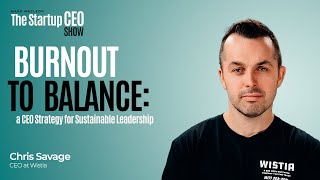
Chris Savage, CEO of Wistia, turned down acquisition offers in 2017 to fund a debt-backed buyback instead. Taking vacations and delegating forced the company to tighten operations: EBITDA swung from a projected -$3M loss to +$6M profit in one year. He shares how prioritizing his own balance made him a better leader.
Chapters
Once you take real vacations and you tell people like, hey, please try not to contact me. What I learned is every time I take a vacation, especially feels like a two week vacation, I would just end up getting less email after. There'll be. I'd be pulled into less stuff after. And like, people just have to make a decision without you. And so over time I realized, like, oh, this is actually letting us scale the business better.
Welcome to the Startup CEO Show. I'm your host, Mark McLeod. In this episode, I sit down with Chris Savage, co founder and CEO of Wistia, a leading company in the video space. He's built this company over the last 17 years, and in the early days they were on the VC train, but they actually bought their investors back. This is pretty fascinating and pretty rare. And the funny thing is he now works less, but his company performs better and he is more effective as CEO. We go deep into that, the buyback process, how to delegate properly, co founder relationships, and so many more topics. I hope you enjoy this episode. Chris, welcome to the Startup CEO Show. It's a true pleasure to have you here today.
Oh, thanks for having me. It's good to see you.
Good to see you. Last time we saw each other, the tables were turned and I was your guest. And I have to say, um, the whole premise behind your podcast is great. This notion of talking too loud. It's not like I felt pressure coming onto the call, but that first question, what has you talking too loud? Is just like, so disarming. And I'm like instantly talking about the thing that I love the most, which is just a great way to kick off a podcast. And so since you ask that question all the time, I just got to ask you, what's got you talking to loud?
Oh, man, there's so many things I would say. Well, today's Valentine's Day and that we're recording and I have two daughters that are 6 and 8 and they're really excited, so got up early and made heart pancakes. We died of pink. And they were. It was just the joy on their faces, like the whole morning just so we got to school early. Basically it was just like. Which doesn't always happen. Yeah. And it's just been. It was just great and exciting and fun and I don't know, it's. It.
They're.
They're at fun ages. So seeing them get a lot of joy just brings me a lot of joy. It's like, I mean, I can't believe it's like that. What's the point? Of life if you can't, like, enjoy these things. And so, yeah, it's just a great start to the day.
Amazing. I was going to go there at some point, but you're. You kind of open the door. So we're there now. Right. So the first time I met you in person, we were over in Scotland, both speaking at Turing Fest. Your wife came with you on the trip. You know, you're making time for your daughters now, so I certainly had the impression that you were creating real space for family at the same time as you're growing your business. Has that always been the case or is that more of a thing now? Maybe talk about that.
Such a good question. I mean, it was not always the case. I think when I first started the business, and for a while I. I told my wife, but she was my girlfriend back then. I was like, hey, look, I'm gonna work more now. And then someday there's gonna be a big liquidity event and you're just gonna see me all the time, every day. It's gonna be great. And we're gonna make up for the fact that we're not staying so much time together. And I kept saying that and kept saying that and kept saying that. And we started the business in 2006 and in 202017 is when we did our debt funded buyback. And it was actually at that moment. So my first daughter was two. I was trying to be more present at home. I had realized like, suddenly when my daughter was born, Zoe, I was like, wow, I have this other thing I want to do. I want to spend time with my kid. And I. And I remember this feeling, this instinct of like, I didn't really care if meetings went long before or if we like sometimes were late to start. You know, it'd be like, oh, we're waiting on this person. And my whole, like the first thing that changed at work was I was like, I have something else I should be doing so I'm not wasting time. Like, I'm trying to get home by dinner. You know, I'm trying to do that. And that was the first change. And then it was when we decided to do the buyback, which actually meant we weren't going to sell. There wasn't going to be a big liquidity event right now. My wife and I had a big conversation. I was like, look, let's just pretend, let's act like, let's act like I did sell the business. What would, what would I do? I was like, well, I would definitely take more vacations. I would Take longer vacations. I would try to focus more on really being home for dinner every night, that I possibly can present with the kids in the morning, present on the weekends, like really focus on like presence with my family. And that I did that and it worked. And of course the other thing that came from that is that once you take real vacations and you tell people like, hey, please try not to contact me. What I learned is every time I would take a vacation, especially feels like a two week vacation, I would just end up getting less email after, I'd be pulled into less stuff after. And it's like people just have to make a decision without you. And so it's over time. I realized like, oh, this is actually letting us scale the business better.
It's fascinating.
And so it's like, this seems like a good deal, you know, be more present with my family, spend more time with my friends, but also scale better, have more, have more growth for folks. And so yeah, it was an explicit decision at an explicit moment to do that. And I think I now understand that, you know, it's really building a company is really about, it's just about people and you know, what everybody wants. What the best one, I guess I should say is like they want to grow, they want big challenges, they want to try things they haven't done before, take their skills and apply it new situations and like actually delegating really well and having a really strong team. And like, that's, that's the secret to time. That's how you get time back. Um, and it's also the same thing of like, if I'm present with my family and also like, if I'm working out and if I'm eating well, I'm a happier person and I can manage more stress. And so then I can manage more stress at work. And I think that makes me a better leader. But it took me a long time to figure out that like actually putting yourself first in a lot of ways is how you can show up and be more present and available to your team.
Amen. Honestly, so good to hear that. I write about this stuff all the time because I deeply believe it and I've lived both worlds, but it's amazing to hear someone else hear it. And so we've talked about a bunch of the positives that have come from that. Right? You've created space for others to step in and fill your shoes. Did you have to lay the groundwork for that? Like, part of the reason why the founding CEO is always in the critical path is because Nobody's got more context, nobody's got more motivation. You know, you, you have all the information, all the values. Did you have to do things to share context, to make sure people are living the values?
I mean, yeah. The truth of it is years of, years of context sharing, years of delegation and also like, I mean, I was just talking to a new manager about this recently and they're like, someone on their team is doing something, they're not sure it's the right thing.
Yeah.
Should you let them make the mistake or not? The question is how long term focused are you on if you wanted this person on your team in three years and you want them excelling? Probably if it's not a devastating mistake, especially if it's a mistake they could learn from very quickly, probably let them make the mistake. And if they're right and you're wrong, great. And if you're right and they're wrong and they can figure it out quickly, people internal. Tend to internalize things more when they've experienced them themselves. And so a lot of that was like, what is our tolerance for mistakes and failure? And like, you know, the, the boat analogy, I think is a good one. Like the above the waterline, below the waterline thing, I don't know if you've heard that, but like, if you're making decisions or you're making a call, and if it's above the waterline of the boat, basically, like let's. You break off. Part of the boat doesn't affect you. It doesn't, you don't sink. So it's like, okay, yeah, keep trying stuff. And then hopefully you make better decisions over time and you know, you're, the boat's not at risk. But if it's below the waterline, like, if it's a decision that could really hurt you long time. Drat. Like for a long time, drag your business down, drag the boat down, then you have to be much more cautious. So the more important thing is figuring out, like, what are the decisions that are truly like catastrophic if you get them wrong and putting enough time and effort and people onto those decisions. But the other ones, like, I think you can give, you can give folks a lot more freedom than you think. But I say that as like, you know, the moment for me when I started this 10 years in and I had a lot of context, a lot of understanding the values, we had a lot of momentum. People understood what we were trying to do. So it didn't feel. There weren't that many decisions that were below the waterline, basically.
Right. Do you find that being a father has influenced your. How you lead?
For sure, yeah. Yeah.
I mean, I think sense of, like, I'm just picturing, you know, that patience and almost benevolence to let people make mistakes.
Yeah.
I feel like has to be influenced. Like watching your kids, like letting your kids douches instead of doing it for them. Right.
You know, is all connected. Absolutely. Yeah. I think it's. There's a lot of leadership, which is just. It's leadership if you're at home or it's leadership if you're at work. Like, I think a lot about. It's really easy to see with your kids that actions really do speak louder than words. So, like, if I tell my kids, hey, you can't watch. You're not going to watch anything today. And then I watch something or I'm on my phone, they're like, but you're on your phone. So, like, why are you able to do that? Why am I not? And you could try to be like, really strict, but they instantly pick up on the difference. And so also, for example, like, things that I've been into over the years, like rock climbing, especially, like, there was a rock gym close by, lifting weights, going for runs, outside, whatever. I didn't tell my kids, hey, you need to do any of this stuff. They're not lifting weights. But I didn't tell them, like, you need to like doing stuff. But they. They're like, oh, I want to go rock climbing. I want to do that thing. Because they can tell it's important to me. So their brain is saying, like, hey, maybe this might be important to me. Also, the exact same thing happens at work. In fact, I think, like, as your company gets bigger, even more of leadership is just actions because people can never get enough context. They can never know enough of your thinking or the details that can't get enough time. So everyone's looking at actions, trying to decide what's permissible and what's not. I'll give you an example that just happened yesterday. That's like a cultural, societal example, which is, I don't know. Did you see this video of Mark Zuckerberg talking about the Vision Pro? So Mark Zuckerberg, CEO of Meta, they have all these VR devices, Metaverse, blah, blah, blah, the Quest, and they've been really in front of this thing. But Apple just launched their first VR device called the Apple Vision Pro. The Apple Vision Pro costs 3500 bucks. The Quest 3 costs like 500 bucks. And Mark Zuckerberg released a video of his quote, honest take of the Vision Pro. So it's the competitive product from Apple and he released like a four minute video of him just talking in, talking about like the good and bad stuff as you would imagine, mostly he just says his thing's the best. But it is shocking, it is shocking to see a CEO of a company that size give like an authentic take on a competitor's product. I don't know that I've ever really seen that. And I guarantee you we are going to see more CEOs and leaders do this very quickly because they're going to be like, oh, I feel like I have permission. Because if Mark Zuckerberg can do it and he's celebrated for doing it as a CEO of Meta, why shouldn't I give an honest take and reaction to my competitors products myself? We're just going to start to see it and it's just he's not telling anyone to do this. He's not saying, hey everyone, this is how it's done. He's just releasing this one video and I promise you we will see more people who copy this approach because actions speak louder than words. He doesn't have to tell us to do it this way. People will say, oh, if the culture accepts it, I should do it too.
Yeah, I love it. Yeah. And you know, whether it's a fully objective take or not, we can leave for others to decide. But there's an error of authenticity. Right. It seems somewhat that's what people like. Exactly.
And I think they know he's of course biased but if he says this stuff is good or this is why I think our product is better in XYZ way, you just don't normally see that. I'm even thinking of other very combative CEOs you don't normally see them get into that detail talking about their competitors. And so that is like if more people start doing it, that would be a cultural change that would come from this which would be interesting to see. It's a very different thing.
I love it. Going back to the balance and creating more space for a moment. I think the multimillion dollar question I have is has creating that space, making the heart shaped pancakes, having the time for that come at the expense of business performance?
I think it's the opposite.
Amazing.
Yeah. I think, I think we, you can't if you want. It's. And I, I will say I think it's. It's. I'm not trying to say if you're a two person startup that like you need to you can't delegate. You know, you. You have to just, like, work like crazy. And I did that, right, like work like crazy to figure out, I think you should do whatever is the best thing for you. But I can say that, like, one thing we often underestimate is persistence and what it takes to set ourselves up to be persistent. And so for me, I can tell you, like, if I was feeling completely burnt out all the time, there's no way I could stay at this problem, these problems that we're working on for this long. And I would also say another thing is, like, we can't control usually the market. The market is, is moving and asking for what it wants at different points in time. And I talk about the example of Wistia of like, we started 2006, let me tell you, we were early. We were way earlier than we thought we'd be. My data today makes me believe that our market is actually more early stage than it's ever been. Because Covid changed people's expectations for video so much that you can show the background of your home. We are used to seeing inside people's homes. We never used to see that everyone sees their computer as a camera. So expectations for how you use video have changed more than ever. And we're actually just at the very beginning. Does the market care that I've been at this for 17 years? No, it doesn't give a shit. They just want better tools that are easier to use, that are faster, that enable them to do things they couldn't do before with the stuff that's available today. And so I think a lot of us, like, it's too easy to have a, like a me centric view of the world when you're building a company. Like, well, I've been at this for a while, so like, it makes sense that this is going to connect at this moment. Like, the truth is you might get lucky and it connects instantly. You might not get lucky, and it takes a long time or you could even be too late to it. But I think in any of those cases, it's often just like the persistence that stops you. And so if you don't have sustainable working habits, if you don't have, like, you're not actually delegating, if you're not taking care of yourself, or. My favorite analogy here is like the oxygen mask idea of, like, you get on the plane, you put the oxygen mask on yourself, first there's a problem, and then your kid, even though your instinct as a parent is to put on your kid first, that's what you think you should do because it's like, well, they're the higher risk. But yeah, if you don't put it on yourself, you can't get off the plane when it lands, you know, there it's like they can't put it on you. You have to put it on yourself first. And so yeah, I think it is actually just like driven. Way more performance because you end up building more systems, you end up having more people step up. As everybody does this, you need to have, I believe, an environment where people aren't getting burnt out, that they're actually excited about what they're doing and they can be creative. And it's like again, really hard to be creative if you're tired. And so this is really simple things. Like if you are living so unsustainably you can't sleep well, guess what, you're not going to be on your A game. And that's going to set the example to everybody else that they don't need to be on their A game either.
I have an ear to ear grin. Honestly, like, basically anyone who's a potential client going forward, I'm just going to send them this podcast because this is everything that I believe, you know, and so often when clients show up, they're completely burnt out. They just can't move forward anymore. And yeah, it's almost impossible to create when you're stressed out. So yeah, this is absolutely music to my ears.
I mean, I know personally, like I could probably easily tell you 10 entrepreneurs that the reason that they sold or their reason that they, that they stopped even though they had success was just that they were burnt out. And I think like, we don't understand like, like what the cost of that is because not just stopping on the startup, I'm not talking about just like the money you would make. You'd make more money, right? Like you'd make more money if you stayed out longer and compounded more. That's how things work. Like if you're growing and you compound it that' you get the returns. But actually I'm actually talking about happiness, which is like a lot of those people were so happy when they were building and like we underestimate the joy you can get out of creating stuff if you're the type of person who wants to do that. And so, you know, when I look at my job today, I'm like, man, if I, if I knew that I could have a job that's super creative where we get to try things and learn them pretty quickly because of the size of the audience. If we are successful with something, it really changes people's lives and you know, it can change people's lives at work and we underestimate that. Like we're talking about not being burnt out, but there's a lot of people, like, I want more time to work on this other project or I want that promotion or I want to grow this thing so I can hire more people or like changing someone's life at work actually matters. And so for I'm just so motivated by this that like, I just love this job. And I think a lot of people love the job and they talk about how it's so fun when they're just getting traction and then the scaling, they get burnt out. And actually with the right long term view and the right balance in your life, you can look at those things and it can still, as I'm talking about, it feels early stage and exciting and like creative and then you could sustain it and like that's just a great job for a lot of us. And so that's what makes me sad. It's like people I know who loved what they were doing and now miss it. And yeah, the grind at the beginning or getting lucky on timing, like that stuff's hard to repeat, so it makes it harder to jump back in the deep end again and start over.
So much good stuff here. I've often felt, both as an operator, investor, whatever, that the single biggest element in startup success is timing. You could have a great team, great product, but if you get the timing wrong, you won't get the outcome. So that's definitely a theme that you're talking about. And as a guy who sold a lot of startups, that is definitely the number one reason why CEOs want to sell number one. And theoretically they could replace themselves and it's an asset that could go on without them. But there's two problems with that. One, their identity, for better or worse, is completely wrapped up in the thing. Second, just practically, their shares are illiquid. So unless there's some sort of liquidity event, how do they put food on the table until they. Because they're not going to get a job, they're going to figure out what the next thing is and they need some kind of cushion to, you know, which makes sense.
And I think that that is like, those are real reasons, right? Like you, you put a ton of time in, you've built something of value and it is, we're dealing with an illiquid asset class by default. So figuring out your Way through that. That does make sense. And I know many people who have sold for that exact reason as well. I think, like, that's why it's interesting. You know, it's. The last couple years have been interesting because like, I definitely have paid more attention and learned more about interest rates than I ever wanted to. And, and I think the whole industry has realized how tied up we are in this. But one thing I think about that I, I don't know if it'll happen, but I think it's interesting is, you know, there's been a lot more investors right at the end of the bubble that got comfortable with like later stage investing and getting liquidity for, and basically doing that to let, keep, let them keep going. And I hear from folks that that is still happening. But I also wonder about like resetting expectations like with the public market. You know, the general thinking today, right, is like, you have to be pretty big to go public with a very stable growth trajectory in front of you. And I wouldn't want to go public without having that right. But like, if it used to be the case that smaller companies could go public and when that was happening, that actually was good for the public because people could invest earlier. And it was also good, I think, for the founders and employees because like, if they had something stable, they could get some liquidity in an ongoing way without it like kind of having to give it all up, you know. So I don't know if there will be other solutions for folks to like figure that out. But that's another interesting, kind of like interesting thread to pull off.
Yeah. You know, in the world where you kind of want to keep just going in perpetuity as a standalone business, that does make you inevitably think about the public market. Something I gained a much deeper appreciation for when I was writing my investment bank was how many layers there are in the private markets. Right. Venture capital gets kind of sucks up all the oxygen. They're the ones blogging, tweeting, speaking at conferences. But there's 2 trillion of dry powder in the mid market private equity space. And there are some folks that want to buy you at 10 million, some at 50, some at 100, some much bigger. So you can keep resetting the clock. If you're comfortable with a private equity type, you know, majority investor, you know, typically majority investor. Right. I think the big thing that's missing is some kind of structured secondary market for privately held shares which Carta tried to create with no permission and got their hands slapped.
Big oopsie there.
Big oopsie but that's, that's a missing piece because. Yeah, markets I think, are not for the faint of heart.
Right, no, yeah, I agree. I think, and I agree with you. I think that the second some kind of like more robust secondary market, that even if it was like, hey, you're going to provide X financials once a year and there's this pool of capital that's going to come in, they understand the terms very simply of like what they get getting in there. Something like that, if it was more programmatic, I think would have a huge impact.
Yeah, huge. I'd be on both sides of that.
Yeah.
I would kill to be an investor in Stripe. I've tried to figure out how to get in there for a long time. And I've got investments. Like my oldest angel investment is 15 years old. Yeah, sure would love to get some liquidity on that, you know, and I.
Think that like, you know, one of the challenges a lot of people have, obviously is like they raise money. They haven't done it before. They're trying to. They don't see it. They see that as the win versus the ticket to play the game. And then you have all these folks that are on your cap table that have different incentives at different timelines.
That's right.
And so without being able to remove the pressure, the simplest way is often to sell. And that also can, you know, to the points we're talking about before, sometimes you might see the future in front of you is very bright. But like to have the resilience to say, I am not going to sell at this moment because I believe in 10 years can be that much bigger and people are like, but we've been in 15 years. And so I do think that the right, the right way of aligning folks there and getting folks liquidity would actually just, it would much more easily align the people on your cap table. And I think a lot of companies would have a more of a shot of being independent because it's, I mean, I mean, it's funny we're getting into this conversation because like I decided not to sell, not planning on selling right now. Like, we're, we haven't raised venture capital. So like, who am I to like talk about all this stuff? I've just, but I've thought a lot about it because, you know, it's, I've. I've realized how important is to get incentives. Right? And so like on, on every front. And like, it pains me when I see companies and people that are, because companies are people that are just like working on something and they're excited about what they're doing, then they, and then they can't do it anymore. And it, it often pains me because it's just like these markets are so big, so much of this is still so early. Um, and like, I don't know, I want more people to be able to, to build companies in ways that they're like, really proud. Like, I think we can, we can build companies and cultures that we're really proud of and I think that those actually can be the companies that win. And I think more examples of that is just like a good thing.
Yep. No, you, you can't a B test the exit decision, right?
Yeah.
You know, I had, I was CFO for a scalable storage company back in the day and we sold it for a 10x return, bought my first house with, you know, my option proceeds. Facebook was growing like crazy and as they were building out their server farms, like we were putting in the storage for that, we were growing linearly with them. We could have kept going for a long time, but we got a great offer and we sold. So you'd never know what it could have been if we kept going. So, switching gears often when I speak with, you know the reason I only coach CEOs of at scale technology companies that have raised either VC or PE. And I do that because I always tell them, once you take that money, you've begun a one way journey to deliver an outcome. Yes. Yeah, there's no turning back. But you turned back. You did a U turn along the way and bought your investors out. And I'd love it if you could walk us through that journey because it's pretty unique and I'll bet you there's a lot of lessons for people.
Yeah. So basically 2017, we had the opportunity to sell the business. We'd had three different companies approach us about buying the company. All companies I respected. And we'd had people approach us in the past just poking around, but we were just like, no, no, no, no, no. But this time my co founder Brennan and I were like, all right, let's have these conversations. Let's see three at once. Seems like there's something here. Have the conversations, get into the place of getting offers. Look at the offers. And they're real offers. Like they're big, they're big numbers. And you know, as I mentioned before, about 10 years into starting the business at this point. So we've been at it for a while and we start to take these offers really seriously and start thinking like one offer Particular, like, what would we do if we actually sold the company? And, you know, we're talking to the folks at that business about, like, what would happen if we got there. And they're like, well, I mean, the truth is, like, you guys are entrepreneurs. Like, are you really going to stick around here? Because I was trying to come up with this, like, big thing that we would do that would be new. That was what I was excited about. And they're like, no, are you really going to do that? Like, you're just going to start your own thing in two years? Like, really listen to that. Like, that's probably true. And so then Brent and I start talking. We're like, well, what would we do? What would you do? What would I do is like, well, if we start another business, like, we would work together. We feel like we have a unique partnership. We have built our values together as we've built this company of understanding in like every sort of business decision. Like, I almost always know how Brennan's gonna go at, like, what he's gonna wanna do. He almost always knows what I'm gonna do. That's not 100% true, but it's true, very true. We felt like the video space was changing a ton at that moment. And we're like, it was the beginning of being able to make videos with your computer, like, where you record and stuff. Like, okay, this is going to have a huge change. This feels like a similar scale change to when we started the company. So then who would we hire? We start making a list of employees. They all work at Wistia. We're like, what type of customers will we focus on? Like, oh, we'd be small, medium sized business. What values would we uphold? We're like, well, we'd be really, we'd take a very long term approach and we'd really try to make sure we give ourselves permission to be really creative because that's what stands out and that's what's different. That's how you get like, that's how you get the alpha. That's how you get a better return. We're looking at each other. We're like, wait a second, wait a second, wait a second. If we sell, we're literally talking about rebuilding Wistia. Why, why, why are we saying we should rebuild it? And I look at Brendan, I'm like, are you happy? And he's like, no. He's like, he looks at me and he's like, chris, are you happy? I'm like, no. Like, why aren't we happy? Why why do we want to rebuild the company? And we realized that actually we had a few years before kind of changed how we were running the business. And we switched to a growth at any cost approach. And that was because we'd gotten so much advice from other entrepreneurs about how we were doing. I'll give you some numbers. We were, it was a moment. We did, we did 10 million in revenue one year and we had 3 million in EBITDA. And we thought that was pretty cool. We're like, look at us. Like, we've only ever raised 1.4 million in angel money. And we got 3 million in EBITDA one year. Like, isn't this amazing?
Amazing.
And everyone I talked to was like, you guys are idiots. Like, you could be growing much faster. You shouldn't be profitable. It's way too early to be profitable, blah, blah, blah, which is general advice, like venture capital advice. Right. But everyone I talked to said that. And Brent and I started to question ourselves. And so we decided you're, we aren't growing enough. We should be pushing harder. And so we started running negative. And because we'd been profitable for a few years, we'd saved up cash. So we used our own cash. It was like we. It's like we switched into a venture mode. But the problem was when we did that, we had tons of great ideas, I thought. And instead of asking when we had a new idea for something to do, is there something we're doing that we should stop doing, is there something we're doing that's not working, that we should take the person who's on that, put them on this new idea instead of asking that question, we just hired and grew and said yes to everything. And so then we ended up in this problem of like, we are running negatively. We had improved our revenue growth rate slightly, but not much. And it felt like we actually had a lot of zombie projects of like, things were just continuing on, but like lumbering and not actually making progress. We lost focus. And so we looked at each other and we're like, all right, instead of selling, let's fix the business. First thing we're going to do is we're going to get back to being profitable. We believe if we're profitable again, that it's going to be much easier for us to be long term focused. Because what ended up happening when we were losing money is that every month that went by, we're losing money. You now have like a time to live. You know, you do the time to live math and if your math is off, you might think you have 18 months and then suddenly, you know, revenue doesn't grow as much as you're expecting, and you don't have 18 months, you have eight months. And are we really going to stay like this or not? And, and it, without meaning to, everything became short term focused. And when it's short term focus, if something doesn't work, it's really stressful. And so sometimes you try something, you do it for two months and you think it's not working, like we need to adjust, and then you stop and you try something else. And a lot of times that thing actually would have worked if you'd stayed on it. So you're like distracting yourself constantly in this kind of like constant thrashing churn mode. And so that's why we were so unhappy. So we decided, all right, we're gonna be profitable long term, focused. But we think we need to realign with our investors because our investors have been in the company for 10 years and they want us to sell. They want a return. So that led us to this idea of raising debt. And debt would force us to be profitable. So we would, you know, it would just, like, we'd have to be profitable. And we also believed if we were actually profitable that we would get back to being long term and that we would actually perform better. And so we, the summer of 2017, figured all this out, said no to the deal, told the, told the company that we're gonna, that we decided not to sell the company and that we're.
Gonna do a contract previously that you were thinking of that we, we went.
To them and said we had some offers to sell. We decided not to do it, Got it. And they said, what are we gonna do? And we said, we don't actually know yet, but we're gonna tell you as we figure it out. And then the next month went by, we're like, we think we're going to do a debt deal so we can do a buyback. And they're like, wow. And then the next month we came back and we're like, all right, we have a partner that's gonna, that's gonna happen with this, and we'll give you the details soon. And then like maybe two months later, we did what's called a tender offer. And so all employees and every investor got the opportunity to write in at a specific valuation, like, how much of their shares would they actually want to sell. So it's like a big. It's like a liquidity event. The way it works is you can't market It. So Brennan and I basically said, this is going to happen. Then we. We walked away and we hid. And our, like, COO and VP of finance at the time basically communicated everything to everybody. And like, you can't talk to Chris and Brendan, they can't give you any advice. But everyone got the same, like, you know, 60 page packet of like, the deal, our forecast, our recent financial, blah, blah, blah, blah, blah, blah. And then on the other side of it, we had bought back control, converted, preferred to common. So, like, our shareholders who stayed in knew that they would be aligned with Brendan and I, and then we could focus on getting the business profitable so we could serve the debt and we could focus on being long term.
Amazing. That's wild. So I have to say, probably while all that was playing out, so when I was running surepath, every quarter we would put together a list of our ideal clients. And Josh, who ran my San Francisco office, said, we have to go after Wistia. And I got to figure out how to get in front of Wistia. And then we were just trying to figure out how to get in front of you. And then we heard about this deal. So it's pretty wild. Did you use a banker for all of this?
No. Yeah, we did it ourselves.
That's impressive.
Yeah, yeah, it was cool. I mean, I feel like I learned so much through that. And, you know, the question I often got actually right after we start talking about this is like, what'd you do for the team going forward? So just so people know that, like, we introduced profit sharing, we had negative. We were on track to do negative EBITDA of 3 million in 2017 before we made the change and we slowed down. We focused our efforts on marketing, we focused our efforts on the product. Revenue growth increased in 2018 with the team size actually shrinking because we had attrition, because people got liquidity and some people left because of that, and we just slowed our hiring. And so we had. And we had 6 million in EBITDA in 2018, the first year following the buyback. So $9 million swing in a year, which is crazy. And then we use the profit sharing as a way to incentivize everyone so that they all knew what we were trying to do. And then actually, you know, I'm a believer. And you go really hard at stuff when you see it, and that's how you learn faster is like, you go hard and you understand, does this work? Does this not? And you understand in like a year or two, as opposed to like five years. So we were on our merry way doing this. And then as I was talking about before, our market changed so much. It felt early stage that in early 2021 we decided to dramatically change our product and expand it dramatically so from really like a hosting and management analytics of video to including creation and editing and live broadcasting. And as we did that, we felt that the market was early stage. We knew we needed to grow the team a ton. So we grew the team a ton, which meant we also were. We brought EBITDA down. So we invested ourselves like back into the business. But then we actually also introduced equity again because we felt that the market, if we really believe it's early stage and there's that type of risk in the market, there's that type of upside, we want the team to be aligned to that. So we did the buyback. We then eventually introduced equity back. We still have a bonus that's kind of like profit sharing that's more tied to revenue than it is to specifically ebitda. And then the final piece of the story, because there's so much to it, is that we ended up paying off the debt, the debt that we did the buyback with last year. So we're debt free at this point.
Oh, thank God. Sorry. Because we've gone through a pretty serious increase in interest rates.
I mean we had a fixed rate. We were very like focused and our fixed rate was really low, actually was four and a half percent. So like amazing. You might be like, why did you pay it off? But it, it made sense at the time given the.
Actually the banking so good that you did.
Honestly. Yeah.
I have a couple of private equity backed clients that are really successful businesses, but the debt servicing burden is crippling them.
It's amazing. So now we have so much flexibility and I think we have the right incentives that everyone is aligned and understands what we're trying to do. And all these new things that we've launched are all working and scaling and it's, I mean it's super exciting. It feels to me, it almost feel it, it honestly feels like it did in like 2011, 2012, where we were just retraction was just starting to go. That's what it feels like again today.
I have to say, I'm guessing the word profit is just like a strange concept for so many people tuning into this. Like we just have this default assumption that we're supposed to burn our way to greatness. Yeah, I love seeing a counter example to that.
I think it just gives you rigor, like, you know, rigor to evaluate Investments, rigor to like maintain them too. You know, we always talk about that like, and I think you'd be surprised how decoupled they can be. Profit and growth, it's wild.
Do you find you're attracting a different demographic of employee?
We certainly, once we did the buyback, got a different demographic employee. We had a lot of people who had been in growth at all cost companies that didn't work and they were looking for like the sustainable route. And it actually got much easier to recruit after we did the buyback. That was another thing people like, how are you getting anyone to join you? I was like, we started getting way more applicants once it was. I mean you have to stand for something. I think that's the thing. Like it was clear to people that we actually stood for something and we'd put our money where our mouth was. And so then it was like, well, Chris and Brennan are like really in this thing for the long haul at like that's. That's going to be a different type of work environment. And it's shifted again because of going remote and so we have access to way more talent. And then it shifted again as we really saw our market as early stage and have found a lot of people who have been at very, very successful companies in the past have been a part of that growth journey and they're like, they are excited to be at Wistia, to try to propel a ton of growth, but to do it in like a smart and clever way. Right.
Was 37 signals a role model for you at all as you were thinking about this new way?
It was a. They were a role model for sure. In the early days, you know, I remember reading. Oh God, what was the getting real. I think or something was like this like PDF or something.
Yep.
And. And I think the seeing what they were able to do with a very small team was always like really inspirational. I think it. At some point I realized that like, you know, a lot of building a company is you create these like value systems or religions, religious beliefs and their religious belief around staying 37 people, which that was a religious belief they had for a long time and that that was the only, the best way to go. Like I remember thinking that it's scaring me almost of like having a company that was a lot bigger. And then I remember at some point thinking how silly that was because like, you know, there's a lot of things where it's not actually more work to have more people. It's often less work because you have more people as we're talking about before that go deeper on other problems and take them on from you. And yeah, I think they, they're very good at marketing their way of doing business, but I don't think it is the way for everybody. Just like my way is not. I hope when people listen to this, you know, they're just picking the things that align with their values and make sense. If you're going to take any advice from this, like, I think that's what everyone should do.
There's no one way otherwise someone written the book and I wouldn't have a business.
So it's like I feel like it's for some reason I'm really on this kick of like there's a lot of like building a business. There's like the right long term things to do and then there's the short term hacks. And it's the same thing as I try to get in shape. Like we all know what it's supposed to take to get in shape. You eat right and you work out and you sleep well. If you do those things like you're gonna get in shape. The hard part is doing those over a long time, doing them consistently right. And I think the same thing happens in business all the time that people are looking for growth hacks or they're looking for something to go viral or whatever. They just stay on the hacks, just like the fad diets basically. And it never works and they can't sustain it. They're like, why isn't, why am I not growing? I was like, well, the long term thing you have to do is build things and bring them to customers and ask customers do they like them and actually listen to them and then change based off of what they say. And you continue to do that over and over and over. And you just have to do that in a space that's big enough that you believe that like you have some unique approach on. And it sucks sometimes for a long time. And so the way to make it not suck is like work with great people, have it, be thoughtful, have balance, blah blah, blah, blah. And as you do that and figure out, do the right long term stuff, ultimately that's how you end up driving real growth and you get into shape or you build a successful business. But it's sometimes it takes longer than people, a lot longer than people think. And so I think like that's why the incentives and how you get the work done like actually matters a lot.
So you're in two relationships. You have a marriage that has lasted a Long time. And you and Brendan, and probably in a world where you were in offices, you probably spent more time with him. And maybe it's. It's less so now, but I guess. How did you. What. What do you guys do together to kind of make that relationship work? How do you. How do you explicitly work on that co founder dynamic?
It's interesting. I said before we figured out our values together. And I think that's just like, once you have enough really hard experiences with somebody else like, that are disparate enough, you start figuring out, like, do you agree in the hardest moments? Do you. Or can you get to agreement in the hardest moments? And I think because we started this so young and honestly, like, we're fortunate that it was slow going at first. We had a lot of those really hard moments, and we figured it out together and we internalized the lessons from those that were the same. The great irony is when we were in per. Brendan and I spend more time working together today than when we were at fully in person.
Oh, wow. Okay.
We realized that pretty quickly because, like, our offices, you know, people would be in. We would both be in a lot of meetings and walking meetings and just constantly, constantly, constantly chatting with other folks. And we always felt like the two of us, like, we could find time later, so we should let ourselves be available to other people as much as possible. And then I remember right when Covid hit, we were on remote, suddenly Brendan and I could like FaceTime each other the second another meeting ended or call each other or go for a walk or whatever. And we were talking more actually. And so he and I, we have a lot of. We have maybe four hours a week blocked just. Just for the two of us.
Amazing.
And we almost never have an agenda. It is just like, what's on your mind? What are you seeing? What's working, what's not? It is. Sometimes it's using our own product and, like, looking for bugs. Sometimes it's using competitive products, sometimes it's using completely things in different industries. Sometimes it's playing. It's all different types of stuff. And I think, like, one thing that I've realized over time that was not obvious to me at first was, you know, people's like, we were best friends going into this and we prioritized our friendship. We said, our friendship is really important. And I know that's like counter to a lot of advice, which is like, don't get into business with your friend. The thing that happens if you're in business with your friend or you're just in working with people you really like is if you really like working with people, you want to give them feedback when stuff isn't working.
Yep.
And I think that simple thing really matters. And I've, you know, unfortunately seen it when you don't have people you like or you just don't naturally get along. If you need to give someone hard feedback, it's like, do I really need to give it to them? Like, is that actually the most important thing? Or let's say you don't work closely with someone day to day, but, you know, once a month you spend an hour with them and they always annoy you. Are you going to give them feedback about how you work together?
You're just going to avoid spending time with them.
Exactly. But that's bad because that is like, that hurts teams in overall, hurts the company. So if you actually like someone, you want to give them the feedback because you care about them and you want them to do better. And so I think that's been part of the magic is that Brendan and I just, like, we let it rip. Like, if he does something stupid that I think is stupid or I disagree with or whatever, like, I tell him and he tells me. And it was funny. I had someone on the team who knows us well ask us if Bren and I do reviews for each other. And I'm. And I laughed and I was like, oh, man, you should see our reviews. Like, they are just like letting it rip to a thousandth percent. And that, I think, is why our friendship is so good, actually. Because we trust each other to really tell each other what we think, both like, in work and life. And I think it's also back to the culture and leading by example. I think that's kind of happened in the business where people will really care for the people they work with. We invest in that, we do off sites and all these things to bring people together when they're not working. And I think that adds up to more feedback. It's. It's hard to really tell, but I. I think that's what's happening and I think that's part of, like, the magic of Wistia.
Will you two hang out socially? Like you get together on evenings or weekends ever? Yeah. That's cool.
Yeah. Get our families together, go to the trampoline, park, skiing, amazing dinners, all that kind of stuff.
I've seen situations where when there's such a close founding pair that it's super positive, it's magical, but it also results in a two layered leadership team. There's like the founders and everyone else. And often the founders show up having sort of pre decided. I'm wondering, do you have that dynamic? Have you worked to avoid it?
I would say that the truth is like, we probably have that dynamic in some ways and we've tried to work to avoid it in other ways. I think the buyback made it really clear to everybody, like, okay, these guys, they've risked everything to build this company. So if you came in here, you know what you're getting. You know, it's like Chris and Brendan.
You'Re now the literal owners, you always were, but you're just the owners now. Yeah.
And so people get that, but also like, we want to get to the truth and we want to get to the best answer. And I know that Bren and I are not always going to get to the best answer, especially if we're by ourselves, especially if we don't have the data from everybody else. So we, we've tried to be pretty explicit in terms of what are the decisions. It's almost like the way I think about it is like we have a board, it's Bren and I and one outside early investor who we asked to come back on and say, like, hey, we want you to represent the shareholders. So we're very aligned. But Brent and I have our role as like board members managing the business. And then we have our role as operators and we actually see those as different roles. And then within our operations, you know, we have a tech leadership team, we have a go to market leadership team, we have a finance leadership team. And we've been pretty explicit about what are the things that these teams own and how they work. So I would say it is not a situation where people like just, they don't just jump to Brendan and I and be like, just, can you make this call and we'll do this. Like, the system is open and hopefully people understand how it works. Such as like, oh, if you have a big thing you want us to change and go to market, like, you know who to go to to ask the questions or suggest the idea or pitch the thing or same thing on the product side. And that seems like that's worked super well. And so it's like delegating the ownership. So clearly that then the stuff that's left is like the hardest stuff, the longer, longest term stuff, like the overall investment level questions, things like that, that I think it makes sense that it's coming to Bren and I. So I wouldn't really describe as like a two layered leadership team. I would say, like, people know that the founders have different roles and that that is the case. And they also know that we're the owners, so they treat it differently because of that. But I can see that problem happening. And I've, in the past, I think, like, we worked hard to avoid it, but I also think just being transparent about how it works is helpful.
Usually you do have a different context here. You are literally the owners. Sounds like you've been very thoughtful about it. So we began this conversation talking about your podcast. And as we start to wrap it up, maybe I'll go back to personal branding seems to be like a thing. You have a podcast, what are your thoughts? Is this a thing CEOs should be doing? How do you think about that?
Yes, I have a podcast and I have become much more active on, like, LinkedIn and Twitter in the last couple years. I was active in the early days because it felt I don't really know what I was doing. I was just kind of like, sharing along what was going on, and it was kind of exciting. And then a couple years ago, I asked myself the question, like, what can I do that no one else can do? And I was like, I can tell the company story in a way that no one else is going to. And so I started posting on LinkedIn. I had a few things, like, really take off. And I was like, ah, this is. I remember this feeling like, I can do this. And it's actually like community building and bringing people in. And so it's something I like doing. I've also effectively been media trained because I have done so many podcasts and so many interviews and so many journalist, so, so many talks, so many things. I was like, I know how to do this and I enjoy doing it. I get energy from it. So that seems like a good match. Like, I like doing it seems unique. So that's what caused me to start doing it a few years ago. And then the thing that I've realized is that there's also a cultural change that has occurred. And the cultural change is actually kind of wrapped up in what we were talking about before of like, we're seeing inside each other's homes or you're on TikTok, you're seeing people all the time being having extreme, not necessarily true, but feeling very authentic feeling experiences. And we just have a belief, I have a belief that is that, like, more and more we want to connect not just with a brand, but with the people in a brand. And that's something we've always done at Wisto. We've always tried to be very people first because we figured out that having videos where you feel like you have a relationship with someone on the video, like, it moves the needle. It really does. If there's two products that are the same, you ever feel like you have a relationship with the person? One product, like, you go with that. That's. That's business. We know that that's. That's just how it's worked, like psychology. But we started to realize, like, hey, like the biggest companies in the world, they do a ton of PR around people in their businesses because then you take the values of that person, you apply it to the business and, you know, Apple's the easiest example. Steve Jobs, innovator, creator, product, like, incredible marketer, blah, blah, blah. So when we, when he had product launches, we were ready for it, excited for it, like, what will we see? The one more thing. Surprise. Like, he's like a showman, all this stuff. And you expect that in the Apple products and the packaging and the messaging and like, all that stuff. And he's kind of a dick too, and you expect that and like all these things. And then you have like Tim Cook, who's like the operator and is incredible operator. And so of course, now we pay more for the AirPods and the accessories and the. You just take the person's personality and you apply it to the business. And it's actually helpful as a way to differentiate and understand and try to guess where the company's going to go, which I think is something we're always implicitly doing and in subscription, always doing. Like, if you're buying, if you're becoming a whiskey customer today, you're not just getting what we have today. You're taking a bet that on the future, the products we build are going to be better and save you more time, be easier, because switching stuff sucks. So. So if you can understand and have a relationship with me, and that means you feel like you better understand or connect to Wistia, that is valuable. And I think that's a big trend that we've been on and we've actually seen in the data that the organic reach for individuals has changed dramatically from that of brands. So Wistia used to get way more organic reach on Twitter and LinkedIn and you really have to pay to get reach now. Um, that's just kind of how it works. Facebook did this back in the day. You have a Facebook company page. Everything you posted, they saw, then they just slowly, over time, switched it. So you have to pay every time you Send something out to get to people who've liked your page. That's basically what's happening on all social platforms, but that's not happening with individuals. And so we get way, way, way more organic reach when you're sharing as an individual. And the other thing that's changing is AI. So Google, all the social media networks are trying to. They're trying to tune things so that they're not overrun by AI, because otherwise we would all be able to just see nothing but junk all day already. Right. Like, that's all we'd see. So what they're doing is selecting for things that are uniquely human. So opinions on things, authenticity as a. As an experience, unique data and research that someone has taken together and released. And so all of that stuff is doing a lot better. That stuff feels riskier sometimes. Like opinions, for example, for a brand to share, not that hard for a person. And so that's the other reason. And so my last thing I would say is you asked me the question, should every founder do this? Probably not. I don't think every founder should do it. Out of everything, every founder has the personality to do it or want to do it, but I do think every founder should ask the question. If you're going to have people in your business that you want someone to connect with, who should those people be?
Right.
And then I think the question is also, like, it does feel a little bit risky to build up someone's profile because they could leave. And media companies deal with this all the time. And I think you have to just look at it as, like, hey, if you have John Stewart, who's hosting the Daily show and is really funny and really great over time. Yeah, John Storr's gonna earn a lot of money by doing that, but a lot of people are gonna show up just to see him, and that's okay. And if you are the founder and can do it and you're planning to stick around, that's even better. But I think just trying to ask yourselves those questions and figuring it out, like, people do want to connect with people. That's an innate human thing. And the algorithms are now adjusting to make that even more important. And I think we should expect that they will even more because they don't want everyone to just be, like, overrun with, like, generative text that doesn't actually make sense.
Yeah, yeah. We need authentic connection more than ever these days. And on that note, I have to say I'm truly grateful that you and I connected. I really enjoyed meeting you and getting to know you. I always enjoy spending time together and this has been fascinating. Like I said, meant what I said. You know, that earlier bit about how you've created balance and the business is performing even better is just like basically the religion I've been preaching. So I'm just basically going to send this podcast to all my CEOs.
Amazing. Well, look, it was great meeting you too. It was so fun to, like, get to do that in person and like at the conference and hang out and catching up with you since has been great. So I really appreciate being on the podcast, being your friend. So thank you. Thank you for having me. And if I can ever be helpful, obviously just let me know.
Thanks so much, Chris. You be well. All the best. Take care. Hey, thanks for listening to the Startup CEO show. If you'd like to connect with me, be sure to visit my website at Mark McLeod me or post. Follow me on LinkedIn at the Mark McLeod or Twitter arcmcleodore. And if you want to tune in again next week, be sure to subscribe on YouTube, Spotify, Apple, or wherever you get your podcasts. We'll see you next time.
More from Mark





The Burnout Breaking Point - How Strategic Breaks Actually Increase Productivity


Emotional Debt - How Avoiding Hard Conversations Compounds Into Company Killing Resentment


The Death of the Specialist - Why AI Is Creating a New Professional Class Called Scalers