From Burnout to Bliss: Strategies for Sustainable Success in Startups | Mark MacLeod, CEO Coach
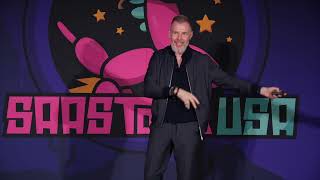
Mark MacLeod, a VC veteran turned CEO coach, shares how he burned out and rebuilt his life with intention. He diagnoses hustle culture in startups, then offers concrete practices: the Wheel of Life exercise, writing a personal eulogy to clarify values, picking one to three success tasks daily, and setting stronger boundaries. Reflection questions at bit.ly/sasdocquestions.
Questions this video answers
January 2019
January 2021
1999
14 years
Four years
Chapters
So as he mentioned, my talk today is about From Burnout to Bliss. This is a personal talk for me and this is a business conference, but we're going to go into the personal side as well and so I hope you enjoy it. So who am I? As you mentioned, since 1999 I've been in the VC backed startup world and a bunch of different roles. I was CFO for a number of companies for 14 years, including Shopify and FreshBooks. As one of the original general partners in Real Ventures, which for a decade was Canada's largest seed stage venture fund, I founded and ran a boutique Investment bank called Surepath Capital, which for five years was the leading boutique in SMB SaaS. And I've now finished my fourth year as a coach to some of the most ambitious CEOs in the world. What I just described to you is like my professional bio. It's what you would hear on LinkedIn. And when we meet each other, that's kind of all that we tell each other. But of course, you know, we're so much more. I'm not just my bio, I'm a dad, my husband, a brother, you know, I have my passions, etc. And it's really important that we make time for all of those other aspects of ourselves as well. But I'll admit there's not a lot of you here, but I'll bet you some of you probably struggle with that balance. So let's start with a little story. I want to tell you the story about a busy executive. He was always on. He would wake up, he would get on his phone between meetings, he was on his phone in a meeting. If he got bored, he'd pull up his laptop, he'd start pounding emails. If he was on the toilet, he was on his phone. Let's face it, that's kind of boring time. So, you know, why not? He would get back on his computer after dinner, at night and just pound on emails and return slack messages. He worked weekends, often traveled, I don't know, two, three weeks out of a month. It turns out that, you know, boardrooms look the same in every different city. Who knew? Often when he was home, he might have been physically home, but he wasn't present. He was reliving the day that just happened or anticipating tomorrow and just was just lost in his mind. And his wife would recognize that and often tell him, just go and take care of what you need to take care of so that you can come back and be here with us. And every year his airline status went up and Just no balance and, you know, so high stress. He started drinking a lot and that stress started to impact his personal life. He kept it together personally, but in his personal world, sometimes that stress would bubble over and he achieved a tremendous amount of business success, but at a large personal cost, including the end of an 18 year relationship and a 16 year marriage. You might have guessed that that leader I'm talking about was me, but it could have been anyone. Many of the CEOs that I serve come to me, in fact, because they just can't keep up with the demands of the job and they're burning out. This photo. I took this photo. Well, this photo was taken of me in January 2019. We had just finished a really great year for our Investment bank in 2018. It was our best year ever. I had an office in Toronto where I was based, office in San Francisco. I was going back and forth all the time. Clients in Europe. I was doing six deals at a time. If I was awake, I was working. I felt like I was at my peak as a banker. But this is also the same month that that marriage ended. And so this is an important kind of, I guess, turning point in my life. I wouldn't be here in front of you today as a coach if that hasn't happened. And I've learned that everything in life happens for us, not to us. Doesn't always feel that way in the moment, but when I look back 100% of the time it feels that way. So let's talk about, I guess, the normal, you know, quote unquote normal that we face here in the startup world. There's this. The startup world is unfortunately quite male. There are three women here in this audience, so the ratios work out. So I'm going to stereotype here. Most of my CEOs are unfortunately male and they identify themselves with like, their jobs and their roles and they give everything to it. And we have this like bro culture, like, oh, I'll sleep when I die. And when you catch up with someone who you haven't spoken with in a while and you're like, hey, how you doing? Like, oh, I'm so busy. He's like, oh, yeah, I'm so busy too. It's like we celebrate busyness and we use coffee, right? We need coffee to get going in the morning, we need coffee after the afternoon slump. If we have coffee too late at night, we end up taking sleeping pills to help us get to sleep. By the way, you don't actually sleep, you just sedate yourself. There's no recovery at all that comes from sleeping pills, but I'm not a doctor, so don't listen to me. And so this kind of bro hustle culture, I feel like it's getting a little bit better since COVID but it's still pervasive and it's deeply healthy. And as a CEO coach, I'm told not to ask questions that begin with the word why because it makes clients defensive. But I have to ask, why is this normal? Why is it that accepted to live in this deeply unhealthy way? And the truth is it's not just founders, but I think as a society at large, we live in this kind of fight or flight mode. And this goes way back to, I don't know, when we lived in caves and you might walk around a corner and there'd be like a saber toothed tiger there. And we don't have that level of danger anymore, but we act as if we do. And we treat sometimes the smallest situations as if they are life or death. And our heart starts pounding and our blood pressure goes up and then we take blood pressure medication to go along with the sleeping pills and the coffee. Anyway, it goes on and on and on and it's just deeply unhealthy. And so I feel that over time this leads to chronic stress. I don't know what the stats are here in the US in terms of how many people have chronic symptoms. Acute symptoms are things that just show up for a minute in time. Acute stress can be great, it helps you perform in the moment. But chronic stress, meaning it just never ends, is actually, it's fatal. And beyond the long term health implications, you know, for my CEOs, if you think about the job of a CEO, it's ultimately to make decisions, which means that you need to think clearly. And it's really hard to think clearly when you're just stressed out and constantly in fight or flight and you just get into this vicious cycle. So let's put kind of our everyday kind of actions into perspective. Right over the course of our life, we have these different roles. We are a son or a daughter. We have these different phases. We were a child and we were a teenager. We had a period where we were a student. We began our career, a period where we intend to be married and very often a shorter period where we're actually married. I realized the second actual marriage I put on there is really short. And that makes sound like sour grapes. That wasn't intended. I'm happily married again and I hope it lasts a long time anyway. And then we have these phases where we're a parent and retire. And the point is, when we're in these phases, it can feel all encompassing. I don't know if you remember high school, but like, your friendships in high school felt like everything. They were like your reason for getting up in the morning. And I found that especially with my kids, I have two teenage kids, so they were in high school during the era of smartphones, where they weren't just connected with their friends during school, but like continuously connected. But I'll bet if you look back, you're probably only friends with like a small number of those high school friends, or, you know, none at all. It was just like a finite thing. Or maybe that period where you were studying, it felt like it would never end, but it's now in the rear view mirror for startups. You know, when we're in a startup, it can feel like it is everything. Back When I was CFO at FreshBooks, I used to have what I call freshmares, which are freshbooks nightmares. And they happen so often where I would just be solving business issues in the middle of the night that I would just keep a notepad in my bed because if I didn't write down, I would come up with a solution to some problem and if I didn't solve it or if I didn't write it down, I wouldn't be able to get back to sleep. And yeah, so this is obviously deeply unhealthy, but something that probably we all do all the time. And the point of kind of putting up that startup phase on a graph of a lifetime is a typical startup lasts seven to 10 years. And when you're in that period, it's everything. But when you zoom out over the course of your life, you realize, oh, it's just a chapter in my life. I actually find it's helpful to, to think about that perspective and remember when things are going bad in the startup, which is inevitable, that nothing's actually happening to you personally and this is still just a phase in your broader life. I also like to remind myself that there are 8 billion people on the planet. And I like to remind myself often that I don't actually matter in the grand scheme of things. When things aren't going my way, there's just no point complaining because who the fuck cares? I'm just one of 8 billion people. Get on with it. All right, so where are we so far in this talk? We're depressed, we're miserable, we're chronically stressed, we use coffee. Deeply unhealthy. We have no boundaries. We're addicted to our devices. Oh, yeah. There are too many of us. Awesome. This is like a motivational talk. How do we move forward from here? You know, there's probably lots of tactics and tips and books and stuff I could. I could talk about here in terms of how to move forward, but I'd like to keep this discussion at the level of our perception and kind of the level of our intentions. Right? We only experience the world through our subjective lens. If you think this talk is boring, you're like, why the fuck didn't I go home? You're right. If you think you're going to walk away from this talk with one actionable insight that's going to change your life, you're right. Exact same talk happening at the exact same time. He's the one who thinks it's like, super boring. And he's like, sorry, I had to. Yeah. So we only experience the world right through our subjective lens. And so that lens that we bring to every moment in our life will shape literally every moment of our life. So the way forward is to live with and lead as leaders with intention. Right? Intention is your North Star. It's your guide to help keep you going. What is intention? It's purpose and clarity. It is what you want to achieve in every moment. When you walk into a meeting, your intention for the day, for the month, the quarter, the year, and it's your priorities and kind of what matter and what are the things that you want to make happen in your life so you can be like, peak you. So I'll give you myself as an example. So we already know I'm a CEO coach, right? But you know, I'm. I'm more of those things. I'm a husband, and like a father, a brother, a son, a friend, I make time for my passions now that I don't work every single moment of the day. I started a record label during COVID and It's now top 20 in the world. I'm even more passionate about my spiritual and yoga practice and recently finished advanced teacher training. And so the point is like, this is just. This is what I need in my life in order to have peak fulfillment and peak purpose. And the intention that I bring is simply to show up, to be fully present in whatever role I'm in at the time. If I'm with my wife, to be fully present with her. Not in the same room on my device, flipping through Instagram or pounding emails. I used to do that. And I don't judge it, but I recognize that it's not honoring her, and it's not honoring my role as husband. Same thing for each of those roles, right? When I am in that role, when I'm with my kids, only with my kids, when I'm working, only working, right? These things, these worlds kind of blend together now, right? Especially now that we often work from home, right? So the personal and. And the business just blend together. Like, it's kind of weird. We finish. I don't know, I'm actually still guilty of this. Like, I finish a workday and then I go listen to business podcasts to relax. It's kind of, like, super weird. And so everything's just interspersed. And so it actually takes proactive intention to create those boundaries. Now, I know what you're thinking. I'm like the old guy with the white beard. I'm not grinding, trying to achieve. Right. I'm kind of at the tail end of my career, not at the beginning. I'm not hustling anymore. And I fully respect that. Anybody who achieves greatness in life is not fully balanced. Right. Malcolm Gladwell talks about 10,000 hours. Well, right? To master that takes 10,000 hours. That's like a long time. And so I recognize that, and I deeply respect it. The thing I guess I'm saying is if you need to be unbalanced for a period of time that you do so intentionally. So, like, let's say you're in a relationship and you just need to go deep for a period of time, you like fundraising, maybe you're launching a new product, then don't just go and do that and not talk about it, and then have your partner resent you instead say, listen, hey, for this period of time, I just got to go all in on the business. Are you cool with that? What do you need? Just negotiate, talk it through. Have that level of intention. That's just one example with your romantic partner, but in all of the other areas of your life, so that you're not accumulating these kinds of resentment or unmet expectations that just add more stress and more pressure to your life. Here's an example, I guess, closer to home, of somebody who's clearly achieved a tremendous amount of success whilst having boundaries. By the way, I should have explained that previous image. Can I go back? I don't know if I can. Yeah. Why did I put these guys up? They're just highly visible examples of people who have achieved greatness whilst at the same time prioritizing family as simply one aspect of balance. So that's why they were there, but Toby's kind of done the same thing. So for the longest time, this has been his Twitter bio. I'm a CEO by day, a dad in the evening. I'm a hacker at night. Right. He runs a company with over 10,000 employees. It would be so easy for him to just let that role just consume him. But from the earliest days, he's had these boundaries, right? He has a finite period of time where he works. I just saw him a week ago Thursday. He works harder than ever, but there's a period of time where he works, there's a period of time where he's with his family and then there's a period of time. For me, it's music and yoga. For him, it's hacking. So he can stay on top of the latest technologies and playing games, like computer games. He's on the record as talking about how gaming has made him a better leader. So these are the things that work for him. What he's done is he's created boundaries. He's put each of those roles into a box. They've got a clear space. It's sacred, it's untouchable. And I recommend that we all do that for all of our lives. This is an exercise called Wheel of Life or Satisfaction Wheel. Right. These are just different examples, but you all have different areas of your life. You have your company, if it's your company or your job. If you're working inside somebody else's company, you may have. Money is important, health is important, family is important. Whatever it is, whatever dimensions resonate for you. Assess where you are on a scale of 1 to 5. One being completely in the shitter, five being perfect. Where are you today and where do you want to be in a year now? I think where a lot of people go wrong in terms of affecting personal change is they try and move every single one of these spokes on the wheel at once. That's just not possible. So really what comes out of this self reflection exercise is a lifelong journey of gradual habit improvement. Take one of these at a time and move them forward. And when that's in a good place, go and move the next one. So it's not about doing it all at once. All right, I'm going to get woo woo on you now and talk about the force. You probably noticed these times where everything in your life flows, things just come easily. Work doesn't feel like work. Customers just come in, relationships just go. I don't know. Great. You're filled with opportunities, deep relationships and happiness, etcetera. And that's because you're in flow. You're in flow with the natural kind of balance of the universe. Right. Intention is a force that exists in the universe, and it can actually, actually be harnessed if your intentions are pure. So what do I mean by that? If you've got a business that's trying to, like, I don't know, get old people to give you, like, credit cards with, like, text scams? Well, the universe doesn't really want you to succeed with that. But if you're doing something that's really positive, then the universe actually does want you to succeed. And that can create a ton of momentum if you can tune into that. And I've experienced this myself in many, many areas in my life. So just to recap, right. That startup that feels like everything right now is just a chapter in your life, there's a much, much bigger context and narrative to your life that's important to kind of keep in mind at all times. In January 2021, I attended a retreat on the theme of self mastery with my guru and yoga teacher. As part of that, she had us write our eulogy. So I had to write about my life as if it was in the past and write about how people would describe me. What impact did I have? What values did I live by? How did I touch their lives? What did I stand for? I don't really believe in legacy because there's 8 billion people. I don't actually matter. But, you know, how did people remember me until they forget me? And, you know, there's nothing like clarifying, like looking in your life through the rearview mirror from the point of view of your death to clarify how you should live and the choices you should make today. So it's a really powerful exercise. I highly recommend it. Don't just like, I got 15 minutes. I'm gonna go bang out my eulogy. You know, like, take some time and really think it through. Take a Sunday afternoon, whatever. Really, really powerful exercise. When we think about how we run our companies, our departments, our functions, our jobs, we're full of intention, right? We have vision statements, we have mission statements. We got okrs, eos, insert acronym here. We do all the things. What if we brought that level of intention and organization and documentation to how we run our lives? This here is an extract from my personal notion page. As you can see, I've got annual goals, I got monthly goals. I have statements of intentions that I revisit regularly. I've described in writing my ideal life right down to what an ideal day Looks like I do postmortems monthly and quarterly. And so I run my life the same way I used to run businesses. And as a result of that, I happen to my life. Life doesn't happen to me. I'm not just being caught along and then feeling unsatisfied. And everything you do in your business, you can take those tools, those tactics, those programs, and apply it to your life, which ultimately matters far more. You know, in companies we have, you know, big moments that happen at key times. A key project or theme, you know, launch of a new product, securing the next funding round, or, you know, ultimately selling your company. And those time in those times, we need to create kind of special focus and special intention. I had one of those moments in my personal life when I got remarried last year. And I took the time to write out and share with my partner, what are my intentions entering into this marriage, how do I intend to show up every day? And I shared it with her the day before and I revisit it regularly, especially when I screw up, because I'm human, I'm going to screw up. And that's just one more example of kind of living with intention in every moment, especially those big moments. So as I mentioned before, we only experience the world through our subjective lens and our attitude makes our reality. And I found gratitude to be deeply powerful and contagious. I've had a daily gratitude practice since that photo, January 2019, and it's been completely life changing. Every day when I wake up, I just note the top three. I write down the top three or four things that I'm grateful for. And even in the hardest days, there's something to be grateful for. Even if it's nothing more than, well, I got through today, tomorrow is going to be better. I strongly encourage you to note those things that you're grateful for. I've actually kept a journal for most of my adult life and it's been a really great exercise in self awareness to note the things that I'm grateful for. So I'm getting the yellow light here, so I'm going to move fast. A big reason why people burn out is because they're overwhelmed. And as I mentioned before, a big part of that overwhelm comes from reliving the past or worrying about the future. This isn't a talk on mindfulness. I do think everyone could benefit from meditation and conscious breathing. It's really just an invitation to be more present. 5% of people can actually do two tasks with their brain at the same time. The rest of us can only do one. And so when we think we're multitasking, all we're doing is just rapidly single tasking and just taxing our brain and making our brain hurt. Let's take a minute and talk about intentional work. Since we spend most of our days working. So what does it mean to be intentional at work? First of all, don't let work be your inbox or your slack messages because for one thing that never ends and for a second thing, your inbox represents somebody else's to dos. Don't ignore your inbox. But like each day show up, like what are the one or two or three things that represent success for today? If you've identified those in advance, it actually kind of gives you permission to to stop at the end of the day and put it down and not feel guilty that you're not working. Meetings. Meetings sort of universally suck. I would encourage you if you get invited to a meeting that has no agenda, just don't go and be clear on your intentions. Why am I showing up to this meeting? And then honor that. I was super guilty of checking email and slack in meetings if I got bored and I just don't do it now. I come in, focus on my intention and then I get out. I'm getting the red button now, so I'm going to just leave you with a thing here. You know, as a CEO coach, I spend my day asking people questions and the right question can be life changing. So I want to leave you all with a series of questions. If you go to this URL bit ly sasdoc questions, I've left you with a series of open ended questions that you can reflect on on whatever frequency makes sense. Do it quarterly, do it annually. The real magic will come when you act on the insights that come from that self. Awareness is a superpower and these questions will help you get it. May you be happy, may you be healthy, may you be at peace. Thank you.
More from Mark





The Burnout Breaking Point - How Strategic Breaks Actually Increase Productivity


Emotional Debt - How Avoiding Hard Conversations Compounds Into Company Killing Resentment


The Death of the Specialist - Why AI Is Creating a New Professional Class Called Scalers