From Consumer Brands to VC: Building Healthier Founders with Sean Kelly
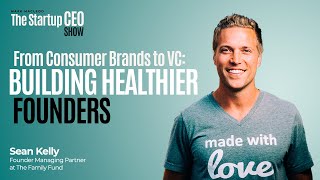
Sean Kelly moved from building CPG brands to co-founding the Family Fund, which invests in early-stage consumer companies. He built credibility through 50-100 angel investments and Founderland, a community of 500 founders. He argues that founder health, self-awareness, and deliberate practice directly improve both leadership and company outcomes.
Chapters
There was never a philosopher that said it was important to change thyself. It was always, know thyself well, know who the hell you are, and then go and build a career and a life around that. For me, I know I'm a little bit adhd. I know I like to have multiple things going on. And so I built a life and a career where I'm able to do this now. Does it mean I can stay constant and just like I am for the rest of time? No, but you adjust as needed and as it, you know, suits you and the people around you.
Welcome to the Startup CEO Show. I'm your host, Mark McLeod. In this episode, I sit down with my friend Sean Kelly, founder of the Family Fund. Sean has a long track record in building consumer brand companies, and so this is actually a different focus for us on the show. I've had lots of B2B software companies, and this time we're going into consumer product companies. So we spend some time unpacking the elements of that. I know many founders who want to move to the other side and be a VC at some point. And so Sean walked us through how he did that, and we spent the last part of the conversation on something that's deeply passionate to me, which is a founder health. And, you know, I deeply believe that happy humans build bigger and better companies. And Sean totally believes the same thing and is doing something about it with his Founder IV program. I really enjoyed this conversation. It could have been a lot longer. I hope you enjoy it as well. Sean, welcome to the Startup CEO Show. It's a true pleasure to have you here. How are you doing today?
Doing great, man. Fired up. Fired up to be here with you.
Amazing. The first time I met you in person. Sean and I are in a mastermind program together, and I learned that he just rolls around Mountain View and his Urbanis speech and his golf cart. So I was kind of hoping we would do this interview in your golf cart, but your office will do just fine.
Maybe if people don't hate yours. I think that would be a great round too.
Yeah, sounds perfect. Awesome. So for folks who don't know, you, just maybe just tell us who you are. Just give us kind of like the 30 second bio.
Yeah, absolutely. Sean Patrick Kelly. Grew up in Michigan, went to school in New York, studied biomedical engineering. Thought I wanted to be a doctor. Realized that I was too ADHD to be a good doctor, and so decided to go into business, but still focus on health and wellness. And so I've created businesses in the health adjacent Space primarily in like healthier food, consumer packaged goods for the last 20 years. And now I spend my time, half of my time developing a B2B media business called Lead Roller and significant publications and we can get into what that exactly means. And then the other half of my time, and I say the other half of my time because sometimes it's like 100% jobs in both fronts. But as the general partner and co founder of a venture capital fund that invests in early stage consumer brands, our fund is called the Family Front End Founder Community. What's unique about us is that all of our LPs are founders and operators. Most have exited consumer businesses in the past.
Amazing. I love that. There's one other fund that came across over the years that has a similar LP base called Lead Edge Capital, but they're very focused on B2B. So it's all kind of folks who ran enterprise who have access to CEOs, decision makers to help companies sell software to the enterprise. Absolute pain in the ass doing capital calls because you're getting 100 small checks or something.
Oh, I know, it's herding cats. We got so many LPs so my ops team doesn't like our capital calls.
But yeah, that's it. But huge value add, right? Just in terms of extending your network.
Well, that's what we wanted to do. You know, I've raised my other two partners. One of them is Josh Wand who the CEO of Force Brands. They're the top recruiter in the consumer brand space. My other general partner is Kurt Seidensicker who's the founder of Vinyl Proteins that had a multi billion dollar exit to Nestle recently. And in 2021 we were hanging out in Puerto Escondido, Mexico together saying what's our ambition for the next 10, 20 years? We became good friends over the last six, seven years together and we said, geez, we've all raised a good amount of venture capital. I've raised over 50 million in my own businesses, which is either a lot or a little depending on how you speak to. Certainly it was a lot. It was a lot in terms of growing up in Northern Michigan and thinking what I would do when I didn't even know what VC was. But we came together and said let's build an investing firm that is the firm that we would have wanted to raise from while we've been building companies. And we recognize that we are very fortunate to actually have really good investors. If you hear investor horror stories, we don't really have those, but the One thing that we realized is the investors that we raised from were primarily good at helping us raise more money. They weren't necessarily that great at helping us be better entrepreneurs and operators. The people who helped us become better operators were other founders. And so we said, why don't we create this network of founders that have a high degree of functional expertise, a lot of experience across every area that a consumer founder will want to tap into to achieve their vision and become successful. Let's get the best people in our community so that when people raise, we get the skill set and experience of this entire community behind the companies.
I want to go back to your kind of operating experience and consumer kind of brands a little bit and unpack that. But let's stay on the VC fund thing for a minute because I know many CEOs who have kind of said, hey, when I'm done operating, I'm going to move to the other side. And I can tell you myself, when I entered the startup world as an operator, I kind of set a goal to be a VC within 10 years and I achieved it. But then it turned out that I actually didn't love it, which is an entire other story. But I'm not being interviewed. I'm curious, like, how did you prepare yourself to be a vc? Because it's a completely different skill set. How did you have the credibility to convince people to back a first time VC who had ever been one who doesn't have a finance background? Just tell me about that because I'm sure there's lots of folks listening or watching who wouldn't mind making that switch someday.
Yeah, all very good points. And I think one of the points you didn't necessarily say, but there may be some underlying thoughts. There is that founders actually oftentimes do not make great investors because as a founder, in order to be successful, you have to constantly be optimistic. And not only do you have to be optimistic, you have to be optimistic in cases when nobody else would be. So you can see, like, oh my gosh, there's a problem, I want to solve it. Well, as an investor, you actually, your job isn't to look at problems and want to solve them because you don't have time to do that. For every one of your portfolio companies, you actually have to think about what are the reasons that this wouldn't work. Right? So yes, you need some layer of optimism. You need to be able to take chances and risks to drive, you know, proper return. If there's no risk, there's no reward. But you almost have to Learn how to defounder yourself in order to be a good investor. So I think today, so often people ask and they're concerned about how technology is changing and Jesus, technology going to leave me behind. I mean it might be an enterprise SaaS company and saying oh my gosh, I just built up this huge ARR base. We have this business and is this three person AI startup going to literally disrupt my entire business? I think oftentimes we kind of over exaggerate the impact of technology on our lives. And the question is not like, oh my gosh, what do I need to do to stay ahead of technology? But it's more of what do I need to do to ensure I have enough people that trust me in the world. And so for me as a founder for 20 years, building different companies, I started investing about 10 years ago just angel investing into consumer brands. One of the companies that I had was human, which stands for helping unite mankind. Nutrition. We had thousands of healthy vending machines that we put across the country. We'd go and find emerging brands, put them in our vending machines, and then distribute these products uniquely to people who had never seen or tried them before. That company ended up spinning off another company called Snack Nation where we had basically where we would place CPG products, healthier, better for you, snacks, drinks, foods, into over 20,000 offices across America. And our, our whole goal there was giving people the opportunity to discover these brands that were fighting for shelf space against the CPG behemoths. Well, what was great about that is we would get all the data on what products that people like the best. We take these emerging brands, we see what people would love, we see them grow. My friend Josh at Force Brands would know what teams were hiring, you know, hiring new leadership which were raising rounds. This gave us great access to invest in those companies. And so, you know, collectively between the partners of the fund, we angel invested in 50 to 100 brands. And a lot of those brands did very well. And then I, so I think we combined that access that we had professionally with an active track record, combined with running businesses that naturally gave us great access just in the general and standard course of business. And then frankly, we were known really well for community from the very beginning. We would throw events and bring community leaders together. We would throw events out in the Hamptons at one of our friend Michael Loeb's house where we'd go and get all of the top strategics and the top investors and the top founders that would like to sell to strategics and we'd Say, let's break down these walls and get these big strategics to connect with the top tier founders to talk about how does successful M and A work. So these are things that were just interesting to us. So it wasn't like we were going into investing cold. We were going into investing already, having put a lot of our own capital, at least for us, a lot of our own capital to risk. Certainly quite a few failures, but also some successes. And then we built community where so many different founders trust founders, strategic investors trusted us and knew us and had worked with us over the years. And I think at the end of the day that's the most important thing. If you have a network of people that trust you, there's a good chance that you can raise money for them. As long as you're raising money from them and placing it in an area where you have a unique differentiation, you have unique access and people trust that you'll be able to deliver above market returns.
Wow. That's actually. Yeah. Hearing you talk about that, there's actually layers of credibility there. Right. You know, you've put your own money to risk, you've got pattern recognition, you have differentiated access. Right. Like I think venture is completely based on unfair advantage.
Yeah. I think, I think one of the questions is, you know, what are you as a firm, how do you find differentiated alpha? Right. And for us at our firm, we talk about, and it was still the same for Fund one, it was about creating maximum access, making sure that we have the acumen as past founders and in the pattern recognition and shown through our track record and then also agility. Right. We actually thought there was a unique opportunity to build a different kind of venture fund and that was a primarily a co investment vehicle where we can actually pick and choose from the best deals. We don't have to have sharp elbows and only write lead size checks. Well, we could co invest with the best founders and the best funds to buy in at the right deals and have that agility that a lot of other funds didn't have and didn't want other approach.
That maximum access thing I actually think is the starting point of a great venture firm. When I thought about venture, it's maybe a little bit different in the consumer space and I do want to unpack that. But generally in the software space where I am, it's a few outliers that make the fund and you can only be in those outliers if first of all you see them. If you don't see it, you're not getting into it. So you have to see everything. Then you have to have some.
Perceived.
An ideally real differentiation, some kind of black box, right.
And.
And then clearly some kind of method to the madness for I think helping companies kind of grow and access to additional capital, access to leader, you know, helping a founder grow up and truly become a CEO. Not everyone can do that, but it starts with the access, you know. And so when I was a vc, my approach to that was to pick a specialty and go deeper in that than anyone could. And the specialty I picked was SMB SaaS. Because I had operated in that area, I knew it had been CFO at Shopify way back in the day, advisor to FreshBooks. I had some data points and I just started writing and sharing everything that I knew. And the process of writing clarified my thinking. And then these SMB SaaS founders, when they were thinking about raising, we were like, oh, I should go pitch Mark and his fund, right. So I kind of solved the access thing. But yeah, it's a tough, tough business.
Well, you, but you're, but you're right. I mean I think the, the dirty little secret, like I still consider myself a founder, I'm still building businesses. I think it's one of the things that attracts people to the family fund and I should say founders to the family fund. And Josh, Kurt and I is that we're founders. Like we were founders first and we're still founders and we're still building whether it's helping a company build or build their own businesses. But I think that the dirty little, maybe not so secret is that investing first and foremost comes down to access. I mean there's, there's actually a lot of. You could actually, even though people don't want to admit this, you could have the best access in your field and actually not be that value add. But just because of your network you get access to all the good deals and you could create great returns. Now hopefully you want to do a lot more than that, but access does matter most and for us, the way that we focus on that, it's why we're community oriented. We just threw founder land a couple of weeks ago where we had over 500 founders in Malibu, California. These aren't just any founders, but they're hand selected the best founders and consumer. If you have great relationships with founders and through the course of business or through over the last few years, people like you and hopefully that you've also helped them, they're going to let you into their deals if they believe you can continue to assist them. So access to Founders, if you just want to dial it in anymore, that's our unfair advantage now.
So I spend all day, every day with founders, CEOs, they're super creative. They always have the ideas. They have these temptation, like, I'm doing this one thing, but I have this other idea, let me go scratch that itch. And then often you're reining them back in and having them focus because you've raised capital for that thing and there's expectations. So how do you think about the fact that you actually have divided focus? Like you're running a fund and ostensibly competing against VCs who only run a fund, but you're also operating companies and then competing against entrepreneurs who only run companies. Like, how do you manage the dual focus?
Yeah, it's a great question and certainly one that comes up in every single one of our LP meetings. The first and foremost, we do agree to put a majority of our time into the fund. Right? Majority could be 50.1%. But we actually believe that the pursuits that we take give us a synergistic advantage that very few, if any, other funds have. So if you look at what I'm doing, I'm actually building media around founder health and founder exits. Well, I'm driving media and creating audiences that allow us at the fund to take advantage of the fact that I'm building these audiences and product services around founder health and around founder exits that spin up interest in people investing in these companies and also get founders interested in terms of how do I optimize my performance, my health, my family, all the other things outside of my business. So I've been very conscious in these last few years. When I launched the fund to ensure that I got out of my operational SaaS business, that was not aligned with my fund, bought in a CEO. And then all my other pursuits right now are they're perfectly synergistic with the fund. My other two partners, one of them, Josh Waront, he's the CEO of Force Brands, he's the top recruiter for cpg. And so it's unbelievable. What are so many teams want that are growing aggressively? They want talent, right? They need talent and people for their teams. So that's unbelievably synergistic. Josh has great access and provides such great, such a great database to these funds. My partner Kurt, the founder of Vital Proteins, he runs a hundred thousand square foot manufacturing facility where he literally manufactures products and can help the CPG companies that we talk to actually get his hands dirty and help them manufacture, build out their own Manufacturing. He'll sometimes do his own. Do manufacturing for them. So everything that we do right, for me, it's like go to market, sales, marketing, media. For Kurt, it's all manufacturing, product innovation. For Josh, it's talent. People see that we're in that space, that it's actually an advantage. Now, admittedly, when all the businesses are firing and we're. We're analyzing multiple deals and we're doing fundraising, and then, you know, there's a. Maybe a fire in one of the businesses or something happening. Is it intense? Absolutely. But that's why you build out a great team. That's why you build out a great team to make sure that you can cover each other when something happens. My belief is that us being active founders today at the fund, at. At the size that we are, provides us way more advantages. And also, I think you gotta. I mean, let's just. Let's just be honest. I think there's a lot of BS around, like, what's. What we make. The entrepreneurial journey is so freaking hard. I also think being a founder of an operating business is significantly harder than being an investor. I know that'll maybe make some investors mad. I believe founders are the kings. But raising money, building companies like, that's. That's made this the. The transition part, you know, at least partly to investing, it's made it a lot easier. I think founding is the challenging thing. They're the kings. They deserve the credit. But I think we, you know, we talk about how hard it is and we talk about, oh, my gosh, there's so much suffering involved. I think sometimes we talk about the hard points actually aren't the hardest points. Like, for me, being a founder, what you started this question off with, Mark, is the hardest thing about being a founder. It's the fact that you can't have your hands in multiple things. That was the. That's always been the hardest thing for me. I love starting businesses. I love getting them up and running. I love the fast growth. I love the building of the systems and the initial execution. I get bored pretty fast. I get bored pretty fast. Now, I'm guessing if you're running Facebook or maybe you're running Spotify or you're running Google, and it's like. I mean, your chances of product expansion and global takeover are unbelievable. You have so much to do that you maybe never get bored, but I think for a lot of entrepreneurs, you have that boredom degree. And so I think you also got to know thyself, right? It's one of my friends Charlie Baranoff, he says there was never a philosopher that said that ever said it was important to change thyself. It was always, know thyself well, know who the hell you are, and then go and build a career and a life around that. For me, I know I'm a little bit adhd. I know I like to have multiple things going on. And so I built a life and a career where I'm able to do this. Now. Does it mean I can stay constant and just like I am for the rest of time? No, but you adjust as needed and as it, you know, suits you and the people around you.
Yeah. No, I love that. Yeah. I mean, what you're, you're getting at is, is self awareness. And I can tell you that's the number one thing I look for in CEOs to coach. And when I was an investor, it was the number one thing I looked for in an investor. Because you're, you're investing for growth, right. And then the only way to keep up with massive growth is if you have deep self awareness and you're going through some kind of learning loop and you're growing at least as fast as your business. Right.
Otherwise you fall behind 1, 100%. You look at. Yeah, I mean, I look at all the time that I tried to. How much time I spent in the last couple decades of trying to improve my weaknesses rather than just doubling down on my strengths and then just plugging in gaps of the people around me. Thank God I'm in a place now where I'm much more cognizant. But, man, 10 years ago, I was spending a lot of my time in the stuff that I kind of hated and I wasn't that great at because I felt like I had to, to make my venture investors and make my team happy. I didn't need to do that at all, you know, And I think that's, that's a, that's a big learning point.
100%.
Yeah.
Lean into your. Know what your superpowers are and lean into that. I'd love to, you know, switch gears for a bit here. And you know, you've built a bunch of consumer companies and you've invested in a bunch of consumer companies. If you kind of look in the rearview mirror and reverse engineer, like, what are the patterns or traits of great consumer brands? Like, so folks who are trying to do what you're doing and maybe want to be backed by you someday have, like a template to follow. Does that thing exist or is it. Is, is there like a reference checklist in your mind or is it different each time?
There's not a perfect template, but there's certainly things that I immediately look for and the first thing that I look for when analyzing company, and I think this probably goes for any industry, is founder problem set. You know, does, is the founder absolutely obsessed with the problem that they're solving? Does it matter immensely to them? And do they have something probably in their, probably in their past or in the story of their life or how they became who they are that relates to that? Because if it's a founder that just, you know, stumbled upon an opportunity, you know, and wants to make a little bit of money, you know, the chance of that founder being successful and doing what is necessary for that business to become what they want it to be is very unlikely. Right. My, my biggest mistakes have been investing in founders who are like, we're going to exit in three years because this is the opportunity and this and what happens, something, you know, something. It's kind of like what Viktor Frankl said. A man searched for meaning. He said, you know, the, the, the people who are the worst and died the soonest were the ones that said, I'm going to be out of the concentration camps by Christmas. Well, then Christmas came and they're still there and they lost all hope. Well, the same thing happens in businesses. You gotta love it so much that, yes, have a vision, have a guidepost, but you need to, you need to love the problem. Doesn't mean you're going to love all the shit because a lot of the shit sucks, but you have to love the problem. One of the things I also learned is that's in one of my businesses that I had to pivot multiple times. I pivoted because we had to. And so many, I mean, how many businesses, Mark, require pivots to become successful? Probably most of them. Right. But the problem is, is that I pivoted the business multiple times, but I built the business in a way it was like facing 180 degrees from like how I founded the business. And I no longer even liked the business. Didn't mean I didn't like the. I loved my investors, I loved the people around me, but I didn't care about, I didn't really care. Like what we were doing wasn't Even a top 10 problem for me. So that jumps out to me is a very important one. I think a lot of investors sometimes want to come in and they want to, maybe they want to sound smart and prove like I'm, you know, that never happens.
What are you talking about?
Exactly? And so I like to, I like, I like to come in and I like to, I like to dumb things down. Like, tell me about your business, how does it work? How do you create the product? Why do you make money? Why do people choose you over others? You know, actually just find from soup to nuts, from creation of the product to delivery and customer experience, just what happens. And for the, for the founders that know what they're doing and are building a good business, they'll very, they'll be able to very clearly describe each step and why it occurs. Another thing that the way to describe is how your product is differentiated. I think differentiation is actually sometimes overrated, right? Because especially in consumer products. Brand matters, founder problem fit matters, the quality of your team matters. You don't actually need to have like this craziest differentiation. But if you don't actually, at the end of the day, know why your consumers pick you versus somebody else, that's a problem, right? So I think we look at differentiation, but it doesn't, it doesn't have to be perfect differentiation. It just has to be understood. And I have to believe every step of what people are doing. Other aspects, we look intensely at the family fund, we look at strategic landscape. This is kind of a pro. It's an issue. But sometimes I'll meet a founder in a really good company, but I'll say, geez, in the category that you're in, there's only one or two buyers. And maybe one or maybe those buyers are either not great buyers because they don't have great balance sheets and they're not used to buying companies, or maybe they already own an asset that's too similar to this asset that's being created. And so the strategic landscape for us is unbelievably important. Is this category growing? Is a category that matters to strategics. Are those strategics hungry to buy? Because there's a lot of investors that end up buying assets and they actually might be decent assets with pretty good operators and kind of a cool product, but nobody wants to buy them. And if you don't get like a strategic acquisition, then you're just going to be basically building a business off of like an EBITDA multiple. Well, Spotify Mark would be worth a lot less if it was only valued on ebitda, right? Like, I mean, yes, it ends up mattering at scale, but you'd like to get some, you know, some levers that increase kind of your returns. And for that you need a lot of strategic acquisitions. There's A lot of red, there's a lot of red flags, right? And yellow flags in terms of, you know, in terms of what we look for. But those are, you know, that's stuff that we look at. I think, I think the other thing I will add, and I could, I could talk about this subject for quite a bit. We obsess over both repeat economics, basically repeat purchase rates, which is the same thing in software as ltv. I think a lot of, I think a lot of founders come out and they talk about their brand. We're going to build a better brand. Our brand matters and this is why it's cool. Well, you can't really differentiate with brand early on because brand at the end of the day primarily illustrates itself through repeat purchase through ltv. Do people love the product? And so once people have that data, which they usually do because we're primarily a series A investor, we go absolutely crazy there. And then the other area that we go crazy in is margin. Because if you have good repeat purchase rates, that means that people love your product. I don't even, it doesn't even have to be the largest audience in the world, but if your customers that you're currently service serving love your product as displayed by them continuing to buy it, and then you also have enough margin where you can continue to market and sell your story and narrative, that combination can lead to explosive growth in a really nice, sustainable company. But so often, I mean, so often we see, we see businesses that are, they're spraying and praying in terms of trying to get, you know, distribution across the world before they're going deep and driving velocities with a core audience. And we also find so many brands that say, oh my gosh, our margin's horrible today, we're lighting money on fire, but it'll eventually get good. It's like, no, you know, most founders exaggerate in terms of how, how much their margin can improve. And margin, you know, you look at, you look at the best consumer exits, in many ways, consumers actually outperformed enterprise over the last 10 years. A lot of people don't realize that, but the average, the average margin for consumer IPO companies is 59%. So if you're literally running a consumer product with sub 15% margins, you're just going to run into different problems than if you're running an 85% margin beauty company where you have, you have so much room for mistakes when you're making 85% margin.
This episode is brought to you by fellow. Tell me if this sounds familiar. You Wake up, you take a look at your calendar and you see it's filled with meetings, stand ups, weekly check ins, one on ones, town halls. And those are just your internal meetings. Some are productive, but some are definitely slowing you down. Be honest with yourself. How many times have you thought this meeting could totally have been an email? Now consider that in the US alone there are 55 million meetings each day and 85 to 90% of those don't have an agenda. Velo is on a mission to solve the meeting problem by offering the only AI meeting management solution that covers every part of part of your organization's meeting workflow. And As a startup CEO show listener, you get 300 free minutes of AI recordings if you sign up today, go to fellow app CEO to start your free trial and start having better meetings.
Do you think it's important to go direct to consumer first before trying to build channels?
I think it depends on the product. I think, I think that building a D2C business, we've gone through the full correction where there was a, you know, two years ago and especially with COVID right? Everybody thought that no matter what the product was, I can create it, I can create a massive sustainable D2C business. Often you can't, right? Like good luck doing that with beverages, good luck doing that with snacks. You need retail shelves. But I think, I think the question is, can you develop an unbelievable amount of kind of know how and understanding of your customer by going D2C first and collecting all of that data so that before you go far and wide and really pour money, you know, fuel on the fire, you know what you're doing and your success is much more predictable. Absolutely. Right. So there's still categories, right? You go to supplements, you, you go into supplements, you go into beauty, you go into health tech, you go into pet, you can still, you can still build pretty large purely D to C businesses. But if you're, if your business, if we see a business that we don't think can be massively successful in retail, it's a lot harder for us to write that check. Because D2C, you'll see even businesses that go like this and create nine figure revenue in D2C, they'll usually have a flattening of sorts because marketing, right. And CAC gets more expensive usually over time. The reason that CPG companies so often like enterprise SaaS, like what did this, you know, I kind of know this kind of dumb guy. This is not me saying this by the way, that's somebody else. Here's this. Imagine this really smart technologist. How did this dumb CPG founder, this guy who's not even that smart or this woman that I didn't think was that impressive, sell our company for a billion dollars? Well, one of the greatest levers in CPG is this game called retail, is that you can literally, you go and you, you take your product in these retailers. If you have a good sell through and your consumers like the product, they will actually make your product successful for you. You don't need a sales team, you just need to give it to retailers and they put it on their shelves. And so that's when you can get this $10 million D2C brand that all of a sudden becomes, I mean, one of our investments that's going to have a, you know, an exit pretty soon. Here they went from 50 million to 500 million in a few years. That was all through retail. That was all through retail distribution. So retail is the reason that a lot of these CPG brands get these massive strategic acquisitions that, you know, the Strategics pay a lot of money for because they see what increasing amounts of retail can do to continue to build that brand, especially as they take it globally.
You know, when I think of recent kind of D2C brands that hit escape velocity, you know, Gymshark stands out. I know that's not one you would invest in per se, even though it's adjacent.
We do, we do, we do invest in apparel. We would have, I mean we would have looked at it early on, I think. I think apparel has its own unique challenges. But we like apparel. It's, it's not like center of the fairway for us, but it's, it's, it's on the edge of the rough.
I feel like I haven't studied them briefly, but I seem to recall like influencer marketing was a thing for them. Is that, is that like one of the things you recommend for your companies?
Well, I mean, I think it's social commerce. So I think there's different aspects, but social commerce today at Founderland a couple weeks ago we had the forager on stage from Sprouts market, right? One of the largest natural food, natural food retailers in America, right? If you, if you fly off the shelves at Sprouts and you can create a nice eight figure business just from that, that, that one retailer alone. Well, in speaking to her on, on stage at Founderland, I said how important is it, you know, that social commerce today that brands come to you and say, hey, look what we're doing at TikTok, look what we're doing via Instagram. You use the word it's critical. So no longer is it a nice to have. But these retailers today, they're actually sifting through TikTok and Instagram and they want to see. Because at the end of the day, if there's, if, if there's two brands, brand A and brand B, Brand A has an unbelievable social commerce following and then brand B doesn't and they're, they're in the same category. Charlottes would much rather have A because they know that the chances of that, that, that product turning on shelves are way higher. Right. So now, now brands, the way that we look at it is sure, because the problem with social commerce is you can have this brand go from 0 to 10 million overnight or whatever, 0 to 100 million. And maybe it's not sustainable, but the way that we really instruct brands is authentically put yourself out there, drive a narrative, get people, you know, obsessed with your lifestyle and your authenticity and then people make it a part of their identity. It improves your repeat rates. You end up getting this social traction through TikTok or Instagram and then you can sell that and take that to retailers and retailers. If retailers look at your numbers and are like, oh my gosh, we love this, then you're off to the races. So we really see it as an asset for retail distribution. More so than just like a standalone, a standalone channel that you should bank your success on.
Very tactical question on D2C. Do you think first purchase profitability is important out of the gate or is that kind of aspirational over time?
I mean here we said in 2024, right? Which is the age of the operator, right. So I think if you look at 2020, 2021, you had these inflated valuations, right? Really hard for an operator to build a company because they're always chasing their preference stack and their valuation and growth just for growth's sake. You've now got to this place of 24. Profitability by great profitability is valued most. We say it's the age of the operator because the only way that you're going to create a growing business and have good profitability is if you're a real operator. That's, that's turning the nuts and the screws, right. Rather than just, you know, pouring money into Facebook ads. So I think in this age of the operator, if you can make first order profit in a D2C business, it's excellent, it's definitely not required. Now do we like to see the first order profit within the first Three months. Absolutely. But it depends on the product, right? I mean if you're talking about product, I know one, one supplement company that we're analyzing right now, 75% of its revenue comes from repeat. Well if 75% of your $30 million comes from repeat, I'm completely okay you going and raising $20 million to actually, you know, even push out that profitability to 3, 4, 5, 6 months because your Ltd on that customer is 2 to 3 years. Right. And so I, I think it's an interesting question. We love to see it. I think it's incredibly intelligent for every DTC brand to, to do everything they possibly can to achieve first order profitability. It doesn't necessarily mean it's something that we need, but early on I think you do. And one of the biggest surprises you look at like the, the vital proteins. One of our friends, Dan Lorenko, a company that we invested in called Ghost Energy, they have energy drinks and a big supplement brand. They grew their brands profitably from day one and so, so many people think like oh my gosh, if I'm going to raise all this money, if I want to go and create this and those are all multibillion dollar brands. So it's like if I want to create a multi billion dollar brand, I need to go and raise a ton of money, push for growth, be the category king. No, most of the multi billion dollar brands they actually started off with profitable unit economics from Dane Warren and they just built it slowly over, you know, over and over and they only raised money when it actually made sense. Ghost, Ghost did not raise money. Institutional capital, we came into that round, they didn't raise institutional capital until they were beyond 100 million in revenue. I think vital, I think vital was 50 or 60 million in revenue.
And I compare, you know, I mostly spend my time in the software world right where we're building, deploying to a server. I'm completely trivializing. It's hard but you know, when you scale you just add another Amazon instance and off you go. Sorry to every software entrepreneur right now. It's just like that dude has no clue how hard this is and I'm totally trivializing it. But the point is now I compare to scaling a physical product business, it's operationally intensive. I've got supply chains, logistics, order lead times. Like manufacturing all this stuff. How do you if at all help your companies to scale operationally is about recruiting people who've been there, done it, got the T shirt, are there other things to kind of build that muscle? Because presumably you know, I start a product because, you know, you talk about founder problem fit. I'm, I'm passionate about solving a product gap, but I may know nothing about how to scale that to hundreds of millions of dollars.
Comes down to three main things. Talent, systems and technology. I mean, so I think the reason that we like CPG is even though you're, you're much less likely to make a thousand x in cpg, let's be honest, right? You're, this isn't Google or Facebook because you basically have the, you know, the, the basically $0 cost of selling an additional unit, right? You don't have that with CPG because like you said, you got to go and buy the product and get it to the customer. But the thing that we love about CVG is that we think there's more predictable returns because at the end of the day, if you have a blueprint and you go and get the talent that knows how to execute that blueprint and you have a product that's in an expanding category that shows good repeat purchase rates, there's so much predictability there in terms of where you know that company's going to go and underwrite. You can underwrite it just to a much higher degree of accuracy. So for, for when it comes to supply chain and operations, it's having the right systems, getting the right talent who knows how to execute those systems, and then making sure that you're integrating the right technology. There's some really interesting technology now. So we Also fund fund one, we're about, you know, 70, 80% branded investments. The rest consumer tech. For fund two will probably be about 30, 40% consumer tech. Now that's consumer tech. You know, you can think about as maybe the newest health technology because we're a significant health or wellness investor. Over 90% of our investments in Fund 1 are health and wellness. I believe even more in health and wellness than I do in consumer. But that's, maybe we can get into that. But you know, we're not only investing in like the, the, what we think is like the best user technology experiences going forward. It's, it's also the technology that's supporting the consumer ecosystem. So it might be supply chain technology, Martech, Revtech, basically new systems and technology that allow growing the cpg, growing a CPG company easier. And so I think plugging in the right tools is ultra important. I mean, there's one of my friends, Joel Goldenato, he runs Charge up AI. It's this amazing brand that automates through AI and machine learning. Automates the entire chargeback and reduction process for CPG brands which is historically one of the biggest pains in the ass ever. Because what people don't realize is in order to get a pocket shelf you gotta ship to a distributor, that distributor goes to the retailer. Well, what happens when one unit is damaged or something doesn't sell? Or you have these trade promotions at retail that don't come through like that's a complete mess that sometimes requires things of people. You're fighting for chargebacks, you're getting these deductions. You thought you had a 60% margin but now after you get a 30% margin it throws off your. He's automating that entire experience. So you don't even need a person focusing on it. So that's the stuff that we're focused on too. And obviously if you have something like charge up AI versus a team of three humans who hate their life because that just sounds like a horrible existence. Probably better. Probably a better solution.
Definitely. I absolutely do want to talk about founder health, but one last question on consumer which is really around. So we talked about DTC a little bit but clearly the bulk of the value creation like you said is in retail and owning the shelf. And I feel like maybe there's historically unfair access to shelves like with mainstream consumer products like you know, Procter and Gamble just has all the access and the eye level shelves are the ones they get and maybe you get something at the bottom. And if I think about your product categories, Whole Foods comes to mind as a pretty important channel like how do they react to your brands versus the more mainstream brands who have more kind of co op or marketing dollars or whatever. Or you can just like fill a shelf like I'm opening a new store and like they can just bring in creates and crates of product that people know and recognize. What are your thoughts on that for your companies?
I'm thinking about a couple things as you bring this up. One, I'm thinking about product selection. Two, I'm thinking about operational know how because the retailers want to make sure that if they choose to put your product on shelf that you can actually deliver. Because if you can't deliver and there's empty shelf space, that's bad for everybody, that's really bad for the retailer. But let's just assume and we can get into that and it's, it's, it's interesting, it's tactical, it's important, maybe it's a little bit boring. Let's assume that every product can actually deliver operationally products on shelf and do that so the retailer has confidence. Well, if you think about what the job of a retailer is, the job of the retailer is to provide products that directly reflect what their average user wants to see. And so I would ask you, or anybody who shops at Whole Foods or Erewhon or Sprouts or. And we do the same at Target and Walmart, do you want the same products from the same big brands all the time? Probably not. You probably want to make sure that those are there, but you want to see what's different. If there's a new ingredient profile that's actually better for you, right. That's going to help you achieve your goals, that's healthier for you and your family. Right. That's unique. Well, what about a new flavor combination? What about new ingredients that, that allow you to have something that was previously only filled with gluten, but now it's gluten free and actually tastes like the original gluten version? Right. That's something that's interesting. And so I think retailers, yes, it's, it's not easy because there's a lot of people that are competing for that shelf space. But at the end of the day, they want the new, the hot brands. I mean, that was the whole vision for, for like my earlier companies, you know, Cumin and Stack Nation was going and getting all these amazing brands and delivering the people because the younger generations, that's what they want. The younger generations want innovation and actually what they want. And especially in this world where we're all becoming like these digital avatars and it's all screen time, you know, in greater, greater, you know, percentages compared to like in, in real life, irr. IRL experiences. I know, Mark, you and I can buy. You and I bond on this because we think being in person matters a lot. Well, when, when, when, when that is all happening in the world and those are the trends people are actually using the physical products and the brands that they have more to show to connect to their identity. And so especially the younger generation loves discovering new products and then saying, this represents me. Because here's this spinner, by the way, we did not invest in spinners. This just happens to be on my desk. This is a lower calorie, right. Keep. Keeps me hydrated. I think it's X, Y. You know, this is what this means for me. It means that I care about health and wellness. I'm not drinking a soda. This reflects me. And in this world today, when we're so focused on digital, it's the consumer and physical Brands that people utilize to tell other people who they are, and they love telling their friends. So I think that's actually one of the most fun things about CPG is at least for a long time going forward, people are going to need to eat, they're going to need to wear clothes, they're going to need to take supplements. Physical products are not going away. People need to continue to consume them, and I think they'll actually increase in performance, in importance.
Yeah, no, for sure. I'm actually obsessed with food, and my wife is completely indifferent to food. And there was an old show, kind of before our time, called the Jetsons, where you would just, like, eat a pill, and then that was your food for the day. She wants that world. So I don't want that world. I get tremendous pleasure from eating, but.
I think there's about five. I think there's like, 2% of the world that probably wants that. But as you think about it, like, we get to invest. It's not just food and beverage. It's supplements of salt. I mean, I love supplements. I take 40 supplements a day. But at the end of the day, food is, food is what brings people together, like it always has in every culture. Foods, what brings people together. And so food, food, food, beverages and all these products and what's in people's kitchens and pantries, in their house. It matters a lot.
So, you know, you invest in, you know, brands that have an authentic health angle to them. And you're a former athlete, professional snowboarder, so founder fitness and, you know, is a thing. You're walking the talk. I was on LinkedIn, even though I know you, I was on LinkedIn before this, just to how, How's John talking about himself? And like, your tagline is build a big, great business and a great life. And that's something that, you know, resonates really deeply with me. I, I, you know, the number one reason why founders want to sell their company is because they burnt out. And, you know, burnout is avoidable. So maybe let's talk. And you've got this program, Founder iv. Maybe just tell us about the origin of this. Maybe I've done it already, but, like founder health, why is it so important and why are you spending time there?
Yeah, I recently became 40, and so I decided that I no longer want to do anything that I hate and that I don't believe in. You know, I don't want to, I don't want to please people that I don't want to be around. I don't want to Work on shit that I don't care about. I just, I want to do stuff that I enjoy. And so I thought in this next juncture for my life, that one of the best ways to do that is just to build products and services that I want to see in the world, right? And that are an authentic representation of me. And something that, you know, I've realized as I was building companies and, you know, building them, obviously to create revenue and profit and for financial freedom and for financial gain. I recognize in myself and in others that all of us, like, thought that we wanted to build just, you know, we wanted to build for money. And by the way, money is a beautiful thing. I mean, I'm an investor. You talk to an investor that doesn't like money. It's like, do not invest with them. But, but, but I, I, I, I just recognize in that process that first of all, so many of these individuals that I met that had unbelievable amounts of money were completely miserable, were totally burnt out. They actually felt like they were more chained and more prisoned than I've ever been, you know, even if they had more, you know, capital than me. And I was just like, what's going on here? And so I think that when I, when I've looked at it, it's like, well, what does money allow you to do? And for, for me, when I think about money, I'm like, money allows me to have complete freedom of, of how I spend my time, freedom of who I want to hang out with, freedom to go and, you know, be take vacations or do what I want to do there. It allows me to optimize my performance and my health and my feeling and my energy, right? And it obviously allows you to provide for your family, you know, in the ways that you want. They're like, well, why am I going, why am I using this like this intermediary of money when I can actually just work backwards and make sure that I'm getting all of those things. And hopefully by doing all of those things and helping, helping other founders, because I love founders and entrepreneurs. It's just the people I like to hang out with, founders and entrepreneurs, even as my friends more than anybody else, I just think they're the most interesting people. So how about if I help people get the end thing and that becomes more of my business? It all works together synergistically, and I think that I'll be able to have significant impact on the, on the people and especially the founders that I serve. So we talked about burnout. I mean, one third, it's not. It's now believed on that one third of companies that fail, which by the way, most companies fail, right? I don't know the exact stats, but most of them do. One third of companies fail because of founder performance, founder health, or like founder failure, right? Because they were not able to mentally, emotionally or physically do what was necessary. And so, yeah, so I just, I looked at it, I'm like, hey, I love business growth, I love marketing, I love go to market, man. There's even aspects of HR that I love. Like, I love all this shit, right? As long as I'm working in a company, I like it. But you know what, there's a lot of people who do that. There's a lot of people who teach about business growth or teach a bit HR and systems or wherever it is. What if we go out and basically build the system and the brand around Founder IV and Fouder IV is just in its infancy. That basically helps founders with all of the other aspects of their life so that they can actually perform their best inside their company, right? And so the way that we look at that is it basically comes down to founder health, founder wealth, and founder freedom, you know, and those are the buckets that we focus on. I think there's, I don't know if, I don't know if I want to say it's a renaissance, but I think there'll be an explosion of focus on founder health not only from the founders themselves, but from investors, from teams. People no longer looking at founders just as like, you know, extinguishable assets inside of these companies. But actually, oh my gosh, if we treat the founder like a high performance, elite athlete, we're actually going to get this asset to be as valued as, you know, as highly valued as possible. Oh my gosh, if the founder doesn't hate their life and is sleeping well and is taking care of their family and does not have marital problems. And by the way, also, is that a ticking time bomb in terms of a heart attack or neurodegeneration or a metabolic disease, but like actually knows their baselines and understands where they're at and can address them so that they don't work their entire life around the clock, sacrificing everything that was important to them and then at 52 years old, die of a heart attack or get cancer and die four years later? Like, I just, I don't think even as founders, like, I know, I know there's this excitement, this sexiness of hustle culture, just work. All that matters is business and all that matters is money. It's. It's just. It's ridiculous, and it's so dumb. And I think we. I think we think as founders, like, we have all this time. Life is so short. Like, I see. I see people in their 50s living and breathing hustle culture and continuing to sacrifice the things that matter to them. It's like. It's like how, like, you're 55, you know, and it doesn't matter if you're 34 or anything else. It's like, why don't you do the things today that will enrich your life, and it actually can make you a better founder. So I think there's this belief that if you're too soft here, you'll become a worse founder and a worse entrepreneur. It's the dumbest. It's the dumbest thing ever. I will tell you that when I take care of myself and I work out every day and I eat healthy and I sleep well, I am a infinitely better leader. I'm a better strategic problem solver. I'm a better fundraiser. I'm a better everything. And so we just. You know, I think part of. Part of business is deciding a differentiated approach. It's being authentic to who you are. Right. It's more about. My buddy Dan says authenticity is undeceived. And, you know, and I think as long as you're helping people and doing so meaningfully and getting them to open up their eyes to something that they may not know that they need, but they really do give people what they need and what they want, I think it'd be a good combination.
I love it. You're definitely preaching to the converted. And I've personally been on both sides of this, and maybe there's a little bit early in your career, you don't have the 10,000 hours yet, so you feel some pressure to get the 10,000 hours as fast as you can. And I definitely did that. But, you know, when I was an investment banker, I was working 60 to eight hours a week. If I was awake, I was working. Like, I did conference calls on the toilet. It's, like, nonstop. And Now I coach 40 hours a month. And, you know, you think about a leader. What do they do? They make decisions. And if you. The clearer your mind is, the fresher your mind is, the better decision you're going to make. And, you know, if you're living in fight or flight mode and you're just going from zoom to zoom to zoom meeting like you're pounding emails at night afterwards because you have no time during the day. And you don't. You eat unconsciously in a meeting. You're not even aware of what you're eating. You just eat whatever you can get. You're not setting yourself up for peak success. Right. And so you think about an athlete, right? Like, an athlete is surrounded by a team to make them like their peak athlete. Right. Like LeBron James, I'm sure, has everything right. You've got, obviously, physiotherapists, sports psychologist, nutrition, like, anything and any modality that he needs, he's got it right. And then obviously the paradigm of an athlete come in. Crush it. Rest, practice your craft. Repeat, like huge amount of rest time.
Right. But by the way, you even talk about that. You talk about practice your craft. The average entrepreneur in the United States gets five hours or less of training a year. The average military leader spends one third of their careers in training and getting better. And so you talk about like. Like, what's the practice version like? You talk about every. You know, as entrepreneurs and founders, we love sports. Sports and military analogies. Right. And metaphors. Well, we're not practicing like the average founder. If you're a founder who gets up and you're just working as hard as you can until you can't work anymore, that's actually not a sign that you're important or that you're so busy or that you're doing well. It's a sign of incompetence. It's truly a sign of incompetence. You're probably doing so many things that you. Not only are you probably not doing them really well, but you're probably doing a ton of things that you shouldn't even be doing in the first place. Right. It's like. And are you actually practicing? Are you getting better? People, they say, oh, yeah, on the job, better. I'll, you know, on the job, training. Okay, a little bit. Right. But I think, yeah, I think the things that you bring up are relevant, and I think they're becoming increasingly important.
Yeah. So on the job training, I get that. Or is it like a professional development course that you can go off to for CEOs and, like, you know, so even me, like, I've been on every side of the table, operator, VC, banker, now coach for a long time. But I don't have all the answers for the CEOs. I spend a few hours with them a month. They're with themselves every day. The thing is. Yes. So, okay, on the job, you're going to do a lot on the job, but you need an explicit learning loop, Right. This actually goes back to self awareness. You will harness the benefit of all those reps on the job only if you are reviewing. Kind of like, I don't like how I performed here, I don't like how this meeting just went. You're going through some explicit correction loop. Right. And the most successful CEO I've ever worked with is Toby from Shopify. And he runs a 10,000 person company as a first time founder who didn't complete high school. But he's deeply self aware and he goes through an explicit learning loop every day. And one of his mottos from the earliest days, even when I was there was get 1% better every day and 1% better every day is 37x better in a year. It's just transformational. So it's a cop out. And it's a lack of boundaries to say I'm learning on the job because there's no actual explicit like intentional learning happening. You're just hoping it's happening through osmosis, but meanwhile you're actually just overwhelming yourself totally.
I totally agree. And I think that like, that's why I don't really trust founders that don't have space. Because if you don't have space, you can't learn. It's impossible to learn without creating that space where you can actually reflect and you can actually become better. In the process of asking yourself the tough questions, being honest with yourself, being aware, those are all, you know, those are all ultra important. And I think the 1% better, I think so many entrepreneurs will nod their heads. Well, the problem is that most founders, even those that are well intentioned and well meaning, which almost every founder is. And by the way, I've almost never seen a founder where the problem with that founder was that they didn't work hard enough. Like we celebrate hard work, right, in the entrepreneurial culture. But it's like, well, everybody's working hard. Like I don't know a single person who's working hard. It's like it's a competition. It's the dumbest thing when everybody's doing it. It's like you're talking about a commodity. Of course you gotta work hard, but that's not what's interesting. So the challenge with the 1% better is that, yes, 1% better every day, 30x plus better at the end of the year. But the challenge is so many people, they have these massive negative swings. They might get 1% better for, for two weeks, right? But by then not setting themselves up the right way, they go Backwards, right. For the next week and then they're back to, you know, where they began. And so that's why even for me, I'm like, man, even in those really tough and those really shitty days, or just when, man, it seems like you're just getting punched in the neck from every direction. It's like, how do you get back to zero? How do you get back to zero? You know, with your, with your self care, you know, so that you make sure that you're not ending the night or ending the day in like a negative 10 position that's just going to put you into the next day, you know, scrambling to catch up and then you're just yawning and you're screwed.
Such a huge point. You're absolutely right. Yeah, it only, the compounding only works. It's not snakes and ladders, right. Go up three, down four or whatever. Like it, it has to be kind of continuous compounding. I'm curious, you know, you walk the talk yourself for the founders you're involved with. Do you have some kind of program to help them scale in a healthy way without burning out?
Yeah, Founder id Right now we just try to, I try to talk about the aspects and the stories and the experience that I've had. Right. The shared experiences and the things that are in my mind. Because I think if I'm reflecting what I'm going through and building my firm and building my companies and what's worked for me and what hasn't, the mistakes, like that's probably going to be what's most relevant. Right. And that's going to be helpful. But we are right now getting into the mix where end of this year, early next year, we are launching a really, really cool community around founder longevity optimization, wealth and like family and freedom. So we're creating a community, we're creating some really, really cool events around all of this where we're going to be rolling it out. And so we're going to be rolling out a program where founders can come in, get all of the tests that they need to figure out their baseline, understand their genetics, understand their biology, understand what's working, what's not, understanding how to improve. And they're going to do that in a community of other entrepreneurs and founders who are going through the same way. Because especially men, especially men founders and most founders still are men. I mean, we love, love backing females and hope more and more women come in and found companies than they certainly are. But men especially are really, really bad at getting tests and that they're so bad like, even, even really smart entrepreneurs who have made their, their tens or hundreds of millions, you'll go to them and they'll be so obsessed with health and longevity. And I'll say, hey, you know, Tom, we talked, you know, over the last few months when we met and we talked about all those tests, like, what, you know, what have you done? What are your results? Like, I haven't done anything yet. I don't want to see the results. Or they're like, yeah, it's, it's too much effort. And so there's, there's stuff that we're doing. So founders, it's really easy for them to get all of their tests, they're held accountable, they're in the right community. We combine it with events, we combine it with really cool wealth building strategies. Another thing that a lot of people don't talk to founders about, this is one of the biggest mistakes that I made is that it's not just about health, longevity and performance. Of course, like that's, yes, that's a, that's a head nodder. Like the healthier you are, the higher performing you are, the better leader you're going to be. But one of the, one of the challenges I thought like in especially my 20s, I was like, oh my gosh, I'm just going to wait until I make my hundreds of millions before I worry about wealth. Like, I'm not going to, I'm not going to worry too much about that. It's so dumb. Like, you know, first of all, most founders don't have big exits, right? So like, what can you be doing, doing today to take your salary, your distributions, your earnings, whatever it is, what can you do to make sure that you optimize and you maximize that? Right. And so I think there's also these components of wealth. When you come in with other founders, what are you doing for your wealth across these other areas? Because, man, if I look at the roller coaster and the ups and downs of entrepreneurship, I, you know, I don't know if I don't think it's at the point where I've made more through investing than through entrepreneurship, but it's pretty damn close. And I just want to make sure the founders, like, I want to make sure founders are making the right decisions there so that no matter what they're setting themselves up to, the life that they want, even if they don't hit that, you know, that 10 figure exit that they're in there for, I love that.
So important, so important. Maybe final question, any thoughts on. I think his Name's Brian Johnson. That founder is now investing so much money on reversing his chronologic chronological aging.
Yeah, so Brian actually lives pretty close to me. I saw him a few weeks ago at a friend's house. I think Brian, every industry needs a Brian. They need the extreme outlier. And so do I think that most people want to live anything like Brian? I'd say no, I don't think people want to. But do I think that Brian is doing a wonderful job of educating, developing awareness around certain aspects of health and especially prevention. But his mission's all around don't dying. I completely agree. Like, like you look at the, the ways that people die, the four main reasons of death, we can significant, significantly prevent all of them. Especially cardiovascular disease. Right. And we know what you can do to avoid metabolic disease. We know what you can do to do to avoid to a certain degree neurodegeneration. We know what you can do to stave off cancer. To some degree those things are essential because again, at the end of the day, if you're building this life and you're working so damn hard and you don't get to ever enjoy it with the people that you enjoy being with, like what the hell is the point? Unless, unless you're just going to sacrifice all of your life for impact, which is a beautiful thing and that's great. But again, I think we forget how fast this life goes. And so I like Brian. I really like what he's pushing. I think that what I will say is how I believe differently. I'm a big believer that actually by integrating the right health and wellness strategies, your life can improve today while taking care of your future self. I think most people would say what Brian's doing and again he's making a pretty large sacrifice. But Brian in many ways is saying I am sacrificing the quality of my life today almost completely to hope that I get to the point where I will never die and then I can enjoy it down the road. I like to take a little bit more of a balanced approach. It's like health and wellness doesn't have to be this sacrifice. It's like how can you enjoy yourself today while making sure that you give yourself every opportunity to experience that top geo longevity.
Yeah, he's definitely a pioneer. I don't think I'd want his day to day lifestyle. I can't. I struggle to think about the implications for the world if the 8 billion people stopped dying and just kept procreating. But that's a separate topic. But yeah, definitely a fascinating character.
It makes a shall. Sean, it is wild how many people still think that, like, overpopulation is an issue. Like that's, that's actually, you know, something that's changing. But that's a topic for another day.
Yeah, that is another topic. Well, I feel like we could have gone much deeper on each of these topics. So maybe we're going to have to have a round two in your golf cart at some point.
We'll bring it up.
I'm going to have to actually. I'll show up and I'll hop in the mountain in the golf cart with you. Thank you so much for making the time. I really enjoyed the conversation.
Thanks for having me. You're welcome here in Venice, California, anytime, Mark.
Yeah, well, in the winter, escaping Canadian winter. Thanks, Sean. Hey, thanks for listening to the Startup CEO show.
If you'd like to connect with me.
Be sure to visit my website at markmcloud me or follow me on LinkedIn at the mark macleod or Twitter arcmcloud. And if you want to tune in again next week, be sure to subscribe on YouTube, Spotify, Apple, or wherever you get your podcast. We'll see you next time.
It.
More from Mark





The Burnout Breaking Point - How Strategic Breaks Actually Increase Productivity


Emotional Debt - How Avoiding Hard Conversations Compounds Into Company Killing Resentment


The Death of the Specialist - Why AI Is Creating a New Professional Class Called Scalers