From Farm Life to $40M: Katherine Regnier’s Startup Success
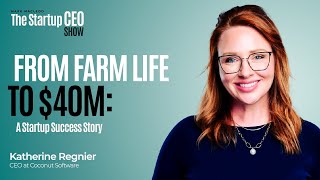
Katherine Regnier bootstrapped Coconut Software from a Saskatchewan farm background to $40M in revenue by focusing on scheduling software for banks and credit unions. She scaled to 120 employees across three Canadian cities while building culture around explicit values and learning to say no to custom deals that distracted from the product roadmap.
Chapters
This episode is brought to you by Fellow. Fellow is the only AI meeting management solution that covers every part of your organization's meeting workflow. Go to fellow app CEO to get 300 free minutes of AI recordings and start having better meetings.
That's also what I adore about being a CEO is I adore that what I had to do on day one and what I'm doing today and what I hopefully am going to do in two years is completely different. And it's. It's hard to transition. Like, what is it? 0.001% of CEOs can be from founders to. I call it the hero, you know, to the 100 million. That's a little bit of a personal challenge for me.
Welcome to the Startup CEO Show. I'm your host, Mark McLeod. In this episode, I speak with Catherine Rainier, founder and CEO of Coconut Software. Katherine grew up on a farm. This in no way prepared her for becoming an enterprise sales software CEO. And yet she's completely crushing it. Over 13 years, she's built a market leader in her category, and I learned a lot in this episode. We talked about her journey, turning down capital in the early years, the importance of culture and how she's built it, how she brings focus to the company and customer obsession, many, many more topics. I really enjoyed this discussion. I hope you do too. That's right. Welcome to the Startup CEO Show. How are you doing today?
Fabulous, Mark. Even better now. Ready to hopefully delight your listeners.
I love the word fabulous. People don't use that word anywhere near enough. So I love that you started there. And speaking of the start, I'd love to just start with your origin story. I've heard from Michelle McBain, who's one of your investors and is a very. She's a close friend. And I'm a friend of Stand up, told me that you had a pretty interesting origin story, so I thought I'd start there.
Yeah, absolutely. So I grew up on a grain and cattle farm and nowhere, Saskatchewan, and I did not set out to be a tech CEO. But as so many of the CEO stories is that you're trying to, you know, solve a real problem. And so I couldn't get a hold of who I wanted to when I wanted to. And I found that really, really frustrating. And so I took a 5k loan from our local 2 branch credit union in Bruno, Saskatchewan, and I thought, hey, I need to. I need to solve this idea. And there's been a lot in between that starting moment and this journey. So to date, we've worked close to $40 million. We have 120 people across Canada, mostly Toronto, Vancouver and Saskatoon. And yeah, it's been a wild ride. Didn't expect to really land here. Just wanted to solve the problem and it turned into something that. I'm really proud.
That problem must have really bothered you.
It bothers me like I hate wasting time. I hate it. Yeah.
Out of curiosity, where does the name Coconut come from?
You're gonna laugh, Mark. We're gonna laugh. So you're part of FreshBooks, right?
I was, yeah.
I. There was 17 people at FreshBooks and I flew from Saskatoon. Cause I was trying to find a program that had reoccurring billing at the time. And I was a big fan of Mike and I went out there and he said there was only. I think his team made him put it on. It was a session for CEOs and starting companies, business owners. Kind of makes sense.
Probably.
I probably wasn't supposed to be there, but I was like, I'm a business owner.
Right.
And he said, if you have a name that people can't say, people can't spell and don't ask you more, you have the wrong name.
Does it?
And I was like, shit, we have the wrong name. It is. It is. And yeah, he shared that FreshBooks was actually called Second Sight.
It was. Horrible name.
Yeah. Well, we were 24 hour assistant.
Okay.
Brutal. No one could say it, no one could spell it. My dad was getting it wrong and so Coconut just. Everyone asked about it. It's engaging, it really stands out. And if you can't spell it, like, that's not on me.
So true. Yeah, no, it's. It's like a happy name. Every time I see it, I'm like, oh, that just makes me happy.
So do you know, Mark, it, I. I think we underestimate the emotion that a name can give you.
Yeah.
And you're right. It's effortless, it's fun. And when I think about what we do, you know, it's usually a pain in the butt if I'm like, oh, go phone your bank and get, get the right person on the line. Not feeling great about that. And so I loved all the emotion it evoked because I feel like that's how it should be to engage with businesses. Right.
And what is it that may. My understanding is you work with pretty sophisticated, quite large businesses. What is it that made you choose that segment? And when I think about kind of scheduling and getting embedded into those businesses, how they actually operate, that actually sounds kind of non trivial. So maybe just Talk to us about, about how you got there. Did you start there or you just. You ended up there over time?
No, we started with a lot of SMMB customers in the early days and really brilliant business minds, not always very good with technology at that point. So lots of training. You were getting $20 a month. And we lucked out on getting a very large enterprise name in Canada, Telco. And so looking back, what we built was really meant for an enterprise customer. And we said, okay, we can't serve both markets. They want different things. The SMBs want a business in a box. Enterprises want it best in class. And it really resonated for me just to do one thing and do it extremely well. And so we started with appointment scheduling. We now do meeting, management and workforce optimization for banks and credit unions across North America with some of the largest banking names that we have. So it's been a journey to get there, but it's a great space.
That's quite a transition from small business to banks. Well done.
Yeah, I think it's all about what you're going to say no to. And we were saying, like, you're in the early days, you just want to keep the lights on, just want to keep things going. And so we bootstrapped for the first five years before we even took on money.
So was that because you had no choice or it was a choice to.
Bootstrap our first investor, Neil Dempsey, who's a big part of my story. When I talked to him, I actually told him, I don't want your money. He's like, what? You don't? I was like, no, I had no interest in raising capital.
That must have made him want you even more.
Well, I think he maybe doesn't hear that often.
It is.
But I did go down to the program he was running, Neil's running start, and I spent a month in the Valley. And then I appreciate it. I'm like, oh, I get it. I get it. This is an opportunity for growth. And I. And you can't. I'm not going to say you can't do it alone. You totally can do it alone. But coming from Saskatchewan and seeing what they were accomplishing there is like, okay, raising money is the opportunity to make a really big business. Or I could stay in this, maybe at that time, even a lifestyle business. We were doing really well. I use the word profitable. My first pitch.
How about that?
They looked at me like, you're a crazy lady. So a lot of education along the way as well.
It's so funny. First of all, I Love that you were five years old before raising because I actually think most founders raise too early because it's a one way decision in some ways, especially if you raise from institutional investors. It's like when Neo took the green pill in the Matrix. Right. There's no going back and now you're on a one way path to an exit. And I think for many founders that's an uninformed decision. You brought up FreshBooks. I raised FreshBooks first institutional funding round and they were 130 people at the time before they raised a penny of venture capital. Now they had raised angel money before, but at that point it was a totally informed decision. Shopify as well was a six year old company before it raised a penny of ventures. So yeah, I love, I love that you waited.
Yeah, thank you.
So there's obviously tons of challenges in, you know, every stage, you know, starting a company, scaling, etc. My understanding is you started this company when you, while you were three months pregnant and that I think you're also a solo founder. So talk to me about this multiple levels of masochism because this is, yeah, unbelievable.
Looking back, you know, I actually worked full time on Coconut and we launched this natural national brand while I was working full time at another company. So when I landed this hundred thousand dollar contract, I actually had a full time job and wasn't even full time at Coconut. But it went very well and that gave me the confidence to say, okay, there's enough here to pay myself and you know, one other person. And so that happened when my husband and I were, you know, we were three months pregnant and everyone said to me, we'll just get your mat leave. And I thought, wow, like we're always put into this spot of being to pick, you know, family, career, family, career. And I just thought, well, no, like I want to do both and I want to do it now. I'll be honest, I was pretty naive at what a kick to the face it would be being a first time mom. And at that time my husband was actually working shift work. So there were many days where I was up all night and taking meetings and you know, going through all of that. But I think there's no good time to, to have a family. There's probably no good time to quit your job and start a business. But for me it was more of, you know, I put things in extremes to help me make decisions and I thought, you know, if I was on my deathbed, what's the one regret I would have and I would regret not giving myself A chance, and that the worst case would be I go get another job. And I felt like I was employable at that time. And so whether it worked or it didn't work, I had no idea, but I just had to do it.
That's amazing. I'm so curious. You know, I'll move in on from the origin, but I'm so curious about someone from nowhere, Saskatchewan, which is apparently right next to Bruno Saskatchewan. I'll have to look it up on the map. With no prior background, deciding to start a software business. Like, did you. Were you even aware of, like, that startups were a thing, or was this just like, screw it, I'm just doing it?
Yeah, I did it. So I did work at a software company.
Oh, okay, cool.
At one point, and it's when we, like, sent out CDs just to date myself.
I remember that. Yep.
So I was aware of what software was, but I wasn't very familiar with SAS or Venture. It was all a lot of private companies where I'm from. And so, like I said, I wanted to solve the problem. I actually failed three times before getting it right. That could probably be its own other podcast. But, no, I didn't have a lot of exposure. And when I went to Web Summit in Dublin, that's where I met Neil's PR lady. And I thought, I need to get out of here. Like, we're under the stairs developing this code. We're talking to enterprise customers. We're kind of becoming this professional services house almost. And I was like, this wasn't the dream. I need to recorrect. We need to go get inspired. We need to change things up. And so that is when I went to Web Summit, met Neil's PR lady, had that conversation with him on the phone, said, I don't want your money. Go down there. He's the first money end. And here we go.
I love it. It's so important to metaphorically, you know, get out of the building and get inspiration, talk to peers, talk to aspirational people. And I'm wondering, because you have a big company now, probably everybody wants a piece of you, tons of demands on your time. Do you feel. Do you still. Are you still able to make the time to do that and, you know, step away from operating and get that inspiration or even just time to reflect?
You know, I probably spend a lot more time with mentors, CEOs that have been there and done that. I feel really passionate about learning from other folks. And, you know, you don't always have to take everything they say, but there's usually a moment in there where I'm like, okay, okay. Or sometimes they say something and I'm like, I don't get it. And then six months later I'm like, oh, that's what they were saying. Okay, okay. But I do, I do spend time going out and connecting with people, but a lot of time with mentors. Our board has an incredible CEO list that I get to lean in on and that's a game changer.
Yep. That's amazing. I love it. And are you part of like an a CEO peer group? Either something formal like I don't know, YPO or EO or just something informal.
I just recently joined Pavilion and went to their CEO summit in Scottsdale. That was great. Met a lot of like minded people. That was fabulous. And I also try to get folks back to Saskatchewan. So when I spent the month in the valley, I like flew up three of the VCs and I consider it one of the first tech events. It was like called Flip the Switch and everybody showed up. But I think it's important when we go out to then bring it back to the community to help it grow. And we're seeing more and more, more companies here that are giving it a shot.
So what's going on in Saskatoon? Like what's in the water? Like you've got Vendasta, which is a former client of mine that is at real from my short path days. It's at real scale. Could go public in Canada if it's. If the public markets were open. I'm very happily sitting on the seven shift cap table and everything's moving up and to the right and then you know, you're clearly crushing it. What? It's a tiny town. It's like 700,000 people or something. What's going on?
I don't even think there's yet maybe in all of Saskatchewan 700,000. What people don't know is actually Jordan was one of my first full time denpires. No, I worked together for about 18 months under those stairs that I talk.
About for anyone listening. By the way, Jordan is the CEO of seven shifts who's been a guest on this show before.
Yeah, he's incredible. And he was one of those folks that I just felt lucky as long as I got to work with him because you always just knew he had more dreams and ambition than being at coconut. And so yeah, really, really proud of his success and what his team is doing. I don't know. I think we just maybe have something to prove. Just really Gritty people told us, do it from here. And we're like, here, hold my beer. It's a very Saskatchewan thing to say. And I think we've proved it. Like the first five years that we bootstrapped, we signed some very large names even in the US and so when there was that pressure to move and maybe do it from somewhere else, I really had credibility in saying, well, you know, we've done it from here. We were able to sell these very large contracts from Canada and from Saskatchewan. I think technology's only enabled that more. I think it's less discussed at this point. But as a founder, you have to put more effort in and getting out there, like you said.
Yeah. So presumably you haven't taught yourself to code, but like, have you? And other than kind of talking to mentors and peers, what have you done to kind of learn these other disciplines? Like, you've clearly figured out how to sell. You're probably very involved in product management, marketing. Like, you've probably worn a ton of hats. And like, how have you come up to speed on those different disciplines?
I think by lots of failing.
Yep.
You know, I think hiring a certain way and then having expectations and being like, okay, that's better, but maybe not quite right. Okay, we need to go back. And I think that changes as a company scales. So you know, the team you need when you're zero to a million and everybody has said this, and when you're, you know, start to get to scaling 20 and north, it's just different people. And I just, as it goes on, I get a little bit better of what I think good looks like. And the first few times, yeah, probably didn't get it right. Lots of reading, lots of talking, lots.
Of learning, daily golf.
Yeah.
Michelle told me that you grew up on a farm, which brought a real smile to my face because I used to have a 50 acre farm. And it was definitely a thing that brought me joy. And I'm curious, beyond work ethic, what does growing up on a farm give you that you. You're able to use today?
Yeah, definitely. Work ethic is a big part of it. You hit it. But there was a lot more to it that I didn't realize at the time. I was not a person who really enjoyed working on the farm. I always said if I had to be physical laborer, I would probably be homeless. But there is a lot in terms of respect, perseverance. You know, people say tech is risky. I think farming is way more risky. You're relying on mother Nature and you really have no control over that. Managing and running a business. It's a very entrepreneurial business. There's a lot of business decisions that were made and a lot of that happened at our kitchen table. And so I was able to hear that and absorb that and understand, you know, your input costs versus, you know, the risk here and the different, different aspects of the global economy and who's buying grain. There was a lot of value that I think people underestimate about a farm truly being a business.
It's absolutely a business. Yeah. And you're absolutely right about the mother nature park. That's always been true. But I just feel, I don't know, the world's so volatile these days. It's probably even more of an issue. Right. With global warming. So scary place.
It's a changing game, but I'm incredibly grateful for it now. I wasn't at the time, but super grateful.
I'm curious, do you. I know when I picture a farmer, I picture waking up with the sun and going to bed shortly after the sun goes down. Is that still a thing for you?
Oh, God, yeah. I think that was a great thing about being an entrepreneur and being in tech. Like, you're always on and it didn't matter what happened the night before. In the younger years, you were getting out of bed and there was no excuses at our kitchen table. We actually were only allowed to complain if we wanted to talk about it. At the end of the day, it was really smart because we were all too tired and didn't care by that point.
So true. Yeah, I love it. So I understand you've nailed culture in coconut software and you've won awards for this. And, you know, culture is so important. Right. We say culture is strategy. The company, you know, just like, you know, Reed Hastings and Netflix with their kind of culture deck. HubSpot's had a culture deck. Like it's so important. And I think most companies don't nail it. What's the secret? What has been the secret for you? How. How have you nailed culture?
I think in the early days, I actually didn't nail culture. I didn't understand. You know, we had 10 people, we all got along, we all hustled, we all. We all got it done. It wasn't until we started getting a bit larger and I started hiring new key executives and we had hired one in Toronto. The office was a decent size at that time, and things just changed and I couldn't figure it out. And I was getting like mixed messaging and so I actually rented a place in Toronto And I. I stayed there for quite a while because I. It couldn't be like, oh, the CEO is coming into the office. I just needed to be there and become a part of the furniture. And what I realized is that, oh, this individual doesn't have the same values that the rest of us do. And then that's where I really nailed down. Like, oh, I get it, I get it. We're all here because we operate a certain way, we believe in a certain thing. And I didn't really have that nailed down. So it resulted in me parting ways with this executive. But that was the game changer for me. And when we're interviewing, we use our values. Cheers. Which is a nice way to remember to. We get to use it a lot. But, yeah, that's where it came down to. We just didn't quite have it right. And then I got it. Then I figured it out.
I think values are so important. I actually deeply believe that every issue, disagreement, lack of alignment, can be traced back to either a value that is not being lived or a value that is just unarticulated. Like, we. It's sort of. It's operating implicitly and nobody's named it, you know, and. But, you know, I think a lot of companies, you know, don't give it enough airtime. You know, whenever a CEO brings up a kind of an issue with an executive or an issue with the business, I always ask them, what value is not being lived?
Oh, that's a good question.
Yeah. Because then, yeah, we usually can get to the root of it pretty quickly.
Yeah.
How do you make sure your company values are being lived every day?
It's multi threaded. And I do think when we started earlier doing that, maybe we were 20 people. We actually have people bringing it up in conversation. Like, one of our values is honesty. And I could even start a tough conversation with that. Like, hey, Mark, one of our conversations or one of our values is honesty. I have something I want to share. Are you open to that? And so using it in everyday context, we also recognize our staff. Staff will recognize each other on a certain value throughout the week. We see that often. And then performance reviews, you know, more of the formal pieces. But I think that because it started young, it's quite ingrained in an everyday piece.
Yep.
Yeah.
At FreshBooks, we had this two page annual review form for each employee, and one page related to results and whether they were achieved. And the second page was values and whether they were being lived.
That is, that's how we break it up too. So here's the values, Are you meeting them? Are you being consistent on them? And then the next piece is like, what are the metrics? Because I think it's not what we do, it's how we do it. I really care about how we do things.
Yeah, Yeah, I love that. How has it been operating? So you said you're in three cities. What does that mean for you? Are you. Is it plane, trains and automobiles? Is everything kind of remote? Like, how does that work work for you?
We do have. I. Especially during COVID when everybody really went remote, it was important to me that we still had an office that people could come to, even if it was social distancing, because some folks, especially in Toronto, had, you know, three dogs and three people living in the house. And I just thought we need a safe, branded place that if people to have that change, they need to go there. And I still believe that today, even though a lot of folks still do work remote, but our executives are across. So I would say each place has a home of an executive. And then we take turns going to each other's cities. So we might do senior leadership team in July is in Saskatoon. Maybe next time it's in Toronto. So just trying to put the effort in. And I never expect individuals to do things that I wouldn't do in sense of traveling. So we try to share it amongst each other.
I love it. How do you. So your. Your leadership team is distributed only actually in the same room kind of periodically. How do you work to make sure that it's kind of like a harmonious, homogenous team?
Well, we've had a lot of work to do on that front. I think we've grown a lot and have become a lot better at it. So every year we set what are our three to four main KPIs, then we break it down and we have a pillar for each of those. This is what we need to accomplish. And then every quarter, the executive team and we bring in our own departments and say, what are the top deliverables we need to bring to the company? And we're pretty regimented on looking at that every week. Like, how are we making progress? I'm a very transparent, very communicative CEO as well, so I'll even do like, vlogs to the company where I'll be like, hey, just want to walk you through this. This is what I'm thinking. This is where, you know, things are going good. This is where things aren't going good. Just to kind of bring it all together in a story.
Love that. What do you think is your superpower and have you organized your role around that superpower?
Oh, my gosh. I don't know if I have a superpower.
Your results would suggest that you do, but.
Okay. I don't know if my superpower is like perseverance and resilience. Just not willing to take no for an answer and not give up.
Right.
I do think that has gotten me through a lot because, you know, every CEO goes through some ups and downs and they can be really high highs and really low lows. And, you know, you can always have the opportunity to. To toss in the keys. But I've always thought, well, if I give, if I ever give up, I never know how far I could have gone. And so that really keeps. Keeps me going. I think perhaps a superpower is people in relationships. Like, I genuinely care. And I think business isn't about selling. It's about connecting with people and helping them get to where they need to go. So I think it's definitely putting in time in with people and empowering them and helping them, however that might be.
Yeah. Are you still personally involved in sales cycles?
I get brought in to certain deals, but I mean, I'm always. You're always selling as a CEO.
Correct.
But I get brought into specific deals and that makes my heart smile. Just in Vegas for a conference.
You can't tell us what happens in Vegas. That's the rule.
I will not tell you what happens. Want to have a job next week, Mark?
That's right.
But I just love connecting with them and I love bringing that back to the product. That. That is really where my heart shines.
Yep.
Yeah.
I coach a few enterprise sales CEOs and I've found if I look at, I don't know what distinguishes the companies that are really doing well from the ones that are not, that are doing, you know, fine, but maybe just not top decile. The top decile ones. The CEO is still deeply involved in sales because the enterprises want to hear from the big chief, Muckety muck. Right. And it's, you know, back in the day, like my enterprise sales companies talk about power mapping. Right. You know, there's like a bunch of people who are going to sign off before we reach a decision and get a purchase order. Right. So like back in the day, some sales rep would do the steak dinners in the golf and just walk the halls and collect the signatures. But that's not happening so much now. But it still has to happen virtually. Right. And so I find the presence of a senior person with A title that begins with a C just tends to accelerate getting those signatures. So, yeah, it's good that you're still involved.
You know what's interesting? And it's, I always think sales is always getting the deal, but the second half is keeping the customer happy. And so as a CEO, knowing that because you got the sale, your job is really just starting. And so, you know, spending time with the existing customers, I think is also extremely important. And lately it's been really good. I've been brought in to speak to boards, strategic boards. What are we thinking? And so again, back to that partnership in that relationship piece throughout the whole life cycle.
Yep. So it sounds, if I understand correctly, that you've maybe gone through a few revs of your leadership team. And I'm just curious how, how you're able to reach that decision because everybody faces that. Right. You know, it's so hard. Companies doubling every year. Not everyone keeps up. Someone used to be great, no long, no longer is. Or like in the example you mentioned, you just, it was just a bad hire. Right. They weren't a culture and values fit. Like, how have you gone about figuring out, oh, yeah, I need to make that code.
You know, I think a lot of executives for the. And I shouldn't have said a bad executive. That's not the right term. They're probably a great.
It was a bad fit for you.
It wasn't a great. It wasn't a value match for us. But I think as a business grows, they end up in different seasons and you need a different player for that season. And so, you know, I can have somebody who is awesome at, you know, doing really big enterprise deals, but maybe not necessarily good at process or now we have, you know, X amount of sales folks. And so it's like, okay, now we need to find somebody with that strength. And so I think it's just always evolving and, and there's a right time and a right person. Unfortunately, if your company is growing, you probably will make some adjustments and change for that.
And it sounds like caring. Empathy is a big part of you as a person and therefore a big part of your culture. Does that make it harder for you to part ways with people?
I guess you could say I always have work with a sense of empathy to understand and not really judge. So I seek understanding first. But I don't think you get to where I am with. With. I think what people do is they mix kindness with. With weakness, perhaps. And there's that saying, don't, don't m. Don't mistake My kindness for weakness. I think that's, that's what I believe in. I, I'm here to perform and I'm here to win. But I don't think one needs to be ruthless and crass to get it done. Some of the best CEOs could have you believe that it was your idea to leave. That's very smart. That's very kind. Smart and compassionate.
It sure is. I completely resonates for me. Right. I used to be an investment banker and there's lots of, let's just call them type A personalities. Right. First of all, it's all about me. They'll just like pound the table. Super aggressive, lots of drama. Literally pound the table and yell.
Yeah.
People throw things at me and like, I just never been that way. And we still crushed it as an investment bank, like completely. So it's. You don't have to be an asshole.
No. You know, like, it's fair to say, like, do I get mad? Absolutely. Does the team know when I'm pissed? Absolutely.
Yeah.
But do I need to yell and scream at people? No. Can I reset expectations? Yes. Do I expect you to do them? Yes.
So the decision, you're bootstrapped for five years and then you decide to take Neil's money, that's a big decision. Probably unlocked a different chapter. When you look back. What have been the other, I guess big decisions that unlocked growth for the company.
Yeah, definitely. Making the decision to raise money was a really big one. I would go back to the deciding what not to do. There's been one instance that I can think of the moment where I was like, okay, this is what, what we're not going to do is we said, okay, we're enterprise. We're not going to focus on SMB. And we have, and we telcos, you know, government, retailers, banks. And I remember talking with our marketing lady, Brielle and I could just tell her frustration of I don't know how to make, I don't know who the ICP is in all of these. And I just thought to myself, oh my gosh, we're like, maybe this is too much. So let's just narrow it and kill it and then we can always add and expand. So I think deciding not to be everything to everyone was a really critical decision which has also allowed us to be one of the. To be the leader and financial services.
Right? Yeah. That's so important. I love that. You know, when I was at FreshBooks, theoretically any business that sells its time or expertise for a living, any service based business could have been a customer and they were all welcome. But we actually only marketed to and built for maybe four Personas. Right. We were hyper focused. Right. Kind of web and freelance designers because they were early adopters, which mattered back when FreshBooks launched because it was, you know, we were kind of at the very beginning of SaaS. Eventually we added trades when we had the mobile app and you could like plumber could like swipe a credit card in someone's house, you know, so we were hyper focused. We didn't try and market to lawyers or, you know, anyone else. Right.
It's really hard, it's really hard to do that sometimes because you just want one to work out and you want to get your numbers. Yeah, it's a lot of discipline in that regard.
Yeah, that's right. So we've talked a bit about the things that you're doing to keep up with the growth. You've got the mentors, you join Pavilion, you're making time to read to get out of the building. What advice would you give to founders who are maybe, I guess a few steps behind from you to kind of maybe avoid some of the scar tissue that you've accumulated along the way and accelerate their own learnings?
You know, one lesson that I learned in the early days is I really built coconut from the customer perspective. I wanted something, I wanted to book it immediately and have that self serve experience. And to this day it's still an angle when we're talking to customers that might be something they care about. And I read this book and it said, take your first 10 customers out for coffee and ask them why did they buy you? And none of them said, so my customers could book me online. I was like, what? What? Huh? This is like why I did this. Like, I'm confused, really confused. It turns out they actually cared about the productivity, the understanding of what's happening with their workforce because you can't tell it in Google or on a piece of paper. And I was like, oh my gosh. It's actually more about like the internal workings of the business. And by the way, it's great that our customer can connect with. So I think advice is like, never give up talking to the customer and don't make assumptions. We've learned a lot by going back and saying like, what really matters to you? What's the value you're trying to drive? How does coconut fit into that? Because it's very easy. And it's actually a struggle we have at Coconut because everyone just thinks, oh, appointment scheduling. And it's like it's like so far from what we do, but everybody gets it and they can make sense of it and then they can move on. But it's not the reason customers work with coconut, which is really surprising.
Yeah, that's fascinating. So you know, your main segments are financial services, so banks, credit unions, when I think of them, I think of really long sales cycles. Lots of decision makers going back to this concept of a power map. And right. There are examples of companies here in Canada where both you and I are like Sensibil that also sold to financial institutions with a product that was presumably great but just died under never ending requirements. Right. Sensibil was selling to like Royal bank, the country's biggest bank and they just keep demanding more and more things and eventually you die. So how you've been able to navigate that and land kind of so many clients and get out of trial, phase into actual deployment because you know the segment you're going after is probably valuable to many people that are listening here.
Yeah, Mark, that's such a great question. And this is probably another very important decision. Point is I thought when we said, okay, banks and credit unions, awesome, that's like narrow.
Yeah.
Guess what? It's not.
Oh, interesting.
There's different sizes. So a bank under 1 billion assets under management operates different than a $20 billion one.
Right.
And so we've spent the last while exploring where do we best fit. Because there are solutions that best fit for the 1 billion and under.
Right.
Our customers, 20 billion and up, 10 billion and up. And so we had to go back and say, okay, we too can't be everything to everybody and said if this is, if they want the best in class of what we do, that's us. If you want a bank in a box, that's not us, that's okay. There's room for that. So it was looking at that market and also understanding how they, they, they care about different things. Right. Credit unions care, they're member driven, they care a lot about experience. Bigger banks do as well, but they may really care a lot more about more deposits, more loans, the feedback loop of the sales cycle on those things. So even though it seems like it's very put together, the more you learn about it, the deeper it is. So to get to your question, we did experience this pull between the different asset sizes of what world and just back to the same mantra of we want to be the best at this. We're pretty comfortable. We're not the experts in that there's other people who are doing it. We couldn't catch up. We couldn't beat them. Okay, maybe we partner with them and we do this side of the house. And so that's been our approach.
Cool. So it's more about picking a specific segment. And when you say best, when I hear best in class, I think that's catering to the largest segment. But it's not in your case.
No, no. And back to your question too, about the sales cycle. Like, we'll have deals that are in the tens of thousands, but then we'll have some in the million dollar deal. So we can. We can we have a very scalable product.
Have you needed to do things like, I don't know, create a category where you're in the upper right quadrant on a Gartner report? Like, is that a thing?
Oh, my gosh, this is such a thing, Mark. I don't. I think there's still opportunity to do that. I think there's still opportunity to do that. I wouldn't put us in the scheduling category. Like, we do lobby management, we do video banking, we do a lot of data and analytics. That probably feels like a natural place that we would go. But we actually don't see a lot of those in the deals that we're competing on. So I think there's some work to do. I think it's all unfolding right now.
I love it.
Yeah.
So scalable pricing kind of tells me, yeah, you're in a segment, but maybe some customers are larger, some are not. And I remember in the early days of Shopify, these big logos would show up like big merchants. It would have been amazing to have these logos. But, you know, they had SLAs, they had requirements that weren't on the roadmap in the extreme. You know, they wanted to host it on premise. That was a really short conversation. Obviously the answer was no.
Oh, I love that. I definitely.
I'm sure you did.
No.
But nevertheless, it was temptation. Right. To be able to stick this really big name brand logo up on your site is credibility. And to Toby's credit, he always said no. And it was just Shopify was a very big company before they launched Shopify Plus. And I'm wondering how you navigate that this pull, never ending scope creep, you know, how do you navigate staying on your roadmap versus, you know, pivoting where your customer wants you to go?
It definitely has been a struggle. And I would say fundraising actually helped us with that because in the early days, we were doing a lot of catering. You know, we're bootstrapped. Oh, you need A separate instance. Oh, you want to do this? Like, we just needed the money to keep coming in. Fundraising gave us the ability. And this happened in maybe it was 2019. No, 2018. Somewhere in there, I wanted to have a true SaaS company and having the money in the bank to then say, either you're going to work on our platform or we were going to part ways. And we, we did. We were two weeks away from signing or renewing a deal. The very large Canadian company, we're getting close to the million dollar mark with this contract. And I worked with them in the early days, did the PMing and all that jazz. And I remember talking to the lady who's managing it at Coconut now and I could see the look in her eyes of just like having to deal with this customer where it was never good enough, they were never happy, really toxic. And we were in red lines. And I phoned our Sierra at the time and I said, we're not doing it.
Good for you. That's amazing.
We're not doing it. I don't. I again, it's not what we do, it's how we do it. And you're not worth it to me because you're going to slow me down. You're making my staff incredibly unhappy. I don't even want to work with you and I don't regret it to this day.
That's amazing.
It's like free. It's like freeing. Yeah. So. Takes a lot of guts, I think. But I don't know, you just have to have the confidence to know that what you're building, and that's the difference too, about being a thought leader. Most of our customers don't know. They come with asks, they say, oh, they're solving the problem. You've seen this, Mark. They're solving the problem. Catherine, we need you to build this. Well, guess what, Joe, We've had that request before, but really, here's how we solved it. And we know you're going to have a better, a better experience and better outcome and I would hate to waste your money on building this when I know, because we've been doing this for 15 years, this is the best way to get it done.
Has it been 15 years?
Well, with bootstrapping?
Well, yeah. I love it. How do you stay motivated and driven?
I don't know. Some days.
That's fair. Totally understand, sir. I like it.
I don't know, Some days it's funny. I really think it does come down to the customer. If I'm feeling like, what am I doing why am I here? I'm exhausted. I go talk to people who are using our product or, you know, the stories that we hear that, that people are getting the financial advice that they need. And it's never been more important than right now. Like, it's really meaningful. One of our customers is Jackson Hewitt. They're one of the largest tax providers in the United States. They do millions of appointments in less than six months. Millions. Over 80,000 tax preparers across North America. I had him come talk to our staff and he said, catherine, for a lot of people this has to work because it could. It is majority of the time, their biggest paycheck of the year, their return. They use it to buy Christmas presents. There's a lot of emotion deep in Copenhagen on what we do when it takes money and people's livelihoods. And it was just such an incredible story. And, yeah, that's what keeps me going.
Yeah.
Customers and impact.
I love it. Just hearing you say that. Hey, I don't know. I keep going, but then I think, oh, I just need to talk to some customers. Makes me think about your schedule. Like, oh, are you ironic for a scheduling company. Let's talk about the CEOs schedule.
There's so many scheduling problems. Basket.
Because some CEOs, right. Like, very often when a CEO shows up to me for coaching, it's because they're overwhelmed and they can't keep up. Often it's because they're operating at the wrong altitude. They're still working in the business, whereas they really should install leaders and kind of elevate more to work on the business. And when I asked to see their calendar, it's slammed. Booked through lunch. Like, no time for reflection. No time to even do email. What does your schedule look like? Is it rigid and always packed? Do you build in free time? Are you able to just, oh, here's an issue. I'm going to go deep dive. And you actually have the space in your calendar to do it. You know, what does it look like?
It's probably more.
More on the busy side.
The busy side. Although that coaching advice that you had just said, I have received, and that's also what I adore about being a CEO, is I adore that what I had to do on day one and what I'm doing today and what I hopefully am going to do in two years is completely different. And it's. It's hard to transition. Like, what is it? 0.001% of CEOs can be from founders to. To. I call it the hero you know, to the 100 million. That's a little bit of a personal challenge for me. Like can I grow, can I maneuver or will I be like, oh, I'm really good at startups but not great at scale ups or. And I, I really want to work on that. So it, it varies from time to time. What I have realized is that if I'm getting into your department and I'm trying to do this work, I probably don't have the right person. And that goes a little bit about the difference of hiring and what I need. It's like, why, why am I in here fixing it? Like so having boundaries, that's become my new, I shouldn't say my new thing. I don't think CEOs have work life balance. I've never subscribed to that. I never claim it. I don't really talk about it. I think it's about boundaries. Is it, you know, there's certain things that I need to carve out that I need to do things. And there are certain times where I have to work through lunch. Like who? I'd like to know what CEO gets lunch. That'd be cool. I didn't know that was a thing.
No, probably not.
Yeah, probably not.
I mean, I bring it up, I've been on both sides of this, right? You know, operated for 14 years and didn't really have any work life talents.
Credible ride.
Yeah, I'm old. Look at the color of my beard. I am old. And it's fine, I'm fine with it. But yeah, I operated for 14 years and you know, it's probably the fourth company I was CFO at and my kids were one year apart, 372 days apart. And there was one CEO who didn't have kids. We did all our strategizing, all of our war room stuff in the evenings over dinner and cocktails. Work like crazy. I barely saw my second born in his first year, you know, so it was, it was tough. And then, by the way, running an investment bank and doing six deals at a time, it's like not for the faint of heart. You know, there's no work life balance. And I didn't have meetings in the mornings because that was my deliberately, that was my deep time for strategic thinking. But lunchtime onwards was an absolute shit show. But what I've come to realize over time is what you are doing right now is creating. Right? And you've, you've been through a lot of it. You know, obviously zero to one is literally creating. You're giving birth to A company. But even going from 20 to 60, it's good. To your point, your role is going to change, the company's going to change. So you have to be creative and you can't actually. It's really hard to create when you're stressed.
Yeah, Right. Isn't that the truth?
Yeah. Because these. It's actually these insights, this magic kind of shows up when you create space. Right. And that's why I always look at CEOs calendars, because, like, where's the magic going to come from? Where are you going to get these insights? Right. You know, you'll probably look back on 2023 as an example and be like, there's been a few big moments, a few key decisions that really move the needle, and you want to show up as, like, peak Catherine in those moments. Right. With maximum clarity, maximum fidelity in your mind. Not like, well, I just pounded some coffee so I could sort of get through the day. But, like, you're actually fully there, you know? And yeah, many CEOs struggle with that.
I had someone say to me once, don't underestimate how much time it takes to think. Yeah. And you saying that made me think about a lot of the decision points I've made, and none of them have been in my office, in front of my computer.
Exactly.
Some of the best ones have actually been on a boat.
Oh, yeah.
On a boat with no foam.
Right.
Just thinking. Just thinking. But I do think sometimes we feel that keeping busy is productive and it's. I think that's a hard transition. I'm assuming, and I'm curious to know, Mark, what you think I assume that's why a lot of founders, CEOs don't make it.
Yeah. The first of all, I'm always on the lookout for this word, should I should be doing this, I should be doing that. And I'm like, says who? It should imply somebody else's expectations and then this busyness. So what I'm about to say, I'm certain you will agree with. Right. The startup world premale dominated as this bro culture. And like, we celebrate busyness. Like, you catch up with someone who you haven't seen in a while and like, how you doing? Like, oh, I'm so busy. And they're like, yeah, I'm so busy. It's like we, like, I don't know, like hustle porn. Like, everyone celebrates being busy and it's, you know, it's not healthy. Like, our brain can't do. Going back to that calendar. Your brain cannot actually go for eight hours in a row and with the same level of effectiveness. It's just we're fooling ourselves. Right. So we're getting diminishing marginal returns with each of these kind of demands that we put on our time or in our brain specifically.
Mark, I, I'm so refreshed to hear that because I do think at times I've seen that show still where, oh, I, I'm constantly here, there and I refuse from saying, oh, I'm busy because I'm always like, what isn't everybody like, what does that, what does that even. But I love that I'm going to, I'm going to take that to heart because I think if there's one thing we need to change in society, that's a big piece. I've gotten a lot of pushback about the four day work week or the flexible Fridays.
Yes. I wanted to ask you about that. Yeah, thank you for bringing that up. Right. Especially because you're venture funded. You have all these expectations. Institutional investors just want more and more growth. So I mean, imagine taking that decision was controversial. So. Yeah, I'd love to hear about it.
Yeah, it still is. Yeah, probably still is. I think I'm with you, Mark, in the sense that I doubt on Friday everyone is putting in a solid eight hour day. And I don't know, I think I believe in trust. And I don't know who said it, I think it's Richard Branson, but maybe it wasn't. But he take care of the people, the people will take care of the business. I know we're in a culture where we're always on, Mark. Like, I mean, when are we not looking at our emails or checking in on this? Like we're always on. And so I think this whole 9 to 5 is kind of, I shouldn't say it's BS because you know, I still love coming into the office. I come to the office, I like to, I have my routine, get in my zone. But I can tell you when I'm at home, hopefully watching the Oilers win, I have my computer up and you know, people are still working and I don't know, I just think trust goes a long way. And the intent of people, I believe the natural intent of people is they want to show up and do a really good job. And if I make them sit at their desk till 3 or 5, I don't know if that's really going to change a ton. But I think we do have this perception of, you know, if you're not sleeping under your desk, like you're Kind of. That's not really good enough. I don't know.
It's tough. It's tough, you know, but yet the data shows it.
The data shows that people are more productive. They're more happy, they're more productive. You know, if there's things that need to happen here, we do them.
Yep.
You know, a lot of people are still showing up, believe it or not, but they're doing the work that they really want to do. Like, oh, like, I really want to do this. And then they have the freedom to do it.
My understanding is this decision to move to Flexible Fridays has in no way harmed company performance. Is that true?
I don't know. Like, I mean, is our performance not where I want it to be? Mm, yes. But I think the whole. A lot of companies, I mean, Salesforce just posted, they missed their first quarter since 2006.
Oh, wow.
Yeah. Yeah. So I think. So what I ask myself is, if we didn't have that with the results be different, and I don't think the answer is yes, they would be dramatically different. So show me the data where it is.
Right.
Show me the data where it is. Because I can show you data on productivity and the increase and the mental clarity.
Right. And the performance measure things like employee engagement ENPs, all that kind of stuff.
Yes. Now you're going to ask me that, Mark. And you can't put this out because I don't know the number off the top of my head.
No, that's just more. It's nobody's business. But, yeah, we'll check this out. That's an important. I guess that's a thing that you. You would see. I feel like that that number would just be moved somehow by this policy.
Yeah.
Yeah. Which is why I asked, like, what.
Have you seen for, like, remote versus the demand? Back to office. What. What are your thoughts and perspective on it?
Yeah, Most of my CEOs want people back in the office. I'd say most individual contributors don't want to go in the office. I think for engineers, it's a lost cause. Offices were never good for them to begin with. And so I think it's really about, you know, more of the commercial people. I will tell you that when I ran my investment bank, I had three clients who were remote by design from day one. Buffer, hot jar, and texture. And all three were the most capital efficient, with the longest employee tenure and highest employee engagement scores of any of my clients. And so what I take away from that is that culture is not synonymous with being in an office. But many of my CEOs want that. Right? Because they want that energy, they need that energy. But it's not a thing, I think. So here's the thing. In my experience, right, obviously in office, can work, remote can work, Hybrid is really tough. And I think unfortunately everybody's trying is going to end up having some version of hybrid. And so it's just going to be really difficult for people.
Yeah, it's interesting because as I said earlier, we have offices and people come to them, but what's really interesting is we come to them and then we all go into our office and do this.
Yeah, yeah, that's it.
And so it's like now, every now and then there's a few that, you know, they'll sit down and have lunch together. But yeah, we all come to the office to then stare at Zoom.
That's right. I gotta say, when you used the term social distancing earlier, he gave me. You brought up my ptsd.
Okay, let's delete that. I don't even know why I said that.
All good.
I don't even want to talk about it anymore. It's so exhausting in a lot of ways.
Same. So forget the past. I think maybe as we wrap up here, Catherine, like, yeah, what's your vision for this company? Where do you want to take it? What does success look like? What, what do you try to achieve personally?
Yeah, our, we just said our three year voyage. Everything is very on brand at Coconut. So we've launched the Voyage. It is delivering more product and services to banking and credit unions far beyond just appointment scheduling and really becoming mission critical into them. Understanding what is happening with their workforce and with their branches. They have a lot of software for contact centers. They know to the minute what is happening, but they really are looking for the visibility into the rest of of their workforce. What is happening? What is most important to them? How do we provide services that are more meaningful? One of the things I would love to see is more value based matching. Who's a person that I would love to work with at the bank to talk about my retirement? Is it an 18 year old out of school?
No, definitely not. Definitely not.
Maybe he's doing like first time home buying perhaps. And so I think we can take it and make it feel less digital, more humanized, to have the best possible outcomes for the customer and the advisor and for myself. Wow. I was going to make a joke and say just keep my job, but I want to see how far I can take it and I'm not egotistical. Enough to feel like if I'm not the person anymore that I need to step to the right. But I. I am really enjoying and feel really privileged to to be here and do this every day. Yeah. So I just want to keep climbing the mountain, see how high we can take it.
Love it. Amazing. Well, I'll be cheering you on from the sidelines and thanks, Mark. I feel between you and seven shifts in Vendasta, I got to make my way out there and see what a nurse.
Oh, that'd be awesome.
Well, thank you so much for making the time, Katherine. I really enjoyed our conversation.
You bet. Happy to, Mark. Thank you.
Hey, thanks for listening to the Startup CEO show. If you'd like to connect with me, be sure to visit my website at Mark MacLeod me or follow me on LinkedIn at the Mark McLeod or Twitter arkmcleod. And if you want to tune in again next week, be sure to subscribe on YouTube, Spotify, Apple, or wherever you get your podcasts. We'll see you next time.
More from Mark





The Burnout Breaking Point - How Strategic Breaks Actually Increase Productivity


Emotional Debt - How Avoiding Hard Conversations Compounds Into Company Killing Resentment


The Death of the Specialist - Why AI Is Creating a New Professional Class Called Scalers