From Fintech to AI: Andrew D'Souza's Entrepreneurial Evolution
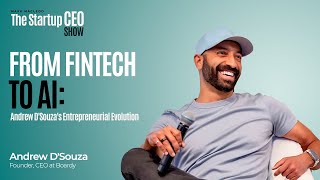
This is a transcript of a Feb 24, 2025 YouTube interview on the Startup CEO Show with Mark MacLeod and Andrew D'Souza. Andrew recounts Clearco’s evolution (started fall 2015; pivoted from gig cash advances to Airbnb to e‑commerce revenue‑based funding), the firm’s peak scale (about 600 people across 11 countries), and the operational/market challenges that followed. He describes early AI work at Clearco (an internal product "Clear angel" fine‑tuned on GPT‑3 around 2020), his decision to step away from Clearco to pursue AI, and the founding and vision for Bordy — an AI voice‑first “super‑connector” that matches people in their "zone of genius." The conversation also covers fundraising strategy, personal branding, network effects, business models for AI, and cultural observations about ambition in the Canadian tech ecosystem.
Questions this video answers
Fall 2015.
About 600 people operating in 11 countries.
Around 2020 (early access to GPT‑3/DaVinci).
Bordy Boardman.
February 24, 2025.
Chapters
You know, unfortunately, there's not a playbook that, that continues to work other than put your statement out there in the world and try and get the investors to reach out to you. Deals only get done when an investor is hunting you down. The reality is if you ask for the intro to the investor, cold or warm, if you're out there pounding the pavement asking for the intros, the odds of that deal gets done is very low. In today's environment, the only deals that get done are the investors coming to you and saying, hey, we love what you're building, we'd love to chat. You know, we think you're onto something interesting. So you kind of have to find ways of manufacturing that, that sort of inbound demand.
Welcome to the Startup CEO Show. I'm your host, Mark McLett. In this episode, I sit down with Andrew D', Souza, co founder and CEO of Bord. Andrew is probably best known for his previous company, Clearco, which he grew to at one point be a unicorn worth over a billion dollars, only to have.
It encounter some pretty significant difficulties.
We unpack the Clearco journey in this discussion. Andrew's had a long time fascination with AI, which is of course invading every aspect of technology these days. And so we talk about that and we talk about his new company, Bordy, which is fascinating. I actually recommend you follow it. I'll include some information in the show notes and go and give Bordy a call. Take care and enjoy the episode. Andrew, welcome to the Startup CEO show. It's a true pleasure to have you here. How are you doing today? I'm doing great.
Thanks for having me. It's really fun.
Yeah, you're doing great in large part because you're a Canadian who's escaped winter. Yeah. Currently tuning in from Florida and everyone who's listening is like, screw him.
Yeah, yeah. No, it's. I'm sorry. I know I've got many friends and family back home in Canada that are braving the winter, but managed to manage to escape this one.
Well, so much to talk about. You and I have known each other for a long time. I think you're most known for Clearco and Clearco. I remember when you and Michelle would kind of just pop into my office at the very beginning and just sort of exploring different ideas. It could be this, it could be that, and then, you know, you found a thing and hit escape velocity. And at one point in time it was one of those fabled unicorns and then kind of came down from that. I would love to just hear from your perspective, like Walk us through the journey from your perspective. Kind of the highs, the lows, the key decisions, inflection points, and then let's just see where the conversation takes us.
Yeah, yeah, absolutely. Look, it was a, it was a crazy journey. We started in fall of 2015 and we went through a bunch of iterations and pivots. I think the overarching theme was like, the world is going to be different when people can make money working for themselves and financial services are going to need to adapt to that. And that theme stayed consistent. And we started by providing cash advances to Uber drivers. Uber used to pay people every two weeks. People needed money to pay for gas and insurance and stuff in between. And we just, you know, we would log into their accounts and, you know, push money to a debit card. And we partnered with Uber to be able to offer that. But eventually it made sense for them to just pay everybody every day. And so we knew that was going to be short lived and we bootstrapped that into funding Airbnb hosts, which was a little bit more interesting, a little bit more complex and taking on some risk. And then eventually we sort of nailed the E commerce funding gap. And a lot of E commerce businesses weren't sure if they should raise venture capital or debt or what the right structure was. And we developed this sort of revenue based funding model for them. But you know, neither Michelle or I had a background in financial services, credit, you know, anything like that. And we ended up building this giant company. And once, once we sort of hit that inflection point, you know, the company scaled like crazy. We were at the peak, we were 600 people globally operating in 11 countries. And, and we had sort of created a category, but then we had to run a business and it became a complicated business where we had to manage foreign exchange risk, multiple funds, growth, revenue, cash flow. That was more complicated than a traditional SaaS business and required sort of a different level of sophistication.
It's certainly been my experience that fintech is go big or go home. Did you know that going in? And therefore there was a push to scale very rapidly.
There's a couple of lessons there, I think. One, we definitely needed to get to scale right? Credit businesses work when you have a low cost capital and access to a lot of credit. And I think the other thing is we were trying to figure out if we had a network effect business with sort of defensible moats and where those moats accrued to. And I think one of the things, data and underwriting became one brand and Sort of go to market, became another one. But we didn't really have a network effect business at ClearCo. And so as soon as we proved the model, you know, we had other competitors coming in, losing money, undercutting us, and we became a bit of a race to the bottom. And I think that was a, that was a big lesson for us is like, if capital becomes a commodity, then where does, you know, where does the value accrue? Where's the defensibility? You know, Interestingly, we got early access to GPT3 back in 2020. We, this is maybe not as well known, but we built a product called Clear angel, which was like, kind of like an AI angel investor. It was for all of the companies that had come to us and they hadn't, you know, they weren't mature enough to qualify for financing. But we wanted to keep a relationship going and we built, we hired a team of coaches and we trained like a rim. We fine tuned a GPT model built on GPT3. And this is back in DaVinci. This is way before ChatGPT. This was sort of early days of reinforcement learning. And people loved it. Like, it was just like, okay, well here's what you do next. You're making a thousand dollars a month. Like, here's some ideas of what to do next. And the AI was like coaching these founders and they were growing and some of them were qualifying. And I got sort of obsessed with it. I was like, this is going to be the future. I was like pulling people off of whatever projects they were working on. This is a 600 person company at the time. So I was like, hey, you should work on this Clear angel thing. And I think I kind of pissed off a lot of my executive team and my board to be like, Andrew spent all this time, I was going.
To say, I could imagine your board throwing up on that. Like, hey, we just need to keep making sausages. This thing's working, right? Like, let's just go.
Exactly, exactly. It's like open up new markets, raise more credit, like continue to scale, like hit the revenue, you know. And we probably spent a year on that project, maybe a little bit more. And I got really excited about it. But it wasn't clear that it was going to be a business. It was kind of like an interesting way to engage, you know, a broader community of people that weren't ready to be customers yet. But it wasn't clear what that business model was going to be. I was fascinated by the interaction. But we got to the end of 21 and it was like, okay, you know, are we going to spac the company? Right. Are we within striking distance of an ipo?
Oh, yeah. I remember that moment in time where spacs were a thing. Right.
We had raised money at a really high price and everyone was kind of. And some of our early investors were. Had been in the company now for six months plus years, or nearing six years. And we were kind of looking at an exit window of like, okay, you know, this is more than $100 million revenue business, multi billion dollar valuation. Are we really going to, you know, step away from the revenue driver and go all in on sort of this technology, you know, this AI thing? Or should we just focus, you know, put all the wood behind this and see if there's, if there's an exit window in the next one or two years? So, you know, at the end of 21, we shut down All Clear angel and all of our sort of side projects. And two weeks later, I kind of realized I'm not the right CEO. I wasn't excited about running the core business. The core business was renegotiating credit agreements and really turning the screws on the operational side to get it ready for the next phase. And I was like, we probably need to go do a search for a CEO, because my heart was really in building an AI and building sort of the next frontier of technology, not in sort of making what we built run better. Yeah.
So that's interesting. Like, in my experience with you, and I saw it just way, way back, kind of debating different ideas, you have this deep curiosity. You're just like this idea machine. And I wonder, even though you've seen scale and obviously you're running a company now and you've raised money, so they're going to want you to achieve scale, are you just at your core a zero to one person?
I think I'm probably like, when it comes to solving a problem, I like to try new ideas. My team gave me, they called it the gumball machine. They gave me a gumball machine and they were like, you just try new things. Right. I'm not the person who's like, I'm going to put my nose to the grindstone and just work through the problem. I'm like, okay, there's got to be, there has to be something we haven't thought of. It's sort of like, let's think divergently. Let's think about what new innovations are there, what can we grab, what edge can we get? And so it doesn't matter the scale of the problem. But what I grasp for is sort of imagination and creativity in solving problem, not sort of methodical structure in breaking down the problem and saying, okay, do this, then do this, then do this, then do this. And the types of problems that we needed to solve at the scale that we were at, Eric Clearco, were problems that were probably better solved with a methodical sort of principle thinking more than sort of a creative sort of divergent thinking.
You were kind of a bank in some ways.
I mean. Yeah, in some ways. In some ways, yeah, yeah, exactly. Exactly.
I don't see Jamie Dimon over at JP Morgan like, oh, let's just fucking freeform this.
Yeah, there's some laws of physics that are associated with finance and capital markets, which I learned.
So there's a bunch of folks watching or listening who, you know, raised capital in 2021 at inflated prices and now the markets come back to earth. You know, you raised at, you know, in retrospect, very high prices for Clear Co, like, what advice would you give them?
I think the sooner you can reset expectations with your investors around, like, okay, here, here's the situation we're in, right? Here's the value that we have as a business, here's the long term sort of potential, here's the team that we need to get to, and here's how we incentivize the team. You know, I think people that are hanging on to those and look and things will rebound, right? Do we really. Do we have a shared view around the time horizon that valuations will pick back up? Do we have a shared view around, you know, what a realistic exit looks like and a window looks like? And do we still believe that there's inherent. We can talk about multiples, but do we still believe that there's an inherent value in the business that we're all running and that the inherent value that exists creates enough incentive for everybody to stay motivated and connected to that outcome? And we went through that exercise with Clearcos. Certainly we raised more capital into the business not at the same price that we'd raised previously. We structured in a way that kept everybody incentivized and kept the core team really motivated. And it's on a great trajectory. We hired an incredible CEO who's running it, and all of the investors that stuck with us, I think, have a very good, good. You know, they're very pleased with, with the direction. You know, my net worth isn't what it was at the peak. And, and not all of the investors certainly were thrilled with it, but I think everyone sort of you know, we came to the table and sort of figured out what. What made. What made the most sense.
I seem to recall you engaged FT Partners. Is that right? Or am I dreamy?
We did work with them. Yeah, we do work with them, but that was also like, at a different time. Right. The company was going through.
Was.
Was sort of going through a bunch of chaos at the time, and so they weren't super. Well, super set up for success and sort of changed their mandate as we were going, but. But they were super helpful. I like those guys.
Yeah, Steve's a baller. He was kind of informally a mentor and would meet in my San Francisco office for sure. Path Capital was literally next door. I just pop into his office periodically because what he had done in fintech I was trying to do in SMB SaaS before I had an existential crisis and decided not to be a banker anymore. But I loved his specialization, you know?
Yeah, yeah, exactly.
So you raised lots of capital and you've just kind of like, just in your career, like, generally. And you just talked about one aspect of kind of navigating on resetting expectations. Like, if you had to distill, I don't know, is there like a d' Souza methodology for how to raise capital? Do you have a playbook?
I think it changes every time. I had a playbook when I first joined Tophat, when I would help them raise their funding round. And I think the playbooks get disseminated and they're not interesting anymore. And so there used to be a playbook. I think that playbook is no longer. And I think even now with boardy, like, we. We focus on how do you just. How do you put a beacon out there around what you're doing and why you see the world differently and then let the investors come to you. It's actually very interesting because. I know. I don't know. I looked at my, like, my database and LinkedIn. I've probably met with 1500 investors in my career, and I.
The.
The lead investor for our seed round was somebody I'd never met.
Right.
And. And I think. I think that. I think part of it is just that play. Like, people are tired, right? And they're tired of the, like, okay, you ask for the warm intro and you line it up and you do this thing. And the investors have heard the same pitch over and over and over, and they only look for the outbound. So even if it's an inbound from a warm lead, like, that was cool, you know, 10 years ago where you had a trusted network that would filter sort of warm leads now, sort of with YC and like that, like, everyone has a way to get a warm intro to an investor, and that is that channel is getting saturated. And so you have to find a different way to stand out. So it's, it's, you know, unfortunately, there's not a playbook that, that continues to work other than, you know, put your statement out there in the world and, and try and get the investors to reach out to you. I think most deals only get done, you know, you probably know this from your banking days. Deals on companies only get bought, right? Deals only get done when an investor is hunting you down. The reality is if you ask for the intro to the investor cold or warm, if you're out there pounding the pavement asking for the intros, the odds of that deal gets done is very low. In today's environment, the only deals that get done are the investors coming to you and saying, hey, we love what you're building. We'd love to chat. We think you're onto something interesting. So you have to find ways of manufacturing that inbound demand.
Yeah, so I was going to ask about that because what that brings up for me is personal branding. And so, you know, you're, you're pretty active on LinkedIn. You're, you're sitting there posting videos. Is that like a deliberate strategy to kind of create that inbound interest?
It is. I mean, honestly, I, I kind of hate it. Like, it's, I don't, I don't mind.
All right. Andrew's a giant egomaniac. Here he is again.
Yeah, I mean, look, I don't mind. Like, sometimes it's helpful for me to think through my own personal philosophies around company building and leadership and sort of like personal development and to share those. It actually started with. I used to do like a thought of the week at our, like, weekly, like weekly demos for the team. And my team would just say, hey, can I just film you? Film that and put it on LinkedIn. And that was fun. And it was just like a way for me to distill what I was thinking about or reading about into sort of like, you know, something that I could share with other people. And it forced me to sharpen my, my thinking and my communication. It's turning into a game and it's turning into like an algorithmic optimization. And I, look, I find it kind of exhausting. So I'm fortunate that I have some reach. Part of me wants to bootstrap that reach to Bordy. So That Bord can be a LinkedIn celebrity and I can sort of like, take a bit of a backseat because it is. I mean, you know this, right? It's just, it's an exhausting game to sort of play the LinkedIn algorithm and then that becomes your master. And so it can be a great source of distribution, but you just have to decide how do you do it in a way that doesn't exhaust you?
Yeah, no, that's for sure. I mean, it's a content hamster wheel, right? Like, I post every day on LinkedIn, every day on X, and I talk to many, let's call them creators. So people who are not running startups like you, but who are nevertheless trying to share thoughts. And for me, anyway, I've certainly decided not to try and play the algorithm game. I guess the not so dirty secret of content creators is they all have engagement pods and people doing kind of fake commenting. And you're writing not necessarily what you want to write, you're writing what you think is just going to be hot, right? And life's too short for that. So I've written for all of my career and I learned through writing, so that's why I keep doing it. It just clarifies. So that's how, you know, you. You like how you think through stuff. Like, that's how I do it. I just need to type and then everything becomes clear, you know?
Yeah, absolutely.
Going back to ClearCo, what are your regrets?
I cared a little bit too much what people thought of me versus just what I had sort of conviction around. Like, so, like, I knew that this AI thing was going to be important, but I couldn't understand why. Like, I kind of had like a bunch of feel like, as a founder, you have these feelings of, like, okay, I feel that the competition is coming in, right? I feel the pressure of rising interest rates. I feel this sort of new technology that I think might be impactful, but I couldn't articulate it. So I had this internal conviction. But my sort of need to be liked trumped my ability to just say, I have this conviction and I don't need to explain myself, right? I'm the founder, CEO, or my ability to rationalize and articulate that in a way that people could understand, right? So I had all these, like, sort of. I was trying to synthesize all these data points that I was picking up, but I couldn't go out and say, okay, here are the five reasons why, and here are the pros and cons, and here's why, like, I Didn't have the sort of structured thinking and I couldn't sort of synthesize those data points in a coherent argument to go to my team, my board, and say, look, I know this might sound crazy, but actually, here are all the facts that led me to believe that we should actually pivot the company, forego revenue, push out the exit window and go all in on AI in 2020. Right. I just sort of had this feeling that we should do it. And I was like, well, maybe I'll just build something awesome and everyone will get it. But that was, you know, it was a bit early for that. So I think that's one of the really hard things as a founder, is like, you either have to be an incredibly effective communicator to create consensus among your team, or you have to have this force of will where you're okay being non consensus and saying, well, you know what, I run the company, so you're either on the ship or off. And I got myself sort of caught in the middle and ended up shutting down the project that I really loved, which I thought could have been the future of the business. So that's probably the biggest regret is sort of picking one of those two lanes to be as a CEO.
Yeah, it makes sense. I mean, I would argue the bigger the company gets, the more the CEO role is just a communications role. You're right, because you have all the context. And whenever you were in hyper growth, I'm sure there was some period on the way to 600 employees where you're adding 20amonth easily, and then they show up with no context. Right. And so the chances for broken telephone.
Just multiply and being remote, you're kind of, you're like an influencer in your own company. Right. You're, you're just like creating content and you're looking at blank screens. You don't know what context people are in. They're in different time zones, you know, like, and you're hoping that everybody gets what you're saying, you know, in the same, you know, shared view. It's, it's a really tough, you know, being a scaled CEO in a remote work environment is, is a tough, a tough job.
There's so much more I could ask about ClearCo, but maybe we'll move on. I'm fascinated by Bordie. A. My first exposure to Bordy was. I don't know if it was an email or a cold phone call from Bordy McBoardface and maybe just tell folks what Bordy is and what was the inspiration for it, because to me it's batshit crazy, but I love it.
Yeah, it's, you know, it's sort of pushing the envelope around how we think about AI and sort of what AI and humanity could be. So Bordy is an AI super connector. You can message Bordy on LinkedIn. He'll call you. We dropped the McBoardface. His official name is Bordy Boardman. Now, Boardface might have been too ridiculous. You can have a conversation with Bordy, tell him about your goals, your backstory, your hopes, dreams, motivations. Then he'll try and connect you with somebody who can help. Could be a customer, could be an investor. It could be somebody that might hire you or you might want to hire. Basically, if your job involves meeting people you don't already know, Bordy can probably help you.
That's a wide temp.
Yeah, I mean, it's, you know, it's external. There's some people whose job involves just spending time with people they already know. In which case Bordy is maybe not super helpful, but for the most part, if you have an external facing component to your job, Boardy can be quite helpful. And, you know, part of it was certainly inspired by the early, early work that I've been, been doing in AI. But the other thing, you know, I got exposed to voice models about a year ago and started to see sort of how quickly they were improving. And, and I think that, you know, if you think about human beings, we have been, we've been producing sound to communicate information way before we had language, right? Definitely before we had written language. And the bandwidth that you have, like we're having a conversation right now, the fidelity and the bandwidth that you have when you're communicating synchronously using sound so much higher, it's so much more natural. And so I sort of realized, okay, if you can both listen and communicate via sound instead of via text, that's going to be a really interesting interaction model. And then creating, you know, I was like, well, where are the network effects in a business like this?
Right.
You know, clear code didn't necessarily have network effects. How do we think about this from a network standpoint? And then, you know, the, the, the third piece is something you and I have talked a little bit about is I, I really subscribed even running clear code to this, this idea of zone of genius, right. And how do you actually pull out what makes an individual unique? And if I could figure out what is fun and easy for you to do and hard and valuable for other people, and if I can figure that out. And I can find the exact opposite. Where what's fun and easy for them to do is hard and valuable for you to do, then that's a perfect connection. And there's all of this potential energy, this latent energy that could be unlocked, this latent value that could be unlocked. When you connect two people, and particularly when you can get two people that are in their zone of genius that, that can collaborate and solve each other's problems, there's real magic that happens. The challenge is like for humans, you only have Dunbar's number, 100, 150, 200 people that you can keep track of and even that you don't catch up with them on a regular basis. So this is kind of a great use case for AI if you can really sort of uncover that for people. And so that's part of the mission of what we're trying to do.
As you were saying that the dynamic duo that came to mind for me was Toby and Harley. Like way, way back in the day. Like Toby was introduced to Harley because he was an early customer. I was just like pounding with feedback. I want this feature. Do this, do that, this is wrong, fix that. And eventually shuts fucking shut up and hire the guy that, that's a dynamic duo. Each leaning into their zone of genius, which are completely complimentary, right?
Yeah, yeah, exactly. And magic happens when you get that, right.
Are you still taking your own meeting notes? Let me tell you about an AI tool that I'm using to take meeting notes. 1. It's called Fellow. It's an AI meeting assistant. It takes human level AI notes, it tracks my action items and decisions and keeps everything in one place. Built with security and privacy at its core, Fellow is the only AI meeting assistant that leaders trust to capture meeting notes and recordings while keeping your data safe. Thousands of organizations are consolidating tools and relying on Fellow to capture their meetings. The team at Fellow is so confident that you'll love it. They're offering an insane deal to startup CEO listeners. 90 days of unlimited AI powered note taking and recording completely free. Visit Fellow App CEO to sign up today and experience the AI meeting assistant trusted by leaders everywhere. Now I remember you sharing with me an early GPT tool before boardy called Ikigai.
Yeah, yeah.
Based on the Japanese concept of Ikigai. Iki I K I G A I But this was Iki I C K Y space gui. Was that an attempt to help people find their zone of genius? Is that, was that like a precursor to.
Exactly, exactly. That was kind of a First, and that was all mostly a chatbot, like sort of text based. And that was like a first, first version of, okay, can, you know, if you ask people the right questions, can you actually get them to discover something about themselves? Can you get them to build a relationship with an AI? And it gave me some really good insights into sort of how he wanted to design boardy. But yeah, that sort of, there were no network effects to that. That was just sort of a single player mode, sort of chatbot. And I think what's been interesting is starting to think about, you know, what does AI look like. I think a lot of, you know, this is one of my frustrations with Silicon Valley, to be honest, is everyone has a consensus view around what AI will be and what our relationship with AI will be. I think for most people it's like, okay, we're all going to have an agent that makes us more productive. We're going to have an assistant that does all the tedious work, the stuff that humans don't want to do. That's great and I'm excited for that. But I think what's more interesting is if you start to think about, well, what if this is like a new species that does some things way better than us and some things way worse than us and could we create a, you know, or a series of new species that, that can collaborate with us in different ways and that exist in society in different ways and that have autonomy and agency and sovereignty and you know, in their own. Right. Right. And I think those types of experiments, they feel a little bit science fiction, but I think those are the applications that I think are going to create the most interesting futures for us to exist in. And yeah, I just find a lot of people are like, well, it doesn't do math. Well, I'm like, well, AI is a gener. At least this new wave of AI, it's generative AI or the purpose is actually it's a non deterministic system. So if you're asking it to solve a deterministic problem, then it's like saying, you know, I don't like this, you know, hammer because it's not very good to eat sushi with like, right. It's like, it's not the point. There's other things that are good at solving math.
Right.
But, but, but I think, I think using a creative and inherently sort of generative system to generate possibilities in a divergent use case is where we're going to see a lot more potential and interesting and valuable use cases. And so board is One example of.
Those I want to come back to. AI. I know you've been thinking about this for a long time and I get a lot of questions, but just staying on board, I'm curious and if this is confidential, we'll move on. But, like, what future world did you describe? Like, how does Bord make the world different? What's the vision that you painted that your investors bought into?
So there's a couple of things that I think are unique and interesting. So one is certainly, if you can allow people to operate in their zone of genius and can connect them to unlock value and collaborate, then you kind of break away from the structures of a lot of institutions where you're sort of like, we've just sort of taken the industrial revolution where everybody has a job on a manufacturing line and ported that to knowledge work, right? You've basically said, okay, here's the job and you're going to do this and you're going to fit the job description. What you do, your entire career is working towards the next job description and checking the boxes and making sure you have the skills. If, if you have a great, if you've ever, you know, if you've ever had a great manager, that manager actually pulls out what makes you unique, right? They pull out the zone of genius and they sort of wrap the job description around you, you know, so like my, my best sales managers in my career, they manage every single rep on their team differently because they're like, oh, you're a very structured thinker. You're going to just put in the numbers. Oh, you're very creative. Okay, you're going to freestyle, you know, you're going to go off script. And, and that's really what a great manager does. But it's hard to scale that. And so if you can have this AI that coordinates sort of human activity in an interesting way, that becomes very valuable. I think about sort of a couple of futures that are again, like, maybe science fiction, maybe not, but. But when you can start to unlock this value between people collaborating and people who, who have, you know, can basically trade skills across the zone of genius. We start to talk about like, what's the GDP of body, right? We start to think about boardie as an economy. How much money actually changes hands? How many investments get done? I mean, deals get, get closed. How much money actually changes hands as a direct result of connections that B makes that wouldn't have otherwise taken place? We're still early for that. But, you know, my, my goal is I want to get a million people Doing a million dollars each in business on boardy and that's, you know, that's bigger than Switzerland. That's a trillion dollar economy. It's a top 20 economy in the world. That's like an interesting business. And so you know, that's part of, part of where I want to take it. And then I think about, you know, what happens when Bord is part of people's team, when people hire Bord to join their team, when people co found businesses with Bordy, right? And like if you, if I, like if I had somebody who had infinite time and knew, you know, a million people and caught up with them every day, that's a pretty good co founder, right? And had access like so, so, so I, you know, it's hard for us to imagine right now, but my goal is sort of underwriting that a couple of years in the future as reasoning models improve, as context windows improve. Then you know, we want to, we want Bored aid to be a great vessel for a lot of that technology to, to be accessible to a wider variety of people.
So in the end stake are you a marketplace? Are you co creating companies? You know, what are you like I don't need to know what the revenue models are, but have you anticipated kind of certain revenue models that were you kind of lie in value?
I always think back to like what are, what are humans business models?
Right?
Like if we're trying to design B based on like how do humans like to interact? So there's no login screen, there's no account, right. You, you connect with Bor over phone, email, LinkedIn, the same way I connect with other people that I know. And so humans sell their time for money, right? And so Bor can probably do something like that. But then the, the wealthiest humans own assets. The wealthiest humans start companies, they own assets. They own assets with uncapped upside. And so it's not out of the realm of possibility that an entity like Bord ends up accumulating more wealth than any human ever has because Bord has more capacity than even Elon or Jensen or Zuck or Toby.
Right.
So again it's a, you have to sort of suspend disbelief a little bit and project a few years out in the future. But to me it feels like an inevitability that we're going to have these AI entities that are authors, creators, entertainers, investors and founders and sort of that exist with us, within us, within our society that we can collaborate with and they probably have similar business models to what we do.
How do you interact with Bord today.
So I started calling Boardy. We're doing this 30 days of Bord challenge and we're trying to figure out if what happens because, you know, we're still growing the network. We don't have a perfect match for everybody. Not everyone wants a match every day or even every week. They don't, you know, necessarily don't need to meet somebody, you know, every week. But the, the more Bor knows about you and the deeper that relationship, the more effective he can be when you, when you do need to meet somebody and he can position you. And so we're trying to figure out, okay, well, what happens when. If you call Bordy for five minutes a day and just say, hey, here's what's top of mind for me. So I called Bordy before the podcast and I was like, hey, I'm talking to Mark McLeod. What are some of the things that I should talk to him about? And he helped me workshop my thoughts around a bunch of different things and then sent me a message of like, okay, here are all the points that are interesting about AI and your career and stuff. So that's great. And now it's possible that Bord will be like, oh, you like doing podcasts? Maybe somebody else is on there. I actually think Bordy makes a more interesting podcast guest than me. So more people. More people.
It would have to be an audio only episode, but I like.
Yeah, exactly, exactly.
That is fascinating.
Huh?
Well, I have a use case for Bordy coming up, so I'll put him to the test.
Yeah, yeah, let me know how that goes.
So let's talk about AI. I coach a few CEOs who run just pure AI companies, and one of them told me last week that SaaS CEOs are either like asleep or like in total chaos. Meaning, like, if they think it's just business as usual, they're completely asleep. If they're like wondering whether they're about to be disrupted and like, what's going to happen? Like, they're living in chaos. And so I'm wondering, yeah, what are your thoughts on that?
I think every CEO needs to continue to, to evaluate what is their compounding advantage in a changing world. Right. And I think it used to be the substrate that you were building a business on was pretty stable for, you know, a few years. Right. You could sort of, you'd raise money in 18 to 24 month timelines. You probably like the APIs you were building on the underlying capability. You know, maybe Stripe would launch a new feature or Twilio would launch A new feature that like changed how, you know, some of the capabilities. But for the most part, you could underwrite the underlying capabilities of the market you were building in every couple of years and you were pretty safe. That is no longer the case because underlying capabilities are changing every three months. I think today, you know, they announced a whole bunch of new capabilities and everyone is competing and things are being open sourced and people are remixing, you know, new models and, and APIs. And so the capabilities are emerging faster than people have figured out the use cases for them. Right. We're like, we're in the era of the mobile phone that just got, you know, GPS in a camera. We don't know what people are going to do with it, except it's like getting another GPS and another camera, like another equivalent capability every three months. And so before we've even figured out to create Uber or Instagram, there's a new thing, right? And so I think it's important to go back and say, well, what, you know, when intelligence becomes cheaper and interfaces become, you know, when people start to question the value of that interface, which, you know, SaaS is ultimately, you know, an interface in a database, what is your compounding advantage? And a lot of SaaS CEOs have, you know, they, they do have compounding advantages, but maybe their data isn't structured in the right way, maybe their customer relationships aren't as strong as they need to be. But I think it's important to sort of say, all right, well if we had unlimited intelligence and we have these customer relationships and we have all of this data and we have this sort of know how on how to actually do what we do that nobody else has, how do we bake that in and how do we take advantage of this, this sort of compounding intelligence? But I think a lot of SaaS CEOs are sitting there saying, oh, are we going to be disrupted by some YC startup? And for sure, I mean, there's going to be people that are going to try, but you have to sort of say, well, why? Why won't we? Right? How do we pay attention to what they're doing and figure out, do we buy them? Do we, you know, bake in some of the things that are working there into our product? So I think it's, you know, I understand why it's a scary time, but it's also a really exciting time to be building a company where you have a bunch of advantages. Because a lot of brand new YC startups have none of those advantages, right? So they can move quickly, but you have some advantages that you can lean on.
I mean, I wouldn't just be worried about getting disrupted by some YC startup. I'd be trying to figure out how to disrupt myself.
Exactly.
Because everything's moving so fast, right?
Yeah, yeah, you have to. You have to.
You brought up the term network effects a few times. Is that kind of how you're defining that kind of durable advantage?
Yeah, absolutely. You know, we're investing a lot in a community. It's the first time I've ever done a consumer, like a real sort of consumer business. It's still for professionals, but users of BORD don't have to get approval from anybody else to use boardy. And so, yeah, it's been really interesting because I'm starting to think about, okay, well, how. How does. How do people's relationships with boardy lead them to have better connections? How does the size and growth of the network become an enduring advantage? How does the strength of the community become an enduring advantage? Because, you know, people. There are lots of people that are creating. I think we've also got like a pretty fun voice interaction and Bordy has a fun personality and in some ways, you know, personalities are defensible advantages. Now it's the reason he's a bit sassy. Yeah, he's got a little attitude. He's got a little attitude. It's funny. Our team, you know, we brought on a creative writer who worked on Broadway and was an actor director for a long time. And our team is starting to look as much like Pixar as it is OpenAI. Right. We're kind of trying to create an experience for people. And I think there's going to be these roles for these sort of creative writers that like. I think most of the people that are writing prompts now in AI are engineers and they're trying to. They think about it as a new coding language, right. A new software development language. And I think that gets you some advantages, but it also loses some of the magic if you think about what a lot of these models are trained on. They're trained on all of human literature. And so if you can access those parts of the model, you can create some really magical experiences. And so I think there's going to be a really interesting. The same way that designer became a role for visual artists, right? People that have sort of visual design background, learned some technical skills and became product designers. I think there's going to be a creative writing. People that know how to express themselves creatively, I think are going to be an increasing, increasingly important role in a lot of startups, a lot of product companies.
Do you have any macro concerns about AI? Like even just within the tech sector, do you feel like jobs are going to be displaced at a far greater rate than those people can repurpose themselves, like anything like that?
I think, I think this is a great opportunity for people to be building because the nice thing about AI is if you can, if you learn to learn with AI, it can be a great personalized instructor.
Right?
You like they. We used to have coding, those coding boot camps and you would come in from like whatever background you had and then you would go through this bootcamp and then you learn how to like write code. And they worked pretty well, but it was hard because you had to cater to, you know, a very diverse set of Beckles. Imagine if you had that as like, like perfectly designed for you. If you came from an accounting background, here's how you sort of rescale. If you came from a legal background, here's how you reskill. If you came from, you know, like gardening background, here's how you think about like. Right. And like it's so interesting. So I think there's a real opportunity to leverage AI in the rescaling process that, that we've never had before. Right. You couldn't have a personalized sort of coach to help you reimagine yourself professionally. I also think that like, as productivity increases, if we do things right, as productivity increases, people are just going to have a lot more free time and people are going to have the opportunity to do a lot more sort of creative self expression. I think that's good. I think there's like a real human need to express yourself creatively and I think we don't get enough of an opportunity to do that in our professional lives and I think that's going to start to change.
Yeah, yeah, I truly love that. Just going back to Bordy for a second, I'm curious. I have this framework that I've used in fundraising for decades that I call the three Ps people, product and progress, aka traction. And kind of the pattern that I see play out over time is like at the seed stage you only need one of those series A, you need two and series B and beyond, you need them all. And if there was one P that's most powerful at any stage, it's progress or attraction. Right. And so I'm curious if you look back, like what do you think the seed round investment thesis was? It was just like Andrew's really credible he's built a team bucket. It's a bet on Andrew or like was it a, was there traction or like, you know what, what do you. Was it just like the product? You had this vision that was so differentiated that it was more like a bet on a product. Like what are your thoughts?
Yeah, it was crazy. So, so the precede, like the day we incorporated the company, we raised a few million bucks from people that had invested in Top Hat and Clearco and you know, a bunch of people that had, had backed me my entire career. So I was very fortunate. You know it was, it was on, on the team and sort of the concept, we sort of had an idea around AI. It was slightly different, you know, it was kind of icky guy and people working for themselves and a slightly different concept but, but same sort of overall market.
That was U Corp, right?
U Corp. Yeah, exactly. Which I still think is where the world is headed. I think more people are going themselves and I think AI is going to coordinate.
I'm one of them.
Yeah, exactly, exactly. And I think, I think AI is going to be a great coordinator, an agent for people who work for themselves so that they can just do what they want to do and they don't have to spend a lot of time drumming up business. Sort of an evolution of that, that concept. But the interesting thing is the actual seed round, the first time we raised sort of institutional seed capital was just product creatum. They had. They don't even remember where they met Boardy. They were a European firm, they were the first investor in Spotify, probably one of the most prominen at European firms.
But I had never met where I've heard of them.
Yeah, yeah, I had never met them. They had never even heard of Clearco, which was crazy. I think once they did the, once they did the like, once they did the background research, we know this company but like they didn't reach out to me because of my background. They didn't reach out to me. They literally called Bordy one of the partners side and you know, maybe on LinkedIn tried it. She sent it to her other partner. They were like, they sent me a slack screenshot with. They're like what the fuck? This is crazy. Like they literally like we're like this can't be AI. And so they had this like mind blowing product experience and they're like, they were asking Bordy. We listened to their call after. They were like Bordy, can you introduce us to your founders? And Bordie's like, look, I can't do that. You know, I'm sorry, I can't like.
Downloaded into the application, cannot introduce to Andrew.
So they found me and they're like, hey, we love Bordy. This was like a Friday night for them in Europe. And we chatted for a little bit and they're like, can we chat tomorrow? And their whole team, all the partners were calling Bordy. They were like, can. They were like, putting him through his face. Can you introduce me to an executive for my portfolio company? I'm doing diligence in this industry. Can you introduce me to an expert? And so, like, he fielded some of them. He didn't have people, but, like, everybody was blown away.
So they.
Most of their diligence was done by calling boardy. Obviously they spent a little bit of time with me and the team and sort of talk things through. But, you know, between Friday and Monday, they'd made a decision. We pitched the partnership on Monday and by Monday afternoon they gave us a term sheet. So we hadn't even, like, we were preparing to go out and fundraise, but we hadn't sort of gone out and done it. And they. It was. So it was all product. And we were very clear, like, hey, this is very early days. We have some, you know, some interesting use cases. We've got the beginnings of a network, but we want to get to millions of people and we're at, you know, thousands at this point. So. So the traction wasn't there. And interestingly, it wasn't really the team that I think they. I think they wanted to know there were people behind the company. Right. This wasn't just a rogue AI that was running around LinkedIn. But, yeah, it wasn't the team that sold them either, which was.
I think you're being modest. I'm pretty sure you checked the people box. But I appreciate that it was product first. Yeah.
And I think the next sort of phase, if we raise more money, would be driven by traction and sort of saying, okay, here's what we're seeing in terms of usage numbers and stuff.
So do you see yourself as a freemium business?
Like, we could definitely charge a subscription and like, I'm sure we could be profitable pretty quickly if we started doing that. But it's. Again, I think a lot of the business models that a lot of AI companies are using are just like, unimaginative. And I think I. I think there are more interesting business models that, that we could explore that again, like, mimic human business models. Right. Requires a little bit more creativity. But, you know, when they first. The first company to ever sell software via SaaS. Everyone thought they were crazy. And now we're trying to sell, you know, intelligence. Right. As though it's, as though it's software. And I don't think that's necessarily where we're going to end up.
Yeah, yeah, that's fascinating. Maybe. Last question on boardy. There's like a social engineering aspect to this. Like it's not normal for me to call it a non human. So I'm wondering, have you employed experts? Have you tried to figure out how to engineer that new social behavior?
I guess fortunately myself and Matt and Shen, my co founders, have kind of do this naturally. We love talking to people. We like to build relationships and so we sort of modeled what came instinctively to us and then we just continue to refine. I do a lot of reading around this. I study a lot of neuroscience and cognitive science, behavioral economics, and I, I, yeah, I sort of try and understand what makes people, what makes people tick, right. What makes people bond. How do you think about sort of vasopress and oxytocin? Sort of what, what drives, what drives people to bond in certain ways, to build relationships, to feel connected, to open up.
Right.
And then how do you use that to like, that's when I feel like I've expressed myself to somebody. Then I trust that they know me and I trust that they can represent me to somebody else. And so without trying to get into the dystopian sort of AI. And I think one of our first principles is we don't want to be a replacement for human relationships. We don't want to masquerade as a human. But you want to have fun with this idea that, oh, there's this AI thing that is, you know, that can be in a thousand places at once, but also I can interface with like I do my other friends and so own the fact that you're an AI, but also sort of play with the fact that you can, you know, like Bordy is learning humanity, right. And human society. Just like we're learning how to interact with AI and I think playing with that and sort of trying to create an experience. The same way that like Disney tries to create an experience, right? Trying to create an experience for people that is interesting and unique and evokes an emotion. You're a dj, you kind of do some of this, right? You produce sound to create emotions for people.
Absolutely.
People feel. So we're trying to do that with conversation, right? We're trying to design a conversation that evokes an emotion, makes people feel something. Hopefully Learn something about themselves and then leads to real value, which is like a connection that could lead to something, you know, value for you through that process. So it's been fun, but it's, It's. I'm learning a lot of new skills as we go.
Yeah, fascinating. But we began this conversation by talking about Canada, you know, in the stereotypical way, which is to complain about weather. Let's end with Canada. Any thoughts on just Canadian tech landscape from your perspective?
Yeah, look, I think. I think things have definitely changed a lot over the last few years, right? I think there was a. There was a. A ton of enthusiasm and excitement, you know, leading into Covid. I think a lot of people sort of like, we lost Steam, the Raptors won. That was the peak, right? The Raptors championship 2019 was the peak for Canada. You know, I think the thing that. That, that worries me is I think there is. I think Canadians just don't like ambition. Like, deep down there's like, a Canadian value where there's like this schadenfreude when people. Like when people fall from grace, right? And I definitely saw it with Clear Co. And, you know, I think people like Drake is seeing this now, and everyone, like, loves the fact that Kendrick destroyed Drake. Like, you know, you sort of, like, see people are like, oh, you got too big for your britches. You flew too close to the sun. And like, you're. You got what's coming to you. And there's this, like, this, like, tall. You know, they call it the Tall Poppy syndrome. There's this, like, sort of like Canadian, like, schadenfreude, where people feel, like, vindicated. Oh, that person was, you know, was too big, too ambitious. And I think as long as that is pervasive in the Canadian culture, it's really hard to be ambitious. You know, I think I'm thrilled to see examples like Toby and Harley and Robbie at Float and Martin Basiri. I mean, there are people who are really fighting against that and have global massive ambitions, but they're fighting two battles. And it's tough, right, because you're fighting a society that, you know, really, deep down doesn't culturally, doesn't want you to be successful. And then you're fighting an industry. You're trying to create something that's never been done before. It's a really tough, tough thing. So I hope, you know, I hope the changes. But I think it's like everyone talks about. It's the politics. The politics reflect the culture and the values of the society. And I don't know how to change values of society to celebrate, you know, ambition.
It's hard enough to re steer a company from a values perspective, let alone a country. Yeah, no, I don't have an answer to that one either. Yeah, well, on that depressing note, thank you so much for making the time. I kind of feel I'm about to jump on a call, but otherwise I was going to give Bordy a call, but I'm going to call Bordy today. Fuck it. And so everyone, when I post this show, I'll make sure you know how to get in touch with Bordie. And let's take it for a spin. And Andrew, thank you so much. I'm really, I'm fascinated to see where you take this company. Absolutely.
Thanks for your support. It's great. Thanks for having me on, Mark.
Hey, thanks for listening to the Startup CEO show. If you'd like to connect with me, be sure to visit my website at Mark McLeod me or follow me on LinkedIn at the Mark McLeod or Twitter arkmcleodore. And if you want to tune in again next week, be sure to subscribe on YouTube, YouTube, Spotify, Apple, or wherever you get your podcasts. We'll see you next time.
More from Mark





The Burnout Breaking Point - How Strategic Breaks Actually Increase Productivity


Emotional Debt - How Avoiding Hard Conversations Compounds Into Company Killing Resentment


The Death of the Specialist - Why AI Is Creating a New Professional Class Called Scalers