From Pain to Purpose: Erin Bury on Building a Business with Intention
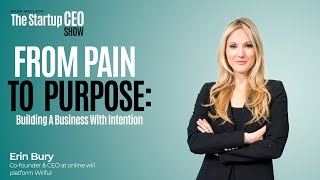
Erin Bury built Willful, an online estate-planning company, after a personal loss inspired her to solve a real problem: 16 million Canadian adults have no will. She stayed focused on B2C, targeted new parents and people in their 50s, and used bank partnerships to cut customer acquisition costs rather than chasing venture capital's growth-at-all-costs playbook.
Questions this video answers
April 22, 2024.
FounderFuel (Montreal), 2019.
About 16 million Canadian adults.
Tactico (main investor/board member Liam).
Retail banks (CIBC, Scotiabank mentioned), insurance companies (Allstate) and credit unions.
Chapters
I think I came up in the startup world at that time where hustle porn was everywhere. This idea that you had to work 24 7, that you had to forego your health, your sleep, your loved ones, your friends, your children in order to just kind of grind it out constantly. And that, you know, burnout was like a badge of honor, not a negative. And so I think it's been an intentional rejection of that. Maybe it's just because I'm almost 40 myself. Maybe it's because I had two kids. Kids. And I saw this really powerful quote on Instagram that said, the only people that remember when you work late are your children.
Welcome to the Startup CEO Show. I'm your host, Mark McLeod. In this episode, I speak with Erin Burry, co founder and CEO of Willful. Erin and her co founder, who's also her husband, encountered every possible objection in starting their business. Despite this, they ignored the objections, kept to their vision, and they've built a thriving company. We go into that and also explore what it means to build a business with your spouse and many other topics. I really hope you enjoy this conversation as much as I did. Aaron, welcome to the Startup CEO Show. It's a true pleasure to have you with us. How are you today?
Thanks for having me, Mark. I'm good. It's eclipse day here in Prince Edward county, so excitement is at a 10 out of 10.
An auspicious day to be chatting, that's for sure. You know, I was trying to think about the last time I saw you, and last time we spoke was many, many years ago. But the last time I actually saw you was very shortly after you and Kevin got married. And I was driving down Bay street by the Bay street subway station, and two of you were walking, holding hands. And I was thought about pulling over to say hi, but I realized I would have caused an accident, so I kept on going anyway, so it's a. It's a pleasure to have you here.
Well, yeah, and I think we first met so many moons ago through the startup space when you were in Montreal. And yeah, it seems like our careers have both spanned many eons at this point.
Many eons. Many eons. My hair is a little whiter and grayer than yours, but yes, many eons back to the OG startup world. And Sprouter, I think it was called. Right?
Yep. You got it.
Yeah. There we go.
Yeah.
Remember that? Cool. Well, maybe let's start off and if you could just tell folks what Willful does, that would be. That'd be great.
Absolutely. So Willful is an estate planning platform that helps you create a will power of attorney documents and other estate planning documents online. And really the goal is to kind of reduce the burden on families when someone passes away by ensuring that end of life wishes are captured and shared.
Yeah. Dare I ask what morbid event led you to come up with this? How did you think, hey, I'm going to get into the will space?
Well, I take zero credit for the morbid idea. It was a morbid event though. My husband's uncle passed away suddenly and he had a will but had never discussed all of the components outside of that. So, you know, burial wishes and funeral preferences and where the important paperwork like life insurance policies were stored. And so it was while kind of searching for those items and debating with his family that Kevin and I thought, okay, we should get our own stuff in order. And when we went to get a will in our early 30s, we were quoted, you know, four figures from a lawyer and just thought, I don't want to spend our money on that. And, and we also don't have a very complicated situation. And so saw some companies in the UK and US that were kind of taking this turbo tax style approach to simplifying and democratizing the estate planning process. And so that's kind of where the initial idea came from. And, and Kevin pursued it initially at first. So full credit goes to him for, for the morbid idea.
That's a great analogy actually. TurboTax. Yeah, I like, I like that. Now I have obviously never looked underneath the hood at Willful, but when I first heard about it and kind of looked at it through the eyes of an investor, here were my thoughts in no apparent order. First of all, giant market and growing market. Every day in the U.S. 10,000 people turn 65, lifespan has expanded. So I don't know what the mortality rate is, but our population is aging, so that's definitely a plus maybe on the challenges. And I would love to see if this resonates and if these were challenges like certainly particularly in the context of Canada. Right. So this is B2C. We just don't have a ton of been there, done it, got the T shirt talent with consumer focused companies and then it's kind of like a one time revenue model, not a subscription. So were those big challenges for you? And if so, how did you overcome them?
Mark, I think you're saying in a nice way what most investors say, which is we hate your business because it's Canada only, it's transactional and it's, you know, it's Something that you don't purchase again and again. Right. And so, yes, we've absolutely faced those challenges over the years and even in the early days. So we, we went through the Founder Fuel Accelerator program in Montreal in 2019. And so many of the folks that we encountered, from the mentors to investors, said, you know, this software is cool. Why don't you just sell it to lawyers and why don't you go the B2B route and, you know, just, you know, help them draft wills in an easier way? And our answer was pretty simple. It was, you know, the problem that gets us up in the morning and gets us excited about this is impacting end consumers and helping them. And to be honest, am I jazzed about running a B2B company that sells to law firms and making lawyers more money? No. So still a great business opportunity if anyone listening wants to go do that. But not the one that we decided to pursue. But knowing that we knew that we would have these constant objections, you know, some of them I think will be solved for as the company progresses. So today we are Canada only. We are transactional in that you're coming and purchasing a will once there's no recurring element. And it is kind of a one and done where, yes, once you have a will, you can come back and make updates to it. It's not like you're buying a, you know, a second will, a third will in the future. But really the way we've been able to overcome that is through just a sheer kind of market size and problem area. Right. There's about 16 million Canadian adults in Canada that don't have a will. And so just. And there's very little competition in this space. The average person is going to an estate lawyer. And there's so many barriers to that, from cost to accessibility, to people just being overwhelmed by lawyers. So we kind of sat down and said, listen, if we can just become the best online will provider and take even a couple percentage points of market share away from those kind of traditional providers or, or influence the folks for whom the alternative is nothing. Right. That just would never have gone to the lawyer. But now because of this kind of low barrier option, they're. They're inclined to do it, we would have a really meaningful business. Would we have $1 billion business? Probably not. Do we need that? No. You know, we've kind of intentionally raised from folks that don't, don't require us to be on that kind of unicorn hamster wheel. So. So all that to say, I think we, we have built and could continue to have a meaningful business even with those objections in place. But the goal in future is really okay. Now that we have folks coming to us for wills, how do we actually add that recurring element? Through things like storing wills and other pieces of information and by creating a bridge to the, to the family and the executor. So essentially adding recurring through becoming a repository for your end of life plans and providing that true value when you pass away.
Great. Yeah, that's really interesting. Yeah, there's definitely lots of ways. Yeah, there's a whole ecosystem of things that happen once you die. Right. So building connectivity into that definitely makes sense. Another thing that I thought of just to add to the list of depressing objections that you probably got a hundred times, which is thinking through the technology adoption life cycle and like, you know, from like early, super early adopters, early majority, so on and so on through to late majority and thinking like, well the folks, you know, you got a will in your 30s because of a family event, but you probably wouldn't have otherwise. And so I'm just wondering what has shown up. Like are you actually now getting younger people to do wills where they wouldn't have before? Are you convincing older people to figure out how to do a will online or all of the above?
Yeah, it's a little bit of both. I mean, ideally you should have a will if you're 19, but are you going to think about that in your second year at university? No, you're not going to. So our ideal customer is really me, you know, someone in their 30s or 40s who is married, who has young children. Because those people are getting wills and regardless of willful entering their life. Yeah, that's the number one life event that causes you to go get a will. It's the birth of a child, followed closely by purchasing a large asset like a home, followed closely by our situation, which was the loss of a loved one. So we do see that our kind of average customer is in that kind of 30s and 40s age range. And then we have a secondary customer of kind of the 55 plus folks who are downsizing, retiring. You know, their motivation is aging. Their motivation is being diagnosed with an illness or the loss of a loved one. And in many cases they have a will that has been sitting in their filing cabinet since 1987 and they are getting quoted, you know, $1,000 plus to go update it. So you know, the marketing to those two groups is quite different. I would say. We're very focused on the kind of new parent demographic just because There seems to be a lot of motivation there. And because to your point, they're generally already tech savvy and are inclined to use things like wealthsimple or willful versus going the traditional route.
Yeah, yeah, for sure. Well, simple feels like it would be a great partner for you, great distribution partner. So Michael, if you're listening, there you go.
Mike Katchen, call us. But it is one of those, you know, I think the biggest challenge, my background is in B2C marketing. I love building brands. But there's no doubt that it comes with a lot of challenges and a lot of expense. Right. And so for us, the question since day one is, and I mean when we poll people, about three in four Canadians don't even know you can do your will online. So there's this education gap around estate planning in general. We don't learn about it in school, we don't talk about it at the dinner table. There's a lot of opacity around what these documents are, why you need them, what happens when you pass away. And just a discomfort with thinking about our own mortality. And then combined with that, you know, when you're B2C you just have to spend a lot of money to get in front of, to get in front of large audiences. So that's really why we've focused a lot on partnerships, partnerships with the big banks, with insurance companies like Allstate, with credit unions, because they have these audiences of people already. They can segment them based on those life events and what they know about them. And we can really focus together on that education to get them over that learning hump and to hopefully, yeah, plug them into our platform.
That totally makes sense. Reduces your cost of acquisition especially. Right. With a one time transactional model. You're not going to raise tons and tons of venture and burn your way to greatness. And I really love that you. There's so much, there's so much that I love about kind of what you've said so far because first of all I brought up these concerns and it sounds like 100 people did before. And yet you still had conviction on your vision and you still kept going because you believed in it. But you've preserved optionality by being capital efficient, which I really like. And then you brought up, even before we went on air, a further dimension which I hadn't even thought of, which is that this business is regulated in some way. So you truly must have had some real conviction to go after that. So I really applaud that.
Thanks, Mark. Or we're really dumb and we should have just changed it and sold to lawyers. But it's funny, I mean, I've pitched probably every Canadian VC that you can think of because I think when you're a founder, especially because I was on the founding team at Beta Kit and spent, you know, a few years writing about funding rounds and, and you know, when I was on this path early on at Willful, I was like, I've got to get money from, you know, Omers. That'll mean I've really made it. And then you kind of realize like you're trying to squid fit a round peg into a square hole. We are not a B2B SaaS company. We are not going to get that big check from the B2B SaaS fund. And that doesn't make us any less great as a business. Right. When you actually objectively look at it, we have a big market, we don't have a lot of competition, especially enterprise competitors. We have pretty unsophisticated competitors if you think of lawyers as competitors in terms of their marketing efforts and how they run their businesses. And we have great margins, right. Being a software business even, you know, if you just look at our, our cost of acquisition compared to our average order value, even though it's transactional, it's still very, very efficient. Right. So, and then the ability to monetize in future I feel is very strong, whether that's through data, whether that's through cross selling third party products, whether that's through expanding our own product suite. So, you know, I, I definitely believe that we should have gotten no's from a lot of those funds because we don't fit the thesis of what they're looking for. But it's a little bit of an anomaly, right? I, one of my friends is Mallory who runs Irene Cremations and she has the exact same problems. Right. It's a, you know, one time purchase, not really the ability to put anything recurring in place at the moment. She doesn't have the geographic limitations, she's gone to the US which we could as well. But there's a lot of competition there. And so I think we, we commiserate a lot about the fact that if you don't fit this cookie cutter mold of B2B SaaS metrics that Canadian VCs are looking for, then you're often getting no's. But there are a lot of people, from angels to private equity firms, family offices, strategic corporate investors who really love what we're doing for a variety of reasons. And it's just about kind of having the ability to step back and say, just because the top 10 VCs in Canada don't like me doesn't mean that I don't have a great business.
Yeah, 100%. There's definitely a future opportunity if you crush it on this and have a big exit for you to start a consumer VC fund in Canada. Thank you. That's a big white space waiting to be filled.
It is. Except then I have to say no to people. I always joke about how I'd be a terrible investor because I would meet someone, hear their origin story, and just immediately want to write them a check. So I have to. I have to sell for enough to be able to write a check for everyone I meet with Mark. We'll see how that works out.
Not meant to be a charity. Yeah, you do have to say no. Yeah, I tracked the stats when I was at Real Ventures back in the black and white days, and yeah, I said no 96 times out of 100, which was very sad actually. It is actually. In all seriousness, one of the reasons why I stopped being a vc, it didn't feel good, wasn't super aligned with my values.
But anyway, well, and as a founder, one of the most helpful things for me was reading Founder Deals by Bradfeld, which teaches you about the mechanics behind VC firms. Because I think when you initially start getting no's, it feels very personal. But when you actually zoom out and you look at the metrics around how many investments a fund can make, the payback period, they're expecting the expectation that they're investing. And every company has to have the potential to be a unicorn. Well, then I look at my own aspirations where I don't actually want Willful to be a thousand employees and a unicorn. My vision of the future is very different. So why would I expect a VC firm who needs X to invest in Y? You know, that really helped you to kind of realign. What are my values? What do I want Willful to be in future? And. And the answer is, you know, take money from people that align with that vision instead of just expecting money from people that are going after something very different.
Amen. I was writing tomorrow's newsletter before I got on the call and that's literally what I'm writing about. You know, how to choose the right investment partner. In alignment is everything right? If you get Mike McDermott, former co founder and CEO of FreshBooks, he used to tell me all the time, there's two things you need to succeed in business and life. Alignment and shared values. If you've got that, you know, you can figure the rest out. And you know, the good news is there are different kinds of capital showing up. Like Indie BC actually now invests in capital efficient companies that actually just issue dividends which no traditional VC would be interested in. So hopefully there'll just be more and more segments of capital that match these different kinds of companies. I'm curious, you talked about partnering with the banks. Maybe it's happened already. But do you view them as a strategic partner?
I mean ideally, Mark, if you're listening to my friends at CIBC and Scotia, our existing partners, I mean I think there's, there's so much alignment between what we're doing and what they're doing. Most of the big banks have these trust divisions that cater to the very high net worth, complex estate planning needs of, you know, the 1%. Right. They're acting as corporate executor for these kind of big media states where it's worth the effort for them. And they're handling the wills and trusts and estate freezes and all of these really complex things that we'll never touch with a ten foot pole because we're really targeting that mass consumer. And if you look at the various kind of portfolios within the banks from RSPs to save for your kids education or mortgages or just the retail banking consumer going through these key life moments, it's so aligned with the customer at Willful. So I think that's, we've been partnered with the retail banking division but the idea is, okay, how can we kind of expand that partnership into these various product lines and, and get more intelligent about it. Right. Understand when someone's going through those life changes and, and recommend education around estate planning and by extension products that meet them where they are.
Last question on the company and then we'll move on. When I think about getting a will, actually I've lived this personally. I've been meaning to update my will. I got married last January and I've been meaning to update my will.
Congrats.
Thank you. And I haven't yet. I just keep putting it off and like sometimes my wife will check in like hey, did you send in those updates? Like no, I'm going to get. But I'm not going to die this week. But yeah, I'll get to it and then I never do. So other than, I guess removing friction, how do you compel people to act now versus perpetually postpone like I am unwittingly doing?
I think you just described our greatest challenge as a business. I Actually don't see our challenges as those things that investors highlighted as objections being Canada only, you know, transactional. Those things we've really solved around, we think there's a big enough market, we've gotten good at acquiring customers and, you know, having great margins. What keeps me up at night is how do you actually create a sense of urgency around something that seems like you can put it off until tomorrow? It's not like taxes where every year there's a specific, specific deadline and you have to get it done. And most people have that mentality of it's on my list, I need to get it done, but I can do it tomorrow because I'm not going to die today. And so the answer is really, we have to create a sense of urgency. And so we do that a lot through things like discounting and promotions, which works very well if you can save 20% off getting your will done and Sunday at midnight, you know, you just need that nudge that deadline to get it done. But I don't think that will ever fully solve for human nature and procrastination. So we've come up with ways to get around that and create a sense of urgency. But it's a big challenge. Right. And so the other way we've tried to solve for it is finding people at those high intent moments, right. Like getting married, having a child, and just finding them at that perfect moment where it's actually much higher and there is that higher sense of urgency. One that I find really interesting is parents traveling without kids for the first time. So, for example, Kevin and I are going to Vegas next week for his 40th birthday. First time traveling without our, our two children. And you know, when I was little and my mom would go on a trip, she'd always, I'd get the email like, okay, the will is here and the, here's the important paperwork. And it seems to be that moment where we all think our plane is going to crash and we need to send everyone in our life the key documents. So finding kind of surprising things like that that you wouldn't have thought of initially, but actually willful is a great solution for because, yeah, if you're leaving on a Saturday at 2:00pm, the lawyer's office is not going to be able to accommodate you if you remember this three hours before you leave. So. But yeah, yeah, human nature and procrastination are a huge challenge.
Yeah, if you do solve human nature, procrastination, you will have a unicorn in your hands and you'll be, I'm going.
To say, yeah.
And since we talked about it here, I'd like to be in on the friends and family run, please. So, yeah, if you do figure it out, let me know. Now, as an aside, how's Kevin feeling about 40? Because I remember being deeply traumatized at turning 40. Is he ready?
You know what's funny is I. People often ask, you know, you asked the question off the top about coming up with this morbid idea. And it's funny, Kevin. I talk so often about how running willful has made us so much more intentional about how we live our lives and so much aware of how fleeting it is. And I'm very, very grateful for that because I think it's so easy to get caught up in how busy life is and to just kind of skate through. And we're the kind of people that just say yes to everything. Like, if a friend messages me and says, do you want to go to Mexico for the weekend? The answer is yes. You know, hey, should we go to Vegas for your 40th? Yes. Like, let's do all of those things versus the people you hear about who say, no, I'm just going to put my head down and save. And when I'm retired, I'll go do those things. And they never had that opportunity. So he's feeling great. We look at birthdays as, wow, we are lucky to be taking another trip around the sun. Not, oh my God, I'm having a mid, I guess quarter life, midlife crisis. Lifespan now is. Is a lot longer, but feeling good about it. And again, I think it goes back to that passion for, for what we do. And I feel grateful a lot of to hear stories of willful users who are kind of highlighting to us how short life is and to be very intentional about how we live it.
I love it. Yeah, I love that so much. In fact, I'd love to dig into this because there's so many founders, so many people listening to this that are on the deferred life plan. Right? I'm just going to grind, grind, grind, and then I'm going to exit and I'm going to make up for all that lost time. And that does happen, but more often than not, it doesn't. And I'm personally on a mission to get the CEOs I work with to live now, not at the expense of building a great company, but live now. And so you mentioned one way in which this kind of insight has manifested for you, which is you're just saying yes and living life now. I'm curious to know in what other ways? That kind of insight about how precious life is and how fleeting life is, how else has that impacted you, your life? And also I'd be curious to know what impact, if any, you think it's had on building the company that could be a positive impact or a negative impact?
Yeah, it's a great question. I mean, I think I came up in the startup world at that time where hustle porn was everywhere. This idea that you had to work 24 7, that you had to forego your health, your sleep, your loved ones, your friends, your children in order to just kind of grind it out constantly. And that, you know, burnout was like a badge of honor, not a negative. And so I think it's been an intentional rejection of that. Maybe it's just because I'm. I'm almost 40 myself. Maybe it's because I had two kids and I saw this really powerful quote on Instagram that said the only people that remember when you work late are your children. And so I think there's. Right. Just stabs you in the heart. And listen, my mom was a marketing executive at Nortel. She traveled half the month. She was always the one kind of screaming in late for dinner. And she was an amazing role model for me. She made me want to have a big career. And I don't remember those days she worked late. I remember how amazing it was that she worked at a job where I got to go to Disney World three times in my youth and have a really great life. But I think, you know, I much, I work much more intentionally. You know, I'm, I think also just having kids makes you more organized because you truly cannot work while a toddler is going through dinner time. It's just impossible. So. So yeah, I'm more intentional about how I spend my time. I really try to focus on high value things that I, as, you know, my business, old business coach used to call them thousand dollar an hour things, right? And trying to delegate or just not do the things that don't fit into that. And Kev's actually been a great coach to me on that because I have a tendency to throw myself into it to work all the time. And you know, I used to work on Sundays a lot. And he would ask me like, why does this have to get done today, not tomorrow? Why is this a Sunday a weekend thing instead of a Monday thing? And I always have his voice in my head if I'm going to open my laptop after the kid's bedtime or do something on the weekend, which is does this have to get done today? And 90% of the time the answer is no. The other thing I'll ask myself is, will this matter in 20 years? Not to say I trivialize or minimize issues in the business, but again, this idea of, okay, if there's something that I need to be working on, does it have to happen at 9pm Can I put it into the kind of 9 to 5 and can I delegate it? So I think just, yeah. It's made me more intentional about how I spend my time as CEO and it's made me kind of not sweat the small stuff and remember that you have to live life as you're going through it. I have a friend as well who I advise her company, Quill, and it's bootstrapped. And so I think it's all. You hit the nail on the head, Mark, where a lot of founders, I think, take this pauper mentality while they're building. And Kevin and I did this, we took $0 salaries. When we did take a salary, it was embarrassing. It was an embarrassment to salaries. And we had this idea that the value from willful would come at some eventual exit. And watching Fatima grow her in an extremely profitable way where she's been able to get value out of it, both monetary value, but also just enjoyment value of it. Setting boundaries around how she works really change our perspective on that to, it's not just about the destination because the destination isn't guaranteed. And so that has looked like, yeah, trying to actually pay ourselves a salary that meets our growing family and that is can measure it with where we are in the business and just trying to get value out of the journey and not just kind of. And if we get some great eventual outcome, awesome. But we're not just relying on that. We're relying on, okay, how does it feel and how does it look to actually grow this along the way?
Yeah, I love that. You know, if you wanted to, you could run this company for a very long time because it's sort of a large evergreen meat. People die every day. People need wells every day. And you brought up wealthsimple. I forget when Mike started a very long time ago. I think he's almost at the end of the second. He's well into the teen years, I think, at this point. And yet he still has captured a small potential of his total market. And your total market's pretty similar. And so what that brings up for me is just the importance of a sustainable pace so that you actually enjoy this and want to keep going many, many years. In versus just like, fuck it, let's just sell it and check out. Right? So that sustainable balance really is key. I'm curious. You don't.
It also helps Mark because I don't have a Next thing you know, I. I don't consider myself the entrepreneur in the relationship. Kev is that person who constantly has business ideas coming to him and this long list of what he would do next. Whereas I love willful, I love the problem we're solving. I'm very passionate about it. I love the team, and I don't have anything waiting in the wings. So to your point, if there is an exit and it makes sense for our employees and for us and ultimately, I believe is the best thing for our customers, great. I'm all for that. I'd like to buy a boat. Awesome. But I'm also great with this scenario that you mentioned of, you know, just running a good business, a profitable business that can pay dividends to shareholders, that rewards employees. That I like doing. And if I. If that is the case in 10 years, my goal is, okay, how do I work four hours a day? Right. How do I become so productive? How do we systematize so many things where I have more flexibility baked in to be able to go to my daughter's science fair and to be able to have some peace and quiet in the middle of my day instead of this pace right now, which is a very, very busy, you know, nine to five schedule. So. But to your point, we raised from our main investor is Tactico, which is a Montreal D.C. firm, but they're a little bit different in that they have so many portfolio companies that actually just pay dividends. They don't actually care whether we go the path of, you know, building towards an exit or whether we go the path of just running a really good business and writing them a dividend check? And we took from them intentionally, knowing that because we wanted that optionality. We didn't want to be hamstrung into choosing one path. And so it's nice to know that we don't have to decide that today. Right. We can kind of see how things go and where the business takes us and. But there's no one breathing down our neck for one way versus the other.
That's amazing. You know, you talked about having the flexibility, building a company, right, where you work less and you've got the flexibility to do what you want to do. I actually think that is the true definition of wealth. It's like, oh, what do I want to do today? You know, like, when I was running my investment bank. If I was awake, I was working. And, you know, I would drive home instead of taking the subway home so that I could keep doing conference calls, even though it took longer. It was stupid. And Now I coach 40 hours a month, like swimming in time. It's like. And it's. I make less money than I did as an investment banker, and I've never been happier. And it's true wealth. You know, I've got time to do whatever I want to do, and it's. It's amazing. So, yeah, I really love that.
I love that. And it's. I think it's hard when you're in it to kind of take yourself out of it and to think about those. But you, you know, you're saying about values fit. We obviously have values at the company, but the benefit of running a company with your spouse is that you can talk a lot about those things. What are our values as a family? Do we want to be the people that sit down and turn our devices off from 5 to 8pm and are truly present with our kids and we can hold each other accountable to that. And that's been really nice to be able to kind of design a life and to set that example for our team. Right. Where they know my family is first and willful is a close second. But that, you know, time with our daughters is not negotiable.
So we've touched on family quite a bit. But let's go into that. So you and Kevin started this company together. My understanding is Kevin was initially CEO and then you switched positions at some point. Tell us more about that. How did you come to start it together? How is it running a company with your spouse? And tell us about that. The switch in roles as well, because that feels like an important either conversation or series of conversations.
Yeah, I mean, when he. So he kind of initially started. I was running a boutique tech marketing agency at the time. And this was back in the day when we had no mortgage and no kids. And so. And he. He was working in trades at the time, working at a cement plant. He didn't love his job. It was very physically demanding. He always. He was a, you know, consummate ideas guy. He called me the dream killer because he'd come home from every shift and have a new business idea to pitch me. And being a tech journalist back in the day, I would be like, no, someone already did that. No, this. This won't work. But then the willful idea came and I said, you know what? Do it, you know, quit Your job, I'll pay the bills for a year. We don't have a lot of them at this point in our life and you know, try to give this a go. Either way, you can't stay in a job you don't like. Life's too short. So yeah, he took about a year. I was a, I mean when you live with an entrepreneur who's getting a business off the ground, you have no choice but to be involved in the business. So I put in as part of the friends and family round, I was an advisor and it was about when I was ready to move on from the agency and do something else. It was, you know, I kind of looked up and was like, oh, this is the thing that I'm should do, right? I shouldn't go find another job. This is perfect. I love building consumer brands. I love building a team. I love building awareness around something no one knows about. And I have been an operator for the past, you know, five years at this seven figure agency. So that was really what motivated the switch is he said, you know, listen, I, I have no business background, I probably have no business starting this business. But I'm very passionate and I've gotten it to this level. I have no ego around titles. You should be CEO because you have that experience. And so yeah, he's always kind of been more of the, the ideas guy. The, we call him the galvanizer. The person who, you know, creates a lot of excitement internally with the team, externally, at events and with partners. And now he's actually on parental leave with our, our daughter, which he's done twice. I've taken less time and he's taken more. So I will say I don't want to present it as if it's all sunshine and roses to work with your spouse. I'm very type A organized. He's very creative. And so us working together on things is very oil and water if we're trying to get a project done. Because he's, you know, I'm the person with to do lists and he's the person that's like off in the clouds, which is the value he brings to willful but is very difficult for a type A person to, to deal with. So we've really worked, learned to kind of stay in our own lanes and to work together on the senior leadership team on things like strategic planning in a very effective way. But in general, I absolutely love working with my spouse because I never have to explain who someone at work is. I never have to explain why I might be opening my laptop at 8pm instead of watching a movie. And there's just this kind of, to your point, this shared value system about our professional life and the impact that we have. And yeah, I couldn't see not working with my spouse, which a lot of people find strange because they find it very, very odd.
Yeah. How do you manage boundaries on multiple senses? First of all, now it's your spouse and like. But also in the time that you've been running Willful, we've gone from being in offices to not. So now you're running a business with your spouse in your home. So how do you separate those worlds?
You don't. I mean, I'd like to give you some nice answer about, you know, all of these boundaries that we've set, but the reality is you don't have a lot of boundaries, which can be a bad thing. Right. If I've just come out of a long day and Kev asks about the business, I'm like, the last thing I want to do is talk about business right now. But he's like, well, I want to be in the loop. Right? I want to know. So I think I'm pretty upfront about, like at dinner tonight, I need to not talk about Willful, but otherwise there isn't a lot of. There's not a lot of boundaries. But we both love the business, so we don't mind sitting around with a glass of wine and talking about it on a Friday night. And again, he tends to be a good check and balance for me to remind me of. Hey, you said you had a meeting with so and so. Why is that important? You know, hey, I'm trying to get you to remember to do the thousand dollar an hour things to put the computer away on a Sunday. And so I actually like that there's a blend of work and life in our house.
Yeah, fair enough. It's not. Yeah, it's work life integration. Right. It's just making it all flow together, I suppose.
I think we all face that, right? Working from home, there's not, you know, like today I did some dishes and cleaned up some toys, you know, over lunch while checking slack. And we're all doing that. There's no work and then life compartmentalization.
These days I follow this method called the Pomodoro technique. I guess some dude named Pomodoro invented it. Right. So I work for 25 minutes and then I break for five and so work, you know, 25 minutes, whatever. Obviously my coaching sessions, that's just an hour. But if I'm doing Other work. Then on that five minute break, yeah, I'm up putting in a load of laundry or yeah, it's all integrated, so. But I do try and leave my phone here in my office when I kind of sign off at the end of the day because if I bring my phone, I'm just going to keep looking at it and there's nothing urgent, you know, it's. I'm not selling a company. I don't have a company with like a week of Runway that needs to close a deal. There's none of that. Still have PTSD from those days, but I'm not actually doing any of that anymore. So if anything's urgent, someone's going to call me. So I just leave the phone. It's.
It's real freedom and being intentional about that is so crucial because I'm the same. I'll find myself just. I think it's, you know, obviously they engineer these things to be addictive, but you're just kind of looking down for no reason. And to your point, I mean, I always say it's not life or death. You know, obviously in willful there is, but I, When I was running my marketing agency, we always used to say it's pr, not er, AKA if there's some sort of client emergency, it feels like this crazy emergency in the moment, but the end of the day it truly isn't life or death. And the same as with willful, right? I mean, we're not doctors saving lives. And so, yeah, being intentional about putting my phone down is important. And the it's not pr, it's or it's not er, it's PR mantra remains.
Yeah, I love it. How other than, I guess doing it, how have you prepared for your. How are you prepared yourself to be CEO of, you know, a high growth funded company?
Well, it's interesting. When we closed our funding with Tactical, I remember the, you know, the first question I asked Liam, who's our board member, main investor, was, you know, how do I make sure that I'm not getting hosted from this company in three to five years, AKA what resources, training programs, books, articles, like, what should I be doing to level myself up so that I'm growing alongside the business? And he said, that's the first time anyone's ever asked me that. And I don't know if it's just like a woman thing or decide maybe watching too much Silicon Valley, but that's always been on my mind is, you know, you don't want the company to outpace and outgrow you. You always want to be thinking about what's next. And I read on Fred Wilson's blog many, many moons ago that the main jobs of a CEO are to hire and retain great talent, to set the vision, and to make sure there's money in the bank. So I'm always trying to focus my activities around those three things, which I think hold true all these years later. But a lot of it has been how does my, where does my time best need to be spent as the company grows? And it's funny, my background is public relations and so I did think I should outsource that. Right? This is not a good use of my time. I'm the CEO. I need to be focused on vision and all these things. But every time we'd outsource it, it just wouldn't go as well as if I was doing it myself. And so I kind of have realized being CEO is also about leveraging your superpowers. If you're a technical CEO or a product CEO, you're probably going to lean more into those sections of the business because you just have a lot to offer. And so I think it's actually been leaning into my superpowers, which are, you know, PR and brand building and, and culture. Like I think I, I'm very passionate about that. I think it's, it's somewhere where my efforts are best served and then focusing on, of course, making sure we don't run out of money. I don't know that there's any books or training programs or articles that have really done it, but just I have a coach, a business coach who's also one of our investors who's amazing. So if you're listening to this call, Mark, but, but yes, so far I have not become obsolete in the business, but I don't know if that's just maybe my time hasn't come yet. But also to, you know, Kevin had no ego stepping aside. And I asked myself this question of if Liam came to me and said the business has gotten to a place where it needs someone different, would I be able to step aside? And I actually do think that's a big difference between women CEOs and, and men CEOs. In a lot of cases, I would not have a lot of ego around that I would want what's best for the business. And I mean, my fully vested equity would still be there. So, you know, whatever was best for the business is best for us.
I love that that could be an, an entire episode around kind of the gender differences and how they impact, how we build companies, but I don't think we have the time for that. But I really think it would be a fascinating discussion. You know, I initially said, or said earlier that you could start a consumer venture fund because there's a big gap. But also hearing you speak if and when you exit this sounds like you would make a great coach as well, because a. That Fred Wilson post, I quote that all the time about the three roles of the cdo. And that thing's super old. That post. I think that's like 2015. And then you're talking about intentionality, which is a thing that I bring up a lot. And so many CEOs are swimming with intention when it comes to their businesses. We've got these documented, we've got these vision decks and we've got five year models and mission statements, we've got okrs and everything's written down. And then many of them have no intention whatsoever with respect to the rest of their lives. You know, and I love like, so you've, I've swim. I'm sure you're swimming in attention with your business. Obviously your kids, you know, take up a lot of your priority as well. But then you're still making time for you and Kevin, right? The two of you are going up because you have multiple hats, right? You're a CEO, you're a parent, but you're also a spouse. And I see so many again, going to gender differences. I see this often with males. If I stereotype like they give everything to the business. Out of the 0% that's left, they find something for their kids and they have nothing left for their spouse. And then surprise, surprise, they get divorced. And I'm speaking from personal experience, so don't listen to me. I don't know what the hell I'm talking about. I got divorced. But anyway, it's, it's a thing. And so I really love that you see up front, you know, how important it is to be, to be intentional.
And I mean, listen, none of us are perfect. If someone says, like, how do you balance it all? Well, the answer is you don't. I learned that very early working for Sarah Prevent at Sprouter, another amazing woman entrepreneur. And she always talked about Randy Zuckerberg's, you know, you can have, you can have it all, just not at once, all at once. And her big thing was like, pick, pick, take five things. Sleep, exercise, friends, family, work. You can have three at any given time. And I always try to remember that, like for me in my life right now, the most Important things that are going to take up the most time are willful in my family, you know, because I have young kids and I try to make exercise a big thing because for me that's my therapy. I'm, you know, I'm someone who finds a lot of clarity, energy in, in working out. I've got a walking pad now, Mark. I walk many hours a day while working, which is my number one wellness and productivity hack. But yeah, so I think it's, I think it's, I struggle with that. How am I supposed to find time for hobbies and friends and downtime and kids and work? And the answer is I won't. You know, maybe at some point one of these things will reduce, but being intentional about those top three things, the top three priorities helps.
I love it. Maybe as we wrap up here, I'd love to end how we began. And we began kind of talking about how we first met back with Sarah and Sprouter. I'm just curious. Sprouter obviously was kind of like a part of the Canadian ecosystem, bringing startup folks together. And I'm just curious what, what observations of any you have about our ecosystem today. And maybe you have none because you're so busy with willful and your kids, in which case that's cool. But just, yeah, curious to ask.
Well, one observation, Mark. I texted Kev from I was at WeWork in Toronto last week working for the day and I texted him like, when did everyone get so young in the startup space? But I fear that it's just that I'm getting older. But it was, it was, it. It's so interesting because I've been actually quite removed from the ecosystem in terms of events and kind of in person activities in Toronto, being out in Prince Edward county. And it felt, it felt this great energy at WeWork last week and it reminded me that, you know, there is this benefit to in person. We do one annual retreat at Willful every year and there really isn't a replacement for, for in person. We sacrifice some of that in person value to be able to work across the country and to be at home with our and things like that. But I guess that's one observation is I do think post Covid, the pendulum is swinging back to kind of events and in person and kind of investing in that face to face again. And then I guess the thing that I love about where I am in the startup space is the folks that I came up with in the industry are starting to have these exits and these successes and to be able to turn around and put some of that capital back into the space by investing or advising. And you have folks like Dan Dubeau who were kind of those aspirational people for me when I was starting out who were doing that. And now some of my peers, like Satish and Arti, for example, are becoming amazing thought leaders and supporters of the ecosystem in that way. So when I think about kind of my, my goal in 20 years, I don't know what I'm doing. But I know that I want to be writing checks to underrepresented founders. I want to be advising, I want to be maybe coaching. Maybe I do have a talent for it. We'll find out. But that's my observation is like there's, there's this new generation of entrepreneurs and ex Shopify folks and just people that have had some sort of success that are turning around and seems like putting money into the ecosystem in a very intentional way that also gives money to non traditional founders. And that's been very heartening to see and I think will lead to a lot of diverse, successful Canadian companies in the future.
I love it. Yeah, that totally resonates with me. First of all. Yeah, the fact that there's a lot of young founders, that absolutely resonates with me. I'm glad I don't operate anymore. I'd be like the fossil. Here's our dinosaur cfo. That would be really bad. But yeah, and it's great to see that like the Shopify mafia having a huge impact in our ecosystem. And love Satish buying beta kit. Yeah, lots of goodness there. Aaron, it's been a real pleasure to reconnect with you. It was far too long. I'm glad I didn't cause a traffic accident on Bay street that day. And maybe next time I'm in pec, I'll ping you for a glass of wine.
I would love that. Mark, I have been a devout reader of all of your content over the years and appreciate all your work wisdom that you've put in your newsletters over time and very honored to be on the podcast today.
Thanks so much, Aaron. You'd be well. Hey, thanks for listening to the Startup CEO show. If you'd like to connect with me, be sure to visit my website at markmcleod Me or follow me on LinkedIn at the Mark McLeod or Twitter arkmcleodore. And if you want to tune in again next week, be sure to subscribe on YouTube, Spotify, Apple, or wherever you get your podcast. We'll see you next time.
More from Mark





The Burnout Breaking Point - How Strategic Breaks Actually Increase Productivity


Emotional Debt - How Avoiding Hard Conversations Compounds Into Company Killing Resentment


The Death of the Specialist - Why AI Is Creating a New Professional Class Called Scalers