From Pub Crawls to SaaS: Classy’s journey to $100M with Scot Chisholm
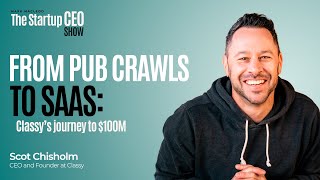
Scot Chisholm built Classy from a 2006 pub crawl into a $100M nonprofit fundraising platform before GoFundMe acquired it. He discusses finding product-market fit across SMB and enterprise segments, navigating investor conflicts, and why the merger made strategic sense.
Questions this video answers
2006
2011
Over 300 employees and $100 million in revenue (reported by Chisholm).
Approaching $10 billion raised all‑time on Classy (as reported).
Chapters
This episode is brought to you by Fellow. Fellow is the only AI meeting management solution that covers every part of your organization's meeting workflow. Go to fellow app CEO to get 300 free minutes of AI recordings and start having better meetings.
For me, it's about unblocking the founder as a leader because my belief is that more founders can become great CEOs than I think they realize or other people give them credit for. And it's especially I say, the founder calls it quits earlier on themselves than any investor will ever do. I think investors generally want the founders to succeed, but what will happen is the founder hits a ceiling, becomes the bottleneck, stressed through the roof, doesn't ask for help, doesn't, you know. And then they just say, I'm not really a CEO.
Welcome to the Startup CEO Show. I'm your host, Mark McLeod. In this episode, I sit down with Scott Chisholm, co founder and CEO of Classy.com. scott led Classy from the very beginning to over 300 employees and $100 million in revenue. In this episode we talk about all the hard worn lessons and scar tissue and the whole journey from founding to exit, including when his investors tried to get rid of him. Unsuccessfully, I might add. Scott is now sharing his experiences with founders and we talk about that as well. This episode is full of actionable insights and anecdotes. I hope you enjoy it. Scott, welcome to the Startup CEO Show. How you doing today?
Good, how are you? Thanks for having me.
Yeah, I'm fantastic. As I was getting ready for the show, I almost took out my cowboy hat. I figured, you know, that might be appropriate for Scott, but then I just didn't.
But yeah, well, I will say my, my neighbors here in Whitefish are a lot more cowboy than I am, but I do sport, I do sport a cowboy hat now. And again, I would say I'm more of a. More into farming and gardening than, than, than the cowboy stuff. But it is pretty cool culturally around, around this area.
Cowboy hats look good. I think they get an unfair wrap.
Definitely.
I'm a fan and I live in the country now. Not as country as you, but we had this big country fair with a rodeo last year or actually the first year that we moved up here and so I was just like, screw it, I'm getting a cowboy hat. So.
Well, it's also, it's also ridiculously hot at rodeos and things like that. So they serve a purpose, you know, and if you're on a horse all day long, you know, and in the sun in the baking sun, in a field, you know, it makes a lot of sense. So they. They're quite functional, too. But I agree, they look good. They look. It's like, it's kind of badass.
It is totally badass. I haven't got the boots yet, but I definitely have the hat, and it comes out from time to time, which is awesome.
Now, boots different. I feel like you got to be a certain personality to really be able to rock boots. Well, cowboy boots, I haven't. I have sort of a hybrid.
I have.
I forget what. I forget what they're called. Red wings or something. They're sort of like a little bit of a hybrid, and those work well for me, but I haven't gotten into the pointy cowboy boots quite yet, but we'll see.
All right, well, aspirational.
I'll keep you posted. I know, I know your audience is super interested in this.
That's. That's why everyone's here. Cowboy attire 101. So you and I first met last fall in LA at this founder retreat for folks that are kind of building their personal brands. And if we've got time, I'd love to get into that, but want to start with Kind of Classy. But. And by the way, shout out to Matt Gray, who's. The guy that. Whose retreat we were at. He's the real deal. But. And he assembled a group of pretty badass folks who have real experience. And so that's why I really wanted to have you on the show. And you've done lots of things and lots of things we could unpack, but probably the big one that's kind of most relevant to this audience is building Classy to a company with, you know, hundred plus people, 100 million in revenue, and so I'd love to spend a bunch of time there, maybe just unpack that. First of all, for folks who maybe aren't familiar, just tell us what Classy was and then just maybe walk us through that journey. What were the big phases, big chapters, and then we'll see where the conversation takes us.
Yeah, for sure. Well, first of all, I appreciate you. Appreciate you having me. And, you know, I, I, after my journey with Classy, I now also work with lots of founders, as you know, which is super rewarding. So I love just being on and sharing the story in the first place. But Classy was actually founded, quote, unquote, as a fundraiser for cancer research because my mom had had cancer when I was growing up, and I had moved to San Diego from the east coast, and I was Living with a bunch of buddies. And we decided to host a fundraising event for a local cancer organization. And we were coming up with an idea for what this event would be. And we landed on 20, being 24 years old, a pub crawl, of all things. So we ended up collecting cash at the door, and we raised a bunch of money. And when we were trying to figure out the name for that pub crawl, the movie Anchorman with Will Ferrell happened to be on in our apartment. And in that movie, it's a ridiculous movie, I'm sure a lot of folks, I love it.
I noticed the. I noticed Anchorman behind you on the wall.
Well, yeah, it's a little head nod to the origin story. So, you know, he says in that. In that. In that movie, the catchphrase, you stay classy, San Diego. So my buddy Pete turned to me and said, well, why don't we name the pub crawl? The stay classy Pub crawl. Never thinking in a years it would go anywhere, you know, but there. But that one event turned into, like, dozens of different charity events for cancer at first. But then we branched out, and we did athletic events, we did concerts, we did all sorts of stuff. And the whole idea was just to get young people involved in different causes in. In philanthropy, younger in life, basically, and to have fun doing it. So we were meeting all. All different people and stuff, and every single event would benefit a different charity. And over time, as we were working with the nonprofits, none of us were from the nonprofit space necessarily, we started to understand the. Were using some of the challenges they were having, reaching new people. And this is in 2000. First event was in 2006. And we actually launched as a tech comp. A tech company, many years later in 2011. So this is a long, you know, initial period. I call it the longest customer discovery period ever. So, you know, we're working hand inand with these nonprofits. We're seeing the challenges they're having. They are slow to adopt online, and they have. Are really having trouble reaching out and connecting with a younger audience. And I was born in 81, so I'm like the older millennial, you know, so it was like, what are these millennials at the time? You know, what are they doing? What's this Facebook thing? And so we sort of figured, hey, we kind of understand the nonprofit, and we also understand the donor, which is the young donor. Like, we are them. So what if we built a platform that would help them connect with young people online? And at first, it was really for our. For our own event. Our own fundraising efforts. It wasn't even for like a commercial, it wasn't for every nonprofit. It was really for our, our local fundraising we were doing. But then we realized, wait a second, you know, we're kind of onto something here. As we started to get positive feedback about the idea and we, we actually did build a alpha version of what would become classy for our own events. And the nonprofits quickly told us like, hey, can, can we use this for our own stuff? Can we use this for, for you know, the other things that we're doing throughout the year. So we went through an incubator in San Diego and, and finished the largest pivot of all time, which is from a pub crawl to a SAS company. And we relaunched in 20 technology company and it was, it was basically a white labeled crowdfunding platform for any nonprofit to be able to use. And then over the years we, we really built out that suite to go well beyond. We call it peer to peer fundraising or crowdfunding. But it has a whole event capability now for in person events, live, you know, hybrid events, virtual events. It has recurring giving which is almost like subscription giving for nonprofits now. And it has a, you know, so many other tools. You can think of it like shop meets HubSpot meets Salesforce for nonprofits. Basically at this point it's the full, it's the full suite of tools that they need to reach people online and to raise money. And that took many, many years obviously to get to that mature point. We started as very much a point solution selling to really small nonprofits, to be honest. So when I look at like the journey, you know, and there's lots to dive into this, but it was, we started kind of at the bottom of the low end of the market rather selling to organizations that were like, almost like SMB, like small mom and pop for profits, right. Kind of the same vibe. And then we started to move up market over time. We didn't leave the bottom of the market. We just had a slightly different approach to how we acquired customers there. But now it's a multi segment company. We work with not only the small guys, but we work with some of the largest enterprise nonprofits on the planet like Salvation Army, Shriners Children's Hospital and many of the different hospitals even higher edit high higher ed institutions across the country and in some other countries as well. And we do get donations from every single country in the world as well. So it's international in that. But we're, we're mainly us focused from an organization perspective and the platform raises billions of dollars every year. I think where I just looked, where we're nearing, they were approaching in the, in the not so distant future. 10 billion raised all time on Classy alone. And then we were obviously acquired by GoFundMe. We can get into that later. But GoFundMe is a whole nother animal and raises a ton of money as well. So combined it's. It's the largest giving platform in the world.
Wow. Amazing. To go from a pub crawl to that impact.
You know what's funny is Will Ferrell actually caught wind of this. I think we might have reached out to him and he actually made a video, like a spoof claiming to be the founder of our company and sent it to us. It was pretty hilarious, actually. I got to dig it up because it's really funny.
He's probably my favorite comedian.
Yeah, yeah, he's ridiculous. And I hung out with him at a golf tournament once for his charity. And he literally didn't break character the entire golf tournament. It wasn't Anchorman. It was some other weird character. And he just acted so goofy the entire. He literally did not. You couldn't have a normal conversation with him. It was freaking hilarious.
That's amazing. Now, I used to be a venture capitalist and one of the rules that VCs have is you choose markets that are rich. And so when I think about building big companies, I don't think about not for profit. But I guess you weren't really charging them, right? Your revenue was just. Was it a cut on the payment from the consumer?
We actually did. We actually do charge the organization. So it's a subscription plus transaction fee model. Now the donor can cover that fee, but it's. But the classy business model, GoFundMe is different and we can get into that a little bit later. But the go. The, the classy business model is very much like Shopify where it's. There's a subscription component and then there's a processing component and then the donor can cover the fees if they want. And actually up to 80% of donors will actually cover the fees, which is pretty cool. But the non profit, sometimes they don't want to do to offer that to the donor. They just consume it and that's fine with them. So there's a toggle and they can basically have a bunch of settings there to decide how they want the, the pricing to go. And then it's. It's essentially volume pricing. So if your organization's doing a lot of volume, it's a little Bit heavier on their subscription because you're a bigger organization. A lot of complexities and things that you do. You get the enterprise version essentially, but you get lower on the processing fee. So as a total cost of fundraising, if you will, a percent of the volum volume, it goes down over time. So it's, it's essentially subscription plus transaction fee but volume pricing based on how much you're raising online.
That makes sense. You know, I saw two broad value propositions when I looked at companies to invest in, right. There's, and I was only a SaaS investor, right. And so there's companies that kind of save you time and companies that make you money. So FreshBooks saves me time, makes it easier for me to invoice. You could argue maybe it makes me money, but I already earned the money. It's just a way for me to invoice the customer. Shopify makes me money, right. And like, because I helped me set up a store and I get customers and this is literally helping a not for profit make money, right. Like use my platform and you're going to get way more donations I would imagine. I don't want to trivialize your go to market. I'm sure it was difficult but that's a pretty strong value proposition to go into a charity and be like, hey, we're going to grow your donation base.
Right, Exactly. And our initial sell, and it's a lot more than that now, but was very conversion focused because of the experience that we were providing. It was a modern mobile first experience that was socially integrated and that was new at the time, you know, so we had just a phenomenal pitch around that. And then peer to peer fundraising. The very nature of that is empowering your supporters to raise money on your behalf. So it's almost like crowdfunding on steroids, you know, where the actual supporters are getting out there and get in and sharing your, the word of your mission and recruiting people so you actually get new donors. Like imagine like new customers coming from your customers. It's like a referral like engine. So you're not only raising more, you're getting brand new people exposed to your organization. And then over time as the, as the tool got stronger and it really became a platform and not a point solution. We had a very strong consolidation pitch because they could, might, they might be using five different things from spreadsheets all the way to some, you know, non, you know, not non fundraising specific CRM platform. And we'd say hey, consolidate all that into this one platform so it's not Only making you money, but it actually was the saving you time and saving you money as well pitch, which is what it is now.
Was Facebook. Did Facebook view you as a competitor or a friend?
Facebook viewed us as a. As a friend when. And they've actually since shut down their crowdfunding more recently. They got out that was. That was a direct competitor to GoFundMe, though. And what was interesting is Facebook was obviously an enormous source of traffic for GoFundMe and for Glassy. And so it was this awkward frenemy thing with them because we, yeah, we would collaborate with them in various ways. But, you know, they, they launched a competing product, which they do across a lot of different verticals as well. So they're very good at being frenemies. Salesforce is very good at that too. And we were, we were frenemies with them for a very long time. More friends than enemies, for sure. But they, but we would always brush up against their tools, you know, But Salesforce was our actually our strongest go to market partner and they helped us move up market and build credibility. They were also the first investor, institutional investor in Classy. So no. Yeah. No. No institution you talk about. You know, when you started this, you said, you know, people don't really look at the nonprofit sector as like a business opportunity per se. And that's not why we started it. We started it because we were literally trying to solve our own problem. You know, we were trying to. We were building software for our own fundraising events. So we started from the outside in almost as the supporter of the organization. And then we realized it could be hugely impactful and be a great business opportunity. But it took us like years, four or five years to actually attract that first check from an institution. Because they were, they were. They would say the same things like, this isn't, you know, first of all, they would say, are you a charity yourself? They were actually confused. And then second, they would, you know, oftentimes just not understand the market. They, you know, there's a lot of investors that are on the board of nonprofits, but they're not necessarily the one running the fundraising operation. They didn't really understand the pain of the nonprofit administrator. You know what I mean? Like, they would in maybe a for profit company that they were more familiar with. So we raised $25,000 at a time in the beginning from individuals, mostly friends and family at first, and then angel investors. And we were lucky to attract probably like three super angels. And, you know, they weren't. We didn't identify them as super angels necessarily. But they came in and invested say a hundred thousand dollars, which is a huge deal for us. And then they saw the traction of the company and they put in another check and another check and all of them ended up being about a million dollar ish investors in the company. And each of those were, you know, successful entrepreneurs that just kind of somehow had a connection to the non profit space and like got it right away. You know, one owned a foundation that granted money to non profits and one of the charities that he was granting money to was using us. So he actually got to see those charities using us and he literally from Texas called us up and asked if we were, we were interested in, in angel investors. I mean that never happens, right? So we didn't even know this person. Yeah. And he, he's awesome guy, Bob Graham. He, he was on the board of Invesco, turns out. And they're very involved in the Yellowstone foundation up here in Montana actually. But they became a phenomenal supporter of the company over time. So that's kind of how it went for a long time, for several years. And then Salesforce ended up becoming interested in Classy because we had built an integration to Salesforce CRM. So it was a very strategic reason and they had already identified the non profit and the higher ed vertical as a big market and something that they were interested in pursuing. So we just became an early go to mark market partner with Salesforce and then their VC arm kind of looked at it and said, huh, interesting. Like I kind of like what you guys are doing. And they wrote a $500,000 check which was for us like monumental at the time. And they increased their position over time. But that was the largest check we ever received. And that, that then the dominoes started falling a little bit at that point because there were a couple other sort of boutique VCs. Bullpen capital out of New York, Hinge Capital out of San Diego. And they were sort of circling us and they were waiting to see what would happen with the Salesforce thing. And then they all, they, they all ended up in investing in that round which was sort of the pre. It was sort of a series A, funky Series A because we had raised $5 million from angel investors over time. So pretty large for, for angels. And then we like lumped on say a million or so from these boutique VCs. And then a little bit later we ended up raising a series B from Peter Thiel's fund, Mithril Capital, which is his other fund outside of a founders fund and a Partner called Paul Leggett became or joined the board and he was phenomenal. And another just got super lucky with him as a partner throughout the years too.
Wow, what a journey. You know, I see many companies that start out serving small customers and then move up to enterprise but don't keep serving both. What was it about this opportunity that enabled you to serve both? Did you end up just creating two completely different versions of the product or were there needs similar that's rare to serve both ends of the market?
It is. And I think we really admired companies like HubSpot and Shopify and others that sort of Zendesk mailchimp that started low and went high. And so we really did have that strategy in mind from the beginning. If you start low and go high versus start high and go low, you're able to build the nucleus of the product that has commonalities through all the segments and then you can build features on top of that that can be toggled on and off for the different various types of customers. And that was really the like layers of an onion versus when you start, when you start tall, you might build the core platform just for the enterprise use case. It's very difficult to whittle it down into a simple use case. And so we really wanted to, you know, have a multi segment strategy from the beginning. But we were pretty disciplined on staying in the SMB with our target customer for a while until we really understood because if, if you kind of rush up to the segments like that'll completely your product roadmap as well and you'll have just a lot of competing interests from the various customer types even within market which was nonprofits. But like you said, just like in business, an enterprise nonprofit is completely different than, you know, in terms of their use case sophistication, much different than a smaller nonprofit. So when we eventually did make that move and it took us a lot longer than we had thought and that actually caused this story for after it caused a lot of pain with our series C investor which we didn't get to, we felt it was going to take us about a year to move up market and that's like a pretty quick transition because we didn't have enterprise DNA within the company from a staff perspective. So we didn't really have enterprise sellers, we didn't have an enterprise motion, we didn't have account based marketing and other tactics that are important for SaaS companies moving up market. We were very transactional sellers. Our deal size for many, many years was solid, $6,000 a year, you know, so that was really where we had really hit our stride and we were good. The issue with you know the, the smallest organizations and this is true for for profit too is you have a lot of turnover there like their own staff. So you have a lot of different folks coming in. It's like sort of a revolving door there a lot in the non profit space. A lot of those organizations are run by the board of directors because this, the organization doesn't have a big staff so there's naturally more turnover and which led to weaker retention characteristics down there versus you know, the high end of the SMB or mid market with or enterprise which had phenomenal retention characteristics. And now I mean no one bear, no one barely leaves Classy which is I'm, I'm very proud of for the team that's leading the company now. Like they've just done an amazing job. But that was the thesis. It was like it's just more stable, it's more recurring. The customer is going to look at this more as a long term partnership and that's exactly what happened. But all we did was really just change the pricing. We made a little more affordable on the bottom and then we made it more self service. So it was much more product led growth there versus in the beginning we were just transactional sellers, you know. So we kind of loosened the or we, we brought up the go to market and the sales team, the line in which you're able to sell and the rest was done by essentially product led growth on the bottom end.
I love it. Yeah. You know in the early days of Shopify we would hear from pretty large merchants like logos that we would have killed to have. But to Toby's credit he said no all the time because he knew it would be a distraction. And so Shopify was a pretty big company before it launched Shopify plus. And Shopify plus was more or less Shopify with different service level agreements, you know, crazy support, you know, more uptime promise. Like yep, it's morphed into a more complex product now. But it was more or less the same product.
Right. And that's exactly what we did too. We started honestly less with features and more just with better service, dedicated account representative that would really work with your team. And all these new terms started popping up. This, you know, things like sales engineering. We need sales engineering now. We needed this, we needed that. You know, it's all these enterprise y things. Right. So you know we, there was a point where we swung you know, really far in that axis and then We've kind of hit a nice middle ground where we, we understand the go to market motion of each segment and we, we're able to tailor the product appropriately for each segment. So, so that they didn't, they weren't buying something was like bloated for, for their use case. You know, like organization doesn't want to buy an enterprise product, it doesn't make sense, vice versa. So that's so important to get that right. But it takes, it takes time and learning just like anything. It's like entering a new segments, like kind of launching a new startup in a way. Like there's a, there's like a whole new product market fit cycle that happens that you just have to be really, you have to have a lot of humility and you have to really come in with a learning mindset because you can go in there assuming what worked and the SMB is going to work in mid market and enterprise and that's rarely the case. So for us, you know, we, we definitely got slapped in the face a few times on that transition and it took a lot longer than we hoped. And our series C investor that I was alluding to before, who had invested in the company on the thesis that we could move up market, got really impatient and actually ended up wanting to boot me out of the company and push out the rest of the management team. And so we had a nasty conflict for two years and we ended up buying them out, which was kind of unheard of. And we were at scale, I mean we were tens of millions. Like it was not a small company at that point. And it was literally went down to the wire. They were trying to bleed us out. They restricted funds coming into the, into the company. They restricted options going to employees. They did everything that they possibly could to wear us down. And to the, to the, you know, I would say rephrase that. I'm unbelievably grateful to the, to the insiders, to the, to the existing investors because they were the ones who led the round to buy them out. And it was, trust me, it was an awkward conversation, you know what I mean? Like hey, they're like, well what's this? Why is this serious C investor want out? And I was like, well they don't, they didn't actually want out. They wanted us out. They wanted control of the company, not necessarily out of the company. Right. So they're like, oh, that's pretty up. And so I had to follow my sword a lot. I made mistakes in that too, was, I wasn't perfect, but you know, luckily, a lot of the investors we had were very much about founder led teams. And there's a lot of magic that happens with founder led teams. And founders often struggle to make that transition into a true CEO. And there are certain moments in that period where I, I struggled as well. I eventually, I think became a pretty good CEO, but it was kind of all happening at once, right? We're growing so fast. I'm trying to scale myself. These guys are coming at us and saying, hey, our I, our irr is all up because you're not moving up market fast enough. It was like just this perfect storm of, of just crap. And I, I truly thought the company was gonna not, I didn't think it was gonna make it. They, they actually pulled out of the buyout deal with 24 hours before because they called us on some technicality or something. They were just with $50,000 more in legal fees. This is the type of people we were dealing with.
Wow.
And it was a firm out of San Diego. I won't say the name just because I don't like to trash people in the, you know, backwards.
I hope one on one you're calling them out so people don't do business with them. But yeah, I appreciate you not doing it here.
It, it's just too bad because there's a lot of awesome people in the community. And frankly, I've been so lucky with my other investors. It was like one bad choice, which basically stemmed from, and I've been asked this quite a bit, well, why'd you let them into the company? Like, weren't there warning signs? You know what I mean? And you know, there things, one is I chase valuation. You're never supposed to do that. And in retrospect, we're talking like $10 million. So that sounds like a lot when you're a seed and series A company. But when you're raising A Series C, $10 million, you know, is not that big of a deal. Like you want clean terms versus that, that 10 million swing. Right. And I had other term sheets. It wasn't, we weren't in a pickle and they were from good firms. So, so that was, that was, that was on me. Right. We chased valuation. They were also a private equity firm and our other term sheets were from more pure venture firms. And that's a different mindset. And I'm not, you know, I definitely think there's great private equity firms out there, but typically they would invest late in a later stage company. And we were like early for series C. You Know, we weren't quite at true, true, true scale, you know, and so there was just a lot we still had to figure out. And PE firms tend to be less adaptable in that way. If you have to, if you have to redo your go to market to try to move up market, they're not going to be the best partner. They're a little bit more formulaic. They've got their thesis like very tight math on, on what you should be doing every quarter and year. And if you have to go break that somehow to go figure yourself out, like, that's going to be a troubling situation, which I learned. Whereas a venture person comes in as, oh, I get it, you know, there's huge rewards here. And not all of them are great like that, but most of them have a little bit of a different mindset with, with, you know, kind of changing plans and pivoting and adapting. So anyways, they, they swam. They swam downstream too early. We swam upstream too early. And that was a culture clash. And there were, there were values, things that I should have noted earlier as well, just on the way they, they thought about running companies, their portfolio and whatever. And I often say to founders, now, you know, when a, when a, when any investor gives you their referral list of people to talk to, like their founders, go talk to three other founders that are not on that list. Don't just talk to their referral list, right? So it says so simple. But people just get excited. Like I did, like, they get excited by a term sheet with a big number on it. And they're like, oh my God, like, wow, the company is now worth X. Like, and it's really difficult to like, say, wait a second here, I'm gonna go do a bunch of referrals and like, you know, try to go find bad news because you want to just. You want it. You want the good news to continue, right? Because it's so hard just to even get a term sheet with your baby. But you fought to get that term sheet. You know, like, unless you're the top.0001% of companies is people just handing you term sheets. The rest of us entrepreneurs out there, it's actually hard to get a term sheet. So when you get one with a decent number, you're like, holy crap, I don't want to lose this. You know what I mean? Like, so you, you almost have this more like, let's protect this term sheet mentality versus let's go vet the partner. You know, it's just a very weird. You don't you don't necessarily want to do that because you're like, well, that might add risk. I don't want to get bad news and say that I don't want this. I want this. You know what I mean? And that's exactly what happened with us.
Let me bury my head in the sand. Everything's going to be fine.
Exactly. And I did. I buried my hand in the sand there.
This episode is brought to you by Fellow Fellow is on a mission to solve the meeting problem by offering the only AI meeting management solution that covers every part of your organization's meeting workflow. And As a startup CEO show listener, you get 300 free minutes of AI recordings if you sign up today. Go to Fellow App App CEO to start your free trial and start having better meetings. So many lessons there. I. The point about chasing valuation, such an important one. Right. Like I can tell you both as an operator and later as a banker, I always chose not even the firm. I chose the human, the partner that was leading the deal. First of all, do they. Are they aligned? Do they want the same vision that I want? Do we have similar values? Don't have to be carbon copies, otherwise we're redundant. But there should be some overlap. And also, like, do I like them? Would I, if I was taking a flight to Tokyo, sitting beside them, would I be cringing or looking forward to it, you know?
Right, right.
Tokyo test.
Tokyo test.
I like always prioritize the human over the firm and definitely over the valuation. But yeah, what you experienced is very common. I'm curious, had you, did you still have board control? Is that how you were able to send them off? Amazing.
Yeah. Yeah. And so we still had board control and we. They did a minority deal. So they don't normally do that. So they were, that was, that was part of the problem. Right. Like they had done a deal that they don't normally do. So when you're a control, they regretted.
It and then it was your fault.
When you, Exactly. When you, when you, when you have a strong preference for majority deals and you do a minority deal, then you don't have the control that you normally. Then you bang the table and do other weird things to try to try to create that control. But. And there's nothing wrong with majority deals if, if both parties know what they're getting themselves into. Like, that's kind of like a mini exit or a full exit really. So, you know, that's fine. That's a different category though.
Right.
So these guys came in and did a minority deal and Then they didn't have the control that they're used to. So they tried to do all these other blocking tactics like freeze the option pool, freeze capital coming into the company, run out the cash. Like, these are tactics to basically put the management team against the wall, and it puts tremendous pressure on the other board members as well. Now, where we really got them was the fiduciary duty. Because I was going to say, like.
That is completely their fiduciary to duty.
Right. And they never admitted this. And, you know, I don't know what the, you know, there's no, like, silence clause in this story or anything, but they never admitted this. But once we started talking about fiduciary duty, the tack changed in the negotiation big time. Because, look, when you're, when you're an investor, you come in, you got to represent all the shareholders and not only just yourself. And that's really what fiduciary duty. I mean, you have a fiduciary duty to all the shareholders is the point. But you also represent your firm and you. You can't. There's. It's all. It's always challenging to kind of have both of those, you know, the two little birds on your shoulder talking as an investor in the boardroom. But there was such a blatant breach of sort of holistic thinking and looking for the benefit of all shareholders in this account that we were pretty easy. It was pretty easy to call foul and at least put some pressure on that regard. Like, we had a case there. And I think it was gray enough where it forced them to the negotiating table in the right way.
Way amazing. Geez. So how did you.
Let's talk about something positive. Yeah, well, I mean, I'm having ptsd, Mark, you're helping me through. No, no, it's good. It's like a counseling session. No, I'm mostly. I'm actually mostly over it. It's like I wasn't over it because there's so much. I mean, there's. There's so many other things that they did psychologically to beat me down. I mean, we don't know what to talk about here, but it was the nastiest behavior you can imagine. It took me years to recover from that. Now I talk about it in a joking fashion, but it was, it was gnarly. Yes. It was much more positive in my story than negative. That was the 12 year. That was like the, er, cloud hanging over the company for two years. Everything else was pretty solid.
I love it. So running an SMB software company where it's sort of like high volume funnel, very quick sales cycles is completely different from running enterprise. How did you transition to becoming an enterprise CEO?
Yeah, well, first it was how do we transition the sales organization to become an enterprise sales organization? Right. I mean I had done a transition.
Or was that just like we're building an entirely new sales Org?
It should have been we're building an entirely new sales Org. And it was, it was actually a transition and we put reps in the seats that they were not trained for and they failed and we had to fire a lot of good people and that was, was terrible because that was our mistake and they didn't want to go backwards in their career back down to SMB. So it's this really. And we gave them a long shelf life. Right. Like, but at some point you realize oh my goodness, like this person is not necessarily the best person to be selling to the enterprise. And that's, that's part training and tactics but it's also personality and what they like. I mean some people really that thrive in transactional selling do not thrive in long sales cycles and strategic, strategic, you know, presentations and having sales engineering and there are all these different things you need. So that was pretty, that was, that was a really hardcore mistake on my part. What there was, there are really two of them embedded in there. One was the right people in the right seats, the right folks that showed the characteristics that they could be strategic enterprise sellers and promoting them but also bringing in people that had enterprise experience to be in those seats alongside them. So you have sort of peer to peer learning going on and it could, it could raise the bo. We were also pretty slow to bring in experienced enterprise and even mid market managers. And we promoted the managers even into those seats. And so we ended up having to sheds, you know, shed some, some, some good people, which was painful. We ended up essentially rebuilding the team and then we would promote people into the rebuilt team if you will. So we didn't, we didn't do anything with the, the transactional sellers. They stayed but then they were able to promote into the mid market and then in the enterprise. But they were being trained and led and coached by folks that had experience there. And the other part was the marketing. Like we didn't like seed the market correctly. We didn't soften the beach if you will, for the enterprise sellers. They went in cold. A lot of those organizations never even heard of us. We thought we were better known than we were because we were really well known in the SMB space. But when we got up there, they're like classy. Who. You know what I mean? What are you talking about? And we even had to change the, the way we talked to them a little bit. And that was, those are some interesting conversations too because we didn't want to lose our, you know, sort of our brand and our values that we stood for because we, we had fun with our brand, we did cool stuff and whatever and we didn't want to be all so serious up there talking to CFOs of enterprise organizations. So we, we ended up finding a nice middle ground. But that, that was a really interesting transition too. So it's like, it's the people, it's the marketing and softening the beach, getting the right demand in the right segment and then it's like, like just who you are as a brand and having to be able to develop that and. But you asked about me as a leader. There was so many mistakes in that transition. It's hard to pinpoint them all. But I think for me, I've always had the philosophy of I have to, as the CEO, I need to earn my stripes with every new phase of growth. By earn my stripes, I mean like, I've got to actually like prove that I can do it and I need to almost learn faster than the organization in these moments. And sometimes I did, sometimes I didn't. I was usually out in front of you, but not always right or you learn from the team. But you, you can't assume that you have all the skills that's going to, you don't, you don't have the, the, the, the initial skills that it's going to take to, to do all the challenges that are in front of you as a startup as you scale. So you really do have to seek those skills out. You've got to learn, you have to challenge yourself or else you're, the company's going to go faster than you and you're going to be kind of left in the dust or you'll become the bottleneck of your organization and you'll be really holding the organization. Definitely had that self awareness from the beginning. I knew that. I just, I actually was freaked out about becoming the bottleneck of the business. And so it pushed me to, to really try to learn as fast as humanly possible. I didn't always get it right, but I was always in that like kind of I don't know what, I don't know mindset. And when I coach founders now, I try to get them into that mindset. If I sense that They're a little bit guarded in that regard. It's like, hey, like, you might be awesome now, but you know what, what got you here is not going to get you there. That's going to be, you know, a totally different set of skills. And, and I tried to, you know, always have that kind of always be learning mindset from the beginning. And that was actually one of Classy's core values, was always be learning just to try to create that lining, that learning mindset throughout the whole culture.
Love it. Yeah. You brought up the number one thing I look for in CEOs to coach as self awareness. So. Yeah, I'm glad you, glad you mentioned that. Maybe let's switch gears a little bit and talk about the, the exit. How did that come about? You know, what were the. I don't know, what were the big takeaways, the big moments that folks might learn and apply to when they're thinking about their own exits?
Yeah, I mean, it's funny because you never, you think about the exit quote, unquote, when you're, when you're growing the company and you're like, who will buy us someday or will we go public or what would that look like? And it always ends up weirder or different, I feel like, than you expect. Initially, I always thought Salesforce or someone like that would buy us because they were, were. They were building out their vertical and it just, it made logical sense. But at the end of the day, we ended up. It was, it was. There was a big equity component here. So it's an acquisition, but it was somewhat a merger as well. Like, I'm still a big GoFundMe shareholder. I still advise the CEO. I'm still involved with the company. So it wasn't just like a, you know, 100% cash transaction and you go away. The idea here was more strategic and this is why it was attractive. Otherwise I wouldn't have done it. There was no reason. We, we had just raised a SER series definancing from Norwest Venture Partners. Phenomenal, phenomenal firm. We, we had done some secondary for shareholders. We relieved the pressure there. Well capitalized and GoFundMe comes knocking. But they had already come knocking several times and we had said, no, no, no, no, timing's not right. And they came knocking right after the Series D, which is really weird because you're like, you know, at that point you're just confident. You're like, let's go. And they're like, look like, this is our, this. They, they did a phenomenal presentation that basically said, this is our view of how the synergies between the two companies can be really amazing, not for just the shareholders, but really for like their customers, not only their end users, which is the consumer looking to help people, but also the nonprofit. And can we create situations where nonprofits can meet new people out there that may be donating to GoFundMe campaigns, for example? Let's just say, and this is a, you know, kind of a tragic example, so let's just say a school shooting or something and there's a massive groundswell of support on GoFundMe. Well, there's organizations on Classy that, that, that tackle that the root of the root causes of those problems on a more ongoing basis. So would that donor who's in the moment looking to support something tragic that happened also be interested in a small monthly donation to an organization that's actually tackling those problems from the, from the root? And so that was a big piece of the thesis of the merger. It was like, can we bring both platforms together and give the individuals, which is the donor, a more rich experience overall? Because yes, they right now can donate on GoFundMe to campaigns and yes, they can donate to individual charities on Classy. But if you brought that together, there could be this unified giving platform where they can bounce around and get connected to causes that they care about and different types of stuff, even local stuff. And they could have this idea of a unified giving profile where their whole history and their like sort of the lifetime of their giving is all tracked in one place. And we're in the very early stages. We've only been together for, for probably a year and a half, two years. And so when two companies that are pretty big in size, you know, come together like that, there's just a lot of work that's gotta be done to integrate the two companies. And so we're just like sort of just coming out of that where we're starting to see the early signs of some of these synergies in the product specifically and the benefits to customers, which is super exciting. But that was really why, it was really just a, it was a strategic thesis around like we're just kind of better together. It wasn't like, oh, it wasn't like they're just going around buying companies and doing bolt ons, you know what I mean? It wasn't that type of thing. It was really like, hey, if you.
Don'T do this, we're gonna crush you.
Yeah, no, no, not at all. They actually knew they, they had bought in some smaller companies sort of in our space. And, and they hadn't done that well. And so they knew that, you know, they, they wanted to buy the leader basically and they, they wanted, they wanted help in that space versus they had some humility and I like that they, they didn't understand the, the B2B side as much. And we were really good at B2B SaaS. And that's, you know, it's just, we had years of experience there. So it's been kind of, it's been kind of an awesome marriage. The. They let us run essentially as a subsidiary. It's pretty independent, which is awesome. And you know, the brands have been coming together in different really cool ways from the executive team to the product teams to everything over time. So they've done it in a really nice natural way where it wasn't like again like this bolt on concept where it's just like they rip you into the organization from culture to the values. They've taken great care because these are sizable companies. You know, they were bigger than us, but we were pretty big. So it was, they've done it right.
I think sounds like a company that's more than big enough to go public if and when the markets open up.
Yeah. I mean, and that's, you know, I don't know what will happen, but I think the thesis for, for the, for both companies that there'll be more options for us together. Right. Than, than solo from an investor and shareholder perspective, whether that's a public company someday or something else. But what I do know is that GoFundMe and classy, like the, that combined brand will be around for a very long time. I mean, GoFundMe has got to be. I don't know if this is true, but it's got to be top 20 brands in the world. I mean it is so well known around the world, it's crazy. You'd be so surprised in the most random parts.
Is it a bunch?
Yeah. And it's, it's, it's just rare to find brand power like that. And that's what also attracted us to the deal because classy is a B2B SaaS company. Not a lot of people know Classy. And that's cool. We actually like it that way. But they know GoFundMe. So GoFundMe can help us, us get our word out there as well, which is, which is pretty cool, especially internationally, which GoFundMe is growing crazy internationally. And Classy is yet to really expand internationally from a, from a charity's perspective. So that's a cool way where we can follow them across the world and let more countries use more country nonprofits use. Classy.
Very cool. Maybe final topic, Scott. So you're still involved with GoFundMe, but now you're a helping entrepreneur. Just tell us about that. You know, obviously, I can just tell from this discussion there's so such a wealth of experience to share with people. Kind of, who are you helping and how are you helping?
Yeah, it's a great question. I mean, I started working with founders because one of my investors at Classy asked if I wouldn't mind working with one of his portfolio companies. And I had no. I mean, I hadn't even thought of this, like, coaching and nothing. And so I was like, okay, yeah, that's fine. You know, so, you know, they ended up giving me some equity and, you know, paid me more than I was expecting. And I'm like, wow, this is kind of interesting. Like, I guess this has tremendous value to people. Like, I guess it's weird because when you look at your experience, I've been doing this for 20 years and, you know, there's still like imposter syndrome in that regard, right? I'm like, wait, they're going to pay me this for my experience? Like, I feel like this isn't even, like, I don't even know that much. And then you're like, I guess I have been doing this for 20 years and like, I've gone through the ringer of experience, you know, and they're. They're in their series A and like, I guess I could help. So it was interesting because it's not. I'm not a. Not conf. I'm not. Not confident. But it was weird the way I looked at this. I'm like, I was almost surprised that, that they saw this as valuable in the way they did. So that was kind of interesting just in general. But, you know, that led to great conversations and I was working one on one with this founder, led to a couple other engagements like that. And then I didn't really. And I'd love to talk to you about this at some point too, but I didn't really see myself scaling the one on one coaching as much. I didn't, I actually didn't even know how to. How. That's actually what I want to ask you. How do you do that and not go insane? But, like, I, I started, you know, to think about what would it look like to do more gro group coaching and create a community and do events for that community. And that's what I ended up founding, which was, which is a program called Highland Now. And it's, it's basically two parts. One is it's executive coaching for the group and I do like master classes essentially on a variety of topics. And I really have help the companies understand like what an operating system is for their company and how to use that operating system for scale. And that's typically when that come really comes into play. You're post product market fit and you're just getting into the initial scale phase. So the founders that join highland are about 1 to 10 million in revenue. Typically some are a little smaller, some are a little bigger, but that's generally the range. So they need a product that's in market that they know people, you know, at least somewhat want. And they're trying to figure out, okay, how do I go from what I call build mode to scale mode? Build mode is like you're just trying to, you're racing to build a product and match it to the market that wants the product. That's product market fit phase. Right. You very founder mentality, very builder mentality. Then you get into this scale phase where you're like, wait a second, I have to start working on the organization itself. I have to design the right organization, the right team, the right culture, all these different things. I have to start working on the macro a little bit more than the Microsoft Micro. And so that's really that transition that people that founders struggle with. And that's really where I, you know, I, I remember myself having a lot of issues with that. And so that's really where I pinpoint my coaching. It's like that transition from build mode to scale mode, or in other words, from product market fit phase to scale phase. Working in the organization versus working on the organization.
Love it. Yeah, well, that's the bulk of the market. I had Andrew Gazdecki, CEO of acquire.com on here recently and he was telling me that only 4% of SaaS companies generate more than a million in revenue, which kind of blew my mind.
Wow.
So you wonder why you were valued so much with that first company is because you were 100x that place that 96% of startups never get to.
Yeah. And that's surprising. I mean, there's so many SaaS companies out there, but you wonder why that is? You know, is it just, just, is it the market? Is it the founder? Is it. You know, I think it's a, it's a lot. It's a combo of a Lot of factors, but for me it's about unblocking the founder as a leader because my belief is that more founders can become great CEOs than, than I think they, they realize or other people give them credit for. And it's, it's especially the, I say the founder calls it quits earlier on themselves than any investor will ever do. I think investors genuinely want the founders to succeed. But what will happen is the founder hits a ceiling, is, becomes the bottleneck, neck stressed through the roof, doesn't ask for help, doesn't, you know, and then they just say I'm not really a CEO and they kind of give up on that role. They might, they might assume the role for a couple years longer, but they kind of give up on trying to be a CEO and some just don't know what that means. So you know, I truly believe it's like sort of unblocking them, becoming more self aware and then giving them sort of the operational framework like almost a, you know, everyone's company is different. So I'm not just saying hey, this is how we did it at classy do it like this. But I'm giving them a framework that they can make the, make their own and that gives them sort of the scaffolding if you will. And they help to understand how this stuff kind of works and interrelates. It gives them the confidence to say, oh, I kind of, I kind of know what I'm doing now. I know what to focus on during my day. I don't feel like I need to be in the weeds all the time. And I know how to hire people, I know how to build a team, those types of things. So it's really just giving them the confidence and working with someone that's been through it and someone like myself who understands that my experience is not going to be their experience. So that's so critical when you're coaching. It's not just, I'm not trying to force fit them into my system. You know what I mean?
That's the difference between coaching and advice. Right. Advice is here's what I did, you should do it. Coaching is not that. Right. Coaching is recognizing that these are unique circumstances and so just probing so that person can generate their own insights and their own plans.
Right? Yeah. And for folks that have raised venture and I know there's a lot of people listening that are in that camp and I think there's no better place case where there's no better thing to do than work and invest on yourself. From an executive coaching perspective, Whether it's something like your program, my program, find one that you like. Because honestly, most venture capitalists have great advisor or operational experts for sales, for marketing, for operations. They don't have a lot for the founder itself, which is so surprising to me. I was talking to some of my buddies at Excel Ventures and they were excited about what we were doing because they're like, yeah, we don't think we have that yet. And I'm like, you're one of the best VCs on the planet. Like, how do you not have that yet? And they said they usually leave it up to the board member that sits on the board to give advice to the CEO. That makes sense. But more from an objective perspective where there's sort of like someone, you have a safe space and you're able to basically do this separately and work on yourself. So there's no conflict of interest there. I think that is actually hugely beneficial to both the founder and the investor. Like, they want the founder to succeed. They don't want the founder to hit the ceiling in the bottleneck. You know what I mean? Like, so it's like they should be, I think the board should be investing in these programs on behalf of the founder, you know, so if I'm a founder, you know, first identify that, hey, I need to, I'm like a professional athlete. You don't just, you got to keep practicing. You don't, you don't know everything, right? So that's just the self awareness, like you mentioned before, is so critical. And then it's go to your board and be like, hey guys, like I, I truly believe you want me to learn and grow in this seed. I think you think I'm the guy and I think I'm the guy, right? But, but I'm gonna need help. And I just, I'm aware enough to know that that's not a sign of weakness, that's actually a sign of strength because you don't want me to hit a ceiling. And that's what happens with the other 96% of startups that are out there. You just made this investor and you just made this investment. You should make an investment in me too. I also think that goes for self care. So one thing I added very late in my journey was this idea of a self care package. And for me it was actually just for the founder because it's a marathon, not a sprint. And for me it was like, like having the company pay for personal training and some supplements and stuff like that. It wasn't anything crazy, but that that, that gave me a little bit of cushion there. And to. To prioritize it, right? To say, actually this is important and the company's paying for it, so I'm going to do it. So it automatically pushed me down this health direction. After years of not treating myself well. Oh my goodness. I treat myself like crap. My God. So I look back and I cringe is just what I was doing. And I. I bet a lot of founders are like that because you don't prior. You're not the priority. The company's survival is. So you get a backseat. But then you realize, holy shit, actually, I kind of need to be healthy.
You driving is what makes the company thrive, right? 100% correlation.
Yeah, totally.
Man, I wish this was an hour longer because there's so many lessons there for people who want to learn more about you and follow you. Where. Where do they go?
You can just go to scotchism.com@scott with one T, which is a Scottish spelling of the name, but often confused. I should by Scott with two T's chisholm.com because I bet people are confused just in case. And then I'm pretty active on LinkedIn and Instagram and more recently X. And so I share a lot of my content there too, so pretty easy to find.
Good stuff. Well, thanks for making the time, Scott. I really enjoyed this discussion and it was great to see you again. Hey, thanks for listening to the Startup CEO show. If you'd like to connect with me, be sure to visit my website at markmcloud me or follow me on LinkedIn in at the Mark McLeod or Twitter arkmcleodore. And if you want to tune in again next week, be sure to subscribe on YouTube, Spotify, Apple, or wherever you get your podcasts. We'll see you next time.
More from Mark





The Burnout Breaking Point - How Strategic Breaks Actually Increase Productivity


Emotional Debt - How Avoiding Hard Conversations Compounds Into Company Killing Resentment


The Death of the Specialist - Why AI Is Creating a New Professional Class Called Scalers