GrowthTales Episode #18: Inside the Mind of a CEO Coach: Mark’s Journey of Guiding Leaders
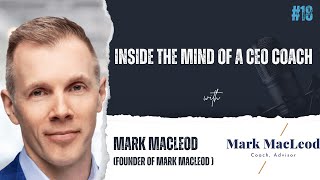
Mark MacLeod, a former CFO and investment banker, now coaches venture-backed tech CEOs. He argues most CEO problems are self-created through overwork and poor boundaries, and prescribes physical health, sleep, and meditation to sharpen decision-making. Go-to-market and revenue matter most for building value.
Chapters
The CEO role, it's really about making decisions at scale. And you make decisions every day, some small, some large. And the thing that you need to make great decisions is mental clarity. And it's hard to have that when you're in fight or flight and you create no space, no time to think. Foreign.
Hi, I'm Mike Pincus, Co Founder, ConnectCPA and your host at Growth Tales. I'm really excited for Today's guest, Mark McLeod. Marcus built a CEO coaching business where he specializes in working with high growth startups. Mark has a ton of experience, having served as the CFO for both Shopify and FreshBooks earlier in his career. In addition to his C suite roles, Mark has also been a longtime investment banker. He's been a general partner at Real Ventures and prior to starting his current business, he had founded his own investment bank, SurePath Capital Partners. What I believe makes Mark very unique as a CEO coach is not only that he has worked alongside some of the biggest and brightest CEOs and established high growth companies, but he has also had extensive experience on the financial side of scaling a business and coupled with a deep understanding of deal making, fundraising and exits. I really enjoyed my conversation with Mark and if you are a CEO of a scaling startup, I believe you have a lot to take away from this episode. Hi Mark, thank you so much for joining me today on Growth Tales.
It's a pleasure, Mike. Thanks for having me.
I've been a big fan of what you do. I've been following your podcast, I've been following your writings for a little while now and what caught my eye about you, Mark, is that you have a very different, unique background compared to most CEO coaches that I see. Being a CFO of really reputable companies like Shopify and FreshBooks and being an investment banker, it's just like a very unique competitive environment that your background's from and you don't see many CEO coaches in that domain. So my first question for you is, what is the origin story between how you came up with the decision to start a CEO coaching business?
Yeah, it's. I was intuitively drawn to coaching, to be honest. I bought my first coaching book in 2002, yeah, 2002. But realized that I lacked the gray hair and moral authority to crush it as a coach. I now have a white beard. You can judge the moral authority bit for yourself. But I went through some big life changes in 2019. I got divorced. It was a 18 year relationship, 16 year marriage and it prompted a bunch of life reflection. And I've kept A journal for most of my adult life. And I reread a bunch of years and there was, I often brought about work because if I was awake, I was working. By the way, that is not unrelated from getting divorced. But there was this really common pattern right across all of my roles, whether as like a CFO acting as a right hand to a CEO, a VC trying to help founders become CEOs, an investment banker trying to help CEOs achieve massive outcomes. The days that I was most excited about are days where I had a one on one coaching or advisory conversation. And so I knew at the end of 2019 that if I had to do over, I'd skip being a banker and I'd just be a coach. And then in March 2020, of course, the world changed. And for a brief moment, companies stopped buying companies. And it was initial panic. I had hundreds of millions of dollars of deal flow die in the space of two weeks. But then I realized this was actually a gift and a golden opportunity. And so I used that window where I wasn't leaving clients hanging to shut down my firm, help my staff get new jobs. And in one case, the guy who led my San Francisco office helped him set up a similar firm for himself. And I went and got back, went back and got certified as a coach. So, yeah, I'm now in the fifth year of a really specialized coaching practice, coach the CEOs of technology companies that have raised, you know, institutional capital, so kind of venture capital or private equity.
That's a, that's a very interesting story because it sounds like your path was a very similar, I guess, process that CEOs go through themselves or founders where they're in a high stress environment, the markets are constantly fluctuating. And the fact that you went through that yourself, granted, in a different position, you have a lot of overlap with the CEOs that you coach in terms of seeing a lot of the things that they're seeing. So I wanted to ask you, the ICP you went after, which is high growth companies, is it because you already had fundraising experience, investment banking experience, you knew some of the challenges that they would naturally face, and you've been in that environment, was that the reason why you went so narrow in terms of who you'd work with, or was there some other reason?
Yeah, I deeply believe that competition is overrated. And in everything that I've done, I've aspired to create a category where I have little to no competition. So when I was a venture capitalist, I went super deep on SaaS and I was one of the few VCs in Canada who was doing that. I was blogging about it all the time and learning about it and sharing what I was learning and that attracted entrepreneurs looking to raise capital from us. And it just became this flywheel and self fulfilling. And when I and all of my investments except for one were in fact SMB SaaS companies. And of course I'd been CFO at Shopify before and FreshBooks after being a VC and I doubled down on that SMB SaaS specialty with my investment bank and there's tons of investment banks. But by the time we were done, San Francisco startups were hiring our Toronto based investment bank. Which is backwards, it makes no sense. But it was because we were more specialized than anyone. And so I've applied the same approach to coaching. There's lots of coaches out there and I'm sure they're all great. But my superpower is that I've personally raised over a billion in capital, I've personally done over a billion of exits. I've been on every side of the table. And so that just gives me very deep context, very deep pattern recognition. I understand what the CEOs are going through. And if you're running a high growth company and you've raised tens or hundreds of millions of dollars, you have giant expectations on your shoulders, huge pressure. And so you need someone to speak to who gets that context and can hang at your level. And so there just aren't a lot of coaches who have that background.
There's no question. And it's definitely something you don't see that often given your background. And that' why I think it's so valuable. One of the things I was always curious about, Mark, is you're now meeting with all these different CEOs and running a startup or even any scaling business is incredibly difficult. And so you definitely see those commonalities of the issues that CEOs face. But I wanted to ask you a question of what are some of the things that CEOs coming to meet with you that they think is a significant problem that you don't see as being that big a problem? I'm curious about that. Where people are coming to you in a panic and you're like, wait a minute, this isn't even that big of an issue. Have you figured out what those things are?
Well, that's a great question actually. I'd say, listen, we only experience the world through our subjective lens, right? If you think this conversation's boring, you're right. If you think this conversation's exhilarating. You're right. It's the exact same conversation. And so the point of that is I don't want to discredit the reality that the CEO is facing when they show up. It is their reality and so we have to deal with that. That being said, I think this might be true actually of society at large, but it's certainly true of CEOs. Most high growth CEOs because of the demands placed on them, just work too much, they have no boundaries and they end up living in this fight or flight place where almost anything can be triggering. And so a huge part of my work is actually to get them down from that. And one of the reasons why I believe so deeply in personal health and advocate that for my clients, sometimes I have my clients literally, let's do some breath work before we even get into chatting because they've just come from, I don't know, like the sixth hour back to back meetings, which by the way is a thing I try and undo in their schedule. So I think rather than this, you know, your question about like, what do they think is a problem? That is actually not the thing that is most prevalent is the, a lot of the reasons that bring them to coaching, the problems, if you will, that bring them to seek out a coach, are self created. And I'm not blaming with that. But like things like I can't keep up with my schedule. I have 10 hours of meetings a day, I have no time to think, I have no time to process email or slack. I'm doing that at night. And as a result I have no time for myself or, you know, my family, my health deteriorating. All of that is self created, right? Because we haven't set up boundaries. Probably because your leadership team isn't as strong as it can be because that's your leverage. And maybe you're operating at the wrong altitude, right? Maybe you've inserted yourself into the critical path of too many things. So really try and unwind all of that and create a healthy, sustainable pace. I can tell you again, I've done a lot of exits and the number one reason why founders choose to sell their company is because they're burnt out. And they're burnt out again. It's self created. It doesn't have to be that way. When I interviewed Toby for my podcast the Startup CEO show, literally that week was the 20th anniversary of Tobi incorporating Shopify. And I asked him why he hasn't burnt out. And you know, it's pretty fascinating, but he has boundaries. For the longest time if you look at his Twitter bio, it says CEO by day, father in the evening, hacker by night, something like that. The point is he's created these distinct boundaries for himself. It's not just CEO, there's a whole bunch more to it, but boundaries honoring all of the different parts of ourselves. Like yourself, you're presumably a husband, you're a father, you're a son, you're a friend. All of these roles need real estate. They need to be a part of your life if you're going to live a fulfilled and meaningful life. All of them feed you. Right. But with so many CEOs, work takes up everything and you know, let's generalize. Right. The startup CEO. Most startup CEOs are male, not all obviously. And I have female clients. But generally speaking, male dominated space. Those males give everything to work. Out of the 0% that's remaining, they find something in the dregs for their children. They have nothing left for their wives or partners and nothing left for themselves. And it just leads to ultimately burnout and a lot of unhappiness. And if you think about the CEO role, it's really about making decisions at scale. And you make decisions every day, some small, some large. And the thing that you need to make great decisions is mental clarity. And it's hard to have that when you're in fight or flight and you create no space, no time to think. And so yeah, I'm on a personal crusade to create that time. Right. And to create sustainable balance for my CEOs and their companies. I deeply believe that happy, healthy humans build bigger, better companies.
Yeah, that perspective of it's self inflicted is, it's very interesting. Like I see like Warren Buffett at like 90 years old choosing the work. Obviously has no reason to have to work.
He does not have to work.
I would put, I'd put Toby into that same category. I mean I'm, I'm assuming he's a billionaire and there's no reason he has to. Yeah. And, and that's.
He could buy an island beside Richard Branson's and just kite surf, but he.
Works harder than ever. But I'm sure not all your CEOs fall into that camp. And so what I'm curious about a little bit is that how much of that self inflicted pressure, not just from, obviously there's expectations from your team, from your vc, from everyone around you who's got high expectations, but the financial side, I'm sure some of your CEOs have taken secondaries at some point in their journey. Some of them haven't. Some of them are growing multimillion dollar businesses where there's a stack of pref shares hanging over their head. And so how much is the financial pressure of not yet yet being set up personally wealthy influence that stress level for some of the VCs because I'm sure you have a mixed camp mark of some that are first or second time founders. Some are very wealthy, some are not wealthy yet, but they're building great businesses. How much does their personal financial situation play into their overall mental state of running a high growth startup?
Yeah, it's a great question. I found that there are three sources of motivation. I can be in love with the market, it's a big market. I think there's an opportunity to make money. I could be in love with the product. I've got this amazing vid widget and now I want to sell my widget. Or I can be in love with the problem. I have found like a market or money to actually not be an enduring source of motivation. Back when you were employed by someone else's company, you got a pay raise and you felt good for a minute and then you get on with the rest of your life. Money is not an enduring source of motivation. And so to your question, I think VCs certainly have a concern that hey, if someone does a meaningful secondary, they're not going to be as hungry, they're going to be distracted, they're going to be doing angel investments, doing all this other stuff. And that does happen. But in my experience it doesn't happen to the A players, the people who are really going to build the outlier companies. The Shopify's, right, The Airbnbs, they are. Money doesn't change them, you know, and it hasn't in the case of Toby as an example. Mark Zuckerberg, right? I just listened to Mark Zuckerberg's interview with Acquired. Like this guy's settling in for the long haul and again, he's still doing it many, many times over. And that's actually because those really, really great entrepreneurs, they're in love with the problem, right? It is their mission. It's the reason why they wake up in the morning. Let's go to Toby. Because it's a closer example, right? Toby's mission is to make commerce simpler for everyone, to reduce the friction. So anyone who wants to start a product based business can do so easily. He's not done right. And so he works hard. And so yeah, secondaries, in this case his personal wealth is orders of magnitude above any kind of secondary we might see in the venture market. And it hasn't affected his motivation. And so I think the people to wrap this up, I think the, the people whose motivation comes down as a result of secondary were probably not the people that were going to create the outlier outcome anyway.
Yeah, that makes sense. And yeah, you have to be motivated by solving that problem because the money comes in the long tail to a lot of these really high growth. It's a high risk endeavor, meaning you're going all in. And especially if you pick that path, that makes a lot of sense, that money can't be the motivator or you're going to give up at some point. Right.
There's way easier ways to make money than being a founder.
Yeah. So speaking of which, of the founders, you're meeting with all these different types of founders and you see some really successful ones, you see some that are brilliant but they can't break through. What are some of the attributes? One or two of the attributes that you see, Mark, in CEOs who are really effective. I know there's obviously external circumstances that they're out of their control. There's a lot out of a founder's control. But of the ones that you've seen that are really successful or figure out those difficult challenges, what are some of the attributes that they have?
First of all, I want to be clear that at least 50% of any outcome is luck and timing, which is independent of the founder. That being said, the attributes that stand out for me, first of all, resilience. You're going to get punched in the face every day and yet you show up with a smile on your face the next day. Self awareness. That is the number one thing that I looked for as an investor and the number one thing that I look for as a coach. And Toby puts it really well. Right. He said for years I need to re qualify for my job every year. It's not the same job. And the thing that enables him to do that is self awareness. Right. That ability to as objectively as possible, review himself and find opportunities for growth. And in the case of Toby, he literally replays his day. It's almost like a movie in his mind. Oh, I don't like how I behaved in this meeting. We used the wrong inputs to reach this decision. Like he goes through a learning loop every single day, which brings up another of his mantras, which is like, get 1% better every day. Which sounds like a cheesy poster in the hallway, but he lives it. And 1% improvement every day. Is a 37x improvement in a year. It's completely transformational. So self awareness is a huge thing, I can tell you. And this really ties into luck and timing. The number one thing that grows CEOs is to unlock revenue growth in the business and just hang on for dear life. Just figure out how to keep up right? With like that is the thing. And you know, you could have, you could be like the smartest person in the world, read all the books, all the blog posts, have all the coaches, mentors, none of that will matter unless you actually unlock revenue growth.
And that makes a lot of sense because if revenue is, if you figure out that product market fit, it's all whatever you thought you were going to have to figure out. When you start scaling like crazy and you're, and you're generating revenue, whatever you thought you had to fix or the next feature, you're probably wrong. I'm assuming you're going to have to pivot 80 times anyway. So if you're going to get one thing right, you're saying revenue's the thing you need to get right?
Yeah, listen, ultimate product matters. If you look at the most disruptive companies, they have disruptive product. But if I had a pie chart for all the elements of value creation over the life cycle of a company, by far the biggest single slice of the pie is go to market. That's why Microsoft, with I would argue pretty shitty products, is a giant company. Way back in the day when you bought Microsoft Office with either floppy disks or CDs, they own the shelf, right? You would walk into Staples in Canada and all you would see is like the main shelf that you would look at, that's eye level, just Microsoft, right? They own the shelf. So that's distribution, that's go to market, right. And so deep channels like formidable go to market expertise, you know.
And I'm going to pivot a little bit here. Mark, we were talking about Toby, we were talking about Zuckerberg and something that I've thought about a lot. I don't know if you've noticed this or not. Like a lot of these high achieving CEOs for some reason or another are really fit. Like I look at Zuckerberg does jiu jitsu. They're, they're just like, they're crazy fit. The most of them talk about their meditation practices on all these things. So I wanted to ask you in, in your subset of, of all the CEOs that you work with, how important is mental health, physical health, to being effective as a CEO.
For Me, it's the foundation, right? If you're building a tall building, you have a big, strong foundation. And that is the foundation, right? Is. Is physical health, mental health. And it's. It's a thing that I advocate for all of my CEOs. Not all of them follow it. And it's a thing I practiced right when I was running my investment bank. It was stupid. Like, just the pace that we had, right? And we were doing six deals at a time. I had an office in San Francisco. I had clients in Europe. If I was awake, I was working. But back to boundaries. I created boundaries. I did CrossFit five days a week. And the beautiful thing about CrossFit is no matter what city I was in, I could find. They call them boxes. I could go to a box and get a CrossFit workout, and I was good to go. And that completely set me up for the day and the days where I would skip it. I found I had less energy, less confidence, less mental clarity. And so if you get serious about physical fitness, it then forces you to get serious about nutrition to fuel you, and it forces you to get serious about sleep. All right? And the number one, you know, get healthy quick. The number one fad for health is to sleep enough, right? Eight hours, ideally, of good quality sleep every night. And so it's this just compounding, virtuous cycle, and then, yeah, meditation, super important, right? Again, going back, what does a CEO do? They make decisions. Mental clarity. And you and I were talking about Kundalini yoga before we went on air. And here's the thing. Like, our rational brain is 10% of our capacity. And our subconscious mind, our intuition is far more powerful. And when you're living in this fight or flight place and just going from meeting to meeting, zoom to zoom, pounding emails, pounding slack messages, you leave no space for your intuition or subconscious to go to work. And that's why you have these aha moments if you go on, like a hike or you're in the shower or something, right? I went back. My last operating role was at FreshBooks. And I used to have what I called Freshmares, which are like FreshBooks nightmares. And I would solve business challenges while I was asleep, and I'd wake up and, like, have to write them down or I'd forget or I wouldn't be able to get back to sleep. So not the most refreshing sleep. But the point is, like, I wasn't working, and so my subconscious went to work. And so this is one of the things that, why I've been drawn To Kundalini Yoga is I am deliberately building my subconscious and intuition and turning on parts of my brain that are dormant. And, you know, meditation in general helps do that. Right. You know, meditation in combination with conscious breathing, that could be a whole into itself.
Well, the fact that you have a background in understanding just the mental health, the physical health, yoga meditation, I think is very powerful because I would imagine CEOs probably come to you and they're like, this is the problem. I have a VP that's not performing. I have a co founder conflict. And that's why I started with that question of they think it's the thing. But like you said, but you've been reiterating is resilience in the altitude you're at as a CEO, to think clearly from 30,000ft of all these issues that are going on is sometimes the thing that helps you through. So I'm kind of curious, when someone comes to you and startups aren't always fun, there's always the problem or the burning thing that someone is looking for help. And Mark, you have the tactical ability to give advice on things like fundraising and unit economics. Being an ex CFO, do you ever cause the CEOs to go, let's zoom out for this session. We're not going to tackle that thing you think is burning or how do you approach it when someone is in fight or flight, but you are looking at all these things that the CEO needs. How do you address that Is what I'm getting at is like you're dealing with someone who's under high stress, high pressure. There's all these tools and they approach you because you have tactical ability above the strategy. How do you know what to deploy in any given one hour increment or an hour and a half meeting.
Yeah, yeah. It's a fantastic question that becomes easy the more you spend time together because you deeply know the person. These relationships are trusted and intimate. Like, I don't even tell people who I coach. There are conversations my clients have with me that they don't have with their spouses or co founders. It's a deep relationship. And so over time as I get to know them, you know, I think a key job for a coach is to hold up a mirror and be like, this is what I am seeing. Right. And sometimes that means we got to go to the uncomfortable places. You know, I had a conversation with a client recently. Where we were talking about these, you know, you talk about, hey, I got a VP that's not working out. These things that are like actually Symptoms, not the cause. And you know, he showed up with a list of symptoms, but we diverted the conversation to the cause. No need to get into what that is in this case. But yeah, that's my job. Right. Is to go where we need to go, whether it's comfortable for the person or not. And so that's a little harder right at the beginning because I don't necessarily have the context and I don't deeply know the person yet. But once we're up and running, then becomes pretty evident and back to kind of Kundalini Yoga and subconscious intuition. You know, I practice every day. I have a deep meditation practice, a deep spiritual practice, and I don't grind anywhere near to the extent that my CEOs do. So I have time to reflect. Very often my intuition will tell me very clearly where we need to go in a conversation.
That's amazing. And the fact that you're seeing it clearly now, but you've sat in those high pressure seats and so there's a lot of trust and authority, I think, because you have sat in that seat, which is what's very, I think, unique of you as a coach, Marc, is the fact that you're not speaking just off of gut, feel alone. You've been in the high growth startup, you've been closing deals in investment banking. And so I think it gives a very unique perspective to the problems that your CEOs are bringing to you. I want to ask you one more thing because I know we're running low on time here and I want to be respectful of your time. 2023 and 2024 have been more challenging. Like some founders have only seen bull markets. They've seen everything being perfect. These last few years in particular in tech have definitely been. They've been unique, they've been challenging. I've seen that some of the people you've interviewed on your podcast are customers of ours or clients of ours that we've known for years. And I don't see that intimate side that you do into the deep, deep rooted issues. I wanted to ask you, what advice have you been giving CEOs over the things that are out of their control over these last two years? How are you getting CEOs to cope with the fact that things just might be shit for a little while? You're going to have to deal with the fact the macro environment sucks. How have you been able to deal with that with your CEOs?
Yeah, to your point, about things being out of their control, that's the first point. Right. Here's an issue. Is it something I can do something about or not? And if it's something I can do something about, great, let's do it. And if it isn't, then we just have to accept it. Now, the surest way to be disappointed is to have inflated expectations. And so part of this is working on expectations, right? If you've never seen anything but good times and you raise money in 2020, then your expectations are going to be inflated. And I've been able to just share. I went through the dot com crash, I went through the 2008 mortgage crisis in 2008, 2009, there was such a downturn in the public stock markets that VCs literally were not writing checks. Their LPs wouldn't give them capital. Right. There's just a complete shutdown of the market. And just reminding my clients as well, right. Like the vast majority, I don't know, let's call it 99.5% of companies in the world need to make more in revenue than they spend in costs. And, you know, it's good to remember that. And like, there are times, yes, rationalize, you know, like rationalize your spending. I deeply believe everything in life happens for you, not to you. And this downturn has made every single One of my CEOs a better operator. Every single one of them has had to go through a downsizing and that's been tough. Right. They've had to look at people who agreed to join their company, signed up for their mission, look them in the eye and say, I have to let you go and live with that. Deal with. I put so much blood, sweat and tears to build up to, let's say, 100 people. And now I'm at 70 people. Like, why was I killing myself to recognize that maybe, hey, I need to just dial it back a little bit and be a bit more sustainable. Because this thing is so tenuous. Right. You know, it could fail. You know, I tell my CEOs all the time, like, an average startup lasts seven to 10 years. And when you're in it, it feels like everything. But when you zoom out to the context of your life, it's just a chapter. Your life is actually more important if you're in a relationship. If you're married, as an example, well, you've made a promise to be with your partner till you die. That's more important than this startup that's going to last seven to 10 years. If you're a parent, well, that's your most important startup. And hopefully you create more time for that. So a big thing that I've seen come out of COVID is people's priorities have rebalanced and they've actually realized, hey, you know what? These things matter a little bit more. Actually a lot more.
Mark, do you mind me asking what the average age of a typical CEO that you work with is? I know it's obviously a wide spectrum. What would you say is average?
It's all over, honestly. My youngest is still in his 20s. He was on the Forbes 30 under 30 list. Deeply impressive human. My eldest is probably in his early 50s. So maybe in the 30s is the average. But yeah, it's a wide cross section.
And the reason why I asked that is that the hindsight being 2020 and you started this conversation by saying you had to wait until you had the experience level. You set a gray beard. I have a gray beard too, although I shave it down. But you, I understand what you're saying now is that what comes with the years is wisdom. Right. And experience. And you need a lot of energy as a, as a founder in a high growth environment and there's stages in life. But I love how you said a lot of CEOs will, it's a part of their identity is their business. And I appreciate your transparency in talking about your past and your relationships because that perspective to share with someone to go you view these next seven to ten years as everything. But you won't look at it like that down the road. But you have to have been through that yourself in order to give that type of advice and wisdom to someone is like I said, similar to how you sat in the seat of CFO and investment banking and all these things. I think it's super valuable, Mark, that you're doing something where you just have a very unique perspective on these things. And I want to conclude by thanking you for coming on because this has been really insightful for me as well. Running a business not to the altitude I'd say that Most of your CEOs are at but really insightful the things you've shared, Mark, on just how the challenges and the things that CEOs go through.
Thank you. This is one of my favorite topics in the world. This is my purpose. It's why I get up in the morning. So I'm happy to talk about this all day every day.
Awesome. Well, thanks again Mark. Appreciate you taking the time for this. And to any of our clients, if like you see Mark, I mean we've already had overlap and I've been loving what you've been doing over this last little while. Mark, how can people find you? What's the best way to get in contact with you?
Yeah, I Write online on LinkedIn every day. Markmcloud me is my website. You can find blog posts and links to the podcast there. And then right now I run the world's least scalable business which is one on one coaching and so I've only been doing that for growth stage CEOs but I hear from early stage CEOs all the time and so to date all I've been able to say is no, which is not particularly helpful and so late in Q4 I'll be launching a Mastermind group coaching program for early stage CEOs so there'll be details of that on my website as well.
Amazing. I thought you were going to say you're going to clone yourself with AI that would have been just as effective and scalable.
Yeah, yeah that'd be handy.
Thanks again Mark. Really appreciate it.
Thank you Mike.
More from Mark





The Burnout Breaking Point - How Strategic Breaks Actually Increase Productivity


Emotional Debt - How Avoiding Hard Conversations Compounds Into Company Killing Resentment


The Death of the Specialist - Why AI Is Creating a New Professional Class Called Scalers