How to Build a $50M Business Without Venture Capital | The Startup CEO Show Full Podcast
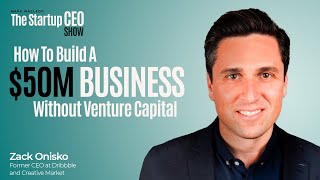
Zack Onisko built Dribbble to $50M revenue without venture capital through bootstrapping, remote-first hiring, and SEO-driven growth. He explains why he stepped down as CEO and how the company made contrarian choices under Tiny's ownership, including serial acquisitions and cultural practices for distributed teams.
Questions this video answers
$50 million in revenue.
15 years.
Monday, April 1 (year not specified in chunk).
About $2 million in revenue (circa 2017).
About 35x revenue growth and 100x EBITDA growth.
Chapters
At some point over the last year or so, I kind of realized it's probably not the strategy that Tiny is going to seriously explore unless there's a crazy outside offer. And so, you know, at that point, I think just for me personally there was just, there's other things that I want to work on, other projects, other investments. You know, I love Dribbble. It's, it's like a part of my, like, DNA at this point of like, who I am. And like, people know me as the Dribble guy. And so it was a really hard decision. It's very bittersweet to make that call, to step away. But, you know, the way I rationalize it too is like, hey, I was the guy to grow it to 50 million in revenue, but I'm probably not the guy to grow up to 100 million. And so let's go find that guy and I'll pass it to the tod.
Welcome to the Startup CEO Show. I'm your host, Mark McLeod. In this episode, I sit down with Zach on Hisko. Zach just quit his dream job as CEO of Dribbble. Over a seven year run, Jack led the company through 35x revenue growth and 100x EBITDA growth without raising any capital. We go into a bunch of topics in this episode, including his decision to leave his dream job, how they succeeded without raising venture capital, how to lead a company that's entirely remote from day one, and many other topics I hope you enjoy. And if you like this, I hope you subscribe. Zach, welcome to the Startup CEO Show. It's a true pleasure to have you here today. How are you doing?
Thanks so much for having me.
It's my pleasure. So I first asked you before we got on air how retirement's going. And so that's going to be my first question for you because I reached out when I saw that you stepped down from Dribble, which was really big news. And I thought that would be. First of all, as I thought about kind of where to take this conversation, I really saw your journey as like a study of contrasts and a going against the standard way. Right. Like bootstrap. Sorry, Dribble was a bootstrapped company. You bought companies instead of looking to be acquired. You know, you stepped down midstream or mid, you know, whatever, not. Not at the very end, which I know is something that people think about because the CEO job is tough. And so there's so much to learn. But I'd love to start with maybe first of all, very long series of questions. Just tell folks What Dribbble does if they don't know, I feel like it's a household name in the design world. But maybe just tell folks what it does and, and then leading to how's retirement? Tell us about your decision to step down and let's, let's just rip that apart. Sure.
Yeah. So just kick off. Dribble is kind of one of the last independently owned social networks. It is a community for designers that has grown organically over the years. We turned 15 this summer and we have evolved and become multiple different things over those years from the beginning to now. But at the essence, it's a network. It's a professional network for a lot of designers. A place to showcase their work, get feedback from peers, but also to find new work opportunities. So probably 90% of our traffic is from non designers who are looking at the work of designers for inspiration or to find designers to hire for the next project.
Fascinating. As a brief aside, back when I was a vc, we led the initial funding round in Unsplash, which feels like it has some similarities just in terms of demographic. Right. You know, kind of people showcasing their work, finding new work, et cetera, in one medium, which was photography. But some. Some similarities.
Dribble actually acquired Crew, who was the.
Yes, that's right.
That was the original Splash.
Yeah, that's exactly right.
Right at the time they spun out Unsplash, so.
That's right. Unsplash was not what we invested in. We invested in Mikhail and Stephanie and initially it was Crew and out of that came Unsplash and yeah, kind of doubled down on that. Yeah.
So, yeah, tell us about the decision.
Yeah, the decision to step down.
The decision was, you know, kind of a long time coming. And you know, I think in the early years of when you're signing up for a startup, it's really kind of, you know, to, to build enterprise value over time. And we're very successful doing that. You know, I was a hired gun CEO, so I came in right at the time that Andrew Wilkinson bought the company from the founders. We're a majority share of the company and really kind of at the time where Tiny wasn't even tiny yet.
That's right. Maybe you were the inspiration for Tiny.
Yeah, I mean, I think that was, that was kind of the kickoff of, you know, now it's become a successful holding company and with lots of companies.
But it's not so tiny.
It's not so tiny. I mean, there's 40 companies now, but at the time they had like three companies or four companies. So yeah, it's been cool to kind of see that, that journey grow. But, you know, I, you know, and over the years, you know, the thesis for, you know, how to build the business has, has ebbed and flowed. I was raised in Silicon Valley and so that, that wisdom was, was my first instinct when I took over the company was to go raise money. And that was, that was 2017. I borrowed a little bit of capital from Tiny to just for working capital injection so I could build out the team. Because I knew, like, I inherited the team as eight people. I'm like, okay, there's some key functions I need to fill. You know, give me a shareholder loan. And, you know, anyway, that, that was paid back in three or six months because that plan kind of worked out. But behind the scenes, I'm down on Sand Hill Road and I'm talking to all the usual suspects in the VC world and got a lot of interest. So everyone knew dribble. But once I kind of exposed that dribble, the time was only doing 2 million in revenue. And it was pretty subscale in terms of the amount of traffic and the amount of scale. The actual website was top 2000 website in the world. So we got a lot of interest and got pretty far in some conversations and got close to term sheets. Where at the end of that year from when we took over the company in January, to probably call it like October, November, our margins had expanded considerably. So during that time I'm like doing the kind of dog and pony show. We just continue to get more and more profitable. And kind of the end of that, I was like, well, you know, shoot, what am I gonna spend the money on? Right? This is kind of an expensive check to cash. And, and so then I kind of backed away from that, that direction and then kind of from that, which made.
Them want you even more, I assume then they're like chasing you down.
Well, I kind of just changed. I just didn't pick up the phone after that, you know, so it's, it's not even worth, you know, even having the conversations. I kind of knew at that point, like, we had, we had cash flow, we had, we had a growing business and it's profitable, so there's no need to take on additional capital and just have the, the pain of having a VC on your, on your board or on a cap table who's, who's likely not aligned with where you are in the journey of building a business. And so that was just the decision. And you know, I talked, talked to a lot of other entrepreneurs and friends of mine, CEOs and our board and we kind of just decided, let's just, let's see how long we can go, continue to grow this thing. And look, we always come back to the table and raise capital if we need it. But that, that day never came. So. And the same thing, I would say the same thing with remote. Right? So I think, you know, in 2017 being a remote company was very contrarian. And you know, I shopped around the same time I was like looking at office space in Oakland and San Francisco. I'm like, okay, we, we need a foosball table. And you know, the cool culture without a foosball table. You need the painted mural, you know, to be able to attract talent and all this. Well, I'm hiring great talent remotely. Why don't we just see how long we could do this? And we're going to save so much money on those expenditures and we're not going to be locked into like a 5, 7, you know, 10 year lease. And so, you know, double down on remote. And then, you know, Fast forward to 2020, everyone's remote. But at, at the time it was, it was a, it was a contrarian route. Same with, the same with the capital too.
I want to just double it quick in for a second because the prevailing wisdom is you need to raise and most startups burn and then never get even close to the success that dribbles achieved. What was it about either how you went to market or just the nature of your opportunity that made it so capital efficient?
Look, I mean I think there's, the landscape has been shifting for a long time and there are certain businesses that do need a lot of upfront capital to get off the ground and grow. I think we see it today with no code tools and. Just the world has become more remote and global and so it's just easier to staff up and build a company, at least a software company today. But I remember a time when I was first starting my career where we had to buy Sun Micro machine servers and those are $200,000 a piece. And they had to go in the. It's like the real expenses you had to pay for even outside the people costs. And I think those expenses have just been pulled away with AWS and with all these new technologies that have opened up, just make it a lot more turnkey. Um, and so, you know, there was a lot, there's a lot of startups, you know, in recent years called the last, like, you know, five years who are raising money really just for acquisition Costs, right. And, and employees attracting talent and then acquisition. And for us, we were finding great talent we were lucky enough to have. The way we were formed through tiny is that we, we had a Canadian entity and a US entity which allowed us to staff in both countries. And you know, as we grew, we hired more and more Canadian talent because the cost of living was lower. There's a 30% discount at the border. And so there was a lot of benefits to, to that and just the structure. And then we also just kind of made a rule of like, let's not hire in San Francisco, New York, where there's just a lot of competition and inflated salaries and you know, there's just great talent elsewhere. And so that was, that was a, just a strategic decision that pushed us away from like San Francisco where I'm based, but also needing to raise money and to attract that talent in this like, very competitive cool. And then on the acquisition side, we, the nature of the business is heavily SEO driven. And so my background is in marketing and growth and kind of exploring the different channels that we had at our disposal. And you paid was going to be really expensive. It had been inflating over the last, you know, those, those early years and I knew that just wasn't a channel that, for this, for this type of product that we wanted to invest in. You know, you look at, affiliate look at, you know, a lot of those channels that require capital to invest in either through like raw budget, but also like having to build a team to, to manage it. We decided to stay away from that and really focus in on channels that we owned. And we're free. Right. And so that's SEO. There's an inherent correlation to the amount of UGC that's added to a platform that expands the number of pages that could be indexed by Google. There's a whole series of methodologies and just structured content that we leaned into in those early years. And then email was always a big channel for us. Right? Another free, a free channel for us where you know, we, we leaned into user acquisition. So all of all this traffic coming to the site, can we get them to sign up, get on our email list and from there we can kind of segment those, those folks and, and then, you know, the, the other thing we've done is, is just like looking at how we make money. Like we have this like network at the, at the foundation of the business, but we looked at, okay, we have all this traffic, okay, so we have this subscription for designers that helps them, you know, enhance their profiles and, and you know, get more exposure on the platform. We have this hiring subscription for people looking to hire designers. We have an education business for folks who are up and coming designers. Then we have an advertising business just to monetize everyone else who's here just window shopping. Right. So we kind of like layered those on over the years, optimized and, and then, and then we could segment basically, you know, through our organic acquisition and then segment into, you know, those different product offerings.
As you describe those offerings, LinkedIn came to mind. Are you basically LinkedIn for designers?
Yeah, I mean, that was definitely a big, you know, they, they had laid this roadmap, like, okay, let's not reinvent the wheel. Like, what have they done that's been successful? Successful? We could probably do a lot of those things. We're at much smaller scale. Right. But yeah, I think that was a big inspiration.
Amazing. So tell us about the decision to step down.
So Dribble acquired my, my former company, Creative Market, which, which is a YC company that, that I joined like 1112 years ago. And so it was just a really long run between the two businesses doing the same thing. Right. And, you know, I have a, you know, I'm still an owner in Dribble. I'm the second largest shareholder behind Tiny. And you know, but we also, you know, we grew the business. I grew the business thinking one day there would be an exit. And, and that's, you know, at some point over the last year or so, I kind of realized it's probably not the strategy that Tiny is going to seriously explore unless there's a crazy outside offer. And so, you know, at that point, I think just for me personally, there was just, there's other things that I want to work on, other projects, other investors, investments. And so I just had like a. You know, I love Dribble. It's, it's like a part of my, like, DNA at this point of like, who I am. And, like, people know me as the Dribble guy. And so it's a really hard decision. It's very bittersweet to make that call, to step away. But, you know, the way I rationalize it too is like, hey, I was the guy to grow it to 50 million in revenue, but I'm probably not the guy to grow it to 100 million. And so let's go find that guy and I'll pass the baton. And that would also free me up to go work on some other things. So off the side of my desk, I am a real estate investor. I've done A few real estate projects. I'm working on a big one right now. But also I'm at the stage of my career where I want to transition from being an operator to being an owner investor. And you know, so I'll likely look at business to buy at this point going forward and take that route. So it's just kind of a career shift. A little bit of midlife crisis, if I'm honest. But yeah, like a convertible car outside. Not yet. No Porsche. No Porsche. Okay.
When I decided to shut down my investment bank to become a coach, it was a big decision, significantly aided by Covid because in a six week period, we had hundreds of millions of dollars of deals die and so enabled a clean decision. But I approached that decision through two ways. One was my gut just knew I would wake up in the morning and like, I know I want to become a coach, but I also then went and analyzed was redundant, but I mind mapped the decision and thought it through in every possible vector and came to the same conclusion and then allowed my gut to be right. What was your process? Like, how did you arrive at this? Which is in fact a bigger decision for you. You had more years like you said, you were the dribble guy and bigger team. What was your process?
Not as sophisticated as a mind map. It was more of a kind of a, you know, I would say I probably had a. I made the decision probably a year plus ago in my head. And then it was like, okay, how do I do this gracefully so I don't fuck things up? And so, you know, just doing the right, you know, bringing my board and having an honest conversation. They had me lead the executive recruitment process to find my successor. And I, you know, I really put my heart into finding the right person to, to take over. And I want this company to continue to grow over the next 15 years. And so, so that, that was just kind of really important to me is just making sure that I did a graceful exit. Because it is unusual, right? It's unusual to kind of leave when you're not at an exit. Right. But that, you know, for me is like I, there may never be an exit. This may be a company that Tiny holds forever. And so at that point, like there's only so many years and there's a lot of things I want to go work on. And so I had to find the time to go do that. And so this, this allowed me to, you know, this, this kind of break as you know, there's a lot of, you know, risk to it. I'm leaving like cash flow. Cash flow is really nice. Right, like having that, that steady paycheck. But, you know, I think there's, there's a quote. I forget who said it, but the three most addictive things in life are heroin, carbohydrates, and a steady paycheck. Oh, that's a good quote.
Yeah.
And that was, that was one of those things. I was like, you know what, I got it, I gotta cut the cord. And you know, at the end of the day, if I'm not working to, you know, for an exit at a multiple return, then I'm really just a glorified employee and what I need to be as an entrepreneur. And I've made a lot of guys rich over my career, not just at Dribble, but in my past startups. And I've spent a lot of time just thinking about building wealth and how many years do I have left in my career and on this planet and, and the time that I want to spend and, and, and, and working, you know, a 9 to 5 job, even as a CEO is, you know, as much as I loved building this business, where I am in my life and what I want next is really to spend more time with my family, to have freedom and flexibility over my schedule, to be able to, you know, do the things that I want to in life. I decided like just pack up and hop on a plane and leave for two weeks. That, that's the freedom that I'm, I'm after. And you know, I've done, you know, I've made some investments along the way. I mean, outside of Dribble, that's, that's, you know, given me a bit of a financial buffer. That's, that's going to give me some freedom to go explore some different things and, and some may work, some may not work, but, you know, I think at this point I'm unemployable. Be hard to have a boss now. And so it's, it's really just kind of get out all about entrepreneurship at this point and not looking back.
Amazing. You know, I'm on a bit of a personal crusade to help make the startup CEO role more sustainable. Most of the time when CEOs come to me for coaching, it's because they're burnt out, they can't keep up with the growth of the company and they need help. And as a former banker, I can tell you the number One reason why CEOs sell is because they're burnt out. And I'm curious whether, you know, because of the bootstrap Nature of this role and maybe the more evergreen nature of they, the opportunity and be Tiny thinking was this role maybe more sustainable than the standard burn your way to greatness kind of startup that you were probably exposed to in sf, like were you able to create space and boundaries for your different roles as like a husband, father, et cetera.
So I think working for Tiny is great. So I had no pressure really from, from their side. We're, I can't say for certain. So I don't have too much transparency in a Chinese business, but I would guess that we were the most performant by a long shot, most performant business in their portfolio. And that was really the pressure that I put on myself. Right. And so coming from that world, my previous titles were Chief Growth Officer, VP of growth. Like so growth was like my DNA and like that's what I was wired to do do. So even though I didn't have a VC on my board, like you know, yelling at me to grow faster, I put that pressure on myself. So we did push hard. We did, you know, have that sense of urgency always over like that, you know, eight year, seven, eight year period. And that was, that was kind of self driven and. Yeah, I mean, I just don't think we would have that success if I, if I did operate it like maybe some of the other, you know, companies in the portfolio which were just more, more dialed in for just cash flow. Right. Like just keep it, keep it cash flowing and, and not really focused on aggressive growth.
Right. So you set the pace. You were comfortable with the boundaries, I guess is the punchline.
Yeah, but the, you know, I think the burnout's real. I think I, you know, I think I was burnt out at the end. So I think those years of just trying a lot of things and some of them working, some of them not working and you know, there's, it's definitely a very complicated story of what happened internally with all the, you know, the different seasons and quarters and years along those, along that journey. And you know, and I think Covid and the pandemic was, was also a piece of it. I think that was definitely like a hit to everyone's psychology. But you know, coming out the other side of that was also, you know, know, again this mindset shift of like, is this really what I want to spend the rest of my life? See what I mean? Or do I need to stop and take a look around and.
Right.
You know, what else is out there? Yep.
Yeah. Right. You know the saying. Right. The change is as good as a break but you never had a change, right? Some folks exit and immediately go to the next thing, but you just kept going. Yeah, and so, yeah, that's hard. So I'm based in Canada and Andrew's a pretty visible figure up here. And you know, you talked about an exit really not being in the horizon anytime soon. And I know Andrew's very inspired by Warren Buffett, who just buys and holds forever. And I'm just curious, what other lessons did you learn from Andrew that might be contrary to the standard kind of startup way of doing things?
Oh yeah. Andrew's been a massive inspiration again, especially coming from Silicon Valley where, you know, I think every move he's made over the last, you know, seven, eight years has been very contrarian. And, and now like, you know, it's become like, you see all these guys on Twitter starting holding companies and it's like the new thing. But no, I mean, I think he's. His ability to, I mean, part of this reason for me leaving is heavily inspired by him. He wrote a medium article in 2016 or something around kind of defining like anti goals, like, here's the things I don't want to do in my life anymore. And you know, and, and he's really like stayed true to, to that vision. And I think that was the, that was the goal of Tiny was really just to give him the freedom to build the life that he wants to build. And so yeah, it's, it's been really cool to work with him over the years. You know, he's, he shared books with me that is, that have opened my mind to just think differently about things he shared and then just working with him on deals like Dribble's done, you know, probably half dozen M and A transactions over the years and you know, working with, with Andrew and his team on those deals have really like, taught me just a lot about negotiation and value investing and just thinking differently about just sensible, Just business. Right. Like, like it doesn't need to be that complex. Right? Like you work, you know, you work with bankers and we do these like very like fancy like modeling and forecasts and, and you do all this stuff and you know, at the end of the day it's, it's, it's much simpler of just looking at a business and like, okay, what's the right price to pay for this thing? And you know, and anyway, so I think, I think from that side of the room, I've learned a lot. And then from, from a distance, just kind of watching him, you know, in his public Persona and and kind of what he's doing there, I just, I just think he's like, he's having a lot of fun and he's playing by his own rules. And I think that's, there's just a lot to respect there.
Yeah, no, there sure is. It's funny, I popped onto the Tiny site before we started this just. But how do they position themselves? I hadn't looked at it in a while. They even talk about being anti synergy. Like what acquirer is anti synergy? But they're just like, no, no, just we're by you. You keep running it. Yeah, it's pretty fascinating and very contrarian, that's for sure. You know, I'm curious. There's probably lots of CEOs listening who have maybe thought about, hey, what have I become a buyer? What have I started expanding the suite of what we're doing and move to the buy side? Just curious like other than just practice and screwing up and getting better, like how did you build that muscle? You know, how did you. And yeah, what did you learn from Tiny and what did you just kind of figure out yourself to, to become a serial acquirer?
I mean, I think I, I just, you know, I, I knew nothing about M and A coming into dribble and Tiny was buying businesses. I was like, oh well if they're gonna do that, I could do it too. Like, so I started to reach out to folks and you know, and a lot of stuff came in organically and we, we started a bit of a search function internally too where I had a corp debt person for, for a while, but I just kind of learned over time and, but I think just being kind of naive in the beginning helped quite a bit of like, I'm not from the private equity world. I'm not from, you know, I'm a startup operator. And so moving into that, you know, capital management, capital allocation mindset in real time, like helped, you know, with a lot of these conversations. And I think also being the guy from Dribble and talking to a lot of companies in our space and in our kind of outer circles, the doors are just immediately open and I could, you know, just easily get on the call with, with anyone and, and just have a conversation of like, does this make sense for you guys? And, and yeah, I mean a lot of the deals that we, we did close were like multi year conversations. Right. And I just um, you know, those, it was really just kind of relationship building and meeting founders of companies and you know, when it made sense, we, we made a deal and, but we probably looked at hundreds of companies and, and, and you know, sent out a lot of offers that weren't accepted to, to get to those, you know, handful of deals that we did close.
Yeah, right. Value investing, that's another Warren Buffett pillar. Relies obviously on buying in like buy low, sell high. And makes me wonder whether a lot of the companies that you ended up buying were either bootstrapped or lightly capitalized because of course VCs by definition overpay. Otherwise they end up acquiring massive stakes early on. And so they're shooting for these outlier exits which probably don't fit value investing criteria. So did it turn out to be that way or did you end up buying BC backed ones as well? And if so, where were those distressed situations where they had to accept reality?
So I think the companies we did buy that were BC backed were distressed and then we bought some non distressed assets that were bootstrapped. Um, and, but the, you know, with all the assets, you know, we're going in thinking like, okay, we could probably grow these, these businesses. We can probably. And I think there are, you know, you do think of synergies, you know, as much as Tiny is very much has a, has a very disciplined anti synergy perspective. I didn't, you know, as CEO of Dribble. So we were looking at like, okay, what are companies that we could, we could bolt on or we could integrate or we bought a couple, we bought like an iPhone app and a Android app that we reskinned and those became the official Dribble apps because it was cheaper to buy those than to hire developers and build those from scratch. And so those are kind of, you know, a very different strategy than a bolt on or you know, or some of these others. We bought Creative Market which was VC backed and you know, that was a, you know, I think at the time it was they need to raise more money or unlock a lot of growth and I think they were going to be challenged to do either of those moves independently. And so you know, that was a deal that we, we, we bought the business. It was burning quite a bit of capital, but I knew the business had been having worked there previously. And so I had, you know, a model in mind going into it of how I could turn the business around. And we took that business from burning, you know, $3 million a year before we acquired it to did like 7 million EBITDA last year. So.
Wow, amazing.
So you know that, that's, that's you know, a huge success story in that one, you know, crew we, we bought and you know, we paid a great price for it but eventually we decided to shut it down because it just wasn't going to be something we can. It requires a lot of investment to turn that business around and we decided the risk was too high to make that investment.
Yeah, I mean, there's no official stats on this, but the prevailing wisdom is half of all acquisitions work out. It's just that the half that do work so well that it's worth taking the risk in.
Structure is everything though. I think that when you buy asset, the heads you win, tails you don't lose so much is just really important as you structure. Structure deals.
Yep, that's right.
Especially as a, as a, as a bootstrap company. Right. Like so crypto, there's not.
Yeah, I mean, so you brought up a really important concept that I, I don't know if enough CEOs appreciate and think of until they become growth stage, which is capital allocation and that you are a capital allocator. Like, how did you think through, like I've got this core business that I could continue feeding. How did you think through investing into that versus investing into, you know, a tangent or you know, something different.
You know, I think it's going back to when we're raising VC money. Right. It was having a conversation like what would I even spend this money on? And so, you know, at some scale.
Of growth.
You know, you can take the profits in the business and reinvest in the business. If there's like R and D that makes sense, you see, market that, you know, or there's a new line of business we want to build or incubate, we just didn't have that. Like we kind of had done all those things and had a good kind of like well tuned machine. And a lot of the deals we did on the M and A side, I leveraged, you know, equity as much as possible to conserve capital. And, and so it was just kind of a conversation with the board over the years of, you know, do we, you know, do we take the cash and reinvest it in the company or do we, do we sweep the cash? And that's kind of Tiny's model is to take the cash from their businesses and, and bring it up to the head office and then buy more businesses. Right. They've done a great job with that. And so I think that's, that's been a better model for them. And then I think we averaged a deal or so a year at the dribble level, which was really just from My mind, it was like, okay, we need growth, and let's look at both organic and inorganic levers that we can pool. And it was kind of a mixture of the two all along.
Yep. Yeah, that's another Warren Buffettism. That's why he owned insurance companies, because they spit all of this cash out that you can then use for other things until there's like, a catastrophe and there's a bunch of claims. But until then, you got free cash. Literally, maybe switching gears for a second. So, you know, you were remote from day one by design. A lot of companies were forced to go remote during COVID And a lot of CEOs equate culture with, like you said at the beginning, you know, foosball tables and being in the office. You know, what advice would you give CEOs, like, for really building companies remote without sacrificing culture?
So culture is a. It's a weird kind of buzzword, right? I think it's. It means different things to different organizations. And, you know, when I took over dribble, we defined a vision and a mission statement and a set of core values for the business. And, you know, really at the heart of all that is that, you know, we wanted to build a business that provided a lot of value back to our community and to our customers. And we wanted, like, selfishly for me, and one of the reasons we went remote is I wanted to be, you know, close to my family and, you know, I wanted to provide flexibility for myself, but also for. For my team and, and also my personality. I've worked at, you know, large Fortune 500 companies where it's very political and very like, you know, people stab your back when you're not looking and, and very. Just not a fun place, place to work. And. And I wanted to do the opposite dribble. And so culture for me was like, I just wanted to be. Have a fun place where we. Yeah, we're spending most of our waking hours with these people, but we're. We're doing it over slack and zoom. And. And so we did a lot of things to try to bring people together. We also did, you know, off sites where we got together in person also, you know, once a year or so. But. But no, I think it's. It's. It's been different at different stages of the business. And, you know, I think from my managerial style and the culture of the company has shifted as well from, you know, really hiring lots of really great executives to own different parts of the business, to really have to pull back on reins and Owning, you know, that. That roadmap and strategy. And so it's. It's changed over the years. But, you know, I think the undercurrent is, you know, and I've said this to the team, like, the most important thing for my legacy and my tenure running this business. I want to everyone who's worked at Dribble to look back as like, one of the best jobs they've had. And that's really just from building the culture on a foundation of trust. Like, there's not too much, you know, we're not. We're not monitoring people. We're not seeing who's online, who's not offline. We trust people to do good work, and they do. And luck. And if they're not, then it's really easy to kind of see when they're not. And then we, you know, have to make adjustments as needed.
Maybe I know the answer to this because of the way you built the company, but do you think remote is just a better way to build?
I mean, it's definitely cheaper. So I think from that perspective, I think there's, you know, if you, if you kind of study the. The evolution of even like the office spaces, right? Like from cubicles to open spaces. And. But there's just a lot of inefficiency of having people have to commute from the suburbs into the city. And then you get in this open, you know, environment where people are shoulder tapping you and there's lots of distraction and noise. And it's just not a very efficient place to work, especially for, like, engineering and like, deep, deep thinking work. And so allowing people to work from. From home or from a coffee shop or from we work or whatever definitely gives people a lot more focused time, undistracted time to get. Get work done. You can argue that slack is distracting, but, you know, we've also done things like, you know, no meeting Thursday, Fridays. We have no, like, random meetings today. Or like, you could turn slack off. So experimenting and stuff like that really just to kind of maximize the efficiency of output, which I think just a lot of people like. So I think from an IC perspective, I think if you did a survey, most people who are actually contributors will say they prefer remote work. And I think where you see a lot of pushback from remote work are the middle managers, where it's more of a theater. Their job is more of, like, being seen, like, you know, going from such.
A good analogy theater. I love that.
And so. So, yeah, I mean, I think we'll see more and more of the world go remote in this industry because the pandemic also opened up, you know, made hiring globally more of a norm, where even companies that were hybrid would still want people locally and like, oh, you got to commute at least like a day or two into the office, whatever. You're still like nearby. But if you really embrace remote work, you can hire people from anywhere. And you might have some constraints like time zone that you're sensitive to. But you know, for us, like we hired across North America, we explored South America a little bit. There's like a language barrier that was always prohibitive. But you know, it really keeps your costs down because you don't have that, that rent and overhead. And then, you know, also like the salaries per headcount is lower than in these metropolitan super concentrated areas where, you know, you hire somebody, spend, you know, months in the, in the recruitment process hiring somebody, they stay for six months and they go across the street and ask for a 10 raise. So faster environment. It's really hard to, to build a team, right? Yep, yep.
100. Did you, you know, you brought up meetings. Did you find yourself moving towards being more asynchronous and kind of de emphasizing meetings?
I think it's ebbed and flowed. We've gone through periods. We're like, okay, we have too many recurring meetings. Let's just blow up the calendar. We've done rules. We're like, okay, if there's no agenda and the calendar invite, you're okay to just like not show up. But you know, at different stages of the business requires different structure and different kind of internal processes. When we acquired Creative Market, we brought that team into dribble and we're one team. And with full time and contractors, we were like over 100 employees at one point. Last year we spun out Creative Market as a separate company and hired a CEO take over that business. And then DRO became really small again. Right. We went from, you know, from, from 100 employees and all the structure that goes with managing that many employees back down to 20. And so we changed the way we work and those processes. And so, you know, a business is this kind of living, breathing entity. And so there's no like hard rules that last forever. So we've always kind of stayed adaptive and flexible to, you know, changing the rules based on the needs of the business.
I love it. Yeah, it's super helpful. You know, all of my clients are remote today, but mostly forced. And so, yeah, it's just great to get your insights. Having just done it from start to finish. As we start to wrap up here, I want to go back to why I reached out, which is when I read your post about meeting and you walked us through it. But I just want to get into your head a little bit. You began that post with the sentence, I quit my dream job today. So the day you left, you know, the day you weren't stepping into, you know, checking in your dribble email, what was going through your head? What did you feel like?
So it was, you know, I still have access to my dribble emails. I'm still kind of in the company a little bit. But no, it's definitely a surreal experience. I mean, that Monday, April 1st, I was the start date of. It was Konstantin's first day on the job. And so I'm introducing the new CEO to the team and I'm like, and today is my last day. And that was just like a weird drop the mic. It was kind of just a weird thing. I mean, they knew the team knew for, for, for a week. So I was very transparent with everyone. But then if that day was real, right? It was actually the day it was happening. And so that, that hit me. So it's definitely bitter, bittersweet. It was my dream job, right? So I, I knew Andrew online, you know, even back when he was making like Tumblr themes as a, you know, teenage kid or however old he was. I don't even know how old he is. But when I was, I was at a company called Hired and was running Growth. Growth at Hired and Hired was in the same building as Uber and Square, but I was doing a rebrand for Hired and I reached out to Metalab to submit an rfp and Andrew was still doing like all the sales for Metal Lab at the time. He was still CEO there. So we, we kind of reconnected and didn't end up going with a different agency. But then like fast forward like six months or so, I get a text from Andrew. He's like, hey, I'm in the building, I'll run something by you. And I go down to the lobby, we grab a coffee, it's him and Chris, his partner, and he's like, hey, so I'm buying this company that's like perfect for your background. It's like part design, part recruitment. I think I was like, oh, it's Dribble. I can't tell you who it is. I'll send you an NDA tonight. And anyway, his EA at the time sent over the NDA, but in an email, the subject line said NDA For Dribble acquisition.
Very discreet.
Do I still need to sign this thing?
That's so funny.
But I literally, I called him the next day. I'm like, I'm 100% in. And he hadn't even closed the deal yet. This is like October and the deal didn't close until early January or something. So. But that next day or that week or whatever, I resigned from hiring. I'm like, you know what? I'm. I haven't received an offer from Andrew. He doesn't even own the company yet. From that is just what I'm going to go do. And that's. That's my. That's my next journey. So it really was my dream job. I. At a previous company, just watching the. The birth of Dribble was just this kind of amazing thing. Like people were selling Dribble invites on second secondary markets. And I interviewed a designer for a company that I was at and basically asked the designer for invite to Dribble because they're just so hard to get invites to at the time. So just, you know, I've been watching the company grow from the sidelines for four years. And so just to have the opportunity to. To join the company in any role, let alone the CEO. CEO role was definitely a dream and it was a hell of a run. You know, we had a great time and yeah, it's a journey.
I'm really glad you shared that history. That. That just makes it really more special. I see you've got a mini Marshall stack it looks like behind you. So hopefully you've got some time to play some music.
Yeah, yeah. Do you play music as well? I see. Get some toys.
Actually, I run a record label. Oh, awesome. And yeah, it's a progressive house label called Deep down. It's top 20 in the world in that genre. And yeah, so I release music myself pretty regularly. Well, Zach, thank you so much for making the time. I'm really excited for you and I'm so glad I reached out because this is just a special moment and I'm really glad that you're able to share that moment with everyone here. Thank you so much. Hey, thanks for listening to the Startup CEO show. If you'd like to connect with me, be sure to visit my website at Mark MacLeod me or follow me on LinkedIn at the Markmcloud or Twitter arkmcleod. And if you want to tune in again next week week, be sure to subscribe on YouTube, Spotify, Apple, or wherever you get your podcasts. We'll see you next time.
More from Mark





The Burnout Breaking Point - How Strategic Breaks Actually Increase Productivity


Emotional Debt - How Avoiding Hard Conversations Compounds Into Company Killing Resentment


The Death of the Specialist - Why AI Is Creating a New Professional Class Called Scalers