Joel Gascoigne Discusses Fatherhood, Transparency, and Business Strategy at Buffer
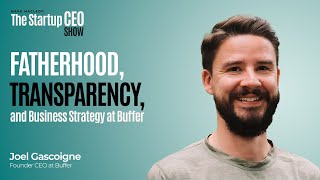
Interview between Mark MacLeod and Joel Gascoigne (Buffer founder/CEO) covering Buffer’s radical transparency (including public salaries), hiring and culture choices, the company’s fundraising history and subsequent buybacks that returned it toward a bootstrap model, leadership style (large direct-report span, shift to monthly one-on-ones and asynchronous collaboration), product/go-to-market decline and recent recovery, and how fatherhood changed Joel’s perspective and productivity. The conversation includes specific operational facts (funding rounds, buybacks, organizational practices) and reflections on long-term vs. growth-first decision-making.
Questions this video answers
Approximately $4,000,000 total: $500,000 in 2011 and $3,500,000 in 2014.
2011 convertible note at a $5M cap (converted at $5M); 2014 raise at a $60M valuation.
Investors were bought out around mid‑2018; since 2017 Buffer bought back over 20% of fully diluted shares and has spent more than double the amount it raised on buybacks.
About 14 years (nearly 14 at time of interview); Joel reports he currently has 12 direct reports.
Monthly one‑on‑ones (experimenting with asynchronous long‑form discussions and a "Deep Work" quarter).
Chapters
For me, the values, the culture were kind of non negotiables. And so we've got to keep to these truths and everything else can be flexible in the pursuit of growth. But I think, yeah, maybe others could come in with because there is that view of startups, that startup equals growth. Right. And so that can really be the fundamental thing for a lot of people.
Welcome to the Startup CEO Show. I'm your host, Mark McLeod. In this episode, I sit down with Joel Gascoigne, founder and CEO of Buffer, Buffer's unique company. And Joel is a unique founder and CEO. He lives by transparency. He discloses everything. We know exactly how his business performs. We even know what he pays all of his team members. In this discussion, we talk about the transparent philosophy with which he runs a company. We talk about them being venture backed and then getting off the VC train, how he handled divorcing from his co founder, the long term approach that he takes to running the company, his leadership style. He actually only has one on ones once a month and he's really kind of just taken a first principles approach to how he leads.
We talked about how fatherhood has impacted.
Him as a CEO. Really fascinating conversation. I really hope you enjoy it and I hope you subscribe. Joel, welcome to the Startup CEO Show. It's a true pleasure to have you here. How are you doing today?
Good, thanks, Mark. Great to be here. Excited for this conversation.
Yeah, it's been a long time since you and I spoke and lots of things to cover and I think Buffer, and by extension you, are kind of one of the more fascinating companies in the startup world. So yeah, I'd love to, to rip it apart and maybe just start with one of the things that really makes Buffers stand out, which is just your transparency. Right. You know, you disclose literally everything right down to salaries, maybe. Let's start with like, where did that kind of transparency philosophy come from?
Yeah, I think so. When I trace that value of transparency back, there's a few formative experiences for me. So prior to Buffer, I worked as a contract web developer and the company that I worked for, I just worked a few days a week and it was a research company and I was building out some of their product. And over the course of year and a half, two years, they'd made a big bet and I didn't work out. And so essentially they were struggling and ultimately they went out of business. The thing that always struck me was that they never shared this with the team. And this is a small company, like 10, 15 people. And so I Just kind of came out of that feeling like, first of all, I was somewhat fortunate because as a contractor I'd get paid a couple of times and I just stopped doing work. But there were others that were salaried and hung on a lot longer and had families and things. But yeah, I kind of came out of it feeling like, you know, if the leadership had opened up to the whole team, maybe we could have all come together and created a different outcome there and then. I think, you know, I've always been pretty open as a person. I've always found value and kind of a sense of freedom, of lightness that comes from sharing. I've always found when I share with other founders, they'll share back and it makes for much more fruitful conversation. So those are certainly other things that I think very early on contributed to that becoming one of our core values. And obviously then we kind of doubled down on it. Pull down on it further.
More than double down. Yeah, that's for sure. I'm curious, are there. I can see the pros of it both from your perspective and definitely from your staff's perspective. I'm curious, are there any downsides?
Yes, I would say there are downsides. I think that transparency can be more work and it certainly is more work in the. Especially in the short term. I think this is where one of the other. It's not so much a value, but it's something that I've codified as one of our operating principles in the last few years is to be long term as a business, be long term minded. And so I think for us, having transparency with that long term mindset has really served as well because I would say that you gain velocity if you commit to it long term and you allow it to compound and build up in terms of having a focus on having a documentation called churn. And for example, with having transparent salaries as you know, it's completely open. We get a lot of benefits from that. People can just go to buffer.com salaries and find out all the salaries for everyone in the team. They know what they're getting coming in both in terms of that value of transparency and the numbers, what that number's going to be. But then maybe the downside is that we don't do a negotiation because that would really start to break down the whole system. Right. So there are some cases, I think, where maybe we have a bit more, you know, we'll take the time to share something with the team. Maybe that can slow us down a little bit. Maybe we can't just Quickly make a call or like bend in the things to bring someone on board and. But I think on the whole the benefits we get in terms of the understanding everyone has of the strategy of the numbers of where we are as a business and also the trust really that's the really significant thing that I've found over time. So I think it's been a vital component of creating a strong culture was.
I am unencumbered, I have literally no technical knowledge but I've always kind of heard this sort of prevailing wisdom that you know, a rock star developer is worth 10 regular developers. I'm curious a do you believe that and does do your salary bands accommodate?
It's a great question. To a certain extent I believe it. Maybe not 10x but certainly there's a. I think there's a multiple there. And the way I think about it is that for us the philosophy of transparent salaries is simply an acknowledgement that we have beliefs and we're going to put them into a system that is visible for everyone to see. So I guess I would just say first and foremost if there's a company out there that believes in the 10x engineer, then I don't think there's anything that is at odds with that. And transparent salaries for us, we have a few mechanisms in our system to allow us to have our own view on the value of a role or even a function for us as a company. And so our system is a blend of the current market data because I feel like we need to be grounded on something alongside we augment it enough that we can really make our own decisions about. So we have as an example, we kind of choose what percentile, percentile we fall on for each function and for certain functions that we value more, you know, we're product led business, for example, we don't have a sales team so we kind of index higher on products and that has a higher percentile for us that we pull in terms of the market data. So we've got a few of these different levers. What I really loved about going through the exercise of transparent salis, we've done it multiple times. I also did it earlier this year. We had a whole new salary system that we shared widely. What I like about the process is that it really forces us to, you know, to articulate and put it into the system and I think it's just a translation of our beliefs. And again we gain that trust with the team because it's all those beliefs just laid out for anyone to not only view them but also question them under the feedback loop that goes into future iterations of salaries. So I would just say that.
Every.
Company should ideally have some kind of system that they're basing salaries on. I don't believe that is the case necessarily. But you know, if, if you don't, it's a form of debt that you're accruing at the end of the day. Right. And for us, having them be fully transparent, of course it's an extra step to take it fully public, but it just holds us accountable in such a strong way that we really don't. We have built up all debt at times, but we can reset it once in a while and, and on the whole we have not built up a lot of that type of debt and I think that's served as well.
Curious if your transparency. Have you seen any unintended effects with competitors? Maybe they're going to be like your level plus 10% or try and mimic the things that you're doing because you share everything that you're doing.
We really haven't. To be honest, I feel like that has always been of fear that maybe we've had at times, but others have really shared and asked us about. I have not really seen that happen. But what I will say is that I kind of like that even if we do feel that a little bit because it pushes us to be unique enough to keep people not just based on salary plus 10%. Right. So to be honest, I, in some ways I'm happy that the numbers out there and that people could approach. I'm sure, you know, and there's no doubt that people are being approached with those kinds of offers. It's one of those things where again that long term mindset, you know, maybe that could hurt in the short term, but in the long term we're probably better off if someone does want to jump somewhere else.
I'm curious, do you attract people who, I guess, I don't know, like they've been scarred by the standard kind of venture backed startup way and they are trying to like they're in recovery. Is that, is that why they seek you out?
We definitely get a few of those for sure. And it's kind of something that I'll look for and dig into in terms of someone's journey and background because I feel like I just want that clarity from someone that this is the type of journey that they want to jump on to.
It's not just the rebound. You're not the rebound.
Yeah, exactly.
Before they go right back.
And I mean we have very High tenure as a team. And it's one of the things that I think is part of our strategy. It's one of the things that helps us win when, you know, in a lot of ways where we have less resources than others. So we need to have these things that we are grounded on that I believe, you know, long term we can be more effective by having people that are sticking around for a very long time. So, yeah, we have people that have that type of experience. We also get quite a few people that might come from other companies that have like a focus on culture and really are intentional about that. Maybe other companies that are maybe, maybe bootstrapped companies. We kind of sit a little in the middle. Probably leaning more towards bootstrap. Of course, we've had that funding part of our journey. So, yeah, we attract all these different types of folks. And also more recently, I would say that this is an interesting one because in the earlier years we used to really index on this, which was people that are active users of. Buffer themselves and active on social. And that's something that we kind of released a little bit as a. As. As a requirement or something that we really look for. I think that was a disservice to ourselves. And so in the last few years we've been really focusing on that as well. And doesn't so much have to be that they're, you know, super active right now, but they need to have a desire to be, have a plan to be. Because I just believe that having active users of the product working on the product, where we're going to build a better product.
I know at Shopify they encourage, you know, many of their staff to start a store, like literally, like where you're like literally shipping. You're maybe in some cases building a physical product. Right. And you could argue that's a distraction, but it really gives you massive empathy for the customer. Massive product awareness.
Yeah, I love that. And we've always encouraged side projects, being very supportive of that. And yeah, if someone has like a real side business, quite a few people above have side businesses that are bringing in money and of course they'll have a social presence for those. And yeah, it leads to better outcomes. Even if there's that tiny risk that someone has something that blows up and does really well and then they go and focus on that full time. We've had a few folks that have done that. But I think you mentioned Shopify and I'm very inspired by Shopify and I think we have a similar kind of vision and mission of really Helping entrepreneurs to be successful. And so to have people that are actively being entrepreneurs and, and they go off and pursue that. I think that's, it's kind of part of the, the mission itself. Anyway.
So you briefly alluded to this, you know, about kind of, you had funding in your journey and now you're bootstrapped. And you know, in my coaching practice, I only coach CEOs that have raised institutional capital. And the reason I do that is because once you do that, you begin what for the most part is a one way journey to deliver an outcome. But you got off the BC train, right? So you actually, it's supposed to be a one way, you know, thing with no stops, but you got off. And so I would love it if you could just tell folks about that because I'm sure there are some who have thought about it and maybe feel trapped because they're in the wrong path right now.
Yeah, great question. I mean this could be a topic probably for a whole podcast episode. Very, very passionate about it. But yeah, a few things I would say just to share a little bit about the buffer journey. So we raised, we raised 4 million in total funding over our almost 14 year journey now. So, and a couple of weeks away from 14 years and we raised, so we raised half a million in 2011 and then another three and a half million in 2014. The thing that's worth noting about our rounds were that generally we raised a fairly small amount for the valuation each time. So 2011 was 500k at a 5 million cap and eventually we converted it at 5 million and then in 2014 it was 3 1/2 million at a 60 million valuation. And so in a lot of ways I would say that that 2014 round, even though we had VCs who participated, wasn't really a traditional VC round of funding. I think we gave up around 6% of the business there and no board seat as well. And so some of those decisions were very intentional by us because especially by the 2011 round was a little bit.
More.
More, more usual in terms of it being convertible debt. And you know, we had a variety of angel investors, but I think it served as well. But we had quite a lot of, you know, small checks for that round. We were still clearly like forming our culture and our long term direction as a business by 2014 that a lot of that had become more clear for us. And so we specifically went out and raised around, tried to find investors that were interested in investing. And we were very transparent upfront that we may not want to raise another round of funding after that one. And so that was very helpful because what it meant was that we, and this was actually a suggestion by the vc, which I and grateful for in a lot of ways, even though there was some hardships that came later in the process of buying them out, they suggested that we put a term into the term sheet that would mean that they could be bought out later, essentially. And it kind of, it laid out the cumulative dividend, kind of interest rate of the investment for the path where we didn't raise more and we bought them out. Now, it was only something that they could trigger, not something that I could just kind of like pay and buy them out, but it laid the foundation for eventually that transaction that we did carry out to buy them out. And so then fast forward, I think, you know, that's 2014, and then we bought them out in mid-2018. So it wasn't too much, too long after that. And then since then, one thing that's maybe worth just an interesting little fact is that actually since 2017, we've bought back over 20% of fully diluted shares and we've at this point, we've spent more than double the amount we raised in funding doing buybacks. So in a lot of ways, I think we've kind of bought our way back to more of kind of a bootstrap place. And we haven't raised around in pretty much a decade now. So.
Yeah, well, I love that they were so accommodating. I mean, I'm sure, like you said, actually executing it is probably difficult, but even just putting in that concept.
Right.
You know, the whole business of venture is to find an outlier and you'd much rather have a thing fail trying to become an outlier than play it safe. And so certainly from a venture investor's perspective, you were playing it safe. So I love that they were so accommodating. And I connect the dots between that and your transparency. Right. You didn't pull a rug out from under them after the fact. You, you kind of stated your reservations up front. Yeah. And I seem to remember, I don't remember it was the initial seed or the A, but you had some pretty shiny names even in the angels, maybe Dharmesh and kind of folks of that caliber. Like, did they. I mean, I, I'm, I know Dharmesh, he wouldn't do this, but like, do you have any pressure from them to kind of keep going and kind of, you know, quote unquote, go for it or not so much?
Yeah, I had a Lot of pressure to, to keep going. And also from my co founder who moved on in early 2017. And so that was a challenging period of the journey, 2017, 2018, kind of making that, making that transition to be. I would consider it a continuation of the way we had been operating. But you know, for some it was a shift as well. I know in a lot of ways it was. Even though it's a continuation, in my mind it's a further kind of doubling down and clarity of okay, we're going to be independent long term. And obviously since then we have bought out quite a variety of different shareholders to make sure we can kind of keep going that path. So what I would say is that for me, and I think this is true of a lot of founders and a lot of first time founders especially, you go out, you start a business and what I find interesting is that so many people go out and create a startup because they've had some kind of experience that has been negative, whatever it might be, and they want to go and create something themselves. And part of that often they want to be their own boss. Right. And really make those decisions. I think that people don't fully realize that when you take on funding after a certain number of rounds, you are not, you're not the boss anymore.
Right.
And, and it changes a lot of things. And I think that even though we had this non traditional round of funding, it was from VCs. And so I just learned a lot in that time period, especially around 2016, 17, 18, around, you know, you really gotta go and look at the underlying model of VC funds themselves. And I think most funds, maybe it's different now, maybe there's more information out there, but I still sense that a lot of people go and raise their funding. And you know, in the moment of raising the funding, it's all very positive. The celebration of, okay, we're going to do this, it's all going to work out, it's going to be great. But you've already put in place the terms, the change, the ownership change, whatever it might be, having people on the board. And so I think I learned a lot in that time period about okay, what is that model of a VC fund? What's the time horizon of a fund to get their return? And then what impact does that have on my business and does that line up? I'm not against funding in all forms, but I do think that overall we found that VC funding and that's why you have VCs that have different focuses and different worldviews. Right. And they want to support a business like ours that kind of takes this long term mindset, but sometimes it doesn't always line up with their own model. So anyway, all that to say it was a tough period of time, a lot of pressure and I kind of had to buckle down and work through it. And then also on the other side of it, be quite mindful about who are the investors that are even shelves of war because you have alumni, people move on and they kind of become, they shift more into that investor mindset, you know, more financial mindset even if you know they are alumni, that they're shareholders, you know, who are, who is, who is on board for this very long term journey and who might not be. And then can we start to build in a way to help them jump off the train and get a decent outcome without us needing to sell the whole thing, which is kind of unusual. So there's been this whole learning for me which I think about as like having a real business which is we need to think about the life cycle of shares and you know, options become shares and we've. So now we've done, you know, liquidity programs for the team and, and we bought out investors. And it's really taken me until a couple of years ago to get the clarity in my mind of how we can make this work. And now I think we're in a, in a strong position.
Yeah, I've been part of a few SMB SaaS companies. It's very rare for them to have the like the hardest thing in SMB is acquisition. Right. Because you just have very large, distributed, fragmented market. Testing new channels, you know, payback period can be an issue. And of course churn's the number one issue issue in this NB SaaS company. It's just, it's just very rare for companies to have the go to market efficiency that would actually create a profit steed and do what you're doing. So it's, it's pretty special.
Yeah, thanks. And it's been, I will say it's been a journey because we, we kind of took our foot off the gas of that of acquisition and the go to market and you know, we made some missteps and we, we plateaued and declined for a number of years and just in the last couple of years we been, we've really rebuilt that go to market engine team between content marketing and growth marketing and we've got it working again. And now we're at acquisition numbers that we haven't seen in maybe five years. And so it's energizing to be back at this place. And I'll also say I'm grateful that we took this path as a company because I'm pretty aware that going through multiple years of decline just wouldn't be possible if it wasn't for the model, the ownership, the long term mindset that we have and those buybacks ultimately.
So let's talk about you and Leo. So we often talk about our co founder. Relationships are like marriages and as we know a marriage has a pretty significant failure rate. It's around 50%. And you know, you guys split along the way. Was it because you wanted to kind of keep fundraising and you didn't?
Yeah, I think that was one of the factors. And that'll probably be the simplest way to kind of describe the difference in direction. I think you can also kind of think about it as a growth versus culture kind of focus as well and the values and kind of how sacred I saw those to be. But yeah, he would have loved to keep fundraising, keep pushing, I think, to have it grow as quickly as possible.
I wonder in hindsight, my impression is that you have these very strongly held beliefs about how a company should be and those beliefs are not based on the template. Like I said, buffer's pretty unique. I wonder whether those beliefs, like just the strength of those beliefs, are just inherently incompatible with having a co founder.
What are your thoughts on. Yeah, it's a good question. Are you thinking in terms of the long term independence or other aspects of.
Those beliefs or just like it's a certain amount of rigidity? Like I just deeply believe X and so someone else is coming in and be like, well, I think Y is a possibility. And you're like, well, no, because I'm just like. It's like sometimes you see founders who are just so in love with their product and that sounds positive, but really what ends up happening is all they're doing is evangelizing. Like, no, don't look at my widget. Don't you understand how good my widget is? And then they're not open to kind of market feedback versus being in love with the problem and therefore iterating on the product to solve the problem. So I don't know if that analogy works, but I'm just wondering whether you felt like you just so deeply believed in a certain way of building a company that was, like I said, pretty unique. Whether that meant that it was, you know, unless someone else had like some kind of mind meld with someone, it was going to be hard to kind of co create that comfort.
Where I think there's probably some truth to that is that I think about the buffer journey as for many of those early years we had had it all like we had our cake and we ate it too because we had we created this very unique culture. We were fully remote since very early days of remote. We traveled the world while we built this thing and we were in so many ways we were living the dream. I think maybe what we failed to do is to and we in so many ways I would say Leo and I were like mind melded. Like we were so connected in that way and especially like the peak years of those early years. But maybe what we failed to do was get to the depth of what do we believe are the fundamental things that matter here and what we're creating because we fortunate to have growth and unique culture and where it started to break down was where growth slowed a little bit and our views on how to resolve it when it was truly at a point of being alarming. And also what was flexible in resolving it and what was not flexible. And for me the values, the culture were kind of non negotiables. And it's like we've got to stick keep to these truths and everything else can be flexible in the pursuit of growth. But I think yeah, maybe others could come in with because there is that view of startups, that startup equals growth. Right. And so that can really be the fundamental thing for a lot of people.
This episode is brought to you by Fellow. Tell me if this sounds familiar. You wake up, you take a look at your calendar and you see it's filled with meetings, standups, weekly check ins, one on ones, town halls, and those are just your internal meetings. Some are productive, but some are definitely slowing you down. Be honest with yourself. How many times have you thought this meeting could totally have been an email? Now consider that in the US alone, there are 55 million meetings each day and 85 to 90% of those don't have an agenda. Fellow is on a mission to solve the meeting problem by offering the only AI meeting management solution that covers every part of your organization's meeting workflow. And As a startup CEO show listener, you get 300 free minutes of AI recordings. If you sign up today, go to Fellow App CEO to start your free trial and start having better meetings.
You probably don't know this, but Leo is actually pretty instrumental in me becoming a coach. When I was winding down sure Path, he was actually doing some coaching at the time and I did a session with him and I was Being all Vulcan, type A, retentive CPA about my decision and he was just being intuitive, gut based. He's just like, dude, you're ready. Just go and be a coach. Anyway, I got off that call and decided to be a coach. So I'm glad I did that call with.
That's awesome. I mean I always found Leo to be, he was a great customer researcher for example, because he would, he can kind of just be intuitive to those like what's going on? And then he's also willing to ask anything. He will ask the question that will really get you thinking. So yeah, that's awesome.
You're 14 years in now, which is far longer than the tenure of most companies. And I think you told me you take a long term approach to decision making and probably many startups either don't or can't. Right? If you're burning your way to greatness and your Runway is measured in months, then maybe it's a luxury to think long term. Even though really be best off to do it. So maybe, maybe just expand on kind of that long term approach that you take to running recovery.
What's interesting is that I think that the long term approach can develop over time. I've certainly become more emboldened in taking the very long term path. At the same time, it probably needs have some element of that desire early on to enable you to just make some, some of the decisions and have a little bit of that, that foresight. As I we talked about the, the choice with fundraising and just I think there was a clarity I had that the culture, the path, even, even the path for the business model and the types of customers we serve needed a long term view and so we made some of those choices. The reason that I enjoy taking the long term view is that I think kind of changes the, the game. I think there's that concept of the finite versus the infinite game where the finite game is, you know, there's a goal, there's a, there's an end to it. And the infinite game is the, the, the game is about continuing. And I think that part of the arc of Buffer is also for me realizing what are some of those differences in terms of the choices I can make that are very long term that will put us in a different category. And, and as you said, you know, some can't choose this and I think we have to be making those choices that others can't make in order for us to kind of win in this, in this choice of game that, that we've taken. So yeah, for some of those are in a space that's been generally the flow has been going up market, which is a lot of times the case in SaaS. In the last few years we've gone pretty aggressively down market and that's been part of our turnaround. Back to, back to growth. Yeah. Back to the roots. I think that's also the key as well is that the times where we've lost our way or I've lost my way have been where I've kind of looked at the playbooks, at the best practices either for what the CEO role should be or for what a SaaS business should do. And honestly they've like led me SFA quite a few times.
So often the case.
Yeah.
And by the way, if you want non average results, don't do the average exact thing.
Right. Yeah, yeah. And it's somehow we can say that, but somehow it can also get bundled up into its own playbook or something of how it feels like. Yeah, but yeah, I think that I've had, you know, in 14 years, you have some, you know, you have great years, you have tough years, you have years where you're learning a lot and you have years where you end up kind of reaping the rewards of things that you've been planting. And one of the reasons I like the long term path is because you get this. I have the privilege of being able to be declining for a few years and be able to stick with it and also not turn the whole business upside down in pursuit of just how quickly can we get back to growth. And so I think because I took that long term view even as we were declining and we came into our decline strongly profitable, so we were, we didn't need to make any layoffs. And that's something I'm pretty proud of. We can kind of think in terms of like a certain length, long term approach. You're going to have different market cycles. Right. And I enjoy being able to experience those and lead the company through them. And for us to stay true to our values and the customers that we're serving and work through them and come out the other side. And I think even just, it's really just also been the last few years that I felt a new level of authority of let's keep doubling down on the things that we are uniquely placed to do that are really represent our DNA, but also only we can take or only people on this kind of like long term path could make those choices because that's how we're going to kind of ingrain Our uniqueness in terms of attracting customers and it being that much harder for others to replicate what we're doing.
I'm curious how you manage your energy in those down cycles. Like, if you think of, I don't know, like in nature, a pelican just sits there in the water with one leg just chilling the fuck out until the fish comes along and there's boom. It's not like thrashing all the time looking for the fish. So I'm only like, did you just sort of accept this is the reality and you didn't waste too much energy, or did you find maybe you were thrashing trying to create unnatural growth at a time when it just wasn't there to be had?
I think there was some flashing going on in the earlier years of like, of plateauing and decline. Some of that was searching for strategy and not having clear strategy, not being fully aware of what led to our growth initially. That's something I reflect on a lot, is that for us, at least, the way that we achieved strong growth and initial traction and continued scaling was in a hindsight, we did a lot of things right and they all came together, they clicked together and it was a strategy. But we never thought about it as, okay, this is the strategy and these are the different things. We kind of just were following our gut. And I think then there's kind of these middle years where we plateaued and declined because we didn't have that clarity of what the strategy was that was working. And we started trying all these different things that actually some of them were in conflict with the strategy that was working. We started going up market a little bit and we kind of changed our business model in a lot of ways. And we somehow made choices that led us towards our competitors and became very commoditized. And really a lot of our differentiation faded away. And then, so there's a little thrashing in those years where we lost that differentiation. The results started to plummet. And it was a leadership team and myself think, reflecting on, okay, how do we get to that next phase of growth and how do we make this, you know, strong again? I think there came a point for me where I was able to step back enough. This for me was late 2020, we started to decline just before the pandemic. And then the pandemic was this extra, like, double impact because whereas at least we have a lot of physical small businesses that we served, so they just kind of ceased operations. A lot of them, once we got to Technov of 2020, the extreme churn that we Experienced, kind of stabilized, and we were back to a place where it wasn't great, but it was at least more predictable, I could foresee. And we came in highly profitable. So I was able to step back and reflect on what are we actually doing here. And it was. That was 10 years in at that point for me. And even though we were, we were, we were still profitable, but we were declining in terms of top line growth. Um, it just. There was a situation where I was able to step back, reflect. I came back to my roots of really serving entrepreneurs and small businesses. And that's what I'm really passionate about. And a few things clicked for me. I realized we got to get back to that, and then it still took a couple of years before. And I think then the key at that point was, I think, having a truly strong strategy, having conviction, making sure you're factoring, you're leaning on your gut as well as on data, not just purely on data. And then I started to look more deeply into our numbers and see that the choices we were making were starting to work out. Not on the macro level of the business metrics, but on some of the specific segments. I could see that it was working. And that was an interesting period because I had a level of just calm and conviction that was hard for the team to have, but I just felt content that this was gonna work out. I could see the numbers shifting when I segmented them, and I kind of knew the things that we needed to start working on. Um, and it ended up being that we, we essentially rebuilt a lot of that differentiation that we'd neglected and allowed it to just fade away. And then with that, and we had some luck as well because of the way that the social media landscape shifted as well, and no competitors and things. But yeah, it started to. Started to work. And, you know, last month, we just had our Highest signup among 110,000 people signed up for Buffer last month. And it's our highest in about five years.
So there's this distinction between co founders and other leaders in the company. You know, you have a management team, but of course, someone started the company, someone didn't, in your case. And very often those co founders, even though they are founders, own like a tiny fraction of the company. But in your case, you literally are the owner of this business. And so I'm just curious, like, does that create. I get the sense you would be very collaborative and engage your leaders, but does that create two classes of leadership in the company? Or they're just. Are you essentially driving long term direction yourself and then a telling people this is where we're going or how does it work?
Yeah, I would say that there is that distinction and I'm, I'm very collaborative and I, we have, we have a lot of long tenured folks who've got some really experienced folks that have come in as well in recent years. And so I really value all those different perspectives. But I think I have to recognize that I'm the one that's going to be best positioned to have the whole picture of the business in my head at one time and have the historical context of the journey that we've been through as a business and that the journey that the landscape that we're, that we're operating in has gone through as well. One thing that's interesting is, you know, we talk about, we've talked about Leo and kind of co founders and I've had this experience where coming up to 14 years working on Buffer, Leo and I worked together for six years. So I've now actually had almost eight years working without a co founder. And there's no doubt at all that there's a huge difference between a co founder and even a long term team member. Right. There's a level of just kind of, you know, as you mentioned, kind of that telepathic kind of way of operating. We're the co founder and Leo and I lived together for a lot of times as well. And so something that I, a transition I went through and actually worked with an executive coach myself through this and he has helped me tremendously is it took me a couple of years to really realize the gaps that Leo had left and that I needed to somehow now fill. And these are not just like functional gaps of skill set. These are also leadership approach or even just personality gaps and things that shape the culture early on. And so for me, one of the hardest things to change for myself was that I, I like, you know, as, as a result of childhood experiences, trauma, whatever might be, I have, unless I work at it, I have this kind of fear of conflict and a real desire to be liked. And I would say my experience with Leo, that's not something that he has much of a challenge with. He has other challenges, but that's not one of them. And so I have this period of a few years after he moved on where I just was not a great CEO. I was not a great leader for my executive team because I was not giving them the level of guidance and clear feedback that was needed. And that's part of, I think, where we kind of lost our way because it was just there's all these boats and they're all going in different directions. Right. Go wherever they feel like they should go. And so I've also gone through a journey in the last five, six years of really kind of getting to a much better place with that fear of conflict and pushing through it and making tough decisions and, and so, and with that like I. What came back to me was my conviction and my energy in what we were doing as well. Because the other part of what happened was there's a lot of talk these recently about founder mode and I kind of have my own experience of it because. And for me it's connected with this fear of conflict and what I allowed to happen because I stepped out of the details and I like let everything through my team. But what I found as a leader is that I don't operate well when I try to just be at strategy level. I do not. The strategy I arrive at is not that strong if I don't have the detail level inputs into how that strategy should be shifting. And so part of that journey for me as well was to get back in the details myself and start working much more with everyone across the team in different ways. Kind of like really flatten the organization in a way, but also just tap back into my own passions that I had even growing up of, you know, coding. I hadn't coded for so many years and I started, you know, just on the side and the side projects and things tapping back into that. So anyway, that's a long way of saying that. I think that there's a huge difference between a co founder or an owner and others in the business at the same time. I have a very long, long tenured leadership team and I'm thinking long term about, I think about succession in some forms and I don't in other forms because I'm planning to do this for another couple of decades at least. But yeah, I think there's a difference and I think that it's also okay. And actually is the role of the CEO even more so. A founder CEO, right. To be making the biggest, most strategically impactful decisions.
We've touched on different aspects of your leadership style as we've just been kind of going in and out of different topics. My understanding is you actually have a pretty large number of direct reports. Maybe let's talk about that. Is that because of this decision to kind of get deeper into the business that you ended up with that or just tell me about that.
Yeah, so I, I currently have 12 direct reports, which is I think on the, on the higher end of things. But I also know there's examples out there. I know this. People talk about Jensen Huang and Nvidia and you know, 50 reports. And so maybe it's on the low end of the scale in some ways, but it brings some challenges, it changes some things. And it's been a intentional but also kind of gradual change to reach this number. So there have been opportunities where someone's moved on and have taken on or I made a tough decision and I've chosen not to backfill that role. So there's a variety of different ways that it's kind of reached this point. But I also think as a business, I mentioned that we going through several years of decline. We didn't make any layoffs. I think within that journey I realized that I think we could be a little smaller. But without wanting to, you know, I chose not to reduce the team because the negative impact on morale, I believe is so great. And I've, and I've gone through this experience previously in 2016, we went through that. So I decided, okay, what we're going to do is basically keep the team the size it is, get back to growth and just see how far we can grow without really growing the team or at least growing our revenues much faster than we grow the team. So, yeah, the result of that is that I have a lot of direct reports. But the other thing is that I had chosen that I wanted to get more into the details. And so each time it happened it felt like, well, in a lot of ways it's more beneficial for me to have a couple or a few different people from function reporting to me in different specializations than have one overall leader that reports to me. But then I'm just kind of getting that filtered view of things from that person. And so it really forces me into the details more. And through that, what I found is that I'm able to implement a strategy that is much more cohesive across all areas. Because really I think a strong strategy is going to be about making choices that are going to differentiate you and making choices that interconnect and compound. So you make one choice over in marketing, another choice in product, and they are kind of aligned in the maybe strategic theme that they're pursuing and then they, they can interlock and compound. And so it. I'm better placed to be able to drive those outcomes through, through the team by being, by, by having more people report to me. And the other thing that's interesting that changes is I Felt a big difference. So I went from eight direct reports to 12 in one go. And almost like something just broke at that point. It was like I can no longer do weekly one on ones or even bi weekly is challenging. But I found that. Actually I found that there can be a lot of downsides to these, like regular one on ones. Because I was going to ask if.
You did one on ones. I was trying to picture your calendar just like your entire week is one on one.
Yeah, well, it kind of was for a little period of time because when you add in the group meetings that you have on an ongoing basis between different teams as well, suddenly it just fills up. And I'm not someone that, you know, Some people thrive in meetings and that's how they think best. I'm the opposite. I think best when I like the input is useful sometimes. But then where I have my best kind of aha moments is where I'm alone. I'll often go for a walk and just reflect on things and then I'll have kind of the breakthrough moment. Um, so these days I have monthly one on ones and I don't have any other meetings scheduled other than those monthly one on ones.
So there isn't a weekly leadership t. No, there isn't.
And that's a fairly recent development we're currently experimenting with. I've called it Deep Work quarter. So for Q4, we're in deep work quarter and we are really pushing ourselves to have the discussions in an asynchronous long form discussion space. One of the reasons that I've done this is because what I found is that for me as a leader having all these one on ones, I found myself just bouncing between the one on ones saying the same thing to five different people. And it was just the current choices I was making on strategy and whatever it might be. And then I started to realize that almost every item in, you know, I'd have all these one on ones and they'd each have a shared agenda document. We'd add agenda points. And I found that each of those agenda items, it was very rare that we absolutely were the only two people that should be discussing that item. And so I realized that those items would really benefit from other people being involved. So why are we discussing them in this kind of one on one form when. So I've basically. And the same thing for the group meetings, right? They're still usually excluding one or two people. That could really add a lot of value to those topics. So I basically kind of just translated all these one on One and group agenda items and said, let's put those in a transparent space where we discuss them and get rid of those meetings and give ourselves the space to actually write and discuss them that way with each other. What it also has created room for is that we started having a lot more ad hoc meetings. What's great is we'll have a meeting about a specific topic, that specific project, and where we kind of sense that, like, the discussion's getting a little challenging or we're going in circles a little bit asynchronously. We'll say, let's jump on a quick meeting and unblock it. But those can be pretty short. Sometimes it might be 15, 30 minutes and they're kind of single topic focused. Versus I found when you have a group agenda with, you know, you've got an hour to cover five topics, you're. You're going to remain very shallow on all of them versus going really deep asynchronously and then having a meeting where you jump on and all you have that context already in your head and you're making much better decisions, I found. So this is something I had been thinking about for a while, but the number of direct reports also kind of was a forcing function to say, I gotta change the way this works. So I'm really kind of pushing myself right now to see how can we work effectively with a much flatter organization and much more transparently. To be honest, it kind of brings us back to core value because it felt like we had built up to be quite a meeting culture, which wasn't the case in the earlier years. And it kind of detracted from how easy it is to have all the information of what's going on with a specific project.
This is fascinating. This also, by the way, I think could have been a podcast because we could really rip this apart. Right? Like, so many companies have meeting cultures. And I equate that with going slow and then absent mechanisms. Like, had Ayden, the CEO of Fellow, on the podcast a while ago. And Fellow is. Is really allows you to kind of run better meetings. And one of the features of it is basically every meeting could be a podcast. So the people in it who are not in either someone who missed it can watch it or your case because of transparency. You could probably just have like an archive of like, well, here's all our meetings. You're free to kind of go after them. Is that one of your. Is that also one of your reasons why you're maybe hesitant on meetings is just so that if it's in a shared space. It's transparent to everyone.
Yeah. And I would say there's a big difference between transparency and genuinely inviting collaboration across the whole team. So almost all the discussions are happening in public channels. We use a tool called Campsite, which is great for asynchronous discussion. Yeah. And interestingly, Campsite, what I love is we've started doing most of our video calls through Campsite as well, instead of Zoom. And they. If you record the call, they automatically create a summary, an AI summary and transcript. And so what we're able to do is kind of have these asynchronous discussions going on, have a meeting, but then reference it from that discussion and then have the discussion continue asynchronously as well. But, yeah, I would say that we played around with having a podcast, an internal podcast before. Many times. We did it a few times. One thing I started to realize is that given a commitment, transparency, we were losing a lot of efficiency by ending up staying committed to our value of transparency, but creating extra work for ourselves and saying, this happened and now we need to share it with the team. And so I love the idea of a podcast because that's definitely more streamlined than, you know, we used to have a weekly executive meeting, and then one person would write a summary and share it with the team. But it was all this work. And so I'm really focused right now on how can we make the work just transparent. Like, literally the same work that we're doing is just transparent. But I also want to invite more people, which is where the concept of a podcast, maybe for me, starts to break down. Because I think if it's an asynchronous discussion in a public channel, then we can pull in anyone at any point who. And as the discussion develops, they are the best person to add some kind of value to.
Is it all fascinating? Any final question, Joel? So you actually have three startups, you've got this rebellious teenager named Buffer, and then you have two children. I'm curious how, if at all, fatherhood has changed your approach to running a company.
Yeah, I think the. A couple of key things for me, and it's actually interesting. I'm good friends with Amir, the founder Todoist, and he shared this with me before I became a dad. He said that he just like, the. The concept of, like, purpose really shifted, and I still feel very strong sense of purpose with Buffer, but I have this immense sense of purpose now, being a father to two kids. And it really does lighten things and, you know, it grounds You, I feel like. And so I think that interestingly, the way that that has manifested for me is that I found. And actually each time I've taken family leave and come back, this has happened where my. The level of ambition I have has just increased. It kind of feels like, well, now I, like, may as well really, you know, go for it. And it probably coincides a little bit with like the journey and maybe the buying back some of the ownership and the independence we have. But yeah, today I feel like, what do I really have to lose? That's something that I think is kind of energizing as I think for a lot of the earlier years of Buffer, everything was just. Everything was about buffer for me, like my. My whole life. Whereas now I think having this other part which is so important, like, I really don't work much, if at all at the weekend. Um, I sometimes have little side poetic passion things that I do, but like, I. That has shifted in a way as well. I used to work all through the weekend, all the time, and so I think there's a level of balance, but there's also this scarcity that comes in as well. And in a very healthy way. I feel like right from the moment Milo, or oldest was born, and you're just trying to get a little bit done in between the naps. And they nap a lot, but it's unpredictable. You just don't know when they might wake up. And so I distantly remember trying to get some work done. And it is a forcing function of productivity because you do have those timeouts. And even today I kind of have my 9am to 3pm window of like school hours to get work done. And so I think I'm net. It's been a net huge, you know, benefit to Buffer, I would say, because I'm more ambitious, I'm more productive in the time I have, and I'm kind of maybe more grounded and balanced over and, you know, I think just having this massive amount of joy that it brings and seeing, you know, them take their first steps and first words and then you start communicating and you just feel like, wow, I've got a little human running around this house on, you know, playing Legos. But it's just. There's so many things that are just, yeah, really joyful.
Well, Joel, thank you so much. This has been a really fascinating conversation. Me really enjoyed it. Thank you for sharing your journey with everyone. Like, just not just this conversation, but all the time. It's a fascinating company. There's a lot for us to learn from So I really, really appreciate it.
Yeah, thanks so much, Mark. And you've, you've supported us along the way as well, and I really appreciate that. And yeah, thanks for the great questions here too, for me to share with others.
Hey, thanks for listening to the Startup CEO Show. If you'd like to connect with me, be sure to visit my website at Mark MacLeod me or follow me on LinkedIn at the Mark MacLeod or Twitter arcmcloud. And if you want to tune in again next week, be sure to subscribe on YouTube, Spotify, Apple, or wherever you get your podcasts. We'll see you next time.
More from Mark





The Burnout Breaking Point - How Strategic Breaks Actually Increase Productivity


Emotional Debt - How Avoiding Hard Conversations Compounds Into Company Killing Resentment


The Death of the Specialist - Why AI Is Creating a New Professional Class Called Scalers