Making Customer Support a Strategic Powerhouse with Steve Bujouves
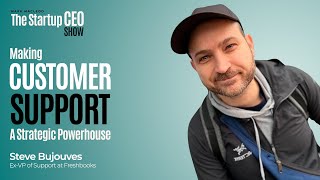
Steve Bujouves ran support at FreshBooks for 14 years, treating it as a strategic advantage rather than a cost center. Every new hire spent a month in support training. When customers called, a real person answered quickly, and if agents couldn't handle it, the phone rang throughout the company until someone picked up.
Chapters
So we really try to encourage people to help the issue as fast as you can and if you think it's appropriate, you're empowered. And also like, we try to inspire you to go a little bit above and beyond to make it just like as special as you can make it.
Welcome to the Startup CEO Show. I'm your host, Mark McLeod.
I've got a different episode for you this week. Normally I sit down with CEOs, but.
My good friend Steve Bajuve recently left FreshBooks. He had a 14 year tenure there and for most of that time he led support for FreshBooks. For many companies, support is sort of like just a box to check. It's an afterthought. It's important but not strategic. For FreshBooks, their support function was deeply strategic, their not so secret weapon. So this episode really is a masterclass on how to make customer support strategic in your business. I hope you enjoy it. Steve, welcome to the Startup CEO Show. It's a true pleasure to have you here. How are you doing today?
Hey Mark, thank you so much for having me. Super excited to be here and to see you and talk to you again.
Yeah. So for everyone watching and listening, Steve and I go way back. I think I first started advising FreshBooks in the 2010 timeframe and you were there and you were there right up till now. And then, of course, we worked together for two years when I was there full time. And then this is actually a first for us on the Startup CEO Show. To date, we've, as you might guess from the name, have only interviewed startup CEOs, but Steve led support, the support team at FreshBooks for the entire time that he was there. And support was a not so secret weapon for FreshBooks. And I thought it'd be really interesting to just dive into that and unpack what made that so strategic. And because it's, I think a lot of companies don't necessarily think that way about customer support. It's like it's a box I need to check. They're not really thinking about how to turn it into, know, a really strategic weapon. And so I think that's, that's a lost opportunity. And so that's the goal in here is a, to see you again. So check in the box on that, at least virtually.
And.
Let'S unpack support. And so maybe just start off with like, yeah, what made it so strategic? Like what was. So you and I realized you spent 14 years in FreshBooks and not in other companies, but from your back vantage point, looking back, what made FreshBook support approach. So unique.
Yeah, for sure. You know, it is interesting in that we all experience support interactions constantly and it's something as like consumers, it can get really painful. And I think that, like, our default expectation when we deal with companies is that like, oh, hey, I need to like, call in and I gotta brace for impact as I do this. But then when we, like, go to make some choices for our own companies, it's like we, we often maybe just look a bit more at the numbers than the actual experience that we're providing. So, yeah, when I joined Fresh Coaching, I honestly did not know what I was getting into. You join a startup and there's this element of excitement in that. A lot of, A lot of bigger companies have like established, like, this is like, this is the way that we do things. But in startup world, there is no way of doing things. So you really get to like, make up a lot of it. And when I, When I joined FreshBooks, I didn't know what I was getting into, but I saw that the people and the energy there was, was really exciting. And then as I started in support, so I started, I think pretty much just before you started advising. So it was early 2010. I was very young in my career. I started as a support specialist. And I remember when I had first joined, I had heard that support board mattered a lot at FreshBooks, but I still hadn't really experienced it yet because I didn't have a small business. I wasn't like using the product before I joined or anything. But when I started working there, you get this vibe of what type of caliber of person they brought onto the team and what they actually meant by going above and beyond to helping people. And so you start to experience some of this stuff and you're like, wow, this company actually really means, like, when they say what matters, they actually really mean that it matters. And there is just maybe like the first introduction to, to what that ownership will look like for me was that I was. So what First Books is for, for those out there that haven't used it, it's an online accounting program that helps small businesses run their business. At the time, we were largely focused on the invoicing side of that invoicing, expense tracking. So a lot of our customers used us to send out invoices, especially recurring invoices that would go out. And I had this one support case very early in my career, like maybe the first week that I was there. And pretty much what happened was this customer had set up their account kind of incorrectly and all of Their invoices that were set for recurring didn't have a certain checkbox checked on their taxes, and so they had to go and update that. So I was working with a colleague of mine whose name is Daniel Tseng, and he had. Had been working there since. I think he was employee number four at FreshBooks.
I feel like Daniel lived in the office. I remember wondering at some point, does he just live there?
He might have. It was definitely an office that you could have squatted at, for sure.
Yeah, yeah.
There's a lot going on. And I sat down with Daniel. I'm like, hey, this is like our situation. Pretty much all of. All of these profiles, like, all of these, all these templates are. Are broken. And I asked like, like, what's. Like, how do you fix this? And he said that, you know, we don't really have a script for that yet. So you would go in and you would click on edit for each one of them and change the setting. And I was like, oh, okay. So we would just do that. He's like, yeah. I'm like, oh, okay. There's like thousands of these. Like, it would, like, it would take us like three, four hours to go through this one account to get all these things up. And then there was this, like, this pause that we had of like, okay, I'll. I'll get the coffee and we'll just start clicking away. And you would just like, this. This was the default behavior of just doing whatever it took to help someone through their situation. And I think that that was like, ever since that time, I'm like, okay, that's the bar, and we're going to meet this bar as long as we possibly can. And so that was kind of like it really did matter to everyone there.
This may not have been the case throughout all of FreshBook's history, particularly after introducing the payments product, because that payments is difficult to support more so than software, right? Like, if there's a bug in my software, I tolerate it, but if you lose my money, like, that's a whole other ballgame, right? But certainly when I was there, I like everyone else, even though I was like, the cfo, had to spend my first month in support. And I can tell you I was scared shitless. And I was like, fine to. Like, it was fine to answer tickets because I could take time to think about it, but I wouldn't pick up the phone. I remember. I wish I could remember her name. Short Asian woman, probably like 100 pounds, glasses. She was responsible for me and she's like, yelling at me, you're going to pick up the phone or like, or like you're in trouble. I was like, she. I felt threatened. I was just like, oh, fuck, I better pick up the phone. And that just really, I think, really did a lot right to make sure that. Well, first of all, I understood the product, but second, I understood the customer. Right. And so important that everyone, like, I think support doesn't. It's almost like the Rodney Dangerfield of departments. It's just not. It's not respected. It's just like a thing. It's off in the corner. FreshBooks, you called your team the Rockstars and you were kind of front and center, literally front and center in the office. Right? How did the Rockstar's name come up? Were you part of that or did you join the team that was already called the Rockstars?
I believe I joined and they had already coined the term Rockstars. And I think that the kind of. It seemed like rock stars were something that had high egos and were like, cool and stuff. But I think how we meant rock stars to be where rock stars is like, you go to a rock show and you're just so impressed by the caliber of skill that these people have. And it's like, wow, that was great. You have this feeling of I interacted with this thing and I feel pumped after doing that. And I think that was more the angle that the team was going forward. They totally hit. And yeah, to your point, Mark, the expectation at FreshBooks was anyone who joined, anyone. So you as CFO developers, people that would maybe have Rolex system ins, that would normally never talk to customers, everyone would spend an entire month on support. And interesting enough, I believe before, like 2010, the time was actually three months. So you would hire like, you hire developer, you got lots of projects to do. You hire a developer, they're on support for three months, just like not doing anything else. Like, we had this big mandate of like, you cannot bug this person, you can't bring them into meetings. You can like kind of skirt the system or anything. They are a member of the support team for this amount of time until they graduate. And then you would be able to like take them and then they would, they would go on to their job. And this whole kind of like, as you can imagine, that's pretty impactful to a business. Very, very, I would say Burning fire in development.
But no, no, this person, like, they're on support, hopefully.
Yeah, at the time too, there was no real condition of like when you would move over it would just be like, oh, I think they're ready. So we, we, we, we evolved out a bit. So it was a dedicated full month, so that there was a start and finish it. So it was a bit more predictable. But it really, it kind of really started like any, any of that stuff really started with this, like, founder mentality that support mattered. And looking back, Mike, Joe and Levi, who are the founders of FreshBooks, it was them that believed that this was something that we stood by and because of that really allowed us. And like, there's a bunch of like, practical things that I want to talk about, but none of them would have happened or mattered if this one thing wasn't true. So as like CEOs and founders out there, like, if this isn't checked off on your checklist, then all of the rest of investment and support is kind of a bit questionable. And that is like, do you as founders believe that your customers value having a good support experience and that this will matter to your business? And are you, are you really willing to stand by that when you're tested? Because every single person will say, yeah, for sure, of course support matters. Who's going to argue against that? And then when you're tested on it, then that's really where it becomes like, is this true or not? So for us, testing on it meant like, hey, would you delay launching a product by two weeks because the support experience is bad? And a lot of people at that point are like, we really need to get this launch, it's already delayed. Or will you take a developer off of another project to make sure that this team's support experience is good? Or would you refund a customer that messed their own thing up, a big refund, because they made a mistake, like, are you willing to make those hard choices? And for us at FreshBooks, this was 100% true. Where the CEO founders, Mike especially and Levi, were totally bought in on this, on this concept that it made our lives doable. And I believe that the story probably better told by them, but the story that we would tell our smart people of how it came to be was FreshBooks used Rackspace originally when FreshBooks was getting started. And there was not a lot of internal skill set at the time to be able to deploy and launch an application on Rackspace. So we would have to call, Fresh folks would call, and then Rackspace would like, walk us through every single button press and all of the things. And for Rackspace, they had this concept of, I think it was fanatical support, and they really lived this kind of concept too. And Mike and Levi and Joe were like, wow, this has really changed our ability to run as a company because we are so supported by our partner. The we have to do this for our customers. And so it's like this, it's almost like a like infectious where you experience something that was so game changing for you that you want to pass it on to your customers. And I've talked to many, many FreshBook customers over the years that because they got such a good support experience from FreshBooks would also be like, we are going to change our support mentality and we are going to be there for our users. And it's kind of like just spreads, which is a really cool aspect of it. So this concept of like taking a full month of your new hires was really because of that. And yeah, to your point, when you were going through it, like one of the key things is that you really get to know our customers in a way that you would never have known. Like when, when you were going through. And Mari, like what was like when you were actually talking to Freshwater customers? How did that change your mentality of like who. Who they were?
Yeah, you know, so FreshBooks very much serve the S in SMB. You know, with some exceptions there were like web hosting companies that had huge invoice volumes. But like the thing that the experience that stands out the most for me was having to help a customer figure out if they were on a Mac or a PC so I could properly advise them. They're not an unintelligent person. Right. But like they are good at whatever their craft is. And this technology stuff is intimidating. And I literally like, it was like there's a little Apple up in the top left corner if you're on a Mac. Like, and I'm trying to say it without sounding condescending as a technology person, like, so it gave me massive empathy that like that's what we're dealing with, right. They're great at their craft. And that's also by the way, that completely ties into the positioning of the product, right. Nobody starts a small business to spend time on back office, right? And accounting software historically has been built for people like me, CPAs. Right. And the whole challenge for FreshBooks through a combination of product and support was to make it so simple that anyone could use it.
Right?
And so part of that was focus, right? It's not for everyone. It's for people who sell their time and expertise for a living. Like you said, invoicing. So no inventory, cost of goods sold, manufacturing complexity. But Then, yeah, the support is, you know, because any, like I run, I run a business now. Like it's one person. It's as simple as it gets. I still have quarterly sales tax filings. I still have end of year corporate tax. I got to get stuff to my accountant. I gotta see my age receivables and who I gotta chase down to pay. You're like, there's all this shit, right? And it was like, this is as simple a business as it gets. One person, right? So yeah, it really gave me massive empathy for that.
And there was like such a common piece of feedback that we heard from people was that they might have even joined FreshBooks with an idea of who the customer was. It's like, yeah, accounting, yeah, I got it. And then when you actually, you're actually talking to them, you're like, whoa. I would like, this is, this is different than what I thought. They're like real people, they're going through so much different challenges in their life. And like where we position ourselves in those conversations are just, they just change because of this experience. The other thing it really had was people learned the product in a way that was way different than what you would had if you just went straight to your own groups. Yeah. In that like, if you ever, if you ever really want to know what your product is like and what it can do and what it can't do, you just spend some time and support. You're going to see where people end up clicking, where they end up getting tripped up on stuff. So by spending such a long time and seeing so many different use cases of how people used us, it let that new hire really like get the feel of like breadth and depth of what they were working with. And so obviously like this benefit is now like, hey, you've spent a month in support, you've learned the customer, you've learned the product so well. Then when you go join your development team or your marketing team, you're really able to speak to like, oh no, I like talk to Susan and she had this problem and it makes sense why she had this problem and I want to fix it. And I think that by doing this we'll get more people to go through the system easier. And so it made them much better at their roles by being able to be set up properly at the start.
Yeah, yeah.
There's also this, this element too. And this is kind of like, I think the first two are kind of a bit more like on the obvious side, but there is these other two elements that doing this time and support gave FreshBooks that were actually, like, a huge cultural impact for us. And that is, we would. We would cohort groups of new hires so that when you started at Fresh Bloods, you would start with, like, I don't know, between two and 10 other people. And that cohort went through this month together, and it really created this bond. And because it was a mismatch of departments that were going through this, you created this bond that once they were done, support, they had this, like, group of people that they like, hey, I know, like, I've worked with this personnel for like a month. I know them. I'll, like, I'll see them in the office and we'll, like, still hang out after work together. And it created this bond across the company that became very impactful for us of just feeling like you're a part of a bigger team. That was great. And lastly, it created this empathy for the support team because to your point, supporting the. Yeah, supporting the industry is like, it's not a, like, the most glamorous of roles. And there's this, like, certain level of, like. Yeah, you know, it's an entry level type thing, but when you do it, it's like, wow, this is hard. You gotta be like, you gotta know your stuff. You have to be, like, empathetic, and you have to be able to context switch so much. And really, like, such a wide range. It's. It's actually a very draining profession. And you're constantly talking to people. Even if you're having kind of a rough day, normally you can just put your headphones on and just, like, crank out some work. But you in support, you can. You just got to connect and you got to kind of, like, put that away and, like, help these people. So by others doing it, they really gain this, like, empathy for, like, the support team and be like, wow, this group is great. We love them. We, like, we're in the trenches with them and we want to, like, make sure we can do whatever we can do to help them. So, like, we'll be a bit more conscious about, like, what we build and what we help them with because we've, like, lived through it.
That's such a huge point. Yeah, I really. It's so true. Yeah, there's normally, like, you said entry level off in its own corner, but yeah, it was front and center. I'm curious either when you look at yourself, but you obviously hired a ton of people into that team over the years. Is there, like, a certain set of DNA that you're looking for that makes the ideal person who can handle that and show up every day and give because essentially that's what you're doing, right? You're giving of yourself every day.
Yeah, for sure. It definitely ends up being like a pack of strays. Like we had such a range of like, oh, where did you go to school? Right? And what did you do in school? And there was like math grads, there were like biology grads, people in. People just in arts, people that didn't think of school at all. And it's just like that, that journey almost is like. Because the fundamentals of support are like, hey, are you good at problem solving? And are you empathetic? Because you get those two things, you're like 90% of the way there and that you'll, you'll be able to talk to somebody, want to help them and then be able to figure out what's going on and help them. So where we ended up was largely around are these people the type that want to sit here, here an issue and are intrigued by it and want to continue to try to like figure this out and help them. And those people ended up being such great support people. And you also have this effect of because they're so varied in where their background was and that coreness of like, hey, you know, they're great problem solvers. They actually work really well in a lot of other departments. So where you end up is you end up having this really awesome farm team within your company to just like really promote from. And when you. So this was like maybe a thing that I was Most proud at FreshBooks is you would hire somebody, they might not have any experience in tech. They would work in support for a year, a couple years. They know this product inside and out. They know our customers inside and out. They are great culture fit. And then we had people in every single other department like development, finance, HR, QA everywhere. In FreshBooks you would have a support person that like went there and then was able to advance their careers. And it's cool now like years and years later seeing where they are now. And a lot of them aren't, aren't doing support anymore. There are some that, that stayed in the craft, but there are many that are just like, like heads of products somewhere or deep into finance. And it's really cool to have seen where their, their starting point was in that support can be that for many, many a company's out there too.
Yeah, well, one of the og. Well you put my OG anyway, long standing team members and support. Taylor ended up joining my finance team got a CPA and now he's got a career in finance.
So yeah, Taylor was a hugely impactful person on the sports side of, he's just like that type of person of just like such a great versatile hire that will do great wherever so like they can find their paths and everything, which is nice.
This episode is brought to you by thelog. Tell me if this sounds familiar. You wake up, you take a look at your calendar and you see it's filled with meetings, stand ups, weekly check ins, one on ones, town halls. And those are just your internal meetings. Some are productive, but some are definitely slowing you down. Be honest with yourself. How many times have you thought this meeting could totally have been an email? Now consider that in the US alone, there are 55 million meetings each day and 85 to 90% of those don't have an agenda. Fellow is on a mission to solve the meeting problem by offering the only AI meeting management solution that covers every part of your organization's meeting workflow. And As a startup CEO show listener, you get 300 free minutes of AI recordings if you sign up today. Go to fellow app CEO to start your free trial and start having better meetings.
Now. I subscribe to lots of SaaS applications but I, when I need support, right, they're kind of forcing me down chat or send an email or like even the works go to some knowledge base. And so it makes me not want to seek out support. And then meanwhile freshbooks publish like a 1-800-number and like hey, give us a call. And like I remember basically Mike wanted to like if the phone wasn't picked up within three rings, every phone in the office rang was just, it's just like mental, right? Like I think about when I have to call the airlines or call my telephone provider to get support. Like, well here's gonna go 35, 40 minutes. It's like I'm just lost it forever. Right. Just a wild experience and just any thoughts on. On that and its impact? The fact that customers were just encouraged to just pick out the phone and call us.
Yeah, this whole like can you make the support experience as painless as possible? Because 100% like what you see standard is this concept of like I want to deflect these customers away from us because support's going to be expensive and we have to like fund it. So if you can just like figure this out yourself, amazing. But like the, the whole kind of purpose of that, especially as like a growth company is like you're, you're spending a lot of money to get these people's attention. And you're like, they want to talk to you because something's wrong. And then it's like the idea of like, no, go away and go and figure it out on your own is like a great way for them to also figure out another company that might solve that problem better. Right. It's like really deflecting your. Your spend away away from yourself. So yeah, what the original goal of with how FreshBooks was set up is, you want to talk to us? You can talk to us. You go to the dot com site, the freshwest.com big bold letters. You see the phone number and what we had done with it too. And we did this for the longest time, like maybe over a decade was if you called that number, you would get greeted by a real person. Like, no, like phone tree, no ivr or anything around, like press one for this. You would talk to like a real person to pick it up. That person is going to solve your problem. So they're not going to pass you over to anybody. It's like they're trained enough that they would be able to like fix this thing for you and that like so different than what the status quo is of, of service. Like, you would often catch people with food in their mouth that are just like, oh, I'm like, would not just not ready for a person.
They're just settling in for a long wait.
Yeah.
To call you back while I wait. Exactly. Yeah, exactly.
So that, that did a lot of that. Like, that did a lot of things for us. One was that you start this, like, generally when you have this like support interaction, it's because of something. So like, hey, I'm trying to do something, it's not working. I'm a little bit annoyed. And then so when, when you then reach out to get help on it, if you also have to jump through hoops or you have to do something, it's like you like build up this annoyance and then eventually when you talk to the support person, if they're not good and you're like, oh. I'm like, I've peaked. I am now mad and I don't like this. So it's like whatever you can do to bring that annoyance level to a minimum. So I call in because I'm a bit annoyed. Oh. But they answered right away and they're friendly and they know what I'm talking about. And so now I'm like less annoyed. And I kind of like this because they were able to help me and I'm on my way. It didn't take very much time. It's so different than what I experienced elsewhere. FreshBooks is great. I, like, I'm glad I'm paying for this service because I'm like, they're backing it up and they're taking care of me. So that element was just like such a big difference. And we, like, we heard that feedback from so many people when we would talk to them outside of sport is, yeah, whenever I call, it's just so painless. Like, I just, I can just talk to somebody and they're so great. And that became this, like, this thing that we were able to do. And yeah, to your point, so what the system was is that you would, the phone would ring up to four times. So like bring. Right? It would do that four times and then if support wasn't able to answer it, it would. Literally every single person in the company had a phone on their desk. And because they, they all did support, right. So it goes back to this like, concept of because everyone knows a product and they've all done it before, then anyone can pick up that phone. So you would have a random person, a developer, say, pick up the phone and answer the call. So from the customer's point of view, it's like, oh, that was a five, five ring call. But I got helped by a person that helped me. Unbelievable, right? Yeah. And then if it, it would ring four times to the company at this point, there's a lot of people working it, right. So there's a, it's a loud, it's a loud experience when every single phone is. It's like you like look up from your desk, like, what? And it didn't happen enough that people were too used to it. So it would be like, oh, what is that? Oh, the phone training, I need to get that. And then if it didn't get answered in four more rings, then it would go to voicemail. And voicemail during office hours was like devastating. It wouldn't happen. Like, we would have like a month and it would be once and you would be so upset about it. And that was just like the culture that we had was that, hey, it matters, um, if the team can do it. Like, everyone had empathy for the team at this point, so they knew that they were busy. And if they're busy, that means you're up. So then you would, you would grab on that call and you would, you would work through it. We also had this thing for a long time too, where even after that first month of support, you would come back to support to like, Have a refresher. And so it would be like, hey, I want to be doing support once a quarter or twice a quarter just to, like, have that, like that connection.
Discretionary or it was on a program.
It evolved kind of over time. At the very early days, it was like, mandatory and it was longer. It was like a week. Like, hey, once a quarter, you're doing a full week of support. But then it changed over time so that it was a bit more flexible. Of you can pick a day, you can pick your days of when you would do it. It was still expected that you would do it. And then over time, it changed from there. Um, but when we could. And in the earlier days that we really. We really held it and it. It really allowed people to, like, keep that. They're kind of like, skill sharpened because you do. You do lose it over time. The product changes over time and it changes.
Yeah, for sure.
So, yeah, that was like this phone mentality that was just so strong. And then through that, we'd also try to find times just to like, hey, like, how can we make this sport experience just a bit more? Like, a bit more. Wow. So we really try to encourage people to help the issue as fast as you can, and if you think it's appropriate, you're empowered. And also we try to inspire you to go a little bit above and beyond, to make it just as special as you can make it. So there's lots of stories around where, hey, I was talking to somebody. They want to pause their account because they're being deployed. They're in the military. They're going to be deployed. Yeah. And be like, I want to do something for them. They didn't ask to do anything, but I wanted something for them. So the person would Google, like, hey, what are the top things that if you're being deployed that you would want? And socks. Socks came up a lot of, like, having really great and plenty of nice socks. So you would go and you would just, like, you would have a budget. You can just go and buy something, send it to this customer as a gift, saying, like, hey, I hope everything goes well. Here's a gift that I saw online was like a good touch. And it was just like something extra to make the experience a bit special. And it wasn't like, the goal wasn't to get them to buy anything or do anything. It was just like, you're a person, you matter to us. Here's something. And then often they would just be blown away, like, why, like, why would you do this? Thank you. It Means so much to me. And then sure enough, they would tell their friends and they would say like, hey, FreshBooks is amazing. And you would get some. Sometimes you would get some great word of mouth out of it, which is nice. But often it just made the support team feel loved. And when you get a team that feels loved, then they want to be there longer and they want to help out more. It was just like this really cool thing that they did.
Yeah, that's huge. It's a virtuous cycle. Right to your point. Right. Support. In most companies, you're just dealing with someone who's angry. It's not your fault. They just show up angry. So there's only so much shit you're going to eat before you're like, screw this. Yeah.
And then you have to crank them out too. Right. So it's just like, oh, back to back on these people that are just upset all the time. You really. Yeah, it really drains you. And then, yeah, your, your lifespan and support is probably not your last very long.
That's it. So. And then this is, this is the opposite. And. And then also like, I don't know, I don't call. When I call support, it's generally to a big company. And of course they are on a traditional paradigm of support. So first of all, it takes forever or I've pressed like to your point about IVRs, like five buttons or six buttons and then waited only to find out that this person actually doesn't have the authority. So now I'm on hold or I'm hunting someone else and I have to explain it again. And it's just a horrible experience. Right. Meanwhile, there's none of that here. And you're empowered. Right. Your individual reps have the authority to even go and just buy something and delight the customer. And I didn't realize that the origin of this was Rackspace. As one of the Rackspace founders, Pat was just a early massive angel in FreshBooks. I know there was a tight relationship. I had always thought the inspiration was Zappos. Did they ever come up at all as you talked about how to build the FreshBooks experience?
Zappos was a key figure. We even went to Zappos office. They had this program that was like an education program for other leaders to go and learn the Zappos way? I think we did it maybe two or three times. The Zappos was kind of like the standard of wow support where they would. I think they had this legend story around a 24 hour phone call where they had this big thing around like, there's no pressure to get off the phone. You help you stay with people as long as you make people feel heard. And they would celebrate those situations where most companies are like, sweating of like, oh, get your handle time down right. They would embrace it. And I like stories around them sending pizza to people when they had called in and stuff. And so, yeah, early days stoppage is a big inspiration to us too, of like, what we can do for that wow side and that cultural piece. But I would say over time that we kind of shift thinking a little bit and we moved away from the wow thing. There was. There was this book that we read that was kind of a bit transformational for our sport team that was called the Effortless Experience and kind of like the. The core piece of it, like highly recommended CEOs and also support leaders to go and read this book. But the, the core thing being around the. The best experience is are those that are like, painless for people that they can go. They like one maybe reduce the problems that are. That are causing the support. Like, like having effort upfront to unblock people before they had experienced those. Like, that's a big part of it. Making it so that it's painless to go through that experience and that people can like, get help quickly and like, effortlessly. And so that is worth way more than, say, our sock story would matter. Like, the socks are cute. Add on like the cherry on top of the experience, but they aren't the experience. So it was for us to get through this mentality around make the thing better, make it easy. And that is kind of like what we're trying to like, build first. And then honestly, it allows you to open up the experience a bit more. So what we did find was that there are certain experiences that you actually don't want to call in. All right, you just want us like, what's like, why is this an error? It's like, oh, just have better error messages so that I could fix it without having to look, even go to the website to get the phone number. So it was kind of like looking at the experience a bit more end to end to try to like, break out of like, what is driving support and also makes you a lot more scalable because you have like, a reduced amount of stuff coming in. So we ended up creating the Effortless Experience team within the support group, which was like, really scrutinized support experience, customer feedback, product experience, worked directly with the product teams to remove as much as those usability issues as you can and just have a Healthier ecosystem. And you would see like, we would fix things. Those issues would obviously plummet because we would have to experience them anymore. People were happier. Less support effort on our side. So very, very worthwhile investment to invest in. Support scalability. As you're, as you're growing, as you're growing your team too.
Is that just like here are the most common tickets, let's just solve them in the product. Is it as direct as that or are there other elements to it, you.
Know, at the heart of. Yeah. And then what we'd also looked at, sometimes when you're doing that, you end up with this like series of top 10 that are just like, they're actually really hard to solve for. It's like, oh, this number one thing is the number one feature request. And it would take us a year to do so. We would also look at it of like smaller wins. So we could prioritize multiple stacks and we can give them to different groups to work on. So like if we had a team that was more so focused on the expense experience, then we can give them a list of where customers are getting tripped up for their journeys. And then some of them might be feature requests that are a bit more harder to solve for, but a lot of them might just be little wins that you can do too. So you have this kind of healthier mix of the two. But overall they just create a much better product experience because product experience is directly connected to support experience. The better support experience too.
When I was at FreshBooks, support was still very much people driven, right? You. I remember sitting down with Mike, the founder and CEO at the time, and coming in with my traditional CFO hat and like, hey, where can I cut costs? And of course with my traditional paradigm, I'm like, hey, can we dial back support? And it was like a religious topic for him. No, for every basically X customers routing a support rep, it's a linear relationship. Next topic, like, literally like you can see it's a score red. And so at the time it was a human LED thing. And I'm just curious to this point around the effortless experience. What, how the, I guess the, I don't know, the ratio between people and technology and support changed over time. Did you investigate AI at all? Like, how did that evolve?
Yeah, for sure. So what, what kind of grew the effortless team was? We had mapped out what we thought our support growth would look like over the next, say five years. And when you add. So the biggest problem with any support team is scaling. And it's like, hey, Just the amount of cases that you're getting. Eventually you get to a point where a lot of your stuff is going to break and you just need to shift over to like a different, a different way of approaching that. And so like I had done this talk once around like the silent killer of support culture, like the high blood pressure of support is your support load. And so what the effortless experiment was, it was like you map out what it looks like and it's like, okay, you bring on X amount of support agents, so support specialists, rock stars. And then eventually you need to add on a team lead because your team's a bit too big. And then from there you need to add on just like back end specialists that would be able to help that team grow. And then all of a sudden your support costs are just like ballooning and it becomes harder because the more people you hire, the more kind of like it's harder to find really a quality people when you need like thousands of them. So it's like your, your standards drop a little bit. It's harder to get education and training across that big of a group. So it's really like, hey, can you like prevent this growth from happening exponentially and to make it a bit more scalable? So what we had done with that, with like this, like this is the model, this is like the trajectory that we're on now. We're going to be spending X millions of dollars in five years to maintain what we're trying to do here. But add in this effortless team and then now the growth curve is a bit flattened and every like X percent of support cases that we can solve for before they get to us represents long term, much, much more savings. So it's like this long term investment in making sure that you're as scalable for as long as possible. And of course eventually you're, you're too constrained on things, you have to make some harder decisions on stuff. But it really like can pull out you like, as you're going through this growth stage, you can like maintain this level for as long as possible by just being a bit more proactive in your scalability.
Yeah, that totally makes sense. So I want to talk about, maybe you're like you were at FreshBooks for 14 years. You know, you look at like the standard Silicon Valley startup. It's very common, like stay for a year, vest some of your options, move somewhere else, vest some more options, like there's no commitment. Right. And it was not uncommon for people to spend a lot of time for FreshBooks I think you're probably top of the, top of the charts but like whether either from your own experience or just maybe just more broadly, like what was it about freshbooks that made people stick around for so long?
The default answer by far is always people. You stay at companies because you work with great people. I think when you're like working at a startup and it's growing, there's every phase is like, it's like you're working at a different company. It's like the version of FreshBook when it was like a 30 person company when I joined versus the version that's like a 75% company or 150 or 300. They just operate different, like different problem sets, different challenges. They're kind of only like have the same name but like people have turned over as like a new group of people you're working with. So I think that the, the evolving change of problems is also something that keeps you there. But by far it's like the quality of people that worked at FreshBooks and like the standard that Mike and Joe and Levi had on when they hired, they would interview like pretty much every person for as long as possible. In the hiring phase before it got a little too, a little too out there, you had really great co workers. My core team, I can't say enough great things about them. Just like the best people that you could work with that were always like solution oriented, like new problem great. We had this kind of concept of it's like they're, they're puzzles, not problems and that we can like, we can figure things out. So let's just like work as a part of a team that likes figuring out puzzles and then you have a much better time at it. So. But yeah, I would definitely say that 14 years is a very long time in a kind of startup world. But you know, bring new problems and bring great people and then you have something that makes you want to stay as long as possible. Really.
That's amazing. And you met your wife in support. So being a Fresh Books literally changed your life.
I'm probably an outlier in that I got the full experience. I started as a, at a time of my life that I was younger, could commit a lot of time and energy, met my partner, got a family out of it, lifelong friends and everything was able to grow. Personally, my career very much so like I really like ate at the buffet and was there for a long time and definitely got full.
So amazing. I'm curious just like you know, you brought up before the attributes of someone who would crush it and support a fresh book? How do you, for people who are thinking about that, like, how do you evaluate that in an interview setting?
Yeah, for sure. Like I would. So depending on maybe what, what, what stage you're at, if you're hiring your first few support people, you really want versatility in that there will be a type of support person that comes later on that is great at solving a case. And I will solve many cases for you quickly and they're like very efficient and effective. But the early day support, like your load's probably not going to be too, too high. So you want them to be able to flex in on so many different elements of your business. You want them to be able to handle spoil coming in, but also work with the team to get that feedback and, you know, understand what other cool opportunities are coming up that customers are bringing up. Be able to have time to explore some of those things. So having someone that shows a passion for problem solving, but then also that is the type that is willing to expand what their scope looks like for the betterment of the business is super valuable. So I would over pivot in the early days on versatility versus efficiency. And then obviously the core belief of ownership and empathy is like they, they just have to be the type that will see something and then want to like fix it and do it. Because often what we'll get in support is like, oh, that's a hard one. It's like, what's like, how can I avoid fixing this thing? And maybe like, I don't know, maybe I'll like pass them over. Like especially when in the startup world you have a lot of integrations and partners. Like, oh, maybe I can like defer this to like a, a payment partner instead of having to work on it myself or something. You want the ones that are like, I am going to fix this and I'm going to call the payment company and I want to work with our devs to figure out why this happened. That is all going to go into one, making that customer mindset of like, made the right decision on my purchase. But then also, hey, you're going to be probably fixing some underlying issues that are affecting many people that aren't calling you. And then you're just going to have a better kind of ecosystem to work with. So problem solving, ownership, versatility are just like, that's the bread and butter of the early startup world. And then eventually you'll have lots of time to mix those people up with the efficiency people that are great at pounding out Cases and that. Really like to help people and then you get a good mix of them to grow the team. I love it.
That's great advice. Very, very practical. I love it. Maybe final question, Steve. In this conversation, we've covered a lot of actionable tips for people who want to make support strategic. If you were delivering Esther class to a bunch of CEOs on how to make support strategic, like, either, either recap this or what have we missed? Like, if people want to walk out with like the canonical checklist of how to make support strategic in their company, what. What do they need to walk away with?
Yeah, I would say that. So other than some of the things, the things that we talked about, so one, looking at your support experience a bit more, end to end to figure out like, hey, as, as an actual user and not as someone that works at the company and that is like pretending to go through it, but as an actual user that is using the product and then has an issue and then needs to get help. What is, what is the feeling of that? Do you feel like, hey, I was able to solve my problem relatively quickly, I was able to do this in a painless way. And then where you don't have that, like, really to understand why, as in to try to address those things. So I would say, like, really scrutinizing what that support experience looks like is like fundamental, but in a way that is not coming from just like a high level, good enough type thing, but to really understand what that looks like, build a team that wants to be there. So a team that has a culture of like, yeah, my voice matters. I look around, I see other people on my team and I'm inspired by them. I think they're great. I think that they're crushing it at their job. I want to crush it on my job because we're all great. Like, having a team that has that mentality, giving them an opportunity to grow, right? To like learn new things and feel like, hey, you know, it's. You're just not like putting out for the company, but the company's also putting into you too. And so having having like support experience, check. Having a great team that wants to be there, check. And I would also say, like, really understanding, like, where is the value that is coming from those interactions in that your customers are reaching out to you for a reason, right? They're just not bored and they just want to talk to you. And so being able to really leverage, like, hey, this set of users that are new and that are signing up, how can we best make it so that their life is beyond the support experience, but the entire company experience that they find this thing valuable. And so that the ones that are. Because I would say maybe 10% of the people that run into something or actually taking the time to like, reach out to you, many more are going through the experience and then just abandoning you and being like, hey, I tried to do this thing. I don't. Didn't really get it. I'm just going to go and Google another alternative to this product. So really understanding, like, hey, where's the valuable points of where people are coming in? And then using support as a vessel to like address those to build that better ecosystem for your company. So it's really like the cheat code of you have a great support experience, you learn so much from those interactions. You can make your business better. All of that goes into, like having a healthier growth and then also making sure that people are sticking around that have signed up because they feel taken care of and their problems are getting solved and they're growing with you.
Amazing. I love it. I can tell you from a former CFO's perspective, like, what I came to appreciate as the strategic impact of freshbooks, like at the time, it was a pretty cheap product, either 1995 to $49.95 or something. And so the traditional view would be like, we have to minimize the cost of support because our customers are not worth a lot. But that example you gave of you and Daniel spending hours updating thousands of records, or let's send this army person socks, you're doing things that are either unscalable or are actually worth more than the customer's worth. But you are creating delight, which leads to word of mouth, which leads to organic customer acquisition, retention. You know, lots of magic, and the hardest thing, particularly in SMB, is distribution. It's hard to pay to acquire a whole bunch of customers that pay 20 bucks a month as an example. You really need that organic kind of free traffic as well to make your blended cost of acquisition work. And Certainly in the FreshBooks case, support was the thing that provided that.
Yeah, you would see it all the time in NPS feedback, CSAT feedback around support being the thing that they're thinking about. So it definitely pays out in the long run too.
It's been amazing. Steve, thank you so much. And thank you so much for sharing this, truly. Actually, I've been part of lots of technology companies. It's pretty unique experience the way FreshBooks ran support. Great to see you again.
Awesome. Yeah, great. I really appreciate you having me on the show. And it's if we can aspire more companies to be great at support, we're all better off for it.
100%. Hey, thanks for listening to the Startup CEO Show.
If you'd like to connect with me, be sure to visit my website at.
Markmcloud me or follow me on LinkedIn @the Mark McLeod or Twitter armacloud.
And if you want to tune in.
Again next week, be sure to subscribe on YouTube, Spotify, Apple, or wherever you get your podcasts. We'll see you next time.
More from Mark





The Burnout Breaking Point - How Strategic Breaks Actually Increase Productivity


Emotional Debt - How Avoiding Hard Conversations Compounds Into Company Killing Resentment


The Death of the Specialist - Why AI Is Creating a New Professional Class Called Scalers