Mark Macleod: How do I grow 1% each day?
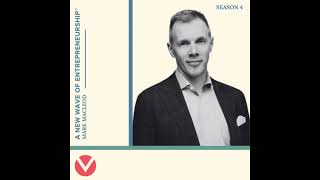
Mark MacLeod coaches CEOs of fast-growing software companies. He argues that 1% daily improvement compounds into real growth, and that a CEO's health, leadership team, and personal relationships directly affect company performance. Coaching differs from therapy: it's about building habits and accountability, not processing the past.
Chapters
Welcome to a new wave of entrepreneurship. I'm Scott Stewart, Founder and CEO of Venture for Canada and your host. The focus of this podcast is to hear from change makers and Canadian entrepreneurs to learn about how they've developed their entrepreneurial mindset and skills. In season four, we'll be chatting with CEOs, founders and successful business leaders about their career journeys. I'm excited to dive into these conversations about how to foster your entrepreneurial mindset and drive and since 1999, Mark McLeod has been helping fund, grow and exit high growth software companies. He served as CFO at Shopify, FreshBooks and others and was a General partner at Real ventures and founded SurePath Capital Partners. Mark now coaches the CEOs of high growth software companies, helping them unlock their personal and company growth. Mark, how are you doing this morning?
I'm great Scott, thanks for having me.
On first topic I'd love to explore is what you're doing currently, which is that you're a coach for some of the CEOs of the fastest growing companies in the country. And one of the questions I'd love to kind of hear your response from is why should a CEO work with a coach? And what are some of the benefits that a leader can get in working with a coach in this capacity?
Yeah, it's a great question. So I only work with the CEOs of institutionally funded companies, so that's companies that have raised either venture capital or private equity. And the reason for that focus is once you take that capital as a CEO, especially a founding CEO, you begin a one way journey to deliver a large outcome. And you look at all the biggest outcomes, they tend to be founder led, start to finish. So let's call it a 100% correlation between your performance and the outcome of the company. And funding rounds get bigger and bigger. A series A today looks like a series B five years ago. And so there's just giant expectations attached to people. And there are so many companies now that we hear about giant funding rounds, giant exits, and we almost take it for granted. But it's actually pretty rare, right? You know, the failure rate on startups is very high. So the reason why a CEO should have a coach is because of those expectations that are attached to them. Like really they're challenge and opportunity is to always grow one step faster than their business. If I look at Toby from Shopify, his mantra from the earliest days was basically how do I grow 1% each day? If you graph a 1% improvement over a year, it's actually transformative. I think in the same way that professional athletes have a team around them, there's the exact same expectations on the CEOs of, of companies that have raised meaningful venture capital. And so that's my focus.
As Albert Einstein once said, the most powerful force in the universe is compound interest. And the same applies for skills development. The same goes also with personal savings. But the more that skills, relationships, everything kind of compound in life. And to the point. This came up actually, in another podcast interview that we did with Matt golden of Golden Venture Partners, and he was talking about the immense pressure that a lot of entrepreneurs face, particularly even at the early stages now with these huge valuations and this pressure to deliver from the very beginning, that is, I can imagine, super intense. So when these entrepreneurs in these high pressure situations where the expectations are massive, where in many ways the odds are stacked against them, to your point, the vast majority of people who raise this kind of institutional funding to don't end up necessarily having huge exits. What are some of the habits or kind of lifestyle tactics that entrepreneurs can develop to kind of keep their sanity and keep themselves calm in the midst of what can be incredibly trying circumstances?
Yeah, another great question. You know, if you read TechCrunch too much, you probably think that companies go from start to finish in like, four years, sell for like 300 million bucks. That does happen, but it's very much the exception. And I think founders need to realize that this is a marathon, not a sprint. And this, I don't know, this macho, I'll sleep when I die, this Persona caricature of the stereotypical founder in the hoodie, just whatever, drinking coffee, working nonstop, it doesn't work, it doesn't last. And so very often when CEOs start working with me, they're completely burnt out. And it may not be the main reason, but it's one of the reasons. So I think one of the first things to do is to actually prioritize personal health and wellness. The CEO is called upon, especially as a company scales. You know, you go from individual contribution, individual heroics, to succeeding through others, which really means two things. One is the clarity of your decision making is actually the thing. And when you work 80 hours a week, you don't think, clearly, we're not our bodies and our brains are not designed for that. If you look like I'm six feet tall, my brain takes up a pretty small portion of, you know, the six feet. Like, we have bodies, we need to use them. They're meant to be moved. We need to sleep, all that stuff, right? So Personal health and wellness is super important. The biggest, It's a mistake. But like when I start working with CEOs, once we have the first session, is really to kind of take the state of the union of them and the business. The very next place I go to is the senior leadership team. And I often find that CEOs are settling for good VPs, good C level people, when they really should be holding out for great. And it's fine, you know, whatever. You're just in there every day and you compromise and you don't even realize it per se. But like, the strength of your senior leadership team is 100% correlated to the CEO's performance and the results that the CEO will deliver. And so I think settling for good when you should be having great is an issue. And that's a habit. Like you should always, it's not that you should be some mercenary constantly firing your leadership team, but you should just realize again, going back to this notion of the expectations that are attached that are on the CEO's shoulders, just understand that the strength of the team is going to dictate, you know, whether you rise to those expectations or not.
There's a great line also by Toby Luke of Shopify that I've heard in different interviews where he talks about, and as well as Harley Finkelstein, the need to kind of reapply to your job each year. And the same works for executives as well as having that. Okay, is this, especially if you're in that hyper growth situation, one person, one year, they might be great, but then two years later, it's a completely different company. They're no longer qualified for that job.
That's right. Yeah. And that happens a lot. And that's, you know, when I find that a CEO has executives that are good, not great. It's not that they were never great to your point. They were great at one point. They just haven't grown as fast as the business. So what we need to figure out is can they grow or do we just need to replace them? So it's an issue. You know, it's really difficult to, you know, if a business is 2xing, 3xing a year for you to 2x or 3x your leadership and management capabilities and technical knowledge and all the rest, that's a real challenge.
One thing that I was kind of intrigued about is that you've been CFO for all of these different companies. You found an investment bank. I'm sure you could have done many, many different things kind of in your next step. And you probably split. Spent a considerable amount of time thinking about what you wanted to do in next step. Why did you pick coaching? Why is coaching the thing you want to do as the next part of your career?
It's something I've been thinking about for a long time. I actually bought my first book on coaching in 2002, but wisely concluded that I lacked the gray hair and moral authority and experience to be a great coach. So I kept grinding for a while. As I reflected back through all of my roles as a cfo, VC and deal maker, the thing I actually enjoyed the most was the one on one coaching and advisory conversations I had along the way. And I realized that kind of at the end of 2019 and then we get into Q1 2020 and the apocalypse happens, right? And companies stopped buying companies for a brief period. And my initial instinct was, well, screw it, we'll ride this out and there'll be more need than ever for what we do when Covid is over. But three weeks into it, I actually realized it would be the cleanest opportunity ever to pivot. Because our deals largely stopped. We resurrected one of them, which was the big private equity round into Unbounce that was announced a few months ago. But everything else was kind of on hold at that time. And so I helped the staff find new jobs. I helped the guy running our San Francisco office start his own company that is similar. And I went back and got certified as a coach. So yeah, no looking back. And by the way, no one gets into investment banking for the lifestyle, right? Every year my Air Canada status went up. We had the office in San Francisco, obviously in Toronto, deals and clients in Europe, you're just always on. And so I definitely was looking to chill out a little bit as well.
Yeah, I can imagine a lot more kind of flexibility, but also a huge opportunity, I think, to provide or to create a ton of impact. Like if you can accelerate the impact of a CEO of a high growth company and potentially make a difference at that company flaming out or that company being really successful, like thinking about your own legacy and life and impact, coaches can have a tremendous impact, I think, on society at large. What do you think are some of the defining characteristics of the most high impact or the most highly effective coaches?
You know, first of all, I will say, like I'll distinguish between coaching and advice or mentoring. Right. So coaching is really about me asking questions, taking the conversation in a certain direction, where you generate your own insights and your own actions and advice is more me sharing my experience. What's worked for Me. And let's see if it fits your context. All of my relationships involve a bit of both, but the emphasis is definitely on coaching. And I think that is so I think part of it is having the restraint to hold back from offering up an answer and then just keeping curious, keep asking questions so that the CEO kind of has their own aha moments. I think that's a thing I can tell you. Like, you know, coaches come in all shapes and sizes. I think if there are two Personas, it's, you know, someone who's just like a professional certified coach. And so they've got the tools in the toolkit. They know how to ask questions, they know how to probe. But what they lack is context. Like, startups are just not normal. Right. And so maybe they had prior business experience, but it just doesn't translate. The other big Persona is former CEOs, and so that's great because they've been in your chair. The issue there is, like, they've been in your chair once or twice, like maximum three times. So their sample size is super small. And I often find they're pretty attached to. Well, this is what worked for me in the past, so you should do it. But it's totally different context, different time, et cetera. So I think what clients have liked about my experience is very large sample size. I've been involved with many companies over the last 22 years, every side of the table from operator to VC to dealmaker. So deeply get the context, but I'm not wrapped up in my own narrative. Right. Cause I was never a CEO, and that was very much by design. You know, back in my operating days, I was offered some CEO gigs. I turned them down flat because I saw just the massive difference in accountability and pressure for moving from CFO to CEO. And you just constantly have a target on your back and just wasn't for me, you know?
Yeah, I can see how your experiences in advisory as also CFO level would lend yourself to being potentially more effective coach than someone who's been a CEO of an organization or organizations. It's interesting because I run a nonprofit charity, and I've often talked with other people who run nonprofit charities or sometimes who are retired. And often I find sometimes it can be a little frustrating because they'll come in very much and be like, well, when I was running it, this is what I did, right? And say like this. And. And I think experience sharing can be good, but often. And we both know Ben Baldwin from Founder City Project, and, you know, I love his system where it's like you're not allowed to share advice, but you just share experiences. And I think sharing experiences in a nonjudgmental way can be helpful. But I often do find that people who have been former CEOs of other organizations, at least in my own experiences, they'll definitely kind of like this work for me. So a hundred percent works for you. It can be a little frustrating. I love a quote from Cicero where it says, like, the best person to give you, to give you advice is yourself in some way. Or the best arbiter of advice at the point being is it's really helpful to learn from other people's experiences, but not all, you know, it's to take everything with a grain of salt. And just because it worked for somebody else, there's different circumstances, different personalities, different, you know, geopolitical situation going on, doesn't mean 100% correlates to sort of that specific situation. So I think you're.
It's all just input. You know, like I back when I was at Real Ventures and we were running Founder Fuel, we would have these mentor days and the founders would complain of mentor whiplash, right? One mentor is like, run right, the next mentor is like, run left. You can't do both, right? And so it's all just input. You have to make your own decision. I also tell these CEOs all the time, like, because VCs will often give very prescriptive advice in board meetings. You should do this, you should do that. And here's the thing. If you do what your board tells you to do and it doesn't work, it's your fault. If you do what the board tells you to do and it does work, that's great. But then they take the credit for it and they think, well, that CEO is not that great. I had to tell them what to do there. And that doesn't mean then that you should just categorically, you know, do the opposite of what your board tells you. It just means that it's all input and then you have to make the call.
So one thing you wrote. I read a lot of your blog post, Mark, and by the way, I love your website and I recommend our listeners check out your, your content. But one topic you've written about that I think is often under the goes kind of under the radar is the importance of CEOs kind of maintaining healthy relationships with a romantic partner and the importance that a supportive partner can play in helping a CEO be really successful. So what advice do you have to the CEOs of high growth companies on how to maintain a healthy relationship with a romantic partner or while going through this intense amount of stress and pressure.
Yeah. So, you know, listen, I didn't become a coach to exercise my personal demons from the past, but this is a thing that I lived personally, you know, in anyway. My marriage ended. I had a long marriage. I was married for 16 years, was an 18 year relationship and it ended and we just grew apart. But it prompted a lot of reflection. And that insight I mentioned earlier about realizing in 2019 that the thing that I enjoyed the most was the coaching and advisory work came from the reflection I did after the marriage ended. But I can tell you for me personally that I often said that my wife was my top priority. But if I looked at how I allocated my time and especially my presence and attention, that was not the case. I, like many CEOs, worked all the time, was traveling, a bunch of would think nothing of getting on the computer after dinner and cranking out emails and doing work. And that's really common. And so I would say CEOs wear many hats. They are a spouse, they are a parent, they are a child. And to live a complete life, you have to feed all of these different roles. What I've found is that work fills all available time. If you give work 70 hours, it'll take 70 hours. If you give it 45 hours, you'll probably get 90% of what you would have gotten done in the 70 in the 45. But that discipline also forces you to work at the right altitude. I often find, especially founding CEOs are way too involved in the critical path of different functions of the business, which tells me that they either have weak leaders running those functions or they can't let go, or both. And so I tackle that head on with clients. Because if you have the best possible leaders that your scale and resources allow, there should be no reason for you to be involved. Been like the critical path of anything, right? And you know, Fred Wilson of Union Square Ventures has the best articulation of the CEO role that I've seen. It's really three things. Constantly communicating vision, mission, values, priorities over and over again until you're sick of hearing yourself building and recruiting and retaining the strongest leadership team that you can and never running out of money. It's those three things. If you're at that altitude, you don't need to work 70 hours a week. Now, I think many CEOs, especially male CEOs, get a lot of identity, a lot of their power from that role and find it tough to then go and be normal and do dishes and play with the kids. So they got to get past that. And I struggled with that as well. And it's easy now. I run a one person business, but it was a conscious choice. I realized that I could not both achieve the vision of surepath Capital and be a good husband or partner. Those were mutually exclusive things and easy for me later in life. I just had my 51st birthday on the weekend. I've had a lot of success. So it was an easy decision for me to say, you know what, I'm prioritizing life, you know, and I recognize it's harder for people that are kind of earlier in the life cycle. But if things are falling apart personally, it completely impacts how you show up at work and vice versa. If your business is falling apart, you're probably like a shit show personally and you're stressed and you know all of that as well. So it's like coaching is not therapy. I don't have people lie down on a couch. But you absolutely have to work with the whole person. And so I'll absolutely go into those dark areas with them and, you know, force some tough conversations.
Absolutely. Work and personal life are not segregated. They absolutely link together. And if something's going badly in someone's personal life, you can tell it in their work life almost all the time.
Yeah.
And I often. One thing I've observed is that I found, you know, the past eight, almost eight years doing venture for Canada, I met a lot of Canada's most successful entrepreneurs. I find there's definitely a correlation that a lot of the most successful entrepreneurs in the country are people who have really supportive partners who help them in a ton of way. Because to your point, like the immense pressure that involved in building this, that if you don't have a supportive partner can be super lonely and challenging. And yeah, I think that having that supportive relationship can make a big difference. Related to one of the points you mentioned, which is about the difference between coaching and therapy, which is something that I've sometimes been intrigued about. There's a great Tim Ferriss interview with Brad Feld where Brad Feld talks about how he works with both a therapist and a coach. And then he recommends that for different CEOs of both companies. What do you think is the distinction between kind of therapy and coaching? And how can a CEO potentially work with both a therapist and a coach?
Yeah, they're definitely complimentary. I've recommended it to several of my clients and I've gone through therapy myself. I'VE been coached myself, so they're definitely complementary. I think if you're going into the kind of coaching I do is very much about performance in the moment, but we may uncover things like really just deep rooted fundamental things that are blocking you and things that are just deeply ingrained in your psyche. And at that point, you know, just therapy offers a lot more tools, whether it's like cognitive behavioral therapy, right? So that you have little actions and triggers that you can go through, little rituals that you can go through to stop yourself from having a panic attack or something, you know, as an example. So it's just a much when you're getting into really deeply ingrained parts of your personality, I think just that's way beyond the scope of coaching. And so I think a disciplined coach needs to recognize that and just call out that therapy would be helpful here. And so I've done that a bunch of.
And your experience resonates a lot with me. I've actually worked with both same a therapist and a coach. And I find there's different benefits, particularly sometimes too if there's specific issues. But either party can kind of add value in different kinds of ways. But I think the reason I asked the question is I think sometimes people think they're mutually exclusive or that you should just do one or the other and someone can really work with both and both can add a lot of value in different ways. So you've seen the Canadian technology sector change a lot in your 20 plus year career. And 20 years ago or 15 years ago, the Canadian tech sector, the main tech company most Canadians knew of was BlackBerry or Research in Motion. And you've seen this even this year. The amount of unicorn companies that have been coined in Canada is super impressive. What do you think kind of explains the rapid growth of the Canadian tech sector in particular in the last five years? What do you think are some of the things driving the sector's recent success?
I've often said that the best and worst thing about the Canadian technology scene is its proximity to the U.S. you look at self contained economies like Germany and Israel and they just have their own strong domestic venture capital startup scene. But we have this massive insecurity here where we're constantly comparing ourselves to a country that's 10 times our size, with so much more capital, so much bigger companies. When I started out in the startup scene here, there was no SaaS, software was sold on premise and so you just had to be where your customers were. And so inevitably the center of gravity moved to the US and there was A lot of skepticism about investing here in Canada. And so it was just hard. You're competing with companies that are raising 10 times more than you. I think what's happened over the last few years is U.S. investors have realized there's a couple of things. One, U.S. investors have realized that there's amazing talent here. The talent is cheaper just because of currency exchange for one thing, but it's more loyal, especially compared to places like San Francisco that experienced like 30% turnover on average prior to Covid. But the other thing is like.
The.
Way software is sold has changed. So yes, there still is enterprise software, but you look at Shopify and FreshBooks, their customers are all over the world. They don't care where those companies are based, as long as they get great software, great support, they're good to go. That's true of many companies. That's a big. That has, I guess, reduced the importance of geography. You no longer have to be in New York or San Francisco where all the big enterprise customers are.
Yeah, no, I can see that. And it's been super impressive to see the kind of growth of the sector. Out of interest, where do you think that it's going to go for the next kind of five years?
If I had a crystal ball, I'd either not be doing this call or I'd be doing it from my island that I would have bought somewhere in the Caribbean. But I've seen lots of cycles. I was there for the dot com crash, I was there for the 2008 financial crisis. And you just see this constant tug of war in terms of who's exerting leverage on who between operators and investors. And we're living in an environment right now where valuations are just super rich. Operators have all the power and they're using it. I just turned down a deal last week at 40x revenue, like just nuts, and turned down an uncapped safe note on a seed round recently. So the point of all that is this is all going to rebound back because it always does. And those companies that have raised rounds that they've had no business raising in this frothy environment, if they are not crushing it, are going to really struggle to raise more capital and their cap tables could get super ugly. So that's a thing that I worry about. Also, if governments ever have the courage or are simply forced to normalize interest rates, I think that's going to have a big impact on the startup economy as well. So I think we could have some clouds ahead, that's for sure. I think on the positive side. Canada's tech sector is stronger than it's ever been, and Shopify and others are really setting the example that you don't have to sell out early. You can build a big company right here. And so I do expect to see more of that. There's just going to be, I think, a lot of carnage and failures along the way.
Mark it's been a true pleasure. We've chatted about a really wide range of topics, everything from rural Scotland and experience over there to romantic relationships to therapy to hiring and how to recruit senior leaders to join a company to the principles of coaching. Really wide range of topics that we've covered in the last hour and it's been a real pleasure chatting with you today. Thanks so much for coming on the podcast.
Thanks for having me, Scott. I really enjoyed it.
That's it for this week's episode of A New Wave of Entrepreneurship. Stay connected with us via our social and our email list. Subscribe to us in your favorite podcast app so that you don't miss our next episode. If you have feedback on Today's episode, tweet us adventure for Canada that is venture the number four Canada. Or email us at podcastventure4. That's spelled F O R Canada CA. We'd love to hear from you. Thanks for listening. I'm Scott Stewart and until next time, stay safe, stay motivated, and stay grateful. A New Wave of Entrepreneurship is produced by Juanita Lee Garcia and Latina Latifah Farah. Editing and mixing also done by Latifah Farah. Erica Ormondston is our Editorial assistant. Mark Wallach and Premium Beat own the copyright and publishing rights related to the song used in this podcast. The comments and opinions, recommendations or suggestions expressed on the podcast by the guests are not liable to Venture for Canada and belong solely to to each individual. Any information provided stated by our guests and our host is independent of Venture for Canada. A New Wave of Entrepreneurship is a Venture for Canada brand and all content is owned by Venture for Canada. If you'd like to use our content, please reach out to us at Podcast Adventure four. That's spelled F O r Canada Ca.
More from Mark





The Burnout Breaking Point - How Strategic Breaks Actually Increase Productivity


Emotional Debt - How Avoiding Hard Conversations Compounds Into Company Killing Resentment


The Death of the Specialist - Why AI Is Creating a New Professional Class Called Scalers