Mindful Leadership with Cameron Wenaus
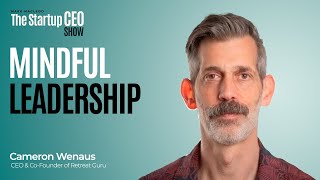
Transcript of a podcast interview (Startup CEO Show) with Cameron Wenaus, co‑founder and CEO of Retreat Guru. Discussion covers Retreat Guru’s SaaS-enabled marketplace for transformational experiences (meditation, yoga, breathwork, psychedelic retreats), the interplay of spirituality and entrepreneurship, company culture practices (mindful lunches, sharing circles, retreat benefits), leadership growth through meditation, and considerations around investors/VC and scaling sensitive healing work. The tone is conversational, practical and reflective, aimed at founders/CEOs interested in integrating mindfulness with business.
Chapters
There's this tendency to kind of think, oh, it's going to get better just around corner. Oh, when I close this deal, then it'll get better. When I get to this stage, then I'll go, oh, but you know, that sounds like when I get, when I graduate from middle school and I get to high school, then it's going to work out. Oh, when I get from high school and you think, oh, when I get to university, then it's going to work out. And then I'm in university like now, actually, when I get a real job, then it's going to work out. And then when you get that job, you're like, actually, when I get that raise, then it's going to work. Or when I get a house and you're like, well, when I get a cottage and joke's on you, it's never going to work out. From that perspective of that, if you get that thing, then you'll finally arrive. And if I, if I look back at my history of my life retrospective, I look at and see I've been playing this really weird mind game where I say, okay, once I get to that, and then, you know, and I've never arrived there. And the truth is, is that you're already there. It's already worked out.
Welcome to the Startup CEO Show. I'm your host, Mark McLeod. In this episode, I sit down with my friend Cameron Winehouse, co founder and.
CEO of Retreat Guru.
We live in a pretty challenging world, always on 24 7. No separation between work and personal life. Glued to our mobile devices, constant stimulation. We need retreat more than ever.
We need to heal more than ever.
Cameron's company enables that. Cameron is someone who's on the spiritual path and this is something that brought us together. And so this is a kind of a unique discussion. Yes, we unpack his business, but we also talk about spirituality. And perhaps more practically, for anyone listening, we talk about the intersection of those two. We talk about how you can build a conscious company, how you can integrate mindfulness into work, and so that all of your work is a practice and therefore how you can basically be a better CEO and better human. And so I really thoroughly enjoyed this discussion and I hope you do too.
Cameron, welcome to the Startup CEO Show. It's a true pleasure to have you here today. How are you doing?
I am feeling great and feeling relaxed now.
We were chatting two weeks of paddling. How about that?
Yeah, well, one week of paddling and then one week of family reunion.
Okay, now, family reunions.
Family reunion would be relaxing. Right.
That's where I was going.
Mark. I have an incredible. I have this unique opportunity in life. I have one part of my family that has not experienced any trauma. There's a. My aunt and uncle are raised their kids in an incredible, beautiful way and I can see that there's. That intergenerational trauma hasn't happened in this one family. I'm ancillary to this. But every time, you know, we have a family reunion, they set this culture of kindness and clarity, love, acceptance, relaxation that we all just sort of tune into this frequency. The rest of us that didn't grow up in this nuclear family and it, it's become. I had two days into it, a co worker texted me and said like, hey, how are you doing? And I said to her, I think I'm high on family.
Wow, that's massive. Very few people say that we're going to get into spirituality a bit, particularly as it relates to business, but just while we're on family. I remember studying at the Toronto Zen center several years ago and they told me that the true test of your practice is spending time with family.
It's like, was it round us and if you think you're enlightened, go visit your family for Christmas.
Exactly.
And it's true. There's so many triggers like you get. We just had a company lunch yesterday and one of the neat things that we did at our, we do at our company is we have. Instead of just having a regular lunch, we have a topic, kind of a mindful topic and it becomes a sort of like thread in which all conversations kind of get. Gets woven into all conversations. And we chose family as, as the topic and it was deep. It was really interesting to see how much we're impacted by family.
For sure.
Yeah. And how, how families. That the function or dysfunction of a family, how that impacts your life. But also. Yeah. And how the family, families change and over time and you know, so anyhow it's. I made me feel very grateful for, for the non neurotic family that I do have and also for the opportunities to see really clearly how evolved I am on the spiritual path.
Right. I like it. That's really.
Which is not very.
I'm not sure about that. You're further ahead than me, that is for sure. All right, well listen, let's, let's talk about your business for a bit and then come back to this stuff. And luckily your business is not unrelated to all this stuff. And so I've been excited to have you on the show actually for that very Reason, I think every single person who tunes into this show could benefit from the retreats that your clients offer and from being more mindful and more wakeful. And so maybe let's start off just tell folks what retreat guru events for people who don't know already.
Right. Well, first and foremost, we're a marketplace for transformational experiences. And that can look like you healing, like making friends with yourself to healing deep trauma that you may have had in childhood or to expanding consciousness into a non dual state. So it runs the gamut. But what is transformation really just depends on who you are and where your next step of growth is. And so those are namely retreats.
And they're.
They can be meditation retreats, yoga retreats, psychedelic retreats of ayahuasca and psilocybin, San Pedro 5 Meo. They can be breathwork retreats. But what I'm finding was really fascinating is recently they're a combination of a number of modalities. The retreats. There's been some sort of convergence that's happened in the retreat and practice space where you'll find that you'll be doing like a yoga meditation retreat and psychedelics at the same time. So that's one big part of we do. And then the other part is we, we offer software, like property management system software to the retreat centers that host these experiences. So we're a SaaS enabled marketplace, I guess you could say.
Yep, I love it. And if I remember correctly, maybe started out more on the yoga space originally, but the psychedelic retreats are really kind of where your growth is at the moment. Is that true?
Well, I mean, my brother and I both have roots in meditation. That's when we, in the late 90s got into meditation and building websites for Zen masters and Tibetan lamas. That was our, our previous incarnation.
That's awesome.
But the. And so our roots, I think are definitely deeply in meditation. Oh, I'm just noticing you've got. Is that Ganesha in the background?
It sure is.
Oh, wonderful.
Okay.
Hello.
I chant to Ganesha most days.
Okay. Would it. That's. Can you, can you provide. Is there, can you do a quick. Offer a quick mantra?
I'll do, I'll do a mala of that most days.
Okay, okay. Okay.
At the end of my practice, just, you know, I'm kind of coming into the world to do things and Ganesh is kind of like a humble guy, doesn't take himself too seriously, helps remove obstacles. He's just, he's just my guy. When I'm finishing teacher, yoga teacher. Training the 500 hour. I'm going to finish it this fall and to mark that, I'm going to get a Ganesh tattoo. Oh, where maybe, I don't know, maybe down the lower core somewhere here. Prominent.
Okay. Yeah.
Somewhere where I see, like, I have my mantra here on this side, which is no shortcuts. Do the work. Just to remind myself every day. So maybe having Ganesh on the other side, I'll just have an all powerful left arm.
I like shortcuts, though.
Yeah, that's fair. We all do.
Don't you want a shortcut to enlightenment?
Yeah, I do, I do, actually. It sounds like 5 Meo might be it, but maybe I don't want to jump. Jump the gun. Oh, no.
Five meos definitely do the work.
Wow. Yeah. All right, so back to retreat guru. You have a marketplace, you sell software, you process payments for your clients as well, but you're pretty lightly capitalized. So how are you able to manage doing all of that? Is it difficult? And maybe just how do the parts interplay with each other? If that makes sense. Question.
Yeah, right. It's difficult. I'll be honest. We have way more that we. Our roadmap and our product roadmap is. And backlog is immense. It's another example of infinity. I mean, you look at it and it's literally there's so many opportunities for us and we haven't. We, you know, maybe many companies feel this way, but we don't have. Feel like we have the resources to address all the opportunity that there is. And as a result, that has impacts. Right. You know, it can stunt growth. There can be a feeling of kind of disheartenment sometimes in the company. It can feel like you're not living to your potential. So those are feelings that, you know. And there's frustration too, where it's like, oh, you know, especially when customers like, hey, we'd love to have this thing. You're like, I can see it in my mind. I know it should be built. I simply do not have the resources to get it across the finish line at this state. And then there's that intense fear of that, you know, you're going to have your lunch eaten. Maybe it's not intense because at this point we're trying not to even see that. The notion of competition, how can you be in the non dual space and then work with the notion of competition? Come on. Right? It's like if somebody else does it, it was done, it gets done. That's lovely. Like how, how lovely. But still, nonetheless, the Reality of running a business on unlimited resources. There's. Yeah, it's, it's has its, it has its shadow side for. For sure. At the same time, you know, we're a SaaS company so we built. That's a large part of our revenue is SaaS. So we've built slowly and steadily over the years. We have. There's a certain freedom I think that we get to that I really value. I think probably I might value freedom more than growth. And I think one of the. And maybe this is a, this is, this is some sort of like therapy I get to do. But I'd be curious to. You know, I. We've talked about this in the past but I have this deep seated fear and it, I think it's with. Not unfounded that if I get, if we get into bed with VC that there'll be. The screws will be turned, you know, for more transformation. You know, let's. Let's crank out more transformation. The work that we're in is really delicate. The work that we're in is people healing from childhood sexual trauma, people healing from physical and mental abuse, people healing from drug addiction. When you turn to these medicines into yoga and meditation, often there's some deep. Particularly with psychedelics, there's a much deeper traumas that surface or that people are gravitated towards. They said Western medicine has failed me. I've been on anti anxiety pills and antidepressant for 10 years. I'm nowhere further than when I thought I was. I need to address the source. Psychedelics can help you do that. Often it's said that ayahuasca is like 10 years of therapy and at night, you know, so when you've got this sensitive situation, how do you. Does that pair well with Venture? And that's been the fear that I have is that taking Venture, you know, will lead to loss of control and we're dealing with something that is delicate and precious. But also if we even get on the other side of the coin, which is not the healing of trauma, but then we get into the recognition or the realization of, of non dual awareness. Or you could say, there's a lot of ways to say it but you could say, you know, progress on the spiritual path. And like how does that pair with Venture either? Like does a VC who's never had a non dual experience really get the, the core essence and the vision and the mission of our company? I don't think so, maybe conceptually, but it's a non conceptual thing. So how, you know, so that's where that's a, that's what we kind of rub up against when we think about.
It makes me think of impact investing. Like we saw this in the public markets, right. There were mutual funds that were created as an example to invest in companies that are addressing climate change in a positive way. On the one hand, that's great because if you're into climate change, here's a place where you can invest that relates to your passion. But I would say, by and large, investors actually just want returns. And so if my impact comes at the cost of returns, well, I'm just not going to put my money there, you know, so. And of course, with venture, they're seeking, you know, significant returns that compensate for the risk of investing at the early stage. And, and so the bar is, you know, even higher than it is for say, that retail investor who cares about the planet. I think it really, I don't know unless there was an like, let's say I wanted to create a venture fund to pursue, to back conscious entrepreneurs that are, you know, making the world more mindful. I would have to go, I couldn't go to the traditional limited partners that are looking just for returns. I'd have to go to people who are drinking that Kool Aid who are already just really rich and well, I'm just going to give you a little bit of my money because I believe in this, not actually because I'm expecting this. Right.
Yeah. It's a different form of return. Right. It's the impact that they want. Yeah, yeah. And we've actually magnetized funders like that. I say funders, which is interesting because one investor that we got said, no, I'm more of a funder than an investor I like, you know, and what we've been very careful to do is bring in investors in the company who are completely vision aligned. And part of the reason of that too is that we think, well, if there is a day that we do lose control, that we want to have the people who are in the control at the control panel share the same vision. I'm happy to cede control to somebody who gets what we're doing. Truly, you know, is, is truly understands the work that we're in. It isn't that I'm particularly looking for Cam, you know, to have control, it's that. It's more that the, that the vision and the execution of the company comes from the place that the most important thing is that, you know, is transformation first and foremost.
Yeah, I would imagine, you know, surrounding yourself with mission align stakeholders in every form is important like this. Probably the same thing for deciding who becomes a team member, a retreat guru. So I'm wondering, or which suppliers to choose. How do you filter for that? Because you have race and capital. How did you figure out who was vision aligned or not versus not?
We just asked them.
You didn't go ayahuasca retreat with them? Let's really find out.
You can tell.
It's just.
It's just there's a sense of people are on the path and doing their work. And it's so interesting because some people just innately they're maybe not don't have a yogic or meditation path, but they just get it. And you can tell they've got a good heart and they really want this work to be done. And other people, you know, you could actually, you could have the opposite. You can have. There's a lot of kind of people that have been magnetized into the psychedelic space that aren't doing the work. And, you know, they're thinking, hey, maybe the quick fix is the thing. These things will. And. And you can also feel that that's slightly off. Like, oh, I don't know if you fully know the space that you're in now. What's interesting is we've. We've actually, you know, the comparison there is. We've made hires internally in the team where people weren't vision aligned, but they were great coders. Well, what happened over multiple years of working together is they said, you know, we had our fifth coming up. We'll have our sixth company, San Pedro retreat. For example. We've done company ayahuasca retreats.
That's amazing. In the benefits plan, I. Oh, yeah, yeah, yeah, yeah.
Exactly. Well, actually, that is part of our benefits plan is a retreat credit where. Where we pay for people to go and retreat. We really encourage people to do retreat. Well, what. And part of that is company retreat. And we actually just are on. When we do company retreat, it's not like strategic planning.
Yeah.
And so what I've seen over the years is some of the people have come into the company and they have just started to really appreciate, you know, the journey, this sort of spiritual path or their own personal growth path a lot more. And, you know, it's been beautiful to see. So like, retreat guru can almost be a path to that. It's like you can come in with no connection. But also. But, you know, four years later you find that you're in the jungle, jungle doing a dieta with ayahuasca. And how did this happen. It's like, well, you got a job, a retreat, career. That's how it happened.
I love it. Yeah, you just, you know, all it takes is that initial exposure. As you know, yoga is a giant part of my life. But I started doing yoga because the women looked hot. It was the worst possible reason, but I liked how I felt afterwards. And you fast forward, I don't know, 15 years, whatever it's been. And now it's a daily practice. I'm doing teacher training. Like, it's just taking up more and more of my life, you know.
So my brother gave me the similar con. He said he got into meditation before I did. And I remember him saying to me, it was like 20 years ago. Yeah, you know, you should go to the local Buddhist center where you're at. He said, there's really, there's really cute guys there. And I was like, oh, okay. You know, whatever it takes.
Right? Whatever it takes.
There's many skillful means out there.
I'm curious. Certainly for me, I would say appreciation of spirituality has been correlated with age. I think particularly with men. I'm going to completely stereotype. And you spend the first half of your life trying to like, grab, this is mine. This is who I am. This is like my identity, my title, my worth, my power, my money, blah, blah, blah. And then second half of your life, which I'd say I'm squarely in figuring out why any of that matters and how can I be more of service and why am I on this planet? And so I'm just curious, a. Does that resonate with you as a generalization and are you attracting maybe a slightly older demographic than your standard San Francisco startup as an example?
Oh, interesting. In terms of. Yeah. Team. Yeah, that does resonate with me quite a bit. Personally. I'm sort of, I'm also feeling I'm at that second half of my life, as you can tell. And, and, and there's a profound yearning to, to deepen the practices and to have more clarity in my life. Yeah, yeah, yeah. In terms of attracting team. Yeah. I find that I think we have a more mature staff. You know, our chief product officer was formerly head of product at Apple and.
Wow.
And she's also in the second, you know, phase of her life, like us.
Yep.
And you know how lovely we're getting. Like, we're getting wise, very skilled, you know, vision driven, vision aligned people. So I appreciate that. And at the same time, we still have, you know, we still have, we. I don't think we have any bro. Culture like there's, that's not, there's, that's not part of who we are. But we still have, you know, I think the average age for the devs is probably like 28 or maybe 32.
Okay, that's pretty young.
But some of our senior team are our cfo. You know, she's also in the, she's, she's older as well, so I think we're attracting more mature leadership for sure. Yeah.
So.
Or we're just getting older because we've been doing it for a while. I mean, you know, come on, let's keep it real.
I'll tell you legit, like this coaching thing had better work out because I couldn't imagine going back and being a CFO at a company. I would be like the old fossil, you know, I'm gonna see it, it'll be 10 years next year, I guess, since I stopped being a cfo, so. And I love it. I love getting older. I love the wisdom. The ship that I used to think mattered I now laugh at in a judgmental way. Just more like, oh, you've come far, you know, like so. But there is an ageism bias, I think in the startup world. And so I definitely felt like when I left operating it was intentional and that was like I say, almost 10 years ago.
Yeah, I think that society wise and we just don't value elders.
Right.
We marginalize them and we, we call them seniors, which is sort of a derogatory term instead of an elder.
That's right.
Yeah, it's, it's a, it's a bit of a systemic issue that we've got.
I have a friend in her 40s who just gave birth and they referred to her pregnancy as a geriatric pregnancy, which just sounds awful. Yeah, yeah, yeah, Perfectly fit. Anyway, so we've touched on this a bit, but maybe let's just talk about like, so you do run the startup. You have attracted a talent that presumably want to have an impact on the world. You've raised capital, albeit not necessarily institutional capital. How do you make these two worlds work? Like, how do you navigate? Are there trade offs between, I don't know, business and the, let's say, the expectations of your investors and like what just feels comfortable for you and feels aligned and feels pure, if that makes sense. Like, do you feel are trade offs ever?
Yeah, I mean there, there are trade offs. We've done, I think we've done a good job in magnetizing vision, aligned investors. But they're still investors and, but they all really understand that we have. The work that we're doing, like I said earlier, is precious and that that gets done properly. So I think we're able to then work at the pace. I also feel like, you know, we had that we're a little early. You know, I. I want to say that in terms of timing is everything and when we, you know, when we get it, like, I think you and I and the average, like, we might be a little an outlier in, in society in terms of spirituality. I mean, yoga is popular for sure, is more of a physical form and exercise, but I think there's fewer people that are walking the path of like, you know, the. The yogic path, let's say. And so, you know, I think we might. We are also early in this space and as a result, you know, we're. And we know that, and I think our investors know that as well. So there's patience is. This has been something that we've been. Haven't even needed to ask for it, but it's been given to us, which we deeply appreciate. There's a. There's a sense, I think, that people are. Know that. Okay. If, particularly in the psychedelic space, like, there's a lot brewing and that things are bubbling up.
Good choice of words. Yeah.
And. But yet it's still probably quite early. If you ask you. You walk down the street and you ask somebody, you know, when's your next vacation? Everybody's going to tell you, but you ask them, when's your next, you know, retreat? They might say, what. What's the retreat? What do you mean? So I still think that we get to change that narrative, but I think that's going to take time.
Yeah. If we just stay on the need for a retreat for a second. I know I'm preaching a converted year. I personally go on retreat at least twice a year and more if I can. I went, as, you know, and did an ayahuasca retreat for the first time this winter and then go off to a silent meditation retreat in September just shortly after my birthday. Figure it's a good time to just, you know, go inwards. I take regular vacation as well, but like so many CEOs, when they show up to me for coaching, they show up because they're just completely burnt up. And then they view busyness as like this badge of honor and never allow themselves, I don't know, space to just sit and be right. It's just like I'm going to be in meetings all day and then I'm going to pound emails, return slack messages Grind, grind, grind. And anyway, let's assume we got some of these folks listening in today or watching. What would you tell them about the power of retreat and how it might make them a better senior and better human?
I don't know about them, but I can tell you how it's affected my life because I can grind and pound, emails and I do all that. But then I have these moments where I think, what the fuck am I doing? I'm going to die. Like, I'm going to die. And I am not. This is my one life. And yeah, I'm Buddhist, so I should believe in reincarnation, but I kind of don't. Like, am I waiting for, you know, there's this tendency to kind of think, oh, it's going to get better just around the corner. Oh, when I close this deal, then it'll get better. When I get to this stage, then I'll get, oh, but you know, that sounds like when I get. When I graduate from middle school and I get to high school, then it's going to work out. Oh, when I get from high school and you think, oh, when I get to university, then it's going to work out. And then I'm in university, I'm like, no, actually, when I get a real job, then it's going to work out. And then when you get that job, you're like, actually, when I get that raise, then it's going to work. Or when I get a house and you're like, well, when I get a cottage and joke's on you, it's never going to work out. It's never going to work out. From that perspective of that, if you get that thing, then you'll finally arrive. And if I look back at my history of my life retrospective, I look and see I've been playing this really weird mind game where I say, okay, once I get to that, and then, you know, and I've never arrived there. And the truth is that you're already there. It's already worked out. So if you're on the rat, you know, the, the rat, you know, spinning wheel. And you're constantly looking for, you know, the next piece to make you happy that's endless. And there's actually a Buddhist term for that. It's called samsara. And it's cyclical and endless and it also has this quality of spinning. So, you know, the mouse wheel is a perfect analogy for it. And so in the moments when I go and I check out of that mindset, because I think it's just a Mindset, when I can check out of that mindset, and I go, oh, my God. You know, often those are moments when I'm in either daily meditation practice or I'm in retreat where I can look in and go, oh, wait a second. Actually, I have it all already. Yeah, things will change. The numbers will change, the corners will change, the problems will change, but it doesn't change. It's just like a kaleidoscope, and the colors are moving around. Essentially, the unit is a whole, and it isn't changing. What you have and who you are is already complete. You're already at a hundred percent. And if you think that you need something to fill you, to get you to that place that's endless, and you could look back and realize you've been doing that your whole life. So do you want to live your life? Do I want to live my life chasing for something that's a dream, that's fictitious, that I already possess, and then stressing myself out and depleting my life force, depleting all my, you know, making my body sick and toxifying my relationships all for this one goal? It's like you have it already. So to the extent that you can kind of wake up to that, I think, you know, I think that defines happiness. And I feel like, for me, you know, retreat is just a method or a tool to come to that realization. And then when you're at that realization, when you've actually realized that you already are at 100%, you already are complete, then you enter a really beautiful space where you can say, okay, I'm already complete. The mission is already complete. Everything is. I'm whole. Therefore, what do I want to do? How do I want to offer? What do I want to create? What do I want to bring into the world from this place of completeness as opposed to, like, well, I don't quite have it yet. And if I can get. Then when I fill in this last puzzle piece, you've got the puzzle pieces. They're already put together perfectly, and they always have been. And that's the kind of cosmic joke, that's what every religion or every spiritual path says at the very beginning, is that you have it. You have it already. You are it already. It's impossible for you not to, you know, it's impossible for you not to not have it. But if you don't realize that, there's a whole path for you to realize that, but it's a circle, you know, you end up coming back and, like, you know, you're like, oh, with the high head the whole time. So to the extent that I'm able to do retreat and I tune into that frequency and then when I do that, I find happiness goes up, ironically, productivity goes up, creativity goes up.
Totally. Especially creativity. How can you create when you're stressed? Right, right. So if you reduce the stress, boom.
But really it's a deeper piece because it's like I reflect on that. It's like I have this, you know, and maybe it's to the extent sometimes when I see them as two different things. I've got retreat and then I've got work, then there could be tension between the two. But my inspiration is to see that how do I merge and blend, you know, as a, as a meditator? Like, well, what if I was always meditating but I'm at work? Like, what if I'm pract. What if work became a practice? Basically, what if work became a practice? Then I'd always have time to practice. Now that's not always so for me, because I'm, you know, there's, there's multiple times where I'm. Because I'm human.
Right.
I can't. But that's my, my kind of like North Star. It's like, oh, what if, like personal North Star, it's like, what if I could merge these two? Then there isn't a tension between the two. Then you don't have to feel guilty about taking time off to meditate or to do yoga or to do an ayahuasca retreat. Then you actually can see that that's actually part of you as a whole human being and that's going to have tons of value. It's kind of like coaching. It's like, are you really wasting time meeting with your coach? No, you're actually making high level coaches kind of micro adjustments up here which when you know, exploded out, are vastly one degree off if you go a couple thousand kilometers. Makes a big difference.
Right.
And I find it's a similar thing with meditation. So I'm trying not to see them as separate. I'm trying to see them as one. One thing.
This episode is brought to you by. Fellow Fellow is on a mission to solve the meeting problem by offering the only AI meeting management solution that covers every part of your organization's meeting workflow. And As a startup CEO, show listener, you get 300 free minutes of AI recordings if you sign up today. Go to Fellow App CEO to start your free trial and start having better meetings.
I know you're not practicing in order to build a bigger Business, you're practicing for its own sake. But I think the result is like, if I were to give a pitch for meditation to CEO, listening to this, like, the CEO's job is to make decisions, some big, some small. And the more presence, the more clarity, the more you can bring all of yourself in those moments, the better decision you're going to make. Right. Versus maybe the stereotype of like someone who's got seven hours of meetings a day can't never present. Right. You know, they're just adding back to my early days when I was operating or when I was running an investment bank. My schedule was just slammed and I go home and I might have been physically home, but I wasn't mentally home. I was either destroyed from seven hours of meetings or I was replaying the day and things that didn't go well or I was planning for tomorrow, I wasn't present. It was one of the things that drove me to practice. I desperately needed it. And so I don't know who said this, but someone said like, basically, if you can't take five minutes to. If you don't have five minutes to meditate, then you need to take an hour. Like I don't, I can't attribute that to someone, but like it probably wasn't the Buddha. There you go. Yeah.
And the other thing I would say is if you're a CEO and you're running a company and you have personal conflicts, like if you have charged relationships, there's no need for charged relationships. That's actually, you know, you could dissolve those completely through, through a practice of meditation. Because what I've just come, because I know this personally and it's really humbling because once I started doing the work and there's a book that I can rec. I can't recommend enough. It's called the 15 Commitments of Conscious Leadership. Oh my God. If you're hearing this book title for the first time, just buy this book. It is literally worth its weight in gold. But one of the aha moments for me was this notion of things are if there's victim mindset. You're either this is these things are happening to me or things are happening by me or through me. And there's this real simple categorization of like, if things are happening to you, you're the victim of your circumstance. But actually the other one is, you see, is that you're actually actively co creating all your reality and that includes your conflicts. And the one thing that's helped me a ton is with my own personal practice is that I started to realize that all the conflicts I had at work with these, oh, that guy is always this way. I was co creating these and when I started to shift and start to see this, it started to dissolve all of my personal conflicts at work. And talk about efficiency gains. When you are literally in meetings and you have no conflict with anybody. I mean there's lots of conflict on like I have differences of opinion, tons of differences of opinion opinion. But there isn't this sort of neurotic.
Your ego is not attached to your opinion. You don't have to be. Right. You can seek the truth.
That's right. Yeah. Or, or you know, you can. I had this one relationship with, you know, that was so loaded and triggering the entire time and then I realized through my own practice that I was bringing all of my triggers into it and I was co creating this. The moment I started softening and chilling out and trying to support him as opposed to, you know, the whole tension dissolved. And so I think the other upside for me for doing this work as a CEO has been to pacify those relationships and then improve efficiency and trust across the company, which is awesome. Trust is a huge thing. Can you imagine a team that trusts each other so implicitly that they never think that anybody would ever do anything untoward or say anything that would be like behind their back or that's, I mean there's a, that's a mark of our culture. At Retreat Guru, which I love. We've put a lot of investment into building trust.
Okay. That's magical. The story, as you were telling me these stories, I felt you were illustrating the number one thing that I look for in CEOs which is self awareness. Think about particularly CEOs of high growth startups. The company's doubling every year. You need to double as a leader every year. The only way you're going to do that is you're self aware, you see where you need to grow, you see your flaws. And so I'm wondering is it your time sitting where you sharpen your self awareness tool or are there other practices that you engage in time build your self awareness?
It's a, it's, I think there's a, a number of them. But the sitting meditation is the definitely like the exercise you get at the gym. Like you know, you do reps, you're doing mental reps. Right. And they, what they really are in, in the, in the gym, you know, in the, in the mental dojo or in the heart dojo because it's also.
A lot about the heart too that's the real brain. So yeah, yeah, right.
That's the muscle that needs to be exercised the most. But you know, you have these opportunity. What I find in meditation is, is you're. There's a such a simple practice that you can do is you sit on a cushion or anything on the edge of a couch is where I first started. You just simply bring your attention to the body. Then you get closer in, you bring your attention to the breath and you make the, you know, the intention to hold your attention to the breath as thoughts arise. The mind is very creative. Lots of visuals, lots of planning, lots of worrying, doubt, sense desires, you know, feelings of aversion. All these things in creative divine's so vivid. And all these images come up as you get hooked and sort of caught away. You're no longer present. There's this little moment where you recognize ah, that's happened. Then you let go purposefully of whatever storyline that you were surfing on. And you come back to the body, come back to just that presence, that simple feeling of being and breathing. And you do. That's one rep, right? You notice you're hooked. You recognize the recognition comes and then you sit, you come back to being present. But in that process, what you're doing is you're strengthening this muscle of awareness because you're, they're, you're seeing that wait, there are thoughts that aren't me. There's just this constant play of the mind. But there's an awareness that recognizes that and there's. These two are very, very different things. I am not my thoughts, you know, and so the antithesis of discard, which is I think, therefore I, you know, I am not true, actually I think, but actually I can't find myself anywhere that might be the reality. So every time you do that rep where you recognize you're no longer present and that you're thinking off in a planning or a daydream, you come back, you're sharpening that tool, you're sharpening your clarity what is really going on. And then that clarity that you have, you're creating some space and distance from your own thought process. And, but that clarity also then you can apply to everything. You can apply to conversations, decision making, relationships, strategy. You know, you can give yourself, there's always this buffer. It's like, oh, things arise, you don't necessarily need to react. There could be a little bit of space, you might even say the context of a business meeting. You know, things arise and that you feel triggered. It's like, oh, you notice my Body's triggered right now.
Yeah.
Oh, my. It's like, oh, interesting. There's a little bit of gap. And so it starts to permeate. Even though that one simple technique and, and you know, that technique is. Predates the Buddha, but that one technique kind of starts to change your whole life.
Do you. Beyond encouraging retreats, do you. Do you have, like, mindfulness training for your team members? Do you get them on the headspace for calm subscriptions? Do you do group meditations? What do you do to facilitate this?
I'm such.
I'm so. I'm.
I'm so terrible because I've got such judgment again. I think mind space, headspace and calm, I think, are great to fall asleep.
Yeah.
There's sleep tools, and they may even position themselves more that way. But yeah, there are some. There's some company culture, cultural artifacts that we have to encourage. One is, of course, the, the company retreat that we do. We've. And the retreat benefit that we offer for. We really encourage people to do retreat. We have. We'll have book clubs on, you know, like the 15 commitments, which essentially, by the way, the 15 commitments of conscious leadership is a. Is like a pure dharma book or spiritual book, but applied to leadership and business, it's the most skillful of the two. It's just unbelievable. There's literally non. Dual teachings embedded into this into. Into strategy and, and leadership techniques. It's really kind of wild. Yeah. I think we also, like I mentioned earlier, we have, you know, when we do company lunch, we have mindful lunches. Yeah, we have. There's a nice.
And what does that mean? Does that mean like, no. Sorry, I mean, like, no device. Does it mean we're gonna breathe beforehand? Is it literally silent luncheons or is it just listening to. Is it listening to like a Dharma?
Yeah, no, it's. It the way we. It's based on picking. It's kind of. We crowdsource the theme.
Yeah.
We all agree, hey, let's do this thing together, you know, so we crowdsource a theme, and it could be whatever's bubbling up. It could be death, it could be change. It could be family. I mean, last yesterday's was. Was just like, family. It's open enough. And then we just make a commitment that our lunch conversation is going to be around this. So one person might kick it off and say, well, you know, I've been having a hard time with family, or I came back from a family reunion, so I get to talk about how my family's changing and the dynamics are changing or the neurosis in one family versus another, whatever it is. Then what I found, what I find is in that it becomes this exercise of deep listening where one person is speaking and it's this loosely held, not police theme, but one person gets to speak on it. Then somebody else goes, they riff off that and somebody riffs off that and by the food comes and you know, and pay the bill. But the end of it, you feel like, you don't feel like you've had this like ping pong of surface conversations where one person gets to dominate and everyone. You find yourself listening to God and listening to this person talk. And like I don't, I don't. They're talking about their mortgage and like I can't, I have nothing to say. And now I'm just, you know, you're not held hostage by conversation. It actually becomes, at least we all experienced it, just replenishing, rejuvenating and an opportunity. If you kind of have a real conversation and drop in. I find people get real really quickly. So that's the mindful, I call it mindful lunch. But there's no other parameters than just that if you want to be on your phone. Heck, even if the conversation migrates to some other topic, it always eventually just comes back. Someone will weave it in because it's in the awareness that you're like, we're having this theme here, but it's crowdsourced, it's not heavy handed and it tends to be. So anyway, if anybody wants to try that form out, it might transform the lunch. It's kind of sweet.
That's really cool.
And then we do one other form we do, which I love, which I have found that people are shocked when they come to our company. If you've just got a job at retreat Guru, you experience this. People kind of come and go, what and it's based on, it's a, it's a sharing circle. We call it our open, our all hearts. It's all our all hearts meeting and civil hands. And it's completely opt in. But it's what I noticed was at the end of an ayahuasca ceremony in the next morning, you'll see this very traditional thing where everybody will go around one by one. You're nodding your head. So it means I think you've done it.
I've done it.
Yeah.
Right.
So they do this share and they'll just speak from the heart and everybody deeply listens. There's no cross talk.
That's right.
That person's done sharing. They'll talk to their experience, but they could be unpacking really deep stuff. Often it is. And also funny things and whatever it is. But they get to unpack and just share from the. Then it goes to the next person and then it goes until the circle is complete. Well, we took that form and we said, well, what could we, could we, we could just do this at work and in it. And it actually grew organically from, from, you know, it grew organically to this forum. But what it ends up being is you come to this opt, you know, opt in meeting. People show up and they just, it's a safe space where people can just, they can talk about anything. And all it is is that people just. We'll do it on Zoom. And, and by the way, if you're trying to kickstart this, it helps for the person they kickstarted to their first share to be vulnerable. Yeah, just go there because you're sending a signal to everyone else, like, you're safe. You can drop in. It's like. And we actually, you know, we did this for about, I remember a year in, one person said, wait a second, could we also, I noticed we never get to talk about how we're feeling about work. And I'm like, oh, yeah, now let's get juicy.
He's like, let's go, let's go.
So we started to really invite, like, you can talk about work and you know, the shadow side. And I found it's kind of a crown jewel in the company culture is this meeting where what happens is people show up, they are vulnerable, they're given this permission and signal that they can be vulnerable. They share. And when you hear from other people who are co workers about their marriage problems, about their physical problems, about their fear of getting older, about their, the terror of losing their, you know, their, their, their partner, you know, or, or their, their parents are losing their awareness and their cognitive abilities and just. You realize what everything gets spoken about. You realize, oh man, it's just humans. We're all, we're all suffering. We're all the same. Nobody CEO or a brand new customer success hire. We're the same. We're beautiful, complete, flawed, messed up, gorgeous, powerful, terrified human beings. And when you see that that is the truth, that's the medicine, you realize, oh, fuck, I'm good. Like, we're all, we're all messed up. Oh, we're all okay.
Yeah, yeah.
And, and then that starts to heal things. Places in you you might not have even known were broken. And then the trust that that has built in our company across. When you're sitting across and you can deeply share and you know you're safe in that. Later, when I'm in a biz, I'm in a call with somebody and we're. I know where they're at a. I know where they're emotionally at, which is amazing. But also I know I can trust them because I've shared with them some of my most profound so. And when you build trust, it becomes almost impossible to destroy it.
Yes.
It's like a lattice work. It's hard. You can take out one thing can get broken, doesn't matter. It's mesh. It's like a screen door. You take out those screws, that's fine. And it repairs it. It repairs itself. So building that foundation of trust.
Wow.
You talk about efficiency, but also humanness. It's a beautiful thing.
It is beautiful. That's exactly the word that was coming to mind. And I don't know for anyone who's maybe inspired by this and thinking of emulating it, is it like I'm in a monthly men's circle and when somebody shares, it's not so that the group can solve the problem. It's just to be heard. Is that how you run yours as well, or are people jumping?
Exactly. Nobody. There's no crosstalk. We start with. We start by acknowledging each other. We do it, but we offer a bow to each other. It goes around. When you're done sharing, you picks the. You pick the next person. There's zero crosstalk. Some people might reference you in their share, but there's no sense of trying to fix anybody.
Yeah.
It's deep listening. And that's the medicine. Just deep listening.
We just need to be heard. Yep. Few anecdotes come to mind. One is Brad Feld. I don't know if you know who he is, but pretty prominent venture capitalist, one of the founders of Foundry Group. Anyway, he got exposed to mindfulness a few years ago, and he's a guy who spends his day in board meetings. And he bows before he enters the board meeting. Then as a sign of a respect and intention, I am now here. I have lots of portfolio companies, I'm doing lots of things, but I am here. And all I'm going to do is focus on this meeting. So just a little thing, then. I have a couple of companies where when their leadership team meet, the first thing they do is just go around the table and be like, how are you? Like, I'm a one, everything's perfect. Or I'm A five. Like, I am suicidal. Like, just, like, go around and just check in to see where we're at before we discuss any of this. And then, you know, if, like, Bob, who said he was a five, blows up on some discussion, well, you know, it's because he was in a bad place to begin.
Right.
You get a bit more compassionate.
Yeah, we do that. Personal share, check in. And then what I also find is it. It's trust building. When someone gets to open up and they say, oh, man, I'm really. I'm kind of freaking out. And nobody tries to fix you or make you feel shame because of your situation, then you start to trust who you're with. You're like, oh, I'm safe here. And when you feel safe. Yeah, magic happens when you feel safe.
I love it. Going back to meditation for one second. For anyone who's inspired by this, and maybe at the very beginning, where does. Where would you recommend they start?
Yeah, well, I mean, there's so much. There's so many YouTube videos on how to meditate. I just. By the way, if anybody's curious, I just gave you meditation instruction in the past of this podcast. You can just do that. The. I first learned at a Shambhala center. There's Shambhala centers throughout the world.
There's.
There's so many different kinds of meditation. I. I probably would try to find. I mean, there's apps, too, but I might be suspicious of apps that have a lot of soundtrack, guide, too much guidance. This practice isn't really about somebody holding your hand. I gave, like, I probably might start off in a book. There. You know, there's. But there. This. The. The technique is so simple, deceptively simple. If somebody really wants to double down on it, like, heavily, I'd recommend a book called the Mind Illuminated. That is by far the best book on meditation that I've ever come across. It's not necessarily a beginner's book, but it can start you on the. It can meet you where you're at. But that is the most. It's like the textbook on meditation. But Pema Chodron is a great author. She's. She's done a lot on meditation. Shambhala, Sacred Path, the Warrior Zen Mind, Beginner's Mind.
There's.
There's some. Those are the classics, you know.
But.
Really the meditation technique where I'd say, like, be careful of the apps, because you could sort of feel like you're meditating if somebody's, like, guiding you and constantly talking and constantly, you know, or there There can. Look, there's a lot that can be put under the category of meditation. And it can be like happiness meditation or wealth management meditation or sleep meditation, you know, but like, meditation, you know, it's like, it's really simple. You're just working with your mind in a very basic technique, but it opens up your mind to you, you know? Yeah.
I love it.
And if anybody wants to reach out to me, I'll leave my contact. I mean, I'm happy to. If there's CEOs that want to chat about company culture or their practice or establishing, I'm more than happy to make time. Like, that's like a deep passion of mine.
That's very kind offering. Appreciate that. On this note, of other companies, maybe as we start to wrap up, I. It feels like you're building a unique company. Do you have role models, other companies you follow, or you're just charting your own path?
Whoa. Yeah, shit, when you say that, I realized I don't have any role models.
That's not a bad thing.
The model that I've got was something that I. There's a culture that I got exposed to through my connection to the Dharma. And I think that's. That's the culture that we're bringing in. It's the culture of, you know, deep listening, compassion, inquiry and, and practice and, and. And so a lot of the forms that I brought into the company, I've learned through my connection to. In my. To the Shambhala lineage that I'm. That I've been. That I've been studying in. And so. And my brother as well. So when we set out, we thought, okay, well, let's, you know, like, I know these are. They're really healthy forums here. And also in the, you know, through the psychedelic and the plant medicine, the ayahuasca space, like, there's some form. So I think I've been porting, but. And seeing, like, what does it look like to have mindfulness and true, you know, path quality applied to building and working in a business? You know, I'm. I guess I'm kind of selfish in a way, because I get. I want to work at a place that I want to be at.
Is your company. Why not? I love it.
So this is what really juices me, you know, drives me and gets me excited is. Is being in a. Being with people I love and trust every day and. And having mindfulness and insight woven through my daily work experiences.
I love that. The main one, I think, when I think of the Dharma, I think a written word it's codified. I study, I discuss like, are you trying to codify your principles in any way or. It's not as rigid at that.
You know, I have aspirations to codify this or at least a blog about it. Yeah, you know, where we've, we've had some fits and starts where we've, we have, you know, written some of this out and when new people join. But I think a culture is more lived experience. It's, it's, it's subtle. You know, we have these forms, we keep them alive, we let go of the ones that don't serve us, we try to adopt new ones. But it's more like, you know, like a family. When you come in, you can get this vibe, you're like, oh, okay, yeah, but it could be codified, I'm sure. Maybe I'll blog about it more because I think there's a. We met. I don't know how many companies are doing this right now, so I'd be curious if there's other CEOs and, and other people, employees of companies that really feel they've got a culture that's steeped in more non, dual and transformative change. Yeah, please hit me up.
I've yet to come across them, that's for sure. Yeah, I don't think so. Maybe first of all, I think we could keep talking for an hour, but maybe. Final question. Plant medicines, definitely a growth category for you. Something I've started to expose myself to personally. I've had a few CEOs. Yeah, I've had a couple of CEOs go on group psilocybin retreats with other CEOs. That's interesting. What would you say for folks who are curious about that? Should they just go to Retreat Guru and search on plant medicine? Like where, where do they go if they want to learn more and maybe expose themselves to that?
Well, that's a no brainer. Yeah, go to Retreat Guru. Yeah. And then there are, there are people like you that are bringing CEOs together and on purpose and that can be a really rich situation. I know that there was a group called One Heart that was doing that. I know Michael Kostoros, a friend of mine in the Bay Area was also, is also working with CEOs and you're doing it. So you know, there are, if you want the CEO experience, then do that. I think there, that's an, I would add an extra dimension that would be quite profound. And I would say that you're not going to find those particular retreats on Retreat Guru. So I'd say talk to Mark, but if you're looking just, you know, you can do a tremendous amount of work, you know, it's maybe some work you don't want to do in the context of other CEOs. Maybe there's some personal work that predates that.
I think so too.
So I'd say, you know, you can find that those kind of retreats are retreat for sure. And again, I'm offering myself as a resource. If anybody's listening to this and wants to hit me up personally, I'll happily make time and connect with them. This is important work.
It is. Cameron, thank you so much for making the time. This is. This is at the intersection of the things that I'm most passionate about. Right. Entrepreneurship and spirituality. Like, all that was missing was house music.
Maybe your intro and your outro track could be house.
Oh, they are.
They are. Actually, they're one of my tracks. So. Yeah, there we go. I love it. If you're talking about electronic music as well, then this would have been just like the never ending 24 7, 365 podcast. So thank probably. It's probably good for everyone that it wasn't. Thanks again for making the time. I really appreciate it.
Oh, my pleasure, Mark. This stuff is so, so close to my heart and I appreciate you having me on.
Yeah, thank you.
Hey, thanks for listening to the Startup CEO show. If you'd like to connect with me, be sure to visit my website at Mark McLeod me or follow me on LinkedIn at the Mark McLeod or Twitter @Mark McLeod underscore. And if you want to tune in again next week, be sure to subscribe on YouTube, Spotify, Apple, or wherever you get your podcasts. We'll see you next time.
More from Mark





The Burnout Breaking Point - How Strategic Breaks Actually Increase Productivity


Emotional Debt - How Avoiding Hard Conversations Compounds Into Company Killing Resentment


The Death of the Specialist - Why AI Is Creating a New Professional Class Called Scalers