Modernizing Canada’s Business Banking: Rob Khazzam’s Vision
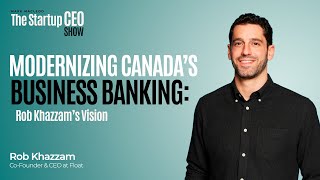
Rob Khazzam, CEO of Float Financial, spent years at Uber before co-founding a fintech for business spending. Float now serves 3,000 customers with 85 to 90 employees and targets Canada's 5 trillion dollar annual B2B payment volume.
Chapters
When I graduated from business school and when many people graduate, I think from business school, you have a perception of how the world works. Private equity for me, broke that. It actually helped me see how the world doesn't work, how investment decisions weren't as simple as just what did the business case and the model say. I got to see the vast difference between a stated strategy and actual execution.
Welcome to the Startup CEO Show. I'm your host, Mark McLeod. In this episode, I sit down with Rob Kazam, co founder and CEO of Float Financial. Rob spent five pivotal years in a number of leadership roles at Uber and that experience completely transformed. He brought that relentless execution to Float and as a result, it's now one of the fastest growing fintech companies in Canada, if not in the world. We unpack all of that experience in this episode. Lots of insights. I hope you enjoy it, hope you subscribe. Rob, welcome to the Startup CEO Show. It's a true pleasure to have you here. How you doing today?
I'm doing well. Thanks for having me. Excited to be on the pod?
Yeah. Much to discuss. I wanted to have you on for some time because you're running one of the preeminent fintech companies in Canada and so there's lots to discuss. But maybe, let's just start. I think there's many folks who maybe followed a similar path to you. Right. Started out and kind of maybe more on the investment side and then made the switch. And so I'd love for, to hear from your standpoint, like how did that background serve you and what parts did you bring with you and what gaps did you need to fill in once you got to the operating side?
Yeah, sure. So, you know, I spent, I was fortunate. I got to spend five years doing investing before I jumped into, you know, operations or startups. And I'm glad I did. You know, I think that the, the background was really helpful. So I did, you know, I did the three levels of the CFA program. I was the only analyst and then the only associate in a shop for, for that five year time period with about, you know, five or six partners that I got to work with on deals. And so, you know, the benefits were you get a lot of reps building models, you get a lot of reps doing work, having your work critiqued, doing it again, and understanding how to work with a bunch of different personalities. And so that was really great experience. I also got to see a lot of different businesses. So, you know, I got to look at a hundred, probably a couple hundred different P and LS and balance Sheets, you know, a couple hundred times a year I got to look at least at a 1 or a 2 pager about a business and provide input on what I thought should we spend time here? And for me, that's the thing I've always enjoyed most, is having an opinion. I struggled in business school thinking about being in financial services or being in a sales role. I really like looking at a business, looking at financials, taking a point of view. And so that gave me a lot of experience, a lot of confidence. Also as I started to formulate opinions, you're nervous, you're not sure sure about them. By the end of my time, that five year run in private equity, I had a lot still to learn about doing deals and businesses. But I really felt that foundation was helpful. And in the operating world, it served me really well.
That's amazing. So much learning, right? I was in public accounting doing auditing for a bunch of years and auditing is deeply, painfully boring. And the thing that got me through it was the opportunity to learn about different businesses. It sounded like you had that on steroids. I have to say I did. LinkedIn stalked you prior to this and really loved your description. I think it was Scotiabank you were in before this, where you're basically the description is like, I mostly did not work. So anyway, I just love that.
Yeah, I look back fondly on the time and I'm grateful that I got the experience, that people there were patient with me and that I had an opportunity to learn about businesses. And I think the last thing I would say that was most helpful about that experience, looking back, is when I graduated from business school and when many people graduate, I think from business school, you have a perception of how the world works. Private equity for me broke that. It actually helped me see how the world doesn't work, how investment decisions, you know, weren't as simple as just what did the business case and the model say? I got to see the vast difference between a stated strategy and actual execution. And that was, I didn't realize it until I got to Uber, but really helped me formulate a view, which is strategy is easy, insights are easy, execution is really hard. And, you know, coming to board meetings every three months, every six months, I began to feel really frustrated with the pace of execution. And that's when, you know, the intellectual interest sort of met the, the, the heart in me, the soul, which is like, I want to do something about this. I don't want to keep coming to meetings talking about this strategy. You know, let's do it. And let's do it quickly. And understanding that that's a competitive advantage in business was not a perspective that I thought of when I entered the world from business school. So that was a great learning as well.
I love it. Yeah, listen, man, all the value is created through execution. You can have the fanciest strategy slides in the world, but that in itself creates exactly $0 of value. So all about execution. I'm curious. Many investment firms have. This may not have been the case at the time, but I see this a lot today, right, where you come in, you get some experience, and then you go out and operate like you can't even get path to partner unless you've been on the other side. Was that a impetus for you to move or it was literally just you were seeing this and you wanted to go and fix this kind of execution challenge?
No, I knew I wanted to leave. I think by the time after being an associate for two years, I realized I sort of had an opportunity to keep going at that point and get on a partner track. And the firm I was at wasn't very operational heavy. So they didn't. The partners there, you know, only came from financial backgrounds. But, you know, I was 28, and to be honest, I did have a flashback to my. My childhood. And I. I have always felt this. This entrepreneurial instinct and also maybe this, like, fear that I won't live up to that. And so, to be honest, I do remember, you know, is 27, 28 years old, thinking, this is great. I'm proud of my achievements here. I'm proud that I'm in this field. You know, it's not something I ever dreamed of getting into, but now I want to be on the other side of the table. I want to be creating something, building something. I don't want to be part of a firm. Not that there's anything wrong with it, you know, but I want to be known as someone who makes their success through building things, building teams, building a business. And that's scary as hell, but it's kind of time to do that. And if I don't do that now, I probably never will. That was really what was going through my head. So it was. It was not just leaving there, but kind of jumping into the abyss and getting in the deep end and daring myself to, you know, make a change before, you know, you get too far into a career that you can't leave. And I think everyone who's been navigated those decisions knows, as you get into your late twenties and your thirties, certainly it's harder and harder to make those switches.
Fair enough. Yeah, I made a switch at 50, but that's, I'm not being interviewed, so it doesn't matter.
At least in my mind it felt, it felt like such a big deal. But you're right, as you get older, you realize, like, you can always do this stuff.
I opened up an Investment bank at 45 and shut it down and became a coach at 50. So, you know, life happens. But anyway, so you wanted, you talked about being thrown in the deep end, which is exactly the analogy that comes to mind when I think of Uber. And, you know, you talk about the importance of execution and from the outside in, and everything I've read or heard about Uber, it sounded like a relentless execution machine and something that was just deeply, deeply competitive, you know, to a fault. And so, yeah, just tell us about your experience there. Again, when I was LinkedIn stalking and I saw you were off in Europe and just like, man, that must have been really lonely. But anyway, that's an aside, but just, yeah. What did you, what did you take from Uber?
Yeah, so, you know, the background. I, I, I quit my job in, in April of 2014 or March of 2014, I started looking for a job in New York. I met Uber. I met a, a bunch of different startups. And long story short, um, Uber wouldn't hire me in New York, but I got introduced to this international launch team and they had basically, you know, said, look, we're not going to hire you in the U.S. but, you know, we have this global team. There's 25 people on it. They get sent all over the world. You're alone the entire time. You work seven days a week. Like, there's no they really solidity. You're, you're the tip of the sphere and the spear. And, you know, I thought it was like, I thought it was sort of cheesy. Like the job description was like, you know, they were making something of it. But then as I went further and further into the interview, it was like, no, this is serious. Like, they're actually like, hey, you're going to get sent to Egypt, and then you can get sent to Pakistan, and then you get sent to Prague, and then you get sent to wherever. And like, we're, we're actually serious. So, like, are you ready to do that? And, you know, you go through the interview process and they're really thoughtful about interviewing, which I loved. And so, long story short, you know, I joined in May 2014. I got on a plane to Frankfurt. They told me, you know, days before I joined where I was going, I had no idea what I was going to be doing. I knew the launch job. I knew that there was a handful of people I got connected to that were like, I could reach out to. But where I was going was really last minute. Got there, spent three weeks doing this Frankfurt launch, which was pretty funny now looking back. And then that was it. And then it was truly my boss and three other launchers that had just started. The three of us together. He just said, this is a map of like Emea. That was your Middle East, Africa, that was the region we were in. And it was like, this is where you're going to be going. This is what you're going to be doing for the next six months. And it involved, you know, where you were going to be living, not to mention working and a really daunting job. So it was, yeah, it was pretty mind blowing to think back to it. It was scary.
Is telling an employee you're going to work seven days a week, is that even legal? Is that a legal employer practice? I'm not sure that it is.
Yeah. I mean, I don't think it was so much working seven days a week, it was more. And I did appreciate it and I now look back on that and it taught me something which is like, this is all in. Like, this is not, you know, you're not in a job in San Francisco. Like, you're going to be in, you know, the people that you're going to be working with. And I got introduced to some of them. Like, some of them are on their, you know, 15th, 16th month touring the world, you know. And yeah, I remember thinking, maybe this is too much. And then I'm glad I didn't. You know, I was lucky. I had mentors that just said, just go for it. If it doesn't work, you'll figure something else out. You know, what's the worst that could happen? And yeah, those first few months were a really great experience and Uber did a great job of removing the ego that we all enter startups with. And I think that coming there, I'd been done the cfa, I was getting up to principal level in private equity. I thought it was a hotshot. And, you know, I got there and I'll never forget, like sitting in that office during the Frankfurt launch and it was like, okay, well should I build a model to market size? And I was like, well, no, right now we're, you know, we got to submit these tasks to the engineers to draw this geofence, like, learn how to do this. And then, you know, we need a thousand chargers and a thousand iPhones and a thousand cables. Go to the mall and go get them. And I was like, well, you know, what do you mean? Do you want me to source a supplier? And I was like, no. Like, we need this stuff in. In two fucking days. Get it. And then come back and let us know when it's done, and we'll cross it off the list. And then, you know, I went and did that screen around Frankfurt for, you know, a day and a half, and then it was like, okay, we need to print a thousand cards to hand out to drivers. And I was like, you know, should I find a company to do this? Surely someone else can. And it's like, no, do it and get. And don't come back to the office until it's done. And it's done today. Like, come back for dinner in the office with these in hand. Okay? And then. And then the next time it's, you know, okay, we need to find drivers. And it's like, okay, well, how do you find drivers? Should we get an agency? Yada, yada. It's like, no, go to walk around the streets to where taxi drivers hang out and don't come back here until you got 20 drivers. And we all did that. You know, the launchers did it. And then we ran the onboarding. We'd sit in a conference room, and it's like, me personally talking to German drivers and scanning their documents and talking to them and teaching them how to use the app. And that was the first couple of weeks, and then that was it. That was all I got. We got that and a launch playbook, a slack group of launchers who we could reach out to. The advice was, there'll be someone doing what you're doing or that has done it in the last month OR 2 Online, 24 hours a day, 7 days a week in all these different countries and time zones. So use this group to your advantage. And that was what I remember when I left to fly to Eastern Europe was, you know, I'm scared shitless, but I know I've got some people I can count on that are in the midst of launches a couple of weeks ahead of me, and they'll help. And that was. That was, for a time, for a brief time period, comforting.
Did you miss your ivory tower of sitting in boardrooms and, like, I don't know, pondering spreadsheets versus going to a mall to buy a thousand iPhones?
I liked it. You know, there was a swagger to Uber that, you know, while all this was happening, there was a swagger, which was. Everyone was like, well, but we're going to win. So even then, within the first week or two, I felt swagger. Like, you know, I'm on a mission. You know, I'm making this thing happen. You know, when I'm walking to the, the mall in Frankfurt, I'm not like walking slowly, like I'm speeding, I'm racing. And there's a momentum throughout the company that done is better than perfect to get shit done, get moving. You know, it wasn't even, it didn't even need to be said like, oh, we're going to work late tonight. The whole company was in 24 7. It wasn't. And I don't mean in the office, I mean, like, they were in it. Like, you know, there was a sense that time was being measured in hours and, and that was infectious. And I think that that, that was something that infused a lot of energy in me, even though I was nervous. And so those first few weeks, I got sent to Prague, and I got sent to Prague basically to launch. And it was like, launch Prague and can you do it in eight weeks? And I was like, no, I want to do it in 10. And they're like, well, this other launcher did it in six. So you're sort of negotiating for how long you're going to get and then you go there and then you have a backlog of literally a hundred things to do. And I very quickly got overwhelmed and made all the mistakes you make. But that was the beginning of that journey.
Do you think it changed you permanently, how you operate?
Definitely. Yeah, definitely. I mean, I think that time period, you know, that, that first launch, that feeling of there's a clock ticking somewhere and I have all this stuff to do and if I'm really fierce, I can get most of them done well enough to launch. And that changed me for sure. I mean, I think that 18 month period was one of extreme loneliness. I was alone almost the entire time and if I was with people, it was for a day or two and then I was alone again. And it hardened me. A lot of things go wrong and you cry and you weep and you feel anxious and then you call someone and you know, at the company and they give you a tip and talk you off the ledge and then you keep going. And I think doing that over and over and over again over 18 months hardened me in some good ways. In some ways I've tried to unlearn, but it taught me you can Achieve a lot. You can achieve a lot by saying, no, I'll figure it out. I remember we had us saying we'd walk around these cities as launchers. And, you know, you'd be. You're recruiting people. You know, you got to hire a marketing manager. You got to get a meeting at the Ministry of Transport. You know, you got to get an office. You got to, you know, believe it or not, it took me three weeks to get an office lease in Prague because the bureaucracy in the country, we couldn't. I couldn't get the legal entities, the signing authority. This is such a small thing. That was my biggest headache for a period of three weeks. And you think you're never going to actually overcome this stuff, and you just keep finding ways to making it happen. And I remember people saying, again, it was a saying famous on the launch team, which is everywhere in the world. People were telling us, it'll never work here. Trust me, son, in Prague, you don't want to screw around with taxis. We know what Uber's doing. Not trust us, not here. There was this balance of, like, naivety and maybe confidence, arrogance, not knowing better, some combination of all of them where you just said, like, yeah, I will, and this city is going to launch and wait till you see what's going to happen. And that was. That was a great lesson to see that, like, you can will your way to great outcomes. And Uber was time and time again just stories of willing our ways to outcomes that felt impossible, at least on the ground and the markets I was in, it. It really felt impossible. Quite, quite often.
Do you ever worry you were going to end up in a foreign jail?
There was some interesting moments. Yeah. I mean, Hungary is an interesting place. It was a really interesting part of the world. Hungary and Ukraine, Belarus, very, very different approaches to these topics. American companies unpopular enough in some parts of that world. And then you add on the taxation regime, the fact that Uber's taking taxi drivers jobs. Yeah, we encountered a lot of resistance, but again, hardened me, which is, okay, Uber has these great things. They have a great app. We have this great stuff. We have money, we have a lot of things, but the service is still illegal in a handful of countries. We still have people chasing us. We still have government actors and people affiliated with the taxi industry that are tied to unionized workforces trying to get in our way. And again, it was. It was fun. I. I felt like I was at a smile novel at times, but it was. It was a blast. And again, the thing I took away from Uber was like, Swagger. And that's that. That belief, like, we can make something happen. You know, we had people showing up at our onboardings and they would intimidate us physically and the drivers that came to sign up for Uber. And so what did we do? You know, we made up a fake ride sharing service. You know, I made up fake Facebook communities to say we were building a ride sharing service, but not under the name Uber. You know, we hired security. I had 24, 7 security. A lot of launchers did that we would bring to protect the offices. We'd. We'd put false information out there about where our office location was. And there was. There was a bit of a cat and mouse game, which, you know, made the journey interesting and definitely fun.
That's wild. Crazy. I gotta say, the very first time I went to continental Europe, I went to Amsterdam and it was all lovely and friendly. And then I went to Budapest and I got off from the airport and like, the. The police officers are there with, like, machine guns. You're in a different.
My, my, my, my. One of the best parts about being a launcher was our first job was to go get ripped off by taxi companies. So we'd fly to a city where Uber didn't exist, and someone like me would go there and spend days doing this green light trip. And the first thing we do is look like a tourist, which is pretty easy. And then they get a ride to the city center and do it with a bunch of different companies to and from the airport and figure out what the hell's going on. And you start to find the devices and the gear shifter and these little hacks. And we did a series with an undercover journalist in Prague at the time of the launch to expose taxis. So there was all sorts of crazy stuff going on, but also a lot of people that wanted it there. And so it was. I'm a student of history. I studied world politics and geopolitics a lot growing up and still do. And so being there and seeing what I'd studied in Post World War II, the Cold War, and then building a business there was just. Yeah, it was really fascinating.
Amazing. I feel like we could spend the entire podcast unpacking that. But that's not why we're here. I want to talk about float. Maybe first of all, for folks who are listening, just tell Floats what what float is.
So Float builds software and products that simplify the entire process of spending, whether that be on corporate cards, whether that be through wire transfers, reimbursing your team for expenses. We offer a platform that makes that whole experience really seamless and automated for small businesses. We've been around for a couple of years now. We have 3,000 customers across Canada and about 85 people, 90 people across Canada helping us build, build against this mission.
Amazing. As I understand you were brought in pretty early. There were some initial technical founders, but then you were brought in. How did, how did that all happen?
Yeah, so after, after my time at Uber, I was looking for what was next and you know, doing what everyone does, meeting people and going for coffees and trying to find their next job. And whether it was joining something or partnering, I didn't know. But I was fortunate. I got a call from Jamie Rosenblatt from Golden Ventures and he said, hey, we've got a pre seed investment into this company, it's called Journal. There's two founders there and they're looking for a third. They've been building for a while now. We think they're onto something, but they need a third. They need someone to lead the company. But we think there's something really, really great there. Why don't you meet them? And so he introduced me to them and over really a two or three month time span, I got to know them and they showed me what they were working on and I told them about myself and we talked about business finance in Canada and what it looked like and we bonded over shared experiences that we both, that we all had as employees. You know, my time in, in Eastern Europe with expense reports. I had this, you know, €150,000 expense report in February of 2015 and it led me down a multi month process of getting reimbursed and going through this really painful process. And they shared the, the same experiences they had at Uber and Shopify.
Oh, they worked at Uber as well.
They were the top. Well when I met them, you know, they were the top Waterloo grads. You know, they're the, the top of the class grads that chose to not get a job in New York at a hedge fund or Shopify. They, they chose to build something but in their internships, their co ops, they did each a stint at Uber and Shopify. And, and so that was the background that I had when I met them. Griffin was still in school. Rusan, my other co founder, had graduated. But we bonded over the shared passion for that problem. And they had a product, they had a product. When they, I'll never forget, they showed it to me, they said, so you had this problem with expense reports, wouldn't it be great? And then they sort of turned the Laptop around and they showed me, I think it was two things. It was an employee requesting spending from their manager on Slack. The manager is saying thumbs up and instantly issuing you a single use virtual card. And then they actually created a virtual card for me and showed it to me and they said, you can buy something on Amazon. And that was for me when I saw what the product already, what they had built could do. The issuing technology and what it enabled and then the bond that we had developed it, that's where it all sort of started. And I decided to, you know, we got together more often and then decided to join full time after about, you know, I think it was eight or nine weeks of getting to know each other.
So they were and did market when you, you joined, you, you led the, the go to market launch initially effectively.
Yeah, you know, they, to their credit like they had done a lot. They had been working for one. One of the stories I tell people always is, you know, why did I what like what, what led to us working together. And I mentioned the product, I mentioned the pro, the passion for the problem space. They were and are relentless. So when I met them, they said like, so if you're interested, you know, it'd be great. Let us know what you think. Like, glad you did this standup if you want to help out. Like we meet every day. And they added me to this standup and you know, I think back to my Uber days. It was, it was like a, you know, an 8:30am stand up seven days a week. And it'd been going for like, you know, over a year. And I was like, okay, that's the kind of energy that I want to be around. Those are the kinds of people that, that's the level of commitment that's required to build something. So that's something that I remember fondly. But they had already a couple of beta customers. So what they had done, they were really smart. They'd gone to Kirk Simpson from Wave. They had gone to a handful of other small business owners or startup CEOs or finance teams and said, you know, we're trying to research this problem. They researched a bunch of them. And so they, they were showing them either beta versions of the product or product designed. And so when I joined, I didn't really know where it would go, but I could see that they had like a, a captive, a small captive number of companies that were giving them some feedback. So when I joined that, that allowed us to essentially allowed me to evaluate over, you know, four to six, eight weeks. Is this good enough to take to market. Should we, you know, do a broader push? Should we hire our first, you know, staff now and get, do, do a broader sales buildup? And that's what we started to do in the, in the, the spring of 2021. But they were, they were really looking for someone to come in to lead the company and that was something they were upfront about, which was we want someone to come in to lead the company, to deal with the board and investors and build up the company so that we can focus on building the best product.
I smartly dodged the toughest job around, which is why I only coach CEOs. Back in my operating days, I was offered a CEO role twice. And it's funny, when I first entered the startup world, I thought I wanted to be a CEO and that went out of my way to try and learn all these things beyond finance. And I would run HR support does dev. I ran engineering for one week while my CEO was on holiday and I was so grateful when he came back because that was just a disaster. But I quickly realized I didn't want to be the CEO. And when I was offered that job both times, I turned it down flat. So good on them. They were very insightful to pass you the hot potato there.
Yeah, you know, I, I think it actually, it's a rare thing for I think teams to not get protective and defensive overalls and responsibilities. And one of the things that I felt really blessed about is that my co founders, and not just my co founders, but really all of the leaders that I work with at Float are, they are so passionate about winning and succeeding that it's always about like, what the company needs. And I don't just say that. I mean they, I remember in our, you know, second meeting, they were like, I was like, it was a bit awkward, you know, like, well, does one of you want to be the CEO? Did like the board or your investors make you do this? And they actually said no. The reason that this, you know, happened, we think that the trajectory of the company would be better off if we brought someone in like yourself. We don't think we're best to do that and we care a lot about who this person is. So they interviewed me. They cared, but they were really serious, like, great, now take care of that and we'll take care of this and let's get back to work. And I really think that's a rare thing to find in teams and especially young people. And I'm grateful that they did that. It actually made my entrance into the Business a lot easier. Sorry. And I think that was really important to our success.
Amazing. So it sounds like these guys have an intensity and relentlessness that you were used to from Uber. And so I'm wondering to what extent do you, what practices from Uber or what, I don't know, values, ways of operating have you imported from Uber to Float?
Yeah, yeah, you know, a lot. And Griffin and Ruslan and I did talk about those early. Like, what are those? Couple of things. And we charted, you know, we share g docs of, you know, thoughts on values and principles of working together. And the things that I took and that I think are definitely embodied in float, whether they're directly attributable to Uber or we've come up with them ourselves or people we've hired and my own co founders, our own co founders have come up with. I think one is a real genuine bias for action and urgency. I mean, everyone says that in startups, but there's levels of what that means and levels of intensity. And I think that I point to that example, the spirit of that seven day a week daily standup. Not to say that that's a practice that everyone should use, but the idea that you're daily accountable, you do a daily standup, like, here's what I'm going to get done today. And then the next day you're like, I got it done. I had a pretty good week. And we did that with our first 20 employees. Every week everyone would communicate at 9am what were the kills or dies for that week? For them personally, what were they going to kill? Or it would kill them. A bit of a metaphor, but like, what am I going to finish this week? Not, you know, I'm going to work on something, but I'm going to finish that tone. Yeah, you know, I'm going to finish this task. I think that attitude of like, I'm going to get something done every day is really, really important. Customer obsession. I saw that from the very beginning. Ruslan and Griffin were relentlessly customer obsessed. I've been deeply influenced by reading about Amazon and their shareholder letters. And I think that customer obsession is really, really important and it's hard to maintain as the company grows. And that was something that I saw them living and how they were, you know, they were already in slack groups with customers and talking to them daily and that those were practices we've continued, you know, learning and growing. I think this idea that in a startup, it doesn't matter how good you are if the company's succeeding, you gotta be 50 to 60 to 70% better every year. And so, on the one hand, you want to hire great people, and I'll talk about talent density in a minute. But it's not enough to just be great in 2021 with whatever you're running or whatever you're doing. The attitude has to be like, I'm going to get challenged, I'm going to have an egg on my face, and I'm going to need to get better because the business is going to grow and my role is going to evolve and the challenges are going to change. And so not just a capacity to learn and grow, but evidence that you've done it, evidence that you like doing hard things, evidence that you can take direct feedback. If I think about the humility my co founder showed, I think the spirit of float is one where everyone, no matter who you are, can acknowledge, you know, I got to be better in this area. And I think that that's a really important element of development trajectory to get to keep hiring people and having them keep scale. You know, you need to see great competence, great pedigree, great great experience, but humility and a willingness to be vulnerable and run towards learnings. And I think the last one is just the idea of talent density. And I think we talked, you know, we talked a lot about that. When I joined them, I said, they said, what do you think you'll be spending your time on? And I said, well, assuming the product works and the first, you know, 20 or 30 customers we bring on use it and we raise our seed, which we were, you know, we figured we would do over the next two or three months, like, I'm going to be hiring. Like, that's my. I'm going to be spending 70% of my hiring time hiring in some cases, and so will you probably over the next year or two. And they thought that was crazy. And I said, oh, if you. If we're doing this together, you. You're going to learn how to recruit properly, and we're going to learn how to interview properly, and we are going to be very intentional about who we bring into the company and why we're bringing them into the company and for what reason and on what understanding what values we're tied to. And that one, I think, has been really important. Not just the idea of we want to hire great people, we want talent density, but the commitment to a philosophy about how to do that. And Griffin and Ruslan, my co founders, early on were very committed to that. Knew, like, we don't know how to do this necessarily, but this is really important, and that's been a really big hallmark of our culture and how we've built the company so far.
This episode is brought to you by Fellow. Fellow is the only AI meeting management solution that covers every part of your organization's meeting workflow. Go to fellow app CEO to get 300 free minutes of AI recordings and start having better meetings. I'm sure anyone listening resonates with that. Anyone who's gotten into scaling realizes how critical hiring is and also how challenging it is. So I'm curious, other than putting the reps in and screwing up, how did you become excellent at hiring? What did you do outside of that to accelerate that?
Yeah, I mean, at first, very little, because that. That first few months, we didn't have much hiring actually to do. But then once the product started moving and we could see there was product market fit and we could see the round was coming, we started by just trying to do a lot of outreach. Like, what I saw pretty clearly was there was no brand, there was no one knew about the company. I had a bit of a network in Canada, but it was only enough at that stage. And so. And we were desperate to hire engineers, so I showed them the sort of, like, operational excellence of recruiting that I had learned, which was pound the pavement. You know, you want to hire one engineer, well, you better book 10 coffees and you better do 100 outreaches. And we got really good at measuring the inputs to recruiting. So we were very militant about, you know, organizing outbound, sourcing email campaigns from all three of us. We were diligent about making sure that each. Each week we had clear next steps with candidates. I'm going to bring this person in for coffee and I'm going to do it in two days. I'm not going to wait another week. We nudged that stuff all along, but it wasn't enough. And we did have a lot of challenges hiring in those early days. We really struggled with engineering. And then we started to step it up and do a lot more employer branding. And I think that that was a decision from my time at Uber and also seeing what was going on in startups in 2021 in the US was a great opportunity to build some buzz around what we were doing. And so it was a bit counterintuitive as a startup to be doing it, but we spent, I think I spent $40,000, $30,000 in the summer of 2021. We rebranded the company and the name of the company and the website, and we also filmed recruiting videos, we filmed interviews with our first 10 employees, we interviewed them about working at Float. We interviewed, recorded snippets of us talking about our product and our mission and our cultural values. And we started really working hard to get into different talent markets. So when we would post a role, you know, everyone at the company would post it. We tagged people we knew. And so getting from five people to 10 to 25, that was a very, very intensive process of, you know, building an employer brand foundation, trying to be smart about creating a little bit of virality and branding around the people we had hired. And then just a lot of time for me, building relationships. You know, I took most of the senior leaders at Float. You know, whether they met me and interviewed or applied for a job or I outbounded to them. You know, I went on walks, you know, and met some of the family members. A lot of the senior leaders that joined Float. It took me three, six, nine months in some cases to recruit those people. And I still recruit, you know, a year or two ahead. And I tried to be pretty genuine about that. So as I recruited for product or engineering or different functions, it was, you know, I want to find the best, but I'm going to just reach out to the best and say transparently, this is what I'm doing. I'm trying to find someone. I'm really curious if you could help me. If you have any suggestions, I'd love to compare notes. And, you know, a third of the time, half the time that led to, well, I'm interested in learning more or I might know someone that knows more. And if you do that a couple thousand times, then, then good things happen. And I think that was really what, what that first two years for me was really all about. It was mostly recruiting.
I love it. So the themes that are standing out for me so far, like, starts off with learning, right? Private equity. I'm looking at 100, 200p and LS a year. I'm learning uber learning on steroids. And then kind of massive execution. And you brought the massive execution to Float. And from the outside looking in, Float seems like a rocket ship. You've got a Tier 1 Canadian investor in the form of Golden, Tier 1 global investor in the form of Tiger Global. Is it that, like, what do you attribute the kind of massive growth to? Is it just that relentless execution or were there other kind of aspects that are worth touching on?
Well, I'll start by maybe bursting the bubble of the. That everything is going right. I mean, I think.
I don't expect that. I don't expect that Every company's got issues, right?
Yeah, you know, our float is still an infant. You know, I think it's important, you know, we're three and a half years in and so we're proud of where we've come, but we've got a long way to go and staying humble and disciplined about, you know, where we are and avoiding complacency is important. But I think a lot of things, you know, we, we've been lucky. You need a lot of luck in startups. If I, you know, how many things aligned for us, you know, we, we got financed in 2021, which is a great time to do it. You know, I met my co founders because I had a board relationship that had a product that they had already built and an MVP that was really well timed. And I think what we should take credit for, or at least we celebrate that we've been able to do, but is important we have to do every day, is to recruit outstanding world class people who are really passionate about solving the problems that we solve. I didn't mention it in the values, but you have to be passionate about what you do to succeed in startups because anyone else would just give up. And so what's embedded in all of this I've described, you know, all this work, all this work recruiting people that actually find this stuff fun and interesting and want to solve customers problems and want to compete to give like have the highest quality bar for customers and provide customer service even at, you know, 1am on a Friday night. I think it's been the commitment to recruiting great people who are genuinely passionate and committed to that mission and being fortunate that we have customers that have been patient with us and have shown loyalty to us because we make mistakes along the way. So I think those are the things that help you create success out of nothing and continuing to double down on that as the company changes because change is always a constant. And I think that you do need to have that long term commitment because there are a lot of moments that are frankly really painful. A lot of great ones, but a lot of hard ones. And you need to genuinely want to create a better landscape for businesses in Canada. Better B2B finance, modern rails. If you're not passionate about that, you're not going to go far. Now tell me a little bit about.
The decision to focus on Canada. Because the NOC on the Canadian market often is that it doesn't do something unless its peers in the US have done it. And you know, so I guess what, what made you decide to focus on Canada or said another way, what made you decide not to focus on the.
U.S. yeah, I mean we, we have a genuine, real, We feel a real, genuine mission to serving better, to serve Canadian businesses better. I mean, I think I was frustrated when I left Uber as an employee thinking about where am I going to work in Canada, that I can make an impact that I see here, not in the US and as a citizen, as a resident, as a voter, I think we all share a huge amount of pride and frustration, frankly, that the Canadian finance ecosystem is not working for all businesses. It's not keeping up with the US And I think there's a real sense of pride, frankly, that we want to be the ones to do that in Canada for Canadian companies. And we more importantly really believe that in order to do that, you have to build Canada first. Like you have to. Actually, it's not just a software application layer. You do need to build really strong banking relationships here. You do need compliance programs, you do need to be close to customers. And so we saw very, very quickly that the market needed it. And we really felt that as we've seen and studied in other markets, and I studied a lot of case studies in other business industries where you have American companies come to Canada and compete, where that hasn't resulted in the kinds of industry change and innovation that we all read about and want to see here. And so there's a real genuine pride in that. And we do believe the market is substantial. There's $5 trillion of B2B payment volume every year in Canada. And the long term trends around payment modernization and business banking modernization, they're not changing. No matter what happens in the next year or two in the industry, the move towards modern business banking, modern business payments is going to happen. And we want to be the ones to marshal that into the industry in Canada and to help unlock what feels like it's missing in Canada, which is a level of innovation that transcends just software. It actually applies to how money moves and we're fired up about that.
Amazing. I have to imagine that a decent chunk of that 5 trillion is floating through Schedule 1 banks. And so at what point do you like, I don't know, is it David versus Goliath and you take these guys on.
Yeah, I mean, there's no question that we want to do a lot of things that the banks or we want to offer a lot of things that the banks offer today in a manner that we think is really outdated. So there's no question we are positioned as a company that thinks there's a simpler way and looks at the way that banking today operates in Canada, the way that card payments operate in Canada today, the way that wholesale aspects of the, the, the finance department are hugely outdated and it's a source of real motivation. You know, it doesn't have to be this difficult. And I see the narratives in Canada now about modern banking and real Time Rails and everyone's sitting around asking, waiting for someone else to do something. It's like the government's going to do it and the banks will do it and these associations will do it. To hell with it. If we can help them do it, great. But we're not going to wait for that, we're just going to do it ourselves and we'll figure out how to make it happen. And if we have to partner, we'll partner. And if we have to build it ourselves, we'll build it ourselves. And if we have to but frankly hire GPTs and humans to auto categorize all of the manual transactions of our customers and use technology to do that. And we have to become a licensed, regulatorily compliant entity in Canada to do this stuff. We'll do it, we'll do all of it. To work backwards from that experience we really want to enable here, which is the ability to pay any vendor in the world globally instantly. You know, the ability to access capital instantly, not in a four, six, eight week engagement with a bank but through an accounting connection, through a bank account connection, through software that can read your financial statements and very, very quickly determine what level of credit you can access and deploy to invest more in your business. And great automations that eliminate all of the hassles of managing spending and help finance teams across the country spend more of their time informing strategic decisions, strategic investments. How do we be more productive as a company? How do we grow our revenue faster as a company as opposed to hey, the sales team went to Nashville for a week and we got a backlog of transactions to reconcile. So those are the things that we're fired up to do and there are simpler ways to make these things happen. Canada in my view has to dream bigger and we have to stop settling for the service quality that we've become accustomed to in this country.
Amen. I'm all over that. Even my tiny little business I have, my chief of staff is in Colombia and I can't pay them directly, right? I can't pay them through my bank. I have to do this kludgy process and send documents to his bank so he doesn't feel they don't feel like there's some money laundering BS going on. Yeah, it's such a hassle. You know when I was hearing you talk about your 18 month stint in Europe and just how intense that was and how basically none of your, the launchers, you know, you're alone, you never had time off. What came up for me were like soldiers in theater and soldiers in the theater do so for short periods of time and they come back and they have PTSD and they need to recover. And then you kind of go right from Uber right into this. And so I'm wondering, do you have ptsd? Like what's the state of your mind? Do you have the capacity to be happy or are you just always intense?
Yeah, you know, it's, it's evolved. Like I was out, you know, I was with Uber for five years and I had, you know, there was three jobs. There was the launch job, then there was the GM for Central and Eastern Europe job, and then there was the GM for Canada. And when I became the GM for Central and Eastern Europe, I had to unlearn some of that so that, you know, after that 18 months, I was still out there for two years and now I was managing GMs and bigger businesses and working with more experienced stakeholders. And I did have to learn how to taper some of that back. That not everything is about execution. Strategic thinking is important. Building trust is important. Taking the time to strengthen interpersonal relationships above and beyond the okrs or the goals on the page are important. And I think I'm still learning that. And my time as a GM helped me soften and round that skill and also learn how to be mentally healthier. I Learned to. Working 7 days a week is not admirable and you may need to do it a bit, but you're probably not going to show up very effectively as a leader if you're thinking and looking and acting in an adrenaline fueled way all the time. And so it has been a gradual process of learning how to harness the good parts of that experience while also being more strategic over time. And I think Uber also, that was a great experience. Was my last years at Uber was that it was everybody, you know, the message in the company was everybody chill the hell out. Like let's, let's take a step back here and actually get off the hamster wheel for a minute and really be strategic. What are we trying to achieve? How can we best achieve that, not just next month, but over the next year? And I'm grateful that I've had that experience and worked with people that have helped me see that. So the leaders I work with now, they are all in, but they also, they push me. They give me great feedback about how I can be a better leader. And so those have been great learnings. And I think on a personal level, you also realize that the. The sacrifices and commitments you make in a business are real. And so there's nothing wrong with making them. But you've got to be happy personally and whatever that means. If it's, you know, dating or going to the gym or, you know, making sure that you take time off, you need to fulfill those other parts of your life or else you won't show up and be the best leader you can be. You know, maybe you'll do good documents, maybe you'll send okay emails, but you're not going to inspire people and you're not going to build the kinds of momentum as a team, optimistic, positive, you know, positive culture that you need to cultivate. If all you're talking about is, you know, we got to hit this goal and done is better than perfect. And, you know, everything has got to be intense 24 hours a day.
Right. So do you feel like you have sufficient boundaries? Like, is your life sustainable?
I think my life is sustainable. I mean, I love what I do. My life's sustainable because I love what I do. I'm really blessed. I would rather be working on and doing what I'm doing than anything else in the world. There's nothing I would rather be doing than what I'm doing. So is it a lot? Sometimes, sure. And is it a lot for everyone at the company? Often, sure. But it's worth it. We love doing it. I love doing it because we have this fortunate opportunity to build something everlasting that hopefully is around for a lot longer than I am, and that's special. I mean, I could spend the rest of my years chasing an opportunity like that. So I actually feel really grateful that I've had the opportunity to have these experiences and to be working with the people I work with at Float, to be serving the customers that we serve is incredibly inspiring and rewarding. So I don't feel bad. I don't like people feeling bad for me. I get to do something I love every day, and things that are worthwhile are hard. And so I'm also motivated by. With that opportunity comes pressure and the fear of failure. And the best antidote to the fear of failure is hustle. It's work. It's preparation.
I love it. Now, that intensity. I only coach CEOs a CEO who's especially a founder has more context but also more motivation than anyone else. Right. You know, it's their company, their identity's tied up to it. They are a meaningful, you know, participant in the cap table. I'm wondering how you translate that intensity to the rest of your, your team who don't necessarily have that same motivation and where if you dial it up too much, they just like check out and go somewhere else.
It starts with who you hire. And I mean, we hire very intentionally, which is we only hire people that really give a shit. I mean, we don't hire people who are just passively interested in what we're doing. And if we do, they generally won't have success or may not last very long. So I demand and expect commitment, accountability, ownership and passion in the people that I recruit. And it makes it a lot easier because I don't actually don't think it's fair to demand that from someone if they don't want to be like that. They aren't that committed. It would be absurd to expect it of them. So for me, it starts with recruiting and understanding the people I'm hiring. Why do they want to do this? Are they genuinely interested in it? Or do they see it as a way to get rich quick or, you know, a cool job title? And I think that really helps. Who you start with is a huge, probably the highest leverage decision I make as a leader. And then in terms of working with them, what I try to instill is a sense of pace, a sense of ownership and ridiculously high standards, really high standards that no matter what progress we're making, we can always be better, we can always grow more, we can always do a little bit better. And to try to be the person that can call attention to when we are meeting that and recognizing it and celebrating it, and then also being willing to hold people accountable when we're not even. And sometimes that may mean pace, you know, hey, we're not moving fast enough, folks. Like, I know we're, we're on track for the, for the quarter, but this is, this stuff's moving at a stale's pace. What is going on? Being willing to challenge people and amp it up, as Frank Slootman would speak, I would say I think has been important. But I've definitely learned a lot of really important lessons about not overdoing that. And I probably learned that lesson, relearned that lesson once or twice or three times a year where I'll overdo it. And then it's an opportunity for me to take a step back and say, how was I too intense in this situation? And how did it contribute, for example, to an erosion, chipping away of psychological safety? If Rob is too intense for a month or two in accountability, I might find in the subsequent months that people are afraid to fail, that we aren't making those big bold bets, people aren't being vulnerable. And then I look around and go, well, how did I contribute to that? How can I be better and be more nuanced in how I'm an intense leader? And that's something I don't think I'll ever be done working on, to be honest.
No endless layers to that onion, that's for sure. Maybe. Last question as we start to wrap up, Rob. Fintech is generally go big or go home and it just takes real scale for these things to work. And when I think about your category, I think about Brex and kind of burnt its way to greatness and that consumed a lot of capital. Did a pivot kind of pretty far into that journey. Just curious. What, I don't know, what have you learned? Have you studied Brexit all? Do you draw any cautionary tales from them? And, and also just, you know, you're, you're, you've committed to this path now of capital. How do you think generally about kind of consumption of capital as you try and achieve kind of big scale here?
Yeah, I mean, this is one area where I'm grateful if we come full circle to the beginning of the interview, the financial experience and that intellectual curiosity and truth seeking and financial background was really helpful and even in my time at Uber. And I think that if I apply what I've learned in startups against the backdrop of the financial experience, it's that there are great opportunities in technology, huge opportunities. And you have to understand, you know, how big your opportunity is, you know, what sort of, how important is scale, you know, depending on what business you're in, what are the unit economics of your business? And I think you can make really big bets. You know, I think that's one of the best things about the startup and entrepreneurial industry is you can raise tens of millions of dollars and make these big important multi year investments and try things that may not work out, but where the upside is asymmetrical. You know, where can I invest a million dollars but create a $25 million revenue business? I think that that's a great aspect of the startup industry. There's always the downside, which is there's been a lot of exuberance. I mean, Float did a big series A people would point to that if I pick a self like one of our own examples. But you know, Brex did a huge round. Uber certainly had raised a huge amount of money. We've seen that with that a lot of like waste, a lot of excess, a lot of mistaking subsidies for, you know, product, product and traction. And so we've tried to find the balance. I don't know that we ever do it perfectly. I think we're probably pursuing growth too aggressively and then pursuing efficiency too aggressively and trying to find somewhere in between. But the lessons from Uber were significant, which are the second half of my time there. We had to unwind a lot of the things we did that were not very smart. We did waste a lot of money and we did miss opportunities to say, okay, we might, we're doing this now, but this is not sustainable. We need to figure out another way to do this. There's a more sustainable way to build something and I think that there are plenty of examples of that over the last couple of years. If you look at building really bloated teams, running campaigns that are massively promoting and discounting products and the erosion of your, your value proposition to customers over hiring, we've made all of those mistakes as well. But I think that those are the things that I look at and say, how can we be really aggressive about the investments we want to make, those asymmetrical bets where it's actually very, very attractive to make a multimillion dollar investment. And then where are the areas where we're just not ready yet? You know, hey, we're not ready to hire 70 people in our sales team. We're, we're still figuring out how to operate it at say 25. We want to go bigger, we want to go faster. Maybe that means we'll experiment, but let's not build an army of people to run a function that we haven't figured out how to optimize yet. And I think that that's the stuff that I try to keep in the back of my mind and straddle that line of being long term, being aggressive and ambitious, but taking really that long term shareholder mindset and maybe to close, I think being realistic and true to yourself about equity value per share, not valuation, not dollars raised equity value per share that you're creating for all of your shareholders. And I think the more that we all stay anchored to that and not the pref price, not the valuation of the overall company, I think if you think through that lens, it changes how you make financial decisions as a founder. And it should.
Amazing. I love that. Wise words. I gotta say, I've always kind of said no one wins unless the common shareholders win. Yes, I've got my prep as a institutional investor, but if I'm exercising it, it wasn't a win, right? By definition, if that investment is a win, I've converted to common. So I love that you're thinking about.
All the shares long term value creation.
Yeah, I've learned a ton on this discussion. It could have been a lot longer. We probably could have just done an hour on Uber and then an hour on what it means to execute relentlessly inside a fintech company. Probably could have done an hour on Canada and whether it's competitive or not. Anyway, I really enjoyed it. Thank you so much for making the time. Hey, thanks for listening to the Startup CEO show. If you'd like to connect with me, be sure to visit my website website at Mark McLeod me or follow me on LinkedIn at the Mark McLeod or Twitter arkmcleodore. And if you want to tune in again next week, be sure to subscribe on YouTube, Spotify, Apple, or wherever you get your podcasts. We'll see you next time.
More from Mark





The Burnout Breaking Point - How Strategic Breaks Actually Increase Productivity


Emotional Debt - How Avoiding Hard Conversations Compounds Into Company Killing Resentment


The Death of the Specialist - Why AI Is Creating a New Professional Class Called Scalers