Narrative Shift: How Stephany Lapierre Raised Millions on her CEO Journey
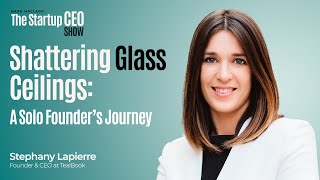
Stephany Lapierre built Tealbook from a consulting practice into a software company that grew 350% in one year. During COVID, the platform helped Brooks Brothers source PPE and connected the UK government with 60,000 manufacturers. She shares how she shifted from services to product and why she hired a president to scale operations.
Questions this video answers
Matchbook, started around 2006.
Around 2015.
Grew about 350%; MRR increased from 90 to 160 (units implied as thousands but transcript gives numbers raw).
A database of 60,000 PPE manufacturers (with contact info, ISO certification, year founded).
Chapters
And the hard part is starting with good data and that's not possible to achieve. Then what are you doing? You're building an architecture with a lot of software and processes. You're not really solving the data problem. So, yeah, really fortunate that you know all the piece and that's what's kept me so motivated and excited about solving the problem is because the market has started to see it. In the early days, no one understood what I was trying to do, you know, investors, customers, even recruiting people. You know, it was challenging because no one really saw the problem the way I could see it at the time.
Welcome to the Startup CEO Show. I'm your host, Mark McLeod. In this episode, I sit down with Stephanie Lapierre, founder and CEO of Tealbook. Tealbook began as a services business, leveraging Stephanie's deep domain expertise. But she turned it into a software business nine years ago. Stephanie is a solo founder and it's hard enough doing a business with co founders. She's doing it all by herself. We go deep into that journey. How she went from services to product, how she grew herself as a CEO, impact of COVID replatforming, how she built her leadership team, challenges of being a female founder in a male dominated environment, and many, many more topics. I hope you enjoy the show. Stephanie, welcome to the Startup CEO show. It's a true pleasure to have you here. How are you today?
I'm good. Honored to be speaking with you today.
Sweet. We were just talking before we started about how impressive your wall is. So for anyone who's watching on YouTube, there's some wallpaper inspiration there. Would love to start with the origin story, like how it is that you came up with the idea for Teal Book, especially since you, you know, you don't come from a standard kind of founder background. How did you. Yeah, how did you come up with this company?
I started a consulting practice 16 years ago and the concept of the the consulting business was to help large enterprise, people within large enterprise that are looking for innovation. And so the concept was to help match the business requirements of the organization with some suppliers that had either solve the problem for other clients because often problems are not that unique, or come up with an innovative way to really differentiate or address a challenge. So that company was called Matchbook and it started that way. We built a process that would make it really easy on the client side to identify suppliers that would bring innovation which had a lot of parallels with procurement and the shift of procurement moving from a cost saving function to more value add function with A focus on how do we deliver more value to our stakeholders within the company. And so it's sort of the parallels were being made by our clients really liking the process and asking my consulting firm to help them shape what the strategic sourcing function was going to look like. And so for a couple of years I had the opportunity to work with really large enterprise customers who had a lot of procurement systems like SAP, Ariba and others. And I, what I kept noticing is that information about the suppliers was incredibly difficult to access across businesses. You know, even, you know, yeah, I mean, a lot of decentralized organizations, so different function, different organizations, and the management was trying to harness the information on their suppliers. And it was very difficult, especially when we're talking about having 10 or 50 or 100,000 suppliers globally. It was very disparate. Companies were trying to reduce the size of their supplier base, often by like this lofty goal of 50%. But they didn't know much, if anything at all about the majority of their suppliers. So in my views, like, how do you optimize this investment on the suppliers that are already in contract and doing business if you don't know anything about them? It was like, you know, imagine a world where we're running revenue teams with no data on our customers or we're prospect customers. It was very similar. And I saw the day to day struggle of, of stakeholders trying to access basic things like who do we use for X, Y and Z and what are the contract terms and you know, what alternative suppliers are, you know, in our market that could bring more innovation or could be more competitive. So I saw it from a large company lens. And then a lot of my customers shifted to go to smaller companies. And at the time it was very specific to pharmaceutical and biotech. And so during the biotech boom, 2009, 2010, my customers were building supply chain for the first time. So they're raising large rounds of capital. They had six, you know, maybe 12 to 18 months to bring a product to market and they needed hundreds, if not thousands of suppliers. And so, you know, initially it started very much like Steph, we need X, Y and Z. So we would help them find those suppliers to suddenly seem like, hey, there's a very distinct life cycle that every company is facing. Is there a way to build a consulting firm that would help them build a procurement function out of the gate that would be more scalable, transparent, enabling for the organization to be able to actually build sustainable, scalable, resilient supply chain? And then I started seeing very quickly with the Lens of if we could start this from a clean slate, could we make it better? And very quickly realized that as we start introducing and implementing system to try to automate, you know, sourcing, contract, payment, et cetera, that we were actually creating a lot of disparity. And very quickly we lost sight of, you know, the information that we needed. And suddenly you lacked transparency, it was unscalable. You sort of patch it with manual processes, a lot of swivel chair between systems and you lost that macro view of, you know, how to optimize the investment. So it was a nine year process of trying to kill this idea that this is a data problem, it's not a software people or process problem. If we could find a way to sort of harness this data and make it more consumable, deliver better insight, or even distribute better quality information on suppliers across all these systems and these functions that need it to deliver business outcome, I think this could be a pretty big idea. And we, we saw over time that this was not just, you know, a reality for pharma and biotech, this was systemic across every single organization, no matter the maturity, no matter the stage of their digital transformation or the sector. And so I saw it as a really big problem to solve. And so I've been on this journey now for roughly eight years to try to solve it. And it is a really hard problem to solve. That's why no one had solved it before.
Wow, what a journey. It's funny, I'm amazed that your clients would be big enough to be considered enterprise and not actually have this kind of infrastructure in place. Kind of blows my mind. But then again, I don't come from the enterprise world, so I'm, I'm blissfully ignorant. Were you reluctant to move to this next phase? Like did you sort of reluctantly say, oh shit, I guess I better create a software company or actually you were kind of enthusiastic about it.
I fought it, I fought it. You know, having three kids and at the time before I start really putting the idea together, I had two daughters and then got pregnant with Sophie, my, my third daughter while I was ideating on the process. But every customer I work with, I thought if they had this thing, it would solve so many of their problems. It would enable all these use cases that they're trying to solve through workflow and you know, portals and, and so I did fight it. I found every way to kill the idea. My business, you know, was generating 40% margin, but so profitable from basically the first year. I never borrowed money, never raised capital. And so it was pretty daunting to start a tech company and I knew in order for this to actually fly, it would need to attain a certain critical mass which would require capital and a lot of expertise to bring it to life. So I definitely spent nine years trying to kill the concept, but it took over. Me.
Your company is a cockroach. Unkillable. I like that.
Sort of. I'd probably save the same analogy for my resilience.
Yeah, exactly, exactly. Those are 100% correlated. And so Teal Book is actually your fourth startup after your three children. That's pretty wild.
Was my third startup. From a real business sense, my first business was when I was 18. I sold that and then took the proceed to be a ski bomb for a year in Whistler and then started MatchBook 2006. Yeah, it was about 2006 and Tail Book really came to life in about 2015.
Wow, that's great. So you know, back when I was a vc, a long time ago in the dark ages, we really shied away from solo founder businesses because it's just so hard, you know, building a startup and especially taking it all the way to where it can generate a return that moves the needle for a venture fund. It's hard enough to do with partners and you did it by yourself. Would love to know how that journey has been for you, especially since you, you know, you don't. You clearly had domain knowledge but didn't come from a software product management background. Just walk us through that. And if you had a do over, would you get a co founder? Love to learn more.
Yeah, I would never do this by myself again, that's for sure. It's lonely. It's lonely and the decision is a real tough decision. Relies on me and so, and, but I heard the double edged sword is you get partners and things don't work out or at some point you get to. Not everybody can scale with the business at some point when you have to make these really difficult changes, it's easier in some ways if people are employees even though they're executive in the company to make those types of changes. And I've had to change my leadership team several times. So who knows, maybe the co founder that would have been at the beginning would have not been, you know, the right cto for example. So I do count my blessing. Although you know, being a single founder is, it's really hard. It's, it's, you know, it's consuming. Luckily I'm really passionate about solving the problem and the market has continued to validate that this, this is something, you know, that needs to be solved. It's been accelerated with COVID because most enterprise that said, oh, I have good spend visibility or have good, you know, handle all my spend data, suddenly something that big happens spend is relevant, but it's not that particularly as useful as understanding where you have risk in your supply chain and where you know, you need to find alternative suppliers or then suddenly you get Black Lives Matter. Now you need to know who your suppliers are that are woman owned or you know, veteran owned or small business owned. And suddenly you get carbon emissions so that you need to stay right, that the requirements is comp. Continue to compound in a way that it's impossible for enterprise today without having a solid data foundation to realize, you know, and be able to satisfy all these different regulations and requirements and all the disruption that will continue to happen. So really fortunate that the world of technology with AI, big data and then also all the other sort of factors that have contributed to raising awareness of the importance of having good data. It all starts with good data. When you ask the enterprise, you know, so how do you, how do you do this? Well, that's the hard bit. Well, you know, if that the hard part is starting with good data and that's not possible to achieve, then what are you doing? You're building an architecture with a lot of software and processes. You're not really solving the data problem. So yeah, really fortunate that you know all the piece and that's what's kept me so motivated and excited about solving the problem is because the market has start to see it. The early days, no one understood what I was trying to do, you know, investors, customers, even recruiting people. You know, it was challenging because no one really saw the problem the way I could see it at the time.
Yeah, I believe that. So you brought up Covid and you know, I was thinking before we chatted that you know, when I think of like really sexy kind of vertical markets like, or sectors like supply chain's not top of the list for me. But supply chain was on everyone's lips during COVID and because our supply chains were disrupted massively. Which brings up for me, I guess what I think is the most important factor in the outcome of a startup, which is timing. So was Covid just a big accelerant for your business?
It was in the way that it gave a lot of more sort of tangible use cases for data. So examples where we helped the Brook Brothers identify net new suppliers to be able to produce 100,000 PPE masks within a couple of Weeks and they were producing that every day. They could have not been accelerated in the way that they could. Because of our platform, we set up the UK government with a database of 60,000 manufacturers of PPEs with contact information with ISO certification. With year founded, it definitely gave software companies more awareness of the need to be able to partner and integrate our data. What I would say is that, you know, in some ways we were in the early days, we were quite underfunded when we started to develop the tech. And so the acceleration, we grew 350% that year, or MDR went from 90 to 160, which gave us amazing metrics to raise series A and series B. But what we didn't anticipate is the tech was not ready for it. And so from a scalability perspective, we ended up running into a lot of really big issues of how we were loading vendor masters of our customers who needed data faster, how we could refresh our pipeline so that we could add more data and make sure that our data kept up to date. And we didn't have provenance. So we had challenges around overriding some of the data that we already had in our platform. So it created. We sort of create a lot of issues for us, which we ended up sort of patching with people and processes and then deciding to rebuild the technology. And so in hindsight, if we had the tech that we've released recently and we're iterating on it, that has a lot more sophistication, a lot more scalability and efficiency in the way that we build the architecture, we would have been much better prepared to take full advantage of the growth that we experience. We kind of have almost like a two year of like we grew and then we had to reset to get the tech to where we need to be. The good news is the problem is not going away and no one's really solving it yet. But we also know that the technologies advance at a pace, that some components of the use cases that we used to focus on have become, you know, much more commoditized. And so staying on, you know, staying ahead of that is really important for us.
That's fascinating. When I, in my last operating role at FreshBooks, we went through a replatforming. The company was in the teens like it was an old original platform. And Mike, the CEO at the time, likened re platforming to changing the engines of a plane while it's flying. Was it that kind of daunting for you or. It wasn't too bad. I know, I realize you're still Midstream.
If I knew what I knew now, I would have probably not replatformed, frankly, I would have just upgraded components of it over time. Yeah, it was easy to understand the rationale why we should replatform. Like the business case for doing it was, seemed more obvious. And then the timeline that we had set to do it were also pretty clear. I think the execution of it was more challenging. And I think the team that we had brought in were trying to solve all the problems of the old platform and bring a platform to market that was sort of, you know, more complex, more sophisticated, but without having customers touching the data. And that was a big mistake. You know, the first platform we built and very modular, and so we were able to expose data and refine and grow with it as a second generation. You know, we had. We ended up with this very monolithic technology that we had to then decouple again. So it just created. Yeah, it's more on the execution of it that we ended up facing some challenges. But, yeah, if I knew what I know now, I would have probably taken a different path. And so, and now I talk to founders who say, oh, you've replatform. Oh, like, how was that? And I was like, no one said that to me, you know, when we were considering replatforming, because I would have probably. Or I didn't hear it, you know, maybe I didn't hear it. I thought that we would be different, which is a great lesson learned from any of the other founders that may be listening to this right now. Look at carefully your options and with the amount of investment. In a way, I remember at some point in the early days, we thought, let's give this to two separate team. And we know we're going to throw away one of the two architecture, but it would have been less costly and it would have been more effective to do it this way because we could have brought something to market much faster. And so, I mean, we're fortunate our old technology, our legacy technology still works. We have hundreds of customers, we're able to satisfy their use cases, but this new platform, you know, it solves so many other use cases at a scale and efficiency that will be unmatched when we're ready to roll it out prime time. We have customers on it now, but we're being very careful before releasing it until we're really, we've nailed the product and, you know, we are able to press on the gas again.
Yeah, it makes sense that you would be careful. Right. Like, data can't be mostly accurate. It Just needs to be 100% accurate. Right? So that makes a ton of sense. I often joke that an accountant would never start a law firm. And so you're running a software company but not a software person. You've had to navigate a very technical product for enterprise customers. It's probably got 100 different bells and whistles and SLAs and all that. And I really. Two questions here. One is like, how do you lead the technology side of your business? Not being a technologist, maybe start there as a first question.
So I was really fortunate that my first cto, well, the first version, the first version I built with contractors, I was very hands on and it gave me a lot of just basic knowledge on development and sort of the process of, you know, building your product and some of the technical challenges. My, my first cto, once we raised institutional, their institutional capital, was a very experienced engineer that had gone back to school and studied big data machine learning and a very thoughtful leader. So I was really fortunate that first CTO that built the, the like what we now call the legacy platform was very experienced and very technical. Now you know, other things were needed like understanding the market so that we could provide feedback, you know, from a product perspective and meeting customer needs was super important. So I had that which was great and getting those first few logos in. So we were a great team. But it, you know, when we did hire, so Jeff left after and I knew coming in that he was not the CTO that was going to be here after series A. It was, it was very clear at the stage that he wanted to be involved. He was very hands on keyboard. We looked for a CTO and, and we didn't hire someone that at the time we were not looking to rebuild. And so I did bring advisors. Our board was quite involved in, in, in that process to make sure we hired the right person. And unfortunately, you know, it didn't work out. And so, you know, lots of learnings, lots of, you know, there's, there's a lot of time I surely spent wondering what we could have done differently because it was very costly. But yeah, I think it all comes down to the people who you hire and who, you know, trusting those people. And what we ended up adding is more governance around the execution. But yeah, it's, it's definitely, I could have probably avoided some expensive mistakes if I was more technical for sure. And I oversimplify technology. I think it's magic. And so I will oversimplify things which often needs to be broken down and timelines are always Too far out. I always think everything is possible. So I think it's good and bad. It has again, a double edged sword.
Yeah, I can see both sides of that. Right. I mean we see examples all the time of founders who, if they weren't naive, and I don't mean that in a bad way, would never ever attempt to do what the company does. And so they're blissfully ignorant and then actually do it. Whereas if someone had the knowledge to be like, oh no, that's impossible. Right. So I think, I think it's great to just think that anything's possible. You know, I'm reminded I, back in my CFO days very like early might have been my third or fourth startup, a very technical scalable storage software company. And the CEO who was deeply technical went on vacation for a week and he's like, all right, Mark, you just run the company. And like I was trying to do like standups with the sales engineering team and figure out how we were going to deploy a customer and check in with R and D on the roadmap and like they might as well have been speaking a foreign language. So kudos to you for figuring it out because I couldn't, I was so grateful when that guy came back from vacation is like, you're never taking vacation again.
Well, what I find is like, and, and you know, I've heard this a few times where I really want to be transparent with the rest of the organization or even our customers. And I hear like, oh, they won't understand. This is too technical. And my view is that we're a tech company, we're a data company. If people don't care to really understand what constitute, you know, or architecture or the data or the structure of the data or the, the complexity of it or what is quality record, you need to be interested or shouldn't be working for a tech company. That's sort of my view. And I, I tend to say like, don't, don't underestimate people's ability to understand. Even if it sounds too technical, they'll retain some component of it. But, and it will make them also more confident when they're in a position where they do have to explain or they have to answer a question to solely depend on, you know, sales engineer to answer customer question versus having the credibility to say actually X, Y and Z and pulling in the sales engineer when you really need sort of deeper tech discussions around integrations or things like that. I think it's really powerful. So yeah, I would definitely suggest, you know, make that Part of, of your day to day and make make sure that people are interested in learning about the tech and especially for us with data. Our product is data. People don't care about data or data quality. Yeah, like it's, they shouldn't be working here.
Yeah, exactly, that's right. Did have you explicitly tried to learn technical. Have you been off just studying technology on the side or it's just happening through osmosis? Just through the process of building this, this company and product.
I think it'll be really dangerous if I learn how to code or do anything like that. So no, you know, nothing formal. I just more I'm curious. I do like to sit if I have an opportunity to sit in stand ups or just listen carefully to some of the challenges, you know, to develop a feature or to hit certain milestones and what understanding the risk. So I think as a founder you need to have, you need to be knowledge enough to be able to ask the right questions and then be able to, you know, step back out of it. But that's something I had to learn over time is that it holds people accountable if you, if you know the few good questions to ask, they know that you relate and understand. Otherwise they may gloss over things that are actually really important.
Right, yeah, that makes sense. You know back to co founders and the pros and cons and you brought up a really good point, right. Like half of marriages fail and I'm certain half of co founder relationships fail if not more. But one thing the right co founder brings is visibility and like will be a mirror and be like that's bullshit or you know, whatever just like give you feedback and like it's so hard to get feedback as a CEO and then especially as a CEO doesn't have you know, a really close partner. So I'm just curious like how do you get feedback? How do you get input and how do you keep getting better?
So I think I've been from the very beginning asking feedback and that was really powerful when I raised capital to even understanding what the problem we're trying to solve with customers. I'm, I love feedback. I ask for feedback all the time and I tell if we talk to customers like you know, be transparent and constructive. That's the only way we can really get better. And it's true for you know, any conversations we have internally I've been not blamed but sort of criticized for listening or taking too much feedback. But what I do when I ask for feedback is I synthesize the feedback and then there's always A theme, there's always a nugget or a theme that keeps coming back. And then I apply it to my situation and what we need to do and then use that to form a decision. Because, you know, from the very beginning, I've never raised capital, I never raised a tech company. There's like, you know, some, I don't know, like some very basic questions that you need to figure out pretty quickly. I had to fight our trademark at some point against Facebook. You know, I had to figure out like, how to learn, you know, trademark, and we got our trademark. So I mean, every, every learning is an opportunity to ask questions and, and ask for mass or for feedback. So yeah, and, and, and sometimes feedback is hard to hear. And I've got multiple examples of that and stepping away and understanding, you know, why does this feedback come. And it's when, and I say this to my kids too, when someone says something, they really believe it. And so it's, you know, it's important to put yourself in their shoes and from their lens, why do they believe that? And so, and then decide, make your form, your own decision if it's, you know, from their lens and if it's applicable or not. So there's always a truth when you get feedback. It's just understanding where it's coming from and if it should be something that you prioritize or, you know, or care to fix or change.
You've been at this company for nine years. It's not the same comp. It is, technically. It's the same corporation. You get your paycheck from the same, you know, entity in the same bank account, but it's not the same company. And therefore you can't be the same leader. So, yeah, I love that you're so actively seeking feedback. Not everyone does that.
In every round like I've always had. Every time I raise capital, there's this big rush, right? Like you, you, you run a process. There's a lot of hype around it. There's a lot of adrenaline. Clearly, as a founder, you need some adrenaline. You're someone who seeks some kind of thrill. Yes, you would ever do it otherwise. And so it is a big rush. And then once you close around, I always went through a transition because it changes the company, it changes the expectation, it changes the stage of the organization and what you need to focus on. It changes the structure. Who do you bring on board? And so I always had a bit of a tough time in that month or two post closing around to kind of reset. And it was sort of this very quiet, uncomfortable few weeks and then to step into this new person that I needed to be for that organization at the time. And we kind of went the other way right now where we're growing really fast. And then as we re platform we decided to scale back the team, we decided to scale back our go to market effort so we wouldn't spend too much money too fast before we nail this new platform. And so we're kind of back to being a startup mentality now. Right. So I had to shift so many times through this entire journey and it's really important to be adaptable to what the company needs you to be. And so right now I'm in front of customers, I'm selling with, you know, a very small go to market team and but that's what, you know, that's what the job is right now. At some point we had, I don't know, sales pods, CRO, VP, sales, sales enablement, sales operations, BDRs. I mean we don't have that right now for good reasons. And so, and hopefully all the learnings that we've got will get us to do this better. Right. And more scalable. And I think we, you know, it's rare that you have sort of a second chance to growing a company the same company again. And we have that opportunity right now.
That's amazing. So feedback is one of your inputs to help you grow as a leader. Are there others? Are you like a big reader, big podcast person? Do you have a peer group, mentors, coaches? What's the top of the funnel for Stephanie Inc. Look like to make sure that.
Well, I have on my wish list having Marc McLeod as my coach. And so I know you and I talked and I, and I know it's the wrong thing to say like oh, the investment, it's always budget or how do we go about this? And I don't want to be frivolous with the budget that we have. And so I do think it would pay itself many times to have someone to talk to that can help you get out of your head. What I'd say is I do read quite a bit. I do listen to podcasts when I'm commuting. I'm part of Fresh Founders. So it's a small group of Fresh.
The Ottawa Group, right?
Yeah. And we make small investment in early stage companies. So I'm fortunate I get to talk to Solon and Kyle and other founders, you know, fairly regularly. I would like to be more involved. I'm just right now because the business needs me to be More focused. I'm definitely less involved, but that's been a great channel. And then through stand up ventures, I also have the fortitude of having other female founder. And so we have a stand up circle that we try to meet once a month. And recently we're together in person and, and it was just really amazing to talk to other founders. Who are you thinking like, oh, I've got all these challenges and you hear another founder like, holy shit. Like, maybe my challenges are not as bad as I thought. Yeah, because we all face different challenges. Right? Like it's, there's no easy journey and it's, it's really important to reset and to hear from their perspective what, you know, what challenges they face and vice versa. I know that I learn a lot when I mentor another founder that's asking me questions and I'm like, you know, in my view, my opinion, my experience may not be 100% the same, but if there's something that I've learned or so there's a nugget that can help he or she in their journey, you know, I feel like I can give back because people have been so generous with me over the years and I've definitely connected with a lot of people like my network from when I started to now. You know, from all facets of industry, from advisors to investors to customers to thought leaders to general people that are cheering on for me. I try to make time for coffee, lunch, or even just a quick catch up because I learned a lot from those conversations.
That's amazing. Yeah, it's funny, the Fresh founders. I've had Kyle on this podcast and I remember when he just started and now he's a part owner of the Ottawa Senators companies. Clearly worked. And then Aydin from Fellow was on.
And he was such a nice person to like talk about having someone who has a lot of humility.
Totally. And just the stories he was telling me about like the super early days of Fresh founders where they'd get together with the Shopify guys and the second cup and the shop of the guys would be like, hey, we just figured out how to do AdWords because everything was new. So it's just like an amazing group. And then another truly amazing group that you brought up is the Stand Up Ventures. And you know, I'm a limited partner in Fund 2 and just a long time friend of the fund and I witnessed, you know, been involved in many funds in different capacities and the thing that stood out for me with standup is the community. Like the CEOs truly want to help each other and you can just feel it. And of course, for those who don't know standup backs, women led technology companies. So where a woman is in the leadership team has a meaningful position on the cap table. And we don't have to go here if you don't want to, but I'm curious what your thoughts are, what you've experienced as a solo female founder. Do you think there are challenges that, that are maybe unique to kind of coming from that background? Are there gender differences in launching and growing a fast growing company?
Yeah, there are. I mean the numbers are there, but even if you say, oh, there's none, like 3% of venture backed companies are female founders. So there is a real gap in the industry. You know, this is my view at least is, I think generally it's, it's maybe not so much being a female founder as the risk profile that we may take on when we're raising capital. That's at least one lens of it. I always think like if four women who had sold companies before, who had, you know, complimentary skill set, who understood the market really well and had a big opportunity with a big tam, would raise capital together, their chances of success would probably be significantly higher. And unfortunately, a lot of women go on this journey as a sole founder and they take on a lot of risk and it's risky. If you're looking, you know, being an investor and looking at a woman who has kids, right. Who had never built a tech company before was this crazy idea that no one understands. You know, I don't know that I would have invested in myself. Like, who's this crazy chick, you know? And you don't know what's going to happen. You don't know if the person has what it takes, are they going to give up and go on to another idea? And I've seen this happen. I mentored women founders who pivoted and went off to do something else and would not, you know. Yeah. Knowing or not knowing the consequences. I know women founders who had kids that were sick for a period of time or needed their family, need their attention. So there's a lot of risk for anyone starting a company. And I do think being a solo founder is very high risk. And you know, when I was able to successfully secure capital, I found two executive, one a cto, one a CEO who had successfully exited from companies, who had background in my space, who put a check in the company and brought other investors. And that lowered my risk profile. And that's when stand up venture was like, okay, we're going to invest. And so I do think that has a lot to do with it. Women tend to overshare and answer questions maybe a bit differently. And so part of my mentorship with woman founder is changing a little bit of the narrative when you're raising capital and recruiting talent. And I had definitely that in the beginning. I need money to rate to grow my company while investors are like, I don't care about that. I'm going to give you money to make a lot of money. What makes you think that you can give me a 5 or 10x return on my investment? And do you have what it takes? And so changing the narrative. And this guy, I said this on a podcast recently where this, this founder was like in his late 20s. He was wearing a baseball hat, you know, and a hoodie, and he's like, steph, you just have to be cocky with investors. If you, like, you'd be cocky with investors. Like, it's not. I, I don't have that. I'm, you know, I'm 46 now. I was in my late 30s and I had three kids. You know, I. That doesn't apply to me. But the feedback was, how do I. It's about confidence and how do I change the narrative to let investors know about the size of the opportunity? Like, why is this happening now? What market are we attaching ourselves that's growing really fast? How big is the tam? What other industry if we, if you can't really understand it? For us, it was, we're to zoom info to the buy side of the digital enterprise and suddenly Our TAM is $62 billion. We're attaching ourselves to the BI and the source to pay market that are growing X and we have the expertise and we have the early. Right? Like, then it's the proof points and it's almost like you'd be crazy or. No, we're, you know, if you don't invest, we're going to find investors and you're going to miss out on this opportunity. And so on changing the narrative, that gave me the opportunity to raise capital and create a bit of FOMO around the fact that we were raising money. So those are kind of examples, I think, of what I've seen women sort of get trapped in and again, feedback and look at yourself in the mirror from the eyes of an investor. If you're putting yourself and you had the money, like, what would you need to see from a founder to be able to say, like, hey, I don't want to miss out. I'm going to put 20 or 100 or you know, $5 million on that business because I genuinely believe that they have the best chance of winning in this market and give me a big return. So it's, it's a different mindset and guys are better generally at that. That's all. Maybe what I'm saying is that guys have this, you know, can be cocky. Yes. Persona with the ego to carry that, that narrative. As women, we tend to be a little bit more cautious or overshare or humble, which doesn't always translate into like, hey, I'm building this massive company, I'm solving this massive problem and you should get on this trainer. You're going to miss out.
Yeah, yeah, 100%. And you know, if I buy shares of, I don't know, Shopify today, I can change my mind tomorrow and sell them. But when I invest in a startup, I'm in for, you know, a seven, ten year journey. And so it's a high risk decision. And then investors have this thing called agency risk, meaning like you are their agent to deliver them returns. It's not about them. They don't, like, they're just kind of along for the ride for the most part. They try and help, but they succeed through you. And so they're always looking for confirmation as to whether this is the right decision. And obviously they're doing it before they invest, but they're even doing it after they invest. And so this brings up like, I'll bet you every VC I would ask would be like, yes, I really wish my CEOs would ask for more feedback, but it's sort of perverse. I bet, you know, you're saying you kind of always ask for feedback. I could always, I could almost see them saying, on the one hand this is good, but like, does she lack confidence? Do I have the right leader? You know, so a strength suddenly becomes a concern. You know, I generally, I can tell you for me, like, I only coach people who are highly self aware because otherwise I'm wasting my time. Right. You know, you have to, you know, you're going to go through learning and growth every single day, not just the days you meet with a coach. And so the, the other side of confidence which is needed is cockiness and.
Right.
If you think your shit doesn't stink, well, you're just not going to be learning. Right. You're just not going to be open to feedback. Someone's going to give it to you and be like, they're wrong and you're just not going to see it. So I don't know. I love it.
Well, one of the, I invested in Chloe Smith of Mercator AI and actually all the investment I've made and the founder and I know her space because it's relatively synergistic with what TE does, but it's catering to very different market and use case. I don't know that space and what problems she's solving. But when we interacted, she asked really good questions. And then once we hang up the phone, she sent me a follow up on all the questions I'd ask with very specific sort of next steps or information that I asked her without asking. But I knew one she asked really good question. She also followed up and was very pointed about the questions I had to make sure I had the answer and then proceeded to give an update to all of our investors in a very detailed, humble, very open, you know, it's not all rosy. There are some challenges. But to me it was more about her. Right. She's coachable, she's listening, she's willing to make the changes that she needs to make or do what it takes for the business based on what the business needs. And that's what I would, you know, I would want from a founder. And that's what I got from the very beginning. If you ask Michelle McBain, she'd probably tell you like, Steph was very coachable. Like, she was listening and she was applying. Not everything, like, not everything is applicable. And I certainly don't want all my shareholders to call me to give me feedback. But the ones at the time that I need it, I've been stepping up and I've been very valuable. And the other ones, you know, I've, I've managed because I do have quite a lot of angel investors. And so from the very beginning, I set up to say, don't put your life savings in my company because this is really high risk and I'll do whatever it takes to make the company successful. And I promise I'll give you updates. But, you know, if I get calls or text message all the time, I'm not focusing on growing the business. And if I need you for your network or for whatever reason, I'll make sure that, you know, I'll contact you so that, that's. That setting the expectation up front has been really valuable. And I've heard nightmare stories of, you know, sometimes it's the investors who wrote the smallest checks that are the ones that are the neediest and have the most.
Absolutely.
And suck some of your time.
Absolutely. I always, you know, CEOs always ask me every time they're doing around and someone wants to be an observer as an example, I'm just like, dude, like, observers don't just observe if they're on the call or in the room. They're going to speak, they're going to call your directors afterwards. They completely influence the dynamic. Like, yeah, they're not benign, you know, and, yeah, I've definitely seen the same thing. Small angels just like, yeah, get something. Get some kind of Google News alert and then text the CEO, freaking out. What is this? You know, I'm like, yeah.
Oh, yeah. I. I've again, I said that recently in a podcast where I told an investor I was going to send his money back. And he was like, what do you mean? And I said, I can't. I can't be answering your text, man. If you're nervous about the check, which I get, it's a lot of money, but if you're nervous about, I'd rather give you the money back. And then he totally left me alone. And once in a while, like, ping me, like, hey, checking in. How are you? Be great to get on a call, but, you know, he's been really, really good about it, but that it required that at the beginning. It's like any relationship. What expectation are you setting with your investors and your board right out of the gate? Because it can. Yeah, it can be a really slippery slope.
Yep. Yeah. As we start to kind of wrap things up, maybe a couple of final questions. One is, you know, you recently brought on a right hand to kind of run a bunch of the business, and I'll bet you many people listening once they've gotten to a certain stage, have contemplated that. And there's a, you know, a huge element of trust in it. I would love it if you could just walk us through how. How that happened and how you got to the comfort level to turn over, you know, a major part of the business to this person.
Yeah, I wish I'd done it years ago, frankly. I know my strength. You know, I can. I can sell tail book. I can get people really excited and passionate. I know where we're going. I'm also really good at diagnosing. Like, I hear things and I know there's gaps, and so I. All the. The areas that need attention kind of rise to the top. And I'm less good about sort of how do we resolve it or putting process in place. And so for a long time, I mean, I've been looking for someone like that for a long time, but it was always that, do we need that? Like if I have executive and they're accountable and they're operational, you know, should that satisfy? And it was, it was the same with a chief of staff. Like I looked to hire a chief of staff and waited and waited and until I did hire chief of staff I realized I should have done it before. But yeah, we hired Phil Garlick as president about five, six months ago. I had almost hired someone two years ago and it was the wrong fit. And so I was, I got really excited about it and then it just didn't feel, as we continued in the process, it felt that it would put us in the wrong direction as a company. And I was worried the culture change was going to be too dramatic. But Phil I had met seven years ago when he was at Zoom Info and the first version of Teobook. I had tried to buy data from Zoom Info and D and B and I remember thinking like, oh, this guy's really sharp. He just seems like a good person and very experienced in the data industry. So I had tried to get him to invest and join my board early on. He introduced me to now one of our independent board members, Marty Kahn. And then we got reconnected about maybe almost a year ago now and I was seeing sort of gaps on our go to market side that you know, it was harder because I had executive that were more experienced than me in some areas. So it's harder to push back when you don't have the same experience even if the person reports to you and it's your vision, you know, you're the CEO. And so I needed someone that had more experience to call out the things that I and help sort of shape and, and in that process, you know, you could see the team really finding what he had to bring to be valuable. It was a good fit from a culture perspective and it was a moment where I needed, you know, that day. Yeah, like you want to take the rein? Because I'm good.
Yeah, here you go.
You know, I asked him what his plans were, if he was looking to sit on boards or you know, do. Yeah. Or do advisory work. And he said that he still had the energy and, and he would absolutely join a company if it was the right role in the right company and asked me what I had in mind. I said I could really need, I could really use someone to take the day to day operations and then that would allow me to really shine and focus on the areas that I'm really good at. Because when I'm diagnosing something Then I can relate back to him and then he can investigate, he can help enable team to come up with a solution or. Right. So versus me trying to be in so many things and do so, you know, it's a much better formula. And I can interact differently with my customers, I can interact differently with a team. I have more time to think. I'm involved where I need to be involved where I can accelerate things by contacts or by industry experience or. So so far, so good. It's only been six months, but I feel, yeah, really fortunate that I was able to find someone like that. I'd say if you're on the fence and you're thinking, you know, to have sort of the yin to your yang, some people, there's a term for that, the enabler or the integrator, sort of the founder integrator that is more visionary and then the person that's more on the business side, especially with the experience that he brings in. Like we were already making changes to structure our user experience, how we're packaging the data because of his experience. So I think it's going to significantly accelerate us. Yeah. So definitely if you're on the fence and you're thinking about it, it's probably because you need it. And just finding the right person is hard, to your point. You need to trust it. It has to be a good culture fit. And the team rallied around him really quickly, which I felt really, it's different. It's definitely a change for me, but, you know, it's a change that I think is a really good thing for the company and the business. So then for me, I think long term will be also beneficial.
Yeah. Just hearing you talk about everything he brings seems like it brings you and the company just tremendous leverage. So, yeah, really strategic. You brought up something really important though, that a lot of people struggle with, which is one of the things that. One of the reasons why you're interested in Phil is because you're managing leaders who are experts in their field and you struggle, you know, you hesitated to push back. And so I'm curious, in those situations, I bet everyone struggles with that, you know, did your gut know that they were going in the wrong direction and did you basically not listen to your gut?
Yeah, many times. Actually, more times than not. And you think over time I'd learned. I have learned to push back. And if my, My God, there's sometimes a good explanation, but if I. If I get the explanation and I walk away, I'm still feeling this way and it's not. Yeah, I Heard you but it's not changed my perception or my, my hunch on something. The dangerous part is when you start digging in and that's what I had to do a few times is start to really understand. Like one example is we were that our ACV was getting smaller, our sales cycle was getting longer and all I could hear is that it's the market, it's the market. And so I'm not under, I'm not saying that the market did not influence some of those changes, but what I was not hearing is what we're going to do about it, what's within our control, what we need to change to adapt to the market if the market is challenging us with competitors or shift in priorities. Um, and it was sort of like we're doing everything perfect but the market is which I was like, I, I, I smell shit.
That's total bullshit.
And it's hard because then you're like, okay, well how am I going to understand it? And so I had to myself sit on gone calls and start listening to what was really happening. And that's hard because then the other person gets, you know, if they're not humble then it get defensive. And it's happened a few times in my journey where I had executive that were ego or for whatever reason got in the way and they ultimately it never ends well. And so where I've done really well with executive is the ones that are one really humble and they're willing to go outside of their role to really understand, you know, what they can do differently. Bringing best practices, being willing to take more responsibilities and acknowledge when maybe it's not the right responsibilities for them. Right. So it's that self awareness and people that yeah are just really there for the right reasons. And so I've had some amazing experience and people are not with us anymore for various reasons and you know, I will always stay in touch and I'm so proud that they've been able to go off to other companies and get more experience and continue to grow in their journey. Like that's a big part of hiring people and letting them go. And then, you know, we've got people that are still with us today that I'm so fortunate to have worked with for a few years and are still very committed to the mission. So but it, yeah, it's a solo founder and I think the gender may play something in it too because I'm not that I'm, I don't have a big ego, I don't stump my foot, I don't scream at people, you know, and so I process things. And I do think that made it more challenging for me as a leader. And I learned so much from Phil just, just by how he's asking questions, how he's driving accountability. And I don't know, there's some, some sometimes I'm like, I don't know that I could actually do it even in my version of myself, the way he's doing it. And I don't know if it's a personality or gender thing. I have not solved that yet. But the version of that for female, it's often, you know, perceive as she man or whatever it may be. And so, you know, and that's not me. I'm not, you know, I'm not a bitch. I don't scream at people. And so. But being more firm, setting expectation, driving accountability for people is super important. So finding within my personality, how do I ignite that without offending or hurting people's ego, you know, along the way? Tricky.
Yeah, 100%. Listen, we get what we tolerate. And so you have to have high standards, but in your own way, you don't have to become someone you're not. And I think the only way you can go through a journey that's nine years in and you're still kind of in the middle. Not you're at the middle of this, not in the finish line, is by being yourself. I think when people try and put on a mask and try and be, oh, this is how I should be, that they just hate themselves or they.
Attract the wrong type of people. Ultimately, when I look around the table now, we have really humble people, very committed. It just took time to find that shape and understand how you hire people. I'm very trusting, and that's sort of. It's good and bad. You know, I. I wish I was less trusting and the trust was earned over time. It's the opposite for me. I give all my trust and it's yours to lose.
Right.
And then when it starts, when it starts to go away for various reasons, that's where it's. It's been more challenging to navigate those relationships.
Yeah, no, I got it. I got it. Yeah. Listen, I think solving for humility is the right way.
Right.
I think ego is complete kryptonite. And yeah, if a company's doubling every year, a leader has to grow in their capacity every year. And like I said earlier, I just don't think they do it if they think they're great. So it can go the other way and you can be insecure and that slows you down. So it's as with everything, it's a balancing act. But leaning into humility is great for me. And then also building a company around you. Right? Leaning into your superpowers, who you truly are, and then surrounding yourself with people who fit that complimentary skills, but who fit. Who align with kind of your view of the world. You know, that makes it worth doing because you probably spend most of your waking hours doing this, so might as.
Well enjoy it 100%. And. And tricky. When we scaled really fast post series B, we hired a lot of people and lots of mistakes and scaling too fast. And so again, sort of had the opportunity to do that again, which is a bit of a gift, because then we can reset on what kind of behaviors do we want to see. We always had these core values, but really living in those core behaviors and values as we're looking for new talent to come in with the right mindset. The right, you know, skills is important, but it's more important to have the right mindset. And I've learned that also the hard way. Lots of war scars.
Yeah, absolutely.
I'm hiding my gray hair.
That's right. I love it. Well, Stephanie, this has been fantastic. I get to sit here and ask, like, a hundred more questions, but I know you got a company to run. Thank you so much for making the time. I really appreciate it. Hey, thanks for listening to the Startup CEO show. If you'd like to connect with me, be sure to visit my website at markmcloud me or follow me on LinkedIn at the Mark McLeod or Twitter arcmcleodore. And if you want to tune in again next week, be sure to subscribe on YouTube, Spotify, Apple, or wherever you get your podcasts. We'll see you next time.
More from Mark





The Burnout Breaking Point - How Strategic Breaks Actually Increase Productivity


Emotional Debt - How Avoiding Hard Conversations Compounds Into Company Killing Resentment


The Death of the Specialist - Why AI Is Creating a New Professional Class Called Scalers