Optimizing Life: Fitness, Health, and Startup Success with David Hauser
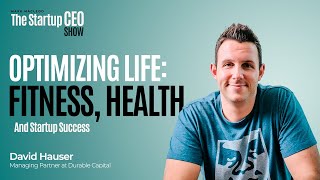
David Hauser built Grasshopper, a bootstrapped phone system company, over 12.5 years before selling to Citrix. He discusses the differences between bootstrapped and VC-backed companies, his 50+ angel investments, and his current strategy at Durable Capital buying profitable businesses with $1-10M EBITDA. He also covers sleep, diet, and routines in his book Unstoppable.
Chapters
Interestingly, we had a consultant come in who worked with the Obama campaign and some others. And he was early in at Informatica, where this is one of the kind of first companies that was really making software around this idea. And we bought into the idea that building a real testing culture could make a difference in how we were doing marketing and looked at some of the data points and the things that were happening around us. We weren't the first, but we were definitely early on and making that change changed everything that we did about Harpet.
Welcome to the Startup CEO Show. I'm your host, Mark McLeod. In this episode, I sit down with David Hauser. David is a multi time founder. He's founded bootstrap companies like Grasshopper and ventureback companies like Chargify. And so we talked about the differences between those two and when he chooses to raise capital versus he's also a prolific angel investor, having done over 50 angel investments. And so we talk about what he's learned from being on the other side. And finally he now buys companies. And so we talked about how he brings his systems from being an operator into his role as an acquirer. And so if you've ever dreamt about one day being an acquirer yourself, you'll learn a lot from finally he's written a book on personal health called Unstoppable. And so we talk about how founders can be unstoppable. I really enjoyed this conversation. It was wide ranging. I hope you enjoy it as well. David, welcome to the Startup CEO Show. It's a true pleasure to have you here. How are you doing today?
Great, Mark, thanks for having me.
Yeah, it's a real pleasure. It's been a very long time since we chatted and followed your journey, which I'd love to just get into here. You've done so many things and there's so much variety to discuss and I think when I first met you, maybe you were living in Boston and you might have been doing charge of I at the time and but there's been so many things that were things before. I was actually a Grasshopper customer when I started my investment bank and I was thinking to myself how brilliant that business was because I just, I needed to have it. But like it rarely got used. I just turned it on and I just paid the bill every month and that was that. Like it wasn't, you know, I just needed to have it. So like I wasn't going to churn. So yeah, it's kind of beautiful. It's not necessarily the sexiest category, but just you know, I'm guessing the unit economics were pretty darn good in that thing.
And yeah, I mean, look like it definitely wasn't the sexiest category at all because we stayed away from voiceover IP and like we, we set a really hard line in the sand and said like, we're not going to go there. We think that's going to be a commodity market. But it was cool at the time. Right. And we said no, we're just going to do what we do, which is make entrepreneurs look better. Right. So like how do we do that? They need phone numbers if it's a toll free number, a local number, whatever it was. And we just provided the best service. These technologies have been around for a long time. We just packaged it the way our customer that we got really great at marketing wanted it. Right?
Right. Yeah, that was genius. Makes sense. And yeah, used both services and they were really great.
But maybe let's walk through.
We don't have to talk about everything because you've done so many things. But like when you look back, are you able to craft? Is there like an arc to your story or you're just following your curiosity? Like, I don't know, let's talk about your journey from your perspective.
Yeah. So there's definitely not an arc in terms of like the industries I chose, but there is an arc in terms of like who I like to serve. And ultimately it took us a number of years at Grasshopper to really codify that into words. But our core purpose was empowering entrepreneurs to succeed. And who I really love serving and having as my customer is entrepreneurs like me. Right. Like obviously I built Chargify that had much more enterprise customers, but that wasn't who I loved and that's probably why I didn't stay around as long. We sold that company much faster. You know, after 12 and a half years at grasshopper, we sold the company and never wanted to Charge of fly was a much shorter period of time. But I think if I think about my whole journey as a whole, for me, I always knew I was going to be an entrepreneur. Thinking back to like way early on, grade school, struggling in school, struggling with reading and writing and then figuring out that I liked computers. I always sold things and did stuff. But like when I really understood I loved computers, that's when it clicked in my mind, like, I'm going to do something for me.
You're reminding me of Toby when you say that. Toby from Shopify. Because similar thing. Right. His parents bought him a computer when he was 6 and he was just like, oh, my God, I'm just so much prefer spending time here than anything else. This is like my future.
And it was very clear for me that it was something that I could excel at and I wanted to prove people wrong. I was always struggled in school. It wasn't the most popular, none of those things. But I wanted to prove people I could be successful, and the computer gave me that ability. Like, I just excelled at it. So it was an easy track directly there. And I loved it. I love spending time there. But really, one of the key moments in my life is my dad said to me, because I wanted a Dell computer at the time, it was like, I don't know, $3,500 for a very, very slow computer, comparatively speaking now. And he said, okay, I'll get you the computer, but I'm going to loan you the money and you have to pay me back for it. Obviously, he could have just paid for it and said, go play games, do whatever you want. But that really made me understand that this was a resource to get things done, and I had to use it that way if I wanted to be able to pay for it, get another computer and continue on that path.
That's wild. Was your dad an entrepreneur?
So, interestingly, he was. He actually ran his father's company. So a different entrepreneurial path than me, where he, his father started a company in New York City a long, long time ago when they came to the country, and he took over that company. So a different entrepreneurial path, but definitely a business mindset and understanding of how to instill that in kids.
Yeah, I love that. I don't know if you're a parent now, but it's amazing these lessons we get. I think guys particularly get from their dads. And, you know, in high school, I wasn't the best student. I was a drummer in a rock band. Thankfully, it was before social media because I had long permed hair and I was convinced I was going to be a rock star. And therefore academics weren't super important. And in the summer before my final year, my dad got me a job or the company he worked at in the maintenance department. And he only told me when I graduated undergrad that he had deliberately found me the hardest job there and told the maintenance head to give me the shittiest jobs. And I quit halfway through the summer and I had no money. I was bored out of my mind. I came back in my final year and I was straight A's and a peer tutor. And anyway, the rest is history. So it was A quiet but powerful lesson. Yeah.
And I am a father now and I really struggle with, you know, what are the lessons that are most important and how to teach them. And I look back to my childhood and this was, you know, long before there was all of these books and social media and all this stuff to tell parents what to do. And I think that's what we really struggle with now is there's so much information about what we should do and how important it is. But really what my parents did is they, they allowed me to be independent. And I think that was the really most important lesson. Obviously they had rules and there was things that were important, but when I did something wrong, it wasn't about punishment, it was about disappointment. And then the rest of the learning experiences they gave me were very much hands on. I think much like what you just described, like touching and feeling and doing something is very different than being told something. And that's how I try to think about my kids today. And I'm sure I fail 100 times at it because I want to have them learn quickly and I just tell them to do things. But really I'm sure the lessons that they'll take away are the ones that they learn themselves by touching and doing.
So Chargify was your, I'm sorry, Grasshopper was your first startup that right?
It was my first startup that was successful. Like I had lots of little things before that I think, as we all do, right. Like we just try different things to.
See what's going to work and you bootstrap that one. Whereas I think with charge if I you raised venture capital, how did you decide, you know, bootstrapping versus vc?
Yeah, so it's a good question and one I get asked a lot, especially for new entrepreneurs and I think my default answer is to always bootstrap as long as possible and buy that optionality over time where you can then raise capital. Right. We got into grasshopper 12 years in and took a little bit of debt because we were spending 12 and a half million dollars a year on radio. Right. Like we had to just from a cash flow perspective, take on some debt. We never raised any other capital. I think that there are limited circumstances today where capital is required. Dual sided marketplaces that require building both supply and demand at the same time. You know, AI, arguably now maybe a lot of capital is required. I think that capital requirement will continue to go down as we see more commodification of the resources and the models and the things that are available to us. We're already starting to See that if you don't want to own the necessarily underlying model.
Right.
Other than that, you know, there's probably a few circumstances where speed to market matters. Those are the categories I think where capital makes a difference. Otherwise it's probably a drag and takes away optionality for the company and the entrepreneur.
I love that. I think on that last point, speed to market, right. If I compare Grasshopper to, I don't know, to chargeify Grasshopper serving The S&SMB sort of mathematically impossible to run out of TAM speed to market is irrelevant. It's up to you. You can go fast, you can go slow. Whereas chargify slightly larger customer, therefore fewer of them, more attractive customer. So someone else probably sees the same opportunity you do. So it's a little bit of a race. I don't know if, I don't know if that distinction makes sense.
Yeah. And also there's a little bit of flywheel effect in ChargeFi which is different than Grasshopper. Grasshopper we had that referral base that continued to allow us to grow but that was different than needing market attention where chargify you had to have an enterprise buy in that this was a reliable long term solution for billing the most important thing in your company. So you just had to have those customers and logos and things happening and at a good speed and momentum.
Right.
Similarly, I built a company in the fintech space. Now is probably about 150 employees there, raised $42 million of capital in a very short period of time and have raised more since then. And that company really mattered for momentum and logos, large enterprise, things like that. That capital requirement is there because you have to be able to build at a trajectory that's really really fast.
So this is a company that still exists but you're not day to day in it.
Correct? Yeah. So after the capital raise I stepped back from the CEO position. I built it from the ground up with the team and really understood that I was not the right person to spend $42 million. I'm not comfortable in that space and that was a hard realization to understand because I could have grown it right. I could have raised more capital, I would have retained more equity because all of those pieces. But I'm not comfortable in that space and I didn't want to operate in that space. I like the profitable bootstrapping experience compared to how fast can you spend that capital, it's just a different experience.
So you knew that raising that money was the best thing for the company but then as a result you aren't the person to lead it.
Yeah. And sometimes we have to, as entrepreneurs, accept that we're not the best person for the next stage of the company. Sometimes we are. And it's really important to do what's best for the company, which is not always aligned with what's best for the entrepreneur. I find that most of the time it is. Right. Like when you're in those really uncomfortable positions that you're not the right fit. You can feel that maybe you grow into it, maybe you don't. But doing the right thing for the company to continue to succeed, the employees, all of those things I think is most important. And we always looked at Grasshopper the same way. Did we have to sell it?
No.
Was it the right thing for the company in the long run? I think so. Right. It found a good home with cross sell and upsell opportunities and all of those things. We never expected to sell the company. Never, never had a plan to. Never had an exit plan. Just said, no, no, no, no, no. Along the way.
I love that. So you never ran a process, Just someone came in and finally gave you the right number and you're like, all right, screw it, I'll take it.
Yeah. Look, I honestly think that we overestimate the importance of running a process as a whole. Like, we hear about those stories where Cisco and Microsoft competed and it was great. And there was a competitive. And it, you know, way over bid. But that's not the common scenario that, that most entrepreneurs go through. We, we wanted to build an amazing company that then happened to be. Someone wanted to acquire it. That was our goal. It wasn't the other way around. How do we build something to be acquired again, bootstrapped. So we didn't have to have that capital pressure requirement. But really what it meant for us was we could say no again and again and again. And then someone offered more than we believed it was worth at the time and. And significantly more. You have to, you know, at least entertain that.
So you had no prior relationship with that buyer. They just came in, they knew about you, and that was it.
Yeah. So they had acquired one of my friend's companies. So that was their way into me. Like, they got like a warm introduction.
But expensive way to get an intro by another company.
Yeah, we had, we had no relation to them. And we found out two really interesting facts, maybe three. One, this is a company, Citrix, who had done 50, 70 acquisitions. So very experienced. They came in, they said, we're really interested in this space. We're really interested in you guys. We should have a conversation. We said, okay, we'll talk, talk to them. We said, no, we're not interested. It's just not the right time. They said, okay, sounds good. They came back to us, you know, next quarter and we had given our plans and said, here's what we're going to do. They said, how are things going? And we said, well, we beat our plan. They're like, we've been doing this a long time and no one has ever beat their plan in that period of time. But we ran a really, you know, rigid process internally. So then that accelerated their, their interest, I think. But what we found out later was there was a, an external report that they were given that said they needed to fill two gaps in their company. One, telecom. They just didn't have a strong telecom offering within Citrix for the SMB market. And two, they needed people earlier in the life cycle of building a business because they had people later in life cycle with virtualization and other pieces of the technology stack. But they were starting to run out the ability to market to that later stage. They needed to get people earlier in the funnel of the life cycle of a business and we fit that perfectly. Right. So like from a board perspective, the value was not our customers, you know, it was our ability to market. So they far outpaid compared to, you know, the revenue or the number of customers or any of those metrics.
That's the perfect thing that you want. Right. Those where the synergies are just so valuable and you get credit for some of them.
Yeah, you never get credit for all of them. Right. Like they're always like, don't worry, we're going to do all this stuff later.
Yeah, yeah, yeah, that's it. So a key thing that you said there is you gave them your forecast so you must have had some level of seriousness to do that and that enabled building some serious trust between you.
Yeah, it's definitely a process that takes time and trust to be built. We looked at it as this could hold ourselves accountable, just like a lot of the other tools that we used to. So there was no like proprietary information in there. Quite honestly, we didn't have the best technology. That's not what we were. We were a marketing organization. If you look back at the Grasshopper technology itself, we didn't have text messaging for three to four, maybe five years after our competitors because our customers weren't willing to pay for it. That's what mattered to us. Was it a cool, sexy thing to build? Sure, absolutely. Was the same with voice transcription now voicemail to text transcription, customers are willing to pay for. So we built it before text messaging. Right. Those are the choices that we made on a daily basis, like what do customers, what will they pay for? And that's what we cared about. So sharing with them what our forecast was. It was just number of customers that we thought we were, we expected to be at. You know, what our CPAs were going to be, those type of data points.
Right. Sounds like a very pragmatic way to run a company, which you have to when you're bootstrapped, right?
Yeah. You run it based on data very, very simply. And I think that has become more popular than, you know, when I started grasshopper in 2012, way, way back, long time ago. And then there was this kind of popularization of metrics and data and data driven decisions and data driven marketing, like the early days of Offermatica and A B testing and those types of tools. Now we just accept that that's how it is. But honestly, we had to build internally this testing culture and that took us a long time and a lot of pushing and challenging people because that's not how things were. There wasn't an AV testing culture at the time.
Where did that insight or inspiration come from that that was the way to do it?
Interestingly, we had a consultant come in who worked with the Obama campaign and some others. And he was early in at Informatica, where this is one of the kind of first companies that was really making software around this idea. And we bought into the idea that building a real testing culture could make a difference in how we were doing marketing and looked at some of the data points and the things that were happening around us. So we were the first, but we were definitely early on and making that change changed everything that we did about Harpy.
You know, you've been CEO multiple times. You've been CEO of a bootstrap business. CEO obviously of a venture backed business. I'm curious like about how those experiences were different for you. I guess, particularly around kind of the altitude that you operated at. Like, is it fair to say in the bootstrap business you had to be more in the business because you couldn't hire a bigger leadership team. Like, how do you compare and contrast the two in terms of how you live the CEO role?
Yeah, so I think it really depends on stage. Right. Because if you look at the later stage of Grasshopper, we definitely built a very strong executive team. People that were paid far more than I ever made from a salary standpoint. And there was five or six of them on the team to the point where when Citrix bought us, we didn't stay on me and my co founder at all. They just took the executive team and said, see you guys later, bye. Because they were running the business. Now did they have the vision and some of the goal setting that we were doing? No, but they were running the business. So I think later stage in a bootstrap company you get there either way if you want to continue to scale. I think in the earlier stage it's a little different. But really what I find different between those two experiences is the pressure and expectations from board and board members. And what the job is as a CEO is much more focused on capital raising and board in a venture backed company, where in a bootstrap company it's much more about operations, goal setting, you know, culture building. Now of course those things still have to happen in a venture company, but if you look at the time split a significant amount of time ends up getting dedicated to capital raising and board if you want to be successful in the venture world.
I don't know what your batting average is, but it feels like it's pretty high Just, just in terms of creating companies, bringing them to exit and then doing it over and over again.
Yeah, but, but that's not, that's not fair though, right? Cause like we only see the successes. And I, I told myself that lie many times, oh, I can build anything anywhere I can do. And I failed so many times at Grasshopper. We built, we, you know, you saw Chargify, but that was one of six companies we built. The other five failed and, and we lost millions of dollars doing it. It was a tremendous distraction for Grasshopper. It was a very bad idea. But we built Chargify, that was successful. So from a capital perspective, yes, we were positive and we made money because of that success, but it was a poor idea. Poor structure, poor execution. Just happened to be one of those six worked out. So I think it's, it's important to understand that behind those successes we see there are tremendous numbers of failures. We don't.
Yeah, that's totally fair. Totally fair. If you look back as you have had more successes than many. I don't know what's your retrospective on that? What were the keys to success?
It's hard as I think times have changed a lot. Right. You asked me the things that I did to be successful at Grasshopper are different than the things I do today to be successful because times have changed and things are different. So that's one. But really the most important things that I learned that I continue to use is building a team around me that is better than me. Like, I know everyone says that, but like, you really have to buy into that and be comfortable with hiring people that are better than you. Otherwise you're never going to get to that scalable point. You could buy, you could build a lifestyle business, but if you want to scale and grow, you have to be doing that around you and be willing to step back and say, I'm not the right person for that role anymore. I'm going to move over here. The other piece that we continue to use is culture. And culture gets overused. But core values, core purpose, super important. And not BS ones, real ones that I've now put more emphasis in much earlier at Grasshopper, we just ran and we did whatever. That was a mistake where we had to go back and fix our culture and really write down our core values, integrate them into everything. We were doing all that stuff in year four, year five, where today people are like, why are you doing that when there's one person in a company at the very early stage? Because that's the most critical. That's the time when it matters. And we ignore it because it's easy to just be like, hey, me and Mark are sitting in a room. We know what our values are. We're going to hire one person. Most likely they match our values because they talk to us and we hired them. But very quickly you lose control of that. So I think front loading that and then similarly front loading process. So I'm a big believer in a framework. Whatever framework you decide to build within your company, it's super important to start on day one with that. It took us years to learn that. And it doesn't matter what framework it is, but use something that keeps you accountable and can give you the action plans of how to get to where you want to go rather than just kind of flying around doing whatever.
So you mean like introducing systems, like a repeatable way of doing things as early as possible. Yeah.
And a planning process. Right. Like thinking about this on a, you know, monthly, quarterly, yearly basis, like, what are our plans? How are we going to get there? What's going to get in the way? That kind of, you know, discipline early on I think really matters. I personally love processes and playbooks and building those things because I think that's an easier way to scale my brain. But you don't have to love that, but what you do have to do is know where you're going, make sure the team Knows where you're going and keep the discipline to keep on a rhythm.
So you're right. Everyone says hire people smarter than you, and yet a lot of people don't. So what's the how here? How were you able to do that? Is it just like it only works if you are humble and recognize, hey, that person's smarter than me? Like, I don't know. What are your thoughts on that?
I think the most important thing is actually doing the job before you hire. So as much as possible, I tried to actually physically do the job in Grasshopper before I hired. If it was running the technology team, if it was doing customer service, whatever it was actually physically understanding the job at an intimate level allowed me to understand what the skill sets that were needed and required and where I was falling down. So it was very easy for me to identify where I was not doing well because I was physically doing it. If you combine that, like, actually understanding and doing with being humble enough to say, I am willing to be the least smart person in the room, that's how you get there. But it's hard for a lot of people, like, they want to be the most important person in the room. And importance doesn't come from intelligence or ability. It comes from the. From, in my world, the ability to actually create a plan and drive towards that plan. If I can get a bunch of people all driving towards a plan, that's where I'm important. Not if I'm intelligent or not.
If I think back on the CEOs, that's. That I've known and worked with. I think they've had two struggles around this notion of hiring people smarter than them. One is getting their ego out of the way. The other, I wouldn't call it intelligence. It's more that that person has specific technical or domain knowledge that they lack. And therefore they're like, well, who am I to manage David? Because he just has been there, done it, got the T shirt. So maybe just a little distinction there. I don't think it's an intelligence deficit. It's an experience and credibility deficit, which just brings up imposter syndrome. Who am I to manage that person?
But we had to struggle with that early on because I founded this company when I was a sophomore in college. So I was going to school three days a week and. And hiring people twice my age. So no matter who I was hiring, I was having that challenge pretty early on, like, why should I manage them? Why should I direct? And if. If I can show them a path to success and then a Group path altogether. That's why I should manage. And I think if we can buy into that, that's how we get over that struggle. We'll always, I always still today have imposter syndrome. Right. Like, I shouldn't do this. Like, that never goes away. But can we build the tools around us to make sure that we lessen that as much as possible? And then understanding that if you do take ego out of it and understand there are way better people to manage a technology team or program or like I wrote the original software, I could have stuck to it and said that was the best software. No, it was the worst software. Right. Like, it really was. But it was the minimum that we needed to sell. That's all that mattered. If I wanted to stick to that and say, like, it has to stay because I wrote it, that's detrimental to the company.
This episode is brought to you by Fellow. Fellow is on a mission to solve the meeting problem by offering the only AI meeting management solution that covers every part of your organization's meeting workflow. And As a startup CEO, show listener, you get 300 free 3 minutes of AI recordings if you sign up today. Go to fellow App CEO to start your free trial and start having better meetings. Let's move to the other side now. You've made over 50 investments as an angel. We actually have one of them in common. Unbounce.
Sure.
And yeah, you might have introduced me to that team.
I don't remember.
Yeah, that's possible. That's possible. I've known them for a long time. Yeah. And Rick is still a close friend. Yeah. What have you learned from being on the other side as an angel? And you know, you still operate now. So how have you, how have those learnings informed how you operate?
So I've learned that one. I'm not a good angel investor because I'm not great at picking. I turned down Uber and other things. So ultimately the portfolio, if you look at it, is positive because of a few outliers and not because of my choices. So I've really come to understand that for me, angel investing is about learning and giving back. Those are the two things that I value from it. So giving back to a community that I care about, bootstrappers that might not be able to raise capital in the traditional sense. So like those people, I want to support to learning about industries, things, AI, whatever it is, I'm paying for buying my learning. And I'm comfortable doing that. Like, it can be a 100% loss if I've marked it in My portfolio as learning.
Yep.
Right. Like, those are the two things that I've learned. The other piece I learned is like one of the things that is most predicting of success for any angel investment that I've ever made is the ability for the founder to send regular updates. Like 100.
Totally agree. I've seen that example.
So silly, right? Like, those that send regular updates, I don't care what the pattern is. If you send them weekly, monthly, quarterly, biannually, whatever the. Whatever cadence you set, those that do it and stick to it, succeed.
Yeah. It's so funny you say that. I've seen that exact same pattern. I think it's just because you're making yourself accountable.
Yeah. I mean, look, the Unbounce team did it. They send regular updates. It is just a clear pattern. So it sounds easy and it's silly, but very few founders actually continue. Some start with it and then it dies off really fast. Some never do it. It's just a clear pattern.
Yeah. I don't fault you for passing on Uber. First of all, kudos on even getting that deal flow. But when I was a vc, we had. We had an accelerator in our fund called Founder Fuel, and there was basically an Uber competitor before Uber. And I remember thinking, like, well, first of all, this is a solid problem. I can get a taxi today. And second, like, there's medallions, union rules. Like, it's never going to work. Like, I just. I threw up all over it.
And I mean, I grew up in New York, like the capital of medallions.
That's right.
And regulations. From a taxi perspective, I'm like, there's no way. So, like, even if you tried, someone's going to kill you in New York.
Like, like.
So, so, like, I don't understand how this is going to work. But clearly I was. I was wrong. And I think where. Where what. What I learned from that is what I was wrong about is there was a new way to challenge regulations that we didn't yet understood and understood at the time. Right. Like, yeah, the way that Uber and others have then challenged those regulations, maybe even in crowdfunding and a few other categories where they've kind of built this ground swell underneath and started to do things as much as possible to skirt the res. The regulations before, that was not accepted. Right. That was not even a possibility. And that's what I didn't understand about Uber when they started.
So you grew up in New York. I first met you in Boston, both of which are kind of startup hubs, and now you're in Vegas and the only company I can think of from Vegas is super old one Zappos. Like, what's the entrepreneurship community like in Vegas?
So it's a great question. When I've been here almost 14 years, when I moved here, there was no community. And it's still not a community like Boston or New York or obviously the Bay Area. But it is a growing community that is very different than when I got here 14 years ago. 14 years ago, there was an Zappos was still, you know, I was being talked about, right. That was it. There was nothing else. I think, unfortunately, like, I met Tony a number of times. You know, I think he was a great resource for the city, but unfortunately, he was still very insular in what he built. And that failed to create an open community. And most importantly, what it failed to do is very few people at Zappos became millionaires. So there was no seed capital running through the system. So because of that, it's taken a long time to get there to have that kind of community. And really what's happened is people have moved from California. They've realized, like, why live in California when I can say, you know, buy a way nicer house in Las Vegas just on my tax savings and still travel. And one of the most amazing things about Las Vegas is how close we are to everything. I love living here. It's an amazing lifestyle. I have chickens in my house. It's not what anyone expects, right? You think about Vegas, but, you know, I can drive two and a half hours and be in Brian head for skiing, amazing Utah snow. Fantastic. I can drive two and a half hours and be at the beach. I can fly almost anywhere in the world or the country from a major airport. And Vegas is a city built for 20 to 25 million people, but has about a million people who live here. So if you think about the infrastructure, the restaurants, the shows, the airport, all of those things, built for a major city without the major city problems of traffic and people and things.
Wow. I've never thought of that, but that makes so much sense, actually. Are you trying to develop a community yourself?
Yeah. So I'm involved in a number of communities, most notably ypo now in the Las Vegas community. It's been a great community for me. I still am challenged by the people that come in here and think of this as a transitory location. Like, I'm here for a year or two while I sell my company. So you have to filter some of those people out if you want to build community. And it just takes time. And I'M perfectly okay with that. Like, I'm okay being picky and taking time. I have a great community around me. I still think that as a group we fail to offer support to early stage entrepreneurs in the community. It's. It's still an insular group. It's very much people that we've known before and we've met and like, compared to an open community where we're supporting the next generation of entrepreneurs, that's where I think we still fail.
Yeah, got it. So from angel investing, if I understand correctly, now you're acquiring companies outright, is that right?
Yeah. So we've bought and sold a few different companies. My view of this has been kind of changing over time. I was very early on in the SaaS acquisition space, a very large LP and one of the first two funds that kind of started really doing this that weren't, you know, large P.
I.
Actually think that there's too many SaaS companies. So I actually stepped back from that and said, I don't want to buy a SaaS company. I want to buy companies that what I determine have durable revenue. So the name of my holding company is yeah, Durable Capital. Really thinking about, like, what are the most sticky things that we buy and do across every industry in every category. It doesn't have to be SaaS or recurring revenue to be sticky. And that was really important for me. So I look at all sorts of different companies now and want to make kind of acquisitions in the one to $10 million EBITDA space at a majority acquisition to be able to put in processes, playbooks, scale and grow. But they don't have to be high growth companies.
Fascinating. So are you like running a fund?
No. So this is my capital. I'm a big believer in deploying my capital first. If I'm successful in what I believe my thesis is and how it works and how I think this scales. If I need more capital, I'll raise it, but I don't want to do that as the first step. I think that's the last step. That should really be like, how do I add rocket fuel to what I'm doing and know is working? And if this crashes and burns, that's fine. It was my capital and I can be responsible to myself.
Sounds very similar to your philosophy around fundraising for companies.
It's funny, right? Maybe it's ingrained in the personality to some extent.
I think so. Very briefly, I want to come back to the acquiring, but you brought up ypo and all of my CEOs either are part of a Formal peer group like that or are informal? And I'm just wondering, did you. I don't know, do you have. Did you have one of those when you were operating? Or maybe just talk about the. The benefit that you see being a part of ypo.
Yeah, so when I was building Grasshopper, I was a member of EO Entrepreneurs Organization, very much like YPO had business coaches, had personal coaches, Big believer. And if you want to be a top performer, having a peer network and having coaches is the only way to get there. I don't know anyone who does it on their own, period. It doesn't matter if it's sports, business, music, anything. You have a peer group and you have coaches. So how do you find them, I think is really the key, and making sure that you're picking the right people and getting the right people on your side. That's a skill to develop over time. A lot of vetting, a lot of thinking. But first of all, just start the process and have someone.
Yep, yep. Well, as a coach, you're obviously preaching to the converted here, but, yeah, every. You know, anyone we admire who achieves excellence has a team helping them be excellent. Right. You know, I don't know. You look at LeBron James. I don't know. I'm sure he's got everything. Sports psychologist, nutritionist, whatever. He's got a whole team making him peak LeBron, you know?
Yeah, yeah. And like, I always think about it as we look at movie stars, right? And how do they prepare for a role? Like, how does someone get in shape like that or put on weight or do whatever they're doing? It's because someone who is an expert is advising them on that one really specific thing and telling them, hey, you need to build muscles to look like a boxer. This is how you do it. I'm going to work with you every day. This is how we're going to do it. I have a plan. I've done it before. I know where we're going. Right. And having those type of people in your corner is how you get there. We just see the end result. Right. We see Mark Wahlberg standing and looking like a boxer. Right. There was a year of work that went into that, and there was a team of not one person, but probably 10 or 15 people, right?
Yeah, 100%. I totally agree. So back to durable. Couple of things I'm curious about. One is, I guess, the extent to which the superpowers that you built as an operator translate now to you as an acquirer. So maybe let's start with that question.
Yeah. So I think that the superpowers translate in terms of building process and discipline within companies and industry doesn't matter. So that, that's, that's one piece that I can transport anywhere. Like, can we take a broken company and fix it? Absolutely. Can we take an okay company and do better? Absolutely. I know that these processes work and these systems work. So that's one, two is I have a benefit of capital now so I can buy companies at a different stage. So I think that that not necessarily is a superpower that only I have, but is a superpower that can go along with the other things I do that give me access to a different set of companies or a different group of people. Right. Um, and then, then lastly marketing. So if I look back at my career at Grasshopper Chargify, every company I've been successful at, it's all about marketing and driving with metrics. So data driven marketing can be applied to any industry for any reason. It doesn't matter. It doesn't have to be only Google AdWords for SaaS. Like none of those things matter. But having that discipline, the A B testing, the. That culture, I think is actually a superpower that very few people really implement. They talk about it a lot, but they, they don't want to do the hard work of actually looking at the data and making the decisions that are counterintuitive and understanding that what you thought was going to work, didn't work. And all of those hard decisions that go into that process. And that again, can be applied to any industry, any company. Yeah.
On that note, of any industry, I'm curious, like when I hear you talk about things like a B testing, you know, systems, process repeatability, those are very commonly thought of, maybe not commonly delivered, but very commonly thought of in the tech world. And I'm guessing maybe less so in the non tech world. And so I'm wondering, is that a value creation opportunity for you? Are you going into places that are outside of tech because you think you can bring a lot of value?
Yeah, absolutely. Definitely outside of tech. So, you know, I have a portfolio of Airbnb properties. We recently decided to pull in all property management internally because the partner we were using was just quite honestly terrible. And I advise them again and again and again. Hey guys, let's just build some processes and playbooks. Like this is repeatable work. Let's just do this, let's do this. And they just want to run around putting out fires. Right. Right now we're building that internally because I know how to do it. But that can apply anywhere, right? It doesn't matter the company. And I think there's a tremendous amount of value that companies are losing or not realizing because of that.
Yeah, yeah, for sure. So you brought up marketing as a superpower. And you know, now you're not necessarily CEO of a thing. You are, you have durable capital, but you're kind of your own brand and have been for some time. You've written a book, which I want to talk about. But yeah, I want to talk about maybe personal branding for a second. Like, I see more and more CEOs posting on LinkedIn, doing their thing and just a, like maybe just talk about, did you set out intentionally to, to build a personal brand? And if so, kind of what were the goals behind it? And yeah. How, how's that working out?
Yeah, I wish that I had set out intentionally to build a personal brand and I wish that I had done it earlier because I, I'd probably be much more successful at it than kind of just doing it because I wanted to do other things. So let me take for example, like I, I write a weekly email that I send to 10,000 plus people. Now, I didn't do that to build a personal brand. I did that for two reasons. One, I wanted to get better at sharing and two, I wanted to get better at writing. Like those two things were much more important to me than personal brand. Did it build personal brand? Absolutely. Do I like it? Absolutely. But that's. That wasn't the goal. I'm sure I should have thought about it more intentionally. I think LinkedIn the same like I think LinkedIn is one of the most underrated platforms that exist today from a pure business customer acquisition standpoint. And I'm not talking about just ads because you really have to engage with it. And I'll be very direct. I am not on any other social media platform myself, so someone on my team posts on Instagram or Twitter or whatever. I'm not on those platforms because I think they're a time suck on the phone. And in general, LinkedIn I actually look at. Because there is valuable content that a lot of people are delivering and their algorithms are actually very good at delivering that content compared to garbage content.
Right.
And I think people really underestimate the, the, the power of LinkedIn right now. I think where I failed from a personal brand perspective and I should have spent more time was I did occasional speaking engagements when I was at Grasshopper. I could have done 10x more and I think that would have raised my personal brand Profile pretty significantly today. I do them as favors for people, but the demand is far less because I'm not building a visibly large company in that space. So that I think was a lost opportunity that I wish that I had capitalized on.
Yeah, huh? Yeah. Those points really resonate, you know, I think. I think people have a love hate relationship with LinkedIn. It's not sexy, but there's real engagement and real people. And so, yeah, certainly for me, number one channel that I focus on. And I'd say speaking I have mixed feelings about, you know, because that LinkedIn post is building my brand while I sleep. Whereas, you know, the speaking, I gotta get on a plane and go somewhere, and then I'm stuck at a conference for a day or two. Like, it's a big commitment, you know, Like, I just did one in a couple of months ago in Austin, and like, it was just a big disruption to my schedule. You know, it was fun. It's nice to get out of the house, but not efficient.
But so, like, the way I think about now speaking is it's part of a flywheel. If you're building a personal brand, it's part of that marketing mix.
Right.
And that marketing mix includes LinkedIn, it includes YouTube, it includes speaking. And once you get that flywheel going, those are the people that we see most successful from a personal brand perspective. Right. And that was never my goal, so I didn't want to build that. I think that that was still the lost opportunity, though. I could have done 50 of those and built that momentum faster if I wanted to.
Yeah. You think about social media, right? We follow humans more so than we follow brands. Right. So leading with the human, in this case, you. Yeah, makes sense. Yeah.
And look, the speaking gigs I did do when I was at Grasshopper were successful for Grasshopper too. I never spoke about what we did, but it raised the Grasshopper profile. So there was there, like it was well worth the investment doing it.
So a big thing that I'm assuming built your personal brand was writing a book. And it would have been easy for me to imagine that you would write a book on entrepreneurship, but you wrote a book on personal health. So I really curious, like, how did that come about?
I thought a lot about this very deeply, actually, because I had a lot of learnings that I've still never shared in a written format from my learnings and building different companies, I'm sure that they would be valuable, but I think, to be quite honest with you, a lot of them are just duplications of other people I don't think that it's all that unique. I wanted to share my personal journey because that was unique to me and life changing. I was overweight, and I still had that image in my mind. I still do today. I still struggle with that image of being a sophomore in high school, overweight. And I can see the picture. I know exactly what it looks like. And that struggle has stayed with me for decades and gone through all sorts of relations of different things with the commonality being I'm a very intense person and I kind of do things at either 100% or 0%. And for me, sharing that story was part of that 100%. Like, I don't think I could have got to that level without publicly sharing the story.
So I'm very curious. You know, first of all, personal health is a thing that is very important to me, and it's actually the number one place I start with my CEOs. Like, I think, first of all, I think happy, healthy humans build bigger, better companies. Number one reason why founders sell is because they're burnt out and they just can't imagine going on, you know, and also, you know, a company while you're in it. You know, average startup lasts seven to 10 years. It's all encompassing when you're in it. But you zoom out to the context of your life. It's just a chapter. Your life is far more important than that company. So I'm curious, like, so I'm drinking the Kool Aid about personal health, but if I look at society at large, we're not like, the rate of chronic disease is higher than it's ever been. Type 2 diabetes, you just name it. And so I'm just curious, what are we doing wrong? And your book's called Unstoppable. What do founders need to do to be unstoppable?
So I think the first thing is to understand that if you want to be a great founder, you need to separate yourself from the rest of those people. We are not average people. If you want to build not average companies, that's the first thing to understand. And if you want to be in that category, that means every part of your life needs to be optimized. And you need to be driving and driving and driving. And it's not about hustle and time. It's about how do I get the most out of my time? And being healthy is the easiest piece to get more out of your time. Like, bar none, right now, easy doesn't necessarily mean simple. Like, there's complexities to it, but that's where I would start for sure. So I agree with you on that and I'm fine. I should caveat that I'm really saddened by our society as a whole, but I'm fine with the rest of the people being different. Right? Like, if I'm going to be different, that's fine. I want to optimize myself. Right. So I don't think that from a founder's perspective we should be thinking about, like, how do we fix chronic disease? We're going far, far beyond that. Like, that's at the beginning of the scale. If you want to be a top, top founder, building a great company, you're on the other side of the scale, which is far beyond disease. That's optimization. And that was really what I tried to write about. Like, how do you get to that optimization standpoint with as little amount of time as possible.
Right. So amazing, Amazing. So very briefly, and I know it's not one size fits all, but what does optimization look like for you?
So the first thing I tell everyone to start with is sleep and diet. Like, those are the two highest value things that are actually quite easy to change. And I eat a very strict diet, probably way stricter than anyone wants to. And that's fine for me because I like that routine. But very simply, get rid of sugar, get rid of processed foods, eat mostly whole foods in the close to their natural state as possible. Like very simply, like doing that, 80% of the benefits. If you want to really go far, okay, fine, do it. Sleep similarly, like, go to bed around 9, 9:30, 10 o', clock, get up naturally without an alarm clock. Like, those things matter and are very easy. Right? Like, how do we optimize for that? Make sure the room is dark, make sure we don't look at screens really late at night. I'm still really bad. I wake up and look at my phone. It's part of my routine. It's probably really bad for you, right? But it's been my routine for a long time and I'm actually okay with it. I've accepted it. But you know, I, I follow that every day of the week, Weekends, doesn't matter. So with those two pieces, I think you can get most of the way there lots of other things. Should you be lifting weights and moving and breathing and doing other stuff? Absolutely. Do I have ice plunge in my house? I do, right? I love it. Do people need to do it? Absolutely not. Like, I don't think that that is what's going to change us in a market way. I like it. It's also 120 degrees in Vegas, so whatever. Right. But there's lots of tools like that that people spend far too much time focused on rather than just the big pieces that matter.
Was it good? I love it. Yeah. You know, a lot of my CEO. Yeah, we talk about CEO burnout. A big thing that I talked to with them about is, is boundaries and how work will expand to fill all available time. And like, you know, you talk about going to bed at 9:30 or 10. I personally start to panic if it's after 10 and I'm still up. So I'm all in on that. But like, very often those CEOs, like, they're in meetings all day, they spend some time with family. 10 o', clock, they're settling in for the second shift. You know, like, it's just so it's like a daunting concept for them to think, oh my God, I should be in bed at 10. You know, it's because they haven't created sufficient boundaries.
It is. But I actually challenge because people ask me this all the time, like, there's no way I can go to bed at 10. I'm like, okay, let's actually break down your time. What did you do after 5:00pm? Like, let's, let's really talk about it honestly. And most of it is bullshit time. It's watching Netflix, it's doing something else. It's sort of working, kind of making the excuse that you're working while watching Netflix or doing something else. If you told me from 5pm to 10pm Every bit of that time was used with your family. Awesome. That's great. Right? Go to bed at 10:30 then. Right. Like, I could buy that, but I've never met someone that that's true. So I think that that's our first challenge. The second challenge is what are you actually doing in the mornings as part of your routine? How are you optimizing your morning to be most effective to. To get gain back time in the beginning of the day? So I actually love doing work in the morning. So that boundary for me is, is much more fluid in the morning because I can get a lot more done without distraction. I then go to the gym. I stay on a routine to buy back my time and make sure that I know exactly where I'm going to be when I'm going to be there. Right. Those two ends. You. You have 12 hours that you can play with.
Yeah. Yeah.
There's no way so to figure it out.
I'm curious. One minor question. My. I'm a CrossFit guy. First rule of CrossFit is to always talk about CrossFit. It's like the opposite of Fight Club. So I've done that.
Yeah.
And my CrossFit coach talks about how we basically get jet lag every weekend because we go to bed at the same time on a weekday and then we throw it to hell on the weekend. So I'm curious, do you have the same sleep schedule seven days a week?
Yeah, seven days a week. Same gym schedule, same everything schedule, same eating schedule. It's like. Like all of those things are on the exact same schedule. So there's no difference between a Sunday and a Monday other than I don't go into the office on Sunday. Like, that is the difference between the days. But the beginning and the ends of those days are very much the same. And the eating schedule, I think, is very important to stay the same as well. Knowing that the body knows when it's going to get fuel. So whatever schedule you're on should be consistent across all days because the body doesn't care that it's Saturday. Like, it makes no difference. Right. But then we freak the body out and, like, we don't eat for half the day and then we have a huge dinner or whatever stupid thing we're doing rather than sticking to that schedule. And, you know, I always get challenged on the food topic. Like, yeah, but it's not fun to go out. And I. I stopped drinking, I don't know, 10 years ago. You know, it's not fun. I'm like, okay. Like, I. I don't think that that's true. First of all, I'm perfectly happy to go to a restaurant and not eat. People are like, why? I'm like, well, I can engage in conversation and be engaged and present and all those things. I'm not worrying about what to order, this or that. Like, it wasn't on my schedule and it's not on my macros. Like, I'm not eating it. That's fine. Okay. But, like, it's. I'm like, if it makes you uncomfortable, I'll order something and not eat it. But it doesn't make me uncomfortable. Right. So let's just move past it. And I think it's actually a more enjoyable experience.
I love it. So cool. Maybe one brief observation just to wrap this thing up. And then one final question. I had Jason freed from 37 signals on recently, and he talked, obviously a guy who's had lots of success. He's talked about how he just has.
Box amazing personal Brand. Right. Like an amazing person.
One of the OG personal brands. Right. Like, for sure. And he's like, work gets eight hours, sleep get gets eight hours and everything else gets eight hours, you know, and like, that hasn't stopped him from being pretty darn successful. So we, it can be done. It just requires intention and boundaries.
So I would say discipline and routine.
Yeah, yeah, exactly. Yep. Final question. Right. So so much success in different areas. You know, operator angel, now acquirer authority. What is your vision for David Hauser? Where, where are you taking yourself?
So I get this, asked this question very often and I, I, I have a challenging answer or, you know, kind of an interesting answer. I, I want to run or exit a billion dollar company.
Really? Okay.
That, that, that's my next thing.
Yep.
And this is very challenging for me because I actually don't care about money. Like, I, I, I'm very frugal. People around me hate it. Family hates. I'll spend on experiences. And one of our family core values is experiences over things. But so, you know, I have the same car that I had when I sold before I sold grasshoppers. Like I don't care about that. But the way our society measures success is in increments of dollars. And if I want to look at what is the next thing I can be successful at from a measurements perspective, it's that billion dollar company or exit. I don't know how I'm going to get there. I don't have that plan laid out, but that's what I'm doing.
All right. Going for the next zero.
Yeah.
I love it. Awesome. Well, David, thank you so much for making the time. I really thoroughly enjoyed this conversation.
Thanks, Mark, for having me. This is a great conversation.
Awesome. Hey, thanks for listening to the Startup CEO show. If you'd like to connect with me, be sure to visit my website at markmcloud Me or follow me on LinkedIn, hemark, MacLeod, or Twitter arcmcleodore. And if you want to tune in again next week, be sure to subscribe on YouTube, Spotify, Apple, or wherever you get your podcasts. We'll see you next time.
More from Mark





The Burnout Breaking Point - How Strategic Breaks Actually Increase Productivity


Emotional Debt - How Avoiding Hard Conversations Compounds Into Company Killing Resentment


The Death of the Specialist - Why AI Is Creating a New Professional Class Called Scalers