Profitability vs Venture Funding: Lessons from ChartMogul's Success with Nick Franklin
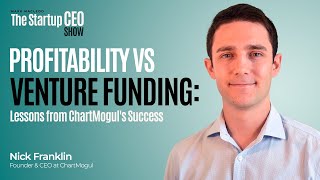
Nick Franklin, CEO of ChartMogul, discusses why the subscription analytics company raised only $3.7M across three seed rounds and became profitable in 2019 instead of chasing bigger funding. The median time for ChartMogul customers to reach $1M ARR is 2 years 9 months, though the top 10% get there in 8 months.
Questions this video answers
2019.
About 2,500.
Seed 1: $600,000 (2014); top-up: $900,000 (2015); later round: $2.2M (2017); total raised ≈ $3.7M.
About $46M (≈ $46–50M stated).
$39 per seat.
Chapters
So it's actually quite easy to get to a million if you have something right, like that has some demand for it and you're good at some sales and it's. But it's getting to 10 million is actually quite a grind because then you have to overcome all the dynamics that set in at some point, you know, between 1 and 10, which is like, you know, churn and retention and upsell. You have to kind of build a real. A real company to get to 10 million, whereas you can get to a million almost brute force.
Welcome to the Startup CEO Show. I'm your host, Mark McLeod. In this episode, I sit down with Nick Franklin, co founder and CEO of Chartmogul. If you run a SaaS business, there's a meaningful chance that you are a Chart Mogul customer or you've been following their data. They just celebrated their 10th anniversary. They have over 2,500 SaaS companies on the platform. Lots of learnings on this episode, including some of the sobering data around how long it takes to get to a million in ARR and how few SaaS companies actually get there. Nick's company has been profitable since 2019. It's pretty amazing stat. And so we talked about the pros and cons of venture funding versus profitability and lots more topics. I really enjoyed this discussion. I hope you do as well. Nick, welcome to the Startup CEO Show. It's a true pleasure to have you. How are you doing today?
I'm good. Thanks a lot for having me. Mark. Great to be here.
Yeah, it's my pleasure. I always love chatting with people in Asia because I'm like, chatting in the future. It's tomorrow. It's always tomorrow. So that's pretty wild. And, you know, I followed Chart Mogul from a distance from a long time. I first met you, I think it was like a 0.9 capital summit outside of Berlin many, many years ago. And this was long before remote was a thing. And I was shocked to learn that you were living in Korea. So I definitely want to chat about remote at some point because it's become, thanks to Covid, a reality for many companies. But you were. You chose remote, you know, kind of from the beginning. So I'd love to explore that. But before we do, I'm sure everyone knows what Chart Mogul does, but maybe let's just take a second and set the stage and tell us what your company does.
Sure. Yeah. So we are. We have two products, but our main product and what we're. What we're well known for is subscription Analytics. So that means, you know, a bit like Google Analytics measures your web traffic and gives you insights around that. We measure your subscription revenue. So we plug into the billing systems like Stripe, Recurley, Chargebee, et cetera, pull in all that billing data and calculate a lot of key metrics like mrr, CHURN rate, retention rate, ltv, et cetera, and allow you to calculate those accurately, visualize them, and then sort of slice them in different ways to uncover insights. So that's the main thing we're known for. And then nearly two years ago, we launched a CRM as well, which is fully integrated, which sort of the first CRM really designed for B2B SaaS companies. So, yeah, we're kind of building out this platform where you can do all your CRM and your subscriptionalities all in one if you're a B2B SaaS business.
Wow. I have to admit, I didn't know about that extension, which sounds really big. Could be really big. Could eventually, I would imagine, be larger than the initial legacy business.
Let's see. It's a long play, you know. Yeah. It will take some years to make a dent. It's a large market CRM and it'll take some years to make a dent. But we're definitely seeing uptake there. But our focus has really been on adoption versus trying to monetize too much. We just charge like $39 a seat. Right. So you'd have to sell a lot of seats, too.
This is true.
To make it into a real business, but for now, yeah. And it's. And we have a free version which is definitely more popular than the paid version of that. And yeah, it's. Yeah. But there's a whole bunch of reasons why we think, you know, having the two in the two in one makes sense. Like there's things that you can do to get. You can do when you have all the data sets together, the subscription billing and the metrics and the CRM stuff all in one as you can do interesting stuff with forecasting, you can do interesting sort of triggers and things. You know, when someone schedules to churn automatically create a task and assign it to, you know, their account manager. That you can just do a lot of stuff that it's just harder to do in HubSpot because it's kind of meant more. It's more of a general CRM. So that's kind of why what drew us to, you know, go into this market is we think we could do something fun that's just for, you know, just for just for SaaS businesses, but then more, you know, more than they could get in a general system, I guess.
Yep. No, that makes a ton of sense. So you know, when I entered the startup world, the term SaaS didn't exist and then SaaS came along as a term. And I remember Salesforce starting out in the beginning with the anti software campaigns. Right? No, software with the logo through it. And so this whole world was nascent. This thing that we take for granted now and this, you know, I remember when Bessemer first started coming out and talking about things like their magic number and like we're everyone blowing everyone's minds with like how to think about SaaS businesses and now we take it for granted actually probably in large part thanks to companies like yourself because you bring that sophistication to, to even brand new SaaS businesses. So I'm really curious, like, what is the state of the art of SaaS metrics these days? Is it still the core metrics that Bessemer has been talking about for, I don't know, 10, 15 years, or has it become more innovative? I haven't operated in some time. I'm just curious what is the latest and greatest when it comes to thinking about metrics for recurring revenue businesses?
I think there's definitely a core set of SaaS metrics that doesn't change like every day. Right. Things like monthly recurring revenue and run rate. I think retention gets a lot of focus these days, especially with the market not doing as well as it was a few years ago. And I think there's lots of different things you can do with metrics that hasn't yet been built out or we've been at the forefront of building out. Um, and I think there's, you know, with, with the rise at AI SaaS companies, there's more and more people doing metered billing. So we'll be launching this year our solution to that, which is an analytics around usage base and metered based billing and how you can layer that on top of MRR and how these two, these kind of traditional, fixed, fixed cost things are metered, interact with each other. So. But yeah, I don't think there's, you know, every, you know, people can come out with, you know, sometimes they come out with new, you know, magic numbers or whatever, you know, quick ratio and things like this that come out regularly and it's just like, you know, how often do they, do they stick and how often do they make sense? But I think it's a bit like, you know, accounting, right? Like not, you know, you know, new stuff doesn't come out all the time, not very often.
Creative and accounting usually means a bad thing, whereas creative and with software could mean something positive.
Metrics? Yeah, I don't know. Like, so I think it's, I think it's good that the core underlying metrics like, like monthly recurring revenue or committed month, like they don't change every day. And you know, you know, we kind of standardize the way in which things like retention and churn and should be measured and, and a lot of the difficulty and complexity comes around with, you know, when you try to start, you know, filtering and segmenting that stuff and playing with those, those metrics in different ways, you know, and you start having to account for, you know, customers that switch currency and things like this. So a lot of the complexity kind of goes from that. But I think the base metrics don't change that often really.
So I've always told folks like the things that matter most and I'd love to know if I'm missing anything or you disagree. But I guess first of all, payback period, it's going to be a long time before we know kind of, kind of true lifetime value. So as a defensive measure at the very least, how quickly do I get paid back on a new channel? Obviously in the long run retention is in my opinion the most important metric for a recurring revenue business. And then if I think about how aggressive to be, I think about lifetime value to CAC kind of on a, a fully loaded basis. And if I'm kind of sub 3x I'm not feeling so good about life. If I'm north of 4x, I feel like maybe I could be more aggressive. Like what, what are your thoughts on those metrics and are those the ones and, and how do you think about what's, what's the right measure to be shooting for?
Yeah, I mean I think it's. So the, the, the metrics that you're referring to are, are kind of what I, I would kind of determine as kind of, kind of you know, scaling unit economics or sort of sales efficiency metrics. Right. Like how much should you spend to acquire a customer versus how much that customer is going to pay you? Right. And like, like how long, how comfortable are you waiting, you know, one year, one and a half years like in order to get the initial cost of acquiring the customer back. Right. So I think, you know, for me personally, I don't really think about these metrics running charm ogle in our, in our day to day because the vast majority of Our customers are not acquired via paid means. And that's, that's often the case even, even with some pretty heavily funded companies. I used to work for Zendesk 10 years ago or 11 years ago before I started this business. And even though Zendesk was heavily funded, you know, we still got something like 85% of our customers by word of mouth. So there's not, you know, more maybe people searching for the word Zendesk on Google or something not a paid channel. So it's like there is no cost of acquisition that's directly measurable or payback period that we're really worried about. And I think a lot of SaaS companies today are in that boat where even if they do spend a lot of money on acquisition, the vast majority still comes from word of mouth. And so you're optimizing those. They would look at LTV and CAC and payback for this portion, but for the most of their business it's not so core. But there is a certain category of SaaS business that is usually quite enterprise, usually quite heavily VC funded, usually based in Silicon Valley or certainly in the us it's not very common to have businesses like this in Europe where they tend to go more after the SMB market. And you know, companies like Pipedrive or Todoist or things like this, whether, you know, pitch, they tend to go more after the SMB market, higher volume and it's more of a sort of marketing led sale. But yeah, for the sort of sales led sale where there's teams of SDRs and you know, very heavily VC funded and they're kind of going for that kind of sales led, you know, paid, paid acquisition model, then these, these are very essential metrics and you got to get it right. We, we personally, we personally are doing much of that we have in the past and I used to always want to try and say, well, we need to get the money back from the acquisition in less than a year. That was kind of my feeling is that maybe maybe six to nine months ideally, you know, so if you're paying like on average $5,000 to acquire the customer, you know, ideally that customer is going to be paying you about $8,000 a year or something like that. So you, you know, after the first six, seven months you kind of paid off the, the cost of acquiring the customers. But yeah, it's a more risky strategy because you know, things can go wrong. You know, the customers you could acquire might not be the same as the ones you already have. They don't behave in the Same way they cancel after one, two months and like then you've just burned a bunch of money on acquiring them. So it's, it's, yeah, it's, it's a, it's a different, it's not, it's not necessarily why I personally spend a lot of time doing a charm ogle because it's just not our go to market motion. But I realized that is a go to market motion for a fair number of especially heavily VC backed sales, sales first type sales LED type businesses.
Yeah, yeah, for sure. I mean we were going to get into your, to your funding journey and you've, you've deliberately been very capital efficient so haven't maybe had the temptation to start burning a lot of money on paid acquisition. But you know, like certainly I only Coach Venture backed CEOs, many of whom have raised hundreds of millions of dollars and they do very meaningful paid acquisition work. But absolutely get the world that you've described, that's for sure. And the difference between those kind of heavily venture funded companies versus not, I'm curious, you've got this view into however many customers you have and their metrics, the good, the bad and the ugly. Do you ever kind of benchmark that? Do you have a view of what best in class performance looks like? I don't know if I'm like looking to raise a series A round in the next six months. Do you have a sense for what I need to look like to do that?
Sure. I mean, well, I wouldn't talk about too much what you need to do to raise, but in terms of benchmarking, absolutely. So on the 1st of every month we aggregate their metrics from all of our customers. There's about two and a half thousand active Chicago accounts, so we aggregate all of their numbers and produce live benchmarks in the product so anyone can, can sign up and look at those. You don't need to actually run a SaaS business to do that. And it's, it's free and yeah, I mean it shows the trends month over month or quarter over quarter year over year of. I think we only do a few metrics. One is like time to reach a milestone. So how long did it take you to reach a million ARR or 5 million ARR, 10 million ARR? And then growth rate, recurring revenue growth rate, how fast you're growing. And then there are different retention rates like customer retention, net revenue retention, gross revenue retention, et cetera. I think, I think these days anything, anything above 100% on net revenue retention is best in class at this point, it used to be much, used to be quite common where, you know, a large chunk of our base was, was getting, you know, better than 100% net revenue retention, you know, three years ago during the era, money printing era. Now it's, now it's definitely best in class where probably the majority are, the majority are below 100% net revenue retention. And you know, the top, I have to look it up but you know, the top sort of percent percentages are getting, you know, 100, you know, maybe 110, 120 would be definitely best in class on, on, on net revenue retention at the moment. I'm, I'm hoping, you know, it goes back to more. You know, I think it's now stabilized and hopefully we'll, we'll see some improvements there. But um, but yeah, I mean we are, I think a lot of companies the last year or two most focused were more on logo retention. So like sacrificing a little bit of revenue in order to keep the customers.
So discounting, you mean?
Yeah, either, you know, we've been doing the same like, you know, flat or, or lower a lot of the time, so no, no increases in price or even sometimes reductions in price to just make sure that we keep the customers, you know, through, through some of the tougher times we had. I think the tough times are probably over by now. We're now in a kind of. But you know, there was definitely a period of sort of two and a half years from you know, 2022 to, to middle of last year where definitely there was, there was a lot of cost cutting in SaaS and that has ripple effects. A lot of SaaS companies, they make their money by selling to other SaaS companies.
I was going to ask about that actually. Right. Because you've probably got many different segments, but I would imagine you have a large chunk of customers who are themselves young startups. And therefore times were great in 2021 and then times not so great thereafter. So is that the case? Do you have, are you, are you, is your customer base basically like representative of kind of the ups and downs of the startup industry as a whole?
Oh, absolutely, yeah. I mean we're, we, we definitely see. I, I think there's, there's been no slowdown in starting new businesses, but definitely established businesses, like they're, they're not growing as fast as they were during, during the 2019-2021, I guess is like kind of peak, peak money printing era. And yeah, like, so we'll be, we definitely see those trends play out in our customer base. But, you know, often something comes along that helps out. Like right now we get a lot of new AI startups. Even though they're AI, they're still doing regular subscription business models most of the time. So kind of helps to pick things up and. Yeah, yeah, definitely, definitely. We have a lot of startups using the product and that impacts. Yeah, I mean, if startup land is doing really well and booming and startups are growing super fast and we'll do well.
Right? You're basically a barometer for the industry.
Yeah, especially the SME industry. I mean, we have a few of the larger companies that are like public companies, but it's a minority. Like the vast majority are sort of in that 1 to 20 million ARR range. And so definitely we have a lot of data in that range.
I don't know if you have data on this, and I wish I had a specific stat to quote, but I read somewhere once that basically a small fraction of all companies get north of a million in revenue and a fraction of a fraction get north of 5 million in revenue. And we sort of take it for granted that those are just small, easily attainable numbers these days because there's just so many companies and so much funding that, you know, we just get numb. Right. You know, someone raises 10 million bucks, 30 million bucks, we just think all the numbers are big and it's all easy. I'm curious if you've seen any data in that, because you probably got a real cross section of companies. Some are funded, some are not. Like, do you have a sense for what percentage of companies reach a million ARR or how long it takes?
Well, definitely how long it takes. The number of companies that reach a million is probably a tiny fraction. Right. Because so many people starting companies. Right. Hundreds of thousands of SaaS companies now getting started, and a huge number of those will just get very negligible revenues and maybe that, you know, they get closed down or they just tick along, you know, doing. Doing a few thousand dollars a month or a year even. You know, like there's. There is just very, very high numbers now. So the conversion to a million ARR is probably sub 1%. But do you call them all companies when it's just one person and it's more of a project and they haven't. So I think looking at how long it takes. So in our data, I have it right in front of me, it's sort of like the median is for companies that do reach a million ARR. It takes them two years and nine months. So that's of chart mogul customers who have reached a million, it takes them less than three years on average and top 25% a year and a half. And then the top decile, the top 10% is do it in eight months.
Oh wow, eight months, that's great.
Yeah, yeah. So you know, you can do that to like 10 million and then it's like the best companies, the top 10% do it in two years and nine months. So they do what the people that do, they get to a million, they do that in one year. Sorry, they do 10 million in the same time period. Correct. Unbelievable. What percentage people actually get to 10 million? It's very, very small, but it's more I guess looking at people. What percentage of people that get to a million get to 10 million within a certain period of time? And that's pretty harsh drop off. So it's actually quite easy to get to a million.
Agree.
If you have something that has some demand for it and you're good at some sales and it's. But it's getting, getting to 10 million is actually, yeah. Quite a grind because then you have, you have to overcome, you know, all the dynamics that set in at some point, you know, between 1 and 10, which is like, you know, churn and retention and upsell. You have to kind of build a real, a real company to get to 10 million. Whereas you can get to a million, you know, almost brute force.
This again brings up for me capital efficiency. And again we're going to talk about your funding journey later, but just that observation, right? Like reasonably easy to get to a million. Pretty hard and rarer than people think to get to 10 million ARR. And yet you look at funding rounds these days and like 10 million ARR is you're still going to be underwater, you're still going to be below investor expectations and actually ultimately the common shares are still going to be worthless. I think people who are going out and seeing their competitors, their peers raising 10 million, 30, 50 are thinking, oh my God, I need to do that without understanding necessarily the implications of it. And like, you know, you have preserved optionality, right. You've been so capital efficient that I don't know your revenue, we don't need to talk about it. But like you got, you've got over 2,000 customers can probably figure it out and like your common shares are in the money. You know, like you could choose to sell the company and you'd be fine, but there's so many folks who are just not in that boat today.
Yeah, I Mean, there's definitely, I think one. So one of our VCs who's well known in the world of SAS, Christoph Jans on point nine. Yeah. Where we, where we met the first time he wrote a blog post some years ago, I think it's like about four or five years ago, some titled something like the growing disconnect between two business models, VC and SaaS. Like there's just. SaaS is now very big, right? It's, you know, it's tens of thousands, hundreds of thousands of SaaS businesses. You know, VC is really around, you know, finding outlier companies regardless of the industry, right? It's about finding really outlier businesses that could become, you know, billion dollar companies. Right. Um, and, and that's kind of like. So the idea that you know, every SaaS company or even, you know, or even 20% of SaaS companies is going to be like VC compatible just doesn't make sense, right? The reality is it's like the vast majority of software of software companies and SaaS is just, just basically software companies, right? Like, and, and, and traditionally software companies, you know, like I think, you know, they weren't always VC backed, right. Like if you were, if you were building a software business, you know, and I think SaaS definitely made the markets bigger and it definitely made a lot of software businesses that were probably not viable at all become viable, right? So you know, we have customers that allow you to manage your herd, right? And things like this like, you know, like a goat herd, like literally because there's enough, there's enough people doing that in the world that you can actually have a viable software business. That's probably not a VC backed software business, but it probably wouldn't, we probably wouldn't be like too surprised if we saw an announcement on like a tech media saying, you know, this SAS company that does herd management has raised $5 million in VC money, right? Like that wouldn't actually, it would be like, yeah, fair enough, lots of farmers, you know, SaaS. But then at the end of the day, is it a billion dollar opportunity? I'd have to think about it, but probably not, right? Like we, you know, there are a lot of farms. So I think, I think definitely there's a disconnect between VC and, you know, I think things are cooled, cooled down a lot the last couple of years. But definitely, you know, 2019, 2018 through 2021, you know, things got crazy and every, every SaaS company that wanted to get funded with you know, a little bit of metrics, a little bit of Traction and the right team, they, they seem to get funded and it's you know, sort of whether or not that's going to be a good outcome for the founders, for the investors probably sort of depends on, on what they've done, how they, you know, how they orientated their themselves and how well they did and you know, how capital efficient were they, et cetera. So but yeah, definitely a lot of, you know, there was definitely a lot of over raising going on and didn't really make financial sense for anyone and I think we come back down to earth now things are a bit more you know, the SaaS companies that really are outliers, you know, like definitely companies like Notion should get funded right on and things like that. But you know, maybe, but the vast majority shouldn't, the vast majority. It's not that expensive to build a SaaS business and to get some customers and then to fund the business based on the customer revenue and that, that should really be the business model for the vast majority of SaaS businesses I think you know, should only be seeking the VC money.
Best source of financing is revenue.
Yeah, exactly. And you should only be seeking the VC money if you're really going for, you know, to build a massive global platform, you know, billion, billion dollar or multi billion dollar outcome and you're confident that you, you know, you have a shot at that and, and that's what you're going to do with the money. I think that's the, that's the where VC really makes sense. Yes.
This episode is brought to you by Thelo. Tell me if this sounds familiar. You wake up, you take a look at your calendar and you see it's on filled with meetings, stand ups, weekly check ins, one on ones, town halls and those are just your internal meetings. Some are productive but some are definitely slowing you down. Be honest with yourself. How many times have you thought this meeting could totally have been an email? Now consider that in the US alone there are 55 million meetings each day and 85 to 90% of those don't have an agenda. Fellow is on a mission to solve the meeting problem by offering the only AI meeting management management solution that covers every part of your organization's meeting workflow. And As a startup CEO show listener you get 300 free minutes of AI recordings if you sign up today, go to fellow app CEO to start your free trial and start having better meetings.
Could you talk us through, you know, your funding journey? I think you know the last published round I saw was 2017. Chart mogul to me is sort of, like I say, almost a barometer for the SAS industry. You're 10 years in. I do want to talk about that 10 year reflection maybe right after. But presumably, and for most of those 10 years, you lived actually in the longest bull market in the history of bull markets, and you were a barometer for sas. So as SAS was growing, probably everyone's portfolio company was using your product. Like, you had to have lots of temptation to raise and yet didn't. So I would love it if you could just talk us through that.
I mean, sure. So we raised three seed rounds. Basically. The first one was two angels and 0.9 pre rev in 2014, and that was 600,000. And then we raised top up of 900,000 like eight months later or something like that in 2015, sort of just after we got our. Started getting traction and some revenue, all from this, just from the same people. I think we added one more angel in there or one or maybe two more angels in there. And then we raised a third round like two years later in 2017, also from the same folks, but we added Alvin in there as well, and that was 2.2 million. And that, that round was actually sort of not what we initially went out to do. So I initially went out to try and raise a Series A. You know, I went up and down Sandhill Road and I, you know, literally pitched people in, in the US and in London and et cetera, to try and raise kind of a Series A, you know, maybe 6 to 8 million dollars. And actually didn't really, didn't happen somehow. We didn't. I think basically we just didn't have the traction and we didn't have the numbers to, you know, to warrant that. So we just weren't, you know, tripling and doubling every year. You know, we're at a few million ARR by now and they're just the numbers we just weren't like snowballing into, you know, towards, you know, 100 million ARR. And I think that was, that was, you know, something good that actually happened to us because I think, you know, if we had got funded, 2017 was pre, you know, maybe if I had done the same thing in 2020, 20, we would have. Things got much more. Maybe, maybe we would have raised. Maybe I'm just bad at fundraising. That's also highly possible. And, but anyway, we, we decided to instead raise a smaller round of 2.2 million and, you know, from, from Europeans, you know, 0.9 and Alvin and a couple and the same Angels that have been backing us and you know, that was the last time we raised like within two years we had got cash flow positive and we've been profitable ever since, so. And so yeah, that's been, yeah, seven years since I guess something like, yeah, seven and a half years since we raised raise capital, something like that. And we've been operating profitably ever since and just reinvest. I think I was looking at the total. So we've, we've collected something like close to 50 million in revenue from our customers in the last 10 or 10, 11, 10 and a half years or 10 years. And yeah, 10 years of actually selling the product now. So yeah, 46 million, I think it was or something like that. So you know, we, you could say, well we haven't, yeah, 46 million. So we haven't raised again and we only raised $3.7 million from investors, but we also raised $46 million for customers. So just reinvested basically all that. I mean except a very small amount that we, you know, build up some cash buffer. But we reinvested all of that into R and D and everything to, to build the platform.
So I don't know Alvin, the fund you mentioned, but I know I've known Christoph for a very long time, even before he had a fund when he was just investing his own money. And I know he's extremely founder friendly, but I'm just curious, was there ever. I don't want you to talk out of school, but just any tension there where VCs might want you to raise more. Like you know, they don't typically get in for companies to be profitable.
Right.
Like they are chasing, you know, and Kristoff. Right. What made Kristoff was Zendesk and you know, it wasn't profitable. So. Yeah, just curious if there was ever a tension there.
Not, not really. I mean I think, I think you know, we always try to, you know, not underinvest in the business so that, you know, if we, if we did have a way to convert, you know, large pools of cash into growth, you know, we would have done it. Right. Like we've always had money in the bank available to try different experiments. Right. And to. We, you know, we, we tried outbound, it didn't really work for us. We tried it several times. You know, mixed results. But we tried different types of paid marketing. But we found that, you know, the things that work for us don't necessarily, you know, scale with just piling more and more money into, into it. Um, so I don't think there was so much tension There, I mean, I think maybe there was mutual trust between, between investors and myself. You know, I think as long as you go into things like, you know, aligned where you say okay, everyone's, everyone's aligned on the idea that we, we try to build the biggest business that we can, we try to grow as fast as we can, you know, within reason. You know, obviously you don't want to even if you're heavily VC backed, doesn't mean you should, should be wasting money. But so I think we, we kind of did those things and you know, it produced a company that is a solid company. Right. Like we, we have 64 people today, although we just hired two. So starting next week, next week will be 60 states. You know, the, oh, 66 people salaries, that's profitable, that's stable. But you know, after 10 years, you know, if you look at Zendesk where yeah, Christoph Invest, I used to work, you know, within, within 10 years, you know, there be like five or 600 employees that was preparing to go public within this kind of same period. So you know, it's definitely a different outcome. But I, you know, I, I think that's why um, you know, VC's place, you know, multiple, multiple investments. Right. And some, some go to zero.
Good number go to zero.
Do something in between. Right. Like, and some become unicorns and huge exits. Like, like loom. Right. It sold almost a billion dollars to atlassian out of 0.9 fund. So you know, right now, well, maybe we still could but right now we're, we're somewhere in the middle, you know. So also it's a bad result and I think, you know, I mean a solid business.
Talk about the difference between you and Zendesk.
Yeah.
You are in rare air compared to most companies.
Right.
Achieve the traction you've achieved and sure.
You know, wouldn't it have been great to be one of the 1 percenters that you know, kind of have produced a unicorn within 10 years and are preparing to go public?
Sure.
But I think in just given our market that we're in the niche that we're in, the dynamics of the market that we work in as well, you know, how easy is it to onboard customers, etc. You know, I just, I felt like we did a good job and we have a good product, happy customers, good business and maybe eventually it will get to that same scale. But for now it's, it's business. I don't, I don't think it created really any, any tension with our VCs. I'm sure they would have Wished for like any invest. I mean I also made a handful of angel investor investments. I, I would have 100% preferred them to be unicorns. I think two of them exited or one of them exited like since I, since I started doing this as more of like a hobby thing and. But no unicorn exit and definitely I would have preferred them to have had like some massive exit and. But you know, that's why you make multiple investments and you don't like.
Well, Christoph and I had an investment in common in a company called Unbounce that you probably know and that was also very capital efficient and was a win. They've been bought by private equity now and was definitely in the win column. Not an outlier home run, but very solid win. So I'm curious for you. You recently celebrated your 10 year milestone in October. I think first of all, congrats on that. That's a huge milestone and I wonder if you could just reflect back on kind of the highs and lows and the key decisions that you made along the way.
It's definitely been a long time, so almost 11 years I think with the same job title. We celebrated our 10 years since incorporation earlier this year. Yeah, I guess there's different phases of the business, right. The first year, the first year or two is just like a little bit manic.
Right.
Like I quit my job at Zendesk originally, went part time and then soon afterwards went full time and then trying to get something built and then launching it and then getting some traction and then raising money and you know, it's just doing so many things you've never done before, right? Like never launched a product. Well, I had launched products before, but not a sort of paid subscription SaaS product. In the, in the same vein as that. I'd done some other projects in the past, but not, not a, not a SaaS business. So, you know, getting first cut, get first users, first customers, getting some press, some traction, it's just like a blur, you know, almost the first couple of years, like so much it's a little bit crazy. And then I think things settle down and you kind of get into a bit of a, we got into a bit of a grind and then, I think, you know, we're kind of on that VC track in my mind. Almost like the mindset was like, well, we need to like, you know, hit these milestones to raise the next round. I think once we decided in around 2018, it was around a year after we raised the, our last round, we said, okay, we don't seem to be on this track that's going to take us to, you know, an IPO or whatever. We need to think about what's the right path for us. And so some, at some point in 2018, you know, we decided that we're going to, you know, get profitable or get cash flow positive. And we're also going to become a remote company as well. We, prior to that, for the four years before that, we, we weren't really remote company. We had an office in Berlin. Office in Toronto and Toronto.
I didn't know that.
Yeah, yeah, yeah, we still have people in Toronto. Yeah, Toronto and Vancouver actually. And you know, we still have office, we have office here in Seoul and we still have an office in Berlin. But it's very optional to come to the office because it's a better backdrop than my apartment for this, for this podcast. But you know, most of the time I actually don't come to the office. So we went remote and we decided to get cash flow, cash flow positive. And I think that was a big turning point around 2018, 2019, when we actually achieved cash flow positive. We'd, we'd gone through the transition of going remote. And I think for me personally, I felt like, you know, much more aligned with, you know, what the company should be, right. I think trying to, it's no fun at all trying to run a VC backed company, you know, and where the, where the company you're running isn't really VC compatible in terms of A round B, round C, round D round ipo, right? Yeah.
You're constantly feeling bad about yourself, trying to live up to unrealistic expectations, right?
And you're constantly trying to hit milestones that you cannot hit. And you're constantly thinking, okay, how can we get to the next? And you're constantly burning more money than you should be, which obviously puts a fuse under the company, right? You're like, oh, we're going to run out of money in X number of months unless we hit these milestones that we can't hit. And therefore. So it's really just a draining experience for everybody. No one's having a good time. The employees, the team, the founder, the VCs, it can't be good for anyone, right? So I think we decided to get off that sort of switch mindset around 2018 and they kind of got there in 2019 where, okay, we're now, we're now profitable or cash flow positive, let's stay there. And, and that was really good timing too because it was just the start of, well, bad timing, good time But Covid hit, right, and this is when the demand skyrocketed. 2020, 2021. We had two really intense, crazy years in the industry where demand for SaaS products really skyrocketed. And going remote also then became the thing, right? It became a trendy thing as well. So we'd gotten out ahead of that and we saw tons of demand for our product. So our revenue growth was actually the best it had ever been. 2020 and 2021, and we were profitable. So this was really a fortunate timing for us. And we reinvested all of that extra money into really building up our engineering team because we'd never really been able to build everything we wanted to build fast enough. So I felt like, you know, that was really important. So we built up the engineering capacity and built out a whole bunch of stuff. Built a CRM, now build a CRM as well. So, so I, I feel like. And, and I think, you know, ever since like 2019, I've been operating, which is now, you know, it's been like five years, you know, operating in this profitable, you know, methodical company building mindset where it's like, you know, we reinvest, we build for the future. Every decision we make, I try to make every hire, every product, every architectural decision, it's kind of like, okay, well this, will this decision still be good in 5, 10 years time? You know, when we hire you always like, do I want to work with them? You know, if it has to be for the rest of our career, would we be happy to work with them? Things like that. So there's no, there's no craziness. It's calm, it's much more calmer. And for me, it actually suits my personality better in a way. I think it's more enjoyable. I think what's many things about scaling and I went through early in my career with Zendesk, starting when it was a very small company, just like 10 people leaving after the IPO. It's like a few hundred people and you know, it's, it's a fun ride, but obviously, like when you're adding loads and loads of people and just scaling rapidly, you know, like, it's, it's also stressful and it's also like, creates a lot of tension. And you know, you don't, you're not necessarily running the best business either if you're just trying to, you know what I mean? Like, you're not maybe spending in the, you know, the efficiency. So I think with Charmogul, it's, it's A very run business. It's a very well run business. I gotta talk myself up.
But, but no, no, first, first of all the results speak for themselves.
I would happily probably trade some of that for faster growth actually.
Right.
Some tech. You know, like if there wasn't. But there isn't. I don't think there is a way to just, you know, just run things a bit more loosely and we'll grow fast. It's not like that.
So, so you weren't tempted in 2021, like you just had like two really strong years, your best years. I'm sure you had inbounds from every vc. And you will also be on the radar screen of private equity now and you could maybe like reset the cap table, keep going but you know, set the clock back to zero. Never, never thought about doing either of those.
Well, we, we, we didn't really need the money to, to in terms of, into the company. You know, we did get every day like as, as a lot of people in SAS do, you know, private equity reaching out. We had a couple of acquisition offers as well. Um, and we, we decided to just keep going like keep it simple. But for me what I enjoy is, is is designing product, building product and getting it in the hands of customers. That's really fun to me. For me like that's enjoyable. Um, yeah, like I get a kick out of that. Designing good products with features, building them, crafting them with the team, getting the customers, using them and getting that dopamine when the customers are like damn, this is great, I love this. Thank you. Like that's a good dopamine feedback loop. So it's just, let's just get that going faster and faster and work on the rate of innovation and I don't know if like, you know. Yeah, like I don't think the financial markets like you know, really help there. I mean unless I guess if you want to do an exit. But I never really. There was never any offer we can't refuse and I'm not so massively motivated by money. But of course if there's some massive offer then definitely consider it. But there was never some insane, insane offer.
I'm very curious just on the product front, you serve SaaS businesses. One of my CEOs, I have a few CEOs in the very deep into AI, one of whom thinks that SaaS is just going to disappear. That software is just going to auto write itself in the not too distant future. Just what are your thoughts, if any on that?
Yeah, and there's a clip that went Viral from the interview with Satya from Microsoft where it's like he's talking about how everything is going to be. All the logic is going to be at the agentic, identic layer. Yeah. And then all the business logic will be there. There'll be a database with your data in it and how the UI will be, I don't know, chatgpt, like, who knows what's the plan there? I think anyone who's super confident about how the direction in the future is going to, it's not necessarily like a positive. Like if someone's like super convinced that this is for sure how the future is going to be, I think it's a little dangerous. I think it's good to always say, well, it could go in this one direction or it could go in this direction. Certainly AI is having an impact already. We also sell now AI enrichment product, add on to our, you know, where we can enrich customer records for better segmentation or lead scoring, et cetera. So I think there are certainly areas where AI enriches, sorry, disrupts certain mass companies that already exist in a big way. Whether or not I think the UI layer is so important. Right. Like if you kind of own the ui, use the interface with the, with the user and that's very important. And it's, it's sort of like how, how do people want to interact with software? Like do they want to, do they want to do everything via a chat, a chat ui? It's not so certain. Okay. And then if, well, if AI is going to write all the software. Well, I'm not sure yet about that. Maybe eventually once there's. But you know, some engineers are very, very smart people.
Yes, that is very true.
You know, they, they are needed to write their software like that level of competence, intelligence, training. So if you could get an AI that can, can do that, it's pretty super, you know, it's, it's, it's pretty superhuman. And I think that doesn't just change the software industry, it changes like changes the entire world. So to have, you know, replacing a really senior software engineer with a computer where they can really understand the platform and everything and everything about it and architect, add new features to it and make improvements, etc. Also a lot of software development requires significant sort of collaboration with customers and other teams. Like when, sometimes when we release a new feature, we have to be like, okay, well we have existing customers using, if we rewrite a feature, using the feature, so how do we migrate them onto the new thing with the data? Might Change. So we need to have a conversation with them. So it's like quite a bit, there's quite a bit to it where it's not just, yeah, if you're, if you don't have any customers or any data or you know, maybe they can, their computer can write something. So I, a part of me feels like to replace senior engineers, a charm mogul with an AI, then the whole world would like the AI would be so intelligent that the whole world would change. That's kind of a bit of win there. And whether or not SaaS is going to be so heavily disrupted where people don't want tailored user experiences, tailored user interface to the domain is tbd, I think.
Do you see a world where, I don't know, there's some agent that your customers use that's basically like a FPNA analyst on steroids. I don't have to hire someone to crunch everything. You're just crunching everything and benchmarking and just giving me the insights. Here's the top three things you need to do today to grow your business. Do you see that world?
I think that's definitely an idea that a lot of people have had and a lot of analytics. There are some app dedicated like just general BI companies that have launched things in this space or have got heavy funding in this space to go ahead and launch things who are working on that, being able to ask for insights like, hey, just go and tell me how to grow faster. Right. And I think that's probably where things could well go and as long as they kind of show their workings and say, yeah, I believe I've done this many different scenario analysis on how you could tweak your pricing. Um, and you know, even if you like, if you change your pricing in this way for new customers and you migrate existing ones in this way, then I believe the outcome will be faster growth and more revenue, et cetera. So you could, you could potentially. This is what an internal, this is the kind of conversations you have internally anyway with your internal team. Right. Whoever does that analysis might be someone in Rev Ops, might be finance or whatever. Um, probably a fair bit of that could be automated or at least done. You could perform that much faster with the help of, of some such an agent. And we have thought about that. Um, so I think that stuff's coming. I think, yeah, that there, there, there are AI is definitely going to more and more creep into every SaaS product. Yep, I believe that. And, and where it can do, where it can enhance or improve, it will like for now it seems making sense of unstructured data is where it's absolutely like killer. Right? So for us, our AI enrichment add on it sends an agent out to the website of our customers, our customers, customers, scans the website and it can tell you things about that, that cost that company, how many it can find, how many employees they have. Perhaps it can find. Is it a SaaS business? You know, they have subscription pricing, do they have public pricing or not? These are things that are really actually. And it can, it can get that really accurately and real time by just sending a bunch of agents out to scan through all the websites, all the publicly available websites of like hundreds of thousands of businesses. And all that unstructured HTML and text, et cetera, can be passed into, you know, custom fields that you can then segment on. So that, that's really where AI is, is, is super powerful right now. And it's super, it's, it's really cheap. It's way cheaper than paying a, a clear bit or a, you know, one of these in, you know, date data companies for that data. Who, who. It's, it's, it's very disruptive there. Um, but yeah, more and more it's gonna be, it's gonna be disrupted for sure in, in more and more areas. So my job I guess is just to make sure that we're not missing out. Like we're not missing something but whether or not the, you know, there's just this massive tidal wave that's gonna just sweep away all business software and replace it with something new where you'll, you know, you'll no longer open up, you know, notion. Instead you'll just open up like some, you know, GPT prompt and it will just do it. I don't know yet. I don't know, I just can't see it yet. Like, like I don't see the way like I still think there's this value in these products because this is how these products are built also with people in mind, like if people aren't going to go away, right, we're still going to be involved and there's certain ways that we like to, you know, interact with things, right?
Yeah, I don't have a crystal ball on this one, that's for sure. Maybe. As we begin to wrap up Nick, I'm curious how someone with an illustration background trained himself to become a CEO and know all the things about business and selling and marketing, you know.
Well, well, I'm not sure. So I went and studied computer animation in, in San Francisco when I was like 18 and then I had, I got it, which is, you know, computer animation. You still have to do a fair bit of. It's fairly technical, but it's still an arts degree. Right. And I did switch, but then I actually started sort of helping out with a local startup, sort of interning there while I was there. And that kind of got me exposure to programming and. And that kind of things. And then in I switch, I moved back to England and switched to illustration. And I was quite bored just drawing all the time, I think. I think I did that because it's like I was relatively good at drawing and it was therefore it was easy for me to get into like, you know, placement, I guess, at university. But I remember I launched a website called amateurillustrator.com it's like a social network for artists. It's when social networks were popular. MySpace, it was like Friendster and then MySpace and then Facebook was coming out and getting popular. So I launched something where you could upload your artwork and there was a forum. So it was mostly just like PHP, but I remember teaching myself lamp stack, like actually MySQL PhD and so that was a university, launched that and got on TechCrunch actually in 2006. There still are. So there's still an article on TechCrunch, I think, from 2006, where we launched this thing. So that's pretty fun. And then, yeah, I mean, after, I think in my final year of university at the start of the year, I was like, I was just determined not to have to be a boomerang kid and go back and live with my parents. So I was like, okay, what can I do to make enough money that I also find interesting? And I found this job at this company, I applied this job, this company called True Knowledge, that was later renamed to Evie, that was a startup in Cambridge in England where they were doing like AI question answering. So you ask a question and give you an answer. And I got a job there and that was fun for about a year and a half. And one of my roles was setting up Zendesk for them as a product manager and. And then eventually Zendesk hired me after they raised Series A. So I just got into software that way. Yeah, Ebby was interesting. I actually became Amazon Alexa. So Amazon acquired that company and oh, wow, that's great. Became Alexa. So it's kind of interesting. And for the longest time you could ask Alexa questions about the various employees of this startup in Cambridge and it would like, have quite a bit of knowledge about them. Yeah, including myself. But I think at this point the backend's been like completely swapped out and it no longer works. So yeah, I just kind of got into software like that. But yeah, I didn't have a formal software training, but. And then yeah, at Zendesk I was more on the sales account management support side for the European and then the Asia markets. But I definitely found that my heart was really in product, which I think is for me the thing that I really enjoy is some creative and designing product and thinking about what will resonate and what will be useful for our customers. Right. Thinking like, well, what are they going to find useful? What are they going to find engaging and interesting to use and get value out of and then designing good solution for that. So yeah, part of starting this business was to kind of, you know, try and have a go at starting a business, but also, you know, to get back into kind of building product building and. But yeah, it was good to have 5 years experience doing sales and commercial stuff because then when I got into starting my own business, it was like I had that background knowledge around, you know, how the sales works, works in software and things like that. So see, I mean, but yeah, how do you learn to be a CEO? I mean, just have to learn on the job, right?
You just put the reps in.
Yeah, I mean I had done management, so I'd led a small team in London and this team in Manila and I had, in Manila we had about 20 people, something like that. And I also had employees in different like in Hong Kong and Japan and things like that on my team. So I'd kind of done some management and I've been working for about six and a half, seven years at that point, you know, five of which was. It was in a B2B SaaS business. So you kind of see what's going on. But yeah, I mean I've never managed team of engineers, teams of marketing people, teams of finance, you know, hiring finance. Like there's so many functions like you have to, in order to like you have to have quite a decent amount of knowledge right in, in all these areas that you're really like in the beginning, you just don't. You're so clueless about. Right. Like that's, that's the hard part about being a CEO is like you got to kind of in order to hire a good head of marketing or a good head of engineering or a good head of, you know, finance or you kind of need to know what a good one of one of those VPs or you kind of need to know what it looks like. Right?
That's right.
In the beginning, you make so many mistakes. Like, for sure. I think being a second time founder is such a superpower because you've been through that. You've got the scar tissue, you've learned it. And so there's a reason why second time founders, they just make so much fewer mistakes. And now Trama was in a great place. You have a great team and great leaders in all the functionals. But it took me so many years now, 10, 11 years of running this business where to really understand, you know, you know, to get that like pattern matching around, you know, when. How are things working? You know, so when. When a team isn't functioning right, you kind of know, okay, that's not right. Like, we need to make a change there or improve something there. So, yeah, it just takes time. I mean, maybe.
Final question, Nick. So you're profitable. You have infinite Runway. You've turned down exit offers. Presumably you enjoy doing what you're doing. I've been seeing a smile on your face throughout this conversation as you talk about different parts. So do you. Do you still want to be running this 10 years from now? Do you feel like. I don't know, eventually. Especially as you're moving into CRM, Right. You know, like mathematically impossible to run out of TAM for a good SMB CRM product. And I certainly think there's probably a venture fundable opportunity just on Salesforce's churn. So, you know, what are your thoughts on that? Do you want to.
Yeah. Although we are selling it just for the. Just for that SaaS market, so not for the entire market. But there probably is.
There's still a large T. But yeah.
So in your first question, I hope I'm still running it in 10 years. We're having a great time and I think we are still just getting started. So, like, we just had our most innovative year yet where, you know, we shipped more features and more code and more improvements than in any other year prior. 10 years in. So that was awesome. And we're going to get even. We're going to go even harder this year. And so the product that we have and the platform we have, it's really unrecognizable from a year ago or from two years ago. It's like. So I think in one, two years we're really upgrading. I see. It's kind of like becoming from a product or point solution product to becoming more of a platform where you can really run, you know, the commercial side of your business. On chartmogul. So we kind of on that journey right now of becoming like a really platform where you're going to, you know, it's really the commercial center of your, of your business and you can, you can run things on charm. So that, that's a long game. It's going to take several years to really achieve that where. And so we're going to do that, we're going to do that. There's no plan to raise money. We're just going to keep reinvesting customer revenues there. I don't see. But never say never. I'm not really against raising money and it's actually been a positive experience for us. I mean also people talk about. For us it's been a positive experience. We've picked good partners and they brought a lot more to the table than just money. So I don't see it as, you know, I think as long as the, as long as you're not really under investing, right, that's the main thing. Like you want to stay competitive. Whether or not be running this in 10 years might depend on that AI question, you know, like.
Yeah, that's right.
If there's an AI super intelligence coming to take over everything, then I think everybody's, everyone's job's at risk. Everybody's business and job is at risk and everybody has to adapt. We'll have to adapt to that. So far, I don't think we're there. We still just hired two more engineers. I think if I was so worried that the quality of the code being output and the capabilities of these systems which we do use. So we're not quite there yet, but yeah, hopefully that'd be great. I think to build anything really great, it takes a long, long time, like to build a great company. I think 10 years is just, that's the, that's the minimum. That's like the table stake to build a solar company.
Right.
For a lot, for, for a lot of businesses like, even the businesses like OpenAI, which is like this runaway once in a. Every, you know, decade success. It wasn't, it's only just getting famous now, but it was probably started more than 10 years ago. I don't know when it launched it or around 10 years ago. So I think to build a great company might take 10, 20 years.
That's a really important point. I completely agree with you. And that speaks to. It's so much easier to start now than it was even 10 years ago. But that doesn't mean you should start. You want to start it because I Don't know, you feel like you have to. You're just so in love with this problem that you're still going to want to work on it. And 10 years from now when, to your point, you feel like you're still just getting started. Right?
So, yeah, one cool thing about Remote is that the company can kind of follow you around as well. Um, so. And, and it follows our employees around. Like we have, we have, we have two people relocating, one. One from Germany to India to be with our family, and we have one from Vancouver moving to Spain I think in the, in the coming months. So, you know, but they're staying with Chat mogul. We had, we had someone move here from this office. We had two people move from this office in Seoul to Europe last year. So. But they stay with Chap.
So.
And for me, I've also, yeah, sort of moved from, from Germany to Korea. And I don't think I'll stay living in Korea forever, but while I go to England or wherever, I can still work for Chowbore. As if everything's in one, one big corporate office. You kind of, you know, if you want to stay as the CEO, you probably have to stay in that like, office. Right? It's going to be hard to like, unless you're the Starbucks CEO or whatever. Like.
Yeah, yeah, yeah, that's right.
He does, he does commute or whatever, but like, you know what I mean? So I think, I think Remote is kind of good for that. That the longevity, you know, allows you to allow for that.
Yeah, no, I agree with you. And I had had Joel from Buffer on the show recently and he was a client of mine back in my investment banking days and like he's been able to kind of live all over the place and they've got. His employee tenure is really strong and I think a big part of that.
Yeah, us too. We're starting to have people celebrate 10 years. That's amazing. 10 year anniversaries and 9 year anniversaries, which is awesome. And yeah, Buffer, also a customer of ours as well.
Well, this has been amazing. Nick, thank you so much for taking the time and it's been a pleasure to dig a little deeper into the chart mogul story. Like I say, I was following it from afar for, for a long time and a few of the startups I was, I was at were customers. So it's, yeah, really great to see and really excited to see where you take the business. Thanks again for making the time and coming on the show.
Thanks, Mark. Thanks a lot.
Hey, thanks for listening to the Startup CEO show.
We'll see you next time.
It.
More from Mark





The Burnout Breaking Point - How Strategic Breaks Actually Increase Productivity


Emotional Debt - How Avoiding Hard Conversations Compounds Into Company Killing Resentment


The Death of the Specialist - Why AI Is Creating a New Professional Class Called Scalers