Robbie Bent on the Emotional Rollercoaster of Startup Leadership and Balance
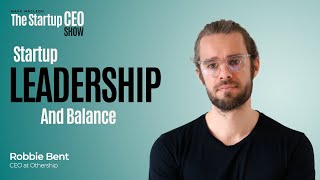
Mark MacLeod talks with Robbie Bent, CEO of Othership, about building a wellness business around saunas and ice baths. Bent describes the emotional swings of startup leadership and how he stays balanced while growing a physical experience company focused on community.
Chapters
You know, I was reading something like within five years, 90% of CEOs will consider quitting. And like around the four to five year period it's like, I hate this. I hate the customers, I hate my team, I hate everything about it. And so it's just if you want to do the thing for one, if you're not doing it for 10 years, it's hard to get advantage because advantage comes from scale over time. And so you know, yeah, this is my life calling, I'm going to do it. But, but it's if you want to do something for more than two years, like you can't foreign.
Welcome to the Startup CEO Show. I'm your host, Mark McLeod. In this episode I have the great pleasure of speaking with Robbie Bent, co founder and CEO of Othership. This is not your typical startup story. Robbie and his co founders are growing a physical experience business using many startup tactics and they are on a serious growth trajectory. Othership is a space for transformation. A unique combination of sauna, ice baths, breathwork, sound and community. Robbie's dream is to solve loneliness by giving people in major cities a healthy place to meet and to heal. This is a deeply personal journey for him. He has many hard earned lessons to share with us. I hope you enjoy our discussion. Robbie, it's a true pleasure to have you on the Startup CEO Show. Thank you for joining me.
Thanks Mark. I'm excited.
Awesome. So you know, Othership is not technically the standard plain vanilla startup and that's actually really why I wanted to have you on the show because I think you have unique lessons to share with everyone. I always find the origin story of a company to be fascinating, but I think that's particularly true in your case because it's really a personal journey and mission. So I'd love to start there and love for you to just tell folks about this journey you went on and how you arrived at Othership.
Yeah, absolutely. I mean, I think it's really hard to build something in a short period of time when it starts as like a business that has to be successful. And so I've always found that playing at passions and curiosities and side projects is like the best way to get started. Real things generally happen through tinkering is good ideas when they're obvious, there's a lot of competition and somebody's going to do it better than you. And magic really happens from tinkering when a non obvious idea comes. And so we were just starting out with an ice bath in a backyard on a residential street in Toronto. And that ice bath was free. And so if you knew, you would open the gate, come in, and there was an ice bath and a fire every night. And my friends and I did this because we were looking for something healthy to do in the evenings. I personally struggled with substance abuse throughout my 20s. And so I wanted to be away from environments where there were, you know, bars and alcohol, restaurants, stuff like that. And so every time I would go to a new city, I would go to a bathhouse. I started getting obsessed with hot and cold as a way to socialize. And most of these places would be, you know, Russian, on the outskirts of towns, a little bit dingy, but awesome and like amazing experiences. And so when I moved back to Toronto, four of my best friends, one being my wife, we just made this ice bath with an idea of could we create a community of healthy people in Toronto with something to do at night in the summer that wasn't alcohol related? And so it just started like that. It was a WhatsApp group. You could drop in and every night we go out and invite, you know, restaurant owners down the street, gym owners, just friends, and would just do this ice bath. And it was free of charge. It was just something fun. As the winter came along, obviously it was a bit cold outside to just like, you know, do an ice bath.
Literally a block of ice.
Yeah, right. So we looked at my garage and I had this standalone three car garage and it wasn't being used for anything. It was like a woodworking shop. And it's like, I wonder if we can do something with this. So we built, you know, non permitted sauna and an ice bath and made a little tea room and just we spent about 80 grand on it and did it ourselves just again to be like a community space. And in that space, things really started to go crazy. So within a couple months we had a thousand customers.
Wow.
At first it was free, then it became donation, then we started charging. And we really learned a secret in that space was that, yeah, people are coming for like the health benefits which you hear about on Andrew Huberman and Joe Rogan and Tim Ferriss and you see people ice doing ice baths on Instagram. But we found there was something deeper. There was actually an ability to connect to a meditative state and process emotions. And so we started designing classes and they were just for fun at first. So it'd be Valentine's Day and we'd have three couples and we'd say, oh, let's, you know, let's do a couple's ice bath where there's an eye gaze and a hug after. And let's all go in the sauna and share our first date story. Everyone's crying. By the end. It was like, wow, this is actually a really unique environment to run therapy like classes because nobody's on their phone. There's a state shift happening that, you know, reduces the inner voice, the ego, and makes you more likely to connect with your emotions. And it creates an incredible social experience with a captive audience. So we sort of saw, just through testing that, oh, I think this is an interesting format for a new style of group therapy, for lack of a better term kind of group therapy mixed with performance. So it's fun, it's inspiring. And so we started practicing all kinds of different modalities, instruments, breath work, meditation techniques, movement. And we were about midway through Covid and people kept messaging me. They started coming on their own as like their only place where there would be an app. It was self serve and people messaging me, hey, this changed my life. Like, you know, I met my romantic partner or I stopped drinking or this was the only social experience in the city. You know, just. Just these crazy experiences. So, you know, it was New Year's and I think I got 15 messages of like, hey, you had a real big impact on me this year. And I've been working at Tech for 15 years and I don't think it ever got a message that anyone cared about what I was doing ever. So that, okay, this is fucking cool. There's enough evidence here that I think that people want emotional classes in the mainstream at a large scale. And I think we think that there could be a new way to socialize. And so we signed a lease, which is fucking intense.
This is scary.
During, during COVID we're like, we self funded the first one, you know, it was $2 million build. And we're like, we think people are going to come, but are they?
And are you like mortgaging yourself? Like, what's the reality?
Yeah, so we had five partners we signed. You know, you're able to get a small business loan. So I personally guaranteed the loan. And then we self funded a couple hundred thousand dollars each. And so yeah, it was meaningful amount of money. But also we're like, this is a space we would use that we would love and we think it's going to work. And so we took a huge leap. And I remember the first piece of PR out was a blog to article. And in the comments some woman just said, you know, before opening, like who are these bozos? 40 people in a group sauna. Disgusting. Like, will never happen.
Yep.
I remember seeing that and being like, oh my God, like, have we committed our. It's a 10 year lease. There's a lot of money on the line. It was very nerve wracking, especially because there was no when we launched and still to this day, there is no sauna and ice bath class in the world. It was just a crazy idea. And so we opened just as the COVID restrictions came off. And it was just very clear that, you know, people wanted a space to process emotions. That wasn't therapy where you didn't have to say like, I'm depressed, I'm struggling. It was kind of an inspiring space. They wanted a space to do that in community and they wanted a space to hang out and socialize at night that wasn't alcohol driven.
Right. That's amazing. Wow. There's so much to discuss there and there would be many episodes. But first of all, I can say as a former vc, just your insight about kind of non obvious opportunities, I guess, why they call it Venture. My observation looking back is the biggest opportunities were based on an insight that was obvious, but only after the fact. Like Uber. It is obvious now with the benefit of hindsight, to know that it's better to just press an app and have a car show up. And for the driver, we can set aside whether they make a fair living in politics, but just as an experience, you know, to know exactly where your next fare is and not fumble for change and know that it's like a human with a rating and all that stuff. But if someone had come in to my office when I was a VC and like, hey, I want to disrupt the taxi market, I'm like, dude, that's a solved problem. Taxi, medallions, unions, like, forget it. Right? And so it's tough, I think, I genuinely think that's. That's why they call it Venture. I haven't then. And I will say, you know, like, on the experience itself. So I've had a couple of exposures. One you invited me down to, to the flagship place on Adelaide. And that building has a lot of positive vibes for me because it was one of my. One of my last deals I worked on as a banker was the sale of TWG to Deloitte. And they were a pretty big tenant in that building. But it's such a beautiful experience. The leaseholds are crazy and everything's thought out, you know, like I'm in the final stages of completing my 300 hour yoga teacher training right now and like If I wanted to start a yoga studio, I know what it is like, I'll put my own touch on it. But if I want to hire a yoga teacher, they know what they're coming for. But you've designed this actually completely bespoke multimodal experience. And so I, I think, I think it's really special. And then that Leela Journey event that I came to, which I actually think was my first exposure, I didn't feel like an outsider, but it was so. Because it was a welcoming environment, but it was so clear that there was a tight community. You could just see it and even just the way you described, you weren't even trying to build a business per se at the beginning, but you were building community from day one, which is such a vital asset. So yeah, kudos. It's really special.
Thank you.
I wasn't planning to go here, but so many people in general, and certainly so many hard charging founders struggle with substance abuse and I wonder if you'd be willing to talk about what life is like on the other side.
Yeah, so I like, you know, grew up, I have ADHD and so I love stimulation. I can work really hard, I can watch 10 hours of TV, I can like read an entire book in one go. But you know, I love extreme sports, I love coffee, I smoke cigarettes for a long time. And so stimulation for me, like I just love partying and being around people and I didn't really have, you know, in university, I just kind of wanted to be rich and I didn't care how. And that was what was important to me is a bit insecure to be honest. But it's okay. I'm going to do whatever I can to make a lot of money. And I was in some tech businesses that failed, totally hit rock bottom. And every night, you know, I'd go out for a glass of wine, I'd have four. And then I started taking cocaine and disappear for two days. And basically two days out of every week were shot. And you know, it was definitely to be a performer in that state isn't is impossible. And that's how I would deal with stress. And as my business failed, it was running for four years and I knew for the last two years it was going to fail. And I just was so afraid of that feeling. Like we'd raised $20 million, hired 100 employees at one point and it just wasn't working. And I was like, what's going to happen? You know, this is my life savings is my salary, what are my skills? And to deal with That I would, you know, just obliterate myself on the, on the weekends. And I ended up getting into meditation. 10 day Vipassana retreats, psychedelic medicines by.
The way, again, an extreme example, like 10 days is a big deal, right? Like seven days. And midway through they're like, I am going insane.
Yeah. And so, and then with my therapist they're like, hey, for you it's not like go and live in a cave for seven days in darkness or do a 10 day meditation retreat. It's like, can you just enjoy going for a walk outside and like be here with the normal. But those things did help me realize like, hey, I shouldn't ever drink again. I met a partner who was as committed to health as I was and my wife, now and co founder and mother of my, my son. And so she was a big support. But having something to do to deal with those needs for stimulation was like crucial. And having something to do that was social, where I could be around other people and still have fun in a specific environment was key. And so for me that was the bathhouse. That's what we're doing at other ships. So if I'm going to go out, I'm going to other ship. And so I solved my own need for socialization with something healthy. And you know, the ice bath doing something similar in the brain, it's tripling dopamine, norepinephrine. Same thing happens when you're, you know, using coffee or cocaine or cigarettes. And so it's a way for me to get that stimulation, but it also does something unique where it's boosting your baseline levels of dopamine. So it's not like these other substances where you're getting these quick hits and then depleting. So it was a very, you know, there's a quite a big correlation between founders, adhd, drug use as well, stimulants, coffee. And so ice bath for that demographic I've seen work extremely successfully. So on the other side now, you know, since I stopped using substances, I joined the Ethereum foundation, was quite successful there. Almost by chance, like, you know, I moved out to San Francisco because I followed smart people instead of following money. Yep, did well, but was just lucky and then started this as a side project in a completely different way. Instead of like targeting money, it was, oh, this is just something I enjoy and it's an MVP and it's for fun and we'll keep adding to it and adding to it and adding to it and the idea evolves to what it is now. But that's only possible. You know, in the last four years, I've taken maybe two vacations. I work on the weekends. I work almost every day. And I can do that because I wake up sober and fresh and I feel good. You know, the other thing, huge difference of being on the other side of that as an entrepreneur is even now, like, some days are just terrible. You know, there's a Mark Andreessen quote. It's like a startup is terror or euphoria.
Yeah, that's right.
And if you are in and let's say it's, you know, 80% euphoria, 20% terror, if you're drinking, it's gonna be 70% terror, 30%. You just can't handle the stress when your state isn't optimal. So I think the biggest difference for me is just one integrity. Like when I was drinking and using cocaine, it would lead to all kinds of bad behavior.
Yeah.
And now, like, you know, I'm actually somebody that I feel. I'm a good dad. I'm an amazing husband. I treat my relationship as my most important thing in the world. And it's just like a night and day difference in my life.
Amazing. Thank you for sharing that. This brings up for me boundaries, which is a thing I wanted to ask you about. You know, like, you run, presumably, you work during the day. Your business, prime time is actually in the evening. It's also the weekends. You know, you're very often there. You do have a wife, you do have a son. As you know, you and I have talked about in the past, it would be tragically ironic to be killing yourself in the process of trying to make everyone else healthy. So, like, boundaries are important, you know, how do you actually navigate all of that? Do you have. Okay, now I have, like, are there rigid separations? Are you able to create different contexts and switch off, or is everything just sort of blended?
It's really hard. And so I think I've gotten better, but I'm still struggling. And like, earlier this year, I'd been going for three years straight. I was running finance, construction, operations, marketing as a single person. And so since then we hired, you know, as a CEO, can you hire firstly to take things off your plate? And so we hired former director of construction from SoulCycle. We've hired professional COO, we've hired a controller. So my bandwidth has increased. If you're just stuck in the details all day, you can never get anywhere. You're just doing the same thing over and over. So that was a major. We should have hired even sooner. Probably. So that was a major change. But there was points like in March where, okay, we're struggling with Yorkville, which is our second space. The launch, New York is a complete disaster. We're going to lose these leases. Oh, my God. We've signed a lease and we don't even think we can build. We need from a code perspective, I might have just committed like a million dollar security deposit and like lose it. And, you know, I'm kind of crying each day and I'm like getting complaints about the experience and kind of. Just so you know, I was also just drinking coffee in the morning and then not eating until 5pm And I'm like, so upset that I'm just like, you know, honestly, fuck the customers, fuck this. Even though I love it so much. And so what I would do then is go to.
So.
So, like, just one is if you're in that state, it's just not you. You can't. You can't be like a real human being, you know. And so I'd come home from work and I would just be. I'd work from home, but I would be just thinking, my wife's like, where are you? And I'm not even there.
Yep.
So hiring really helped some other things that. But. But also, like, look, when you're starting, like, you might not even have the money to do that. So it's just kind of hard for a period of time. So I look at it as like, what am I willing to sacrifice for how long? And it's worth it to me, to be honest. Like, if I look back on it, like, yeah, absolutely. Okay. That's what it's going to take to build something great and like create something in Canada and go to the US like, that is what it takes. Like, you have to have fanaticism about every little detail and you just have to care at that level. So it was worth it. Now the role has shifted from like, okay, I'm not an individual contributor anymore and it's actually detrimental to the company for me to do that. And so now my role is mostly emotional. So it's like raising money, vision, ensuring all the employees are the right people. And that takes. It doesn't take like, I'm losing my temper on calls with people and they're afraid of me, which, you know, candidly. Yeah, I'm just trying to be transparent as possible so people know. But like, yeah, I would lose my temper and people are like, whoa, this guy's intense. And I would like, yeah, yeah, sometimes then regret it after, you know.
So.
So the boundaries I have now though, I, I take one week per year which I, which I'd always done. It's not enough but it, it's a good starting point to have my phone off. And so whether that is a vipassana retreat or just in nature it's like, or a psychedelic medicine retreat, whatever it is, it's one week with no phone. I'm trying to do little bite sized things twice a year where it's like a weekend again with no phone. Healthy eating I've taken. Now it stops because we just opened a new space but I was taking one morning a week to do a massage at myodetox and then a float and to just start my day again. No phone, no caffeine to kind of layer in. And then I've started doing for the past year therapy bi weekly, a two hour session of like ifs parts work. Just like feeling emotions in the body and like kind of talking through the way we are, like, hey, there's a competitor launching in New York. I'm afraid. What does that feel like? Not like just try to ignore it and be pissed but like, okay, I'm angry. Why am I angry? Because I'm afraid they might do it better than us. Okay, what is that? And like, you know, okay, let's feel that feeling. It's okay to be afraid, you know. And so before I used to just try to the hard feelings like push them away. And so what I've learned this year is to just feel them deeply and they usually subside a bit. And so that therapy I've been doing has been extremely helpful. And then on the dad's side I was also feeling guilty of like, oh, I'm not really helping, you know, I'm tired in the morning, I don't want to get up early. And there was a discussion with my therapist recommended to just have a discussion with my wife and was like, hey, what do you need for support? And she's like I need you to get up four mornings a week. And I was like, okay, well I don't want to. And so I ended up hiring a nanny, a morning nanny. You know, at first we were like, oh, we want to spend more time with our son. But it turned out to be more worthwhile to have someone come 6am to 9am four days a week so we could sleep and.
Yeah, especially because you're kind of on in the evenings.
Right, Exactly. So it just, it's, you know, getting sleep was super important. And so something I thought before was like, just be Resourced know. So I have two equity advisers for business advice. I have my therapist, I have a health coach. So another thing, like I wasn't eating in the morning so I did all my blood work with this health coach and now it's mandatory that I have a shake, even if I'm like all riled up, ready to go with like, you know, banana, avocado, protein powder, a bunch of stuff. So at least I'm getting my nutrients first thing. And I thought like, oh, I'm intermittent fasting, like who cares, I won't eat all day and like there's no nutrients there and like you don't have the energy. And then I would be way too stimulated. So right. Morning shake, nanny for support therapy time off intermittently. We're going to take our first vacation in a couple of years in Costa Rica in February. And I just feel now having.
Being.
Like present and emotionally aware is sort of what the CEO role is. And so I've been more aggressive about not being as in go like day to day for specific roles.
I am so glad you said that. I feel like I'm on a Crusade with my CEOs because especially in the tech world, right, there's just this default kind of, I don't know, assumed expectation that it's just back to back to back meeting, meeting, meeting. I'll pound emails at night, I'll do slack whenever. But if you actually think about if you're at the right altitude, if you're working on the business versus in the business, it's actually a small number of big decisions that move the needle. The right hire, like to your point, right? Really articulating vision, especially as the team grows, communicating that over and over and over again. And you actually want the freshest, crispest mind to make those decisions. And of course our brains are just not even designed to, you know, you talk about dopamine, we're addicted to dopamine in the wrong way. You know, I'm a guy who has a deep practice and I still find myself in the middle of writing something. I'm like, oh, let me go see who's liked my LinkedIn post. It's like the worst. And like this is me with like some level of awareness. So I, I really love that you said that and the importance of presence. And I also think that what othership does is actually really, well important for society at large, but certainly important for people who are interested in performance. You know, after I came to, you know, the flagship location, because I live in the middle of nowhere, I Put a, a sauna, a hot tub and a cold plunge in. And we hit it regularly and noticed that first of all, I do CrossFit. First rule of CrossFit is to talk about CrossFit. It's like the opposite of Fight Club. So I've done that, check the box. But. So it really helped me with inflammation. But I think more fundamentally I sleep better on the nights where I do it. Like just more deep sleep, instantly asleep and just, I don't know, just lots of benefits. So I think what? And, and I often, you know, you've just cited a bunch of ways in which you are investing in yourself. And I often say that CEOs are like professional athletes. Right. You have the same kind of expectations on your shoulders. Right. Like LeBron James has a team around him to make him peak. LeBron, he's got obviously, you know, physiotherapist, he's probably got sports psychology, coaches, you name it, you know, whatever the peak nutrition, whatever he needs, he's got it. And then he's also deeply investing in sleep. You remember hearing about how much sleep he was trying to get during the playoffs. And so I feel like you've got kind of a similar level of awareness going on here. Which, which is great.
Yeah, I mean I think anyone can like over a two year period grind it out 100. But you know, we're building this. This wasn't really a profit endeavor to begin with and now it is like obviously we want to make money, but like I would never franchise this. I want to build it out personally over 10 years. I want to build 100 locations and I want each one to feel like a five star restaurant or like a Four Seasons where it's that amazing and to have that motivation, like you can't, you know, I was reading something like within five years, 90% of CEOs will consider quitting.
Yeah.
And like around the four to five year period it's like, I hate this. I hate the customers, I hate my team, I hate everything about it. And so it's just if you want to do the thing for one, if you're not doing it for 10 years, it's hard to get advantage because advantage comes from scale over time. And so, you know, yeah, this is my life calling, I'm going to do it. But, but it's. If you want to do something for more than two years, like you can't, you'll just break. And I'm pretty hardcore and always have been and I'm like almost broken, like four times. You know, even with some of the practices.
So my yoga teacher, Kia Miller, her husband is a guy named Tommy Rosen, and he's written this book called Recovery 2.2.0. And he's very public about, you know, pretty serious substance addiction. And he's decades away from that. And he's devoted his life to helping others with that. And yet he even talks about how like every day is a struggle. Do you find the same?
No, because I've replaced again. I guess it depends. Like, addiction comes in varying degrees.
It does.
And I've just replaced, you know, unhealthy addictions with healthier addictions. And so work and coffee have taken the place of cocaine. And, you know, it's also like, it's just ruining my life. And so there's never a desire of like, oh, it's 8pm I should go out and like disappear for two days. And so now I have guardrails. I have like a wife. You know, I used to also do that to chase girls, of course, and to try to meet people. And like now I have a wife that I care about more than anything. And so a lot of the desires around, like why I was doing that have shifted. But, you know, the behaviors are there. I just know how to deal with my addictions. And so now it might be a fantasy novel. If I'm like really cranking, I'll read like Dune or some kind of sci fi and just read that for six hours as like my, my rush.
This fake. It's a pretty big book. The first. Well, the first, yeah.
So it's, it's, it's just like trying. It's, it's finding out what works for you. Because I also don't believe like, if you have to have fun. And so for me, I can have fun with psychedelic medicines and they're not as risky. I can have fun with cold plunges and bath houses. And so I don't feel it's a struggle like it was for sure.
Right. That's amazing. So, you know, you've referenced your wife before and I want to go there. Right. You know, most businesses fail. Certainly most businesses that try to go rapidly. Most co founder relationships fail. You know, there's someone typically the CEO has. I'm totally stereotyping here. But like the CEO has more context, more motivation, often more ownership. It has access to more experts, especially those that are raised venture capital. Because, like, meet this CEO, you know, like, you just, you're absorbing more than say a co founder in a different role. And so very often co founders don't go all the way. And now there are marriages within the. First of all, there's a number of co founders. Like, there's like six of you, and there are marriages within this, this group. So how do you navigate all of that? Like how. What were the kind of discussions up front? Did you go into it with like an awareness of the risks? I'd love to learn more about that. Yeah.
So my partner had been in restaurant groups and had had trouble his entire career with co founder Dynamics. I've been in five, five companies now as a co founder, early stage person. And so a lot of awareness of the importance of coaching and the importance of this upfront. And so right from the beginning, I was the CEO and there's no check on my decision. So if I say it's New York, it's New York. If I say it's Miami, if I say we're going this size, there's one person with authority. And I don't think you can build something where there's co authority. So first thing with the co founder position is one person is the CEO. And that's very clear right from the beginning. Second, we had coaching right from the beginning. And so especially starting when you don't need it, it's more important because you need to build trust with your coach. And every person on the team has to have that trust. So when conflict arises, which of course it does, because, you know, the co founder who manages finance for a single store is not going to be the cfo. The co founder who manages construction for the first two is not going to be the person who leads to 100, you know, and so almost every single role will be replaced except the CEO because the job changes, you know, and so we had that discussion up front. It was very clear and people were okay with that. And we started coaching early. So like from inception, everyone met with the same coach. We'd meet with her weekly, and when friction comes up, she would facilitate arguments and like, like moderate them. Like you'd have an arbitrator. And so we've had discussions around equity fairness. Over time, we've had to reshuffle splits, which I think is also, you know, was really good. And that we were friends. And so there's been resentment at times, and one person is pulling more weight than another when some people do try to do jobs where they didn't have the experience for. So all of that stuff we've had to go through and we're in a really good place now. But it was, you know, coaching, willingness to shift equity Clear line of decision making. And you know, it sounds complicated, but the good thing about it is if you can manage the dynamics, it's actually a superpower because you have five co founder energy. And that energy is like, if any one of us is in the space and there's something amiss, boom immediately escalated. Like, we need to fix this.
Yeah, yeah.
Every employee that deals with the co founder sees that level of passion, so you have five times the passion. So we're actually able to build a community that we want especially for a brick and mortar product, so we can just move five times faster. So, you know, in this four years, not only do we have multiple spaces and are expanding to the US we have an app as well. Some of the co founders. It's really pro work just on the. On the app and launched it. So overall, I think if you can make it work and if you can make it work with friends, there's like no better journey of meaning to have what they're like. There's nothing like, you know, in a friendship you can often avoid conflict and a business you can't. And there's nothing like growing with people around shared meaning. So to me, it's just the most wonderful gift. And I think honestly, every day, thank God that I'm like, not alone.
Yeah. Oh, yeah, I would. I think it's really hard to do it alone. That's for sure. Something my wife and I started this year. There's a marriage meeting. So every Sunday we meet, kind of make a ritual out of it and, you know, same agenda every, every week. What are we grateful for? What are the things that we noticed in each other in the past week? What chores? You know, divide and conquer. What needs to be done? Are there any issues? If so, let's surface them. And then plans for good times, you know, like let's, you know, not just let life happen, but let's actually plan, you know. So the thing I love about it is, well, I feel like we're like you said, you know, you got the coats before you needed it. We have this mechanic for investing in our relationship before, you know, like small issues left unaddressed. They're like cancer cells. They just metastasize. They get bigger and small things become big things things. So it gives me a lot of confidence in the relationship because I know we have this forum and then often if one of us is upset, well, we know we're going to meet that Sunday. And often by the time Sunday comes around, it's not that big a deal. And if it is we bring it up. And so I love that you guys have built in, I guess like a similar kind of set of practices, you know, to like it's a machine, you got to keep it oiled and finely tuned. There's lots of moving parts. It's like a high performance sports car. Right. You got to maintain it. That's really cool. Back to kind of putting on my BC hat, the single big. I look back my year 24 in the startup world and when I look back, the single biggest factor was timing. You get everything else right. Rockstar team, amazing product. But if you don't get the timing right, it's really not going to work. It seems to me from the outside looking in that you've kind of nailed timing. What are your thoughts on that?
Yeah, I don't think we could be any more lucky. And so there was a whole bunch of things like I had mentioned, like this wasn't a business. We were doing hot and cold, not because of the health benefits, but because of the community feeling and because we wanted a space to socialize. And so at the same time, you know, bath houses have existed in every single culture except North America. So there's a market that should have this because it's everywhere else since the beginning of like human evolution basically. And there's none. Then you top on, you know, there's a huge movement to sober living, which I've seen and lived, so people looking for healthier experiences. Then there's health benefits, which every day there's a new report, you know, on like we don't even market any of the health stuff because it's just happening for us. Then there's problem with loneliness in urban areas, which isn't quite well known yet. But it's, it's like the Surgeon General's number one thing is more dangerous than 15 cigarettes a day is loneliness. And that's due to increased use of cell phones, isolation from using things like Uber, Uber eats. Everything is instant. And as a result there's less human connection. Now even more people meet online than all other forms combined.
Yep.
So there's this whole thing around loneliness and people wanting to connect. Then there's like health and longevity that's exploding and then finally there's people that are looking for more meaning. So, you know, spirituality, yoga, meditation, stuff like that, psychedelic medicines. So I think we're really hitting a place where life is default unhealthy. And if you live in a city or default unwell, you know, you're at a desk, you're not outside Enough, you're probably not eating properly, you're on your phone all day. And so I think all these trends are kind of colliding into something perfect for us in a market where there is no competition yet. So timing is excellent and we're the first mover. Now brick and mortar is challenging with a VC hat on because you hit product market fit, there's no real, the barriers to entry are, hey, it's expensive to build, it's quite complicated, it takes time. And then to scale many, it takes an enormous amount capital and operationally it's extremely difficult because you're relying. You know, it takes me 50 to 100 people to run one of these spaces. So it's quite hard to scale. So it does take time. And then you have to put your, you have to sign the lease, you have to guarantee the debt. So it's not like everyone can just pop these up, but it will take us 10 years to build these in every city. And so you know, of course there's going to be competitors there. There already are. And so you see the idea and you can copy it. And if you're in a different neighborhood that's closer to where someone lives, it's out there. Whereas, you know, if you build Shopify or Facebook, like these have network effects that prevent competition and that just doesn't really exist here. So in one way I think the timing is perfect. In another I think you really have to think about how fast do we go while also maintaining, you know, a five star customer experience.
Are you, as you're planning kind of locations, facilities, are you planning around people returning to work, like moving into offices, Are you planning around residential kind of high density areas?
Mostly high density areas. And so when we look like the good thing is now is these just don't exist. And so as long as you're in a high density neighborhood, you'll probably be the only one. Yeah, so, but, but yeah, and even like in New York we'll look at, we'll get the numbers, we'll look at where the best equinox is, where the best Soho House is, where the best berries is and kind of look at the numbers of, of high end consumer fitness brands. But we definitely, we would not go into an area for a discount that was a tier two building. I think one, one of the only ways to stay ahead with these types of businesses is to like be the premier brand. And like brand is everything. So every email, every piece of language, how the front desk greets you at the front, how clean it is, how Often, the maintenance is done. How differentiated can you be? And so the minute you go into a tier two building, really, even a tier two neighborhood, it really impacts the brand. And so generally with these things, even though there's a lot of competition, there's only one Soul cycle, there's only one Berries, there's only one Equinox. And it's the. It's the brands that focused, like, maintained their brand promise. So that's kind of how I think about it. It's like density plus neighborhood brand.
Yeah. It's not a coincidence that those are your neighbors in Yorkville. Yeah, exactly. Equinox is a block away. Barry's is, like, literally around the corner. I used to go get shakes there all the time. Yeah, you're in the right place. That's the key. The three keys of retail. Right. Location, location, location. All right, you might cringe at this question. What tales, good or otherwise, do you draw from WeWork?
So the first one is, look, if you sign one bad lease for your first one, you're bankrupt. If you sign one bad lease in your first five, you're extremely impacted. If you sign multiple bad leases in your first 10, you're bankrupt. And at the end of the day, it's a unit economics business. These aren't software businesses. They have specific margins that require specific throughput. And so if you expand to leases that are not profitable, you will not be profitable. And so it was a extremely unique situation where someone was able to raise a ton of money selling a vision of a tech company that wasn't with. You know, you fast forward today, and you have a whole bunch of, like, I'm talking, like, I'm worried about one lease underperforming in my first 10. And they're like, 75% of their leases.
Yeah.
Are underperforming. So in bankruptcy, actually, we work would probably be a fantastic takeover. You could get rid of the bad leases, and the brand is probably still intact. But I think the biggest tale there is just be extreme. Like, there's this thing Jeff Bezos says is go fast when the decisions are reversible.
Yes.
And the only decision in brick and mortar that is not reversible is your leases. And so you have a lot of companies. You know, you have a grocery store where there's a retail division, and they get paid on how many leases they sign. Like, for us, I will walk every single space. I will go in the neighborhood. I will live there for a week. I will talk to all the tenants. I will ensure, you know, that ends with me Only signing the leases. And again, if you have to do for us to be really successful 2030, like there's no better use of time than ensuring those are the right spaces.
So you mentioned you came from the tech world. You just talked about lessons from Jeff Bezos. Like to what extent are you infusing this company with kind of startup practices, startup ethos, even though it's actually a brick and mortar business as much as possible.
I mean startups generally are interesting because they're trying to make the most work with less and they also have access to the newest tools. So you know, our entire culture is async. We're using loom for standup meetings and for reporting. We're using Typeform and video ask for our interviews. We use a whole bunch of integrations with Mariana Tech. We're quite good with paid ads and customer demographic sourcing. We do a type lean customer interview method from Lean startups to talk to customers. We use the very disappointed service BE from Superhuman. So we've taken everything from like creating amazing customers, from automating our processes that I, that I used in, you know, even our, our chat is in discord because it's company chat, but community chat as well, which is like super random. So a lot of time I've spent working remote in tech. So we have a lot of remote best practices and then infusing that with like, okay, well how do we also have 10 star hospitality? So one really interesting exercise we like to do is the Brian Chesky, you know, what is the 10 star experience where you write down over three hours, what would this look like if you had no budget or constraints? And we sort of use that to help design our processes. So a lot comes mostly not really on the product side, but more on like the marketing and communication side from the tech world because I think, you know, in E commerce, Silicon Valley style, companies that are doing consumer, they're just way ahead. However, it is a hospitality experience at the end of the day. And so we've actually driven more from Danny meyer. We've created 10 magic moments. And so we want you to have these 10 moments every time you step in to the studio. And that's sort of proprietary to us. The idea of like what are the 10 moments that if these happen you will guarantee to be to come back. And that is more from like the hospitality world. So I think there's a lot of opportunity when you're going into there hasn't been as much innovation as brick and mortar. So when you're going into a new Space and trying to take some of these management philosophies. There's a lot of opportunity and there's honestly less competition, you know, I love it.
That's. Yeah, I love that so much. Yeah. Danny's book Setting the Table is one I read many, many years ago. Found it to be pretty inspiring. As we start to wind down, Robbie, just maybe two final questions for you. One, I want to go back to Community. You weren't building a business then, but you've. You've built a really valuable asset. And I think lots of companies, you know, realize today, well, I can't rely on social. The algorithm changes. I'm renting audience. You know, I want to build my own audience. And a lot of people are thinking about community. Like, how would you like, can you reverse engineer? I know this is a specific use case, you know, it's a physical product, but like, how do you think? If you were advising a CEO and building community, what would you tell them?
That's a tough one. It just really is. Is business dependent, but it can be done, you know, like Notion. So firstly I would say, hey, like, what I always like to do is look at parallels in other industries and see what you can take. And so our business specifically is a mix of, you know, group therapy retreats, bathhouse culture, fitness, and we kind of. I went to probably 70 bath houses and also have done hundreds of immersive experiences and retreats to try to pull out what is unique. And so I would do the same if I wanted to build a community and I'd look like who has the best in my space. And like, Notion is an amazing example where they enable people to create templates and become Notion coaches. These people are so obsessed with the product. They love to share, how to get better, how to get more productive. So it's, what about your product? Do people want to share? So for other ships specifically, it's the. It's the classes, right? It's the piece of like, wow, I did that loving kindness class or that warrior class, and, you know, it was pitch black. And we all screamed and we felt bonded. And so it's finding the piece of the product that is the most captivating, most magic, most passion, most heat around, or the problem. So I'd look at it in two ways as, like, you know, in notion, okay, people really want to be organized. They're like obsessed. People are obsessed with productivity. So can you create a blog around, like, productivity hacks or can you buy a property like that that has a community around it? And so I would look at your business is like, who are the top 10% of customers that are most engaged? What is the problem they're solving? And can I create a form for them to solve it together and meet, whether it's in discord or a blog or something? So I don't think it has to be too crazy. I think it's just who are my most passionate customers that want to share what they're using this for and want to talk about the problem and then connecting them. And that would probably work for any business.
I love it. That was great. Totally makes sense. Final question. You know, you talk about you want to be at 100 cities, you know, your vision. Do you have a broader vision around the impact you want to have on people, you know, on society? I have a good friend, Cameron, who runs Retreat Guru. It's a place where you can go and find initially wellness retreats. And now there's a lot of ayahuasca retreats as their number one category. But their stated mission, first of all, is to help retreat owners run and grow businesses. But it's actually to elevate human consciousness. That's the thing they're trying to achieve. I'm wondering, you know, do you have a. A similar high aspiration for your impact?
Yeah, we do. And, and, and so we have one that's sort of unattainable, but it's. The vision is to solve loneliness. And then one sort of underneath which we're actually striving for is to make emotional regulation a practice that everyone does weekly. And so that idea is that you're coming into a space and you're practicing loving kindness, or you're practicing feeling despair, or you're practicing feeling confidence. It's this idea that, like, feeling into your emotions can be done the same way you go to a gym. And I'd like to, you know, a goal would be that 300 million people in the US had tried this and understand that regulating your emotions weekly can be a practice. And I think that is one closer step to solving loneliness. So, you know, the studios are just a function to help bring this to the masses. This idea that we can process our own emotions together in a collective.
Yeah, I love that. That's amazing. And such a growing problem. Robbie, thank you so much. I really appreciate you taking the time to sit with us today.
Amazing. It was super fun. I like the questions. It's always nice to be transparent. And hopefully, you know, being a CEO is just hard and it's shitty. And I feel all the time like I have to. I'm always the negative one. You know, I got to argue with the vendors, I got to argue with the investors, I got to argue with the employees. I got to argue with the customers. It's just as like, it's a really hard role that is not natural where you have to be the bad guy a lot. And for people listening, like, yeah, I'm doing well, but it's a struggle. You know, I think sharing with somebody is like, the number one thing is getting. Getting support. So I really appreciate what you do for the CEOs. They're super lucky to have you.
Awesome. Thank you, Robbie. Hey, thanks for listening to the Startup CEO show. If you'd like to connect with me, be sure to visit my website at markmcloud me or follow me on LinkedIn at the Mark McLeod or Twitter arkmcleodore. And if you want to tune in again next week, be sure to subscribe on YouTube, Spotify, Apple, or wherever you get your podcasts. We'll see you next time.
More from Mark





The Burnout Breaking Point - How Strategic Breaks Actually Increase Productivity


Emotional Debt - How Avoiding Hard Conversations Compounds Into Company Killing Resentment


The Death of the Specialist - Why AI Is Creating a New Professional Class Called Scalers