Shopify CEO Tobi Lütke: The Infinite Game of Leadership Full Podcast
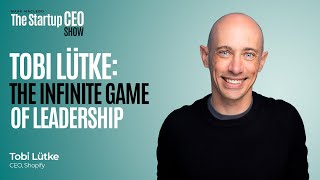
Transcript of a long-form podcast episode (Startup CEO Show) featuring Mark MacLeod interviewing Tobi Lütke (Shopify CEO). The conversation covers entrepreneurship, leadership, burnout, ambition and optimism (especially for Canada), hiring and coaching, continuous learning and decision logs, remote culture and company wins, and Lütke’s personal interests like motorsport and fitness.
Chapters
We need Canada to be an optimistic country because like, hey, spoiler, the best times are ahead of us. Like just there are. We'll need resources. We have a lot. So good. We need space. We have a lot. We have like to do anything you need amazing people. We have a lot. They need to be educated by excellent universities. We have a lot. So like we have all the ingredients. We just like the world needs from Canada. Let's go.
Foreign.
Welcome to the Startup CEO Show. I'm your host, Mark McLeod. When I started this podcast, my dream guest was to have one day, Toby from Shopify. Well, today is that day. Toby is my guest. As you would expect, this was a wide ranging conversation. It could have gone much longer than it did. I tried to just unpack his success. Less about how to run a 10,000 person company today and more about how he got there. Of course, we diverged into other topics, including his views on the Canadian ecosystem, politics, and our shared passion in motorsport. I really love this conversation and I hope you do too.
Toby. Welcome to the Startup CEO Show. How are you doing today?
I'm doing great. I was looking forward to this. It's good to see you.
Good to see you. Yeah. You know, when I started this podcast and I had a list of dream guests, you were literally the number one. And I figured, you know, maybe after a year I'll have enough credibility. But then I saw you at the Beta kit event and I was just like, screw it, I'm going to ask him. Worst he's going to do is say no. And here you are. So I'm really grateful for that.
Hey, I love podcasts. It doesn't take that much convincing. We have some fun priors to fall back on, especially on the topic of becoming or being a startup CEO. So this should be really fun.
Amazing. Now, one thing I noticed is that when you responded to my email to say yes, you would come on. You responded at it's either 4:20 or 4:30 in the morning, which tells me that you are either like in Iceland or the UK or you're grinding pretty hard. So I thought I'd ask. First of all, just let's start there. Are you grinding really hard these days?
So, I mean, look, the funny thing is I couldn't even like. It's not like that. I know exactly what was going on. There's like many constellations of hobbits could wind up being true. I. I don't know. I took rained hard. Yeah, probably. I, you know, sometimes I get up very early, sometimes I stay up late. Depends. I just sort of learned to listen to my body on this kind of stuff. I also travel a good deal, so it's one of our above. But, like, yeah, I. It's funny because this seems like a really controversial thing to say at various times, but, like, you know, I really like working.
Yeah, obviously, because you could choose not to. And from my vantage point, you're working as hard as ever, so you must love it.
Yeah, I tried. You know, like, you get lots and lots, lots of advice, and especially, you know, when you hear something 10 times, you should probably take it seriously. If you hear some. Hear something thousands and thousands of times, you're like. And feel you are sort of on the other side of the thing, but you keep getting suggested. You're like, yeah, it's probably me that's wrong here.
I think it's a feature, not a bug.
Yeah, yeah, yeah. So it's a joke in German about, like, you know, when radio comes on and says, like, on a highway, there's someone driving the wrong way around, and you say, like, what, one person? It's thousands. So, you know, you really have to get a bit of perspective. Anyway, this happened to me around, you know, just sort of like, work life balance and all these encoded things of, you know, there's clear, clearly correct assertions in there. But, like, yeah, my life isn't. Doesn't feel very balanced if I don't, you know, just get a lot of work done because just, like, I get to play with computers all day, and I got to play. I got to work with unbelievably inspiring individuals today. In fact, I work all day for, like, unbelievably inspiring individuals as my customers. Like, I have such an embarrassment of riches. So it's just kind of, you know, every once in a while, I like to play a video game. But, like, you know, it's just hard to imagine that any video game can keep my attention for very long, given that everything else that's going on, of course.
And so obviously, you know, as you know, the audience for this podcast is young startup CEOs who you once were. And for most of them, they can't even imagine the greatness that you've experienced. And nobody who achieves greatness is balanced, right? Nobody that we admire. No musician, athlete. You and I are both Formula one race fans. No Formula one driver is balanced. Right. Their life is completely geared around being the top 20 drivers in the world. And that's the world you live in, right?
Well, I mean, greatness. Look, here's the thing. Yes, but the craziest thing already happened for everyone who's a startup founder. You start a company just like it's totally unreasonable thing to do. And you did this thing. If you have started a company where you first of all decided you can do something totally better, which I applaud because it's an act of defiance and courage to say, hey, I know how to do this thing better here often also it's right, because the world's not that good. This is a funny thing. And also the world's not that good to begin with, even if it would be static. And it's not like we just have to reinvent the world shebang every couple of years. It seems like we are all in another delightful technology transformation right now through AI. I didn't expect actually to see such a strong, massive paradigm shift again. I've lived for a bunch of firms before, so that's good. But you made a conscious decision to, instead of working 40 hours a week for someone else, you work a hundred hours a week for yourself, just so you don't have to work 40 hours for someone else. Right. Like, that's not exactly what, what, you know, well adjusted normal people.
So.
So therefore everyone who starts businesses and runs them is kind of an unreasonable person. And I think that's an important thing to do. Like it's is kind of shaped by the unreasonable because we're reasonable. Don't get started.
Yeah, yeah, I love it. I totally love it. I feel like that might have been a Nike commercial back in the day, but I can't remember the exact phrase. This brings up for me something I wanted to get to, but let's just go there now. Which is burnout. Right. The number one reason why founders sell their companies is because they burn out. And I'm wondering how that live for you. Were there periods in this journey where you were like, I'm done. And how have you managed those boundaries? I don't know if you still live this, but I remember your Twitter buyer for years, I think was something like CEO by day, dad in the evening, hacker at night. I'm wondering, do you still keep those boundaries? Have boundaries been key and you not burning up?
Yeah, I think I was mostly speaking not out of like, of ambition, but more on statistics. Like it's. This is sort of the way the heat map of hours in the day kind of works out. But like it's. Yeah. So burnout. I have a complex relationship with that topic because I actually, like, it's kind of devilishly hard to talk about because there's a very real thing called burnout that. But I think it's much rarer than people would expect. And broadly, burnout happens in the following way, reliably, which is that if you do the kind of work, if a work you're doing, especially work that you have agency over, like, that you put a part of you, like your creativity is invested in it, and so on. This is the book that feels amazing if you end up succeeding. But if that fails often, especially for things outside of reasons like, for instance, corporate headquarters shut down the project, even though it would have been a good one or so if this kind of thing happens a couple of times in a row, there's a really, really, really bad thing that can happen, which is that the activity you craft and your work gets associated with pain and failure. And that is a thing that you have to unwind psychologically. And that requires either to live a highly examined life if you want to do the DIY version of this, or a therapist or. Definitely very good advice and some distance. My sense is the term is being thrown around pretty commonly for things that, like, it's not clear to me when I listen to some people talk about burnout, that it isn't the word they are not actually sort of looking for is hard. And I think this is not a great thing because, like, man, like, shit's hard. But it's just interesting because it's hard. Like, it's like you want to actually set yourself hard challenges now, some of them can be frustrating on top of it. So you end up getting this cocktail of emotions and that can be draining and that requires some recuperation time. But it's actually the fun bit about like, I don't know, most like it feels to me, at least in my 20s, I didn't need any of that kind of stuff. It just worked. And then so in my 30s, like, I got like, there's just not that much gas in the tank to the same degree. It's like also things have. Some things have turned mundane which were previously amazing. Like, just like the process of learning to, like starting a business or the process of learning to become an excellent programmer was like so invigorating to me in my 20s that it's like while doing the tasks I was trying to do, it also recharged me. It's like, it's like sort of a. You know, it's like driving electric car and having solar panels on the top that can actually recharge as you go. It's not a dream of everyone. Totally doesn't work in the numbers, but like, in. I think in the 20s, it can actually happen, and you're very lucky if it does. So with all that being said, you kind of have to figure out how to make this sprint maintainable and turn in a marathon. And I think what I see people in Shopify have had problems with is they just sort of opt out and try to do the mojitos on the beach thing or just go van life or something, and it just. That tends to not be the right thing. So for me personally, I've had. I mean, look, I have my ups and my downs and my moments, for sure. I've been. I started Shopify exactly 20 years ago, pretty much precisely now, around 20 years ago. So I Shopify gives you a month intermission every five years. I have them all banked. I. For now. So sometimes I threaten to disappear for four months, and then everyone ignores me because they know I could never even pull this off. So, no, I don't know. I wish people wouldn't talk so much about burnout so to leave room for when this is actually truly happening in a medical sense. And I've managed to avoid it, I.
Suppose for me, when it's come up with my clients, I've focused on two things. One is, let's reorient your role around the things that you love and that your soup are your superpower. Because I actually find in some ways it's as simple as that. If you're doing what you love, you keep going. And if you're doing what you hate, life sucks and drains energy.
One of the most important questions everyone has to ask themselves is what is the thing that you would do for free and you do for free that someone else would have to be paid for? And I think that's. It just gets at the heart of it, and it is just important. Like, so. So. So my darkest moments where I was like, closest other times where I eventually realized, you know, I went to a therapist and maybe I was trying to talk about my parents. I'm like, just. It's just not it. And eventually I just realized I never program anymore. Why? Like, I have so much, and so I added it back in my life and then everything was fine.
So that's amazing. Yeah. Yeah. So the superpowers is a thing. And then the other is actually make time for physical fitness. That's the foundation. Right. And if you do that and you're serious about it, you'll be serious about sleep, you'll be serious about nutrition. And then when you show up, you're just going to be a better version of yourself. And so on that note, you're still lean and mean. Is fitness. And now you're racing, which I definitely want to talk about before we're done, but maybe later. So is fitness like a thing for you?
Yeah, it wasn't. I mean, I was sort of out of shape after, like, sort of right after the time of ip. No, no, like it sort of. I never took it like super seriously, but my body needed it. So like, eventually I'm like, okay, well this is not good. And then I just realized how much fun I was. So I wasn't that diligent about it. It's sort of the last 10 years now that I've been much more thing. I go to the gym every day. So, like, I. I mean, I have a home gym, so I always do 20, 30 minutes after, you know, before breakfast. And that's been super stable for me. It's hard. It's a tricky thing just because, like, the effects of it are like, hard to like, you just have to like, kind of. I mean, everyone hears these stories like, this is. This is one of those which really, I think, like, I mean, I would also undersign the statement. It's just hard to immediately correlate it when you start getting into it. And people are too hasty wanting to see the results. But like, it just physical, especially resistance training and strength training, these things are just like incredibly, incredibly good for literally everything about if you want to do this kind of stuff. And you're right, the motorsport is just like, you really, really, really have to. This is just a lot less forgiving. The unsatisfying thing about a lot of a desk job startup kind of thing is, man, the feedback loops suck. Right? Like, it's. Everything is slow, everything is vague. Like, it's like even if you build software, you deploy it and then it might be about thousands of people use it and it just doesn't feel like anything. Like your server's lord goes up a little bit.
It's.
Everything is so abstract.
Yeah.
But that is the thing that does make it hard.
Right? Yeah. Let's take a step back and we don't need to cover the origin story that's well known, but, you know, you were not the original CEO. You didn't necessarily want to be CEO. You'll bristle to hear this, but you're obviously mathematically and objectively the most successful tech CEO in Canada and just like would love to unpack how you taught yourself to be that CEO. And you know, I quote you all the time to my clients about how you talk about having to re. Qualify for your job every year, but I'm wondering just how specifically you did that, especially because, you know, in my brief time with you, one of my observations was that you bristle at convention. If someone's to say, oh, this is the way you do it, like, you would almost be like, well, then I'm not going to do it. You're going to have to prove to me that that's the way to do it. So I don't think it's as simple as following people and doing what they do. So I'm just curious how you, how you did it.
Yeah, I, I reflexively just take the other sip. Yeah. But I wonder if that's actually, like, that's definitely important for my story, but I don't know if it's important for like, I think there's many, many different ways there, like. Yeah. How far to go back? I, I, you know, I, I just, I, I love computers. I love working with them. I want to be CTO of a company. I, frankly, as sometimes I feel like I still want to and you know, like me, my co founder, split the company. Just like so, right. Like Scott do the business. I do, I, I do the tech. It wasn't like When Scott left 2008, I think, seven, I was trying to find a CEO and then just sort of got to talk. But I also, I wanted to ask them smart questions. So I just, I'm like, okay, well what does a CEO actually do? So back then that weren't like podcasts like yours or any of these things. And you know, I started with books and read them, but this is how I learn things in technology too. Right. Like, it's figure out who know something and then figure out what they, what, what they learned or at least what they, how they explained their success. Right. Like, I, I tend to find biographies better because they, because I, I find it extremely hard to learn anything outside of a context in which it was discovered. And they also usually give you sort of a, this, what did the person know when they made their most important life decisions at the point when they were made? Because you get it sort of laid out in sequence. And so I've kind of made a study out of this type of decision making. And maybe this is a bit also the engineer in me. I just don't like arguing by analogy just because something is like another version of that. I just don't think that makes, I don't think that has anything terribly interesting to say. The world is pretty mid in terms of quality. Again, I really don't think the really remarkable things we can all list. It's a Golden Gate bridge and Rome and humanity has sometimes decided to make unbelievably great beautiful things. But that was a very specific times and most of the time we don't. So I don't know why people think doing something like everyone else is such a good idea. Fundamentally, the reason why I left, struggled on my own and wanted to start a company is because I want to do something world class, right? And if you want to do something world class, axiomatically you can't make it the way everyone else does because otherwise.
You get the same thing like everybody else.
So I think there should be a healthy skepticism of what everyone doing the same thing. And so, and it is really, really a fun practice to be able to argue from ideally very few axioms why a certain thing works. Which leads you in the world of companies very quickly to, I mean, very quickly to economics, very quickly to statistics, very quickly to social studies, to psychology, really and also philosophy. It's like entrepreneurship is a very applied version of basically all the sciences to a degree that just makes it like. Which is why it's so fun. And it's a perfect, it feels to me like the perfect excuse to then have a sort of skin in the game to have to learn as much as you can. Because frankly, any situation you're getting into, you will have to make a decision pretty quickly, right? There's a lot of decisions that have to be made in a given week, every day. A company, all in a company makes millions of decisions a day and you just hope that the vast majority of them go in the right direction. And so you have to try to be able to judge the right direction. You will have to hire people, you have to interview people, you have to know a lot about a lot of people. And I felt like I was committed to this basically already. It was a big factor for me when starting a company that I didn't like. Even if it wouldn't, even if it wouldn't work, I would learn a lot because it just seems like that's a game. It's learning a lot. The world's just unbelievably interesting. And so, you know, I read these books and then it was eventually an angel investor of mine who decided, John Phillips, who you think you might, you know, but who eventually convinced me that there's never going to be anyone who's like, you will care about Shopify as much as I do, which, you know, meant I should probably like be the automated decision maker and. Yeah, so that's what I did. It wasn't my ambition or like it's funny, it's like life is so path dependent. I would have been perfectly happy if that wouldn't have happened as well. But here we are.
You said something. Well, something I'm kind of latching onto. And what you said is how you wanted to do something remarkable. I'm just curious where that ambition came from.
I don't know. See, that's a good question. I haven't really thought about this. It just seems like maybe to reverse the question. Where would anyone's ambition for anything else come from? Why would anyone settle for anything else? The only thing worth working on on planet Earth is world class things that inspire others because we're creating gifts for each other when we make products.
I mean, it requires us to go out of our comfort zone and not everyone's up for that.
Yeah, but where is this comfort zone coming from?
Right?
Like, I don't. What is this comfort zone? I don't understand that. It's like, like why, why is that the label we put on it? Isn't this just like mediocrity?
It is, absolutely.
But, but what's about, what's comfortable about that? It's like I, I mean, obviously I'm being cute here a little bit, but like I, I don't know, I just, I want people to aim higher because man, like we, we only have one career. Like, it's like life's like.
Yep. You know, both you and I are immigrants to Canada.
Yeah.
Can't tell listening to me. But I came to Canada from a tiny island in Scotland when I was 11. And you know, my best friend on the island at the time, still in touch with him, has a part time job bagging groceries at the one grocery store in town and a part time job driving a taxi for the one cab company in town. Right. That could have been my life. I came to Canada and obviously not when I was 11, but as I was graduating high school and getting into university and just realizing like, oh my God, I could do anything, you know, and could achieve. Now I haven't founded a company, but certainly relative to where I come from, I've achieved a lot. And not settled, not gone for mediocrity. And you're right, I don't know. The Buddhists say we have many lives. I only know about this one and I want it to be special. I want it to matter.
Even if you have many, if you have any shot at making it a good one and maybe even making the next one better based on accelerating things a little bit into a good direction, you should take it. So ambition seems to be the most obvious, the only game theoretically valid strategy that exists. And so where is this being drained? This maybe is becoming a little bit of a Canada conversation. But the problem is very often, I mean, in Canada we often have conversation about Canada, but like, why are we so different from the United States? It's actually not. I don't think this is the way it works. It's like, why is America so different? Like everyone else same. Like it's like there's exactly the same problems in the G7 is like, like every country. Like, I mean the path to the problems is that this is a different one and of everyone it's making, but literally everyone's in the same position. Like, it's just like that can't, like. And then you have a United States which can't even. It can't help itself. Like having like multiple companies compete for the next trillion dollar market cap milestone. And like, it's just like, oh my God, that, that country. So why do we. Can't we reproduce this outside of the United States? Is what I. Is what I keep thinking about.
Yeah, I have some thoughts on that. I'd say first of all, stay on Canada for a second. And certainly in the context of like the tech ecosystem, I think the best and worst thing about the Canadian startup ecosystem is its proximity to the US because we can't help but compare. And I contrast that with Germany. Germany's a large country and it has a large domestic market. And there's companies like Rocket Internet back in the day that were quite happy just building products for the German market, whereas Canadian customers won't even buy new technology unless their US counterparts have bought it. And then of course there's the fact that the US is like 10x the size and this whole settling and cowboy mentality and we can do anything and then just 10x the population. I think we like to bash the US at the moment just because of politics and stuff, but there's a lot to admire there, that's for sure.
Yeah, Pretty remarkable. Lots to learn. I think we can criticize the United States as long as we also appreciate it for what is accomplished. And I think we should be insightful enough to realize that many of those things are the same side. Like two different sides of the same coin. Again, optimism is a minimum requirement for entrepreneurship you cannot be a pessimistic startup.
Founder if you don't almost hallucinatory levels of optimism, right?
Yeah. But also. Optimism has been for all of human history. Correct. In fact, usually been too pessimistic about future. There is zero upside of being a pessimist. There's just no, nothing happens around pessimism. And not to even talk about cynicism, which is like, it's sort of like it's going backwards. Yeah, it's like that. I mean that's basically the pessimists who didn't even manage to stay on pessimism. It's fine to be sometimes pessimistic about some project or things that are in front of you because sometimes we need for people being pessimistic to look around corners and just steer us around the obvious pitfalls. But you gotta be optimistic or medium long term. Otherwise you should not be in a tech company or you should basically you're dooming yourself towards taking a critic role. And again, society thinks critics are useful. I just, I really don't. I don't. I think if you are a critic, if you take the critic position to society, like the most defining thing that you could possibly do in your lifetime is say something so outrageously stupid to a builder to galvanize them into just like actually like I'm going to show them like, like that's your most optimistic scenario for your contribution to the like society's common project of your country, which is the economy. And I'm like, yo, like, let's not so much. And so, you know, anyway, like, like we need Canada to be an optimistic country because like, hey, spoiler, the best times are ahead of us. Like just like for the foreseeable future. Not forever, but for another bunch of years, bunch of decades. We'll need resources. We have a lot. So good. We need space. We have a lot to do anything. We need amazing people. We have a lot. They need to be educated by excellent universities. We have a lot. So we have all the ingredients. We just like the world needs more Canada, let's go. And I think that's the attitude every country needs to take because again, man, we have forgotten our common projects here. This is my biggest. Not to wear this too much into politics, but just since I'm basically committed at this point, I'm going to go there anyway. I think the worst thing that happened is this sort of talk about unbiased and neutral that exists. I don't recognize. This is not something I know from Germany. Germany always had a left and A right channel. So they're kind of like, here's two different perspectives. I think what happened in North America now, and this is like America is implicated in this, is that we have kind of tried to explain away the project we are on. And I think this is a problem. I think if you see people like Milei or like now, you catch a glimmer of this man. Liberalism is amazing. Creating markets, having like, you know, inventory can exchange goods. People can enlighten self interest. I mean, Shopify is like, fundamentally a celebration of entrepreneurship, right? Like it's. We pray on that altar. It is about individuals being extraordinary. And so in our infinite wisdom, we create these markets where people can exchange gifts to each other for whatever transfer of value you choose for currency. And so we need to stop talking about neutrality because it sounds like stasis. And of course, stasis leads to pessimism because stasis is the opposite of motion. But that's not at all what's going on. We are actually still committed to the project of building better societies that work better for everyone, one step at a time, every day, through these institutions we created and so on. But what we have to do is we have to reinvent this all for the new times. We have to continue building it. Like we are going on a chart. We are moving this project forward in a way that none of the founding fathers or John Locke or other people, Voltaire or other people who thought about these things would imagine possible. We are porting the concepts of entrepreneurship into the digital realm via constantly coming up with new technologies and products and resources and so on, so on and so on. An incredible wealth is being created all around us. And I think what's said is this is all framed in like, let's be unbiased or fair and balanced all the time. No, we are not fair and balanced. We are building liberal democracies. We are building a super unlikely thing here, and we constantly need improvement. Sometimes we need to look a little bit on the left and a little bit on the right for finding the best path through this sort of foggy terrain. And we need both sides, and both sides have something to add, but it's not the entire spectrum. So, sorry.
We could have an entire discussion on this, but that's probably not the right. It's not the right one.
But here's in as much as it is, I think let's try to land this plane and why I'm so passionate about this. God damn it. It's important that we start companies because it is just not possible to sustain any of these projects without a constant influx of remarkable individuals reaching higher, being ambitious, optimistic about the future, collecting the other people who want to reach for. For a better tomorrow and just making products that are like just, you know, reach anything from making completely new things possible that would never before to be possible to just improving everyone's day by like 1%. Because you love the leather boots that you're making or the technological gadget. We need all of that because that's what shape focus is made from.
I love that. That's great. No, Amen to that. So let's go back to you for a moment. I'm curious. Do you take. So you're a coder, you build products. Have you taken that same approach to building yourself as CEO? Do you have a leadership roadmap as an example? Here's what I need to look like a year from now and here's the projects that are going to get me there.
So I'm really. So you would be surprised how few goals I actually never used inside. I don't think goals are not motivating to me. I know this is a little bit character different personality types are different there I. One of my favorite books is a book called Finite and Infinite Games by James Carr and it describes this much better than I quote. But I just, I'm a journey person. Like I think of like. So anyway, this is probably too big a discussion, especially after I just rambled for 10 minutes. Just clear your afternoon, Toby, and we'll.
Solve all the world's problems.
Yeah. Suffice to say no, I don't have. Here's my goal. I have a mission statement right. Like for myself, which I find is very, very helpful. I do just like this is helpful for companies and I've learned to just like follow my interests in terms of stuff to learn and what to prepare for the next step. And you know, sometimes it's quite clear when we were talking taking a company public, I really, really had to learn just more about finance than I had to take the company. Like around the same time I also just had to do some media training. There's some obvious. Sometimes it's obvious, sometimes it's nebulous. But the key is that it needs to be quite clear to me what I'm becoming better at. Because again, stasis is the thing that will kill you otherwise you really do have to re qualify for these jobs. I don't think I'll ever retire from my position, but I'm very well might fire myself. Right. I want to be the or. I certainly think I'm pulling this off to be my harshest critic.
No doubt that you are.
And so I'm. I'm getting quite upset at myself if I make obvious mistakes. I am fairly good at record keeping to figure out if I made mistakes. And so, so this is sort of a way it's all put together. So it doesn't. It doesn't revolve around goals. It revolves around partly because goals didn't nominate a finite game. Like there's a. You know, like a place at which game point the time the game is won where infinite games unquantifiable. It's like education, wisdom. It's the larger things, the things that don't have a victory condition. Finite games are usually played in order to level up towards these infinite games. So I spend a lot more. I'm a lot more set and maniacal about the infinite games and then I'm very easy on the finite ones along the way.
This episode is brought to you by Fellow. Fellow is the only AI meeting management solution that covers every part of your organization's meeting workflow. Go to fellow app CEO to get 300 free minutes of AI recordings and start having better meetings.
I remember you telling me maybe it was 2012, this is back when people's offices and homes weren't in the same location. About how you would go home at the end of the day and replay your day almost like a movie in your head and go through a learning loop and correction. I'm wondering, do you still do that?
Yeah, yeah, I do. It's pretty involuntarily and I've kind of always done it. It's not something I probably could turn off if I wanted to. I just want to make sure again, I see it as my craft to be as good as possible for the next day and try to make this. Of course I fall short or often, but I then endeavor to learn the right lessons from that. And if I made a mistake, I. I'll apologize for it. And I think that's again, that helps me with my own goals of the things I wanting to become very good at these things as well. So I've developed this further. I take better notes these days. If there's big decisions, I sort of capture the decisions plus the information I use to make the decision so I.
Can revise as like Shane Parishes decision log.
Yeah, exactly. And I think that's good practice sobering at times. Like the thing I specifically look out for is I don't worry about having making the wrong decision if I couldn't have known that. Right. Like what I really worry about is when I make a wrong decision and the right information was readily available like someone would have already known and I didn't ask them or I just didn't know about a certain thing being sometimes commonly done. Sometimes I dismissed the standard way to do a thing too quickly and didn't realize there's significant wisdom encoded in that that wasn't immediately apparent. That exists as well. But yeah, that realization that you just.
Said that there is some wisdom in the standard. I'm wondering whether you've been more open to that as you've gotten older.
Probably better to ask for people that I work with.
Yeah, I'll do a 360.
I don't know. Yes, I have learned to value. Yes and no. I was extremely dismissive about everything initially because I just think I thought everything was like shit. Now I think everything is mid. Like that's basically the difference. And sometimes mid is actually exactly what you want. It's like I need to have a world's best account receivables departments so as long as the right things happen that's probably okay. I probably don't want to have the most innovative finance department. We have to gap. Accounting needs to be meticulous but not maybe creative. In fact creativity is usually creative.
Accounting usually gets you in trouble.
So there I want to. If you put this on a scale from 1 to 10, say 10 is world class and then you have 9 is good and 8 is sorry, 9 is great, 8 is good, 7 is meh. And then everything else is like whatever. I don't care about everything else parts. So 7 out of 10 so meh is like that's like the high end of like that's basically what you get when you're doing a very good implementation of what everyone's doing. Like the best version of sort of the middle of a spectrum. Starbucks coffee is 7 out of 10. It's not meant to be the best cup of coffee. It's just reliable every single time low, you know. So I believe that startup exist to address good grade and world class and there's some large companies that manage to pull off every once in a while great stuff which is remarkable and it's unprecedented I think but it exists now. You know Apple does it once a decade or so. That's.
Are you able to see the greatness in yourself and the greatness in your company or are you always focused on the gaps?
Always focused on gaps. I'm like if you get 98% on a test. I ask what happened in the last 2%. I'm like, I've got good Asian parent energy.
Wow. So how would you quantify, like, I don't know, your base level of happiness?
I think, I mean, lots of studies on this, right? Like, I think people have sort of a base level that they always will revert to. So, so mine is like, I'm also German, so, like, probably Germans never get to like, like they are on the scale. So I don't know, I probably like, somewhere in the middle. I, I'm, I'm very. Yeah, like, I mean, look, I'm, I'm obviously been insanely fortunate and I, I have a super interesting job and a fantastic family. Like, I, look, I, I'm, I'm like the lottery winner on every one of us kind of things. All this stuff is really, really, really cool. But I mean, happiness is a bad goal. It's like, it's an unachievable thing because you will always revert to your median line. You can be content. You can also be, I think Alpha Brooks calls it happiness. You can optimize your happiness. You can do this by workouts, more health, more being surrounded by beauty and these kind of things care about your craft and your work. So I've got all this going, so it just gets to me. Happiness is a vague philosophical conversation. So I'm not trying to blow up your very simple question into a very complex answer to avoid the issue. But again, I think burnout can also happen when people aim at something that's unachievable. Like humans are not happier. There's no by the way. Some people talk about wealth and objects and products and these kind of things. They seem to indicate that they believe there's this life of complete utopian bliss that can be achieved. It's like, I know a lot of a billionaire aesthetic that exists. None of them are like this.
So, yeah, yeah, for sure. I'm glad you actually brought this topic back to Bernio. Then we'll move on to another topic in a second. Because listen, it's a, it's a long journey. Even just for startups that, you know, achieve much lower levels of success. It's a long journey. And my belief is actually by not losing your edge, not losing your dissatisfaction and chasing the vision, but taking a second to just appreciate where you are and where you've achieved and even if you're nowhere near your vision, just to realize, hey, we've made progress, I actually think that fuels you and prevents burnout. I think It's a thing I'm saying.
A lot of complexifying things. Let me say something simplifying because I think this actually touches on literally every one of the topics we've just talked about, from burnout to sort of personal mission to personal, like learning journey, even to economy and optimism. You know, what really, really matters is winning. Like, it's. I know it. This is like. Like, I know this is not easy, but at least it's simple. The thing like burnout will be stemmed off by winning. And. And, you know, like, I think culture is often talked about at companies. Yes, all very successful companies have really, really, really fit for purpose. And great cultures and all losing companies don't. But you know why? Because culture is not centrally planned. Culture is not even grassroots, organically grown culture comes from winning together and celebrating it. And it's just like you got to figure out how to set yourself up for a steady stream of wins. Like, this is actually where goals are super valuable, winning goals. And then making a point of taking the second to do it together is important. And here's going to be another thing I say Shopify happens to be, I think, the biggest committed remote company in the world, which I don't recommend. It works really, really well for us. But I do think it's like something on the order of two to three ticks harder than doing it together because of this waiting. Winning together does not feel as nourishing remotely as it does when you're in the same location. I think this is where it's a human connection. It's like, hey, you were there when we did this thing, but you weren't there. The same IC channel just doesn't count in the same way. I think about this a lot. And so. So, yeah, I'll tell you my. We brought all of a company, everyone who works here to Toronto for a week recently. First time since we've done this since before COVID And it's hundreds and hundreds of people flew in from Japan alone. You know, like, it's a big company that's everywhere in the world. And that was probably my most fun week of my life. It was so wonderful.
That's for you as an introvert.
Yeah, I just loved it. It was seeing everyone and we were like, we did hack days together, which is a real important event for us for three days. And we were there till midnight every day. And it's just this complete, just like, stop. Like, drop all pretense of being these, like, very serious people, captains of industry, what have you. Just like, like, we are all just like fans of each other, right? Like and just enjoy each other. And we had like fun talks and like just like it was, it was absolutely wonderful. And those are the moments where I'm like holy shit, I love doing this. It's so cool to get to work on something like this and work with so many inspirational people and I don't know, like that'll nourish me for a very, very long time. And you know, day to day is like day to day. These jobs aren't that interesting in terms of like, like I, I probably make this sound better than it really. Like I always say my 16, you know, 16 year old would be amazed by what we have accomplished but just made by how I spend my day, right? Like because it's just like, like meeting after meeting and you know, like look, people don't actually bring me their victories, they bring me their problems, right? Like it's like, it's like I get to like spend all delivering over like these sort of 51 to 49 could go either way. Decisions about something that neither, no one likes either of the bars because hey, you know, like whatever. That's what, you know, that's what you signed up for.
Yeah, well I tell you we can go on for hours. But you do have a company run. I'm asking two more questions. Maybe one on the business side and one not. When I look at Shopify, it's the only company I can think of in recent memory where all three active co founders were crushing it in C level roles at the time of ipo. And there's many factors behind that. Obviously very smart, obviously right time, right place. But all of you I believe starting with you had a coach and in fact the same coach. And I think at one point you had two coaches and then you brought that first coach in house and built a coaching function. And I think you invest in many, many levels at the company. I wonder if you could just talk about the power that impact that coaching has had on you and why you made it a company wide thing.
Yeah, this is really important again, specifically Shopify got started in Ottawa, Canada which also meant we did not have like a, a very deep time pool of people who've built tech companies before. So we just made a, I think very wise decision to hire directly out of university. And just my belief is there's no speed limit for personal growth really. It's just sort of induced by school that everyone has to sort of move ahead at the same time. Wall clock time. We've sort of learned that I mean school basically makes the assertion that everyone the best configuration for learning is that everyone learns at the same pace but we make the level of understanding variable. That's what grades are which I just think is completely. I mean it's an idiotic idea. I don't know why we keep doing this but anyway so I know why we started it but I don't know why we keep doing it. Real life isn't like this. You can have people go for 10 years of Wall clocked career time in a year or with an extremely well chosen project that is just slightly too hard for who they are and what they can do but create this sort of alignment longing for accomplishing it anyway. And when people reach and further than they even thought was possible and it changes them in a way that it's just like a privilege to see. Then Shopify IPO'd with an off the executive team and the next level of a company. Only one person in the entire group of like 20 people ever worked for a public company.
Great Russ.
Yes. So I think that's pretty cool. I think it came out of this commitment for growth because we felt that while some people are extremely good at doing the self directed doing difficult things together is always better. Coaches have ability to see every situation multiple times and it just ended up becoming such an obvious and amazing aspect of of what we are doing. Every time I send people to coaches which I insisted on with my exact team it just made such a difference and eventually we just built out as a function. We call it talent acceleration and it's been with us ever since. It's definitely look the thing you're trying to find the last hundred years of business before the 2000s really until the 90s I would say there's true and false on one axis. Like think an Eisenhower kind of quadrant thing here like true and false on one axis. Obvious non obvious. On Vabo the the Last sort of 2010 since Frederick Taylor and then all the way to I would say sort of beginning of full Digitalization in the 90s I think all that needed to be done is people just sort of coming up with fairly obvious and correct things. They needed to figure out which ones incorrect things about how to build a business and between the correct ones. It's amazing how long this took for people just again Friedrich Taylor didn't bring a stopwatch to a factory to figure out how to turn building I think this was Bethlehem Steel how to take a task and turn it into many smaller tasks that could be individually timed and so on this is sort of beginning of scientific management they called it back then. That was a technology. Like imagine there was alpha in bringing a stopwatch to this flight. So I think sometimes we really just underestimate just how slowly it actually how long it took us to even come up with obvious stuff. But we know this all since then. It's the unobvious stuff that's correct that we are looking for. And every time you find unobvious but correct thing, you know, you've found alpha, you're trying to build a better company than everyone else. So you got to look for this stuff. I think hiring for potential was unobvious then because it wasn't believed that you could then accelerate it. And putting coaches on payroll was also an unobvious but correct thing. And the way those two things interact with each other because probably each individual wouldn't work. So they were combined like they were compository. So anyway, I think this is like it's a neat little micro example of I think how I like thinking about building the company. Just try to figure out where is what and try to like almost all the value that's left on the docket that we haven't incorporated into the businesses of today is unobvious. But correct ideas.
Love it. Last question, Toby. So we have a mutual love for motorsport. I think yours is larger because you have a motorsport team and you race. I love that. For me, I love just the, all the athleticism and just like the things we will do to get like a 1% improvement. So you just all this technology, there's everything and I'm just, I don't know, just tell me about motorsport in your life and like, I mean are your board directors losing their every time you get on a race? Like what's happening there?
Yeah, funny story. I actually have a reason why I this was around IPO time, which again the IPO nine years ago. So this was not recent. I, I, I learned about keyman insurance and I had to sign a document with like had a long list of things I would no longer be able to do. Like guys like I'm like almost nothing on this thing sounds appealing to me but like if you make me Simon Stockman, I'll do all of them because clearly look healthy. Like, you know, I don't like, maybe I also start a company because I just can't work for other people. I have clearly authority problems. So like, like if you make me sign that I can't do stuff, I will do them. So which by the way, my, my chief of Staff has definitely figured out as a, as a way to get me to do stuff. So yeah, like motorsport is actually one of those I picked up. I, I, I, I didn't for a long time. I didn't even have a driver license in Canada. Was never, I mean, I love Formula One. I'm lifelong Formula One fan, grew up like 20 minutes away from a Nurburgring in Germany. So this was all weekends and, but like I didn't think that would be something I would be doing. And so I went to a track one point and like some one of us got myself invited. It was like, oh, I actually I was a plus one of someone who got invited from the office and you know, like they put you in these cars and then just like give you a helmet and tell you to, you know, here's what to do. And you know, after I think two laps or so, they waved me in again. I was wondering what was going on. And it was, they told me I was almost out of fuel because it was actually like 40 minutes later and I was like, holy shit, I need to do more of this. I think what I love about it is, I'm sure you've done track days, but what I love about it is there's a perfect lap time out there. It's theoretically possible and your actual lap time is just the sum total of all your inadequacies.
But so true.
You just go. But I find that so motivating. I love like there's nothing in the world I love as much as competing against myself. And I think that's actually probably a through line of a lot of the things we talk about. I, I just, I'm not motivated by other people. I, I just don't, you know, I, I, I build things for other people. I, I, I send gifts to other people, but I compete against myself.
Yeah.
And so I, so I, I, I love that you, you have to learn so much. It's so undeterministic. It's not possible to be better prepared, I mean better trained, but there's no set pieces. It's not like chess or so where you can just basically breakfast on an opening book and just memorize it all the way. To win most of your games against unsuspecting victims, you gotta just build your intuition. And so it's a wonderful sport. Every lab is different and so on. Anyway, I got to do it. It's one of the most fun things I get to do. I do prototype racing also, I should say, like the fact that a friend of mine, David Hannemansen got very much into sports also there because he encouraged me to keep at it. And so yeah, it's incredible fun and highly recommend grabbing a lap day if possible. And I have, I've done it.
I used to have a Maserati GT and burnt through brakes and engines and it's, it's actually meditative in some ways. You're just so locked in.
Yeah, I call it zen Buddhism at 250 kilometers an hour.
Yeah, that's right.
It's true. I mean this is like adrenaline has to be part of it. I found like kiteboarding to be insanely good for this as well. It's like, it's like this combination of lots of non deterministic elements like tires, waves, water, these kind of things and, but some danger like, like it just, it creates like enough adrenaline to like I can't meditate. Like I just like I will refactor some code base if I sit down and don't not do anything but like I. That clears the head and I think that's wonderful for that. So. Yeah. And you know, Formula one is now popular and that's kind of, you know, that sort of happened at some point. Thank you, Netflix.
Yeah, exactly. Thanks. Netflix. Yeah.
Yeah.
Toby, thank you so much. Honestly, this could have been many hours. Fascinating. And as a proud Canadian, you know, we're very, very proud of you and Shopify. Thank you so much.
Awesome. I really enjoyed this. This is great.
Hey, thanks for listening to the Startup CEO show. If you'd like to connect with me, be sure to visit my website at markmcloud me or follow me on LinkedIn at the Mark McLeod or Twitter arkmcleodore. And if you want to tune in again next week, be sure to subscribe on YouTube, Spotify, Apple or wherever you get your podcasts. See you next time.
More from Mark





The Burnout Breaking Point - How Strategic Breaks Actually Increase Productivity


Emotional Debt - How Avoiding Hard Conversations Compounds Into Company Killing Resentment


The Death of the Specialist - Why AI Is Creating a New Professional Class Called Scalers