Startup Resilience: How Clutch Bounced Back from Near-Collapse
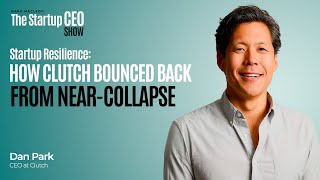
Dan Park, CEO of Klutch, a used-car marketplace that buys from consumers and resells after reconditioning, talks through a failed funding round that forced layoffs and a pivot back to profitability. He covers unit economics, the 10-day money-back guarantee, and what he learned about capital intensity and speed when everything nearly fell apart.
Questions this video answers
Close to $200 million in equity.
About a 20-acre lot with ~100,000 square feet of space and 40 lifts.
Approximately $1,000 to $1,500 per vehicle.
A 10-day money-back guarantee and a 90-day complimentary warranty.
Over 1,500 cars (he also cited ~40–50 Honda Civics as an example mix).
Chapters
I think a lot of these successful companies have similar existential stories like this, but, man, I think they just make you stronger and we've got a fundamentally better business as a result of it. Yeah, I don't regret anything from the last three, four years. All the decisions we made were by and large the right decisions, given the information set that was in front of us. And I think it's part of the company's DNA.
Welcome to the Startup CEO Show. I'm your host, Mark McLeod. In this episode, I sit down with Dan park, co founder and CEO of Klutch. Klutch is offering consumers an entirely new way to buy and sell used cars in Canada. He's been through a wild ride of his own, high highs and low lows. At one point he had to lay off two thirds of his staff and now they're on the growth swing again. We walk through the whole clutch journey as well as his lessons from Uber Eats. He used to run Uber Eats Canada. Lots more topics here. I hope you enjoy the discussion. Dan, welcome to the Startup CEO show. It's a true pleasure to have you here. How you doing today, Mark?
Thanks for having me on the show.
So, you know, I've been following. I've known you for a long time, knew you back when you were at Azure Capital, but I've been following the clutch journey from afar and seems like you had some high highs and low lows, and I really want to get into that. And I'll say for what it's worth, I see a lot of clutch license plates on the road. So good.
It's working, it's working.
Maybe just super briefly, just for folks who don't know what clutch is. Maybe just tell us what clutch does.
Yeah, we're an online marketplace for used cars, fully vertically integrated. And I think that's the difference. We own all the inventory we have. You know, as much as we are a tech company with software engineers and data scientists, we also have full production facilities where we reconditioned vehicles at scale. So today I'm sitting in, you know, one of our main facilities. It's a 20 acre lot that has two buildings with 20 acres. 20 acres? Yeah, with about 100 square, 100,000 square feet of space with 40 lifts. So you know what our model is? Basically we buy. We buy cars directly from consumers at scale. And the magic is really in that vertical integration where we then recondition those vehicles. And if you've ever been to a car mechanic, you know that the markups on what you pay as a retail Customer are pretty insane. You know, the cost of labor, they'll charge you anywhere between $120 to $140 an hour. Markup on parts is, you know, 4X, like 80%. And so we're able to deliver a ton of value by offering you a car that is fully reconditioned. And we put anywhere between $1,000 to $1,500 of work into that car. But you as a customer are getting anywhere between 4 to $5,000 of value for that vehicle. And so we then resell those at a very transparent, seamless experience where you can buy a car directly online.
I'm a CPA by training. I spent six years working in accounting firms which was boring and painful, but I may have the math on this wrong. But I used to audit some car dealers and I remember the gross margin, not even the EBITDA or net income, the gross margin being in the single digits. And the thing that made the math work for them was services. Is that, is that the same for you as well?
No, not, no. I think we're, we're, we're fundamentally changing the business model. We do not offer service at least today. And so it's really about the transaction where car dealerships, and from an economic standpoint we, you know, we effectively have the same similar economics to a dealership where we make money is on the financial services products that we sell. And so the difference with us, we offer financing, we offer warranty, we offer some insurance products, we stand by the products we sell. I think a lot of folks, at least in the traditional world will try to sell you products that may not be valuable. So things like there's some anti theft products that are out there that are really just a sticker on your window or you'll walk into a dealership and be like, hey, you know, driving around in Toronto is dangerous. Like you should buy this life insurance policy. And so we don't offer any of those. We offer pretty basic coverage and protection plans. We modeled it similar to Apple Care, where you know, you want peace of mind when you, when you buy the product, but you shouldn't be buying things that you don't need. And our software actually will surface things. You know, if you've got negative equity and if you've got different, you know, scenarios on your loan, we'll offer you different products to make sure that that's tailored to what you need.
I'm always fascinated by companies that are venture backed startups. Therefore, you know, presumably going after large growth, but in mature, established Industries like, I don't think anyone's ever enjoyed the process of buying a car, especially a used car, and then haggling and is it good or not? But like, what was the insight to say there's like a venture scale opportunity here?
Yeah. And you know, we met back when I was in venture and the opportunity I got excited about was really the fact that in Canada there was no retail brand for used cars in this country. Right. The only way that you can buy or even sell a car in Canada until we came along really was you either visit your local dealership. The average time a consumer will spend in a dealership is anywhere between four to five hours or you meet some stranger off of Kijiji in Tim Hortons parking lot. Right. Like those were the, those were the two options. For every other consumer category that you can think of. There is some national retail brand that is trusted, that offer offers consistency. And in the US there's a company called CarMax that a lot of folks have heard of that started back in the early 90s and it's a large, you know, one of the largest retailer of used cars in the US and then along came Carvana around when we were, when we were starting. And so we were trying to leapfrog some of the, if we can kind of compare the used car industry to Walmart and Amazon where CarMax is kind of the Walmart and then Carvana is the Amazon trying to leapfrog the Walmart and build a different way to buy a car in this country and offer that brand that spans coast to coast. So when you go to Vancouver to buy a car, you know that you get the same experience and the same product than when you go to Toronto to buy a car.
Just to make sure I understand that analogy. So CarMax being Walmart, meaning it's primarily physical, you know, and then you, Carvana.
Is online, you know, you can take the item, kind of take it off the shelf, I. E. Test drive it. Whereas in Carvana it's all online. You can, you can, you can get it directly delivered to your home and it's much more digital.
And so your experience, I've obviously not bought a car on clutch, but like I shop online, you bring it to me and I try it out. Is like I don't go to a dealership ever, right?
No, you shop. So you shop online, you buy it outright. And for the most of the packages we sell, we offer a 10 day money back guarantee, a 90 day complimentary warranty. And because we've taken title of each of those vehicles and then run it through our production. We call it a production facility. It's a massive facility. We've got licensed techs, we have vehicle inspectors that work directly, that are clutch employees. Those cars have been through our process. So as a result, we can offer those guarantees where if the car isn't what you expected for whatever reason, you can return it. And, you know, that's a hell of a lot better than, you know, a 20 minute test drive down the highway. Right, like that. You know, the average car buyer doesn't really learn much from doing a test drive. Right. Like the average car provider, you know, they, they, the, the, the brakes work, it doesn't smell, the air conditioning blows cold. You know, it handles well. You know what, most cars that were built in the last five to 10 years, you know, handle well. They're well, you know, as long as they well maintained and reconditioned, they'll be good quality cars. And we can tell you, our license mechanics can tell you whether or not, you know, this car is actually up to certification. And so we've got a better ability to assess the quality of vehicle certainly than any average consumer. And if it doesn't fit in your garage or, you know, the hockey bag doesn't fit in the trunk or whatever reason, then you can come return it.
Do you find you get taken advantage of a bunch or. It's actually pretty good. Like in terms of.
No, I mean our return rate is super low. It's like 5%. Half of those are actually exchanges. And so the true return rate's less than 3%. The reality is that, you know, you get almost every penny back. There's some like government licensing fees that you like 10, I think it's 10, $15 that you don't get back. But you know, ultimately you get the bulk of the refund back. But it does take, it's annoying to unwind that transaction. So people don't want to like, you know, buy and sell. Buy and sell.
I had Aaron Burry from Willful on the podcast last year and we were talking about the challenges of building her company. I'm wondering to what extent you share these challenges at clutch. So one is like institutional investors, there's less appetite for B2C, like direct to consumer companies than there is for B2B. A lot less talent who truly understands how to build consumer demand at scale. And then in her case, one time transactions like I create a will and then I'm good. Do you face those same challenges?
I would say to a certain extent we Face all three. The first one though, I think there is certainly globally a subset of investors that are very attracted to this space. There's been a lot of money made as well as a lot, but a lot of money lost in this space. And so if you pick the winners, you've done really, really well. And as a result there is a lot of capital. It is a capital intensive business and it's a very, very high barrier to entry and competitive moat business which investors really like. And so, you know, there is, there is a subset of investors that are very bullish about this sector and we've raised close to 200 million in equity. And so the money's been out there, but it's been primarily in the US. The second point around, talent, I think that's absolutely true, particularly in Canada. There haven't been a lot of folks that have built large consumer businesses in Canada. And so that's, that's something that we're, you know, we're, we're, we're trying to work with. But you know, I think, you know, we've been successful at experimenting. I think our company has a really great culture of iteration, speed of iteration. And so, you know, you make mistakes but you can unwind those really quickly and get to the right answer in pretty short order. And the last one about a one time transaction, I mean our unit economics are positive from, and quite positive from day one. And so, and people, I think people, well, for a will, I mean, I guess you have to refresh it every once in a while. But for us the reason why people don't transact more regularly is because it's actually pretty terrible. Right. You know, the buying and selling experience of a car in Canada from my perspective is fundamentally broken. And the reason why people just hang on, you know, you ask the average person like how would you get rid of your car? And the thought of that is very painful, right? It's like, how am I? I don't know, like, you know, they don't know, right. And so we've made it much easier. And so we have, we've have customers that buy, that bought us. I mean, I think our, you know, we've got several customers that have bought and sold like you know, six, seven cars on our platform personally. And so we do get a fair amount of repeat purchases. And I mean there's a, there's a pretty high network effect in this business.
I was going to say you probably get a bunch of referrals. Someone has a great, I was so much better than like the way I used to buy a car.
We have an gps, right? You know, we've got a lot of, a lot of.
It's better than Apple.
I know it's a, it's. I think the bar is low and so people's expectation is low. And so people get pretty fired up when, when they go through our experience. I mean, people, a lot of people, I mean the, the, the most. If you look at the word clouds that come on Google, when you, you know, look at all your reviews, the, the, the. I think the number two word is skeptical, right? Like I was skeptical at first, but like it was amazing. And so there's a lot of disbelief. People, you know, every day, you know, we, we take customer feedback very seriously and we have a real time feed of all of our customer feedback. Google, all the different sources, Facebook. And the reviews that we get are like, I can't believe it was so easy. I didn't know that this was an option for me. This is amazing. So we get a lot of great feedback and so we get a lot of referral and kind of word of mouth traffic, which is great. And so I think the last one, I mean, I think, you know, conceptually at least in traditional car buying and selling, that's probably the case. I think we've really focused on the LTV of the customer and having them come back and have their, you know, a lot of folks will buy a car for themselves and then, you know, they're a parent and you know, they need to buy a car for their children and they'll come back. And so we get, we have a very like, I think we have a strong network effects for the business.
Amazing. For folks who are listening who do have a kind of a direct to consumer company, what could you share and who are just thinking about, hey, how do I scale it? What can you share about and what's worked for you? I don't want you to reveal anything proprietary or super secret, but do you have a playbook for how you go to market and what channels, anything you can share on that?
Yeah, I think for a marketplace, I mean, we're a marketplace. And so for us, selection in inventory is a big driver of demand. And the channels we use when we are a smaller marketplace with less inventory are very different than when you have a bigger inventory and more selection. What I mean by that is, let's say, let's use an extreme example where you have 10 Honda Civic or 10 cars and where we, if we were to market without a home and tv, it would be a complete Waste, because you're trying to market to an audience to buy these 10 cars. But in reality, the people that want those 10 cars, one, there's only 10 cars to sell. Two, the likelihood of spending all this money to find the person that wants to buy that specific car is pretty low. If you're driving all this traffic to the website and they're like, I'm super excited about clutch. I'm excited to transact. And you get to the website and there's only 10 cars, and you're like, oh, that's disappointing. Right? Because the car I want is so. So I think you don't want to be relying on tactics that drive a lot of traffic when you don't have a really robust marketplace. So early days, we'd rely more on our listing sites. So we'd list our cars on Kijiji, on Autotrader, on Cargurus, and we'd use more targeted Google. We'd be buying very specific search terms that are very specific to the inventory and much cheaper, frankly, than buying. If you're trying to buy Honda Civic, that's expensive. If you're trying to buy blue 2019 Honda Civic, Honda Civic, that's a little cheaper. And so we use more targeted channels to then sell cars. Today we have an inventory of over 1500 cars. And so now we have the ability to do tv, we have a partnership with the NBA. We can do billboards and out of home and radio and drive traffic. Because I think we've got probably something like 40 Honda Civics or 50 Honda Civics. And if you're looking for a Honda Civic, you know, the chances of finding the one you want are pretty high.
Yeah, I mean, you're a marketplace, but you're not just in the middle. Right. It's not just the build demand, build supply.
Like, yeah, we're a marketplace retailer. I think the official, like the VC term is managed marketplace, because we, we do, we do take possession. It's a pretty, I think, nuanced distinction. But, you know, it's the evolution of most marketplaces in that, you know, ebay was the original marketplace connecting buyer, seller. And then Amazon came along and started owning inventory and owning logistics and vertically integrating. So I think that's where we're. I think autotrader is the most. I was kind of like the equivalent of trying to connect two buyers and sell our buyer and seller together with no real infrastructure between that transaction. Today, we're trying to facilitate. We're creating liquidity effectively for the seller and creating a market because all of all of our inventory is acquired from the general public. And then we take that inventory into our, into our facilities and then we are listing those on our website.
I've been a long time investor in Hopper and you made me think of them when you were talking about how the financial products are kind of actually key to making your business work because they've largely become an insurance company. Yes, you buy flights through them, but it's all these financial products around it and really just this allocation of risk, I'm paying for you to take on some risk for me, that's actually been key to their revenue growth.
Yeah, I mean, effectively the car, in Hopper's case, the flight is the cac and it's a positive. I mean, hopefully it's a positive cac. And then from there you've now acquired the customer and you have the ability to then layer on and provide value added products that continue to fuel more margin for the business.
So let's talk about your funding journey. Right, so you see, you raised 200 million in equity and you've shown up in the Globe and Mail a couple of times. Once when things were really bad and then once when things were really great, which I loved reading. And I was reading the story before this about the $95 million round that fell apart. Maybe just. You've probably told that story a hundred times, but if you don't mind, just tell folks that story about the buildup and then having to cut and. Yeah, it's a fascinating war story, you know.
Yeah, 20. 20. I mean, 20. I, I started back in 2019, September of 2019. We hadn't launched an Ontario operation yet. We had, we, we were, you know, I raised the seed round and we were about to close it. We signed the term sheet, I think it was like early March. And then global pandemic hits. And Janet Bannister, who kind of saw the auto marketplace of Kijiji and how successful that was and then was like, oh, this is really interesting because this seems like a better version of that. And that was really huge, so this should be huge. So that was her bet. Turned out to be the right one. But it was in the middle of, as we were washing groceries and there was this whole contemplation that we're never going to leave the house again. And so I was obviously nervous around whether or not we were going to close that. But true to our word, we closed that. But then the next month, sales evaporated. It went to zero. And back in 2018, 2017, we'd been on a you know, seven year bull market at that point. And you know, I was convinced that like, okay, this is it. Like with this is, I mean, we kept on going and I was convinced that the pandemic was the thing that was going to basically, you know, that was, that was going to be the downturn, that was going to be, that was going to be the, the shoe that dropped and turned things kind of to the negative. And the reality was, you know, pretty shortly thereafter with all the stimulus, like think things went crazy, right? Like used car sales, like, if you remember back then, the used car frenzy was insane.
And actually, yeah, you're right, right.
A used car.
I traded in a car and I made money on it.
You probably made money on it, which. And cars were appreciating in value for the first time ever, right?
Yeah.
People, people went from like, I want, I don't, I don't think I ever want to leave the house again to like, I never want to get in an Uber, I never want to get on public transit and I need a car. Right. And so people started buying cars, prices started basically inflecting and then our demand went through the roof. And so within a couple of months things were going exponential. And then we raised a Series A seven months later and I think we quadrupled revenue that year. And so we raised a Series a in late 2020. And then from there things continued. And this was not just unique to us. I think a lot of growth stage companies at that stage in 2021 were able to raise boatloads of money at really high valuations and you know, a lot of them. And the name of the game at the time was growth, like aggressive, aggressive growth. And it was this, you know, I, you know, I'd spend time at Uber. And if you weren't in particular in marketplace, marketplaces are generally winner take most or winner take all. And if you didn't plant the flag in the geography that you wanted to be in first, you were, you were just at a disadvantage. And we saw that at Uber where we had competition in some of these markets and we came late and it was so hard to make up share, right? And so you had this, you had, you know, we had a competitor in Canada that raised a bunch of money and they were launching markets, so we had to launch markets. And it was all about who grew fast to raise the next round of capital, right. If you grew faster, if you grew faster, you would get more money. If you grew and get more money, you could grow faster. It was a self fulfilling prophecy. Back in 2021. And so, you know, that was the focus. It was like, if you were going to. If you wanted to raise a lot of money, you just had to grow. And so we did that, and we did that pretty well. And by the end of 2020, 2021, we'd raised. We were. We did a, almost $100 million round, which was our Series B. That took, you know, three weeks from my first introduction to closing. It was the fastest thing ever. And the investor came in, handed us a check and said, let's. Let's go. There's like 100 million behind this if you. When you. When you spend it all. So let's get aggressive. And that's when we hired 300 people in six months. And, you know, we were scaling. I mean, we were scaling, and we were scaling very quickly. We. I think we.
You.
We tripled revenue again that year.
And.
And then, you know, within. And that was like the first board meeting when that investor came in, it was all about being really regressive within the next board meeting, which was three months later, it was like, there's no more money. Stop. Right? Like, get the business profitable, right? And we're like, well, I think, you know, and this was like summer of 2022. So summer of 2022, we were. I mean, we were trying to raise more capital. And every VC had been. I think you were either in Aspen or like Lake Como. Like, no one wanted to talk to us, right? And, you know, we'd done our first layoff in the summer of 2020, 2022, which was early. That was before a lot of companies did. But I read that Sequoia, like, How to Survive Crisis, that thing. And, like, it was like, if you went deeper, faster, you'd just be better off. And when things start to turn, they generally don't inflect back quickly when rates are starting to rise. It's not like the Fed was going to start. They were going to start reducing them again, or at least anytime soon. So capital started evaporating. And so we got pretty nervous. And so we were like, we want to sustain this growth rate and sustain our burn. We need to raise more capital. So I was out in the market in the summer of that year, and, you know, nothing. Nothing. It was just crickets.
It was. No.
No one was picking up the call. So we said, okay, well, fine. Let's focus on the fundamentals of business. Let's come back up for Labor Day and see if we can raise a round of capital. I have this rule that if you don't raise if you don't have a term sheet signed by Halloween. You just can't. It's hard to close around by the end of the year. And, and, and so especially in the.
Us, Thanksgiving is a big deal. Right?
Exactly right. So you want to have a term sheet by, even by Halloween. It's tight. But that was. Halloween was the deadline we got, I think we got the term sheet on the 28th of October and then we signed it on November 4th. And so we had it in hand on a path towards closing and invariably it slipped towards the holidays. And you know, this was a large multi trillion dollar institution and some directive from the top was probably like, hey, look, we're pulling back on deals. And so on January 5, I got a call as we were working through this deal and probably like two to three weeks away from close, they called us and said, hey, look like we're not feeling this anymore. There's only. Carvana is our biggest US public publicly traded comp. And they were going through a similar downturn. And so there's a lot of negative headlines. And I think the commentary was like, hey, there's only so many negative headlines our IC or investment Kitty can actually read. And so we're out. And so we're like, oh man, this is. We kind of like banked on this because we were, you know, we were on the process towards closing. I think we'd actually escrowed 20 million in equity already. So that was January 5th. On January 12th. And I remember these dates like very. They're ingrained in my head. January 12th, we executed a 150 person layoff and basically took the company down from 350 a year earlier down to 87, exited a bunch of markets and reversed a lot of the growth that we had. So it felt like we were taking 10 steps back. And I think when you do that, I mean, obviously there's this existential thing of is this worth doing anymore? We made all this progress, but now we're behind and we hired all these people and now we're tiny. How do you get through that? And I think we kind of, Steve, who's the founder of the business and my partner, we've been doing this together, kind of in the trenches together for the last five years. We kind of looked at each other and said like, we've got like, the product is great. It's like, you know, you know, sucks that the capital markets aren't valuing this, but we've got a really great product, great experience. The core team is Fantastic. Like we owe it to ourselves to give it a shot. Right. And so we, we put our heads down, we, we set some like very achievable milestones. Not bestly achievable, they're important milestones both from a profitability and growth perspective to be able to hit in in the summer to prove to ourselves that we actually had something that was worth pursuing. And over the last two years it's been really just heads down, working on the core fundamentals of the business and we've got to a place where we've kind of crawled ourselves all the way back, built a ton of stability around the business and now it feels like we can be back in growth mode again with the luxury of having really positive unit economics, profitable business and using everything that we generate to invest back into growing. So I think it's been, you look at these things in hindsight and I think a lot of these successful companies have similar existential stories like this, but man, I think they just make you stronger and we've got a fundamentally better business as a result of it. Yeah, I don't regret anything from the last three, four years. All the decisions we made were by and large the right decisions given the information set that was in front of us. And I think it's part of, it's just not part of the company's DNA.
Are you still taking your own meeting notes? Let me tell you about an AI tool that I'm using to take meeting notes for me. It's called Fellow. It's an AI meeting assistant. It takes human level AI notes, it tracks my action items and decisions and keeps everything in one place built with security and privacy at its core. Fellow is the only AI meeting assistant that leaders trust to capture meeting notes and recordings while keeping your data safe. Thousands of organizations are consolidating tools and relying on Fellow to capture their meetings. The team at Fellow is so confident.
That you'll love it.
They're offering an insane deal to startup CEO list listeners. 90 days of unlimited AI powered note taking and recording, completely free. Visit Fellow App CEO to sign up today and experience the AI meeting assistant trusted by leaders everywhere. You hinted at it a little bit, but I'm wondering where we could go deeper on like your state of mind when you just like let go of 2/3 of your people. Where was your head at?
I mean it was the most, it was probably the most emotional. I mean it's the most emotional I've ever been at work by far. I mean, look, I mean anytime have to make a decision that affects the livelihood of individuals. It's. That's a, like, that's a. You know, I mean, my definition for entrepreneurship is when you have someone's paycheck on your shoulders, right? You know, you, You're. You're lively. If you're, if you're responsible for someone's livelihood, that. That is like, that is a. A huge responsibility and a privilege. And so, you know, making that decision was not something that we did lightly. It was the right answer for the business, but, man, it was painful and I think, like a testament to the folks that, you know, lost their jobs that day. I mean, I would say the vast majority at least understood and accepted. While they were obviously sad and disappointed. I was also early enough where I think a lot of folks landed in really great places. And so I think the speed, the speed of doing it was helpful for us. And the thing that made me at least sleep better at night was the fact that if we hadn't done it, the rest of the team would not have jobs either. It was a crucial and pivotal point in the business where if you didn't make that decision, there would be no business at all. And so I think that's how you at least intellectually justify it. Whether that's the right answer or not, I don't know. But I think the. The decision itself or decision itself was obvious, and it was the right academic decision. But emotionally, I mean, like, you know, it's. It's not easy.
My first startup I was CFO for was this company called Solanus Technology, which is ironically still around. And we had to, like, go up in the dot com bubble, half of our staff in one day. And people walked in and there was like an envelope on their desk. And it told you to go to one of two boardrooms, one boardroom we were keeping you. And we just said, hey, here's what's going on. Pack up your stuff and go home. Everyone else just wait to be called. And like, it's like you're bringing people out to, like, literally execute them. It was horrible. Yeah, we did the exact same thing. Yeah.
And we. And I mean, we had people showing up to the wrong room. It was not ideal.
My understanding is shortly afterwards, you did our recap.
That was in the summer of 2023. So that was when, after we had proved the milestones. I mean, it was tough, I think, for investors to put more money in unless we'd proved some of these milestones. And so we were very focused on proving some of these more profitability milestones. And we got there and so we were able to do, I mean, a large ish financing that was a $20 million financing at the time that allowed us to get. We were partly towards profitability, but the intention of that capital was to get us to full profitability. And so that was in the summer of 2023. Kanan, which was our lead investor in the series A, you know, amazing conviction. Laura, who's on the board, has been fantastic partner over the last five years. You know, she, she really, she really, you know, she was super supportive and, and, and stepped up in probably one of our most challenging situations, but, you know, gave us. Gave us the. The breathing room to be able to go and pursue that goal of trying to become a profitable business and became.
They became a majority investor then.
No, no, no, no, no, no, no. I mean, the deal structure allow. I mean, the math was effectively, you know, if you want to do the reverse engineering on the math, it's like, okay, we put X dollars of capital in. Here's the return that I would like to get. And here's what my intellectual view on our academic view on what I think the value can be on exit. You know, what do I need? What ownership level do I need to be able to. To get there? And so in a lot, in many ways, it was. It was one. Buying back their position, but also increasing it for some.
It's amazing. Yeah. Well, I love that that happened. And so things are now up and to the right again.
Yeah, I mean, look, it's. I mean, it's never linear and it's. But, you know, generally the trend is linear to the up and to the right. You know, I think we prove it's amazing the difference of running a business that doesn't burn cash every month is versus, you know, again, we're not like hugely profitable. We're basically just break even. But, you know, that, that allows us to, you know, you know, we don't. It's a lot easier to sleep at night when you know that, like, every minute that you spend isn't, like, putting you further towards like, existential crisis.
You're now running the way like 99% of businesses run, which is they need to make more money than they spend. Yeah, exactly.
Well, yes, exactly.
It's just in our little venture bubble that we deviate from that.
Well, yeah, I mean, look, I think, you know, I think that. But that it's hard because that formula works, right? That formula. Uber, Airbnb, you know, Facebook, all these, you know, all these large Tesla, like all these.
It works when it works. If I understand correctly, Uber had cumulative losses of $95 billion. Like you could argue that it didn't deserve to exist, even though it's created lots of market cap, like for years. It just didn't make sense.
No, no. 100% like the unit. I think, you know, I was there and I was like, how are these, like, how are these unit economics ever going to.
Right?
And then it does. I mean, Carvana, I think they were burning something like 2, 3 billion a year.
Right.
And you look at that and you're like, well, how does that have value? Right. From just like a financial standpoint. Right, like that math doesn't math over time. But ultimately, if you can get there over time. I mean, the beauty was back then is that you could just like the capital train, like the gravy train of capital was readily abundant.
Sure was. Oh, you got a pulse. Yeah. Here, here's a check. Let's go.
Yeah, and that works, right? If, if capital's super cheap, like that works. And that was. Working like that would, I think that would have worked with us. Like you, you, you scale and then you buy the, like that. That allows you. Then, you know, at certain point, then you, you, then you work on the efficiency. I think this period over the last, call it, four years have forced a lot of companies to do both grow and become profitable at the same time. And I think that's really hard. When we were, when I was at Uber, that was very hard. And I think as a result, there's a lot of, there's a lot of, you know, there's a lot of casualties as a result of the last couple years because doing both is actually pretty hard and, and, and, and painful.
I'm curious what lessons you took from your time at Uber and applied here at Klutch.
I, I think the biggest one for me, I think there's this, this for a lot of folks in tech, they have this desire to be so product focused. Uber was not product focused. Uber was so operationally focused. And throwing bodies at a problem is a lot faster and cheaper than throwing engineers at product development. And if you're operating in a business that is not just pure software, and even then, a lot of times you can do a lot with the existing product that you have in front of you forever. We worked on the MVP of the Uber Eats app, was what we used for almost two years. And we'd have to operationally hack around so many of the deficiencies in the product. And we do a lot of that here where the Default isn't like, let's build product for this or let's spend engineering resources. The default is fire up your Google sheets, hire a couple more bodies, like, try to figure it out before we start investing in product. I think that's been a huge lesson that we've taken away because chances are if you build product without actually having to build the operations around workflows or process, invariably the product that you build is going to be wrong, either not used or need to be significantly revamped. And so getting that user, whether it's external or internal users, the user feedback on any product that you're building is crucial. And doing that before you actually build it is even better. And so I think that's lesson one. I think lesson two is just speed of iteration, particularly if you're a business that is cash flow negative. I alluded to it before. Every minute at our peak, we were burning 6 million a month at clutch. Wow, what is that? That's $200,000 a day.
So I'm a bank for 200 somebody's salary every day, like a senior person's salary every day gone.
And so you're like, okay, well you know, how was your $200,000 day? Right? Like, you know, that's, it's, it's, it's, it's gut wrenching and it's just a fight against time. And the math on that is pretty simple. You know, if you've got X dollars in the bank and you're burning, you know, Y dollars a month, you know, you figure out your Runway pretty easily, right? And so that time is so crucial. Most startups for at least some period of time will be in call investment mode or cash burn mode. And so every moment, to me, every moment is so precious. And so you don't have a lot of time to mess around and try to test and iterate and you know, pontificate or whether this feature is the right feature or not. Right. Like you, you don't, you don't have that luxury, you know, particularly in a consumer business. Like just get it out, you know, put it in front of consumers. Tell me if this works or not. You know, yeah, it's half baked. Fine, doesn't matter, right? Like put it out. Speed, I mean speed of iteration for us is so crucial. I think a lot of big organizations and I think one thing we learned is when you don't have time, you know, and there's so many, there's so much literature on this, you know, if, if you get two months, if you get A year to do it. It's going to take you a year. Right.
So work expands to fill all available time.
All. Exactly. Right. Like, I was. I was at an event the other night with some of the largest brands in the country at this, like, NBA event, and we're talking about marketing campaigns, you know, most of which take at least a year long to put put together. And I'm like, we don't have. A year is an eternity. A year is just like a year in startup world is a full eternity. And like, so you got three months, two months at, you know, three months tops. You know, ideally a month to put this out. Right. Like, you've got. The speed of iteration has to be so much higher. And so I think that's like a pretty major takeaway and something that, you know, we've always obviously tried to implement here because, you know, time, time for a long time was not our friend.
No. Not at 200 grand a day. I had Rob Kazam, who runs Float, on the podcast, and he also spent time at Uber. And the big thing for him was just that direct. Like, you directly solve a problem. Like, he would get parachuted into a country and he'd be like, oh, we need, I don't know, 2000 smartphones to go and hand out to drivers. Like, oh, great, so I should go and find, like, somebody to go do that. Like, no, literally go to the store and just start buying all the phones. Like, don't come back until you've bought the phones. It was like that, direct.
Yeah. I mean, in Philly, they were. They were ticketing drivers or whatever and impounding cars. And, you know, the. The GM of Philly literally showed up with a bag of cash at the impound lot and started, like, paying drivers to get the car released.
How did you stay motivated in the hard times?
I mean, I actually, I probably. I found something outside of work that I can focus on. Because there's only so much you can control. Right. You know, I think that the tough thing is a lot of the stuff that we went through was actually not specific to our company. It was actually more macro. And so the macro stuff, you can't do anything about macro. Right. Like, if this is timely, if tariffs are implemented next week, I can't do anything about it as much as I'd like to. So you kind of just need to accept the macro and react to that. So I tried to focus my efforts on things that I could actually control to give myself a little bit of relief from the. The uncontrollable I turned to fitness. So fitness was a big thing. I went on this crazy fitness fitness and my partner Steve went through. He started doing half Ironmans. So we tried to put our energy into. Some people turn to less productive things like drinking. We put our energy towards trying to do things that we had control over. So I think that was actually great. I think. I think I've continued that over the course of the last couple years and allowed me to, like, you know, relieve stress and, you know, alleviate headspace. I've got two kids, too. And so when I try to go home, I try to really decouple that. I think, you know, work's important, but I think trying to separate the work and the life is actually not a terrible thing.
Amen. Yeah, I mean, you know, clutch is x many years old. I don't know. And may it continue for a very long time. But in the grand scheme of your life, it's going to be a chapter or two chapters. It's not your life.
No, exactly. And hopefully it's big and successful. But there's other things that are important in life and so focus on those things. But from the business and specifically around the business, I really believe in the product that we're selling. I think we're truly disrupting an industry in Canada. I think we are providing consumers a much better way to buy and sell vehicles. And, you know, maybe this sounds cheesy, but I think this needs to exist. You know, someone needs to do it. For now, it's me, but someone needs to be building this in the Canadian market. And we actually, both Steve and I, we turned to this like that. Like we want. This has to exist like this. Someone needs to do this. And it'll be. Be sad if this wasn't an option. And we get this like when we pulled out of our B.C. and Alberta markets and we're actually going to go back, but, you know, we still get a lot of folks being like, you know, when are you coming back? Like, we need you back here. And so there's like, there's that draw. And I think that's important. You know, I think. I think, you know, it's. It's a business, it's a. It's a purchase that actually makes a difference in someone's life. A bad car purchase can actually devastate you financially. And there's so many people that get taken advantage of when they're trying to buy a vehicle. And the tactics that are used more commonly are frankly, like, pretty dirty, where they. If you're more vulnerable and you need a car, you've got this finance. Once you get approved for financing, it's really hard to go shop that around because it continues to hit your credit. And so if you're locked in a finance, like a finance terms, then you got to go find the car that fits that. You're kind of held hostage. And so what happens a lot is that, okay, well, you're going to buy a car on a finance rate for $25,000, but maybe it's only worth 20. Right. So you're going to pay $5,000 more because you're financing this vehicle. And they hide the payment, they hide the cost of the car in the payments. And so there's so many times where you walk into a dealership and say, okay, Mark, how much are you willing to pay for this? Or how much? What's your budget? I want to spend $400 a month or $500 a month. So magically, that car is now $500 a month. Right. You know, maybe it's, you know, maybe, you know, with a better rate or the right price of the car, it should have actually been $400 a month. And so I think there's a lot of ways that the average consumer, because they're maybe not aware of some of these things, can get taken advantage of. And what we try to do is put that all just like very front and center on a page on the Internet where you can, in the comfort of your home, spend whatever time you want looking at the details, doing the math. You can flip between cash and finance to understand exactly what you're paying, what the rate and the interest rate is, what products, what you want to buy in addition to just the car itself. And so try to create that transparency, which I don't think really exists right now.
And I haven't checked out your marketing campaigns, but I'm guessing there's a. An obvious one just picking at your enemy and showing how bad the traditional buying and selling experience is and therefore how much better yours is.
Yeah, I mean, we try to, we try to highlight some of the positive things around the business. I think people are pretty aware of how terrible the existing status quo is. There's a Gallup does a poll every year on perceived honesty and ethics of different professions.
Used car salesmen being pretty low.
It's usually either the Last or the second last U.S. members of Congress kind of flip between that and so. And then number one is nurses.
Really? Come on. I would have never have guessed. Yeah.
Nurses are the highest perceived honesty in ethics in any Profession.
Oh, okay. Okay. I thought you meant number one, bad. Okay. Yeah, yeah, okay, sorry. That makes sense. Yeah, yeah. Okay.
Got it.
Going back to Uber for a second, right? And kind of justifying all of that capital going in, like there needs to be like, you use the word, kind of disruptive disrupt, right? Like they disrupted a market. Well, first of all, they just fundamentally expanded the market, right? Like if someone had came in to pitch me when I was a vc, like, hey, I want to disrupt the taxi market, I'd be like, oh, dude, that's a solved problem. Medallions, taxi unions, like, forget about it. Like it's only now that we see, you know, with the benefit of hindsight, like they disrupt. Like they completely expanded the use case, right. For when we get in someone else's car and like made the experience on both sides fundamentally better. We could argue whether an Uber driver earns a fair living, but let's park that. It's a better experience. So I'm just curious, like at scale, like how do you describe the disruption that you will have such that it generates those kind of same, you know, venture returns?
So you think about any consumer category in this country. There is a brand associated with that consumer category, right? So if you think about shoes, you know, Foot Locker, you know, Sport check, whatever, you know, Zappos, you know, electronics, Best Buy groceries, Loblaws, you know, coffee, Tim Hortons, Starbucks, right? There are, there are brands that are associated with that consumer category where you know what you're going to get if you go into that store and, or online experience, right? In Canada, there is no retail brand for used cars. And when you go to Vancouver or Calgary, like there's no standard for used cars, right? You know, generally even a certified pre owned car is really just a fancy warranty from the oem, right? And most, most dealerships will operate on like a, you know, on a, on a complaint based system, right? So you bought a cp like a C. Pre owned, pre owned certified vehicle and you're like, oh, these like brakes feel squeaky. Like, oh, no problem, we'll fix that when you buy it, right? Like that's the, you know, that's the, generally the methodology for us, you know, because we're selling online, we want every car, we never want anyone to complain about a car once they receive it. Like we want it to be perfect. And so we put all the work up front. And that's very rare and unique. Like this facility I'm sitting in is Canada's largest reconditioning facility. And that doesn't really exist right now. And so the goal and the vision for the Next, call it 10, 15 years, is to be that brand. When someone thinks about buying a car, they're like, okay, I'm gonna go to Clutch, right? And look like, we don't sell super high end cars, we don't sell vintage classic cars. But there's places and there's obviously niches that we will not address. In the same way that if you want some kind of fancy coffee that you really want from your local store, there's space and room for your local coffee shop. But if you want something that's consistent and you know what you're getting, it's easy and convenient, you go to Tim Hortons, right? That's kind of the vision that we're trying to create for the business to be something that consumers can rely upon and get excited about when they think about buying a used car.
Final question. Do you regret being a vc? You ever like, why did I give up that job? Or I just could sit back and.
You get pitches and I loved vc. It was like the coolest job that I think. You know, when I first got in the industry, it was, you know, you've been there, it's like, it's awesome. You know, you get to talk to cool entrepreneurs doing cool things. Your intellectual stimulation is super high.
Sure is. You're paid to learn every day, get.
To learn about new businesses. You know, I spend a lot of time just thinking about cars. You know, you asked me about like Web3 or like what crypto's doing or like, you know, the new trends in AI. I'm like, yeah, I used to know that stuff. Stuff much better. No, now I just don't have the bandwidth to think about those things on a regular basis. So I loved it. But I think I love this more. I mean, my journey into Uber was really a test. It was like an experiment for myself to be like, I think I want to be an operator, but this is a pretty low risk way of becoming an operator, right? Uber starting up this new, like, food delivery thing. Like, worst case scenario, I got Uber on my resume. Like, it's not going to be in the world. I, I love, I really, really love my, my Uber experience was, you know, highlight of my career. And you know, in some ways I'm trying to replicate that, I think here and you know, doing it to, you know, you know, kind of more for myself, I guess. And, but like the, what I love about being an operator is one like, you know, creating something that, that We've got almost 300 people at the business now. This is a place that 300 people come to work and we create 300 jobs. I think that's pretty cool. And I think the feedback loop you get on a daily basis is super fast and much faster than obviously VC. VC is like you make a decision and then seven years or eight, 10 years later.
Seven years, exactly.
That's right, seven. You'll feel lucky. 10 is probably more standard. And so, you know, I still do kind of VC off the side of my desk. I'm still somewhat, somewhat active in investing. I have a few angel investments and try to stay connected, but it's probably a world I go back at some point. But, you know, I love this for now.
Well, Dan, thank you so much for making the time. I gotta say, I thought the Clutch story was cool, but you know, after hearing it, I think it's far cooler. Like I look back on my experience, like I don't want to be dealing with some random person to sell my car and I've always. I know I've just given up margin and just done trade ins. And it's great that you're offering a fundamentally better experience.
Yeah, I appreciate it. Thanks for letting me tell the story.
Yeah. All right. Thank you. Hey, thanks for listening to the Startup CEO show. If you'd like to connect with me, be sure to visit my website at Markmcloud me or follow me on LinkedIn @the MC Mark McLeod or Twitter @Mark McLeod underscore. And if you want to tune in again next week, be sure to subscribe on YouTube, Spotify, Apple, or wherever you get your podcasts. We'll see you next time.
More from Mark





The Burnout Breaking Point - How Strategic Breaks Actually Increase Productivity


Emotional Debt - How Avoiding Hard Conversations Compounds Into Company Killing Resentment


The Death of the Specialist - Why AI Is Creating a New Professional Class Called Scalers