Startup Resilience: How Notch Pivoted to Success with Jordan Huck
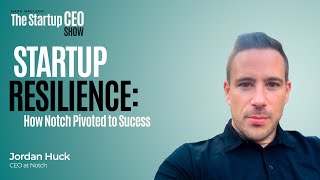
YouTube interview (Mar 18, 2024) between Mark MacLeod and Jordan Huck (CEO of Notch) about how Notch rebuilt after COVID-era revenue hit zero. Jordan explains the company pivot from a B2B marketplace to AP/AR automation for the food-service supply chain, fundraising (seed and Series A), finding product-market fit by building with a large distributor, and scaling via go-to-market focus. Key tactical takeaways: prioritize cohorts and net dollar retention, ensure payback on customer acquisition (preferably <12 months), iterate fast, and the CEO must lead product discovery during existential phases. Jordan describes company metrics (net dollar retention north of 100%, zero churn since the pivot) and fundraising experience (Series A process requiring ~90 meetings).
Questions this video answers
March 18, 2024.
Accounts payable/accounts receivable automation and payment-collection software for the food-service supply chain (distributors and restaurants).
About 90 meetings.
Net dollar retention is north of 100%.
Zero customers churned since the pivot (two-year period reported).
Chapters
The people, whether they know it or not, I truly believe, like the people that actually do want to come and work at early stage companies that are building things want to be pushed to do their best work. And as they're pushed outside of their comfort zone, there's growth that occurs there. And that growth is what makes me come. I have grown so much in four years. Do I wish we were at 100 million in revenue? I do. And my investors. But we're going to get there.
Welcome to the Startup CEO Show. I'm your host, Mark McLeod. In this episode, I sit down with Jordan Huck, CEO of Notch. Notch is in the restaurant industry and their company's revenue went to zero during COVID In this episode we talk about how Jordan and his team fully rebuilt the company. New name, new product, new everything. And now they're crushing it. We talk about perseverance, which is the number one trait for CEOs according to Jordan. We talk about the CEO reality distortion field and we go super deep into raising venture capital. I really hope you enjoy this episode, Jordan. Welcome to the Startup CEO show. It's a true pleasure to have you here today.
Thank you, Mark. It is my honor to be here with you.
Amazing. I'd love to just jump right into it. But before we do, maybe just tell people who are tuning in what Notch does.
Sure. Yeah. So my name is Jordan Huck. I'm the CEO of Notch Financial. So here at Notch, we help businesses in the food service supply chain unlock profit in their businesses. And so we build accounts payable accounts receivable automation software for payers and collectors.
I love it. Yeah. So much to unpack there and I'd love to just dump right into. All startups are roller coasters, but yours in particular was because your revenue actually went to zero during COVID and wondering if you could just talk about that. You're still here. You have a smile on your face, your hair hasn't turned white. Like, you know, just walk us through all of that.
Yeah, thanks, Mark. Well, my wife would say it is graying. Yeah, I think, you know, originally. So, you know, I was really fortunate prior to this to have a scale up. It wasn't a startup in the, in the sense of, you know, we raised outside capital and we were, you know, not, not, not profitable. It was a traditional scale up business. Took us 13 years before we sold it and then actually came in to a previous iteration of this business as a sort of professional CEO like come in and scale up a, a two sided marketplace business. And for no one's fault for. I mean, that's what startup businesses do. They go out and try to create something that doesn't exist in the market. You know, not only, you know, because obviously we sold to restaurants and wholesale distributors. Not only did Covid sort of decimate that revenue base, but that was also the period of time where we decided that we needed to pivot the business. So, you know, it was, you know, Mark, and, you know, we worked together on some of those challenges. It was a very, very difficult point for the business. And I think if we didn't have. So essentially what happened was we, you know, went to our base of Canadian investors and said, you know, for lots of reasons that we all agreed upon at that point, like, this business is not viable as a, you know, as a B2B marketplace, we. But spending time around this customer base, we've clearly identified a problem. And so essentially we. We raised the seed round, right? We raised the new seed round led by some great Canadian investors. And, you know, Mark, I know you've been on both sides. You've been an operator and an investor. I think, like, if we didn't have such great investors that believed in the team and believed in my vision, I wouldn't be here today.
Right.
You know, and really, really difficult time. But it's always difficult. Like, it's, you know, different phases, you know, and we believe that, that, like adversity and Mark, you and I work together. There isn't much that phases me these days. Just.
No, no, you're a warrior now.
You know what?
You want me to choose some nails? Sure. Great. Pass the ketchup.
Yeah, but like, I don't know, you know, I talk about it. I'm very passionate about Canadian entrepreneurship and building companies. And that's what it takes, right? Like, we, as the Canadian ecosystem, need to be up for that. It's difficult. If it was easy, everybody would. Would do it. And so, you know, I'm not going to call it the investors here. I don't know what the protocol is on that, but I have some great investors that backed me and just said, hey, we believe in what you're building and your ability to put together a team. And my mindset is like, okay, don't run out of money. Keep bringing good people to work on the problem. And like, you will build, like, you know, you, you will get to a good place with, with, with the company, right? You, you will be able to, you know, find a repeatable motion and go to market. And there's all the tactics and, you know, underneath but, and so, yeah, that, that was my. My mindset. I mean, you and I work together like on the other side of that difficulty and those challenges, you know, great things are achieved. And that's my mindset.
Yeah. Yeah. You just outlined two of the three jobs of a CEO at scale. Right. One is communicate vision, mission, North Star values over and over again till you're sick of hearing yourself speak. Two, build the strongest team that your scale and resources can allow for. And three, never run out of money. So you just instinctually brought up 2 and 3 in that answer there, which I love.
Yep. I, you know, I consistently refer to my job set. Right. Like making. Make sure we're working on the right things. Make sure we have the right people to work on those things don't run out of money.
Yep. That's it.
Those.
So simple. Right.
Possibilities.
Right.
And what I underestimated and give ultimate and complete respect and adulation is just how difficult it is from scratch to find the right things to work on.
Oh, yeah, for sure. Yeah. Huge element of luck and timing and, you know, often, I can tell you, having been a vc, often.
Right.
We look for folks who have true domain knowledge for whom this is like a very informed problem. Like they've lived the problem. But there are varying degrees of that. Right. If we, you and I are both sitting here in the frozen north in Canada. If we look at the most successful startup in Canada, it's Shopify. Toby just wanted to sell snowboards.
Yeah. Yeah.
He didn't want to build an E commerce platform. He just, like, wanted to sell snowboards. And there was nowhere good to buy snowboards on the Internet. And he hated Yahoo Stores. So you just build something. Yep. FreshBooks, another company I was part of that was just a web agency and they had built a billing tool. And then their clients were like, oh, can we get access to the billing tool?
Yep.
Enough of them asked and they said, oh, I guess we have a business. Right. So it's not that everyone has this foresight and vision. Right. Of a great venture fundable opportunity right from the outset, but it's so important to get there, that's for sure.
Yeah. No, I mean, yeah, look, I saw Talk the other day. I just, you know, was watching it. The CEO of OpenAI and this was. He runs Y Combinator as well, and he was talking about, like, the trait that they look, you know, Most for in CEOs is just pure perseverance. Like, just pure. Like there is just a direct correlation. So. So yes, like, you know, the, the domain expertise Some work with it, some don't. Like there's, you know, but, but if there's the continue like if it's built into the fabric of the company to constantly be learning and moving quickly, right. Like constantly be, be iterating and in everything, right. Like in your channel mix, it's not just product, right. Like because after you find product market fit, then you got to find go to market fit which is equally as do or die, right Mark, I know we talked about that.
If anything more right? Over the life cycle, the biggest slice of the value creation pie is distribution.
100%. 100%. And I think that's the phase that we're in now in company building, right. It's just iterating on that, on that, that piece. So even when it's really hard getting to product, market fit is special. I reckon I give any entrepreneur in any business ultimate respect for those that do that. Find a cohort of users that want to continue using something you've built.
Yep. So clear, but so hard to pull off.
Very hard. Yeah, I.
I know the answer to this because we worked together, but just for the benefit of, of everyone, how did you continue to believe and have faith during this period where you had to rebuild the product, rebuild the company, have zero revenue? Like how did you cross the desert and get to the other side? Oh.
No, nothing contrived. I'll like honestly tell you from my heart, like I always believe that I will figure it out. Like I always, you know, and there were periods of time in this journey where there was like, lots of people from all corners were like, this can't work, it won't work, it can't work. You know, but one, our origin story. So our origin story with the pivot is pretty straightforward and it's probably similar to a lot of great startups, right? Like find the customer before you have the product. And so we went to one of the largest, you know, wholesale purveyors in all of Canada and built a relationship. And you know, we have been talking about, you know, we built a relationship in the previous iteration, a little bit of the business and we said, well, what problems could we solve for you? And basically they laid out without being able to say what it was, but what they were laying out was a finance automation problem, right? An opportunity to help collect. So Whenever you're in B2B commerce, you're giving a lot of your customers turns, right? And so it's not shopify where a purchase order is an invoice and they're just paying instantly you know, you're, you're giving 30, 45, 60 day terms and there was. So what that means is that your ability to collect those funds, right? So convert your payers to online payment methods, appropriately give out net terms, properly manage disputes on invoices, properly post to your erp, properly reconcile bank feeds. These are all processes that Fortune 500 companies, you know, have automated and they've got AI teams and tools that are doing all this work. But when you get down into the. I mean this is honestly what drove me my belief that I could do it and I can do anything. That's Mark, we've called that the reality distortion field. So I have one, you sure do. And so, you know, I believe I can do anything. And then two, the size of this problem, right? Like high radius, not to cut, call it. They're the market leader in AR Automation. They have 800 customers. They only go after. They're the market leader, they have 800 total customers, right? So this mid market, messy, fragmented, long tail is an enormous market. And so we went and we built this product for this very large initial customer immediate product market fit. I got all the payments immediately. All of their online payment methods are flowing through the product right away it was like turning it on. And then I met, went and met with 500 others and ran into zero competitors. So at that point I started to be like, okay, this is going to be very, very difficult. And we were hosting on a no code solution. I mean, you know, like yeah, Mark, the initial MVP of that product was on a no code solution, right? So not exactly the most beautifully put together. No.
Now you duct tape. Scissors, right, whatever.
It was 100% duct tape, right? And, and then we just listen to them every single day. Like we probably iterated on the payment report because like reconciliation is everything for finance divisions. Mark, I mean you were a cfo, right? Like money comes in post to post to the erp reconcile against funds into the bank. And so, you know, the combination of those two things just like, okay, there's a really big market and there's a problem here. Unquestionably, will somebody be solving that problem in 10 years? The answer is yes. Or is it 15 or 20 or 5? I don't know. But somebody will solve that problem for these businesses. Why is it not me? Why is it not us?
Yeah, right. For sure.
So I think those two things and then you and I work together, I hope by many entrepreneurs and CEOs try to make sure it's not some cost fallacy, right?
Where I'm that comes up a lot.
Yeah. But I don't think it is. And the company's growing really, really well now and we're feeling great about the future.
It's amazing. I jumped right into kind of notch. And of course, as you alluded to, there was a history. And then of course you were not the founding CEO.
Yep.
And I think it might be useful to explore that because it's often we hear about founder CEOs, but it's not uncommon for a company to have someone come in. And in your case, you actually didn't come from the startup world.
Yep.
So maybe just talk to us about that. You know, how, how did you make that transition?
Sure.
I know everyone deals with imposter syndrome. I know that was probably a thing for you. It is for everyone. Just tell us about that.
Yep. Yeah. So I came from a technology services business. So we were doing technology staffing, outsourced software development and. But it was a fierce, very fierce operational environment. Like essentially you drove value in the business by, you know, really understand and measuring go to market. Like how much gross profit do you drive per seller? Like that's how you create value. Right. That's how you drive, drive EBITDA. So I actually came from, we got it to 20 million a month in revenue by the time we sold the business in 2018, took over as CEO in 2016. So it operated at scale and certainly was very, very comfortable with a B2B go to market motion and building up that infrastructure for direct sales. I always was almost intoxicated by the idea of I know I can create great go to market teams and then I want to get the lock in and the high gross margin profile that can come from technology businesses. Mark, to be, to be frank, right. Like you know, you want to create that, you know, and now I'm in an embedded, now I'm running an embedded payments company and there's even more lock in. Right. Cause we get workflow lock in and payment type right. As they're processing on our rails. So now easy to aspire to, Mark. Really hard to get to. So I knew I wanted to make that transition in my, in my career. And so you know, I got to know some of the investors here. Toronto. And you know, it's no one's fault but the, the, the board and myself thought that the, the business that I came into was ready to just go into scale up mode. Right. So looking back and definitely coming in, it's like, all right, I gotta really, really learn. And Mark, I started working with you Almost right away at that time, what was really dangerous, looking back, and these are the learnings that are only clear is that if you come into a business that hasn't found a repeatable set of users that are going to continue to use that product. Right. Like if, if you were, you know, with venture capital, you can, because you know, they, they'd raise some capital. You can do things that are unnatural. They can mask the, the fundamentals of, of a business. Right. And unnatural meaning like maybe you're like Uber famously would like reduce prices. Right. And subsidize the transactions a little bit to try to get, especially when you're trying to solve a cold start problem in a marketplace.
Right.
Where you're, well just subsidize until. And so it was difficult to ascertain. And so Mark, looking back, like I came in with the wrong mindset like scale, like which, like the last thing that you want to do is go into scale up mode when you haven't, you know, really defined what your product is for a set of users that will use it over the long term. So that, you know, that was painful for, for myself and the, and the, the management team and definitely I think contributed to everybody feeling a little unsettled until we realized, whoa, okay, like we need to unpeel this thing. Back to first principles, like is this, you know, will this set of customers want to use this service or product? Why or why not? And then only then could we start to understand, okay, this is not the, this is, this is a. Mark, I don't know the stats, but I bet you most startups just die because they solve a problem that doesn't exist. Right. Or they're.
That'S for sure. You know the technical reason why startups die is because they run out of cash. Yeah. But there are obviously underlying fundamental reasons and that is definitely one of them.
Yeah.
And you know, so you came in as a CEO from a scale up, a big exit. Yep. With a mandate to grow.
Yep.
But the company wasn't ready for you. Right. You know, I've often said that when you're, when a founder is running a company that's pre product market fit, they're not a CEO, they're a product manager 100. All you need to be doing is spending time on product. Nothing else. Everything else is a distraction.
Yep.
How did you turn yourself into a product person? Because I know you, you were, you, you were the lead product guy on aspects of this and.
Yep. Yeah, it, it, it was when someone is put into a, I mean it depends how you're hardwired. Like, for me, when I look back, is it something I would have knowingly done, gone in and done a turnaround? Then we had to change the capital structure of the company. We basically a brand new company, right. We set up. And the only way to create a new company was to go out and talk to potential customers and figure out what to build for them. So, you know, whether you want to find that as a. As a product manager, I mean, yes, that in theory would be, you know what. But it was either that or die. And so if you've been in the arena, growing companies for long periods of time, I think what you end up, like, we talk about context switching. I know where you're gonna ask, we're gonna talk about in a bit. But like, you, You. You gotta go where the large. So we talked about the three responsibilities of the CEO. Fine. But like, you gotta go where the largest problem is, right? And at that point, it was like, figure out that problem or die. Well, who's gonna do that? Whose job is that? You hire somebody. No, you go and find out when you can't be wrong again. Mm. You can't be wrong. You must be right.
So.
You know, I think that over 20 years operating, I have developed an instinct through many, many reps of knowing what is the problem that needs me to go deep on. Clearly, that is the one. It was existential at that moment. Right.
Were you able to set aside pressure to drive growth and be like, listen, investors, we can't even think about growth until we know what direction we're growing in. Or was there pressure to do both?
Unbelievably, I've always had an amazing board, like, amazing mark. You, you know, you know that, that board, like, they've supported me the whole way.
There's.
Yeah. Like, there was. You know, I think one of my abilities is to be able to articulate the vision of how this work will unlock growth. And so we were able to put aside, like, short term, like, how quickly are we signing customer? Like, we. We really had to unwind a B2B. You know, we didn't have a head of sales for a period of time. We went really, really lean, right. It was myself and we were just out talking to really, you know, large wholesalers, what we needed to build. So, yes, we were able to. But when you've already raised venture capital, that's really, really hard. Like. Like, we did this the wrong way. This is not the sequence that somebody listening who is starting a company would do. Like, you know, Mark, you would advise them. You write about it like, go out and find customers. Go get traction without money.
Yep.
Go try to get some type of go to market engine. You're the CEO, you should be selling the product. So you're the product manager. Then you go out and sell the product, get people using the product and paying you. Then consider if you need to. Cause you think it can go faster. I mean, Mark, I know you very much could and would argue wait till later. Try to never only raise when your cohorts pay back sub 12 and you just make this sausage maker go faster. But you know.
Yeah. And I understand not everyone has access to angel money or their own money or not every business can go from being a service business to a product company. But I do think generally most startups raise too early.
Yeah.
Before they know what they are. And it's like a child taking steroids. It's not going to grow up properly. You know.
And do you need to be figuring out, you know, I mean, it's no one's fault. It's a young great. You know, it was a young management team that was like out there in the arena trying to build something and they were, we didn't have product market fit and they're studying Sequoia decks on how to prep for board meetings. Do you know what I mean?
Yeah, yeah.
Like, so as soon as you raise that outside capital, like, yeah, there's, there's governance in the company. You, you are deploying capital on behalf of investors and it's. Right. And definitely the expectations are high and there is a need to grow and then there's, you know, I think because I've been fortunate enough to have been part of a great management team. Can you still hear me, Mark? Because I was lucky enough to be part of a great management team that was all about fundamentals, like, all about fundamentals. For 13 years of my life, my mentor, I ended up taking over CEO from him. I didn't get caught up in the whiplash too much of like VCs want this. You go on a meeting. Should you change the business because of what a VC says? Like, I very much respect and appreciate the perspective that. But VCs are wide and thin.
Yep.
Right. And you know, they can't tell you how to operate. And I think the great venture capitalists that I all work with on my board, like, they don't presume that they would know. That's why they're good at their job. Right. And so I was able to not really get too caught up in at least I think, well, we got to change this or we got to change that or, you know, because I've gone through multiple cycles marking our time, working together, growth at all costs. Well, now you've got to be very profitable at the unit level if you want to raise. Sorry, profitable at the unit level and a path to actual EBITDA profitability. So things have changed fairly dramatically in the last, you know, the last four years.
Yeah, let's talk about that now. You know, you've been forced to become an expert in raising venture funding because you had to do it in very challenging circumstances. When you do your retro on that, what is your advice to founders who might also be raising in challenging circumstances? Because there's probably going to be lots of those this year.
Yep, I've thought a lot about that, Mark. Yeah, I, you know, and for context, to raise our Series A, you know, it's public information that we, you know, raised from portage took me 90 meetings. That's not insane. By the way. You hear some people that have done 200, you should expect 30 to 50. I think it like, Mark, I think say it's not in an insane number.
But a real commitment at the same time as you're running a company.
Well, you, you. Oh, yeah. Okay. So I'll give, I'll give mental state advice. Even you didn't ask me that question. And then I'll give you my fundamentals. So great mental state advice. You need to be really taking care of yourself during that period of time. Right. Like you, you know, Mark, you're the same as me. I work out like, I take care of my. I think very hard about my, my mental state and how I'm feeling physically, especially in a period of time where I need to go and, you know, simultaneously understand every key metric or number in the business and exude the belief and confidence that I think is my strength. Right. That I, you know, I lead with passionate energy with my team and I want that to get across. I don't adapt my style. You know, that's, that's who I am. So I want to make sure I'm in the right mental state. But then fundraising and even during a very frothy time, if you're a B2B SaaS business. For me, there are two things that I care about and that I will never go out again with having without being like, especially in today's market conditions, Mark. And I know you'd say the same thing. What is the, like, I think the most all encompassing metric. Like, if I was A vc. The first thing I'd want to know is like, show me the cohorts and show me the net dollar retention. How does revenue retain over time of your cohorts? I think that metric, Mark, gives me an all encompassing view of their business, right? Like how good are they at upsell, how good are they at retention? Like, you know, you can break into gross dollar, you know, split out gross dollar versus versus net dollar. But now that net dollar retention metric is going to tell me the incredible value creation machine from SAS companies come when net dollar retention is north of 100%. Because it comes that layer cake of growth, right, Mark? It's like I stack customers, they grow, I stack more customers. And so how your cohorts perform, you know, perform, and I can tell you I consider myself, you know, I was part of the sale process in my last business to, you know, private equity and very large strategic buyers. There's no faking net dollar retention. So you can have the nicest pitch deck in the world. And I had a beautiful pitch deck. But if the cohorts don't perform in line with best in class SAS organizations, you shouldn't be out raising venture capital. That's metric one. I think it's the most that'll be for you to write about, but it's up there for the most, the most important metric it shows.
I'll just reinforce if you, if you don't mind just that point. Like when we raised the series A for Shopify, that was actually the unlock. Bessemer asked to see our cohorts and we were like, oh man, do we show it? You know, that's a high degree of trust. I think we ultimately concluded, well, Bessemer's a legit shop. Let's just do it. And they just came back with a term sheet.
Of course, of course, of course, man. Like Shopify is either a product that people love to use and they're going to use it with increase. I mean, do people use your product with increasing engagement or decreasing?
Whoa.
People use it more over time.
Yeah, yeah, yeah. How about that?
What else do you need to know, right? Like do you use Spotify more frequently or less frequently? Right. And so you know, doordash an incredibly well written, like I don't know that CEO. Like their cohorts were beautiful. That's why they've people use DoorDash with increasing frequency. You know, GMV retains at 110% stacks. I bring a user, it stacks year over year over year. So I wouldn't go out without because you can prep all day long. You know, you, you, you are going to dump your data into a data room.
Yeah, that's it.
And, and venture capitalists are very smart. They know what they're doing. You're not there to, you know. And so I wouldn't go out until my cohort performance was, you know, looked how it should. Best in class. So and it's different, you know, enterprise versus SMB versus right. You know, maybe best in class enterprise 130% SMB. Best in class could be 95 or 94. So you know your business, there'll be benchmarks. And then the whole concept that got lost a little bit that I had to go to school on was like, well, what is the concept of raising venture capital? Well, there's large amount of R and D costs that you don't worry about at the start if you can prove that you're profitable at the unit level. So the gross margin that I generate from a customer pays back ideally as soon as possible against what it cost me to acquire that customer. Yep, that's the concept, right Mark. And if I'm profitable at the unit level, I can dump cash down the engine and it will pay back into my business to reinvest in acquiring more customers.
Yep.
That gets lost a little bit. Right. Like where it's just like raise the money, raise the money. Well, it's, it's, it's to fuel that engine. And so for me, do my. When I invest a dollar. So do I have go to market fit. Go to market fit Fit for me is I, the mental model I have is like, have I found the channels, right. Lots of different channels that I can use to acquire customers. Have I found the channels necessary to acquire customers that will generate gross margin that will pay back my cost of customer acquisition minimum sub 12 months. I would not go out without it paying back minimum sub 12 months.
I love it. That's super specific and I think especially important in this environment. Right. Which is a bit more risk averse. Right. You don't want to have, especially with lower middle market SMB customers, a really long payback period because there's a leap of faith as to whether that cohort will in fact pay back.
Yeah, 100%. And I think, look, you're going to read documents and people are going to talk about this metric three times ltv which you got to make up and like. Right Mark, like creating the long. As you're a startup, you're creating the LTVI estimate. It's three years, right?
Yeah, yeah.
You have no Clue, bullshit, bullshit. Like do the cohorts pay back? How does the revenue retain from people on your product? And like Marco Bears wrote an incredible piece for anybody that's listening. He was the teaches at Harvard now. He was the head of revenues, the CRO at HubSpot. I think they probably built. I mean, they created inbound marketing and then used it to create a monster. But he was an engineer that took over sales and there are ways like you can segment. So if your net dollar retention is poor, find a cohort of users where it's not poor. Right. And break that data out and be prepared to articulate. And by the way, articulating that should also be the strategy. Right. Go find more of those types of users.
Focus, focus, focus. Find your segments.
And I haven't. Yeah, I'm talking, you know, I'm giving this advice prescriptively. Like I've done everything wrong, been too wide, focused on too many sets of users doing custom development. So, you know, but through these knocks, you know, I understand that simple is what's important. Right? Like, is it a big market? Sorry, Mark, we should have led with that. Is it a big market?
Venture scale.
Is it a big market? A venture scale market. Right. This concept of power law, if you learn about power law, you'll understand how a venture capital capitalist thinks because only a few companies are going to return the portfolio. Right. So is it a very large market? Okay. How do users perform? And the best metric is net dollar retention. To look at that and then do you have go to market fit? How quickly do your cohorts pay back? For me, that's it. And then, you know, but we get caught up spending time on team slides and I make sure that my Mark McLeod advisor little logo looks good. That doesn't matter.
Not at all.
Even though I love you, love having you on there. But, but that. It doesn't. It doesn't.
Yeah, I love it. I'm going to give you a little piece of useless trivia and then I want to double click into something you said that I think is important. So since you're in the restaurant industry and since you brought up HubSpot, I'll share that I had dinner with Dharmesh once.
Ah.
And I learned that he will never ever let anyone pay the bill.
Wow.
He just, he cannot. It's just like, like it will cause him physical pain. Like he's a very timid guy. You'll get into a fight if you try and pay the bill.
Wow. He's a great thinker.
Yeah, great thinker. Yeah, yeah, yeah. The thing I wanted to bring up based on what you said is the importance of, like you said, we did everything wrong and yet you're still here, which illustrates that you're going to make mistakes. It's fine. The key is to move rapidly. It doesn't matter if you move rapidly left and then realize, oh, I should go right, and you zig and zag. Speed is the thing. And I feel like you had that. But it's just great for people to remind themselves, like, yeah, it's okay to screw up as long as I'm moving decisively and rapidly.
CEO of Coinbase, Brian Armstrong, I think is his name. Yeah, his Y Combinator talk, he said startups are like sharks. You gotta stay moving. Right. And, and you move in one direction, it's the wrong direction. You go back, you go in this direct, like it, it's that, that, that concept too. And that always came naturally to me, the ability to get the team moving at speed. And it's one of the core virtues and values. And in some cases, you know, I've really, as I've matured and gotten older, I've just crossed 40. Try to slow down on those.
You.
Know, Jeff Bezos calls them, I guess the one way versus two way doors. Right. Like big decisions like your payment provider or like decisions that are not easily undone. You really should be much more deliberate and slow down. But on almost everything else, you want to move quickly. Hiring executives will be one of those things, Mark, to slow down.
Yep. So painful when you don't get that right.
There are decisions that change the trajectory of your company.
So.
But almost everything else, trying stuff, tactics. We don't have the perfect metrics set up. Well, we'll get the metric like, you know, so, yeah, that's why we're here. Right. It's just we've had that ability to figure things out. Hasn't been pretty. We're able to look back fondly on what was very difficult. And a lot of people, Mark, I know we've talked about this a lot of people and it's okay that it wasn't for them, but it's not for everybody to be truly figuring something out. And like, you know, companies shut down and there's incredible companies that get caught in just maybe a macro shift or whatever it might be, you know, in the startup ecosystem that's real. It's really hard for the people there. Really hard.
Yep. I've invested in one with a really credible founder who I've known for a long time, who is Just facing the reality that it's in kind of in an automation space and he's facing the reality that ChatGPT has probably made his company irrelevant. So difficult to face that.
Yeah, yeah. And like, But we need to, in Canada, like we, it's like how deep. Don't go on this topic. We, we need to embrace that it's difficult and like celebrate those that were in the arena, not demonize them.
That's right.
Right. And like we take a lot of shit at our company when we tried something that wasn't right and the employees we almost shut down. Like, you know, we go through these challenges and these, you know, we like, we need the scale up and the operational chops to support because we have great ideas and great technologists. Right. And now we need the 10x thinking that a lot of the times can come from ecosystems and the hardened operators that come from other ecosystems. Not yet. Toronto, I'm speaking about, speaking about Toronto. It's where I mark, it's where we live when we call home. And, and I'm really passionate about that, that that can happen here and is going to happen here. And I want to be one of those, to be frank.
Yeah, I love it. If I generalize about Canada, there's lots of exceptions. We earnestly build great product and do a shitty job about selling the product 100% and that's like, that's the gap. Right. We need to learn to just, just crush selling, crush distribution.
Yeah. It takes people, it takes our operators learning how to do like demand generation versus marketing. Demand generation is a technical role. I have one. He's trained at seven shifts and he's a technical, he is technical first and he generates demand. Right. And the Americans, they, they really do well at that.
Yep.
Right. Exceptionally well. Whereas they apply, you know, that engineering based thinking to every function. And, and so it's coming. I want to, I want to be part of the growth of, of that and ignore that the venture capital market is down right now. Like there'll be cycles in that. You know, I'm more about like, okay, we've, we're in a big market with a product that solves a real problem with a very attractive, you know, ACV profile. It benefits our customer. It's, it's a great product for us to sell. Now we need to scale up aggressively and I'm learning new muscles to think like, no, no scale 10x.
I love it. I think, you know, time will tell, but I actually think your timing's pretty bang on you raise this capital in A downturn, which means hopefully you're building up to, you know, growth capital and. Or deciding on an exit in an upturn.
Yep.
You know, so we shall see.
Yeah, we shall see. And like, you know, I think what we've learned. I got caught up in 20. You know, when I talk about imposter syndrome, I was like, how come I'm not raising 100x round? 100x ARR round? How come I'm not getting that? Like, what's wrong with me? Like, everybody's getting that. Like, why am I not getting that? But there's no crystallization of actual enterprise value. I mean, maybe there's secondaries that were happening.
I'm sure there were.
Okay, well, all right, then that's beneficial for the management team. But for the most part, that's just a paper valuation. And now companies have to slow their. They have to, because they're not going to want to take a down round. So they have to grow into that to raise up over that. And some companies will and some won't.
Yeah. Lots of venture capital funds don't want to take the markdown. Yeah, it's a trap. When I was operating, I almost never took the highest price per share. The thing I actually sold for was, well, the person, the partner at the fund, do they have alignment? Do we see the same vision? Can they add value? Would I want to get on a plane to Tokyo with them, or would I cringe that I'm about to spend 14 hours beside them? Those are the things I would solve for.
I love that mark. So well said. I. My thermometer for venture capital professionals is, are they humble enough. To understand that whether they like it or not, the CEO and the operator is in the best position to operate the company?
Yes.
Right. And, you know, like, I'm passionate about the guys at Golden Venture Capital. I hope you don't mind me. I'm not plugging them.
They didn't pay me, but I love them.
They. They do an incredible job of networking you and introducing you to like, they live and die by their value, which is to open up doors and bridge, help you with. With the network that you need to unlock the next round or the next great hire or, you know, and so that's true value add. True value add.
So money is money. A dollar is a dollar. That can't be the. That can't be your value proposition as a VC. It's got to be beyond that.
Yeah. 100%.
Yeah. You just to switch gears, you referenced this earlier, and it's something I wanted to bring up which is leading with passion. For better or worse, your heart's on your sleeve. And my observation of that is the highs are going to be higher for you, the lower lows are going to be low. You're going to be hurt.
Yep.
Just talk to us about that because.
Mark, we're going deep.
Yeah.
I'm really passionate about work. I think most CEO like people who are built. Like you got to like the process and you got to like building. I really like building. There's nothing. It's so hard. Then when it works, it's just incredibly fulfilling. Any builder I think would, would, would say that, you know, I think that I'm, I hope that I've been doing this long enough where I can like honestly say that, you know, stylistically it helps me sometimes and hurts me sometimes. Right. Like, you know, that I, you know, I want to work with people that, you know, were unapologetic. I think the guys at Float do an incredible job of that. I really respect the management team there. I think it's just a really great, well run company where it's like, it's not for everybody. Like working at Notch is not for everybody. And you know, things have changed a little bit with, with COVID and the workforce. And I'm not here to comment on whether that's good or bad. That's not for me. I'm stating a fact. Right. That you know, we've got 20 vacancy in office buildings in Toronto right now. Right. And yep, you know, productivity per capita in this country is going down again. That's just a fact. I'm not, you know, GDP goes up because we've had net influx of immigration, but GDP per capita is going down. You know, I, I lead with, with passion and heart. And some people, you know, it, it may not be for everybody my style. And in my 20s I thought, cause you know, I've been leading teams since I was 24 years old, 22 years, like forever. I don't remember ever not. And I used to think employee net promoter score was the measure if I was doing a good job. Am I liked? Am I liked? Because when you're young, you have major imposter syndrome. You're like, I want to be liked by, by the people. Guess what? The people, whether they know it or not, I truly believe like the people that actually do want to come and work at early stage companies that are building things want to be pushed to do their best work.
Yeah.
And as they're pushed outside of their comfort zone, there's growth that occurs there and that growth is what makes me come. I have grown so much in four years. Do I wish we were at 100 million in revenue? I do. And my investors. But we're going to get there. But like, you know, and so I just have completely rethought what it is. My job is to interact with like, I want to build personal relationships. Great. That is fifth on the list. Ninth on the list. Right. I'm here to build something. I want to work with people that are passionate. Not saying you work a hundred hour weeks. That's not what I'm saying. I'm saying you come and you give everything you have and you develop, you know, you, you, you orient towards getting done.
Yeah.
So that style, helpful and hurtful to me sometimes I completely, you know, get that and I'm aware of that, but I'm not, I'm, I'm, you know, I'm not. We've talked, Mark, if that weakness or a strength. It's a strength and a weakness, but it's not a strength. I'm gonna, I'm gonna, I'm going to consciously get rid of.
I think it's a superpower, personally.
That's very kind of you to say that.
It's a magnet. It means you're going to be hurt. A key person leaves. You're going to take it personally. But I also think it's the passion that attracts people. Right? It's a passion and an energy that attracts investors because they're like, they feel like it's an inevitable.
That's how I feel. I've always felt that it's inevitable. If you're like an early stage person in Toronto and you're listening to this right now and you like want to get in, like you want to get in and you want to like. Because you got to get in and operate a little bit and then maybe you get an opportunity to start. It's like you should want to go somewhere where everything's not working. I don't get it. When really brilliant people in Canada are like, well, it's not working, you're there to get it working. The value is created. Like Mark, I know we'd agree on this. When I have this thing mechanized flawlessly, the product we've built, every feature, we've built features for three years. I'm paying back cohorts. In four months, I got 500 sales reps. I am easily replaceable.
Yeah, so true.
I am easily replaceable. The value is created now. The value is created now. And if we can just Embrace that mindset. Like, I don't go do things that work. That's not what I, in my mind, that's not what I do. I don't like go and do things that are working. I take things from nothing and I make them something. Right. And that's because that's the hardest thing to do in, in, in business. So I, I just, it's surprised me. It's not someone's fault. I don't know. I guess I'm just making a comment. I don't begrudge anybody. I just, I think it's another muscle that we can build which is like, okay, it's not working. How do I work to get it working? And there are. Look at my VP of engineering. He's done an incredible job of taking something that wasn't working to getting it working. Like there are exceptions to that rule. And those people will just be tremendously successful. I, I can't say how highly they are regarded and valued by people like myself.
Yep. I love that. And it seems like counterintuitive advice. Right. Go to a place where it's not working, but that is where you're going to get the most growth. Right?
Yeah. There's obviously some criteria there. You've got to believe in the CEO. Is it a good ethical person that you believe in. You'll be treated fairly and you'll learn and get better. But anybody can just lock into the multinational. And I mean, I'm really attracted to. So, so you know that, that for people that want to get into that type of, that want to be early, early stage. Your function shouldn't be perfectly working when you get there. If you're taking it over or there isn't an opportunity for you, like you want to align yourself to the creation of enterprise value for the business. And the creation of enterprise value for the business is mechanizing and making things repeatable. Sausage maker, Mark. You gave me that term.
Yes.
Like, you know, and so you want to be part of taking that. Is it a big market? You know, all those things. But. And I think the problem is we just haven't had enough. Like we just, you know, we need notch to go be and it will be a hundred million dollar revenue company. And the people that were here and participated in the creation of enterprise value get to benefit tremendously. And then they go invest in other companies.
Yep. I love it. You know, I completely agree with everything you've said and I do think maybe some people gravitate. Let's go just find the thing that's Working. But even that thing has issues. I think companies exist in one, startups exist in one of two states. They're struggling to create growth or struggling to keep up with growth. Right. Even the company that's figured it out, it's got product market fit, it's got channels, it's tripling or doubling, they've got issues, they're high quality problems. It's like how do I get enough people? How do I create alignment? Like how do I keep up with growth? There's still problems. So I think the challenge comes is like if you join the company thinking, oh, I'm just going to hitch my ride onto this wagon, it's going to be easy. Well, you're wrong because there's no such thing as easy.
Yeah, yeah, I, I like doing the hardest things possible. And then you just transform into this new, this new person and the growth that you can, that you can get. Entrepreneurship. Anybody who steps into the ring early, early management teams should be celebrated. I salute and celebrate them.
Yeah, yeah. 100 win or lose.
Especially you lost. Great. Like did we want to lose the capital? Of course not. They were giving their 150best to try to build something great.
And so well said. I love that. I know we're running out of time here and maybe you've answered this already when you talked about 100 million and creating enterprise value. But you know, you've gone from almost running out of money, almost dying, literally zero revenue. Now you're back on the growth path. What's your dream for this business?
Yeah, yeah. So we, we at Notch think we have this incredible opportunity. So when you look at the, the supply chain specific wholesale food service, essentially the largest part of the market is this messy, fragmented 2 to 4 million a month kind of revenue distribution business. And they're literally 100% of those businesses are collecting offline and paying their vendors manually. Right. And so we've built a product. Right. The same integrations into accounting systems we use for AP and ar. Right. I push and pull invoices from a system and so the opportunity for us, it starts with helping them, you know and we've churned zero customers since the pivot two years ago on our collective.
Wow, zero customers in two years I.
Have churned zero customers from our, and you know, net dollar retention is north of 100%. So we're, you know, our, our vision, you know, it starts with payment processing, right. Where we help collect, we help to get all these, these payers that are paying them in, off to pay them online in lots of different ways we're doing that and we keep seeing that penetration rate go up. But over time there's just these incredible opportunities to you know, these segments of these sort of sleepy offline are dramatically underbanked.
Right.
Like there's an opportunity for us to, you know, ideally for some of these distributors provide receivables factoring. Right. There's an opportunity to, you know, there's, you know, an opportunity to provide that same lending on the payer side. Right. We've built software associated you know, with, with the, the distributors that are using our, our collector product. So you know, we think so our focus has been on increasing the, the breadth of offerings going out to that, that segment of the supply chain and that, you know, we're going to be a hundred million dollar revenue business without having to have 500,000 like SMB SaaS. Very small ACV. It can be done. FreshBooks has done it successfully. It's a very difficult road.
Right, sure is.
We want to be a big part of our customers, you know, of our customers investment in, in software and there's all kinds of ancillary, you know, products that we'll be able to, to distribute to them that will benefit them and help us create, create a large company.
I love it. Well, I can't wait to see that happen. Even though it's going to take a long time and I know that if I ever. Only because great things do.
No, of course it will.
And I know that if I ever need a hookup to a crazy Toronto restaurant, you're the guy that called 100%. Actually, not even just Toronto. Jordan, thank you so much for taking the time. I really, really appreciate it.
Thank you Mark. Really appreciate it.
Thank you. All right. Hey, thanks for listening to the Startup CEO show. If you'd like to connect with me, be sure to visit my website at Mark McLeod me or follow me on LinkedIn at the markmcloud or Twitter arkmcleodore. And if you want to tune in again next week, be sure to subscribe on YouTube, Spotify, Apple or wherever you get your podcasts. We'll see you next time.
More from Mark





The Burnout Breaking Point - How Strategic Breaks Actually Increase Productivity


Emotional Debt - How Avoiding Hard Conversations Compounds Into Company Killing Resentment


The Death of the Specialist - Why AI Is Creating a New Professional Class Called Scalers