Taxjar's Journey: From Bootstrapping to Stripe Acquisition with Mark Faggiano
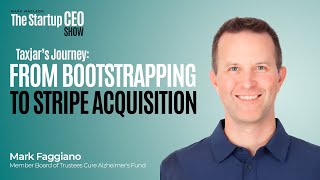
Mark Faggiano started TaxJar over a taco lunch in 2012 to solve e-commerce tax compliance. He bootstrapped it to profitability on $8k a month, raised a $600k angel round within eight months, and skipped traditional venture rounds to stay capital-efficient. Stripe acquired TaxJar in June 2021.
Questions this video answers
Around 2012.
Approximately $600,000 raised within the first eight months.
Described as "a couple million bucks" (seed round after the angel round).
About $8,000 in their first profitable month.
Triple-digit growth plus profitability.
Chapters
We had all the leverage, and I'm not sure we understood that until those kind of conversations started, which was like, take it or leave it. Right? Like, we know what we're doing. We've got all the stats to back it up. Triple digit growth plus profitability. And we had the great fortune of picking based on fit at that point.
Welcome to the Startup CEO Show. I'm your host, Mark McCleod. In this episode, I sit down with former co founder and CEO of TaxJar, Mark Faggiano. If you bought something from a Shopify merchant, there's a meaningful chance that you've been exposed to TaxJar software. Back when I was an investment banker, I helped Mark and his team raised a $60 million growth round and then he went on to deliver a massive exit, selling his company to Stripe. In this episode, we walk through the whole taxjar journey from origin story to funding, his decision to be remote, skipping all the Alphabet of venture capital and just going from a seed round to raising a growth equity round, and ultimately his decision to sell. Mark is now devoting himself to trying to find a cure to Alzheimer's. And so we end the episode talking about that. I really enjoyed this conversation. I hope you will too, and I hope you subscribe. Mark, welcome to the Startup CEO Show. How are you doing today?
I'm great. Awesome to be here. Thanks for having me on.
It's a true pleasure for everyone listening. Mark and I first met because I believe in the power of cold calling, or in this case, cold emailing. And I thought that Mark was in San Diego and I was going to be in San Diego, and I wanted to meet him and learn more about his company. Turns out you were literally on the other side of the country in Boston, so I got that one wrong. But yeah, luckily over time, you became a client and we did a pretty cool deal together. So cold calling works if you're credible.
Right.
You can't just be, you know, you can't be irrelevant to the person. But anyway, it's really a pleasure to connect, reconnect with you after a really long time.
Yeah. Thrilled to see you for sure.
Awesome. There was a little less white hair last time, so not much I can do about that. Yeah, it's actually my secret weapon in coaching. People ask me questions and I just stroke the beard and then boom, the insights.
I like it. I like it.
Now, you've done a bunch of things, but obviously, you know, the biggest success and the thing that, that you and I, where we, you and I met was TaxJar. And so I'd love to spend a bunch of time unpacking that because, you know, the whole purpose, the whole context for this show is like, well, first of all, startups are hard, obviously. And then the hardest role within a startup is the CEO role. And, you know, you look at all the biggest outcomes, founder led, start to finish, 100% correlation between your performance and the outcome of the company. So we're just trying to unpack lessons from CEOs in this show. When you've done all the things right, you founded a company, you raised seed, you've done, you've done venture, you've done kind of growth equity, and you've had a very meaningful exit. And so there's a really valuable journey to unpack there. And so for folks who maybe don't know, maybe let's just start with what textjar was and what was the origin.
Story of that business around 2012. Ish. I was a little more than 10 years into being an entrepreneur. And, you know, that's the only life I knew, that was the only life I was going to live was trying to start SaaS products and see how big we could build them. Right. It had been a couple of years since I started one. I think the last one that we had built shut down. We had sold it in 09, something like that. And like everything else, timing was right to start the next thing, not only for me, but for Ryan Thompson, who I had started, who, you know, Mark and I had started two other companies with that we had exits on. So 2012, hey, are you feeling good about doing something? And we both said yes. And the. What became known as the Taco story at TaxJar. We literally got together for lunch at our favorite taco place in Del Mar, just north of San Diego. And our homework assignment for that day was to come with a list of possible ideas for the next thing. And we both had literally had pieces of paper and something about sales tax was at the top of both of our lists. So we were already in agreement that that was the thing that was kind of swirling around us and we should think about trying to solve. Keep in mind, neither of us have a tax background. Ryan's much more financially trained than I am, but it just was like one of those things that was in the water at the time that a lot of people with the company he was with and the clients that I was trying to serve were bumping heads with and really having a hard time trying to be compliant. So that's what we tried to do. We tried to be and Ultimately, I think succeeded in being compliance, automated compliance software for E commerce at the time, just sellers and then eventually, you know, big brands that were doing hundreds of millions of revenue. And there's a whole lot to say other than that, but that's kind of the high level of what we tried to do.
So I'm a CPA by training, so tax maybe makes my heart skip a beat a little bit more than it does yours. But there were a couple of key decisions there. First of all, identifying tax as a problem. And tax compliance is actually a lot meaningfully more complicated in the US than it is in Canada. My understanding, like the tax rate varies almost by zip code. Right. So it's like a non trivial thing to kind of get on top of. But. But then you made another key decision which was to focus on a vertical E commerce. Maybe chat to me about that. How did that insight come about?
Yeah, I mean, a lot of that was for the same reason that that's where focus was at the time.
Like you were just in that space already.
Yeah. So in between start trying to start companies, I would moonlight as a consultant and I was basically a web mercenary. Right. Like talk to somebody local who needed a website built. Great. We can handle that. Then it became, can you do our marketing for us? Sure. Then it became, you know, we want to start selling things online. Can you build our shopping cart? And the options were kind of laughable in the early 2000s. Right. Compared to now or even compared to 2012. So if we went down that road, inevitably this thing around sales tax would come up and I would just sort of wave my hands and say, I have, you know, no idea what that's all about. I've heard it's complicated.
Good luck with that.
Yeah, good luck with that. And I recommend you talk to a professional. Right. But if you punch somebody in the face enough times, then you know, they'll start paying attention. And that's what led to that. You know that taco lunch.
Saying, was it on a Tuesday?
I don't remember. I don't remember it. I could tell you exactly what we said. Yeah, they do. They are incredible. Yeah, it's called the bring in team. It's amazing.
So, so were you able to bootstrap early on because you had this services business or did you raise the seed capital right away?
We had enough money to just get it off the ground. I went all in and went full time. Ryan still had a job that we felt was really strategic for him to keep because of his E commerce connections. We brought in A third co founder as our lead developer and cto. Essentially he was part time. We got traction fairly quickly because we had spent six months doing, you know, customer research and customer development. So we, we went and built exactly what everybody told us to build. Right. Because remember, we're trying to understand the problem from the user perspective. And fortunately for us, I mean it was pretty clear what we should go build. And we built that and got traction pretty quickly. And it was clear that we needed more development power and we didn't have that kind of capital. And so one of the first guys that we brought in, his name is Kevin Reith, had some experience raising money and said, you know, why don't we try an angel round? And we raised 600k pretty quickly, I'd say within the first eight months. And that allowed us to hire our first couple of developers full time.
And you were already, but you already had revenue at that time. So it's just more acceleration of a.
Thing or I think we're doing, you know, a thousand bucks a month, something like that. But it was clear that people could sign up easily. They didn't need our help. They would fork over their credit card after 30 days. They weren't canceling. And it was just a matter of, you know, could we replicate this at scale?
Yeah, you know, listen, it's not the sexiest category, but obviously everybody needs it. You know, I think about, I have payroll software, so another compliance related thing, I founded my company in 2015. I've been a subscriber since 2015. Right. Like the only you get churn if you run out of bit, you know, if you go out of business, which is, you know, a thing, certainly a thing in E commerce as well at the low end. But otherwise you're not going to churn unless you outgrow. Right. And in payroll, right. If you get a certain amount of employees, then certain amount of sophistication, you have to move on. But yeah, I've been a customer. Lord knows how much I paid for that software at this point. But that brings up another thing. Like when I think about the user experience of my payroll software, it completely doesn't matter to me because I set it up once and it just runs automatically. And was user interface really important for you? Is it kind of a set it and forget it thing or how did that work?
Early on we thought a lot about what kind of experience overall that folks were going to have with the company. Right. So not just the sign in process and starting a free trial. We were very thoughtful around, hey, if somebody actually calls the phone number, what's that experience? Like, if somebody emails us, how do we talk to them? What tone do we have? Do we use with them? Because we were nobody. We were going up against giants. We had, you know, we had customers that nobody had ever heard of and we were really thankful for them, but we wanted them to then go on whether they became a customer or not. We wanted them to go to their community and say, you know, know, you should really check out TaxJar, because they treated me the right way.
Were you displacing giants? I'm trying to remember. Was it Avalara? Is that the company that was in your space? Were you like literally removing them and you were going in most of the.
Customers that we were trying to win early on, there really wasn't a lot of options available. It was either a CPA or Excel. The things, one of the things that we heard in all that customer development is people didn't like how they were treated, right? And we thought, that's easy, right? We know how to do that. So not only is that the right thing to do, but turns out strategically that was a smart thing to do as well. So, you know, people talk about like product led growth. We thought without it being a label to anything, we thought about like experience led growth, right? Like we're just going to work really hard, try to make sure it's as easy as possible, but also just try to make sure that people were feeling good about the experience that they had and the time that they spent with us.
Experience led growth, man, I love that.
Most of it was set it and forget. But as people grew, they might have to expand their compliance, right? So there might be a reason for them to come back and say, well, I need to be compliant in 12 states now instead of six. So there are some things that I need to do. And as that happened and we started having more of those types of customers, then we had to think about, okay, that re engagement process. How do we make that simple as well, right?
You know, as I was hearing you speak there, I was having all kinds of flashbacks to FreshBooks. So many similarities. First of all, like, our competitor was status quo, right? Pen and paper, Excel, Google sheets. And we never coined that term experience led growth, but we were all about that. For us, we were inspired by actually an E commerce brand, Zappos, I don't know if you remember them, a shoe company back in the day. And the Zappos customer service reps were empowered to do almost anything to delight the customer. Like just Wacky shit that completely would blow the unit economics on the order. But they felt like, well, if we delight the customer, they're just going to tell five of their friends and that's how we're going to grow. And they did, right? They got to a billion in revenue. I think with FreshBooks, customer support was our thing. So every single team member spent their first 30 days inside customer support. I remember in my first 30 days and I was fine to answer emails, but I was completely scared shitless to pick up the phone. And then it was like literally like a five foot tall customer support manager who was assigned to me and she's just like yelling at me until I picked up the phone. And then you just learn so much doing that, right? And then I don't know if they still do this, but at the time, if someone called customer support and a support rep didn't get to it within three rings, every phone in the office rang until somebody served the customer.
We did a similar thing that everybody had to spend. This was much more in the early days, but everybody had to spend time in the support queue, right? Because we had this theory that you had to, number one, we actually needed it, right? But number two, the benefits of everybody in the company staying close to the customer paid off huge for us, right? So we all understood what they wanted and what we were doing well and what we weren't doing well, where we needed to get better. So that was a practice that was harder to scale. But I think the fact that we spent so much time doing that in the early days really paid off.
This episode is brought to you by Thelo. Tell me if this sounds familiar. You wake up, you take a look at your calendar and you see it's filled with meetings, stand ups, weekly check ins, one on ones, town halls, and those are just your internal meetings. Some are productive, but some are definitely slowing you down. Be honest with yourself. How many times have you thought this meeting could totally have been an email? Now consider that in the US alone, there are 55 million meetings each day and 85 to 90% of those don't have an agenda. Fellow is on a mission to solve the meeting problem by offering the only AI meeting management solution that covers every part of your organization's meeting workflow. And As a startup CEO show listener, you get 300 free minutes of AI recordings if you sign up today, go to Fellow app to start your free trial and start having better meetings. So we've chosen a category tax. We've chosen a vertical E commerce. Did you then like how did you think about platform? I can't remember whether you did things with BigCommerce or others, but I'm sure you were, if not 100%, Shopify. Overwhelmingly Shopify. Like, how did you think about platform risk?
Like, from the earliest stages, we actually didn't really understand the customer in terms of platforms. So most of the customers that we talked to in that development phase were on ebay. And so we solved for that right out of the box. And then, I mean, this is hilarious to say now, but a lot of them then told us like, hey, I'm starting to spend more time on this thing called Amazon third party seller program.
Oh yeah, this thing went Amazon. Yeah, yeah.
Oh, okay. So, you know, we were pretty naive. We thought, well, we just, we have to make sure that we have a connection so that folks can download their data from Amazon as well as ebay. And the beauty of sales tax compliance, right, is you can't file returns without knowing the whole picture, right? Like, we can't do our job if Mark is selling on Amazon and he's on Shopify and he's on eBay and two other places that, you know, marketplaces that are specific for his niche. So we had to chase in that way, right. And make sure that we offered as many platforms as possible. And what we figured out in the process was like, this is the way it is, that customers are multi channel because they're just trying to figure out where their stuff moves the most. Right. And obviously they have to be on Amazon to be competitive. So that's how Shopify came in and bigcommerce. And we learned a lot about where the product resonated best and where we should be spending time marketing and trying to acquire customers.
I'm starting to picture very vividly why you needed more development horsepower. Right? Like you're developing for all these platforms. I'm not a coder, but I certainly know that the APIs that Shopify has are far more robust than some of those other players. So, yeah, no, I totally get it.
And also the complexity of the use cases are now getting a lot more intense. Right? So you start off with somebody on eBay selling two SKUs to someone who has dozens to hundreds of SKUs doing over. I mean, we couldn't even imagine people are doing over $1 million in revenue, right? Like, wow, this person wants to use us. And they're selling across the entire country and they've dipped their toe into international and it's a very obscure product now that, you know, it's not like clothing. Right. It's something like grocery items are something else that maybe has a rule that we need to interpret. Right. To make sure that we're handing handling the taxability and the rates correctly. So that opened up all sorts of different doors around. Well, maybe we need a lot more tax expertise in house than we have now because we were all self taught at that point. Right. So that was a game changer for us to start bringing in ex CPAs and folks that worked in the states auditing and doing all sorts of other things that gave us a lot of kind of intellectual horsepower that lent itself well to the product development.
So what I'm hearing so far is there was a lot of iterating based on customer feedback. Were you calibrating that against an overall vision or you were just sort of, I don't know, surfing with the feedback?
Yeah, I'd say it's probably more surfing. I don't consider myself like a strategic genius by any means. Like much more of a feel player. Right. It's kind of how I've lived my life and I think a lot of that comes from growing up in sports, just trusting instincts. So yeah, we would have discussions where we weighed options and just kind of went with what we thought was the best, where what's the best way for us to spend our time and our resources. And I think we made more good decisions than bad, but certainly weren't perfect by any means.
Now when I met you, we ended up doing skipping the Alphabet. You didn't go from seed to A to B. You just went from seed to a growth round with Insight Partners which kind of straddles, right. They're somewhat venture and mentality but they're really a growth slash private equity investor. I'm wondering, was that a deliberate decision? Did you have like hesitations about venture or it's just that you got profitable, like walk me through the thinking there to kind of skip going down, going down the Alphabet.
So we didn't even know we were doing that basically. But I remember you saying, I remember you saying, clearly you saying, we're going to call us a series A. But this is, you know, really not a series A. This is a C or a D or whatever. So we did that angel round. We followed that up fairly quickly with a seed round of a couple million bucks. And honestly right after that closed, we said we're never doing that again because it was painful. It was painful. And we hated taking our eye off the ball. Right. Like we hated not knowing what was going on in the company. On a day to day basis. And also one of the things that we felt really strongly about from day one is that we were going to win or lose based on our decisions, right? Even if this thing bombed and it was our fault, that was okay. We would rather be in control.
Win.
Or lose, rather than, you know, win with somebody else making the decisions and controlling the board and that type of thing. And the only way to do that is to get profitable. And took us about 18 months after that seed round, but we did. And I think we made like eight grand our first month. And we never looked back. And that changes the entire conversation, as you saw right firsthand. And I'm sure you saw it with other. We had all the leverage. And I'm not sure we understood that until those kind of conversations started, which was like, you know, take it or leave it, right? Like, we know what we're doing. We've got all the stats to back it up. You know, triple digit growth plus profitability. And we had the great fortune of picking based on fit at that point. And I don't know if you remember that. That was. That was everything to us. Right?
I sure do.
So, and that's the way I would, you know, recommend it for anybody. If you can find a way to get to profitability, you do have all the leverage. And then you can do what you always hear, which is like, raise money when you don't need to raise money. Right. I always laughed at that, but I started to understand it the deeper we got into it.
No, it's. Right. There's a. Especially at the early stage, there's a power and information asymmetry. Right. You're trying to get someone to take a leap of faith on something that's totally unproven. But then the growth stage is sort of the opposite. Right? Like, the number one rule of, like, operating, I guess, for a growth investor is sort of do whatever it takes to get into this thing and then don't fuck it up. Like, what do you need? How can I help? As opposed to do this, do that, you know, like, it's completely different game. You know, I don't think I gave this feedback at the time, but something that really struck me about you and Ryan was that you were just your own people, you took your own counsel, you were completely grounded. Like, I know lots of founders who, you know, read all the blog posts, listen to all the podcasts, like they're getting input from everywhere and they don't trust their own instincts. And then they feel like, I should do this. I should do that. And you guys just took your own counsel and you did some things in that round that we don't need to get into here that I thought were like, oh, that's super ballsy. No, we can't do that. Oh, we can do it. Just who knows, right? And it's just because you are your own people listening to your guts. Right. Which is super important.
Well, I appreciate you saying that. Matt Anderson was our third co founder and he, he played a role in that as well. And also we had a really high comfort level with working with you. Right. So we saw you as the guy in the room who knew everything that we didn't know. And we could come to you and say, hey, what would you do in this situation? That was super valuable. But look, one of the number one things that I hear from first time founders is how do I find a co founder? How do I find somebody to share the journey with? Ryan and I are, you know, in 2012, we're, we've been really good friends for 10 years and we've already done this a couple times. You can't, you can't replicate that. So when the moments got tough, I mean, we can trust each other. Right? And you know, we felt good about the decisions that we were making. We weren't always right, but. And you know, he left a lot of decisions up to me and I tried to make the best ones I could, but yeah, we stuck to our guns and we always felt like we did understand who we are and what we were trying to do and that was the most important thing and we were not going to let anything interfere with that. We were not going to be anything other than ourselves or who we wanted to be as a company.
Like you said, it's so hard to replicate what you and Ryan had. And Y Combinator did a study looking back at all other companies trying to identify predictors of success. And actually the number one predictor is the length of time that the co founders have known each other longer, the time higher the probability of success.
Think of all the time that we avoided trying to understand our roles, understand where ego fits and does not fit in the room. And all those, we just hit the ground running. Right. Which is a huge advantage for a multi time founder. Right. They understand where to spend time in that first six months and where not to worry about things, which I think makes a dramatic difference. So, you know, cheers to the, to those founders that are over 35 years old that feel like, you know, maybe they're not in favor. Right. But that Experience is just. It's just amazing. And we had to tell each other that all the time, which was like, yeah, we don't get the press, we don't get, you know, recognition. That's perfectly fine. We love being under the radar, but we also have probably 15 more years experience than most people. And that. That is absolutely going to pay off someday. And we just need to keep remembering that.
Right? 100%. Listen, I never founded a startup, but I was a CFO for 14 years. And when I compare who I was in the last three years to who I was at the start, like, it's embarrassing. Like, oh, my God, how did. Why did anyone hire me? Like, so bad?
Like.
Like in my first startup, I felt like, you know, the CFO has to be like the bad cop and the guy is going to say no and, you know, rein in the chaos. And so I had an office. Most of. Most of the people in the company didn't have an office, but everything I did was confidential. So I had an office and people would come to see me. And I literally went around the office to find the two least comfortable chairs for people to sit on when they visited me. So these wooden chairs, and they were short so that I would be like, looking down at people like, like this. Looking down over my glasses. You want to do like. I was like, such a dick. It was so immature. I think it was like a conscious strategy on my part. I'm going to assert dominance over these people. I'm going to make them not even want to walk into my office like, what a dick.
Oh, my gosh.
That's what happens when you become CFO and you're 29 years old. You know, so it was bad.
Right? Right.
Going back to experience LED growth for a second. First of all, I love that term. Do you have efficient? Yeah. I can't believe it hasn't. No one's come up with it. Do you attribute your capital efficiency to that or were there other factors, like the fact that there's just low churn because you're essential? Like, how do you unpack the. If you were doing a retro and why you were so capital efficient and you were able to skip rounds, what would you come up with?
I wish I had some brilliant answer to this, but my. The way I thought about this was the purpose of a business is to make money, and it is not to spend money and then ask for another handout. Like, that just does not resonate with me at all. And so eventually we have to figure this out. We have to make more money than we spend and we have to do it a lot and otherwise we die. So yeah, that's just like a fundamental core belief that I would have if I was running a donut shop or, you know, another SaaS business and didn't really take any convincing of the folks that we all were working together and everybody bought in and it meant that we had to sacrifice some things that people didn't like. But it paid off. Right.
So how did your seed investor feel about it?
Not great. Not great. I mean, investors want you to spend as quickly as possible so that they can come back and write you another check. And there was tension there. But Jim Andelman was our seed investor and he was fantastic and we were very upfront in the process, which I think a lot of founders don't do. To say control is the most important thing to us. We actually don't want a playbook. We actually don't even really want your input. Right, Right. We want to be able to call you and we want to be able to call you at 2am when shit hits the fan. Right.
Yep.
That's the, that is the most valuable thing you can do for us. But otherwise kind of need you to get out of the way. And so if that's the role that you want to play, which is like in our ear, needing a weekly update and all this kind of stuff, this is not going to work out. Right. So we screamed heavily for that and we even did that. I don't know if you remember, we did that in the A round as well, which was like we were very conscious of, you know, is this kind of a Vista type situation where somebody's going to slap a big three ring binder on our desk and say, you need to follow. No, no, no, we're not, we're not doing that. We need somebody in the dugout with us putting on the uniform and wants to play. But just know that we're probably not going to listen to you most of the time.
So.
Sounds terrible to say, but that was how we felt. Again, comes back to like, we'd rather fail making our, our own decisions that be successful with, you know, being investor led. Like, what's the fun in that?
If you had a large ego, it would be tough to hear what you just said, but you don't. And so I just love.
Sounded very egotistical. I realize it probably shouldn't have said it, but that's how it felt.
Only a humble VC who is sure of him or herself would have been comfortable with that. Yep. Which means.
That. That's right. And you probably need to have five times as many conversations to find that person as, you know, Right. Like you're not going to get that right on the first or the fifth conversation. It's going to take a lot of vetting.
Another key decision that you made was being remote. Maybe just walk us through a that decision and how you made it work. Because everyone was forced to go remote during COVID and I think universally struggled with it.
And we did too, believe it or not. And I can talk about that. It was not a conscious decision to be remote in 2012 and 13. I was already 15 years into working remote. It's the only thing I knew I was not going to rent an office. I saw no purpose in that. In my 20 plus years as an entrepreneur, I never paid a dollar in rent, so I wasn't going to start then. And by the way, none of the core folks that were part of the company at the beginning, none of us lived in the same city, right? And I wasn't going to force people to uproot their families and move. That didn't make any sense to me for a thing that may or may not even get off the ground. So. And in fact, one of the other companies that Ryan and I sold lasted about three, three and a half years, something like that. The people in the company were never in the same room at any point in the history of that company. Right? So, like, that just wasn't a big. It just wasn't a big thing. It's not something that we thought about. But I'll never forget the moment when we had our first. We used to call them Jar Fest, which was twice a year. We'd get everybody in the company together. We had our first one, or maybe it was second or third, and we had enough people, you know, probably a couple dozen people there. And these people who had never been in the same room as each other, right, from all these different parts of the country and diverse backgrounds and everything, were acting like they had been friends for years. Right. And I'll never forget thinking like, this is our thing, right? This is the way that we do it. This is actually the reason why we're going to be successful, because people have bought in to remote work. It works for their lifestyle, it works for the way that they want to work, and they're really appreciative of it. And we're doing a good job so far hiring. So like, how do we be. How do we become better at hiring remotely? How do we become the best at onboarding people remotely. And how do we just double down and make this our thing? And not. Because at that point we weren't talking about it. Right. It was just kind of like how we were building the company. How do we actually be proud of it and brand it and sell it so that we can attract the best people we can possibly attract.
Yeah. Last time I saw you in person was actually in Palm Springs right before one of those jar festivals.
That's right. Which was. I think that was one of our last ones. So. Yeah. So. Well, that was probably what, 19, something like that. Early 19.
Yeah. Spring of 19.
Only had a couple more after that, but those were just, you know, those were a week at a time, all expenses paid. And, you know, early on we used to focus on like, oh, we should do a bunch of work and be productive. And you know, and we figured out actually the opposite. Like, do just enough work to make sure the customers think we're actually working, but get people to spend, you know, as much time as they can with their teams and, you know, they learn to love each other a lot more because, you know, they loved each other on Zoom. But having a beer with someone or a meal, man, that was invaluable. And they, they would come off, we would see that the two or three weeks after those events were incredible. People would, they were ready to run through a wall. Right. Because they were just so excited about what we were doing and who they were doing it with.
So I'm guessing your employee turnover rate was pretty good.
Yeah, it was tiny. Yeah. Low single digits. Nobody left. Yeah. Until we, you know, one year we went From, I think 75 to 150 employees and we missed the mark there. That was hard. But before that. Yeah, nobody's leaving.
So you and Ryan are three for three, or were three for three. What's the secret to making a co founder relationship work?
Having time with that person before you start a company. Right. So, you know, our third co founder, Matt Anderson, and I knew each other through family as well, so we just knew each other. Right. We weren't getting to know each other on the job. We knew each other personally, we respected each other personally, we loved each other personally. And, you know, the longer you get to know someone, you figure out where you fit and where you don't. And, you know, if you really fit with someone, you're going to be friends with them for the rest of your lives because you share the same values and views on ego and teamwork. And, you know, what's important to building a team And a company. So I don't know if that's a great answer, but I think that's really what the magic is. Versus, hey, you and I are forced to work together on day one. There are a lot of stuff you and I need to figure out about each other, other than like, hey, what are we supposed to be doing building this company. Right. And giving it the best chance for success.
Yeah, it's a great answer. It's prioritizing the relationship versus being transactional and just wrecking. You just need real time together.
That sounds a lot better. I wish I'd said it that way.
Just paraphrasing what you said. So maybe let's fast forward. Like, so you raised the seed round with Jim, and then even though he would have preferred that you raise more capital, you didn't. You skipped and went to Insight, who Giant Fund clearly would have loved, I assume, to deploy more capital. But then you made a decision to sell. Could you just walk us through maybe those moments and in particular, maybe let's unpack the decision to sell because it's a big binary decision.
Yeah. So to do that, I need to back up and give a little perspective on timing. Our last Jar Fest was February of 2020. And a week later, the world changed. Right before COVID That was a survival year. Honestly, within two days of, I think it was that Tuesday where the NBA shut down and everything canceled and schools started talking about closing, we had totally revised our financials for worst case scenario, we canceled all hiring. We kind of, in hindsight, went off the deep end and just went into preservation mode. We've got plenty of cash, but we're going to focus on the team and making sure people have what they need. But this is not gonna be as big of a growth year. And it sounds silly. Right. Cause then E Commerce exploded. Right?
Right. But you didn't hoot. There was no precedent for this. Right?
Right. We didn't know how long it was gonna last. And again, kind of goes back to the instincts of, like, we didn't wanna end up having to go hat in hand to someone. Right. Because maybe we had hired way too many people and, you know, the world had completely changed.
Something Shopify did. Right. Shopify, with the benefit of hindsight, like, recognized they overhired in that time and that growth in E Commerce wasn't going to sustain.
Right. And even when I remember Toby saying, like, I think we've skipped 10 years in E Commerce, we didn't really change our hiring strategy. That was a mistake. Because we got to the end of the year and people were obviously exhausted from what was going on on the planet. But we grew, we had grown a ton, right? So it was like a double edged or double whammy. So we got to that fourth quarter of 2020 and said, you know, we're never going to let this happen again. We are going to stockpile enough cash so that we can truly do whatever we want to do forever. And I know you probably remember this while the market was red hot at that point, right? Like, not only could we tell a good story, but we could go in and tell it at the right time. And so we knew valuations were going to be favorable. And coincidentally, we had spent the last two years, ever since we had signed, you know, all the paperwork, thanks to you, cultivating relationships for that next round. So literally all we needed to do, we had four or five, you know, really high profile investors that were on a relationship with us where they said, call us when it's time, right? We're, we're all in. And so in that Q4 of 2020, we said, we're going to do this starting in January and we're going to stockpile a ton of cash, we're going to hire when we want. If another, God forbid, if something else crazy goes on in the world, we'll just be impenetrable. We can do what we want. And so that process started in January and we're calling it a Series B. And the feedback was tremendous, the valuations were tremendous and we were going down that road and it was going exactly as planned and then sort of all hell broke loose, which was, you know, this better probably than I do, but VCs talk or somebody talks. I don't want to blame, I don't want to blame anybody. But the word got out, right? And strategics started to get involved and wanted to invest. And you know, at first we really didn't pay a lot of attention to it. And in fact, if you had asked me, you know, at the beginning of that year, I would have said the chances of us selling were 0%. There's just no way it's going to happen. Why would we ever do that, right, where like we're on a tear and we're going to go raise a ton of money and we're going to be that much more unbeatable. But a funny thing happens when a giant number gets thrown in front of you, right? It tends to change your thinking. And I remember as clear as day the conversation that says, like, what if things aren't as Good as we think, right. We are getting an offer that's going to be life changing for all the founders and the core team, but for dozens and dozens of those first employees. I think we actually need to think about this for a second. And then we got another offer and it was that much bigger. And we said, maybe this is shifting towards, you know, acquisition is the number one option. And I'll, I'll never ever forget getting off the Zoom after that call and just completely. I lost it. I completely was bawling because I knew it, I knew in that moment that it was pretty much over. Right. Like it would never, it was never going to be. No matter who we sold to, they can always talk about it's going to be the same or we'll let you do your thing. But I knew that it wasn't going to be the same. And it was the best job that I ever had and it was the most fun that I ever had. But I knew that we couldn't pass up on life changing, you know, financial outcome for, you know, 30, 40 people. So that was hard, but I had to get over that really quickly. And, you know, then Stripe came into the picture and, you know, the deal got even better basically. And at that point it was like if you guys. And we talked to people, we talked to some of our angels, we talked to other people and basically said, you know, it looks like you're thinking this way, but if you guys don't take this deal, you may very well regret it in short order. And that was June of 21, which turns out to be the height of the market. Right. And that's when we signed the documents and the deal was done.
Timing is almost everything.
And trying to explain that to the team, right, like, hey, you were the guy that was in front of the team non stop and said, you know, our goal is to go public, right. Let's get to 100 million in revenue and be that first remote company to go public and do it our way. And having to get in front of people who are clearly disappointed and angry that, you know, I stopped that momentum and decided to go in another direction. That was tough.
So do, do you regret selling?
Not one bit, no. No, I think we would have been. Our valuation would have been cut in half, if not more, in six months. Right. The market tanked. Even if we had done around at that point, we would have been on the hook for a multi billion dollar outcome. Right.
Which meant, yeah, you'd have a giant prep stack and they would have paid peak valuation.
Yeah. What's that another five or ten years. That's right.
For sure.
And that, that definitely put a knot in my stomach. Not because I didn't think we could do it, but, you know, I was tired already at that point. Right. I was looking for a way to get some rejuvenation and that wasn't going to come from taking a week off.
And let's face it, then you'd have years dealing with an investor who has buyer's remorse. It's not that they regret being in the company, but they regret the price they paid and it's your fault. Even though they're grown ups and they made the decision, you know, so you just have to deal with that headache for years.
It would have been tough. And I'm not trying to avoid tough things, obviously, but yeah, when you weigh that against the outcome that we had. Right. It's a no brainer. It's an absolute no brainer.
First of all, I actually think we could have done an entire episode just on the exit. But I've loved kind of learning more about the journey. But maybe as we wrap up, I'd love to completely switch gears and talk about Alzheimer's, which is a cause you're spending a bunch of time in. And I don't know, maybe it's just because I'm getting older but like everyone I speak with has some first degree exposure to dementia or Alzheimer's. It just seems like it's everywhere. It's in my family and so I've just loved to. I'm just going to turn the mic over. Just talk to me about why you got involved and what is like, is there hope for like solving this or slowing it down? I don't know, just open ended. Whatever you want to say about Alzheimer's, floor is yours.
Yeah. So I'm sorry to hear that you have exposure to it. So my dad passed from Alzheimer's in 21 and that was after basically about eight or nine years fighting it since he was first diagnosed. And it's the worst. Basically. You know, we think about all the things that we talked about on the show and, you know, me hitting my career grand slam and not being able to share that with my dad or have him understand that. Right. Is devastating to me even to this day.
So.
My dad was my hero, will always be my hero and I felt compelled to do something after he passed and that's to learn a lot more about the disease and to just, you know, try to be involved and just by fate ended up getting connected with the cure. Alzheimer's fund which is based locally here in Boston. And over the last few years I've just been absolutely blown away by the people that I've interacted with there from the top down. Meg Smith is the, is the CEO over there and their, you'll love this. Actually their approach is very VC based because a couple of the guys that founded it 20 plus years ago were from the VC community and their efforts are in funding research. So it's a little atypical in that way. But they have the world's best scientists coming to them and making proposals for funding that may otherwise not get funded through typical venues and ways of getting funded, which I'm still learning about. So I can't speak too intelligently on it, but they'll take bets on long shots, which I think is really cool. And they're deploying 30 plus million dollars a year. It's like little seed investments, right. Somebody comes to them and has an idea of let's think about this approach or we need to know more about the relationship between the gut and the brain and I want to go do that research and I'm looking for seed funding. So this is a, you know, a non expert's opinion, but we're a long ways away from a cure. I feel that in fact, you know, the research says that this is developing decades before it's ever diagnosed, right? So you know folks that are in their 40s and 50s, this might already be happening in their brains, which is really unfortunate. So where, what are the right ways to get to this earlier? Right? So that somebody in their 30s, 40s and 50s knows that they're at risk for this or this is coming and what can be done in that phase versus like hey, you know, my dad's been diagnosed, it's, it's too late, right? Like this thing is a runaway train at that point. And that's historically the post diagnosis phase is when is where most of the money has been allocated and now you're seeing most more money allocated to pre diagnosis. So what are the greatest risk factors, right, that we can prevent? What are the markers that allow us to test for this more accurately? And it's just an incredible project and one that I'm super thrilled to be involved with them. I just joined them as a trustee and it's like anything else, right. You just love being associated with great people that have a goal that seems impossible to achieve. And so I'm all in. I really am enjoying my time.
Maybe last question on this. On the assumption that lots of people listening are in this late 20s to 30s to 40s age bracket. What lifestyle changes or lifestyle factors should people adopt to? I guess best avoid this.
Yeah, I mean, so sleep is, is huge, right? Diet and exercise and exercising your brain are all very critical things. Challenging your brain and, and being social. Right. Like not being on zoom all the time, actually getting out and having face to face conversations that are complex with people goes a long way. So. And, and just to tie that all back to like founders, one of the greatest lessons I learned was how to close my laptop every night, right. And know that I had done everything that I could to try to make the company a better place that day and prioritize sleep. Because I can't stay up until three in the morning every morning. It just doesn't. The work that I'm doing between 12 and three is probably not that great anyway, right? And I'm just hurting myself and I'm probably hurting the company. So I have to be at peace that maybe I didn't get everything done and all the boxes checked, but I probably did more than I think and that just has to be okay. And that was one of the greatest things I ever learned and helped me the last four or five years of running that company.
Oh man, music to my ears. I mean, I'm preaching that to my founders all the time. You know, this sleep when I die kind of bro hustle culture, it's total bullshit. Total bullshit. I know I said that was last question, but one last question. Do you have another startup in you or is this your purpose now?
I don't know. The thought of starting something at this particular moment doesn't feel great. I love what I'm doing right now, you know, trying to help other founders, spending time with cure Alzheimer's and just. I am locked in with my family and I'm able to take them to school or every single sporting event. That feels amazing. And we've done a bunch of traveling and creating memories, so that's fun.
I got to tell you, Mark, this is inspiring stuff, I think for folks listening and I'm super happy for you and it's been a real pleasure to see you again. Thank you so much for making the time.
Thanks for thinking of me and including me. Appreciate it.
Hey, thanks for listening to the startup CEO show. If you'd like to connect with me, be sure to visit my website at markmcloud me or follow me on LinkedIn @the markmcloud or Twitter arcmcleod. And if you want to tune in again next week, be sure to subscribe on YouTube, Spotify, Apple, or wherever you get your podcasts. We'll see you next time.
More from Mark





The Burnout Breaking Point - How Strategic Breaks Actually Increase Productivity


Emotional Debt - How Avoiding Hard Conversations Compounds Into Company Killing Resentment


The Death of the Specialist - Why AI Is Creating a New Professional Class Called Scalers