The Importance of Persistence: Cody Ruberto's Path to Startup Success
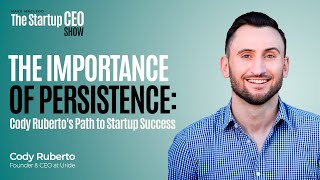
Cody Ruberto founded U Ride in Thunder Bay after impaired-driving deaths motivated him to build rideshare for small towns. He launched with C$3,000 using scrappy tactics like leasing personal cars under commercial insurance, faced rejection from VCs, and expanded to Mexico. His soccer background taught him resilience and how to take coaching.
Questions this video answers
Approximately $3,000
March 27, 2017
Six hip operations
About 24 cities
Chapters
I think that we should help each other. And I think in business, try to be a good person, try to help people. And yeah, don't be a bully. Support people. Even if you're competing with people too, you can do it in a. I think a good way. And yeah.
Welcome to the Startup CEO Show. I'm your host, Mark McLeod. In this episode, I sit down with Cody Roberto, founder and CEO of U Ride. There's been a lot written about how hard it is to build marketplaces. Imagine how hard it was to build Uber. Now imagine building 50 or 100 Ubers simultaneously. That's what Cody is doing with U Ride. He's bringing rideshare to small towns and cities throughout the world. He's got a really powerful origin story for this very deep passion. Super hard business. VCs wouldn't touch it, but he leveraged his background and his competitiveness as a former professional athlete to persevere despite all of this, honestly. See, I knew some of the story before going on the show with him, but I just have so much love and respect for him and his business after this conversation. I really, really hope you enjoy it and I hope you subscribe. Cody, welcome to the Startup CEO Show. It's a true pleasure to have you here. How you doing today?
Good, yeah. Pumped to be here. I'm a huge fan of you podcasts and, like, obviously your blog. I've sent you emails a bunch over the years and so helped us a ton. So, yeah, excited to chat again.
Amazing. One of the reasons why I wanted to have you on the show is because I feel like you're doing something extraordinarily difficult. And, you know, many of the guests that I've had on the show are folks who've completed the journey or are near the journey, whereas you're just still in the thick of it. And so I thought it would be cool to unpack all of that as well. So maybe just first of all, briefly, for folks who don't know what U ride is, just maybe tell us what it is that you do.
Yeah, ride sharing for small towns. So I'm from Thunder Bay. For those of you that are in Canada, smaller city, there was no Uber, no lift. People used to wait over an hour for taxis. And my background is completely different. I'm like, not a business person, not a tech person. I was playing sports. I, like, got injured, saw this problem, and yeah, basically I just started giving people. I would go out with friends and like, end of the night maybe, you know, you'd wait an hour for a Taxi. When a taxi did show up, there'd be 10 people rushing it. Like I've seen fistbites break out waiting for cabs and like people would just walk home or drink and drive and he was insane. I've had friends who have been killed by a pair of drivers and basically, yeah, also like growing up, one of my, one, one of my best friends at the time, his brother was driving drunk, ended up killing someone. The person he killed was another friend of mine. It was her brother and like a fat. I grew up with her whole family. So yeah, it's, it's just a problem that shouldn't exist. So I started giving free rides to people after the bar. I would do maybe two or three rounds just kind of on my own. And that wasn't enough to make a difference. So we just thought, you know what, screw it, we're going to start a ride share company in Thunder Bay to fix this problem here. There was like no Uber, no lift. I had a, now a year off from, from soccer. I was playing soccer overseas, had a bunch of surgeries in, in the U.S. and anyways, yeah, that, that's how it started. And then we like bunch of other people reaching out across Canada in these smaller towns saying they had the same problem. And then it turns out there's like a billion people in these small towns around the world that don't have access to reliable transportation. And so what we do is we're trying to fix that. So we operate in all these smaller communities that you know, know are like kind of the forgotten city cities like where I'm from. And yeah, we're just trying to fix this problem.
There a deeply personal path to you like in terms of just feeling this pain. Right. Like literally people you know and love dying because of this gap.
And Stan said like people don't know there's like seven times the number of deaths caused by impaired driving per capita in these smaller towns versus like urban centers like Toronto, Vancouver and places that have options. So people need like transportation is a huge part of our lives. People need options. And, and even for like a lot of, a lot of people, if you're from Toronto or you're from a bigger city and you go to one of these towns that like doesn't have rideshare, it feels like you're going back in time, right? It's like oh yeah, we, we still got a ton of work ahead of us. But yeah, I'm super excited and passionate about going and fixing this problem for all these communities, you know, around the world.
When I think about marketplace businesses, lots of complexity. Right. You got to create lots of supply, lots of demand, and then create liquidity. Right. So that the people driving feel like they're getting enough rides to earn a living. And then there's enough drivers so that the people who want to ride don't have to wait too long. And I feel like that's challenging in any market. You know, I've read lots about Uber getting going in different cities and having challenges with that. Maybe, Tom, I can only imagine in small towns, it's even more challenging. Tell me about how you were able to crack the code on that.
So the star was a lot of pain. So just like we had, we had. We started the company with 3,000 bucks and no other money went in until we were much, much bigger, like in millions of dollars a year or whatever. So lot of pain, a lot of suffering. Like, we're a 247 business and we couldn't afford to hire, like, any dispatchers, any other support. So it's like when we started Uride, I guess. Yeah. When we started the company, there's all these different things that I don't know. One of our. How do I say so? One of our, like, I. I guess core values and like, just a belief I've helped for, like, pretty much my whole life is like, there's always a way. And just repeating that a hundred times a day when I'm going through just some. Some like, horrible stuff, challenges where you have no idea what you're gonna do. Continually repeating that has got us through so many situations where, like, we should have died. And yeah, starting a marketplace business with 3,000 bucks, like, trying out how to get an app up, up and running. Having no idea, like, Like, I didn't go to university, my background is in sports, had no idea what we were doing. Just cared about this problem. So the early days of U ride, I. I don't know what you want to get into, but we could talk about how you start a company with 3,000 bucks and actually, like, actually fascinated.
To figure out how you start a company where you have to build a piece of software with 3,000 bucks.
Yeah. So I started, like, what's the first thing I did? There was a ton of challenges just to get to the point where we could, like, turn the app on. But yeah, basically before the app, it's like, okay, can we do ride sharing in Thunder Bay? Like, why aren't Uber and Lift here? And I was checking into. Into all this stuff and. And you couldn't do ride sharing. In our city. So they had a bylaw that, like, prevented ride sharing. And so that kind of killed that idea at the start. And then I reached out to Operation Red Nose. I don't know if anyone listening is familiar with it. It's an organization that gives free rides every December. It's all volunteer based. And I reached out to him. I'm like, hey, if we could figure out how to, like, get an app up and running and like, you know, I could kind of help sort some of these things out. Again, I had no idea what I was doing, but, like, can we run this all year round? Cause it's like, not. People don't just need rides in December. This is a full year thing. So that ended up, like. We ended up getting in touch with our head office. They thought we were a bit nuts, so they didn't move forward. But this could have just been like an opera Roth.
You probably were a bit nuts. That's okay.
Yeah, a little bit. Yeah. I don't blame them. And then from there we're like, okay. So I just started reading the bylaw in our city and. And on the third time reading through it, I saw this line that, like, limousines could set their own rates. I'm like, okay, interesting. I'm like, we could probably run with this. So then I started calling up these limousine companies. I'm like, hey, the first one I called, I told them, like, tricking and driving is a huge problem in our city. If we can. Anytime your cars aren't being used, can we fill them with drivers, get them on the road, get an app up and running, and just, you know, try to prevent a fair driving here? First, people we called thought we were nuts, like, hung up. And there's only two limousine companies at Thunder Bay. So the next company went there in person, told them the same thing, and I just said, like, they also thought we were nuts. But I just told them, I'm like, if, if. If you, like, your cars are parked. So best case scenario, this actually, like, works and you get paid per ride that we give or whatever, and you actually, like, make way more money than you're making right now. And we get to, like, actually make a difference in our city and help prevent this preventive bear driving and get people home safe. I mean, yeah, worst case, you just. You're in the same position you are now and like, can you just go for this? Let's do it. And then they. They ended up agreeing to it. We made a deal, got, got that sorted, and then it was like, okay, how do we get an app up and running? So I started calling, calling, like, people. I made software and all this stuff, and it was going to be like 2 to $300,000. These quotes I was getting to build an app. And I'm like, okay, starting the company with 3,000 bucks. I'm like, I gotta go for these major hip surgeries in the US and like, pay out of pocket all these things. And then from there I'm like, okay, so we don't have that money. I'm like, I'm sure there's people that have built rideshare companies that failed. Like, maybe they have products and things that, you know, they're not using now that we could figure something out. So I just started calling every rideshare company that started and failed, seeing if we could, like, get their code, do a deal thing, like something like that. Then started coming across, like white labels and then ended up making a deal with one company where it's like, hey, we don't really have any money right now, but if you work with us, like, you can make a little bit more over time. And, yeah, convince them to kind of work with us and get this started for almost no money. And then from there we got up and running. We like, so we had limousine partner, we had an app that we could like put on. Put on the App Store. And then we also had no idea what we were doing. So, like, I don't recommend starting a business like this, but I didn't tell anyone about it. The night before we launched, I put a post on my personal Facebook just talking about this problem. And, like, this is a problem that shouldn't exist. Year off from soccer, I'm going to try to fix this problem for Thunder Bay and like, let's go for it. And then that post went viral. So in Thunder Bay, it was like. Like, viral is like you get 5, 600 shares. And people started downloading. It was so cool. And then the first ride came through and then I remember going to pick this person up and I was so excited talking to them in my car and like, I forgot to click, drop off and overcharge them. So I ended up just like giving a free ride. But yeah, from there it was the start of just chaos for six months where, yeah, orders start coming in. It's a 247 business. A week after we launched CDC, I guess saw my Facebook post, they did an article about this and then put it out because it's weird. It's like they said, professional soccer player launching Uber, like, business in Thunder Bay. And then thousands of downloads started coming in and then demand just started exploding and we, we barely had any drivers. Limousine company had four cars. So we were like trying to get drivers to fill those up, trying to figure out how to run a business, trying to figure out how to pay Drivers every week, 247 dispatch customer support, working as a driver all the time. And then like, I think really early in the life of you, right, I had to like get two major hip operations. So like micro fractures. This is like, yeah, kind of things that could end someone's career. I thought I knew I would make it back. But so early days of you, right? If you were a customer and you booked and let's say it's like, I don't know, 3am, 4am, I would crush. I was crashing in my uncle's basement in Thunder Bay. I crush out of their house at like 3 in the morning. The whole house would wake up, throw the crutches in the passenger seat, come pick you up. You would hop in the car and you'd look and they like, see these crutches. And like, this person had a huge hip race. And customers used to go like, are you okay to drive? I'm like, yeah, no problem. Hop in. I just move the crutches over. And so people would hop in my car into my phone. Again, we had no employees at this time, so my phone would ring non stop with customers in the car. And I'd have to say like, hey, is it okay if I pull over and help this driver? I'm so sorry. And I'd pull over, help a driver with an issue, work out something if it was a customer, and then keep driving and then make sure that I stopped the trip early so that this customer doesn't get overcharged. And it was just an chaos.
It was like chaos.
And soccer was my life. So like at the same, like at this, this point, I'm still like, so soccer is my path. I'm going back to you. Like, I know I'm going to make it back from these injuries, get back to Europe. So in between driving people working dispatch, I'm going back and forth to the gym and physio and trying to do my recovery for these hip. These like major hip operations. So, yeah, it was nuts. It was nuts.
That's wild. I'm so curious. Like, you managed to get a couple of folks to take a leap of faith here, did you? Was it just your energy and passion? Like, were you. You can go for the heartstrings here with the stories about these Deaths that are close to you, do you think? Is that what got them to kind of take a leap year?
For example, that limousine company was called Granite Town Cars. Nadia, she's awesome and yeah, she really cared about this problem. And she had also been affected by impaired driving, so that was a big part of it. And then also the vehicles were sitting there. So it's like when you weigh out what the risk is of trying this versus, you know, just not trying it, it's like, yeah, I thought it was a no brainer. So yeah, a lot of people took chances on us and I guess the other thing too is we did get tons of no's. So like just we wouldn't stop until we found a way past everything that got in our way. So any rational person I think should have quit many times. So I don't know. Yeah, like, I don't want to make it seem like we talked to a couple people and like it just kind of worked. Limousine company, okay. It was the second one but the app provider trying to get a platform up and running with, with no money. Like I must have talked to probably 150 different people. Like just. Yeah.
And you said we. Was there a we or is this just you?
At the start? It was, it was me. And then probably so started working on this in December, January of like all January 2017. We were live by March 27th. And then by the summer I convinced my, my cousin to quit his job downtown Toronto and move to Thunder Bay and like work for free and also be on 24 7. So then there were two of us. This was a couple months in. How do you know?
That sounds like an awful job. I really would love to have heard the sales pitch.
Yeah. Called him multiple times every week. He was working for like a much bigger company in downtown Toronto and yeah, just why did he actually go? That's a good question for him. But just kept talking about like, and we're, we're, we actually had like, I think, I think I was talking to him about it before and you know, nothing really happened. But then we had revenue, we were growing tons of orders coming in, all this stuff. So yeah, he was, was he excited? I think he was pretty pumped to like jump in and try. And then it's like, I don't know how much I, maybe I, maybe I didn't tell him everything like how bad or painful it was going to. We were both on having no salary for I don't know how long, probably couple years and it was just, yeah, just chaos. But we saved up Enough to hire a nighttime dispatcher for eight hours. This was a couple months after he joined. And, like, that was incredible because now, like, before. Before we get the first calls, like, it goes to, like, someone else and then comes to us. So it was like. That was. Yeah. So the start 24 7, sort of on my own, then two of us going 24 7. So that made it way easier. And then as. As we, like, I could tell you tons of obstacles and things that happen along the way, but just like, as we grew, we were able to, like, get more people on board, start launching more cities. Well, we started having a bunch of people reach out that, like, I would drive passengers who were from Sault Ste. Marie, Sudbury, even, like Fredericton and places across Canada that would be in my car and just, you need to come to our city. We have nothing. So then we started thinking about expansion and, man, it was. It was crazy. Yeah, it was a roller coaster, especially in the early days.
So you think about product market fit. Very clear from the demand side that you had that right away. And if I understand correctly, then. So in Thunder Bay, you guys had to be the drivers. It wasn't about now acquiring supply side the way Uber does. Is that true in all of your towns or. Or do you. Are you building both sides now?
Now, now we're like, we're building both sides. And even like, when we launched with something that wasn't scalable, like, like with partnering with a limousine company, we basically, they had like four cars. So we were able to drive a lot of times. Then we were able to get drivers on product market fit. Like, it was horrible on the driver side, so we had to beg drivers to stay on the road, like, whatever. Whatever it would take. Like, I would. There's times where we could buy a family dinner so that, you know, like, the person could work. I've offered to, like, babysit people's families so they can get on the road. Road and drive whatever it took to keep drivers on the road. Yeah, we, we did. And a lot of the early drivers, like, a lot of them really cared about the mission and what we're trying to do. A lot of the drivers today really care about that as well. But yeah, I'm super grateful to the. Especially the drivers and, and, and in these early days when it was a horrible job, they were unbelievable and helped kickstart this thing and just like. Yeah. And then, then we eventually, like, limousine company, like, our demand started skyrocketing, so that wasn't close to enough cars. They started buying more vehicles. They got up to like six or seven. Then we basically found a busing company that also had. Also had limousine license and they had, like, two cars that they kept going on. Then we had to figure out, okay, demand was still going through the roof, like, what do we do here? So we found. Found this sort of loophole where you could lease your personal car to this. This busing company. You could fall under their commercial insurance and their licensing, and then, like, get on the road and start driving. And then, then we started scaling up to like 30 cars, 40 cars. And then the busing company maybe a story for another day. Like, I think there's crazy things that happen in business, but this person, they wanted to invest first. They wanted to buy the company, and they had like, an airline busing company, all these things. And we were just like. Just started in Thunder Bay. Yeah, they wanted to buy the company and we were like, I don't know, we don't really want to sell. And then they're like, cool, like, can we invest? And we're like, I had sort of a bad feeling about it. I didn't. Yeah, whatever. You meet some people and, like, sometimes you're. You have these feelings where I was like, of course I don't think I should stay close to this person and all that. And then the person ended up, like, blackmailing us. Can't remember how long it was, but I got healthy, recovered from surgery, got back to Europe. We had like, a dispatcher, and now I'm doing soccer and building the company, which is insane. But, yeah, this person started putting tons of pressure where they're like, they wanted us to sign this document to change the bylaw so that they could have their own. Their own, like, tax company or whatever and, like, lock in a number of cars. We could have a small portion of the market and lock it in. It was a really weird thing. And he was basically trying to force us into signing. Sign this document. That same. We support it. And he's like, if you don't sign this thing, I'm going to. I'll be fully transparent with people. Yeah. He said, I'm going to make sure that I ruin your business and you guys go bankrupt. I'm going to pay journalists to write horrible articles about you. And, yeah, I'll go to council and I'll also pull all your cars on the road by Monday and off the road. And, like, almost all of our cars were kind of underneath this person. And. And it's. It's Friday and. And like, we have this gun to our head. And I remember I was in Manchester, England, and I basically booked a flight. There was these developers. We needed something built to be able to get our own commercial insurance and switch all of our cars over to our own insurance. And we were sort of like, we had a bad feeling about this person. So we were kind of working on this, but now we had a gun to our head. It's Friday night. So I just, like, booked a flight that night to go meet up with. I knew there was these developers we needed to build this thing. They were in Las Vegas at this conference or whatever. So I booked a flight that night to Las Vegas, met up with them on Saturday, made a deal with them Saturday. During the day, they stayed and worked, like, I don't know, I think basically until Monday morning, and built this thing that we needed for the insurance company. Monday morning, called the insurance company before the start, started the day. We had a contact there or whatever. We switched all of our cars over Monday morning to our new policy. And it was insane. So we. We basically survived, kept the business running. This person on Monday, pull pulled everything. So they said, like, all your cars are off the road. They went to council. There's probably a video of this somewhere. But they went in front of council and, like, I sent a message to all of council and the mayor and told them everything that was happening beforehand. So he went up and, like, said all these crazy, horrible things about us and just making up these things. An article came out, like, a hit piece in Thunder Bay about, like, all just super transparent. They were saying, like, we were selling drugs out of the car. They were saying there was all these, like, assaults and things, and we were, like, covering them up. Just, like, complete, I don't know, fabrication. And. Yeah, yeah. But we basically didn't cancel. After he was done talking, they're like, okay, next. And he just looked around like, what is happening? And then, yeah, from there, we survived. We had this new model where people could go under their personal cars in this, under our commercial insurance. And we just. Yeah, that was one of the. One of the crazy things. There was multiple crazy things that happened to us.
I'm curious, do you still have anger towards this guy? And does that fuel you, or have.
You just moved on, or do I still have anger? I don't think I have anger. I think that it helped us a lot because right after that, this person started a competing company and we're like. And then just tried to kill us with, like, cash. And we're like, you know what? It's time to expand. We need to get big quick and like, we can't get bullied by, by, you know, someone like this. And we just focused on being the best service in Thunder Bay for our customers, for our drivers. It gave us a lot of fire to expand, a lot of fire to fix some of these problems that we had. And we just used that as motivation. Yeah, I, I, I don't think I, I don't think I have anger now. I don't like when, like, I really, when there's bullies and things like that, you really, it does really bother me. And so if it's happening to us, if it's happening to someone else, like, I don't know, I'm the type of person that all I'll stand up for things that I think are wrong. And yeah, I don't know, I think you got to treat people well. I think in business, like, if you help people and you're, you know, trying to be a good person and try to fix a problem, like, I think you'll be successful. And I think that if you're always just like, trying to screw people, trying to, like, do whatever you can to, like, make the most amount of money regardless of, you know, the moral side, I don't think that maybe it works for some people. I think over time, you, you won't be very successful. Yeah. And I actually, a couple years later, I was, there's like a community sauna in Thunder Bay or whatever. And like, I'm in this in the sauna and I just heard someone. I don't know if this is weird, but, but yeah, I heard someone like screaming at this, at this, like, girl like this. There is someone working as a lifeguard. And the person's probably 15. I heard this person just like screaming. I think she was telling everyone, it's 8:45, we're going to close in 15 minutes. So people got to kind of start moving. And I'm listening, I'm like, I recognize this voice. So I go and I look and it's the same guy, like going off on this girl. Like, I'm going to go to council. You guys are like, it's 8:45 and you're trying to get people out. And then, yeah, talk to him. I'm like, you know, and, and he basically said like, hey, I shouldn't have done any of that and I'm sorry and all those things. So, yeah, not, not holding it. I think that we should help each other. And I think in business, try to be a good person, try to help people. And yeah, don't be a bully. Don't be a bully. Like, support people. Even if you're competing with people too, you can do it in a. In a, I think a good way. And yeah.
This episode is brought to you by Thelo. Tell me if this sounds familiar. You wake up, you take a look at your calendar and you see it's filled with meetings, stand ups, weekly check ins, one on ones, town halls. And those are just your internal meetings. Some are productive, but some are definitely slowing you down. Be honest with yourself. How many times have you thought this meeting could totally have been an email? Now consider that in the US alone, there are 55 million meetings each day and 85 to 90% of those don't have an agenda. Fellow is on a mission to solve the meeting problem by offering the only AI meeting management solution that covers every part of your organization's meeting workflow. And As a startup CEO, show listener, you get 300 free minutes of AI recordings if you sign up today. Go to fellow App CEO to start your free trial and start having better meetings.
This is hard to question. Like, I'm trying to figure out how to ask this question. Like, I'm trying to figure out what role being a professional soccer player, being an athlete, has had on your success. It's hard for you to answer because you don't know what you'd be like if you weren't that. But what I'm hearing is tons of resilience, tons of positivity, tons of energy. And anyway, just like, to what extent do you think you're drawing on your athletic background here to run this company?
I think there's two separate things. So one, which is like my athletic background, like when you're on teams, like you go through, like, you have so many different coaches, so many different team environments, so many different ways of basically running teams and all these things. So you learn a lot and you sort of like figure out at least what you think works, what you think doesn't work. So you get these ideas in your head about how, you know, you would kind of do things. But the biggest thing that soccer has helped me with and like the pursuit of that career, like, there's nothing that comes close is this. That's, that's, that's anywhere close to as hard as my soccer journey was. So the amount of like pain, like physical pain, I've had like six hip operations. I've had crazy scenarios of like 19 doctors telling me I would never play again. So all of these different things, physical pain and emotional pain of like the amount of times I basically had my dream sort of like feels like it's getting rip. Ripped away from you. Yeah. So it makes everything in business like whatever I'm going through, like, even, even that situation I described nowhere near as challenging as some of the scenarios in my, my soccer journey. So yeah, pain tolerant helped me out a ton. I think how much pain you can take going through the, especially the early days of startup, like, I think it's a huge indicator of success that you can like get through all these different things. And like every founder I talk to there, they have kind of insane stories trying to get their business up and running and the obstacles and any rational person should quit. So yeah, from soccer I got resilience, pain tolerance, all of that. There's other things I could talk to you about, running the company, that, building teams, all that, that I think is useful.
I'm guessing you're pretty coachable given that you've been coached all of your life.
Yeah. Am I coachable? I, I think I'm super. I think I'm super coachable. I think that there's times where business is a little bit different, where you sort of have to. Yeah, in soccer I was kind of like a robot. Like my coach wanted me to do something, I would do it, you know, tenfold, like whatever I had to do. I was, yeah, most coachable person I think in business, especially the early days, well, really is we're sort of in a bubble. And then like I started, I mean I met like the guys from Skip Josh and then I started learning from them in this like startup ecosystem, started reaching out to people like yourself and learning. So that part I think I'm super coachable and I'm always trying to learn. I think the other thing is like our business, when you're talking to different people that maybe built billion dollar companies and are a thousand times smarter than you and like Harvard MBAs and all this stuff and they just tell you you're like dumb and your idea is horrible and you're just going to get killed. It's like you have to. A lot of times I think it's super healthy to disagree with people, people way smarter than I think you take the information but ultimately you have to make your own decision. And we've had things like this too, where it's just like, yeah, we have advisors, we have different people we're learning from who share their ideas and their thoughts. Ultimately, yeah, I'll try to, I'll try to do my best to listen to it, be open, take the information, but ultimately make my own decision. Which in soccer was a little bit different.
You know, again, when I think of Uber, many, many differences. Right. Like, first of all, each market they're in is giant. And then they used capital as a strategic weapon. Right. And burnt a hole in the ground and would subsidize both sides to block out competition. What do you think it is that made you be able to succeed without capital, or did you end up having to raise capital along the way?
We got in a couple angel checks. So, like, after we were doing like. Like, it was like a couple million dollars a year, there was like, if there was a new experiment we wanted to try that we didn't have the money for, there was like, angel checks that came in. But what caused us to succeed? Just. Yeah, I guess for. For us, that. That same thing. Like, there's always a way. Every obstacle we ran into, if we didn't have money for something, how do we get the same result without spending money? We had to get great at, like, getting free press, getting awareness, all these things. Like, with. With no cash. We had to. There's like, we experimented all the time. We tried so many different things. And, like, there's a couple things that, you know, you might try 100 things. And, like, there's one thing that completely changes the trajectory of the company. Right. So, yeah, when you. I guess we were always used to having no money, and so we weren't thinking about, like, oh, if we have $10 million, because we just didn't. So it's. They were in this situation. We need to figure out this problem. How do we solve this? And, yeah, we might try in 20, 30 different things until we found the solution. Yeah, we just. Just wouldn't stop. And I think it's hard to. It's hard to kill a person or a company or whatever that just, like, won't quit. And we'll just keep driving forward through every single obstacle, every problem. I don't know if that's a good answer, but that's. Yeah.
That there has to be a way. Is that a company value now?
Repeat it all the time. And there's still situations today where we don't know how to solve this thing. We're like, kind of in the middle of it and. Yeah, just. There's always a way. We've been in way worse situations in the past. We're going to figure it out, keep moving forward and. Yeah.
So before we went on air, I was just. We were just catching up. I asked you where you were. You're in Guadalajara. Turns out you're opening up down in Latin America. I'm curious, have you had to physically move to each town that you're opening up into?
I think I've been to every single one of our markets, spent time there. Do I have to move to every market? No. Do I like being on the ground and like, close to our customers and our drivers and in kind of in it? Yes, I love it. So, yeah, early days, like, definitely. We're spending a ton of time in each of our markets, like, kickstarting them because we know no money. A lot of times we had no employees. So it's like you're. You're kind of a launcher and all that. Now you. We have a bigger team, we have more people, all of these different things. But what that one thing that scares me is, like, getting too far away from our. Our customers and our drivers. So, like, I'll do things. Like this summer, I went from, well, you know, like Nanaimo, Courtney Kolmax on.
On.
On the island, like, all the way out west, basically got a car and then went visiting urine cities from the west coast all the way across Canada and then ended up like, yeah, saint. St. John's Newfoundland. So hanging out with our drivers in cities, taking you rides, like, and you. Yeah, I want to stay close.
That's amazing. So this is like all in. Like, do you have. You don't have a family yet, right? So you're able to just go all in or you have a family as well?
I don't have a family. I have a partner, my girlfriend. And yeah, but no kids right now. And. And yeah, right now I'm heads down in the middle of it, pushing every day.
Are you in the US as well, or you just went straight from Canada to Mexico?
We're not in the US We're. We're looking at it. There's like, us. So there's like Uber Lyft, like, drivers can turn their app on in, like most cities. It's usually just not the best service in these towns. So we're trying to figure out when we're expanding. Where do we go? Do we go to places that have nothing, really, really need our help right now? Do we go to places that kind of had. Have a bad service and go tackle that for us, at this stage, it makes sense to go to places that have nothing, bring ride sharing there, go do our best to fix this problem for them, and then over time, these cities that might have ride sharing, but it's a bad sort of version of it. For these small towns, go do our best to improve. Improve transportation there, too.
So tell me about, like, if I think about, I don't know, expanding in Mexico, I feel like it's kind of scary. For one, I need to learn Spanish. Do you speak Spanish at all now?
I do, yeah. It's not perfect, but enough to have conversations with drivers, conversations with riders and. Yeah.
Good for you. Cheers. That's intense.
Yeah, A bunch of other things, like, tons of learning. Just. You can just, like, yeah, open up your first market outside Canada. There was tons of things that we had to figure out, tons of things that we had to learn, tons of obstacles. Operating in Mexico is like, a lot different than operating in Canada, too. So it kind of felt like the early days where you need to learn, iterate quickly, make changes for passengers, and then try to get, like, product market fit there. Then the driver side, same deal. I could share tons of stories of trying to get this market off the.
Ground, but, yeah, what was the driver behind the. I didn't mean to have a pun there, but I was a pun. The driver behind the decision to expand outside of Canada. Did you feel like, Canada, saturated?
Canada, it's not saturated. Like, there's still a couple cities that we're going to launch, new market or existing markets. We can grow quite a bit. But honestly, this same problem that we have in Thunder bay, we're in 24 cities now. The same problem that we have in our existing cities exists in thousands of cities around the world. So someone has to go in and fix this problem for them. And so, yeah, I want it to be us. And when you're going into these markets, you got to figure out the unit economics and make sure the business makes sense. But, yeah, the main driver is like, I don't know. I want. I want to. I want to have an impact in my life. People that are here at the company, we want to have an impact. We want to fix this problem. I'm like, I think we've done a decent job in Canada. We can always improve and get better, and we're going to. But this problem exists everywhere. Let's go tackle it and fix this problem around the world.
From an investor standpoint, right? We often say, well, there's no market until there's competition. So I'm wondering, are there other folks who popped up who've seen the same gap that you see in smaller towns and cities?
Yeah, it's really hard operating in these areas. So we've had, like, a couple people pop up. I mean, like, over the years there's probably been, I don't know, 20, 30 companies that I know that have, like, started in one city and they're just kind of Doesn't. Doesn't work out. Yeah, it's hard going into these cities and making it work. Yeah, there's some companies that might be in like, one city or two cities, three cities, but scaling it. I think there's one company in the Middle east that was getting up for like 812 cities, but that is pretty much it.
Now, you mentioned you raised some institution. Sorry. You raised some angel checks along the way. I'm wondering, have you also raised any institutional capital to date or. It's all. It's all just angels.
Mainly angels. Yeah. We don't have any VCs in right now.
Did you try?
Yeah, yeah, yeah, we tried and just got crushed. So I think the last time, like, we seriously went out to go try and raise. I went to San Francisco for, like, four months, talked to a bunch of people, and I think, like, Uber and Lyft were really struggling then too. And. And, yeah, like, I remember going into a meeting in Palo Alto, like a partner meeting, and, like, Lyft dropped 30% in a day that morning.
Bad timing.
Yeah. So we got ripped apart. I've talked to, for sure, hundreds of people, and we just failed at raising capital. So, yeah, it forced us to get a lot more creative, keep more ownership over the company within, like, the employees and stuff.
So, yeah, I'm not surprised. And I don't think that has anything to do with your ability to pitch. I mean, I can just imagine, first of all, your energy and enthusiasm. You talk about kind of founder problem fit, right? You have deeply felt this problem. You have experienced death. And, you know, with people that are like, the passion is there, right? The evidence that there's a problem very clearly there. And then, of course, by the way you're doing it, you know, it's not just an idea. You've done it, but from a VC's perspective. You know, I think where I would have struggled is just like, I'm not going after one TAM. I'm going after hundreds or thousands of small TAMs, and there's no synergies. Right. Like, I. Like, I use Uber, where I'm not in the city anymore, but obviously I use it in Toronto when I'm there, but anywhere I travel in New York, San Francisco, Boston, wherever, like London, England, like all over, but always in cities. Cities. I'm using it, right? So it has utility to me all the time. But the chances that I'M going to be in Thunder Bay, Sudbury, like Nanaimo. Like, I'm just not going to be there.
Right.
So it's like you're basically whoever you acquire as a customer in one town, they're just going to use you in that town. Right. So like, the LTV lifetime value kind of per passenger is small. And therefore, again, this is just standard pattern recognition from an investor's perspective. Like, therefore, I can't apply steroids and acquire a lot of them. Like, I'm maybe not in control of the velocity of growth. I have to rely on word of mouth, organic. Did any of those objections come up? Because I feel like that's my, my gut reaction. Putting on a VC hat. Yeah.
And then just like, I think the biggest one is like, Uber is just going to come in and kill you. Lyft is going to come in and kill you. That was like, probably, probably the number one. And then also, like, even if they don't kill you, like, those businesses are like, struggling and so they couldn't understand. I think another really hard understanding was like, they were burning a bunch of cash at that point. The whole rideshare business model was like, sort of being questioned. And they just like, we were like, profitable. And you think so? They just, it was weird. And I think, yeah, we just got slaughtered.
Yeah, they don't understand profitable businesses. What, sorry, what's. Why is this black at the bottom? I don't understand what's going on.
That is interesting. And like, yeah, another thing too is like, yeah, you need to like, build it market by market. I think the lifetime value of these customers is like, yeah, there's tons of people that rely solely on taxis in these towns to get to, to and from work and to the hospital and wherever. And just like, unfortunately it's like, not a good experience for them. So a lot of our customers use us multiple times a week and, you know, stick around for long time. So like ltv, I don't actually like LTV to CAC ratios. CAC ratios will be like blended. But like, yeah, they're pretty. Like, people seem pretty excited.
I have been an angel investor for a long time and invested in lots of companies and have seen this could be causal or coincidental. A high correlation between, like, those CEOs that send out regular updates. Those companies tend to succeed. The ones that don't send out regular updates actually tend to fail. My theory is that the process of sending out regular shareholder updates just creates accountability, forces you to show progress. Each time I bring this up because I'm Not a shareholder, but I get your updates and so what's driving you to send out updates and you know, like, yeah, it's. Walk me through your. Your thinking.
Yeah, I don't know. I see, like, I see you as a friend of, of the company. Like a mentor, even, like, you sort of been a mentor. We've had couple calls over the years, but, like, you've been a mentor through your blog, through the podcast. Just like, I've been learning tons from you, even if you don't really, really know it. So, yeah, I love keeping you updated. But yeah, what, what drives that? I think we first started doing it, doing them with like, thinking about, like, the line versus the dot. So does it motivate us to execute? Like, I don't know. So live versus a dot for everybody is like investors, you know, whatever. People, if they see you at a. If they look at a dot and they look at your numbers at a point in time, there's like, way lower chance of them working with you, doing anything with you, versus seeing dots or. So you're seeing a line of you executing every month, every quarter, every year, just continuing to attribute. So, yeah, for us, would we. Does it change how we do things? I don't know. I think we're pretty obsessed with executing and growing and doing what we say we're going to do. I think that the great thing with setting up these updates is it forces you to take a step back from the business, look at things, and that kind of laid it out raw, like, the good, the bad. You obviously want to have good things to send in these, but there's some of the investor updates where we might share things that are like, hey, this part, we're like, failing and it sucks. And we need to figure out, here's what we're trying, here's what hasn't worked, and here's what we're going to try next. So I think that process of, like, stepping back makes a difference.
So you mentioned earlier, hey, I didn't go to university as a soccer player. I got like, what have you done other than just experience putting in the reps and trying shit, failing? What have you done to turn yourself into now the CEO of a technology company?
From day one, you sort of like start off as, okay, you could start off as like the founder or CEO, but like, you're not a CEO. You have no idea what you're doing. As the company scales, your job keeps. Keeps changing. So I know you talk about this and Toby talks about this, like, every year you need to re qualify for your job. So things that I do are one like yourself. You put out a bunch of content on being a CEO and like I've, I'm pretty sure I've read every single one of your blog posts that you've ever written. Like yeah, other people I've been so since one of the highest impact things like I was in Saskatoon for a little bit and like showed up at, you know, the founders of Skip, they started this a new, new company there. We were basically like I was huge fans of them. So I just like showed up there and said hey I'm Cody. Like it's Joshua. Would love to learn. And ended up staying there for three months just like watching, learning, trying to absorb as much as possible and learn tons. And then from there started like just reaching out to people that were a little bit further ahead. And the crazy thing is like I'd reach out to people and I'd say like why would this person ever respond to me? Like they're not going to talk to me. And people would take meetings and I would learn a bunch. And it doesn't even have to be about the CEO overall. There's things that you need to learn as a CEO. Like how do you hire, you know, if it's like a CFO or a VP of Finance or different roles that you like, you're hiring someone who should be way better than you. So reaching out to you know, 10 different CFOs and having conversations and learning and like knowing what to look for books, like I'll crush through books. So every day I'm reading something and trying to learn what else. Yeah, there's things like one thing I started doing recently was just like actually taking, taking courses. So I took like there was like an HBS online leadership course and I learned a bunch of stuff from there and started testing some of this stuff in the company. Right now I'm taking a course on eq. So like emotional intelligence. I think being able to like stay level headed and like actually think rap like rationally through well be. Yeah, thinking rationally through decisions without your kind of emotions or all these things sort of affecting it is important. So I'm trying to, to work on that. So that's something I'm doing right now. So yeah, every day like 1% better. You talk about this, you know, Shopify and whatever by like end of each day. All right, did I get 1% better today? I do an end of the week review. Did I get 5% better this week? And when there's too many Days. If there's a day that I can't answer yes, that annoys me. So I think maybe it's not the best for your EQ and your happiness. But, man, I want to keep improving. I want to keep making progress. And so every day I'm trying to. Trying to do it. And by the way, I'm like, nowhere near. I don't think I'm a great, like a good, great CEO right now. I think that I'm learning this level of being a CEO today, which is. And, like, my job's going to change in six months and 12 months. But, yeah, I'm religiously trying to learn and get better, but those are some of the things that I'm doing.
Oh, listen, man, I've seen the scale on your reports, and you've done that really without much capital. So I don't know, I think maybe you're not giving yourself enough credit. I connect the dots to what you've just described, actually, and your athletic background, because what I'm hearing is competitiveness. You're competing with yourself, right? Every day.
Another thing I would. I would just. I would probably add in is soccer, like, my soccer journey. The other thing it taught me is, like, you can improve dramatically at whatever you want to do. So, like, if you're willing to do whatever it takes, there's tons of sacrifices. This isn't the best for personal relationships and things like that, but if you're going all in and doing everything you possibly can every day on one craft, like the progress over a year, five years, ten years, is insane. So soccer, like, I don't know. I was riding the bench for my high school team in grade nine. I was like, under five feet, 95 pounds. And I just trained like an animal. My whole life revolved around it. And by the time I got to end of high school or whatever, like, we won for Ontario, we made. Made a ton of progress, or then went to Europe and, like, ended up on a team where you basically pay your own way, was an academy. I was the worst player there was 26 of us. I was the worst player on the team at the start of the year. I trained three times a day, which is probably, you know, over training or whatever. And like, by the end of the year, two of us ended up getting contracts, right? I was one of them, fortunately, and just throughout my career, if you look at, like, I don't know, me at like, 20. To me, at, you know, 28, 30, you know, like, the improvement and like, it's. It's insane. So and then I think there's another thing too, like always wanting, wanting to be the worst player on the team. So my goal at the start of every season was to be in a place where I feel like, man, why am I here? Like, everyone's way better than me. And then just train like an animal so that by the end of the year I'm sort of like at the top of the pack and making progress. And you do that year after year and it just compounds. I think in business it's the same deal if you're learning, growing every single day, surrounding yourself with people that are way better than you. Yeah. Over time that I think makes a huge difference.
Wow. I respect and admire that so much. I gotta ask you, like, I don't know, I feel like if I showed up and I was like the worst person on the team, I might just crawl under a rock. What got you to become in the top two? Is that just self belief? Is it just this vision? Is it, I don't know, like, what got you to show up every day harder than everyone else?
Ah, what got me to show up every day again, not healthy. And like, I don't recommend this for happiness or anything like that. My identity and my life was linked to me as a soccer player. So when things were going well with soccer, my life was like great. When it's going poorly with soccer, it was like, my life is horrible. It's like the end of the world. So it's not. This isn't, this isn't a map for happiness or anything like that. But I had this drive where I think I never felt like I was good enough. I always wanted to improve and just like, yeah, I. It sucks being in those situations where you're looking around and you're like, you feel really small and you're like, why am I here? And man, these people are way better than me. But if you remind yourself, like, okay, perfect, this is where I need to be and the improvement I'm going to have. So if everyone's twice as good as me right now, maybe in three months they're 50% better than me. And then in six months they're 25% better than me. And then in nine months we're kind of the same level. And then so I would just sort of think of it that way. And the other thing I would do is, and this is, I think important as a CEO, I probably need to do more of this. But like, I would map out at the start of, oh, I would do it in like kind of three to six months chunks. I would map out every part of my game and like all my weaknesses, all my strengths, and I just write a plan. I love having plans where it's like, you need to think, you just need to go execute on this. So if it's like you're tired, it's pouring rain out, it's 5am, it's cold, you don't want to get outside, but it's on there. You're getting your. Getting out of bed and going and doing it. If you write something where it's like, you stick to this thing, you will. Like, it's almost impossible for you to not make progress. Yeah. And you stack that for years. I think that makes a difference.
Nobody.
Who achieves greatness in any field could be business, sports, performance, arts. No one who achieves greatness is balanced. Right. Like, messy didn't get to be messy by being balanced. Right. Toby didn't get to lead a 10,000 person software company by being balanced. You know, like what you and this kind of identifying with yourself as a soccer player. I think everyone who just listened to you speak, they're going to resonate with that. Because I know, well, I spend all day, every day with CEOs, and many of them are in the same boat. You know, often when they show up, their sense of happiness is completely tied to the trajectory of their company. Now, that's not healthy. We have to uncouple them in some ways, but it's very common. So I think people would definitely resonate with what you just said.
Can I share one other thing here? Like, another thing that I think really, really helped me is like, whatever you're doing, if you're trying to do anything hard, building a company is hard. You know, trying to be the best in the world in something else. Going out is tough, but, like, there's all these crazy things that happen along the way. So another thing I used to tell myself is like, okay, this, this challenge here, this is where another 50% of people quit. And then like, I get past this stage, we're like a little bit closer. It's not irrational, but it's like you. That got, kind of got us through so many things in soccer, in business. So, yeah, gotta keep pushing, keep rolling every day.
All right. Have you wound down from soccer now or is it still a part of your life?
I'm playing for fun. So when I'm on the road, we could go into this probably on another. Another call. I sort of had like a midlife crisis, like, impact. All these things. I was Doing. You ride in soccer at the same time and like, go to soccer, you would entertain people, a small group of people, and it's like, you. I love doing it and there's all these lessons from it, but the impact we get to have with you ride, like, you know, fixing this problem, if. Or, you know, hundreds of thousands, millions of people. That's transportation. That's super cool. You create hopefully great jobs for thousands, tens of thousands, hundred thousands, millions of people. That impact is great. Every month, a portion of all rides goes towards helping the communities that we're in. So I think I got super excited about the impact and when I looked at my time and where I want the majority of my time to go, I want to have an impact and want to try to make a difference and. And I think you ride. I'm super passionate, I think. Yeah. So it's been about three, three and a half, four years since I, like, had been playing soccer professionally. I still play for fun. If I'm on the road, like, I'll go find. If I see a field and people are playing, I'll go play. And do you just, like, decimate them?
I kind of like, they're not former pro players. You must just destroy them.
I just go pass the ball around and have fun. Try not to. Yeah. Not take it. Take it too seriously now. But. But, yeah, that's it.
Well, Cody, thank you so much. I gotta say, I knew some of the uride story, but I. I have so much love and respect for you and what you're doing now having heard this story. I really appreciate you sharing it now.
Mark, honestly, you've been a huge part of it. And like, seriously, like, I know, you know, you. You don't know how many hours I've spent absorbing and implementing the material that you've been putting out. But yeah, you've been a huge mentor throughout this podcast.
I appreciate that part of.
So I really appreciate it. Thank you.
Thank you. All right.
Hey, thanks for listening to the Startup CEO show. If you'd like to connect with me, be sure to visit my website at markmcleod me or follow me on LinkedIn at the Mark McLeod or Twitter arkmcleodore. And if you want to tune in again next week, be sure to subscribe on YouTube, Spotify, Apple, or wherever you get your podcasts. We'll see you next time.
More from Mark





The Burnout Breaking Point - How Strategic Breaks Actually Increase Productivity


Emotional Debt - How Avoiding Hard Conversations Compounds Into Company Killing Resentment


The Death of the Specialist - Why AI Is Creating a New Professional Class Called Scalers