The Power of Gratitude in Business: Insights from Indochino’s CEO
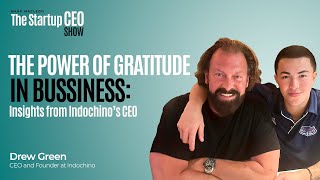
A recorded interview (YouTube) between Mark MacLeod and Drew Green, CEO of Indochino, reflecting on Green’s 10-year leadership, the company’s growth from an online-only startup to an omnichannel global brand, strategic partnerships (notably a $30M strategic investment with Diang Diang Group and media-for-equity with Postmedia), supply-chain design that avoids store inventory, COVID-era responses, marketing mix, company culture (gratitude and 'game ball' recognition), and considerations about future exits (public listing vs strategic/deferred liquidity).
Chapters
And that's another thing that we did just from a. From a brand perspective is, you know, like, this year, wedding will be 40% of my business. Could probably be more if we weren't so big. But I don't know that we'll ever go back to that time period where you wear suits every day. But from a business perspective, a suit will always be the core of a men's closet. And again, whether it's 1 10, or 100, you're going to have one. And yeah, we're going to be right there for you.
Welcome to the Startup CEO Show. I'm your host, Mark McLeod. In this episode, I sit down with Drew Green, CEO of Indochino. The world might be getting more casual, but Drew has sold over a million suits this year. He's celebrating his 10th anniversary with the company tomorrow, and he's helped grow it to over 140 locations and over a thousand staff and really a global business in 52 countries. In this episode, we talk about the key milestones and journeys along the way, the strategic partnerships that unlocked growth for him and what he refers to as game ball culture, the importance of gratitude, and so much more. I really love this conversation, and I hope you do too. Drew, welcome to the Startup CEO show. It's a true pleasure to have you here. How are you doing today?
I'm doing great, Mark. It's good to see you.
Good to see you. I got to tell you. So when I knew I was interviewing the CEO of a men's high end fashion brand, I was like, should I put on a soup today? I was like, you know, I'm in my house by myself. That's a bit ridiculous. So I didn't. But I'll tell you for what it's worth, but I wish the world hasn't gone so casual. If you set aside kind of like the drunkenness and the misogyny of Mad Men, if you ever watch that show, boy, were they ever stylish. I just loved wearing suits. And when I was an investment banker, every time I closed a deal, I got a suit made. And so now I have this closet full of beautiful suits that just gather dust.
Yeah, you know what? That's one of my favorite shows. Mad Men. Incredibly stylish. And I mean, look, you'd be surprised on how many people are still dressing up. We sold and produced over over a million units this year.
Come on. Really?
You know, we just keep going. I think the suit is the sort of core of your wardrobe. Right. You need at least one, but hopefully 10.
I love suits. You know, it's impossible to not feel confident wearing a suit. You know, it's just like instantly put together. You always look great. I just love it.
Yeah, no, it's a great point.
So we were chatting right before we went on air. So Tomorrow's actually your 10th anniversary at Indocino. So this is like a perfect time to kind of maybe take a step back and maybe I'll just open up like, you know. So 10 years in. Would love just your thoughts on kind of. You've got. These may be old stats, but what I saw, you've got over 140 retail locations, you got over a thousand staff, another 3,000 that are kind of more behind the scenes manufacturing custom suits for everyone. Like, walk us through those last 10 years. The highs, the lows, kind of key milestones, big decisions. Just what were the big inflection points from your standpoint?
I love those words, inflection point. Because every business has one or hopefully many. And you know, look, this has been a really special journey. You know, I've been a CEO now for well over 15 years now and counting. And you know, the last 10 years has been really, really special. I think with, you know, with this company in particular. It was a, it was a, it was a small online only brand, right? When we, when we essentially restarted the business, my partners and I, and you know, we had a, we had a vision, we had a big goal. Um, and the vision was to inspire a generation of men to, to create their own style. Right. And, you know, the how, the how wasn't entirely clear when we started. But what I knew, Mark, is that sort of this, the path that retail was going at the time was very transactional. Right. I mean, you and I are of a vintage where we were around when E commerce started. And you know, it's still not the majority of transactions as you know, but it became very transactional. And so what we saw 10 years ago in this company was, you know, a business that had taken an industry that was, I don't know, a couple hundred years old, three hundred years old, you know, in bespoke custom apparel had brought it online. But really to create, you know, a brand that could last hundreds of years, we really needed to connect with the consumer in a different way and we really needed to focus on experience. And so, you know, we've gone down this journey of, you know, an omnichannel way, way overused words, but omnichannel, you know, strategy, where we have an incredible collection of tier one flagship showrooms, now 61 we've got incredible mini showrooms inside of Nordstrom. 33. 33. Soon to be, soon to be 41. We're launching another eight with them in, in early 2025. And then we just launched. I mean, it's good timing with this, with this show, but we just launched 50 locations with Kohl's, the green label of all things. It is a big deal that. It's a big deal on a few different levels. I mean, number one, we always aspire to, you know, to partner with, you know, the best companies that we can partner with. And I have a lot of admiration for Kohl's. Their team there is incredible. But it really opens us up to a new market, right? A market that might not necessarily be able to afford, you know, the made to measure version of what we. What we do. And, and so I'm excited about it. We'll see if we can get to all 1200 stores here in the next couple of years. But. But yeah, you talked about inflection points. You know, we really had our first inflection point right off the bat, you know, because this company was a very small company. You know, call it, I don't know, $15 million, trailing 12, losing half a million dollars a year. That is unsustainable. As a former cfo, you. You would have been like, what are we doing? But we knew that, you know, if we properly capitalize the company, we brought in strategic partners to really enhance both the main parts of any business, supply and demand. We could create something really special. And so, you know, that first inflection point was really, you know, manifest is a word that runs around my house quite a bit. And it's just kind of an interesting story. But even before we close the deal and again, sort of restart, reset the company, I told one of my partners in Seattle, I said, hey, we're going to go out and raise 30 million. Literally said that to him. I said, we're going to go out and raise 30 million, don't know from who, and it's not going to be you because you're a venture firm and you could write that check, but it's not going to be you. We need somebody that can actually provide other value in the business mechanically and operationally. And six months later, we closed a $30 million strategic investment with Diang Diang Group in Dalian, China. Just a wonderful, really incredible group of entrepreneurs and people. At the time, they were the largest suit manufacturer in the world. And we're really inspired, I think, by the vision we had to create you know, a market leader, a global brand, and ultimately, you know, hundreds of millions of dollars now, billions of dollars worth of sales. And so we closed that deal. And that really, Mark was, was our first inflection point. You know, we, we could then go from, you know, producing and shipping in kind of four to six weeks, depending on which way the wind was blowing, you know, with all of our various manufacturers just outside of Shanghai, to being really just setting the standard in the industry and being able to deliver in two weeks.
Wow, that's crazy.
Yeah, yeah. And we, all of a sudden, you'll appreciate this. Again, as a former cfo, you know, we literally redesigned our cash flow model. We went from buying fabrics every 15 days and having to pay production monthly to, you know, 90 day terms.
That's transformative.
Transformative, right, because then all of a sudden you can start scaling, you're getting the capital in, you have a negative cash flow model, and you're, you're paying out 90 days. And so, and, and, and, and I could literally go through 12 parts of that deal that were really important outside of the capital. Well, what the capital did was it allowed us to, to really create the showroom model that we're now famous for. And, you know, we went high street to start, you know, Toronto, Boston, New York, San Francisco, you know, really the premier shopping destinations, the Sohos, the Newbury Streets, the Beverly Hills. And then we sat back and we learned, right. We didn't all of a sudden just deploy the capital and say, let's hope for the best. We really went with those first step seven, then we went with another four and just kept building. And now, like you said, we're at 144 retail units and a lot more growth to come.
That's huge. Okay. There's so much to unpack there. I do want to come back to the strategic partnership because many folks listening might be thinking about that at some point. Right. Once you get to a certain scale and you know where you're headed, strategic capital makes sense. Perhaps more than just institutional capital. But let's park that for a moment. I don't know if you know this, but back when I was a vc, I invested in a men's clothing brand, Franken Oak, and Frank and Oak. When I invested, it was not Franken Oak. It was a thing called Modus Suite. And it was actually custom custom shirts, custom made dress shirts and suits, et cetera. And perhaps this is one of the reasons why you went retail. But we found the hardest thing was educating people to take accurate measurements like proper Neck size, the arm length. So the ones who did became great repeat customers. But we had just so much drop off in our funnel and Omnichannel wasn't a thing then. Was that one of the inspirations for you going the Omni Channel was just to be able to kind of get accurate measurements. You have that just more complete experience, not rely on people to figure it out.
Yeah, I mean, my, my background, I mean, I've always had an affinity for fashion.
You and your brother?
Yeah, me and my brother.
He's big into vintage fashion and a.
Little more so I think he's become a model. But. But, you know, I'm. I'm a. I'm a tech entrepreneur, tech executive. And, and that's my background. What really enthralled me about, you know, what I re. There's a few things that I really liked about Indochino, and you mentioned one of them. But first, in any company or any technology company that you start, you want to be able to solve a problem, right? What problem are you solving? How are you making it better for a cohort, consumer group, etc. And here was this company, super small, losing money. They were solving a big problem, right? Like FIT in the apparel industry is, is a massive problem. And when I say massive, I'm not exaggerating. I mean, you see return rates at 10, 15, 20, 25%. And as you know, that kills a piano. And so I really liked the fact that we could take a problem solving approach in building this company and how we marketed the brand and how we competed against our competitors. And I mean, you nailed it, right? Like, we provide. I mean, fit is our. Why it's our. It's our Northern Star. And you know, we get fit right 80% of the time out of the box, and then we've got tailors across the network to alter, you know, those smaller, smaller requests for an even better fit. And so, yeah, I mean, you kind of nailed it, right? Like, being able to solve a problem is super important in any business, I think. And, you know, direct to consumer apparel is a tough, tough vertical. Right. To, you know, Frankenhoek. I know those guys well, you know, have a lot of admiration for what they built, but it was tough.
Super. Yeah, yeah. Far from a straight line. Ultimately, it's still going, but for the initial founders and backers, not the outcome that they hope for, that's for sure. So the key to retail is location, location, location. So sounds like you figured that out. With that kind of initial cohort of stores and one of the Things it sounds like would be great with your model is I'm guessing the square footage was probably pretty low in each location because you're not carrying inventory per se in each location. It's more like, here are the samples and we're going to size you. And probably here's like, I don't know, a few finished garments just so you can see. But I'm guessing the footprint of each of those locations was pretty small. Is that right?
Yeah, you nailed it. I mean, I think. And location is important, right? Especially when you're, you know, I think when you're starting off, it's probably even more important because you got to make sure you're kind of getting the brand out there, whether you like to talk about it in a board meeting or not. You know, those retail units become billboards for you. And so, you know, those locations are important. But I, I kind of think model, model, model is also important. And what we recognized in our model was we have no inventory. And so when I open a store, Mark, you know, I'm not spending a million or $2 million to build it, excuse me, design it, build it, and you know, stock it per se. I'm spending, you know, a good amount of money, but I'm not having to put inventory and I'm not having that inventory turn. That's a huge advantage for me. Like I'm sitting, I'm sitting here and looking at my, my, my appointment count for today. We've got thousands of appointments, but I literally have no inventory. Right. They'll go through the process, they'll create their garment that'll be automated, automatically transmitted to China. The laser cutters will start and you know, the, the production will be done in five to six days. And so, you know, that was really important. The other thing with our retail model that gave us confidence initially and then, you know, has inspired the growth is we're appointment based. So you, you know, as, you know, with Frank and Oak, you know, you're kind of relying on walk in traffic, you know, and so how busy is, is Larry and Susie beside me on each side going to be? Because that's going to maybe impact the amount of walk in traffic. Am I near Apple? Where's Lemon? In the mall or the high street. But we, we have that, we have walk in, but it's a single percentage of our, of our revenue. The rest is appointment based. And, and then where it gets really cool for us is that we kind of figured out how to toggle, right, the appointments through media, through CRM and through Other customer journeys that we've created. And so like, again, I said today, like we start Black Friday this Monday, the 11th. I'm not sure when this will air, but, you know, our appointments are building significantly. And so that gives us great confidence. It gives, also gives us great confidence to staff the store, you know, appropriately. So a lot of things in our model that are different as it relates to sort of traditional retail or that Franken Oak example or Lululemon, who's on our board, you know, we're just a. We have a different model.
Well, the not having to carry inventory is everything. You know, it's not on my LinkedIn, but I used to be a partner in a chain, a skateboard at snowboard stores back in the mid-90s. And we went out of business because every time there was a big snowstorm, we'd go riding the mountain instead of working. We had a lot of fun, but we had six locations. But yeah, inventory killed us. The stores were profitable, but the cash flow and then, you know, with the hard goods especially, you had to commit in advance of the season. You had to commit so much of your inventory spend in advance. It was just a giant leap of faith, you know, so tough, really tough model.
Really, really tough. And that's where, like I think for, for founders, for CEOs, you know, the sort of automatic. You're pulled towards building your team and you're pulled towards how am I going to market my brand, how am I going to acquire customers, how am I going to, you know, build the front end of a business? But for me, it's always the back end, right? Like, unless you figure out your supply chain and create differentiation, there's. Unless you figure out that cash flow. I am not a cfo, but I'm a, I'm a cash flow junkie, you know, and unless you sort of figure out points of differentiation there, either you've got to raise hundreds of millions of dollars and take on debt and do those things, or you figure them out, create creatively with partners like we have in China, where everybody wins. You know, I'll kind of revert back to that inflection point, you know, that 30 million dollar investment for 19 of the company at the time. This is back in 2016. And, you know, I probably paid them half a billion dollars for my production because as part of that deal, they got all my production, they got all my fabric, they got all sort of the supply chain, if you will. And. And so they went on a couple different fronts, right? They still own 16, 17% of the company and I paid them, you know, a boatload of. Boatload of cash.
This episode is brought to you by Fellow. Tell me if this sounds familiar. You wake up, you take a look at your calendar and you see it's filled with meetings, stand ups, weekly check ins, one on ones, town halls. And those are just your internal meetings. Some are productive, but some are definitely slowing you down. Be honest with yourself. How, how many times have you thought this meeting could totally have been an email? Now consider that in the US alone, there are 55 million meetings each day and 85 to 90% of those don't have an agenda. Fellow is on a mission to solve the meeting problem by offering the only AI meeting management solution that covers every part of your organization's meeting workflow. And As a startup CEO, show listener, you get 300 free minutes of AI recordings if you sign up today, go to Fellow app to start your free trial and start having better meetings. So let's, let's talk about supply chain for a moment. You know, that became top of mind for everyone during COVID And so I'm wondering what happened to you during COVID Did it grind to a halt to keep going? And then also I'm guessing people stopped wearing suits when they were stuck at home. So.
Yeah.
What impact did Covid have on you?
Yeah, man, it was. Oh, it was a moment, you know, it was. I mean, it was a moment on so many different levels. I mean, I'm a, I'm a father first. That's my kind of first C level job. And I had two aspiring athletes that, you know, I knew were going to be. Be faced with some challenges to continue their dreams and their journeys. So we, we tripled down on that. And that's a great story for probably another day. But, but within the chino, it was, it was incredible, man. But I, I will say, and I, and I know I talked about this past 10 years being, being just an incredible journey. That period of COVID is probably the, the singular, you know, time period that I'm most proud of. Like, you know, I've always, I've always started, I've always, and maybe this a little bit of my upbringing, but I've always thought that every challenge is an opportunity. And I, you know, I talk a lot about that, you know, with team, I talk a lot about that with other CEOs that I mentor, et cetera. But when a pandemic hits, you're really put to the test, right? Like, is it a challenging opportunity? Well, let's see how I handle It. And so it was tough, man. It was March. We were away as a family. It was my wife's birthday. And, you know, within three, four days of getting to where we were going, you know, I was literally on the phone, you know, every hour. And it was. It was crazy, right? And it. It was concerning because you, you know, as we know, like, we didn't really know what Covid was, you know, And I just remember. I remember a call when I started. We started talking about some of the staff getting sick and. And being scared. And we were still open. This is kind of like, you know, before the mass shutdown. And I just kind of, you know, looked at my wife and I was like, you know, we got to close. Like, we got to shut this down. People are getting sick. People are scared. You know, a couple hours later, Starbucks announced they were closing their units. You know, Lulu, Nike, etc. And so, you know, by end of March, we basically. What we did, Mark, you might appreciate this again as a cfo, but, like, we cocoon the business. That's what the board night sort of referenced. We said, oh, my gosh, we're going to have this incredible year. We had TV commercials, we had Nordstrom launching and all these things. We're going to cocoon the business. We're going to protect our people. We're going to protect all stakeholders, all shareholders, and we are going to work with each and every one of our partners systematically to create a plan with them to get to the other side. And, you know, we. I remember, like, I have an. I have just an incredible board that I'm really so grateful for. But, you know, we would speak on. On weekly calls. We had a checklist of things that we, you know, work through back to the supply chain, you know, because we had no inventory. We were so protected on that side. Right. I wasn't sitting with even $1,000 worth of inventory. We. We had none. And all my fabrics sit on. On the books of my manufacturer. So. So we're well protected there. We kept, you know, kept our people in a place where we could bring them back because you just didn't know what was going to happen. And I'm talking about our people in the States and our retail team and, you know, DHL Post Media, which was a major partner of ours, literally dozens of partners. I was on. On a call with them every day. Right? Here's what. Here's what we're going to do. Here's how we're going to work through. And we did it, you know, in mid. Mid May we started reopening, which was, you know, less than a month later. And then we shut down and then we reopened and wave after wave after wave. But, you know, we managed all the way through it. We were a nine figure revenue company in 2018. Just to give you a, you know, a sense of the impact. And we're a way bigger company now. I had, I had 55 retail units. I now have 143. Our online business is way bigger. And you said, you mentioned this earlier that people were working from home and you know, not going out and so not not having the need to have suits. But actually the opposite occurred a little bit. Right. Like yes, there was a casualization, but man, when it was, when there was an opportunity to go to a wedding or when there was an opportunity graduate, they double down. Right. And so, and that's another thing that we did just from a, from a brand perspective is, you know, like this year wedding will be 40% of my business.
Oh, wow, that's huge.
Yeah, that is huge. And could be, could probably be more if we weren't so big. But you know, again, I don't, I don't know that we'll ever go back to that time period where you wear suits every day. I don't think I want to go back there even personally. But from a business perspective, a suit will always be the core of a men's, of a men's closet. Right. And again, whether it's 110 or 100, you're going to have one. And yeah, we're going to be right there for you.
I love that. So 40% weddings, your store footprint is all northern hemisphere. So I'm guessing you have a very seasonal business. So the summer months must be pretty huge. I guess spring perhaps leading up to summer, probably very huge.
Yeah, that's a great call. Yeah. I mean, you think that. I mean November is a big, big.
Month get for the holidays.
Yeah. But because we're, you know, I've been in E Commerce forever because we're not instant delivery or same day delivery. I'm two weeks. You know, things start to slow sort of mid December and we switch over to gift cards quite a bit because you just don't have that instant gratification. But yeah, wedding season is a huge one for us. We saw a big surge this summer. We had one of our best quarters ever, you know, in Q3 and both on the top and bottom. And so yeah, that's the other thing, Mark. Like I think the pandemic, it changed so much. Right. And when Talk about the socio and economic impacts. But where people live, there was a huge migrational shift. Right. People moving from.
I'm one of those people. I left Toronto, I'm now in the boonies, something like in a town called Caledonia, like on three acres. I hate going into the city now.
Well done. I love Calvin. Yeah. I mean, people were just moving and changing jobs and doing a whole bunch of different stuff. And so you got to adapt the business that way as well. Right.
Have you explored. I don't know if you, if this is a trend you're jumping on, but my favorite store is Harry Rosen. And when I got my very first credit card back in my 20s, I instantly went and maxed it at Harry Rosen, buying stuff that I had no business buy anyway, so I've been a long time customer and they launched this line of custom made, not bespoke. There's a difference, as you know. But it's like a hybrid suit. So it's a suit, but it's also like a track suit. So it's kind of more casual. It's kind of like a drawstring waist. You know, it doesn't have like the padding on the shoulders. Have you, have you gone into that trend at all or you're sticking more to kind of true suiting?
Yeah, that's. I mean, I'm such a big fan of Harry Rosen as a brand and you know, the family for what they've created together and totally understand you max out your card because they got so many good things. But yeah, we haven't gotten there. You know, we just launched an athletic, what we call an athletic suit inside Walt, which is more of a mass marketplace than Harry Rosen would be after. I mean, we're in 50 stores and Kohl's to start. Hopefully that goes to 1200, the green label. We'll see how it does and I think we'll, we'll play with the different designs. But you know, again, going back to our business model, like, we're never out of season, we're never out of style. You want double breasts, you want single breast, you want cufflinks, you don't want cufflinks. What type of collar do you want? It's all within the platform for you to create. We don't have drawstring pants. Great idea. But you know, that's, that's where we'll keep to our knitting. Right. I think we'll introduce this. We just launched some knitwear and showroom which I think is going to, you know, do well this holidays. But man, at the core of what we do, 80% of what I sell is suits. Right. And so we've got outerwear, we got khakis, we got shirts, we do hundreds of thousands of shirts. But really the core of what I do is suits. And so I don't think we'll get into what you described with, with Harry Rosen launching, but let's see how they do with it. I'll be rooting for them.
I'm curious about your marketing mix and I don't want you to talk about anything proprietary but you know, I come more from like the SaaS and Pure E commerce world where marketing's mostly transactional. Like I'm mostly trying to drive a behavior, come and sign up for a trial, come and buy something and hopefully I get first purchase profitability. But I'm guessing with you, especially with suiting and then because there's an element of trust in buying a suit, particularly for a wedding.
Right.
So I'm wondering, is your marketing mix more skewed towards brand versus transactional?
No, not yet. I mean, no. In terms of more brand, I think heading into 2020 we had aspirations to get into some TV. I've done millions of dollars worth of radio that I, that I speak, it's my voice on the radio. But that's a little bit of, you.
Have a deep radio voice.
So yeah, that works. Appreciate it. But we really were going to do, we were really going to transition into more brand marketing in 2020. Pandemic hits and we quadrupled down on transactional media. And I wouldn't say that we're pretty diversified. You know, been in this industry a long time. You never want to be over reliant on one channel, that is Google or Facebook or you know, or both.
I mean most venture backed startups, a big chunk of what they raise goes to those big platforms, right?
Yeah. And so we've stayed away from that. And so we're very, very diversified. But I would still say we're, we're pretty transactional.
Are you doing like local? Will you have specific marketing for San Francisco, specific for Boston, etc.
Yeah, we'll, we'll do that. We have partner marketing, you know, kind of coming out of our ears. Right. Everything from Nordstrom to Kohl's, you know, network now just launching. But the Yankees, the LA Rams, the Phoenix Suns, the Boston Red Sox, you know, we partnered with dozens of, of, well, hundreds.
So this is like influencer marketing. You're getting like kind of known people.
Yeah. And, and, and you know, that's, that's actually to your question of brand versus transaction. Like those aren't $10 million deals, but those are pretty big deals. And I do think, you know, it's helped us get the brand out there and become, you know, become an inspirational brand. Right. Not unlike, you know, Warby Parker or some of the others that are in our subset serving really the core millennial customer. You know, we've done some pretty creative things. Right? Yeah.
You know, you referenced postmedia, I seem to recall that was a pretty creative, basically non cash investment like, of sizable. Right. Like maybe tell us about that.
Yeah. So, you know, my philosophy in building any business is I've started 15 companies in my career, all, all of which that are still active and building. But my philosophy is simple and you can apply it to any business. It's people, product and partners. And if you can be relentless on those three, you know, on those three Ps and really, you know, focus and build on them, you're gonna, you're gonna do great things. And so we've got this amazing team, we've got this amazing product now. And partnerships has been from day one how we've really accelerated this business. And so you think about sort of the trilogy of our capital raise journey. You know, we went to China, we fixed our supply chain, attracted, you know, an investor to take a stake in the business that now had a vested interest in the quality to which we delivered check. And then I thought, well, man, I can't spend, you know, even a dollar on brand marketing back then. What if I went to Post Media and proposed, you know, an in kind investment? And so that was $40 million of in kind media in exchange for equity. And that put us on the map, Mark. Like, you know, we were this little Vancouver brand and all of a sudden we were on the front page of, you know, the National Post every week and you know, for years. And so that was an incredible, I thought it was incredible for both, you know, got a lot of admiration and respect and love for Paul Godfrey and some of the other people there, Andrew, that helped put that deal together. And you know, I think it was good for both companies. Then I went to Japan and I said, okay, well if I'm going to truly create a global brand, there's no better suit market than Japan. You know, 10, 12 million suits a year on a population three times the size of Canada. And so Mitsui invested in us. And so those were our three sort of strategic investors alongside our private equity and alongside our venture shareholders. And so yeah, the media deal was A great thing for us, super creative.
You're not applying a standard playbook there. When you're so.
Oh no, you're not. And you're needing to, you have to, right? You know this. I mean, you've built some incredible companies as well. I mean, if you just gotta go about it like everybody else is going about it, you're gonna have the same outcome that everybody else has.
That's right. Exactly right.
Yeah, you gotta do some, some things differently.
How do you think about the interplay between your retail and your online? Is retail really just about establishing the relationship, getting the measurements, but online is actually your revenue engine or not so much?
Really great question. I mean, from the outside looking in, you think, especially if you looked at our P and L and you know, some of the gap you have it, you'd be like, oh my gosh, this is a retail company. Like they're, you know, majority of their sales, majority of the revenue is retail. But kind of peel that back and you know, 75% of all transactions start online. So what that is, Mark, is that's somebody saying, okay, you know what, put it in B2B software terms, okay, you know what, I'm going to come, come in, in a chino and I'm just going to self serve and do it myself, right? And so they build their suit online and they, they check out online. Then we have full serve, right, where you make an appointment online. So I'm going to come into King street or I'm going to come into Yaletown, you know, this Saturday at 3 o', clock, boom. I've had a transaction there and I'm creating demand for my showroom. So, so again, 75% of our entire businesses is generated from our online business. And then I kind of view, I view E commerce and retail as just one, right. And I want the customer, I want the customer to be able to interplay between the two. And so if you want to come in store and you want to get fitted and you want to feel the fabric and you want to, you know, pick your lining and your monogramming, get all the way to the checkout, you know what, I'm going to check out online, that happens a lot. Or you build it online. And then you know what, I want to triple check my measurements, I'm going to go in the store. And so, you know, I'm telling you all that because we just sort of see the business as one, not two. Right. And for me it's just all about that customer journey and making sure that again, it's not, and I don't mean this in any negative way, but it's just not like everyone else where you, you go into the store, maybe they help you, maybe they don't, maybe they have your size, maybe they don't. Maybe it's in stock, maybe it's not. Okay, I've either had a good experience or I don't. We really want to just, you know, create a fan when we have that customer, or at least that's our goal.
Is there any channel conflict? Like, do you have your reps in store that don't really want that sale concluded online? Is that a thing you had asked.
About media prior and it's, it's interplayed to this. Like we have very sophisticated attribution model. So we know, we know every dollar that we spend, we know what it creates in terms of not only in the moment revenue, but lifetime value, etc. And then for online, you know, we obviously, we've got a very big retail team, right. And their job is to just create an incredible experience for each and every customer. And you know, we want our showroom managers, what we call the leaders in each showroom, you know, we want them to act like owners, right? We want them to be entrepreneurs, we want them to be CEOs. And so we empower them a lot to look at their business. And sometimes orders from online are pulled back to their business because, you know, it originated with them. And so we do reconciliation every month. But at the end of the day, you know, it's, it's one business, right? It's not two.
So you brought up lifetime value, which obviously is a massively important concept. I think everyone gets that in the SaaS world. But I'm wondering if you think about like, I don't know, share of closet. I've got one suit in this person's closet today. Like, how do I. What are there other, like, are you thinking about that life journey, like wedding and now what's the next event that's going to get them to buy the next suit? Like, how do you think about that, if at all?
Yeah, I mean we, our lifetime values significantly high. If I told you the life to date customer count that we have, beside the size of company that we are, you'd be really shocked. Right? Like, we have a lot of customers that just come back and they're loyal to the brand. We're not just acquiring customers and then never see them again. The vast majority come back again and again. And so I think we can do a better job and we're you know, we're exploring it now, especially in the last few years of providing more different product categories. Right. Like, I was so insistent, you know, the first five, six, seven years that we needed to be number one in the world at something. Right. Like, I, I don't want to be good at everything. I want to be great at one thing and then we'll do some other stuff. And we became the greatest, you know, custom suit in terms of volume in the world. We serve 52 countries. We've got, like we talked about earlier, 150 stores and millions of customers. But we became amazing at the suit, to the cost, I think, a bit of not launching other product categories, you know, quick enough. But now we have outerwear, now we have khakis, now we have shirting, now we have women's, which has been a really great, you know, really great category for us. So. So, yeah, I mean, you kind of go through different cycles in the business. And I think we're at the cycle now where, where we'll probably switch to more like, how can we be more part of the wardrobe? How can we be more part of the calendar? How can we be more part, you know, of the customers, you know, experiences? But we really stayed narrowly focused on those things that I mentioned, you know, previously.
I'm curious, do you spend any time in store or otherwise kind of directly with customers?
All the time. All the time. I mean, I used to a lot, actually, so. And here's just a cool thing. So I, I really take a lot of pride in writing customer notes. And I still, I still write over a hundred a week. There was a time when I'd write hundreds a week, not just, you know, inbound, where I get the, hey, you know, Susie could have done a better job, or Larry, you know, forgot to do this. And, and it's more of an apologetic, you know, customer email. But I, if I get opportunities to outreach to people and thank them, I do that a lot. I'm big on gravity. Yeah, I'm big on gratitude, just in life in general. And I think as a CEO, you know, there's, there's a responsibility to be grateful to your team, your board, your shareholders, but most importantly, the customer.
I love that. Let's go there for a second. Because I have a daily gratitude practice. I started it in 2019. And every day when I wake up, I write down three things that I'm grateful for. And it's been life changing for me. And even in the hardest days, there's something to be grateful for. If nothing Else, Well, I made it through the day. Tomorrow's going to be better. And I'm curious. My job is to ask CEOs questions for a living. And I do the exact same thing on this podcast. And I've asked several guests, you know, do you ever stop and smell the roses or are you just focused on the gaps? And more often than not, they say we're focused on the gaps, meaning what's left to do or what's wrong. So how does gratitude impact, like, how you run this company?
Yeah, no, it's a great, great, great way to put it. I, I kind of think gratitude is the way I run my life. And that kind of spills into everything that we do. I've got, we've got this expression at home, you know, again, I've got to, you know, elite athletes that are, that I have big dreams. And we always talk about how you do one thing is how you do everything, right? How you do one thing is how you do everything. And so, you know, in that context, and going back to gratitude, I just, you know, every day there's things to be grateful for. I think as a CEO, to make it relevant to our show. Like, you know, as a CEO, you're always dealing with problems. You really are. Right? Like every day and every, every hour. And that's like, that's like, that's a gift, right? To have that responsibility, to be that, that sort of singular, you know, person. That's not going to solve them all, but that's going to listen to them all, that's going to work with others to find a solution to every one of them. But it is, it is a job where you can get overwhelmed, you know, quite quickly. And I've, I've been there, right. Like I said, I've been a CEO now for 15 years. I wasn't the same CEO 15 years ago as I am now. And so unless you have, you know, unless you have an ability to sort of step back and a. Celebrate the wins, man. Like, because you can get really bogged down with all the challenges and the, you know, quote unquote problems that are, I think, opportunities, you can get bogged down. So you got to celebrate the wins. So we have a system, we have a rhythm, what I call communication rhythm, where every day I know the top priority yesterday, today, the rock, if you have one, and the victory, if you have one, from 14 of my leadership team comes through email. We used to do it as a stand up, no longer. And that's a chance to, like, you know, really show where you're focused on, but also to share problems so we can all help you and also celebrate the victories. And I know I'm kind of going across a different couple things here, but getting back to gratitude is super important. Like, you know, having the opportunities that you and I have, man, you kidding me? Like, so great. And yeah, it can become, you know, a little bit much sometimes perhaps, but no challenges is, is, is insurmountable. I really don't, I'm, you know, I've never, never thought that way. And I think if you, if you really work within a team structure and, and, you know, provide the proper leadership, you'll always have people to help solve those problems with. But yeah, I mean, gratitude is really important. The other thing we do, I don't know if you can see it here. Game balls down there. Those are, those, those, those are retired game balls. But again, going back to gratitude, we used to do game ball stand ups every Friday where one person in the company would say somebody that did something great with them that week. And I always believe peer to peer recognition was really important. But it is gratitude, right? And then you sign the ball and now it's retired. You know, different years are retired.
In my office, when I was doing some research to prep for the show, you had a reference to game ball corporate culture. Is that what this is?
Yeah, that's right. And really, again, it's, you know, it's great to get together as a team once a week for sure. But I, I just love to see peer to peer recognition because again, to your point, like, you can go, things go so fast, especially when you're growing, you know, at the rates that we've been growing and you kind of miss the wins or you miss saying thank you. Right. So let's not, let's not miss the wins. Let's take time to say thank you. And, and so you kind of need to have a system, especially when things are going so fast, you know, that's super, super important.
Yep. I love it. I really love your mindset. Honestly, it can be exhaust. First of all, like, the number One reason why CEOs sell their business or leave their business is because they're burned out. And when I ask the CEOs about what they've done to not burn out, like, I had Toby from Shopify on the show in September. He's 20 years in. It's a large company. How have you not burnt out? He says, because winning Trump's burnout, when you actually feel that you're winning, it creates energy and he said it with all humility. It's not like, oh, we've won. He's still, he's not done but he has felt and recognized those wins along the way. Right. And then also just like if you think you can do something, you're probably right. If you think you can't, it's sort of either mindset is self fulfilling, right? So why not have the positive mindset? I actually connect the dots there and you're just out of the box thinking like I can build a national brand even though I have no money, I'm just going to go and do it by doing this creative deal with post media, right. Like I actually connect the dots. You just, you're, it feels like you're just wiring yourself for possibility.
That's a really, that's really well, well put. Yeah. Mindset's so important. I really like what Toby said there about, you know, what burnout is like. Again, I don't think you get stressed out or burnt out or overwhelmed by the amount of work you do. I think you get all those things if you don't work smart. And you know, one thing I joke around with my wife is that like every day I take a vacation and every day I work, right? And that's true. Like I'll be in here, you know, I come in every Saturday, I come in every Sunday at 5, 5:30am I work for three, four hours and then you know, she's up with the dog. And I used to, it used to be about training my boys and taking them to practice and all that. But life's changed a bit. But if you can, if you can keep a routine where you, where you take a little bit of a break every day and maybe your break's working out, maybe your break's taking your wife to dinner, maybe your break is reading a book, whatever your break is taking a walk, whatever it is, man, like take a vacation every day, even if it's half hour, you know. And so that's been a key. When I look back on the last 25 years, I don't go away and shut off my email for a week. I've never done that. I'm always working, I'm always on vacation.
If it works for you and it's clear a boundary, right? The hardest thing is, is to shut off work but then actually truly be present in non work, right? Versus like oh, now I'm spending time with my wife and my kids, but I'm actually still thinking about work, in which case you don't take a break. So what I'm hearing you say is, no, I have hard boundaries and when I'm not working, I'm not working. Is that true?
Yeah, that is true. I mean, you're, you know, we're human, right. And so there'll be time period when maybe something is really, you know, needs to be solved and trying to figure it out when you shouldn't be. I really try to practice when I'm doing something, I do that. So like I'm doing this with you now. This is all I'm doing. I'm not, not really thinking about anything else. And then once we're, once we're done, then I'm on to that next thing. Yeah. And I live at my calendar, so this is my third, you know, time block today. And so each, each of those three things, that's all I'm doing. And I'm going until 1 o' clock and then I've got some time with my wife planned and I'm going to try to just do that. What really helped me with this is being a father, because I, I, and I'll just give you a quick story because I do think it's relevant for CEOs, it's so important. You know, the greatest gift I've ever had was being a father. Right? Is being a father. And I think my first few years, you know, when the boys, Liam and Aiden were babies and adolescents, I was just so focused on work. And then I kind of realized that's not going to work, man. Like I've got to, you know, those are my greatest startups, those are my, you know, those are my, those are my guys. And so when I look back on the last 10 years, again, going back to time blocking, going back to every day is work, every day as a vacation. I've watched my sons play 500 times. I've been to every game, I've taken them to 2,000 practices, I've trained them thousands of times, including at 5am in the morning. And so, you know, you can have all the success you think you want or need in work, but the greatest thing I'll look back on is my success as a father. You know, so far that brings up.
Something I wanted to ask about. Right. You mentioned, you know, you started 15 companies, they're all still around. I LinkedIn stalked you and there's a long list of things, both of which have a start date and say, present, like you're still involved. So how do you, how do you manage all of that? And, and of course you have a large company In Indochina, which is your primary thing. And it could easily suck up all of you, including the time for family. Right. Like, there's so many CEOs who give everything to work, find something from the zero percent that they have left for their kids kind of out of obligation and have literally nothing left for their spouse and then wonder why, like, they're unhappy, divorced, like, but you've got all these things going on, so. Yeah, what's, what's the, what's the secret?
Yeah, I don't know if there's a secret. It's. It's more of this. I just have great curiosity and, you know, a mission. Sure. Passion, sure. But a great curiosity and a great desire to, you know, impact a lot of people's lives in the most positive way possible. You know, if I look back on my career, you know, I've been back in Canada now for 14 years, and I came back really with, you know, three goals. One, I wanted to raise, my son's Canadian. You know, sort of check that now down in Florida, playing ball. I wanted to build companies here. You know, I love this country. Like, I just love Canada. And, you know, building companies here is a privilege and, you know, I hope to continue to do it. And then the third thing I wanted to do was, you know, really help, right, invest capital, mentor, show people what I didn't do right, and show people what I've done right and really help sort of that next generation be successful. And, and I think all three, you know, of those goals have been checked and they're ongoing. It seems like a lot, but again, everything is time blocked. I start at 5. A lot of those opportunities, you know, maybe had a time commitment at the beginning. Let's take one like Pineapple Financial, which we started, you know, seven years ago. Man, was that an intense, you know, first couple years, really helping them raise the capital and, you know, get the company to where it was, was stable. Now it's once a quarter, now it's once a week, half hour call. It's not, it's not nearly as involved. And, and here's a really important thing for me at least, is that everything flows together. Right. It helps being on boards and advising and helping entrepreneurs and investing in entrepreneurs, you know, helps me be a better CEO. It really does. I learn and I'm a big believer in continuous learning and constant learning. You know, I'm learning every day. Right. As well as hoping, hopefully providing valuable mentorship. I'm taking back and I'm learning again what, what trends there are, what to do what not to do. But yeah, I mean, this is how we've set our life up. We have, you know, we have four things. We have the family, which. Which is number one. Always and always gets number one priority in terms of time. We have induccino, which is obviously, you know, something we're very proud of and does take quite a bit of time. We have a real estate business that we started, my wife and I, you know, 25 years ago that we built from scratch. And then we've got, you know, a portfolio of over 100 companies that we've invested in. And some of them we started, and some of them we. We continue to. To be on. On the board. So those are our four lanes. Those lanes don't cross over. You know, we try to keep them. Keep them separate. And again, it's all about time management.
I love it.
Does that.
Just that kind of breadth of responsibility and then also the discipline of family first, no matter what, does that raise your altitude? Does that sort of force you? I have to kind of work on the business. I have to delegate. I have to solve for leverage, or are you still going into the details?
No, that's a great, great point. So that's a really good point, Mark. So early on, as a CEO, it was really hard for me to delegate, right? And just because of how hard, hard I run, how hot I burn, I always felt like I had to be in it. Right. I got to be right beside you. We got to be doing it together. Let me do it. I'll do it for you. And that doesn't work. That doesn't scale. Right? And in fact, you know, it can be to your or others detriment. And so, you know, look, we've got an incredible team here. Back to that rhythm of communication. You know, there's a. There's a rhythm to our meetings. There's a rhythm to how we communicate. There's a rhythm to our board communication. There's a rhythm to our shareholder communication. It's consistent and constant. It has been for 10 years. I can give you dozens of examples. But, yeah, I mean, I don't. I'm not a cfo, so I don't try to be one. You know, I'm not a. I'm not a VP of retail. I got tons of ideas, but I don't try to be one. And so, you know, just again, back to the three P's. You know, this team with me now has been with me for a long time. We just brought in a new executive, which I'm super excited About. But my job is to empower them. My job is to make them superstars. And if, If I do that job, then the business will be successful.
This is amazing. Maybe. Final question, Drew, and I'll let you get back to your very large list of responsibilities. So your 10th anniversary is tomorrow. The company's been around longer and had backing longer. And I'm just wondering, you know, one of the big criticisms of venture and your investor base is diversified, obviously, is like, they want to get in in order to get out. Like, how do you think about exit strategy? Do you just replace these guys with more private capital and keep going? Do you want to put on one of your Indochino suits and ring the bell and go public? Like, how do you think about that?
Yeah, I mean, we have a duty as executives. As a CEO, I have a duty to return shareholder capital, for sure, at some point. I think, you know, the pandemic made us stronger, made us a bigger company, it made us more profitable, and we're kind of in a really good spot here. I'm blessed to have, you know, some incredible investors, you know, Madrona Highland, Flash, Porch Light, you know, Diang Mitsui, and I think they've been very patient, you know, and how we built and. But look, as. As we come into the next couple of years, it's going to be interesting to see what happens with the. The markets, the economy. It certainly hasn't been a time to go public, you know, these last two or three years, at least in my.
View, especially not in Canada.
Yeah, that could change. We'll see. You know, we've probably had half a dozen folks reach out to us through the years and say, hey, here's a number. You know, what, what do you think? And, and, you know, part of my thesis mark, in coming back to Canada was that and entrepreneurs, they just sell too soon, right? Like, build. Build longer. Right. Instead of selling for 100, sell for a billion. Right. Go another 5, 10 years and build bigger or whatever the numbers are. And so look, it's, you know, we're, we're. We're going to stay focused on just building a great business. I think profitability, no matter what the markets and the press say, is going to remain at the forefront of capital. And so we'll see. But the company could go public for sure. We're built for that. But there'll also be strategic opportunities that are kind of constantly coming up that we evaluate.
Amazing. Well, I'm cheering you on from the sidelines. I don't think I quite appreciated the power of not holding inventory until you walked me through it. That's so key to your financials.
Yeah, it really is. It really is. You know, cash flow in any business, as you know, is the lifeblood. Right.
Drew, thank you so much. Really, really enjoyed our time together.
I really did, too. Thanks, Mark.
Hey, thanks for listening to the Startup CEO show. If you'd like to connect with me, be sure to visit my website at markmcleod Me or. Or follow me on LinkedIn at the Mark McLeod or Twitter arkmcleodore. And if you want to tune in again next week, be sure to subscribe on YouTube, Spotify, Apple, or wherever you get your podcasts. We'll see you next time.
More from Mark





The Burnout Breaking Point - How Strategic Breaks Actually Increase Productivity


Emotional Debt - How Avoiding Hard Conversations Compounds Into Company Killing Resentment


The Death of the Specialist - Why AI Is Creating a New Professional Class Called Scalers