Transform Your Leadership with the CEO Perpetual Growth Loop
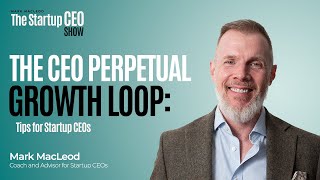
Mark MacLeod lays out a framework for founders to lead long-term without burning out. It starts with health as the foundation, then aligns work with purpose, builds the right team, creates speed through flywheels, and keeps the business funded. Shopify's Tobias Lütke is cited as an example.
Chapters
This episode is brought to you by Fellow. Fellow is the only AI meeting management solution that covers every part of your organization's meeting workflow. Go to fellow app CEO to get 300 free minutes of AI recordings and start having better meetings. Welcome to the Startup CEO Show. I'm your host, Mark McLeod. This is a special edition of the show. No guest, just me. In this episode, I'm going to share my thoughts on how to lead your company all the way for as long as you want without burning out. Let's get started. This is Mark McLeod. Welcome to the Startup CEO Show. For those of you who may not know me, here's some background that might help frame this conversation. I've sat at the right hand of the CEOs of venture backed startup CEOs since 1999 in a variety of roles. I spent 14 years as CFO, three years as a venture capitalist, five years as an investment banker, and I'm now in my fifth year as a coach. And I've seen two very clear patterns over this time. First is that the biggest outcomes in startup land are founder led, start to finish, Shopify, Spotify, Facebook, you name it. The people that started those companies are the people that lead those companies. And so as I tell my CEOs all the time, there's 100% correlation between your performance and the outcome of your company. The second big pattern that I've seen is that the number one reason why founders want to sell their companies is because they're burnt out. I've personally done over $1 billion in exits and I've seen this pattern play out firsthand for myself. The founders just can't go on. And yes, theoretically they could replace themselves, but there's and the company could keep going. But there's a bunch of problems with that. First, their identity is completely wrapped up in this company. For, for better or worse, you can't imagine not, you know, somebody else running your baby. Second, you know, 90% of your net worth is tied up in the shares of that company that are liquid illiquid rather. And which brings up the third thing, which is if you've been running that company for a long time, you're probably unemployable. You can't even imagine working for someone else. And so what are you left to do? You just choose to sell. And the thing with exits is you can't ab test them. You know, you don't know whether it's the right time to sell or not. And I've personally been part of exits of companies that I felt could go on to be really, really big. And so we just never know. These are the two big patterns that I've seen play out over the last 25 years. Now, coming back to coaching, I only coach startup CEOs. I see the purpose of coaching as helping CEOs grow faster than their company. If your company is doubling every year, then you need to double in your capacity as a leader. If you don't, you'll fall behind. But in that never ending quest to keep up with that growth, many CEOs burn out. And in fact, when many CEOs show up for coaching, it's actually just because they can't keep up anymore. And as I mentioned, founder burnout is the number one reason why founders choose to sell their company. So I'm reasonably obsessed with fixing this for my CEOs. I've been thinking for a long time about how can my CEOs keep leading for as long as they want? How can they keep compounding themselves and their companies? Famed investor Warren Buffett thinks compound interest is the eighth wonder of the world. It's that powerful in terms of its impact. And so as I thought about how to compound, how to keep going, how to not burn out, how to not have to sell and just keep growing your company forever, I've come up with this framework that I've called the CEO Perpetual Growth Loop. And so in this podcast, I want to walk you all through it. So here's my attempt to break down a recipe or framework for how CEOs can leave their company forever. The first step is to prioritize health. Health is the foundation and sadly, it's the first thing that is sacrificed most often when things get busy. Sacrificing your health is what begins and or quickens the path to burnout. How can you make great decisions when you're not taking care of yourself? How can you create when you're stressed? Right. Building a startup going from 0 to 1 is inherently a creative exercise. And I don't know about you, but I find it super hard to to create when I'm stressed. For those of you who know me, you know that I'm a big CrossFit fan. And so what follows here is a framework called the five Factors of Health from Ben Bergeron. Ben Bergeron is one of the most successful CrossFit coaches in the world. So here's how you make health a priority in your life. First, eat real food. Things that exist in nature. Not food in cans, ideally not food that is processed. Don't eat too much. Eat till you're maybe 80% full. Eat mostly plants. I'm not saying that you need to be vegetarian, just that you need to eat a lot of plants, a lot of quantity and a lot of variety. Plants actually have the most energy and life force. Right. If we think about the animals that we eat, what do they grow up on? They grow up on plants for the most part. And so there's just so much life force, so much energy, so much vitality that comes from plants. I'm actually guilty of not following this next point myself. You know, Ben recommends having three meals a day. Don't go back for a second portion. Minimize snacking, and in particular, no snacking before bed. I tend to graze through the day, so I have. Don't live this one a hundred percent myself. But the idea is you take in your nutrients, you have time for your body to digest and assimilate and process, and then you're ready to go. Like the factory's clean and ready to receive the next batch. Most of your plate in every meal should be fruits or vegetables. That is sort of the opposite of how we think about things, certainly in North America, right? You go to a restaurant, what do you want? Do you want the chicken? Do you want the steak? Do you want the pork? Like, the meat is the highlight and the kind of the. The reason to order that dish. And then everything else is sort of secondary. Ben's advocating, and I definitely live this myself, kind of flipping the order of things. Think of the meat as the side dish. You know, I choose a meat portion that can fit into the palm of my hands, that takes up, you know, a small portion of my plate. Drink lots of water. Water is key. Well, first of all, we're made up of, I think 70% water. And being sufficiently hydrated is really what makes this amazing human machine run. Well, it increases actually our cellular energy and our vibrations. If you want to go to a woo woo place. So drink lots of water. In terms of timing, have your last meal three hours before bed, and ideally your last liquids two hours before bed. And, you know, on the topic of liquids, caffeine, you know, many folks in startup land use coffee, you know, to get through the day or have energy drinks. And coffee has, you know, pretty serious half life. You know, I think it lasts, stays in the body for at least eight hours. So in an ideal world, if you do drink caffeinated coffee, you would have your last dose of that at some point the morning. Which brings up the next factor in the five factors of health, which is getting at least seven hours of sleep each night. We celebrate busyness in the startup world. It's like a badge of honor when we catch up with someone for the, for we haven't seen for a while. We're like, how are you doing? Like, oh, I'm so busy. And they're like, yeah, I'm so busy too. It's like we celebrate it and like, you know, sleep. When I die, like, there's this kind of just, I don't know, badge of honor just makes no sense to me. And so we, because we don't have boundaries, because work takes up all available time and we spend all this time in meetings, we end up catching on emails and slack messages at night, and, you know, we just don't have sufficient downtime. And here's the thing. I think humans forget that we are part of nature. We're not above nature. We're not separate from it. We're. We're just a part of it like everything else. And if sleep wasn't important, evolution would have gotten rid of it, right? Think about how vulnerable animals are when they fall asleep out in the forest or in the jungle, right? But so it's like a human, it's a weakness, right? If, if there was a way to get rid of it, nature would have done so already, right? We are meant to sleep for a third of our lifetime. And lack of sleep has been linked to things like depression, weight gain, immune system repression, Alzheimer's, and even, you know, permanent brain damage. And I've met lots of founders who, you know, say, I don't really need sleep. I'm good four to five hours. And like, it's just so statistically rare. That does exist, those people. People are out there. But for the most part, we need seven to eight hours of sleep a night. I definitely recommend, you know, if you're serious about sleep, first of all, track it in some way. I wear an apple watch. The Oura ring is also really good for tracking your sleep. Definitely recommend going back to this notion of boundaries. Having, you know, at least one hour before you go to bed where you're off screens and you're minimizing intake of blue light. All right, so we're eating really good food, we're getting good sleep. The next thing is we need to move our bodies, right? Ideally with resistance training, meaning with weights. And so Ben Bergeron, coming from the CrossFit world, recommends what he calls constantly varied functional movements at a high intensity four to five times over week. Let's unpack that. What are functional movements? Right Functional movements are compound movements where you're moving multiple joints, multiple muscles at a time. So think squats, deadlifts, power cleans, etc, functional movement, you know, as opposed to just, you know, I don't know, doing a bicep curl, right? Like moving one muscle at a time. Use more of your body. They mimic the things that you do in real life where you need to move a heavy object, they stimulate your metabolism and. And so these are just really practical movements and, and certainly as you get older, right, being able to squat really low, being able to pick up heavy things is just going to lead to a better quality of life. So one of the things I like about CrossFit is no workout is the same, right? We mix heavy weights with cardio, we do functional movements, we do things that make, make, make us better in every aspect of our life. But you don't have to do CrossFit. That's just the thing that I've done. Whatever is going to get you moving is the thing that you should do just that. If you are over 40, it's particularly important to work in resistance training to lift weights, because otherwise our body loses a certain amount of body mass every year. And, you know, I think we tend to just associate with what's going on in our head. Like we just, we are that constant voice in our head, but like, our brain's actually only a small portion of who we are. The body is so much bigger, right? And so we're meant to use them in proportion and it's so key to move our body. And I know it's easy to be like, I don't have time to go to the gym, but here's the thing. I've certainly lived this myself. When I work out regularly, which is almost all of the time, I find that I think clearer. I have more energy, I have more confidence, and so I actually am better at my work. When I make time for exercise and then those rare occasions where I skip it, work is actually more of a struggle. So exercise is supremely important. The next step on prioritizing health is to work on your mindset, right? We do not experience reality in an objective way. We only experience the world through our subjective lens, our subjective perception. If you're listening to this show and you're bored out of your mind and like, man, why did I pick this? You're right. If you're listening and you're completely engaged and you've already heard some tips that you think might change your life and you're so glad that you tuned into this episode. You're right. The exact same podcast, exact same content, two completely different perceptions of the world. So given that possibility, it makes sense to work on our perception. Here's what Coach Ben has to say about mindset. Never whine, never complain, never make excuses. Take responsibility for everything that happens in your life. That way you'll never feel like a victim. You'll always feel like you can do something. You are happening to life. Life is not happening to you. I would add something else on top of this, something that I've been practicing every day since 2019, which is practicing gratitude. Right? Every day when I wake up, I write down three things that I'm explicitly grateful for. And I've found that that process of explicitly acknowledging what I am grateful for has created just a deep pattern in my life. Deep grooves and a muscle of just almost continuous gratitude. And I think startup founders struggle with this, right? We have this vision that we're trying to achieve. That vision's way off in the future. We're so far away from achieving it. How can we be grateful, right? Like, how can we be happy? But going back to burnout, right? Like, the startup journey is a long one. I think it takes between seven and 10 years for the average venture backed startup to go from founding to exit. That's a long journey. And there'll be inevitable ups and downs. And your mindset and your level of positivity has a huge impact on how you get through those ups and downs. And even in the hardest days, there's something to be grateful for. If nothing else, the fact that you made it through today and tomorrow's gonna be better. So really, really encourage that. Practice the last step on prioritizing health. Just as a reminder, prioritizing health is the first step in this, what I call the CEO perpetual growth loop. So the last aspect of prioritizing health is to connect, to make time, to build deep relationships with other humans. Right? If sleep is the most underrated aspect of health, then human connection is probably the most overlooked. Science shows that people with deeper emotional connections to other beings live longer. We need each other. We're social creatures. You probably noticed this during COVID I certainly did during those lockdowns, right? We crave human contact. And so, you know, if you put all these things together, I hope you see how, like, there's the transformative impact that prioritizing health can have on your life. Right? First of all, we are what we eat, literally, right? Our cells are made up of what we put into our body. And so if we put in real food that comes from nature, that has the most life force, the most energy, lacks the most chemicals, et cetera, that's obviously better for us. We clearly need to sleep or nature would have gotten rid of that. I'm sure you've lived days where you've been active and seen kind of the impact that has on your energy and your mindset and can absolutely understand, well, hey, if I worked on my mindset every day, that would probably transform my life. And if I made time to build deep relationships with friends and family, that's going to make my life better as well, right? Like health is the foundation, right? You cannot achieve greatness in your business or frankly in your life without health, right? You know, the healthy person has many priorities. The sick person has one priority, which is to not be sick anymore. And I firmly believe happy healthy humans build bigger and better companies, right? Building a great company takes time. You won't last without health. It's a non negotiable. I spent a lot of time on this first aspect of the CEO Growth perpetual growth loop, because it's the most important one, right? It's the thing, it's the foundation, right? You want to build a tall building, you need a big deep foundation underneath. That's what physical health is. This episode is brought to you by Thelo. Tell me if this sounds familiar. You wake up, you take a look at your calendar and you see it's filled with meetings, stand ups, weekly check ins, one on ones, town halls, and those are just your internal meetings. Some are productive, but some are definitely slowing you down. Be honest with yourself. How many times have you thought this meeting could totally have been an email? Now consider that in the US alone there are 55 million meetings each day and 85 to 90% of those don't have an agenda. Fellow is on a mission to solve the meeting problem by offering the only AI meeting management solution that covers every part of your organization's meeting workflow. And As a startup CEO show listener, you get 300 free minutes of AI recordings if you sign up today. Go to fellow App CEO to start your free trial and start, start having better meetings. Let's move on to the next step in the perpetual growth loop, which is to find your true purpose. I have seen over the years that there's kind of. The founders tend to have one of three sources of motivation for starting their company. One is they see that there's a big market, right? There's a lot of money to be made and that could be, could be great, could be compelling. But here's what I found, is that money is not an enduring source of motivation. Think back to when you got a paycheck, you know, pay raise or a bonus. I don't know, you probably felt good about life for a minute, and then you got right back to life and nothing had changed. So I've definitely found that money is not an enduring source of motivation. The second source of motivation that I've seen over the years is that you are in love with the product that you've built. And that sounds great. It's valuable. You need it. How can I convince someone to buy something if I don't love it myself? But there's a downside to being just motivated by the thing that you've built, which is your mindset becomes closed, right? You just end up evangelizing. Look at this widget I've built. Don't you understand? Why don't you get it? I haven't explained this. Well, let me explain it again. You just, like, are maniacally focused on trying to get people to buy the thing that you have built, and then you cease to listen to what the market is telling you. And so being in love with your product is not an enduring source of motivation. So this brings up the third right? The truly enduring source of motivation is that you're just in love with the problem that your company solves. It becomes your purpose. It's your reason for waking up in the morning. And so an ideal world, your company that you run will be going in a direction that is something that you are so passionate about. It is your purpose. It is why you get up every morning. So how do you find that? How do you find that purpose? I did this personally, right when I made my decision to shut down my Investment bank in 2020, it was a big decision, and I wanted to make sure I thought it through. And so I went through a Japanese framework called ikigai. And ikigai is the intersection of what do you love? What does the world need? What are you good at? And what can you be paid for? And when I answered all of those things, they were all like circles and kind of overlapping. And I filled out, okay, what do I love to do? What do I think the world needs? You know, what do I think I'm good at? What do I think I can get paid for? Kind of looking at passion, mission, vocation, profession. When I put all of those together, it was really clear to me that I should be a coach. And it was clear to me that through all of my roles, whether I was like a CFO acting as a right hand to a CEO, a venture capitalist trying to help founders become CEOs, an investment banker trying to help CEOs achieve great outcomes. The thing that I enjoyed the most in every single one of those roles was the one on one coaching and advisory conversations I had along the way. And I'd actually bought my first book on coaching in 2002, but I concluded that I just wasn't experienced enough. I wouldn't be credible as a coach. So it was obvious to me when I went through this exercise that this is what I was meant to do. And so I certainly found it to be powerful. And so if you're struggling with kind of purpose and motivation, you know, I, I encourage doing the Ikigai exercise yourself. It's I K I G A I. And so when you can align these things, when you have found a personal purpose and created a company that goes in the exact same direction, this adds more fuel on top of the fuel you've already created by prioritizing health, it's what keeps you going through the inevitable highs and lows. I often bring up Toby from Shopify as an example of somebody who is living his icky guy and living his purpose, right? So Toby's a billionaire. He doesn't have to work. He could buy an island beside Richard Branson's and just hang out, or he could just race cars all day, right? But he works harder than ever. Why? Because making commerce simpler for everyone is his purpose. It is his icky guy, right? He wants to reduce the barrier so that anyone can start a product based business, right? And so he's just not done. And so that's why he works as hard as he does. On to the next step. So we've prioritized health. We have found a direction for the business that completely aligns with our purpose and what matters most to us. It's time to assemble your team. I read a book many, many decades ago, maybe late 90s, by Jim Collins called Good to Great, where he studied all of the quote unquote great companies, right? The market leaders, the big public companies on the S&500 etc and tried to reverse engineer what steps did they take in order to become the great companies that were worthy of study. In the very first chapter in his book, the first step that he saw across all those companies was basically assemble your team, right? Put the right people, get the right people on the bus, even before you decide where to take the bus. And so assembling the strongest team that your scale and Resources allow for is one of the, the absolutely, you know, top three roles of the CEO. Now, if you're bootstrapped, that's going to mean something very different than if you're growth stage and have lots of funding or if you're just wildly profitable. And that's why I say the leaders that you attract have to be appropriate given your scale and your resources. The people that report to you are your leverage, right? As the CEO. Founding CEO especially goes through a change in altitude over time, right? Over the evolution of a startup, right? In the early days, you're succeeding through individual, often heroic effort, right? You're doing all the things. You may be writing code, you may be selling product, you're taking out the trash. You're doing everything. Every decision goes through you. But over time, once you hit product market fit, find a repeatable channel for growth, start building a leadership team. That's the time a CEO to start elevating and going from working in the business to working on the business. Do I have the right people? Are they pointed in the right direction? Do they have the resources that they need to succeed? Right? And so those people, they're like I say, they're your leverage. You want to invest in your leaders so that they keep up with the growth of the business, right? If the business is doubling every year, your leaders need to double every year or they're going to fall behind. And so as Jim Collins said, right. Good is the enemy of great. When I onboard new CEOs to coach, after we do the initial onboarding session, then the very next session, we unpack the leadership team. Who's in what role, how do you rate them? And yeah, give me everything. Give me the brain dump about each and every person on your leadership team. And very often I see that people are tolerating good leaders where they used to have great leaders. And, you know, so we never want to compromise here, right? So this is a really key thing, right? Is to create time to be developing, evaluating, supporting, growing your leadership and, you know, having a network of potential future leaders in case your current ones don't work out. Prioritize health. We have found our purpose. We have assembled the team. Now it's time to build the flywheel. You want to work with your leaders to create a flywheel in your business, right? You want to remove any and all barriers to speed. I have my CEOs asking in almost every meeting, how can we go faster, right? Faster does not mean more. It doesn't mean if the team's working eight hours a day, that they now need to work 10 hours a day. Right. Simpler often means faster. Faster means looking for things to stop doing versus doing, you know, doing more review way you review constantly for things, processes, meetings, routines that are no longer serving you, no longer creating value. Right. And again, I go back to Toby at Shopify and one of his mantras was like, how do I get 1% better every day? He had an approach for applying that to himself as a leader. That's a separate topic, but that's a great question to pose for your company, right? How can I get my company to run 1% better each day? A 1% improvement. Each day is a 37x improvement over the course of a year. It's completely transformative. And so building the flywheel, removing sources of friction, enabling the thing to move faster is absolutely vital. Right? In the startup world, all else being equal, like speed is the primary strategy and the primary being primary tactic, getting to the same place faster tends to be more valuable. First of all, venture capitalists tend to, you know, the single biggest driver of valuation of your startup is the rate of year on year revenue growth. And that revenue growth is the magnet. It's the thing that attracts, well, first of all, investors. It attracts ambitious talent that wants to work for you, it attracts customers that want to be with the market leader. And ultimately it's the thing that attracts strategic acquirers who want to buy you, if for no other reason than they're scared shitless of you. So speed is the thing to solve for, assuming you've done that. We've taken all these steps so far. Now it's time to disrupt your market, right? That's the next step in the CEO perpetual growth loop. The companies that move fastest tend to have disruptive products or services. And that disruptive product is actually a big factor in creating the speed in the first place because their offering is so transformational. Think about the impact that Uber has had on our lives. Right? Of course, it's just a fundamentally better experience to open an app and have a car show up and know exactly when it's going to arrive and get out and not have to fumble for change or ask for a receipt. And we can set aside, you know, whether Uber drivers are in a fair living. But it's a better experience for a driver to know exactly where their next fare is coming along from there, rather than just driving aimlessly or Airbnb. Right? Like we now let strangers sleep in our houses and we sleep in strangers houses. Right? Completely transformative experiences. And so the thing to be thinking through here is how can we delight our customers and just completely blow away their expectations? Right. How can we just 10x what is in the market today and just blow past your competition and dominate the market? Right. That's the thing to think through for disrupting the next step in the perpetual CEO perpetual growth loop is to clear the forest. Right? You now have this machine that is running smoothly. You've got this strong leadership team in place, and they're running a company that you are continually optimizing so that things move faster. So with a team and a flywheel in place, taking a disruptive product to market, it's time for you as CEO to anticipate the future and ensure your machine is on the straightest path towards your vision. This really means going back to what I was talking about before, about changing your elevation as CEO. Going from working in the business to working on the business. Right? You know, you are now no longer in the critical path of doing this isn't all ivory tower. I'm not saying that that's the reality of a CEO, but it's actually only by creating the space to be mainly in this world where I'm working on the business. That's when you have the flexibility to go in and fix the inevitable issues that happen in the business. But if you're spending time at that right altitude, then you've got time to think, what issues do I anticipate? What could slow our company down? Where does the flywheel have weaknesses? Or where? And how can we make things even better, bigger, faster? Right? We want to clear the forest so the team that is executing each day can come through as quickly as possible. Two more steps in the CEO perpetual growth loop. Create clarity. This is the next step. This is really about communication, right? Fred Wilson from Union Square Ventures has what I consider to be the canonical definition of the CEO role. Right? At scale, it's three things. Communicating team vision, you know, values, North Star over and over and over again. Team building the strongest senior leadership team that you can and never running out of money. Those are the three roles. And so those really show up in this framework where we already talked about team and the importance of building that. This next step, Create Clarity, is really about just the importance of crystal clear and repetitive communication. Right? As your team grows and it's moving with more and more speed, the opportunities for miscommunication and lack of alignment, they compound, right? Broken telephone slows everyone down. As soon as a company has five people, communication issues start to develop. So creating clarity and alignment becomes really your primary Role as the leader, right? You're the conductor guiding the orchestra. Give them context. Continually connect their work to the overall vision, mission and goals. This keeps everyone focused on disruption and moving as rapidly as possible towards that vision. You know what we're talking about here is context, right? As the CEO, especially the founding CEO, you have all the context. The entire 360 of this business is in your head. What you need to do is to get it in everyone else's head, right? Without overwhelming them. And so I actually think often about politicians here. I feel like politicians are a dirty world, dirty word these days. But if you think about what a politician does, they speak in sound bites, right? They have crisp, simple, memorable sentences that they repeat over and over again. And so if you can distill the things that matter most in your business down to these sound bites, there's a much higher chance that the individual contributor, the newest person, has joined your company is going to get it right. And this keeps focused. It keeps everybody focused, right? So if you find yourself saying the same thing over and over, you're doing it, right, right? If you're sick of hearing your voice talk about mission, vision, values over and over again, you're doing the right thing. All right? Last step in the CEO perpetual growth loop is to feed the beast. This is really about funding, right? Big, fast flywheels need capital. They need fuel that can come from profits. I'm not saying you have to raise capital. There are lots of great bootstrapped companies. It can come from borrowing, right, from lenders and it can come from investors. It's your job to ensure that the beast has the fuel it needs to move with as much speed as possible. I call this a loop, right? The CEO perpetual growth loop. Because by the time you get to feed the beast phase, you might find that you've compromised your health or you need to change team members or you're somewhere else that's further back. So you need to go through the cycle again just with a bigger business and a much for you being a much improved leader. So there you have it. So that's the CEO perpetual growth loop. Those are the steps I'm now working to take my CEOs through them. Easier said than done, that's for sure. The key in what I've shared with you today, and this is the key to leading and in fact, the key to your life is to live it with intention, right? It's so easy to just let everything happen to you. The practices in this framework are all about creating boundaries, right? When you establish boundaries. You make life happen for you. You build a company and role that give you energy that you would not really want to sell. The offer would have to be really good. And so I hope you find the steps in here valuable, and I hope that you implement them in your business and in your life. Hey, thanks for listening to the Startup CEO show. If you'd like to connect with me, be sure to visit my website at markmcloud me or follow me on LinkedIn @the Mark McLeod or Twitter arkmcleod. And if you want to tune in again next week, be sure to subscribe on YouTube, Spotify, Apple, or wherever you get your podcasts. We'll see you next time.
More from Mark





The Burnout Breaking Point - How Strategic Breaks Actually Increase Productivity


Emotional Debt - How Avoiding Hard Conversations Compounds Into Company Killing Resentment


The Death of the Specialist - Why AI Is Creating a New Professional Class Called Scalers