Unlocking the Future of the Creator Economy with Greg Smith
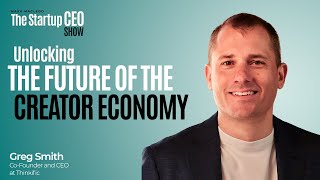
Greg Smith, CEO of Thinkific, started with LSAT tutoring in 2005 and built the platform to help creators sell courses and memberships. The company raised $180M and went public within five months of deciding to do so. Smith discusses shifting the creator economy from ads and sponsorships to owned products, and Thinkific's focus on reducing friction for creators through commerce tools and partnerships.
Chapters
I don't regret going public. There's definitely pros and cons, right? And it's certainly not for everyone or for every business. And we can talk through some of the pros and cons, but as I shared a few, there's a lot of really good things that have come out of it, you know, above and beyond the $180 million that we raised. And yeah, we raised at a really good time. But the trade off when you raise at the peak is, and I've heard Warren Buffett talk like, you know, he wants to be in good, in accurate valuation, not excessive and not low. And I'd love to just operate there for all time too. But you do move with the market, so we obviously came down off that peak.
Welcome to the Startup CEO Show. I'm your host, Mark McLeod. In this episode, I sit down with Greg Smith, co founder and CEO of thinkific. I've been following this company for a long time. They were actually a client of mine back in my investment banking days. Now Greg runs a 350 person public company that's a leader than the creator economy. We talked about his whole journey, going from lawyer to running technology company, how his roles changed over the years, the whole process of going public, which is probably foreign to many of us and many, many more topics. I really hope you enjoy the discussion. Greg, welcome to the Startup CEO Show. It's a real pleasure to have you. How are you doing today, Mark?
It's a pleasure to be here. Thanks for having me.
Yeah, they are, you know, one of my OG surepath clients. So I've been looking forward to catching up with you. But maybe, you know, for folks who don't know you, let's maybe just start with kind of origin story of. Of the business.
Yeah, happy to. So let's see, we started thinking of it in 2012, but Origin kind of goes back before that. 2005, I was going to UBC Law School, teaching and tutoring the LSAT in person and just wanted to take that online to reach more people and build a bigger business around it, you know, hopefully pay off more of that student loan. And so we actually went looking for software to do what we needed and we really wanted something that would let us have our courses on our own website where we had total control over data, customer relationship revenue, where conversion rate and branding and those kind of things were built into it. So we looked at marketplaces, didn't really cut it because it meant putting our content on someone else's site. We looked at lms, it didn't really work for us because it was, you know, more expensive, clunkier, difficult to use and more designed for an institution teaching students inside a school. And so we ended up just putting together our own by just mashing together WordPress and, you know, some other functional pieces of software and adding some custom code. And that kind of grew as a hobby. I went on to finish law school, practice law, and eventually came back to it full time because it was going well. But then also this, while that was growing, this other thing was happening where people were reaching out to us saying, we want to do what you're doing. We want our own courses on our own site, under our own brand and want to be able to sell them and build a business. And so that's really. It was that poll from people asking us for it that we solved that problem for them by starting Thinkific as the place where you can do all of that. And then since then, we've kind of evolved of going beyond courses into all sorts of digital products. Basically, anytime you're trying to share knowledge and build a business around it, and in a few other ways as well.
It's funny how many great businesses of all that have just solving your own problem, building for yourself first. Right. You know, Toby didn't set out to build an E commerce platform. He just wanted to sell snowboards and Mike at FreshBooks. Right? That was an invoicing platform for their agency customers. And their customers are like, hey, could we use this? Right? So just it's. That's natural evolution. When I think of lawyers turned tech entrepreneurs, Harley from Shopify comes to mind. And my brief stint working with Shopify, he was in the office beside me and was just a true force of nature. And he told me that one thing that that law background gave him taught him how to think. I'm wondering what you've taken away, like, what are the good parts of that background that have made you successful in this new context?
Yeah, I think, I mean, certainly coming into starting Thinkific, I was very much the generalist, like the jack of all trades, master of none. I'd had three years practicing law. I gone to business school and done some in finance. I started a bunch of businesses with varying levels of success and failure. You know, done a whole bunch of other things and very similar to my sports career. Right. Like not good at any one sport, but playing lots. And so I think that was a really. So I took something from kind of each of these experiences, whether it was cultural learnings of places where I wasn't treated well. Or I was treated well and I wanted to emulate. And then, yeah, on the law front, I think there's a lot. Certainly business, finance and commerce and accounting was really helpful in knowing that starting a business. But also on the law front, it, yeah, there's an element of. It teaches you how to think and dissect things logically. It is shockingly similar to code. Like a contract has so many of those core elements of code, like defined terms, you know, essentially formulas that you can refer back to to save time. All of these things are very similar. So it, it helped me wrap my head around not that I write code, but, but at least be able to speak to engineers better. And then certainly in, in risk management and decision making, you know, we, to me, law is very much about managing for risk and also relationships and partnerships. And so it gave me some of the tools there to make sure, going into a decision making process, I understood like, you know, here are maybe the rules or parameters, but what risks are acceptable and which are not. And then going into partnerships, you know, I think most, the only reason you have written agreements is so that, you know, you flesh out any unintended areas of misunderstanding early rather than when it all comes crashing down or later in the arrangement.
Yeah, such a useful background, right. You think about the thinkific journey, right. It boiled down to there's lots of little things, but maybe a few big moments, a few big relationships and deals. And ultimately those are about risk allocation, alignment of interests, who's doing what, accountability. And so, yeah, having that background would probably be invaluable.
I did have to rein it in at times because early on there was sort of like I was acting too much like a lawyer. Oh, we can't do this, we have to do this. And nothing was ever about, you know, ethics was an integrity was always high. But there were points where it had to be like, no, we have to act like a business here and recognize that, well, there's a risk, we're going to take it or we're going to decide to do it this way.
If I were to kind of broadly generalize, I've encountered two kinds of lawyers. Those that want to protect their clients and those that are there to actually enable business. And I'm wondering whether that law background kind of maybe held you back from taking risk in the beginning or whether you were just always in that second camp.
No, that's. I think, yeah, what I was referring to a little bit is that early on my brother who was building the business with me, a couple of times he Said to say, look, I get that that's what you've learned and that's the most conservative approach, but we got to build something here. And so I took that to heart and was able to sort of be aware of those things, but make the right decision for growth.
I feel like maybe when you started this business. I hear a lot about this creator economy these days and I'm in it. You know, I publish on LinkedIn every day. I do a newsletter, this podcast. Right. Like creating content to help kind of spread what I learned to more and more people. I feel like this maybe didn't exist when thinkific started. And when I look back at what's the single biggest element in the outcome of a technology company, I think it's luck and timing. And so I'm wondering if you could just comment on what is this creator economy? Has it been a big driver for you and maybe what's the future of it? I'm asking that. Definitely, as a creator. Yeah.
I mean, it's certainly big and it certainly has been a driver for us and certainly luck has played a huge role in getting us to where we're at today. I'd say when we got started, we were working with a lot of sort of subject matter experts where coach, trainer, author, expert. And for them at the time, social media was maybe I use it as a marketing channel nice to have. Whereas that's evolved where now it's a need to have marketing channel. It's necessary. But it's evolved even further in that we're seeing more and more of the rise of the social first entrepreneur where as opposed to I wrote a book, I'm going to go on Twitter. It's. I've built a massive audience on Instagram. Now what. How do I monetize, turn this into a real business? I didn't, you know, I didn't foresee this coming sometimes. Right. And so that's one of the trends we're seeing. And you know, with the leap, the Leap co is this new AI product we have that we're, you know, really leaning into that trend and helping people who are kind of mobile and social first really unlock growth for them. But some of the other trends in the space that are exciting is obviously AI and we can talk more about that. But yeah, there. Sorry, there was another one tip of my tongue there. It'll come back to me in a second. But AI is definitely big one. Oh. The other big trend I think is so far the majority of the revenue art in the creator economy is ads and brand Sponsorships. But I am seeing this shift. I think Goldman Sachs has a creator economy growing to about half a trillion by 2027. And 70% of that is more ad spread sponsorships. But we are seeing more of a shift to the creators taking control of their own different destiny in business. As opposed to selling someone else's product, they're starting to sell their own. And so that can be merch or physical goods, but it's also turning into a lot more digital goods. And of course we're in the center of the digital goods transformation there. And I love it because the, the margin structure, right? Like if you sell an advertisement for someone else or even if you sell a physical good, you know, some of the challenges on the advertisement front is you need way more views, followers, fans to generate meaningful income. You know, your typical revenue per thousand views for ads is maybe 5 to $8. Revenue per thousand views or RPM for a brand deal might be 30 to $50. But then you still have all the, you know, you got to negotiate the deal with whoever the brand is. But if you own your own product, say like my course on my own YouTube channel, I do $1,000 per minute, thousand dollars revenue per thousand views. So I only need a tiny audience to generate revenue from that. And we see that from a lot of the people who work with us. So that's a really exciting transformation of giving power back to the creators by them owning their own products and moving into more high margin products than what they've historically done. And then the other thing is the people are trying to become less reliant on a single algorithm. So instead of building your entire existence on say YouTube where you're entirely reliant on the ads there, you use all of YouTube, Spotify, Instagram as your go to market channels and then you own a platform where that's where you're actually producing your, your own products and fulfilling them. And so gives you a lot more control over your destiny, higher margin structure and you can earn more revenue from less views.
Funny, I really always thought of thinkific kind of specifically around maybe course creators like you know, digital products. But are you playing in the advertising value chain as well or you're just. This is the broad ecosystem. But we really play more in the digital product.
Yeah, we're very much in the digital product space in the but and the reason I highlighted is I think that but we're seeing more people move from ads to digital products. Like my, for my YouTube channel personally when it first launched I had ads running and I was earning you know, five bucks per thousand views. And now with the course, I earn it little over $1,000 per thousand views and I've seen people do $2,000 per thousand views. So that's the piece we're excited of. Like, you know, less of the ad model and more of the digital product model gives you more revenue and less need for with a smaller audience and at a higher margin structure.
So you're actually running a course on the platform now, personally.
Yeah, so I got, I built my LSAT course back in 2006 or something like that and it still runs. It's. I think its peak year was maybe a year or two ago and it seems to be finally after 12 years of neglect because I'm entirely focused on Thinkific and not on AlphaScore. The LSAT course, it is declining significantly. But I mean we had a good run. It's. It's been going since 2005, 2006, and it's only start. It's only declining now. And for the last 12 years I put nothing into it. So it's pretty amazing. I mean we don't generally preach the passive revenue, but it is very possible that once you've built something, it can just keep coming in.
Do you think we have too many creators? Is there too much noise out there?
No, I don't think there's too many. I think there's a lot for sure. But I think we're going to see more and continued growth. We're still seeing really rapid growth in that and you know, more you just talk to any 12 year old, what do you want to be? Right. YouTube is probably more common or YouTuber or Spotify Musician or something like this is far more common than an astronaut or police person or something like that now I think so I think we're going to see that continue to grow and you know, on the. Is it too overpopulated or. Okay. What I see is that people are connecting with someone who resonates with them. So there might be 50 people teaching a corporate finance course that you can find in a certain area, but one of them connects with you in the way they speak or teach or how they look at the problems or, you know, so I think there's still lots of room for people to deliver their own unique genius in their own way. Maybe.
Last question on this and then we'll move on. I had Michael Litt, CEO of Vidyard, on the show recently and he talked about how much friction there is to create compelling video content and how they're really trying to reduce that and make it easier. And so we talked a bunch about AI in that context and wondering what are the frictions that you're trying to remove to unlock the ability for your customers to just truly be creators and leverage their potential as creators?
I love this view of it. It's very much core to our strategy is our vision is we want to take people with knowledge, passion and expertise, make it easy for them to go and change the world by sharing it with others, having a positive impact on others, and, and actually generate revenue doing that. And so then friction and removal of it or making it easy and all the steps in that journey for that person is what we're focused on. So initially that starts with building your first product, right? So if that's a course or a membership or a download, we just want to make that as easy as possible, remove that friction and then it's how do you get out there and market and sell it? We want to remove that friction and then it's how do you engage with and continue to scale that up and removing those points of friction? So, you know, we call it easy to start, easy to sell, easy to scale. And we're really focused on making things easy the whole way along. AI is certainly a big part of that journey, but as so is user experience and just in every possible way making it as easy for people to take those steps as possible.
Maybe. So, moving to a different topic. You're a very brave soul and took this company public. And you know, back when I was operating, my last role was at FreshBooks and one of the reasons why I moved on is we had talked about, hey, eventually probably makes sense to take this company public. And I had exactly 0% interest in being a public company CFO and only about 4% of venture backed exits are in the form of IPO. And so I think what you've gone through is probably fascinating and unknown to most people listening to this. Could you maybe just tell us a little bit about, I guess, the decision to go public and, and the process itself?
Yeah, very happy to. It's interesting you call it a venture backed exit because no one had an exit in the ipo. I didn't sell a penny. Neither did our venture investors. In fact, they doubled down significantly. So yeah, it is interesting because it can be seen as a liquidity event and technically I guess the stock is more liquid after that, but there wasn't any liquidity generated in it. Um, and that was intentional. We didn't want to. We wanted. We're like, we're Just getting started. Let's go, go, go and scale this thing. Our decision. So we had, you know, we bankers approach us and start talking. You could go public. And the initial reaction was no way. We're, you know, we're not maybe one day. But then they, we were looking at the market and the, and the possible valuation and the fact that we could actually be a viably a big enough company to go public at this point. And once we saw that we made a pretty quick decision. Within five months of the decision we were listed. So it was a pretty quick process for us I think usually we're told, you know, a year or two to prep and list, you know, but we had amazing, I was really lucky. We had an amazing team that was already in place that had all the skills to kind of make this happen quickly. Some of the reasons we did it was first was, you know, it does expand your marketing reach. So we did get more coverage, press releases, go further. There's a little more brand recognition. It builds more trust especially as we were bringing on larger and larger customers in terms of, you know, there's a little more responsibility and that comes with it. So there's some trust building element. It does give liquidity for all of our team and employees, every single person at think of it since shareholders. So now they have the ability for you know, stock restricted stock units or options to you know, go and buy a house or something like that, which was exciting for us. Lots of other good reasons but so those were some of the reasons to, to get going on the journey and then yeah, we can go deeper on you know, the journey or after that.
Did you have to bring on like a public market cfo? Did you have to make changes to your leadership team?
So I had Corrine, our CFO today who was already with us. She came on having been a public market CFO before and so she had the full skill set so that we were lucky there. And then Miranda, our CEO and co founder played a big role in it as well. And she hadn't done it before but just had a great skill set for doing that. And of course my background, I was a security floater. So I've done IPOs with clients but never obviously for myself.
You know I heard about Shopify's Roadshow and they were on their banker's private jet and it was just sort of like non stop. And even though they actually did a video to kind of give them leverage, like what's the actual, the actual process? I mean was it just like a complete blur Is it chaos? Like what, what's, what's that like?
Yeah, we didn't get any of that. We got a completely different experience. I heard all these stories of, you know, jets and, and, you know, rushing around in manh, going from building to building. And I sat in my home office for 14, 16 hours a day going from zoom call to zoom call or Google Meets to go or teams to teams because, you know, usually the bankers prefer to use teams. But we just, yeah, we just. It was like 45 minute calls with a 15 minute break and every call went over by 16 minutes. So, you know, even finding the bathroom break was like throw on like a.
Set of Depends, some adult diapers and. All right, let's go.
Yeah, it was intense, but it was awesome because we got to tell the story and we got really, really good questions and learned a lot about the process and how to do it well through that. And of course, so you have your testing the waters where you essentially do the whole roadshow just to get feedback is this viable? And then if it goes well, then you build up a bit more deal with some of the feedback and then you actually do the real roadshow.
Right, bro?
Being, you know, online meetings.
Right? There you go.
Yeah.
So I'm blissfully unaware of what it's like to actually run a public company, but my impression from the outside in is like it just becomes a communications job versus operating. And I'm wondering how, how has life changed for you? How is. How has your job changed as being public versus private?
Yeah, so a lot of it is the same, which is still obviously the operations and growth and working with customers is the most important thing. I still spend, you know, at least a few calls a week on with customers, learning more about their business and how we can help. Still spend a lot of time with the team, you know, specifically on product and what we're building for customers. But then you add some things for sure. So adding that responsibility of our quarterly earnings call and getting ready for that, where we have a quarterly call where we talk about our financial results and answer questions from analysts. And then of course, some you continually meeting with investors, so new potential investors or existing investors. But I really love that part in particular because when we were private, I was still taking calls from potential investors, I was still getting inbound from VC firms. But it's kind of half the time it felt pointless because you'd have a call or you'd talk about it or they'd want to take a meeting and you know, even if they want to invest it's sort of we're not raising right now. Um, whereas now when we're public, even if I'm not raising money, I can go have a bunch of meetings and they can buy stock in the market and the stock goes up for everyone, which is great. So it has value to do that. Plus I find because so much of our financial data is public and other data, we get these really smart investors who will go dig in on it and then they'll come with really smart questions and sometimes that actually sets off a light bulb for us of yeah, we should be looking more closely at that and do something differently there. So I do find it really interesting to have that part of it.
If you had a pie chart, how much is taken up just by this kind of, I guess, external relations.
But yeah, I mean it really varies depending on a few factors. So for the five months from decision to list, I pretty much told the team, you're going to have to operate. I'm busy doing this. A few of us are Busy doing this IPO, right? And so it was probably like 70, 60, 70% getting there. Then after that there was a still a brief post IPO period of intensity. And then it's more of these flashes around board meetings and earnings calls. And then once or twice a quarter I hop on a plane and do a non deal roadshow where you, you're not raising any money, but you're just meeting with investors for two or three days in Toronto or New York or Montreal or somewhere. So on a pie chart right now it might, on a, in a spike period it might be 30%. Usually it's probably 15 to 20% and the rest is still just operate the business and grow and talk to customers.
Oh good, that's great. That's better than I thought it would be, to be honest.
Yeah.
This episode is brought to you by Fellow. Tell me if this sounds familiar. You wake up, you take a look at your calendar and you see it's filled with meetings, stand ups, weekly check ins, one on ones, town halls. And those are just your internal meetings. Some are productive, but some are definitely slowing you down. Be honest with yourself. How many times have you thought this meeting could totally have been an email? Now consider that in the US alone, there are 55 million meetings each day and 85 to 90% of those don't have an agenda. Fellow is on a mission to solve the meeting problem by offering the only AI meeting management solution that covers every part of your organization's meeting workflow. And As a startup CEO, show listener you get 300 free minutes of AI recordings. If you sign up today, go to fellow App CEO to start your free trial and start having better meetings. So Canada has not been a friendly place to public technology companies. That's generally a true statement. You know, I've found it to the Canadian public securities investor to be fickle with respect to tech companies. They'll pile on when times are good, but the second times are bad, they're out. And, you know, you perfectly timed your raise in some respects. But then since then, that entire cohort has traded down and Nuve has gone private. Dax da Silva has come back to lightspeed and made it very clear he's open to going private. Just wondering, I guess, first of all, do you regret going public and what are your thoughts on this whole go private kind of, this trend?
Yeah, good question. And, and so there's a bunch baked in there, I think. I don't regret going public. There's definitely pros and cons, right. And it's certainly not for everyone or for every business. And we can talk through some of the pros and cons. But as I shared a few, there's a lot of really good things that have come out of it, you know, above and beyond $180 million that we raised. And yeah, we raised at a really good time. But the trade off when you raise at the peak is, and I've heard Warren Buffett talk like, you know, he wants to be in good, in accurate valuation, not excessive and not low. And I, I'd love to just operate there for all time too. But you do move with the market. So we obviously came down off that peak shortly after the ipo, but we've seen really good share price appreciation over the last couple of years, which is great. Like, I think we're up 70 to 100 over the last 12 months and you know, really well the year prior to that too. So things are going well for us that way. Get a lot of good feedback and it, it also introduces some maturity within a lot of levels of the company. You've got governance from the board that I think is healthy. You've got more, you know, we're actually better known competitively now for security, reliability, uptime, because we've invested so much in our reliability and security and you know, Soc 2 and things like that, which is sort of related to being public, but also just to having customers that are really scaling to new levels and on the fickleness of investors. I, I do find even cross border there are just depending on investment strategy Some investors are in one day, out the next, whereas we have actually some big holders in Canada who have just been accumulating positions. And so they just, they're, they're clearly very long holds, which is exciting because they see the opportunity that we see in terms of the scale of the market we talked about, but also what we're up to strategically. So I still see people buying for long term, but it does take a while to kind of flesh that out. Some are kind of in for a bump and out and others are, you know, picking that long term. And I, I am learning more and more. There's ways to sort of pick your investors in terms of how you speak, that you're in it for the long term and you can do the right things for the long term and that will attract the right type of investor. It's not perfect and you can't always attract exactly who you want on your cap table, but you do have some flexibility there.
Yeah, well, I'm on your cap table.
Oh, wow. Hey, thanks.
Yeah, no, so Eric, who worked with me at surepath, when I wound down, surepath moved over to CIBC and was involved in the process. And I was like, well, I think Greg's a masochist for going public, but screw it, I'm going to take a bet because I like him, I like the company. So, yeah, I've been on it since the ipo.
Oh, wow. Well, thanks for holding and hopefully we can get you back up there.
So you're 12 years in now. How do you stay motivated?
Yeah, good question. It's evolved the whole way. Like obviously the work you do in the first three years is so radically different from what I'm doing now. Whereas then I was sort of looking at every design, sometimes moving pixels myself, rarely writing code. I tried once or twice and they kicked me out. But today it is a lot more and it's grown into more and more people management. So one I think is recognizing that when you're growing, I have to constantly be growing and evolving. So it's a lot of learning and study just as to like, you know, what's the next thing I want to solve. I really try and stay focused on growth because I find you there is a temptation, especially as you scale, to get sucked into process and problems as oppo and problem avoidance and risk avoidance as opposed to growth opportunity. It's really easy when you're getting started. Everything is growth, all just, you don't have any problems. It's just, let's grow. So I really try and stay There because to me that's motivating. Whereas I can get demoralized and demotivated if I focus too much on just what are our problems. Another would be working with great people. So we got some exciting announcements coming out shortly around some big hires we made that, you know, just level up the overall leadership team that I'm excited to work with and. But the biggest one I think is just talking to our customers. Every time I get on with a customer and I hear their plan or their vision or what they've already executed with thinkific and how we've been able to make a difference in their life or their students lives, it's just, that's the big motivation for me, just helping people.
So are you doing periodic customer support or you're just doing outreach just to be able to speak directly to customers? How are you getting that? Direct contact?
Yeah, I used to do a lot of support. Like I'd actually do a shift essentially every week. I do a lot less of that now. Occasionally when it hits my email, I'll do a little bit of it. I was helping someone today with a quick problem, but it's, you know, it's only a few minutes in each interaction. Much more is just hopping on and saying, how can I help? And then having almost this kind of conversation with a customer about, you know, what's, what's going on, you know, what's working, what's not. Here's some advice I can share. What's working for you. Sharing that stuff. I also actually have a podcast called Unique Genius, the business of Creators, where I interview some of the top creators out there and sort of getting like, how's it going? What are you doing well and what's your story behind it? So it's all those points of engagement and just learning about their business and seeing how I can help.
I should know this especially since I'm a shareholder, but when I think back about transformational decisions for Shopify and FreshBooks, in both cases it was the decision to launch a payments business. Are you in the payments flow? Do you have a payments business?
Yes, we do. Yeah. And so we, we watched and certainly learned from Shopify in particular on the payments business. Initially it was mostly just Stripe, Stripe Standard or Stripe Connect. And then more recently, last couple of years, we actually built our own payments engine. It is powered by Stripe's API, but we run the payments rails and built or built on Stripe's payments rails, we, we have thinkific commerce. So kind of like we call it TPay or thinkific commerce and similar to shop pay. And it's got a whole bunch of features beyond payments that allow people to do order bumps or buy now, pay later or you know, multi license checkout, things like that or bulk selling that. And what we've seen is it significantly increases the volume of sales and conversion rate that our customers do when they use it. And so we're really trying to encourage everyone to use it because it's just better for their business.
Yeah. What I found at FreshBooks was the customers who used our payments platform churned at a meaningfully lower rate than the customers who did it. And so LTV was higher. And yeah, it was just like kind of one seamless experience. Right. And we didn't have a checkout per se. And I think it's even more important in the context of checkout. Right. Where you're wanting someone to make that decision before they click off and go somewhere else. Right. You're trying to remove all friction possible.
Yeah, no, it's great. And there's so much value we get to add like we get to calculate, collect and remit their sales tax for them so they don't have to worry about that. There's just so many things we can do for them this way. That's great. Yeah, we do see LTVs up turns down. So it, it certainly it helps their business, it helps ours. It's a great way of aligning our success with theirs. And it doesn't cost them more. That's the nice thing because they're going to pay for payments from somebody. Right. The 2.9%. So better that we participate in that without having to change prices.
You know, in my coaching practice, I only coach CEOs because it's the toughest role. And there's 100% correlation between a CEO's performance and the outcome of the company. And often talk with CEOs about this change in altitude that needs to happen. Right. Like in the beginning, you're working in the business, you're building product, you're selling product, you're taking out the trash, you're doing whatever needs to be done. But over time you're working on the business. Do I have the right people? Are they pointed in the right direction? Do they have the resources they need to succeed? And it's not as simple as that. You're not just in an ivory tower looking down. Obviously you still have to get your hands dirty. But by and large, hopefully most of the time you're at, you're at the right altitude and you know, think ifixnow 350 people. And I'm just wondering for folks who maybe aspire to have a 300 person company of their own at some point. Can you, if you look back how, how and when did the altitude of your role I guess change over time?
Yeah and it's, it's changed a few times in a few ways and I've even like scale. I got too far ivory tower at one point honestly and scaled back a bit. I'd say certainly around 100, 150 people is when I saw my role really transition from being two in the weeds to being much more leading and empowering other leaders and that. And it's really been like that ever since. There was a point though where I got to too much, hey, that's all taken care of. I'm going to go really high level and just strategic and stuff. And I think there's always a role. I mean you even see it with at least I hear the stories of like Toby diving into a specific project. So the way I look at it right now is yeah, your higher level people, management, empowering leaders. But you do sometimes need to put it drill a hole all the way in and look at what's going on or drop a dipstick down and really deeply. I'd go deep on a few projects to really understand how it's working, especially the most important ones. So I'd say, you know, 20% of my time is still going really deep on a few projects, usually only one at a time. But it just allows me to get a better sense of what's going on, see if I can help there or see if it's. It's being really well execute it.
Do you manage your schedule so that you can be this sort of like roving free agent and dive in whenever you need to go or is your schedule just kind of back to back madness?
I wish I could say I was better at it. I am. I'm currently managing too many people and have too many sort of meetings in my schedule without enough time to sort of rove and go in where I need to and be a bit more strategic. It's a point in time right now and I with a couple of key hires coming that will open up considerably. So I'm kind of just at this moment getting by with that. But really. But like within a month I expect a full calendar revamp. I kind of do a once every six months, once a year, full calendar revamp. My like almost like at least mentally delete everything and start from scratch and think is this the best use of.
My time, as I'm sure you saw. Like Shopify has several times. It only became public in the most recent time. But periodically Toby will just blow up all recurring meetings and yeah, force people to start over again.
Do that too. I love it. It's like, yeah, I don't have quite the level of chaos engine that he's got built in, I think, for that kind of stuff. But yeah, it's, it's, it's a. And I love the new thing they got going too, where I think they're using a tool to calculate the value of a meeting. So it'll look at average salary across attendees and tell you what that hour is going to cost you, which I think is a great way of sort of really encouraging people to think twice about just adding way more people to.
A meeting other than, you know, again. So when you were a surepath client, the business was impressive, but much smaller. And now, like I say, you're over 350 people. Other than just sort of hanging on for dear life. What have you done? How have you invested in yourself so that you grow faster than this business and so you always are the most relevant and best leader that you know the business need.
Yeah, I mean, there's the mechanisms and then how I determine what I study part of, you know, it's. It's courses, podcasts, books and mentorship. And then peer. Peer feedback, whether it's internal or external. I do find getting out of the environment you're in and talking to others who aren't in it so you can get that kind of fresh perspective can be really good. And then in terms of the topics I choose, it's some of the internal peer feedback, it's some of the external peer feedback as to what I should be thinking about, but I'm not. I do try and it can be a real struggle to focus on the growth elements as opposed to the problem solving elements. And then so, yeah, it's kind of picking one thing for a period of time that I know I need to be better at. Maybe it's people management or setting goals or building our differentiated strategy and then go a bit deeper on that.
Becoming a public company meaningfully increased your workload. Is it like I'm doing everything that I was doing before and now I'm also doing this public stuff on top. So my days, I've gone from seven to nine hours. I'm just making stuff up. But has. Is that the dynamic?
I think so. There certainly were lots of periods pre IPO or was like hey, we got to get this shipped or we've got to launch this campaign or something where I was still putting in crazy time. I also, like around the last eight years, the other big shift on the calendar is I've had two kids, so I've made more accommodations around evenings and weekends there. So in a sense it's more piled on, but it happens in different ways because I want to put my kids to bed at night and take them to soccer on the weekend and all that kind of stuff. So I've made an intentional shift there. Whereas before, without kids, I could kind of just get home, have dinner and go right back online and work until, you know, sometimes I work until I was done. I was out of. I've always had a pretty good balance. But to me, balance doesn't mean every day looks the same or it's perfect or I always get to work out or, you know, see my friends. It more is like, comes in peaks and valleys, right? Plus, if you love it, then, you know, the balance is a little less important.
Back to law school for a second. You know, I know many lawyers and of course it's about billable hours and, you know, churning and especially if your securities, right, you're just cranking on deals all the time. I feel like that background gives you stamina. Is that true? Like, did you acquire stamina as a result of being a securities lawyer?
Yeah, I wonder if I. I mean, I certainly did, you know, round the clock deals and lots of work. And I saw other people at the firm doing a lot of that and I loved it. I think a lot of people assume when I tell them I left law that it was like, oh, yeah, you kind of. You hit a point where you didn't want to do it. Like, no, I was loving it right up to the last day and even missed it for years afterwards because I, I kind of. I don't know if I'm a deal junkie, but I loved. The cool thing for me was as, especially as a securities lawyers and corporate lawyer is you would parachute into a company for just a few months at the most exciting time. Like, they're raising money, they're buying a company, they're going public. You get to be a part of all the cool conversations or many of them, making that happen and then you're on to the next one. So I thought that was super fun. And yeah, that meant crazy hours, but it came with that excitement. And the other thing that made it energizing, I think, was working with just exceptional people. I was at BLG and I was at Blake's and at both firms, I had just awesome lawyers to learn from and look up to and work with and peers to work with. And so that made it a lot of fun. And so that was actually what I missed the most when I made the shift into entrepreneurship is initially, I mean, it was my brother. He's smart, was good to work with. We had our moments, but, you know, you didn't have that same broader team around you until years later as we built that up. And so that was probably the piece that I missed the most. But, I mean, yeah, and the motivated and the stamina, to me, I think. And there's lots of talk of burnout these days. I think that burnout or that lack of motivation comes when you're. You don't. One of a few things, like, you don't know what you're trying to achieve. You don't have clear goal, or you don't know how to get there, or you're really trying, but you're failing. Whereas if it's clear where you're going, you're really trying, and you're making progress toward it and you're working with great people around you where it's fun, then I don't burn out. Then I don't hit, you know, any sort of real negative component because, like, hey, we're going that way, and we love the people we're riding with, and we know where we're going. And, you know, we didn't go as far today, maybe as we wanted to, but we went. We went somewhere, and we're going in the right direction. That, to me, is what keeps me going until whatever time I need to work for.
So you mentioned you got two new executives joining soon. And I'm just curious over this journey, how many times you've had to kind of do a rev on your leadership team? And how did you know when it was the right time? And what's the right balance in your mind between just replacing people versus growing people?
Yeah, it's. It's tough. And I don't know that I've ever always done it. Right. Right. So sometimes it was they. They were done. You know, they wanted to try something else. Sometimes it was. They were exceptional for a period of time at a stage of growth, but didn't want to or couldn't transition to that next stage. Sometimes it was just structurally, we didn't have a role for that skill set anymore. But I think you have to be. I learned to be very careful about categorizing People as say a player or not. It was more a player at a time in a role, you know, at a certain scale for a certain responsibility or even a certain task. I like is it Andy Grove high output management, his concept of task relevant maturity. And you can apply that to particular tasks, but I think also to certain stages of company and certain roles. And so, you know, some people got to certain stages and said, you know, I don't, my, my CTO at one point was like, you know, I think I'm my sweet spot, sort of like up to 50 people. And we pushed him way beyond that and he was amazing. But, you know, he wasn't in his happy zone. So eventually he's like, we got to start working on the succession plan. I want to go operate a smaller company. Right. Like you've said, you didn't envy being public market cfo. So you, you understand where your happy place and sweet spot is. And I think that is important is understanding that for people, where do they want to be operating? And sometimes they can see it themselves and then it makes the transition easier. Sometimes they can't. You got to help them see it or potentially coach them in every case. Obviously for me, the, the starting point is trying to coach people up to that next level. But if that doesn't work or they don't want to or they can't, then that's where you have to obviously look at other options.
Instrumentation comes up for me here, right. When I think about a SaaS business, right. You've got all these metrics and you've got kind of early indicators, et cetera. Right. Like if I'm looking at how I'm gonna, if I'm gonna hit my, I don't know, my sales targets for the month, I can look at new sales qualified leads, I can look at how they're converting to marketing qualified lead. Like I can kind of measure my funnel. And I'm wondering whether you have any instrumentation set up to know whether your leaders are keeping up or is it more just only after the fact as you see that they're making mistakes, falling behind like, yeah, what, what's your actual mechanism for measuring and monitoring this?
We have a data science team and it like that really goes deep on the metrics and allows. And that combined with our finance team, we're able to produce tons of data reports. We've dashboards. I actually think, you know, you look at Rockefeller and was J.D. rockefeller and how the Rockefeller habits were sort of articulated and one of the things they did really good and this is I don't know, going back many years to an oil company was they were really known for having a metrics review that they got relatively close to real time. Come data coming in from across the company, from all over the company and across the country that they could look at. And that was touted, you know, historically now as like, what an amazing management practice. Whereas now I think that's just so commonplace and standard. Like who doesn't have a metrics dashboard that they're looking at for their business? I think in software at least, we're beyond that, where we almost have too much data, where sometimes the issue is so we have really good instrumentation where I can tell which teams and which people generally are doing well. But it's almost like there's too much. Right. Which there, you know, when I talk to any one individual or team, there's probably 47 metrics that they could look at. So we, the effort for us now is more like refining it to what's the most important output metric and input metric. The input more being customer focused and leading indicator and the output being more tied to revenue. But even within that, it can be hard to parse from so much data to really understand whether someone or some team is doing really well or not. I mean, usually you can get a view of it, but then there's just so much data to unpack. Yeah.
When I joined FreshBooks, I found there were all these different silos of data. Like customer support had its data, marketing had its data, product had its data, and of course finance had data. I was just like, yeah, this is bullshit. There's going to be one source of truth and it's going to be finance. They're all well intended, but you can make an Excel spreadsheet say anything. And it was also just a lot of overlap and kind of redundancy.
Right.
So we. That was an important initiative in the business, I think, just to really have very strong fpna.
Yeah. And the one source of truth is key and we have a really strong FPA team. And so there's an element too of a source of single source, but also a trusted source in that you always want to separate church and state. Right. The people doing the work versus the ones sort of measuring it, like doing it should still be measuring it. But I think that's where the tendency comes to let me modify the view of the graph unintentionally. It's never poorly intended, but you present sometimes the data that looks good as opposed to the worst stuff.
So like we talked about earlier, right? You're 12 years in, you got a public company, 350 people. So there's lots of lessons that you've accumulated along the way and scar tissue and like, I don't know if you were doing a do over, if you had a mulligan here and you were starting over again, what, what advice would you give yourself?
Yeah, it depends on the stage. I think like at first starting out, I would say just build a content engine from the get go, but continue doing all the other stuff you're doing, but also build a massive content engine. Especially today where even if you. Because we knew the industry we're going to play in, but we didn't know exactly what problem we were going to solve and it took a few years to really hone in and lock it in. And so if that whole time I was building a content engine, you know, around, you know, SEO and content and audience around that general topic, we would have always had something to draw on that is very low cost customer acquisition and building trust and notoriety in the space for that. So I would do that. And then I think, I mean, you can look at, we did do some layoffs, right? And so going back and saying maybe don't hire as much going into it, it's a tough one because when things really accelerate, if you don't hire into the curve, you could be left behind. But if you do hire into the curve like everyone else does and then things slow down, then you're with every other tech company like we were two years ago, where you have to, you're forced to cut back on costs and lay people off. So that's a tough one because sure, if I knew if I had the crystal ball, I wouldn't do it. But if growth accelerated tomorrow, would I hire into it? Probably. I don't think I'd do it quite as aggressively though. I think the big one for me is we were profitable or break even for the entire life of the company up until a couple years ago, and then we overspent. And so I think I would have put more strict financial controls on spending even in high growth periods, so that you can't end up in that situation where you're overspending and you have to adjust. We've adjusted fine. We're back to profitability and growing. But you certainly go through a painful period that wasn't necessary. If I had tighter controls on that.
Hey, listen, hard to fault you for that. That was a period of time where capital felt very freely available, you know, and when you think about a SaaS business like in terms of long term value maximization, it's most strategic to acquire as many profitable customer annuities as possible. It's why the OG SaaS company Salesforce was giant before it turned a penny of profit. Right. If, if customer right of LTV to CAC is positive and you have channels where you can acquire more of these positive annuities, you should just keep acquiring them. Right. Assuming go for it. Access to capital. Right. But I think that rug was pulled out from under everyone and, and so pretty clear that I think public and private markets are rewarding capital efficiency these days.
But hey, we're back in a, you know, they're still back in growth opportunity which is exciting and on the reward it's still probably 2 to 1 point of growth over point of profit. So I think we're still paying out more on valuation for growth than we are on profit. And that makes sense to me. Right, because a dollar of growth can earn you profit. A dollar of profit by cutting costs is never going to earn you a point of growth.
So what does the future hold for, for you and thinkific maybe as we start to wrap up here, where, where do you want to go? What's, what's your vision?
Yeah, super excited about it. I think the big thing is back to that core idea of how do we help people who have passion, knowledge, expertise, get, or businesses as well that are doing it, get it out in the world, have that positive impact and generate revenue doing it. The medium and mechanism is going to change. It will not always be the Internet. You know, maybe we're moving into a more augmented reality world. AI is certainly changing things so the medium and the mechanisms that we do it, but it's really about unlocking something I don't think is going to change in the next 100 years, which is individuals like yourself have a unique genius that you want to bring to the world and have a positive impact on others. How do we help you do that and, and get that message out so you can impact others but also make sure that it's sustainable so you can actually build a business doing it and, and continue to add to and grow and produce higher quality education and reach more people. So that's, that's really the vision and then the mechanisms, the near term ones I'm excited about is certainly our commerce stuff because it's helping people sell more AI because it's just making it so much easier and a few others, but those are some of the big ones.
That answer there made me can you think of a Final question, which is like, so you're a commerce guy, law guy. Are you personally driving the roadmap? Because you've just articulated some pretty robust and kind of technical ways that the roadmap can go. Are you driving that?
I try and drive more. The outcomes we want to achieve, the difference we want to make. And then got some amazing product design engineering leaders who are really driving the roadmap. So they're figuring out the specifics of how we solve the problems. That was a hard lesson for me to learn. For a long time I was absolutely driving the roadmap, and I don't now, but the transition period was tough. I'd kind of heard that story that the strength of the founder often becomes the weakness of the company. And I think for a time that was true, where my strength was kind of product led. And. And then we went through a period where it was pretty tough and now we're back in a strong position there. But that required some learning on my part and also getting the right people in who could take on a lot of what I was doing and do it better than I could.
So you're clear on what your superpowers are and your trying to just lean into those.
And then I guess on the, you know, looking forward, the other big opportunity we see is pretty early on. Like, we started this, we've talked lots, creator economy, but we also saw a lot of larger companies coming to us and continue to where they've kind of got the same needs. They want to take something they're good at and share with the world and drive revenue with it or package it up alongside existing products or services. So this would look like a software company like hootsuite packaging up courses to deliver with their software or even selling courses and certifications. So we're seeing more and more of that. So that's another really exciting trend that we're riding and a part of.
Final, final question, because I've said that like three times now or something. What are your thoughts on kind of, you know, career content, being married with community? Like, I think platforms like Skool are kind of pushing that angle. Is that a thing?
Yeah, we looked at that. Geez, it was five years ago. We were looking at maybe, maybe a bit more looking at Facebook groups because that really was where the community was being built and recognizing that, you know, Facebook groups, there was data privacy issues, advertising issues. I mean, you go into your. Your special Facebook group, you're building for your company, and your competitors are advertised along the side, the data is being sold or used in weird ways or whatever they're doing there. And you don't have a lot of control over who's in, who's out, especially if you're tying it to commerce. And so we actually built our own entire communities platform. So now with thinkific, that is where some of the evolution beyond courses, you can build an entire community. You can have different tiers, you can have fees for IT moderators and, and so very similar to sort of a private Facebook or private Slack, but it can also be tied to generating revenue. You can have free tiers and paid tiers. So yeah, I think that's a huge and growing trend and certainly that transition from the Facebook groups to have owning a community where you have a lot more control and you can create a much healthier environment as well for the participants is a, a big growing trend and we're excited to be part of it.
This has been a real pleasure to catch up with you after so long. And like I say, I've been a loyal shareholder since the time that I could and I, in addition to that, I'm finally about to become a customer in my one on one coaching. I only coach the growth stage CEOs and every time an early stage CEO comes, all I can say is no, you're not ready yet. But I'm finally getting ready to launch kind of a mastermind and group program where I'll be able to get them on your platform. So I'm going to take your product for a spin.
Awesome. Yeah, let me know if I can help in any way. That's great. Thanks Mark. Yeah, let me know if I can help in any way. Actually, another really cool thing we didn't come into is, I don't know if you saw, we just launched a partnership with Spotify. So now people producing courses on thinkific can actually it's like build on thinkific, sell in Spotify. It's just running in the UK now, but hopefully we go global with that one.
So that's a. I did actually see, that's cool. That's cool.
Yeah, yeah, yeah.
I mean I've always thought of Spotify for music, but it's the number two platform for my podcast actually. So clearly more and more content going on there for sure.
Yeah, Music, podcasts, audiobooks and now courses.
So thank you so much, really enjoyed the conversation. Thanks Mark. Hey, thanks for listening to the Startup CEO show. If you'd like to connect with me, be sure to visit my website at markmcloud me or follow me on LinkedIn at the Mark McLeod or Twitter arkmcleod. And if you want to tune in again next week, be sure to subscribe on YouTube, Spotify, Apple, or wherever you get your podcast. We'll see you next time.
More from Mark





The Burnout Breaking Point - How Strategic Breaks Actually Increase Productivity


Emotional Debt - How Avoiding Hard Conversations Compounds Into Company Killing Resentment


The Death of the Specialist - Why AI Is Creating a New Professional Class Called Scalers