Unsplash Journey: From Viral Hit to the Ultimate Exit with Mikael Cho
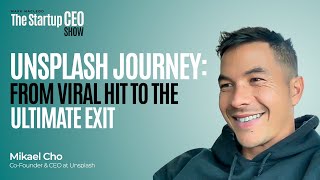
Interview (podcast/video) of Mark MacLeod with Mikael Cho (co-founder & CEO of Unsplash) about Unsplash’s emergence as a viral side-project from Crew, its product-market fit and growth (early Hacker News virality, rapid download spikes), fundraising challenges as a pre-revenue high-growth site, cap-table and spinout decisions, building/leading with a co-founder who became spouse, and the eventual acquisition discussions/exit. Key data points mentioned: initial accelerator terms (CA $25k for 6%), early Hacker News launch (10 images → ~30k downloads quickly), reported traffic peaks (tens of millions to ~100M downloads/month), prior Crew funding (~$16–18M raised), and a $5M lead investor allocation that enabled the key fundraising round.
Questions this video answers
CA$25,000 for 6% equity (accelerator offer mentioned).
Reported peak around 100 million downloads per month (also referenced ~30 million/month at an earlier stage).
Approximately US$16–18 million raised for Crew (speaker gave both $16M and $18M figures).
A lead investor offered US$5 million to lead the round (Jason Goldberg / crypto-related investor).
Chapters
We were talking about partnerships still. And I also said, hey, we're raising a round. He said he wanted to angel invest if we're doing a round. I remember, you know, angel Invest, you're thinking 10k, 25k. Since that. I remember the email. We're standing on the corner between Index Ventures of meeting there and another meeting at this other place. I'm waiting for the light to change tonight, waiting for the text to load, the email to load. He says, well, you have space for 5 billion. And I was like, what?
Welcome to the Startup CEO Show. I'm your host, Mark McLeod. In this episode, I sit down with Mikhail Cho, co founder and CEO of Unsplash. There's a really good chance that you've used their service. It's by far the biggest photo download site in the world. At their peak, they were getting 100 million downloads per month. Unsplash was actually a pivot. It came out of a different business. And so in this discussion, we talk about how they discovered this new business, how they executed the pivot, how they scaled and got funding for a business that had nothing in terms of revenue. And we talk about the ultimate exit process. They sold this business in a very successful exit to Getty Images. And so lots of really actionable insights there. I hope you enjoy the conversation and I hope you subscribe. Mikhail, welcome to the Startup CEO Show. How you doing today?
I'm good. Good to see you, Mark.
Good to see you. So Mikhail and I actually go way back. I don't even want to think about how old you would have been when we first met. Maybe you'd just gotten your driver's license or something. I don't even know. But anyway, it was pretty. Pretty darn young, that's for sure. So I think actually the last time I saw you in person was maybe 2015, the year I started my investment bank. I feel like I had dinner with you and Stephanie in Old Montreal.
I mean, we first meet. We first met 2010. I was 20. 22. 23.
22. Crazy wild.
Yeah.
And so we initially, you know, I really want to unpack the Unsplash journey. I'll bet many people watching and listening have used Unsplash. I use it literally every week still to come up with an image for a blog post. And there's so much to unpack there. But of course, the business that we originally funded, Mikhail and I first met when I was at Real Ventures. And of course, that wasn't the business. We initially funded a thing called Crew Labs. And so it'd Be great to. First of, I'd love to just rip apart the whole unsplash journey, right. You're 11 years into a pivot and so maybe a starting place would be like, you know, lots of businesses face this situation right, where the thing they're working on is not working. So before we unpack unsplash and all of its success, maybe take us back to the pivot and like, how did you just navigate the fact that, okay, this thing that I've raised capital for, I've got a team, I've sold them on this vision, but it's not working. And then how did this new concept come about?
Yeah, so we had started, I think I'd had one job prior to this and had no idea on expectations of how you're supposed to build what you're supposed to build, all these different things. And then we went into the accelerator and. Which was run by Real Ventures and Founderfield. That was here in Montreal. It was kind of like for everyone listening from all over the place, like Y Combinator, but in Montreal. And that was our first taste of building something for ourselves. So I had been a freelance designer building other people's stuff, but that's kind of all I knew. And then in this program at the time it was, we're going to give you 25k for 6%, your company and like 6% of our company. We don't really have much yet, so it sounds like a pretty good deal to actually go and build your own thing. So I think a big piece of the start and getting through a lot of that was actually some naivety. We didn't know that it's weird to change your idea a bunch of times. And all we had read was some of the early startup stories and going way back to the story Dropbox starts with Airbnb and when it was really like messy and you had to figure, just figure stuff out and I think that was really put inside of us, we gravitated a lot towards that. I wasn't really super technical. One of my other co founders wasn't super technical. But we knew that we could have a lot of grit now if we just kept fighting and learning and trying to figure stuff out faster than other people. I think we felt that we could eventually get somewhere. So there was about a does seems like a short period, but it was long for us. But a year and a half of just going through different versions of the same idea, totally different ideas before finally landing on unsplash.
Wow, that's amazing. I have definitely follow up questions But I'm going to share a little thing that I don't think I've ever shared with you. Like I always felt as a seed stage investor. And of course, when Real Ventures through founder Fuel did the investment in your company, that's even pre seed, always felt like if you get the people right, like if you back the right people, they're just going to figure it out. Everything else is subject to change. So don't invest because you're in love with the product or because you're in love with the market. Invest because you're in love with the people. And I remember you and Stephanie came in and wherever there was some kind of pitch thing going on, and we're all pretty excited. And then I go onto Facebook and look you up and discover that the two of you are in a relationship, and I start freaking out. It's like, what? They didn't tell me about this, but we had completely fallen in love with you two as founders and just felt that there was some magic there. And I do want to talk about what it's like to run a business with your now spouse, but let's park that for the moment. But it definitely bore it. I mean, that was my entire strategy as a vc, was to back the right humans because I figured they would figure everything out. And I sacrificed my liver along the way and would go for drinks with founders pretty late in diligence to see if, like, their behavior changed. How would they treat the server, you know, once they had a few drinks in them. And I backed out of some deals because of how they behaved, you know, so kind of all about humans at the end of the day. And so the initial crew labs thing, how did unsplash come out of that? And maybe, I assume probably everyone listening knows what unsplash is, but if not, maybe just tell folks what it. What it is.
Yeah. So Unsplash was actually not even designed to be a company at the beginning. I think that was something that was special about it and what made it ultimately work. When we were in the beginning of trying to figure out a company, yes, we all these different ideas. I think, yes, we really thought about problems for ourselves. So that was always something that was part of it, part of the idea that we wanted to have. I don't necessarily think we were as good at figuring out the right solution around those problems or how big these problems were. So it took a while to kind of hone that intuition. So I think it was actually good that that first, you know, I said year and a half where we're figuring out stuff that first year where it feels like you're failing, but actually you're just like learning how to build something good. And unsplash was the result. Like, I don't think if we would have had that kind of rapid iteration, foot against the fire situation for the first year and a half, that we would have probably come up with unsplash in the way that it was. And unsplash, what it is, is it's all high resolution photos that you can use for free. So now if someone says that sentence to you 10, 15 years ago, you're only asking questions.
You're not like, that's right.
Great business idea.
Oh, free. Perfect. Excellent.
Yeah, great. How are you gonna get the photos? You're never gonna make any money. This is terrible. There's. There's 8,000 competitors, there's two massive competitors who are gonna eat you alive. You know, all these, all these things. But from that intuition of building stuff for yourself, you know, there's some problem and that no one is solving properly. And I had dealt with it a lot myself as a designer. It was just finding good images that I knew I could use. And when you were new, I was still young, I was a new designer. I didn't come from this background of 10 years of understanding copyright and which photos I can use and which I can't for commercial projects, all of this. And it was just so difficult. Even like for a presentation. Can I use it? Can't I? What's the size? What size do I actually need? Lots of questions around how to use an image. And that's really where unsplash came from. Now this was connected to that original company, which was crew. So crew was another thing that solved a designer problem. I had been actually on both sides of this. Crew was a marketplace for design talent. So how do you find a good web designer? How do you find a good mobile app design designer? And the problem for designers actually is that how do I find a good client? Like, if I don't want to go work full time, I want to maintain my independence, but I want to work on good contracts. I actually don't want to even do the selling. So when I was a independent designer, I teamed up with another guy and there was two of us and he didn't want to sell at all. So I had to do the selling. I would have preferred to the designing, but I 80, 90% of my job just became selling. And so crew was kind of solving this problem on both sides where it's really hard to Find good talent. If you're trying to make something, make a website, make an app, and it's really hard to find good clients consistently that you can keep working with.
Right.
So that's what we aim to solve with Crew. Now this in a different way.
99 designs. Like more premium, more.
Exactly. You could think of this as like the Harvard for Website Design mobile side. We are vetting everyone. Less than a 1% acceptance rate. Getting onto the site, running all the screens for you. It's not like you just get these DMS and messages. It's up to you to sort through, you know, these profiles that people are submitting themselves. This feels the opposite. Highly vetted, highly curated. We would rather have just 20 good projects going at once than 2 million, for example, and they'd be higher value. So that's how you would make up the difference. These would be the budgets on these were 10x20x which you would see on other freelance marketplaces. So but growing these marketplaces, going back to what we were talking about of the beginnings of Airbnb and these things, if you look at most of these marketplaces, they all have this cold start problem where the world doesn't want to change for you at all and you can't just do. I have never seen one that just does. Channel marketing, SEO, ad, something that everyone else is doing to make their thing stick and start rolling. You often have to think of something super unique. Airbnb doesn't talk about it that much, but their Craig List thing that they did was a big deal. And for us, that's what we started having that mentality. We didn't even have any money anyway to run ads. So we were like, let's just think of weird creative ways that we could get people coming in that would be like our Craigslist hack. And one of them was just thinking about these problems that our customers would have that weren't necessarily something that Crew was solving, but was like another problem that they faced in their day to day that we could solve pretty easily and drive people to the site. So that's where Unsplash came from. I deal with this problem all the time, finding images as a designer. We actually did a photo shoot for our first website for Crew. Let's instead of just leaving these sith here, let's turn that into some marketing. We'll put it on a Tumblr blog. She made the first version in three hours, put up 10 images. We'll keep it super simple because we're focusing on our actual company. We'll do 10 images every 10 days. We'll let people submit. There'll be no profiles, whatever. We'll see what happens. But we could do 10 images every 10 days and do it ourselves if we had to. We could do the first 10. And if we didn't have enough people submitting, we could do the next 10. And it could have a reoccurring thing, people coming back. And then it was just this little text made by crew that was pushing people over to our site. So, yeah, that afternoon I remember put it up on Hacker News because I was actually super, super embarrassed by what Unsplash looked like. I didn't even share it with friends right now. This is bad. It's just like a person working. My co founder working on a laptop and his hands and these pictures. And I went away. And then I get these texts from photographer we worked with because we gave him credit to his portfolio. And he said, I don't know where you put those photos, but there's more traffic on my portfolio site than I've seen in my entire life. It's happening, like right now. So I went back to Hacker News and checked in. It was number one. I was going wild. Getting a message from Dropbox head of engineering, because we didn't even put these links hosted in our own files. We put them on public Dropbox links. So servers gave us like, huge thing, like, what's happening? 30,000 downloads on 10 images is what was happening in a couple hours. So, yeah, you see that. Okay. So first thought was like, great. This is great marketing. And I think there was a sliver of there might be something more, but we're super focused on this, and let's see what happens. And we did the opposite of what you're supposed to do for building a company around Unsplash for that entire year, because we were focused on this other company. But I think it speaks to. When you have a product and you found something that people really, really, really like, you can't stop it. It's like the market just pulls the product out of you. So I would come back the next week, we had double the subscribers. I didn't do anything. You know, the next week doubles again. And we're just posting 10 images. 10 images, 10 images. It's like nothing. We're killing ourselves on the other side, you know, trying to get this marketplace and it's. It's going. But when you feel. That was the first time I really felt, you know, when everyone's talking, what's product market fit? I think we have product Market, but I think it shouldn't even be. We think it's like, oh my God, we have product market fit. I can't even deal with it. Yeah, yeah, it's like an avalanche.
Champagne problem.
Yeah. People building apps on it and we had people like building automated things, putting into Dropbox people. We had I think over a hundred API. We didn't even have an API develop. Someone built an API for it. You know, all of this stuff was happening and there was just all these signals. Something really special.
That's amazing. And I guess just through that word of mouth and virality, that's when the supply side started to happen. Just because more and more photographers were submitting or were you, or were you deliberately trying to find photographers?
There was no deliberate finding photographers for the first year. It was just submit a photo and you could just submit a photo. And we had. This came from Mark McLeod and you could put your website link. That was it. And that was enough to fuel that for the first. It actually fueled for a long, long time. I think for maybe one month we experimented with writing on Instagram and trying to find photographers. But then we realized, you know what, we don't, we don't actually even need to do this because the supply is, is, is the right thing. And then the people who are submitting are submitting already in a different state. They're different. They're. They're submitting because they want to. And this is more of like an, an altruistic site. Like people are doing this not necessarily because they want. They're not looking for money back, they're looking to. I've actually used the site so I want to give something back almost more in like a Wikipedia type way where the community is fueling itself. So that's. Yeah, we, we just let that, Let that be.
That's wild. I don't know. There's a positive karma thing here. You were just doing something really positive for the world and it got self reinforced and created a bunch of scale.
Yeah.
So how did you know then? Oh, we can actually make a business out of this?
No, I think there was moments, it was really that first part where when you saw it take off, I think we knew there was something there. More so than I had ever seen. And that was enough to be like, let's keep doing this as its marketing thing. It needs to build up anyway. And then a year later, I remember not even a year later, about six months later, we just had conversations because we had already raised money for crew right around that time. That was A Series A. So still, Crew's EOG company and Unsplash basically caught up to being a series A company within five, six months. So it was almost at the same stage and it became a what do we do? Situation. And I had a call over that winter with some members from our board investors. I think we should probably spin this out and let it be its own thing. We can still refer and have it be a marketing thing for Crew, but that's not taking up too much real estate. I think it can have its own legs and we're probably doing a disservice to it by keeping everything together right now. So this was even a, you know, just a different mentality too, as founders. Don't expect to go through this where you. Now you've got two ideas and how do we split this and how do we. At such a young stage of the company too, that took about a year and a half to figure out how to split that up. So we did put one person on it full time to build. And because there were just becoming too many images, more things, and putting one person was a worthwhile investment even from just a growth perspective for the traffic coming back to the original business. But it also allowed us to see what would happen if we put a bit more focus and attention on this. Yeah, just logarithmically kept going to another level. So it was very clear. And then at that moment, okay, we spin this out. This is how we do it. I remember the conversations. I was like, who's going to be the CEO of each company? I'm like, oh, it's me. And they're like, who you think you are, Elon? Oh, my God. I was even. I think I was even naive enough where I was like, who's Elon?
Oh, shoot, that's, you know, that's awesome.
So there was, yeah, a lot of these moments of I've never been through splitting a company doing these things, difficult transactions, U.S. canada, investors. So that's what took it a while. But fortunately we had already made the decision to keep building on it. And so we didn't necessarily lose building time on it. Finally got it split out. We had split the team a little bit. Unsplash didn't require a huge amount of resources at the beginning. Crew needed more. So we were able to just take a much smaller team and build that out on the Unsplash side. So we had the two teams running simultaneously. Different goals we wanted to see. And I remember setting a standard for Crew. So Unsplash, it was just grow, grow Grow, grow, grow, grow. And CRU was, I think we've been through this for two three year budget cycles and we saw it growing and we would think of these great ideas to get growth going and put those into the budget the next quarter. Uh, and if you fall short, you say, okay, well, we can get another experiment next quarter. And I remember this meeting with my co founders. One of my co founders just said, you know, we're having this meeting again. It all sounds good again. But I've seen this story before and we don't have the same trajectory of, of what's happening when we. And almost interestingly, Unsplash provided this other guinea pig as like a reference that was happening at the same time. And it wasn't always like, yeah, that's the only way. And that's the only way a business is going to work is if it grows like that. But I think there was these feelings of this repeated delusion that you could sometimes have. Like, you always think you're getting closer and closer every quarter and there's always something you can do, which is good sometimes, but sometimes you can trick yourself. So that conversation, we decided, okay, fine, we think we can do this, but let's make this the moment. If we don't do it by this time, we're going to take a different course of action.
Okay, so you drew a line in the sand.
Yes. So it was August, if it's not happening here, because also we had capital supporting two companies. Right. So that was the line in the sand.
It's hard enough to build one company at a time. Right. And to realize the expectations of your venture investors.
Right.
And so now you're splitting your focus. Yeah. You're making it very hard for yourself.
Exactly. So we gave it effectively three months and then it wasn't. It didn't have to be that this huge home run thing, but it needed to. Well, we got to be able to do, say at this point, some of what we could do. And actually hit that August came same kind of effect. Didn't quite hit. Hit a little bit on certain things. And that was the, that was a good realization. I was like, like almost snapped out of it. You're like, oh, yeah, we've kind of been going through this cycle for a bit. It's becoming pretty clear probably what kind of business this is right now, what resources. It's not that it couldn't be a big business, just what kind of resources it needs versus the resources we have and the situation that we're in. So we reduce the team I crew turn the focus to become a profitable business. So we basically cut the team size in half and said get profitable and all of the investment, we're going to push towards unsplash.
Nice.
So that was another six months.
Did you face a situation where nobody wants to work for the thing that's not growing? Everyone wants to go to unsplash.
No, that didn't happen. I was going to say we had already had early the split that happened with the original one person who went on, on it. Like, I think if we said to him, like my co founder, hey, go back on crew. He's like fully invested. I think what actually what we had was all the crew people were fully invested on that and we had one designer who was going back and forth and then it was like myself and Steph going back and forth. So there wasn't too many people who were having to really choose between the two. It was more like a feeling of everyone was invested, everyone was invested. And maybe there was one or two people in that spot and two of the people were us. So we, yeah, we were able to do that split amongst the team a little easier. And then eventually we did decide to sell crew about six months later. So that's where I think there was this moment of people kind of tend to course correct when they learn something new and they maybe overcorrect a little. I became this like super focused. Like we made this, these, this, these potential mistakes with crew where we were doing too many things at the beginning, trying to do different things. On Splash, we're just going to say no unless we really feel like a hell yeah, it's everything is no. And that was a big shift. And that was even what led to the cruise sale was like even having it as something to think about, even if it's profitable, is a distraction 100%.
I had Zach from Dribble on the podcast a few months ago after his decision to step down. So I know that that was the home for crew. I'm curious just the mechanics of splitting something out because there could be many people listening who have that. Like, did you like, mirror the cap table? So everyone got the same shares in the Newco? Is that how you did it?
Yeah, that was hard too. There was a lot of different feelings. We had different feelings. We had Ben. One of the good things about going through lots of iterations is you figure out how to iterate it very quickly. One of the bad things is it can mess up your cap table because you, you've taken longer, you've gone probably three, two or three extra cycles. So you could think of it as two or three extra rounds of almost dilution that you've taken on because you needed to figure out different things. And that comes with expectations too. People expect you to be at certain points with these, with these businesses. There was people who believed and agreed. And also these are totally different businesses. They're not like marketplace Marketplace, like free nothing, massive scale. This is a marketplace almost like a B2B marketplace. So lots of different opinions. That was not. That was very, very difficult to do, that split. Also we were naive around it. I think in this context, the naivety didn't necessarily help because you start getting different opinions from people and you don't have your own. So it was okay, who do I trust? Who has even been through this? Like, this is such a weird thing to even ask. Like I don't even know people to ask that are the right people. Ultimately, yeah, we ended up just doing a mirror split and then we issued some like additional stock to early team members and things like that for AdSplash. But it took a while to get to that place. There was conversations around, should we just like spin it out? Started from zero and reinvest, you know, and that's how you. The investment in it. But ultimately, yeah, we decided the best thing was just mirror it and we'll deal with those consequences later. For which those consequences came very quickly once we ran out of that money.
Yes, yes, let's talk about that. You have a free product. How did that become a company with a revenue model?
The site at that time was very big. We were doing believe about 30 million image downloads a month.
Wow, that's crazy.
We're bigger than Shutterstock and Adobe combined at the time in terms of image downloads. So we felt that was enough. And we understand we don't have a revenue model yet. We have ideas around how we could be making revenue, one of which is advertising. For advertising to make sense, this needs to be still even 10 times the size. So we needed to find investors that were aligned to that. And during this process, we did start to fundraise. We did see some investors who were aligned to that. But we had this cap table issues too. We had issues of we had raised $18 million total on crew, so.
Oh, wow, that's more than I remembered.
Okay, yeah, that, that sits maybe a 16, but that sits in front. You know, as you know, all of these people are going to get their money back first. So when a new investor is coming in, they're thinking, well, this thing Better sell for at least, you know that. Or I'm already a zero. I got to make up this, you know, this extra dilution. It's not like a company that's raised 2 million or 4 million.
And also that new investor doesn't care about the other investors. They care that you have the motivation to crush it.
And we had that too, where our. Our cap table looked like we were like a series C company, but pre revenue.
Series C, Pre revenue.
Yeah, we were pre revenue. So it's. You really needed someone to believe there's like maybe one or two people who would probably take that kind of shot. And then you need to pitch it in a certain kind of way to make that happen. And I don't. I think thinking back to myself, I could have done better. Even in the pitching of it, I wanted to be sharing a revenue model, and we just didn't have it yet. And I did have some advice to just be very clear, like you don't have it yet, but when you're a month left and people are asking you a month left in terms of money left in the bank, that's tight. People are asking you just get us this diligence and we can do this and I can close this deal and you start to give them some stuff. Right. And. And when you start to give people, as you probably know, anything with a spreadsheet that's got some SO estimates, if people can look at variables, I think their brain starts to change. And even certain people in the room can start to have opinions very easily. It can even test how clear you actually are on your revenue. So I think in some cases we open that up, some cases we didn't. And what I would have done is, yeah, just say we. We don't have it. I mean, it's easy to say now because I know how everything worked out, but at the time, I was trying to stay with that. I was trying to be. We don't know what it is. Here are some ideas, but it just felt like it wasn't connecting with people and it put us that plus the. Plus the cap table. All that together, I think was just made it a difficult fundraise, even though we had all that growth.
This episode is brought to you by Fellow. Fellow is the only AI meeting management solution that covers every part of your organization's meeting workflow. Go to fellow app CEO to get 300 free minutes of AI recordings and start having better meetings. There's certainly so much precedent for companies, Facebook being one of them, right? Like where if we have A whole bunch of free users. If there's crazy engagement, we're going to be able. There's value. Right? Like bringing that kind of just quantity of people together has value. So ultimately, was it just someone just betting on the traction or did you like, what. What do you think was the basis of that investment decision we had?
We were so close on a couple of these deals and they went on a summit and then VC disappeared and I was like, what's happening? Oh, we're not going to do the deal anymore. That happened twice. We had knowing what the deal was going to look like, the term sheet and all these things. And I remember we're running up to 1, 2 months left worth of money. It's after Christmas, everyone's exhausted. We've been doing this for like 6 months. My co founders, I said, we have to go one more time, we're gonna go again. I remember that. And they're like, you can go again. I'm like, we have to go again. We gotta go one more time. Lined up some meetings, let's go. So we start going and meetings are. We. I don't approached it where we're probably gonna not be able to hit valuations that we want. We might have to eat some things, but let's just get to that point where we've got some term sheets on the table and see what can happen happen. So there was a couple funds. There was one fund that put a term sheet down. I started to feel something's happening. I'm like, yeah, we're gonna get killed, whatever, but let's just see what happens. I'd write to everybody and then I get an email from the company who eventually led the round. This is like when crypto is going wild. And I had just been talking with them from a partnership perspective. So Jason Goldberg, he was the former, some might know the name, former founder of Fab.com, which Ashton Kutcher had a really big moment and then didn't work out. But he was in the crypto space and we were talking about some partnerships earlier and we had stayed in touch and they had done their ICO also.
At that time, back when those were a thing.
Yeah, talk about timing. We were talking about partnerships still. And I also said, hey, we're raising around. He always, he said he wanted to angel invest if we're doing around. I remember, you know, angel Invest, you're thinking 10k, 25k since that. I remember that email. We're standing on the corner between Index Ventures of meeting there and another meeting At Silly Place. I'm waiting for the light to change, I'm waiting for the text to load, the email to load. He says, well, do you have space for 5 billion? I was like, what?
Amazing.
And I show my co founders, they're like, what's happening? We, we went back to the place we were staying. I gave him a call. He's like, I believe in the business, so we want to do some partnership stuff anyway, let's talk it through. And yeah, through that. I mean it was real. So they became the lead investor and in this very interesting way, because we didn't have a VC as a lead investor, it allowed us to do things on the term sheet that helped us make this round possible. So we were able to be able to make space for investors. He didn't have to hit 20%. Now he just wanted to get his 5 million in. And we agreed on evaluation that also with the current investors it all worked because it wasn't a formal VC and we even had formal VCs coming in and angel investors and the whole round started to gain the momentum and then we closed it a month later.
Wild.
So thank God for ics. Wild story.
Do you value this thing on like a multiple of downloads? How do you value a pre revenue company?
I think a lot of it is, yeah, you're looking at the previous rounds and then stage of company. What's. What's the next? Do you have anything or are you like zero and you have to go zero to one on the revenue again?
Yeah.
Where does that sit? So I think there was some anchoring just from previous valuations and then we did have comps like Giphy was a relatively similar business at the time and we had actually grown to similar size as them. So there was some at least market comps and they had no revenue at the time that they raised those routes either.
I'm very curious if I think of pivots that really worked. Slack comes to mind. Right. It was originally a gaming company and Slack was just the internal communication tool. And of course Stuart, I think did Shutterstock before. Didn't he? Him and Catherine. Did you ever.
Stuart did Flickr.
Flickr. That's it. Did you ever talk to him in this process?
I feel like I'm you just like you're in 2006 and I'm doing this 10 years later saying yeah, yeah, exactly.
That weren't able to make that.
Yeah, we didn't get in touch with them. But that kept coming up a lot. And I think that was even in the minds of Some people when we had meetings.
Sure.
Investor meetings, they're like, oh, this is that pivot thing that can happen.
Yeah, yeah.
Where people accidentally build these big business that can get really big because it's not actually trying to build all this company infrastructure. It's just trying to build the. Got something that's fun and a product for people that know that they have this problem.
Yeah. Your decision to tell your co founders, we got to go out a third time is that just because you really knew there was something special here. Your gut was just telling you that.
I think this is the same attitude as the beginning. I remember if you read the Founders at Work book and how they talk about. And what Paul Graham used to say about the Airbnb people is like, you just don't die. You're like cockroaches. I think that resonated with us a lot even then. And that became part of the company. Even tna. Right. We're just not going to die. This is just going to keep. We're just going to keep going. And you have those moments where you need each other. And some. I think this is also why I say co founders are good. Right. There's always one who's, oh, my gosh, you're so tired. And this and this. And then the other one can bring you up and be in a different moment. Yeah.
I love it.
So, yeah, that was that moment. That was the moment of again doing that same thing. Let's go again. And yes, I think you have this luck collision that can happen where you have the ico, but that never happens if you never go again.
That's right. You know, in decades of fundraising and facing, I can't even imagine how many hundreds of rejections I got. I always told myself, it only takes one. Right. And whenever I get the fund would pass, I'd be like. And use an old example. But, you know, Skype was turned down 99 times before it raised its Series A. And I just kept telling myself that, like, it's funny. You talked about going to pitch Index. Index was the one, I think, who finally said yes to Skype way back in the day. It only takes one. And in this case, year one had a bunch of funny money from that second in time where ICOs were a thing. So luck and timing. Maybe let's switch gears and talk about pros and cons. The experience of building this company with your girlfriend and now wife. Tell me about that.
Yeah. So pros and cons, everything's magnified. I would say that's the biggest Thing. So all of the good stuff is even better and all the hard and bad stuff is even worse. Or it can be because you're just sharing and it's doubling the effect. Right. You're going home together at the same time, which has benefits because the empathy is there. Right. It's like you can work late, and we both know exactly what's going on and why you're working late. So there's never any of those questions. But you can have other issues even at home, issues that you don't want. Even having an ounce of that pop into some meeting. Right. Like you had some argument about something stupid, the way you spoke, which happens all the time in marriages and relationships. And you don't want even. Oh, you said that last night, which is like a personal thing to be coming up in. Right. Company.
Get the side eye and the management meeting.
Some little thing, even. A little thing. Yeah.
Was that a ground rule that you set?
My wife naturally has this thing where she senses if there's Even like a 0.1% weird thing we talk about, even though it seems like overkill. So I think that was already built into the relationship, and that was really helpful because don't even let things get to a point where it can get in there. Second piece is we worked on very different things inside of the company. So it's like, it's not like we're both designers. It's not like we're both, like, pushing vision. For example, she was more optimistic to do other things inside the. Yeah. So I think that was the biggest.
And did you try and create boundaries? Like, hey, now I'm just gonna be. I'm not going to be Mikhail, the CEO. I'm just going to be Mikhail, your boyfriend, and we're not going to talk about work. Did you try and come up with those boundaries at all?
I think it was natural where we would. Anything. Stepping into the office, anything, even though we're working remote. So sometimes you're at home, which can be hard. But any of that is work. And even if were at like, a Saturday event, but that's for startups, those would be difficult because I. We would still do that. We would still be professional, not in a relationship, effectively. Like, not acting like we're in this relationship?
Yep.
It was only when we were out alone together or we're at home and stuff is off. Like, that's kind of the. The boundary.
Like, do you ever rule, hey, if we're going out for dinner, we're not talking about work.
I think we would do It. Sometimes we never had like a hard and fast. Every, single, you know, this, this, this, this, this. But it would happen. I think we didn't have to, because we didn't. We were already just working on it so much. Like we knew that the break was us together. So it was 9, 9pm, 10pm you're coming home. We can't even talk about anything. We have nothing left.
Yeah, that's right.
We left it all on the floor, like that's it. And there's a few times where we would talk about it, but there was just too much work really happening, actually.
Yeah. Yeah, that's. It makes sense. I think it's great that she was such a badass, because it certainly would have been awkward if you'd had to fire her or something. Hey, honey, we need to have a chat. On that note, I'm curious. You talked about in the beginning how you didn't. Naivety, and you didn't maybe even know who Elon was. How did you manage to grow yourself to keep up with the business? I know part of it is just hanging on for dear life with all this traction, but were there specific tactics you did? I don't know. You reading books? Did you have mentors, coaches, peers? What were you doing?
Yeah, I think reading in the beginning helped a lot. I think not reading too much. I do see that happen a lot as well. Yeah, I have this thing where you can endlessly read. I think once you see when you're first starting to read, for example, and you read three or four biographies or sorts of companies, you start to see the things that everybody did that seem to make it work, and you start to adopt those. And then I think that's like a pause moment. You're like, okay, I don't need to go and read another biography. There's some reinforcement that already happened here. For example, being focused at work, I would build these systems with my wife where I would say to her, I'm going into focus mode. I would send her these texts. So she knew, because she knew a certain way that I like to work or I'm not going to be answering things. I. I'm really looking at this. No messages, nothing. Even work messages. I'm not looking at anything. And when you start to build those systems and you see that that has come. You've seen that happen in three or four other people who are successful or that you've looked up to. I don't think you need to go and read that extra book to be telling you so. There was a moment in time where I read a lot and then there was a moment where we're out in the field. It's almost like you're reading the rule book so you understand the rules. So you understand when you need to stay to the rules and when you need to break them. And then once in a while there will be a good book that comes that you want to add some knowledge and you can figure out ways to read better even. So I got really into that as well, buying books and not even finishing them because I learned how to go through table of contents and seeing is this worth it and the chapters, these sorts of things. Yeah.
I think most business books could be blog posts.
Yes. And that too. So often you can find the shorter things and immediately thinking of the action you can apply when you read. So I do think there is a. I see so many people reading so many things and like I read a lot and I read a hundred books. But like.
And I implemented 5% of the ideas that I read about. I was like. And it didn't work. So weird.
Yeah. So I think there's something that I've always done naturally because I've felt that, like, how can you read a whole book and then just leave that book and think anything in there. You're like, oh, that's a good idea. And maybe it apply some here and then just move on and start reading the next part of the book.
What a waste of time.
There's no way you're going to remember that thing.
That's right.
So I would take whatever I learned. That immediate thing, it would be like, stop. I'm like a big stop start. And sometimes I'll read the full thing and then read it again and do the stop start if I want that view, like a broader view. So I'm not just like reading these little bits and just figure out immediately how. How does that apply? Did I have an idea around that? And I'll stop it. So it'll become very action oriented, like right away.
I love it. Yeah. For me, every book I read, it's like a textbook in university. I'm highlighting, I'm taking notes, like I'm going to be tested on it and then. Yeah. Figuring out what I implement.
Yeah. So even podcasts, I started doing a bit more of that because it had the balance of both where you can hear like the nuance of the story. And I know some people don't like that because this podcast can be long, but then you get this extra nuance and. But you can do it as a second Activity. But the problem with the second activity is usually you're not focused and then you don't gain anything from it. It's the same thing. But I'm out here in the, you know, the Canadian cold, taking my glove off, pausing the podcast. Okay. Times. I'm probably trying to write 53:17, you know, talking to my mic, the note that. That idea that came to my head and then come back to the house redigest those notes that I took on this. Yeah, I think that step I wouldn't read unless I did that step. I think it'd be waste.
That's right. Yeah, I totally agree with that. And like you said, most of it is putting the reps in in the field. But I'm curious, did you have any kind of. So setting aside reading and podcasts, did you have any sort of explicit learning loop to capture lessons? Like did you have like a reflection habit or anything to promote self awareness of. To capture the learnings from, you know, all the reps you're putting in. In the field?
Yeah, yeah, I had a. The Trello board which has different columns and it would be each major problem or function of the company and then the current experiment, not even that the company's running, but that I'm running. So inside of community now, there's just three things that I'm thinking about or maybe there's one big thing and I remember just putting it there. And what I liked about Trello system is you could move things in terms of priority. So I could take this row, drop it over here, move this and I could tell from myself you'll see this. Sometimes the main thing with to do lists, you usually tend to check off things that you like or they're not painful thing. And what I liked about that Trello system is you can see the thing that you keep leaving and there's something at the back. Right. It's always the last row. But it's probably the most important thing. So that's why I actually did that because I could see this. Okay, I keep cool. I'm looping really well on these three or four things. But there's this one thing sitting back here always and I need to read. Is it even important or is it like super important? It's one of those two things. So that system was really, really helpful for that. I had that for a while maybe.
Final topic, Mikhail. So unlike most startup founders, you got to the finish line and generated an exit that was very positive. Maybe walk us through that. Maybe first of all, the decision to exit if you actually took an explicit decision to find one and. Or maybe it just kind of came to you, but maybe the decision, if there was one, and the process.
My mentality from the beginning is I wanted to build a really big business. I think some of that comes from. You think that you can. It's almost like the. This happens everywhere in business building. But the exit or whatever happens, whatever the outcome, people kind of equate that to their, what they're mentally evaluated on their worth. Right. So if I. If I'm like one of the top three companies, I think I'm one of the top three people building companies, my company should sell for one of the top three. Right.
That's just ego. But yeah, you're right. It's very common. That's.
I think, I think that that happens, right?
Yeah.
And I didn't necessarily think I had this specific number, but I just had this feeling of I do want to do something super impactful. And the easiest measure for that was that was like taking something public, doing something in the billions that affects billions of people. And once we started actually on that path, we were reaching hundreds of. We had 100 million image downloads per month around the time of the acquisition. So that was actually. We're in fact affecting a lot of people. And we had this moment where we were mapping out the plan for the next few years again. And as you know, once you fundraise, you're thinking about the next fundraise. I'm doing the deck. Even as we closing that round, I'm like, I'm all excited. Everyone's excited. And then we just pause too, and we just think, like, okay, this is going to take a lot of capital. We're building an advertising business and we're effectively now building another business. And we've gotten all this growth, but we need to build another whole other business. You're going to build a B2B ad business, ad network on top of this. And it was really just looking more at the numbers. And I think when you're in these vision moments, sometimes if no one's looking at the numbers, you can just keep going and it can work, but sometimes it can't. And people are really surprised. You know, they like, they sell way down the line after raising like 10 rounds, huge number. And they're like, wait, I thought I own more than that. Like, I owned that way back then and what's happening and you know, all these. That math, I had never thought in that, in that situation, I was always thinking more on the, on the vision side and I have people around me and co founders who brought more of that into me over time. And yeah, we had that conversation. It was like, well, let's have some conversations, because that is a big thing that we're going to do. Let's still build towards that and we'll see what happens in this next year. The weird thing, as you know, with everything with fundraising, with M and A acquisitions, you need to be having these conversations when you don't think you should be having these conversations when you don't need to. And we definitely didn't need to. So we just raised money and everything was going really well. And that was actually the time to do it. So we started just talking about partnerships. Jetty had already been messaging us a lot of other people in the space. Pretty much everyone was messaging us in the space. So we just started having those conversations instead of saying no.
Now, you mentioned partnering, but you were essentially competitive. So what's the nature of that partnership? You're feeding them content.
They had these different partnerships which are called affiliate partnerships. So there are some other free sites in the space where you have free images. And let's say someone couldn't find a free photo. They could be referred almost like an Amazon referral using an image from iStock, for example. And you go over to iStock and you can download and pay and then you're doing a rev share off of that. So they knew they had really good measurements around this. They'd been doing these partnerships and they saw our traffic, they knew what was possible. So there was a potential deal around that that they wanted to do. But for us, we wanted to stay independent. The only way we would do that is if we were in the same company, because then we could be fully aligned because we would never have been fully aligned on that kind of revenue stream, especially going after ads. We would always put an ad there or our own images instead of a referral link. So that's really where it heated up and went from there. And then the conversations got interesting where it was like, these two businesses combined. What could they look like? How do we make sure that we don't screw it up? That was a big conversation. And yeah, that was over about a month and a half. We got pretty quick to term sheet, but then, yeah, three months of additional documents diligence after that. Chasing investors around China.
Oh, yeah.
The last night and you're still there now.
So it sounds like you made the right decision, like it's clearly working.
Yeah, it was the right decision. I think if Facebook and Google how ads worked wasn't just so pervasive, mixed with our DNA and capital to be able to do like a we are a new ad network, kind of like what Snapchat did when they were going public. I think that's really what you would have had to have done to get that level of an ad business. We had the growth was there. But one of the things that Unsplash wasn't is it wasn't this thing like a social media network that everybody was going to every single day.
Yeah, that's right. You go in, you get what you need, you leave. So you're not scrolling.
Yeah. People who are funding those businesses, they need to see that that's been the playbook for ads. And I don't think people maybe necessarily saw it enough in me or they saw it enough in the capital that we had or whatever our mix that we were going to do that. And we did take a big like after the fundraise, our sole focus was that I effectively became CEO of this new business inside of Unsplash, which is building an ad business. And I put all my effort because it was the biggest problem and it's what we needed focus on. And yeah, we did a good job, but I could see, I could see the engine and the beast that you really need to build to build a really big ad business.
Wow. Such a fascinating story and obviously I knew parts of it following along from the outside, but love the awesome happy accidents along the way. Love sort of just the experimentation. Just let's identify problems and try and work on them. The reasonably unprecedented traction that this thing got quickly and yeah, you're just focus on solving one problem at a time. There's lots of really actionable insights here for folks. This has been great.
Thanks, Mark. Yeah, it was great.
Thank you so much for making the time and great to see your face virtually again. Hey, thanks for listening to the Startup CEO show. If you'd like to connect with me, be sure to visit my website at markmcloud me or follow me on LinkedIn @the Mark McLeod or Twitter arcmcleod score. And if you want to tune in again next week, be sure to subscribe on YouTube, Spotify, Apple or wherever you get your podcasts. We'll see you next time.
More from Mark





The Burnout Breaking Point - How Strategic Breaks Actually Increase Productivity


Emotional Debt - How Avoiding Hard Conversations Compounds Into Company Killing Resentment


The Death of the Specialist - Why AI Is Creating a New Professional Class Called Scalers