Venture Capital Pitfalls: Insights from Rand Fishkin
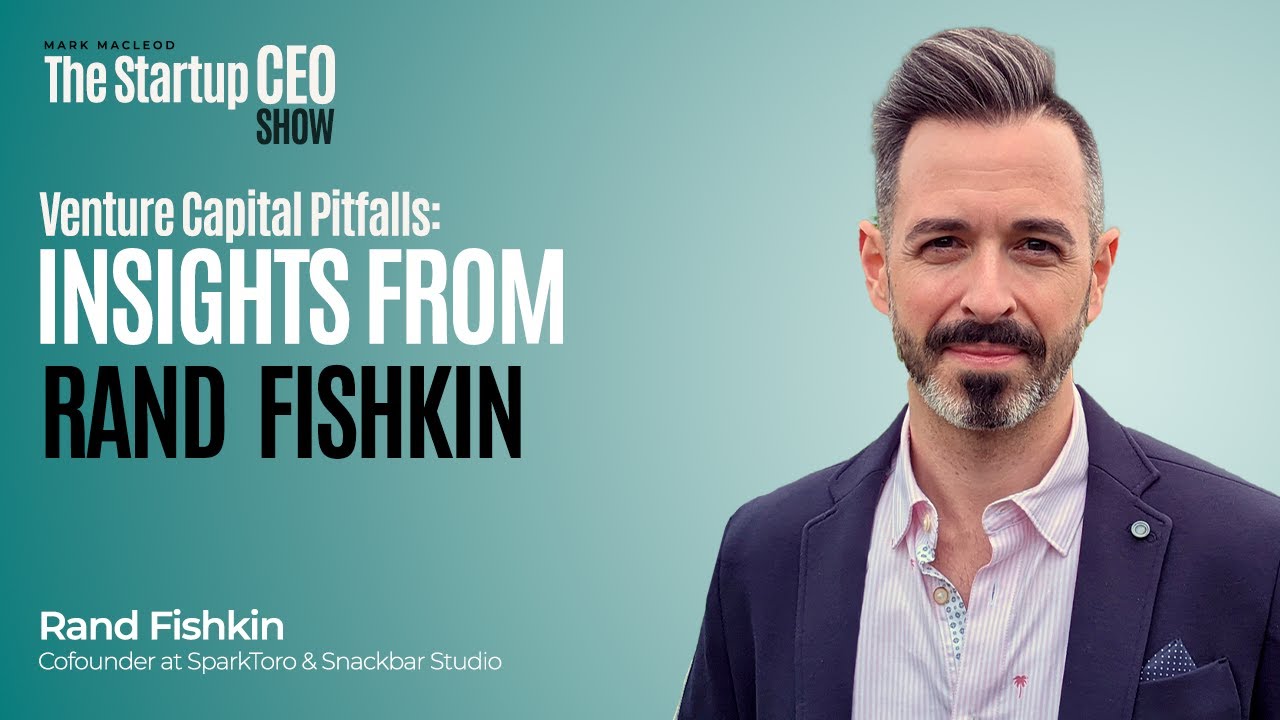
Rand Fishkin, co-founder of SparkToro and former Moz CEO, explains why most VC-backed growth is a poor fit for many companies. He details an alternative funding model he used: an LLC-based angel syndicate with profit-sharing and dividend-style returns, with open-source documents available for other founders to replicate.
Chapters
Riding a big trend that nobody else thought was big. If you are jumping on the AI bandwagon right now, that's not what I'm talking about. Everybody thinks the AI bandwagon is big, but in 2003, nobody thought SEO was big. Nobody thought search was big. And so very frankly, I think the thing to try and identify is not what's a giant market, it's what's a medium-sized and growing market that nobody else likes, that nobody else is willing to touch. There was a good Wall Street Journal article recently about sort of the, you know, the millionaires next door and talking about how many of them were essentially owners of what would be called boring businesses. What do you do? Well, I run a company that makes a device that rips up carpeting in hotels. What? You know, well, it's a $20 million a year business. You know, like, there, there you go, right?
Welcome to Startup CEO Show. I'm your host, Mark MacLeod. In this episode, I sit down with Rand Fishkin, co-founder and CEO of SparkToro. Rand is most well known for Moz. He was kind of, I guess, a celebrity amongst founders long before personal branding became a thing. In this episode, we talk about kind of this trend of CEOs building personal brands. We talk about kind of his reflections on Moz, what he got right, what he didn't, kind of his thoughts on venture capital. Startup industry in general. Rand is just, you know, a colorful character, amazing human, and that absolutely came through in this discussion. I just, I thoroughly enjoyed it and I think you will too. Rand, welcome to the Startup CEO Show. It's a true pleasure to have you here. How you doing today?
Yeah.
All right.
Thanks for having me, Mark. Good to be here.
Yeah, it's my pleasure. So, you know, I first came across you many years ago through the Unbound Skies and, uh, oh yeah, Rick and Ollie and Carter said great things about you and the time, I was like a little starstruck, you know, there aren't too many guys whose like books I've read. I read your Lost and Founder book when it came out and, um, you were really, uh, like you stood out as like everyone knew who Rand was and it was sort of like order of relevance. It's like Rand and then Moz and then by the way, this whole kind of inbound movement. So anyway, it's awesome to be to be chatting.
Oh yeah, wonderful. I actually, um, Ollie and I got to go on vacation together in Costa Rica. Was that January of this year? So yeah, I kept in touch with those guys. Still, um, very grateful to them for all the things they've done and yeah, excited, excited for all the things they're going to do.
Yeah, you know, um, they're dear friends of mine. I led their one and only venture round back when I was a VC.
Oh, right.
Yeah. And they were like 14 people at the time and just shows the strength of that inbound movement that you pioneered, right? Because like on $600 grand of financing and a little bit of debt, they built a pretty large business, you know, in the tens of millions in revenue and just like huge organic inbound kind of acquisition, right? Yeah.
Yeah. Remarkable brand too.
Yeah. Yeah. And, uh, I've spent time with Sarah from Moz and I'm obviously much more familiar with Unbounce, but like, like Moz, a values-driven company, like they led with values and culture and, uh, yeah, a really special place. Like of all the companies I invested in when I was a VC, that was one that I would have, would have happily joined as CFO.
Oh, well, that is, that is lovely to hear. Yeah, I'm sure Rick would be honored. I hope, I hope he's doing well. I haven't seen him since he moved to, was it Toronto?
Yeah. Moncton, New Brunswick, away on the East Coast again. Right.
Oh, right. Yeah.
Yeah. He's doing, he's doing well. Yeah. Gardening, of course. And, uh, and doing CrossFit.
Uh, oh wow. Yeah.
I've been plugging him at CrossFit for years. It's sort of like the opposite of Fight Club. You have to talk about it. And I've been an avid CrossFitter for a long time. And now, now he is as well.
I think this, my understanding is there's an overlap. If you're into astrology, podcasts, or CrossFit, you have to talk about it all the time. Oh, there you go.
Okay, perfect.
Oh, that's it.
So check the box, I talked about CrossFit.
All right. Unfortunately, I don't know anything about astrology, but we could get to that later.
Yeah, exactly. I don't know anything about it either, but it must be a thing because it stood the test of time. It's true.
It's a very, very powerful brand.
Yeah, that's right. And you know, I'm a Virgo, and based on the stereotypical traits of Virgo, they seem pretty right, you know? But anyway, that's—
Well, so you know much more about astrology than I do. I don't know what constellation I am, and I don't know the traits that are associated with it. But if I looked it up and I found out that, you know, I was a Poseidon or whatever it is, and my traits were, doesn't know things about his own sign, I would be super impressed.
Yeah, there you go.
I would really, they would really nail me.
That's hilarious. So yeah, like I say, you know, big brand, you were a big brand kind of early, and I've noticed a trend these days with more and more CEOs building a personal brand. And I'm curious, you know, what are your thoughts on that? And like, first of all, did you set out to build a personal brand or just sort of happened? Like, yeah, what are your thoughts about that?
Yeah, so I think, let's see, there's a, there's definitely an overlap, um, in the last 10 years between what was for a while called influencer and, and now is sort of called creator, um, and building an influencer brand or creator brand and then overlapping that with sort of a CEO brand or startup, um, founder brand. I think it can be helpful. Uh, it served. It served me well at times at Moz, but I think overall the, I think if you were to talk to the company's board of directors, let's say, you know, just before it sold, I think they would say that on the whole it was a net negative.
Interesting. Tell me about that. I'm curious. Yeah.
Well, I, you know, you know, as a, as a, as a venture capitalist, right? You need to achieve a certain kind of breakaway growth rate and, um, I think that personal brands, especially when they have the risk of becoming disconnected from the company, carry a lot of challenges and problems that a brand struggles to overcome. When, um, a well-known founder, well-known CEO steps away from the brand or, or is asked to step away from the brand, um, when that disconnect happens, it gets messy in the minds of people who know the company and brand, and there can be conflict between those two entities. I, um, I think I was sort of nudged to leave Moz about 18 months before I actually did. And those 18 months were a process that involved almost $60,000 in legal fees just on my end personally, right? Well, I was paying lawyers to interface with Moz's hired lawyers to negotiate the settlement for my departure. Yeah, it's a— and Mark, I'm sure you can imagine, right after I wrote Lost and Founder and after people read the blog post about my departure, I heard from dozens, maybe even 100 startup founders and CEOs who had had similar experiences. I had calls with a lot of these people, very therapy-centric, right? Types of calls like, oh, it happened to me too, man. It was the worst. I don't know who I am anymore. My identity is gone. You know, all that kind of stuff. And then negative impacts on their company too. So I don't know. It's, it's a messy situation whenever companies and founders break up. Um, and I think doubly so, or, or maybe even 10x so when there's a personal brand involved in the person departing, that's just. You know, it's incredibly hard. Counterpoint, you know, obviously Ollie's not with Unbounce anymore, but it was a very amicable departure and like there's no, there was no bad blood. Everything was great. Ollie was like, it's time for me to move on. And they were like, great, what can we do to support you? No problem. So I don't want to say that it always ends badly, but it always carries risk. That's, you know, that would, that would be my assessment. I would argue that if you're a personal brand startup CEO founder, it does amazing things for your marketing, especially at the small and mid-scale. If what you're trying to do is go from sort of the $0 to $50 million in revenue stage, or the zero customers to first 10,000 customers, awesome. My God, what a superpower. It will make so many things so much easier. If you have that both founder market fit and also founder marketing fit, it's amazing. But my, you know, my assessment is if you're in sort of the larger scale venture world and you need to cross that $100 million revenue scale per year, the value of the personal brand really slows down. It doesn't have as much of an impact. It can be a drag and it does carry risk.
Interesting. Yeah, that's, that's really valuable insights. You know, when I first saw this trend happening, I was like, these people are distracted. They should be operating. What's going on? Like, and then I just worried about human nature, which is, I don't know, you start believing your own hype and like, you know, the, you and the more followers you have and then like, oh, let me see who liked my post today. Uh, and then. You become ungrounded and lose your humility and then stop learning. And that's, you know, again, my context is startups that are trying to grow rapidly. As a CEO, you have to grow as fast as your business. If you think your shit doesn't stink, you stop learning. So that was, that was my concern.
So this, this conflicts directly with most of, ooh, all of, I'm going to say, I'm going to say most, but in the high most, like high 80s, low 90s percent of CEOs I know who have become, I would say, sort of extraordinarily successful, right? Like they've had those, built companies to $100 million, sold them for half a billion or a billion dollars or more, or even become, you know, worth those figures. They often believe that their shit doesn't stink and that their levels of humility. Tragically, like many of these people, oftentimes I'm not going to name names, but like oftentimes I was friends with them in my 20s and 30s and we sort of, you know, whatever came up in the world together. And my, I am disconnected from almost all of them these days. Yeah. And I think, I think a big part of that is because I'm, I'm, I am not entranced by You know, oh yeah, well, you probably remember my wife. I left her. Now I'm married to somebody who's in their 20s and I go to these parties and check out this boat that I have and my shit has never stunk. I never had prob— you know?
Yeah. Yeah. I poop diamonds. Yeah.
So I, I think there's, um, unfortunately a correlation between, um, those people, you know, having those attributes and having that level of success. And I think I would, I would argue, uh, what really needs to change is we should change the definition of what success means. Because I'll, I'll tell you, Mark, I'm sure you know plenty of those people. Do you think they're happy? Do you think Elon Musk has a good—
No, I mean, I read Elon Musk's biography and I was just like, A, I would never want to be him. And B, I'd never want to work for him.
Nope, nope.
Tortured soul.
Yeah. And I think, I think that a lot of these people are, right? That it's— there's no, um, there's no limit to the greed. There's no limit to the feeling of inadequacy that is driving a need to present a face that's different from the one they feel inside. There is no, you know, no amount of money or notoriety or mentions on social platform that will satisfy them.
And, uh, yeah, external that will satisfy them, right? Really, like, last day.
And I never—
contentment—
I never see the turnaround story, right? I never see someone who's like, gosh, you know, I went through this, I was this big shot, and then, you know what, I sort of humbly removed myself from that situation and I don't know when in a— maybe Bill Gates is sort of there, but I don't know, the dissolution of his marriage and a lot of the stuff people say in Seattle at least seems like he is also, despite doing many, many good things, um, experienced some of those same challenges himself. So I don't know, I'm not sure human beings were built for, um, for billions of dollars. How about that?
No, no, I'm sure not. I'm curious, you know, when you were going through those highs, we can talk about the lows separately, but like, did you have practices to keep you grounded and keep you humble?
Um, well, I, one, so I am, um, very, very deeply in love with and attached to my wife Geraldine, who is, she, self-describes as having poor girl energy. And I think that, um, that really, really helps in fact, right? Like there's, um, there's not a moment that, uh, goes by where she isn't conscientious of, you know, both sort of our situation and the world around her. Um, and, and brings, always brought a lot of humility to me. Um, even during my years of You know, whatever. I never got to the scale that most of these folks that we're talking about are on.
But I was, I don't know, you could have easily gotten caught up in the C and B scene. Look who I'm with.
Blah, blah, blah. Sure, sure, sure. Right.
Look what events I'm speaking at. I'm on the circuit. You could have been that guy, right?
Yeah. I got to meet lots of those people.
Right. Sure.
You know, and had, I don't know, acquaintanceships and friendships with some and, I don't know. Also, I think early on got to see some of the dark side of it. That helped, right? That it's sort of a, almost a warning signal. I remember, you know, I had some friends whose companies had been acquired by, oh my gosh, what's, WeWork. And, you know, people who interacted with Adam Neumann and that whole scene and situation.
Did you watch the, uh, the TV show about it?
No, I haven't. Is it good?
Oh yeah, it's worth watching. Yeah. Yeah.
All right. I might have to check it out. And, and then, you know, um, I, I knew and was not friend, friends, but friendly with many people who had high profiles in the venture capital world. Um, and, you know, because I'd pitched them repeatedly and some people were investors and some people were regretful non-investors, especially for like the kind of 5, 6 years that Moz was really riding high. And, um, yeah, so that, that exposure too, right? Like you'd get together for coffee or drinks or a meal and those people would spill stories that just made your head spin. Um, I think that helped, right? I don't know. I don't know why. And, and I will say, I think, you know this too, Mark, right? So, uh, founders like myself and, and Rick, right, from Unbounce are exceptionally unusual in that we did not come from wealthy backgrounds and didn't have strong networks when we started our companies.
You didn't go to Stanford.
Right, right, right. And, um, uh, when I did research for Lost and Founder, you, you might remember like one, one of the early chapters, I sort of, uh, laid out the, the detailed research that NVCA did, um, where they looked at this is, this is American companies, but, uh, which represents, you know, still a very large number of, uh, venture financing events. And, you know, for the sort of quarter century from '95 to 2020, um, fewer than 5 in 100 startup founders who raised more, I, I wanna say it was more than $2 million, but it might've been more than $5 million in venture., almost all of them were what, what you would call nepo babies, right? Like they were deeply connected to the Bay Area or East Coast, um, financial and startup and tech worlds. They had gone to these schools. They had grown up in wealthy families, like wealthy families meaning, um, net worth of $10 million or more, right? And so you just, you know, you don't see middle class and see poor kids becoming founders of venture-backed companies. Not that you don't see them, but they're exceptionally rare. It's, it's like finding a star in Hollywood today who's related to no one else in Hollywood ever. Um, you know, it's almost, almost impossible to find.
Yeah. That's fascinating. Huh. I definitely wanna spend a bunch of time on SparkToro, but let's stay with, with Moz for a bit. Like, I'm curious, when you look back, what did you get right and what did you not get right?
Got right, riding a big trend, riding a big trend. Well, two things, riding a big trend that nobody else thought was big, that really helped, right? So if you are jumping on the AI bandwagon right now, that's not what I'm talking about. Everybody thinks the AI bandwagon is big, but in 2003, nobody thought SEO was big. Nobody thought search was big. And so very frankly, I think the thing to try and identify is not what's a giant market, it's what's a medium-size and growing market that nobody else likes, that nobody else is willing to touch. There was a good Wall Street Journal article recently about sort of the, you know, the millionaires next door and talking about how many of them were essentially owners of of what would be called boring businesses. Like, what do you, what do you do? Well, I run a company that makes a device that rips up carpeting in hotels.
That's pretty boring. What?
You know, well, it's a $20 million a year business. You know, like there, there you go. Right. And I'm one of 5 companies in the space and you know, all the, all the small hotels in Ohio hire us to come rip up their carpets and you know, like, Hey, great, great businesses, right? I think identifying stuff that other people don't want to do, don't have the skills, don't have the wherewithal, the knowledge, the network, that can be a really great thing. And that is something that I did very unintentionally wisely at Moz. I was just attracted to SEO because I like to optimize things. And, you know, I really, I got pissed off early on at Google for hiding the way their algorithm works. And that, you know, that, that started a fire under me that lasted 17 years. And, and I just kept pounding away at trying to make Google's ranking system understandable to laymen. And, um, yeah, I think that, that turned into, uh, I mean, a relatively successful business, except that we raised a bunch of venture, which was of course very foolish. Um, there's no need to, you know, if you gotta $30 million a year company that's profitable. You don't, you don't need to, uh, give yourself the obligation to get to $100 million.
Are you still taking your own meeting notes? Let me tell you about an AI tool that I'm using to take meeting notes for me.
It's called Fellow.
It's an AI meeting assistant. It takes human-level AI notes. It tracks my action items and decisions and keeps everything in one place. Built with security and privacy at its core, Fellow is the the only AI meeting assistant that leaders trust to capture meeting notes and recordings while keeping your data safe. Thousands of organizations are consolidating tools and relying on Fellow to capture their meetings. The team at Fellow is so confident that you'll love it, they're offering an insane deal to Startup CEO listeners: 90 days of unlimited AI-powered note-taking and recording completely free. Visit fellow.app/ceo to sign up today and experience the AI meeting assistant trusted by leaders everywhere. Right. Can we talk about that for a minute? And then let's go back to the postmortem just because not only did you raise venture, but you raised from Foundry, like a tier 1 fund. And that comes with, you know, commensurate expectations. So yeah, let's, let's talk about that. Gosh.
So, uh, Brad Feld and I from, from Foundry Group met through Through Geraldine, through my wife. Um, Brad's wife Amy was a big fan of Geraldine's blog and, um, Geraldine's sort of a, uh, personality in the travel and now more so culinary world. Uh, she has a James Beard Award now and, um, is a very— yeah, she— her latest book was a bestseller. And so she's, she's quite accomplished in her own field. But, uh, Amy, Brad's wife, was, was reading her blog and she had written about my experiences fundraising, uh, and Amy sent it to Brad and then Brad reached out to me. So that's, that's how I got connected to Foundry. Um, and yeah, we, we formed a, a close friendship for a number of years. You know, Brad was obviously an investor and, um, I think we, you know, I got entranced, entranced by the world of venture, um, for a long time. Like I, I wanted to play with the big kids. I felt like an outsider. I felt like I wasn't good enough. I felt like in order to be somebody, I had to do what all the cool kids on the front page of TechCrunch and the New York Times and the Wall Street Journal were doing. Um, I don't know, for whatever reason, I foolishly, I never even considered the path of Hey, what if I built a quiet, successful business in this field that happened to do really well? Um, which interestingly enough, the two companies that beat Moz eventually, right, that took market share from them and won the space, neither were venture-backed until like the very end, right? They're very, very late stages.
Is that something like SEMrush? I'm not super familiar with them.
Yeah.
Okay.
Yeah. SEMrush was one of them. Now, now they're a public company and Ahrefs, which never took money and is still private and is north of $100 million in revenue.
Right.
And, um, yeah, I mean, that, that very easily could have been Moz. I think if, uh, if my ego had been in check and if I had thought more carefully about it and, you know, and maybe if the, I think if the venture community too had been, had, had looked at our business and said, you guys are onto something amazing. You should not take money from us. Like, let me show you this other path. Um, but that is not marketed to any founders, right? Venture is marketed to all founders, even though it's wrong for 99% of them. I think even yourself, right? When you were a VC, Mark, you would have said venture is wrong for 99% of companies.
Yeah. It's one of the reasons why I stopped being a VC. A, um, I believe that the industry was broken. Look, you know, location mattered a lot more then. I was running a $50 million fund out of Montreal and I was just like, I can't out Sequoia Sequoia. Like they're gonna kick my ass every single time. And therefore I can't look limited partners in the eye and be like, hey, I know most fund managers shit the bed, but don't worry, I got it all figured out. Give me your money. And then by the way, backing up that empty promise with my own money, I was just like, honestly, like I was literally, it was literally eating at me. Like I lost 30 pounds in a year. People thought I had cancer. No, it's just, I had like no bum. Like I was like concave. I was just like, I was just stressed out from like being in the wrong industry. So, uh, that's when I hit the eject button.
Yeah. I'm incredibly, I, I think it takes an incredible amount of self-awareness and an extraordinary amount of empathy and humility to do what you did. Um, and it should be, it should be lauded. It is lauded. It is lauded by me as far more impressive than anything. No offense to Brad, but no, and anything that, that he and his team ever did. Um, I'm really, I think that, I think that's a, um, truly wonderful, thoughtful way to live your life and to, you know, be able to recognize that is a, is a superpower. Um, and find things that make you happy and make the world better and make, um, sense for, you know, a, a thoughtful, caring life. Yeah. So anyway, I obviously, I became disillusioned with venture over, over the years as well. And when I started writing a little bit about that, some, some of that was on the, on the blog. And then of course in the book, gosh, man, I, like I said, I heard from so many founders that had experienced, you know, really, really rough times. And a big part of, um, the allure is that the notoriety that comes along with being associated with, uh, with those brands, right? So if Sequoia or Benchmark or Foundry invest in your company, you know, you can put a, I don't know, it, you know, it's like Geraldine putting a James Beard Award winner, you know, next to her name on her book. Um, it just, it feels so meaningful. Um, and, and what it, what it actually means, you know, statistically speaking is I think the numbers are like 93 out of 100 firms that raise venture will not return even 1x. So, you know, every founder and every employee at those companies having a bad time and the investors too., and then there's another 4 out of the 100 that will return, uh, 1 to 3x. Probably not a good time for anybody there either. Moz was in that group, by the way, uh, in the, in the 1 to 3x group. Um, and then, well, for its early investors it was a bigger return, but for the later stage investors, much lower. Uh, and then the, the last 2, you know, 2 or 3 make up the, That makes the fund, right? Like those are the ones that do the 4 to 10x, 50x, 100x. Yeah.
Yeah. Crazy numbers. Yep. Yeah. I've got a recent stat for you. Actually, I was speaking at Turing Fest in Edinburgh 2 weeks ago. This was actually an intro through Ollie. It was my 3rd time speaking and it was Ollie who connected me. And you can't tell from my accent, but I lived in Scotland until I was 11. So it's like amazing to go back. Anyway, I did some research and, um, so 70% of venture-backed exits since 2022 were for less than the capital raised.
And those are the ones that exited, not the ones that shut down.
Yeah, yeah, exactly. Those are the ones that actually, there was an actual transaction, right? And then often those are celebrated, you know, like, uh, because no one has an incentive to tell the truth.
No one has an incentive, right? The founder, the employees at the company, even if they get nothing, there, there's no incentive to sort of say, hey, I was part of this essentially failed transaction, failed company, company that didn't return 1x its investment. And for the investors, there's no reason for them to publish a list of, hey, we invested in this company. Yeah, that's right. Um, and so unfortunately you, you almost never get the truth of that. And instead you get a, sanitized version of what's going on. But so anyway, go, going back to your earlier question, I think one of the other things that Moz did really right was marketing.
Mm-hmm. Like 100%.
I don't, I don't think, I don't think of myself as being an extraordinary product or engineering CEO. I, I certainly hope that I'm getting better. And it's something I put a lot, lot more effort into with, with my new companies, but I would, I would say Moz blew it out of the water marketing-wise, like just became, became this massive brand in the, in the digital marketing space and obviously the SEO space. Yeah, you know, and built up my personal profile probably far more than, than I ever expected or necessarily wanted. Um, which yeah, had some helpful effects, but, but like we mentioned, some challenges for the business at scale. It's certainly been helpful to me in future projects. So, you know, I obviously I've, I fundraised for my, my second company for SparkToro and for Snack Bar Studio, my third company. And both of those processes were absolutely helped by the fact that many people already knew, liked, and trusted me and had this, you know, sort of impression of me as someone who was impressive and knew how to do things. Um, and I'm, yeah, I'm deeply grateful for that. We, we raised in really weird ways, which we can talk about if you want to, but, um, the, uh, non-venture way.
Actually, I'd love to, because I think a lot of people raise venture because they think they have to. They think that's like, that's what you do, right? So yeah, I'd love to know what you did. Yeah.
So, so, um, SparkToro.— I don't want to say pioneered this. I, um, Broadway plays have been raising this money this way for, for years. But essentially, um, what we did is Spark— we made SparkToro an LLC and we raised money from a lot of people like yourself, right? Like individuals who I knew through my network who had, you know, some, some net worth. Um, the, the United States requirement is quite low. I think you only need, I wanna say it's $1 million of net worth or a salary of $200,000 or more. So, you know, for many people, like if they own a second house, right? Or they have a, an index fund in the stock market, um, or even they own private shares in their own company whose valuation is a few million dollars. They, you know, they, they are, they are a qualified investor. And those people put in, I think we raised from 30 33 or 34 angel investors who put in between $25,000 and $100,000 each, uh, and raised a total of $1.3 million. Um, and that allowed me to, Casey and I to build SparkToro because we, we did not have the funds to do it ourselves. Um, when I left Moz, I, I would have needed a salary very shortly. You know, I got a, I got a nice severance package, but it wasn't a,, you know, it was not a multimillion dollar severance package. It wasn't even a quarter of a million dollar severance package. Right. Um, but it was enough to sort of take some months to get off the ground, get Sparktor off the ground and raise a little bit of money. And then, um, essentially we've spent the first 18 months building the product. We were able to pay back our investors, uh, 4 years, 4 years after we launched. So that was, that was great. Essentially that $1.3 million. We paid that back to our investors. Now everybody participates in profit sharing pro rata. And so our hope is to pay dividends every few years for a long time, right? For hopefully decades to come. And that, yeah, that's kind of an exciting model. It's sort of, it's sort of like the difference, right? Like a lot of people, Mark, are familiar with investing in the stock market and there's stocks that you buy on the assumption that they will grow in value. And that you'll sell them someday. And there's stocks that you might buy who just pay dividends. The, the price doesn't really grow up—
go—
grow that much. I think, um, PepsiCo is a good example of this.
Like many people, any utility company.
Yeah, utility companies, sure. Even a treasury bond, right? Like you buy it and then you— hey, it's going to pay whatever, 3.5%, 4%.
Bank of America, Citibank, like they'll pay big dividends.
Yep. So that we kind of think of SparkToro as that. It's a much lower risk way to invest in this, in the, you know, private small startup world with the idea that you're gonna get your money back and then get dividends over time. Um, and it works really well for companies that have that lower risk, but also, you know, Casey and I are not trying to build a $100 million company, right? Like, you know, we're not even $2 million in revenue, but we only have 3 people. Our expenses are relatively low. We didn't raise very much. And so, someone who put in $25K can, can kind of expect to make a nice treasury-style return on SparkToro. And that's, that's our goal. We did the same thing with Snackbar Studio just last fall. So in November we raised $2.15M, so considerably more for that business. And also from about, I wanna say almost 40 investors., who put in between $25K and $100K each. That company, um, I would say is a, it's a little different. It's a C corp. Um, the goal is certainly a little bit higher. Like the, the expectation is we're going to, um, be a higher return, but also higher risk business. Um, and that's, that's just sort of the nature of indie video games. You either produce a smash hit or you don't. Um, yeah. And so we're, we're, we're working on our hit and, and we hope to get there and maybe you'll produce the next Slack.
That's how they started off. They were trying to build a video game. Um, was there any concern among investors that you were doing two things at the same time and therefore half pregnant?
No, didn't, didn't seem to be. Um, yeah. And I, you know, I do lots of other things too, like, like many folks in our, demographic. You know, I, I'm on the board of directors of actually another company, a hardware company here in Seattle that, um, raised money using SparkToro's model. It's called Seattle Ultrasonics. They're making the world's first ultrasonic home chef's knife. Um, super cool business. Uh, obviously tariffs have been a real pain, but, um, that, that business is fascinating and about to take off. And, um, they, they got their patent and Yeah, doing amazing stuff. Um, yeah, so, you know, I think this, this funding model, my hope is that it's going to have legs and, um, be used by lots of other folks. And to that end, you know, for anyone who's listening, if it sounds interesting to you and you would like to raise money this way, I open source the documents for both companies. So Snackbar Studio, you can find, if you search for Snackbar Studio funding, you can find the docs open source. We paid our lawyers, you know, like 10 grand extra to essentially publish open source versions of those. You'll find a Google Drive in the blog post. Same thing with SparkToro. If you want to raise with an LLC, um, and there's reasons described in both posts about why you would choose one over the other. Um, yeah, so this is, you know, my hope is like we can, we can build a different kind of class of startup and redefine what success means.
I love that. That's really cool. Nice public service you did there. I'm curious, you know, so Even though nobody talks about it, you know, there are many founders who go through like where they leave one company and then there's a period where they lick their wounds, heal and learn and start something else. Could you talk about that period? What was that in-between period like?
Yeah. Um, I think it was almost 10 hours for me.
Very productive 10 hours. That's awesome. You had a lot of coffee.
Uh, no, I'll tell you quite honestly, it was, it was, um, uh, a marketing thing and a, oh my God, I need healthcare. Um, you know, y'all up in Canada, you're very lucky that, you know, you sort of have this. I, I realize Canada has its own challenges.
We got lots of land.
I know, I know. But, um, yeah, America, for Americans, healthcare is a panic thing. Um, Many people know that my wife Geraldine sort of very famously had a brain tumor a number of years ago and wrote about it in her first book and on her blog and stuff. And anyway, the high risk to not have health insurance for any given amount of time. And so I really needed to get that going. And so SparkToro started technically the day after I left Moz. And so essentially, you know, I only had those 10 hours of unemployment, um, between when I left one company and started the other. And it was also a, um, an intentional marketing thing. Like I knew that when people heard that I left Moz, there would be a lot of attention around that. And so I wanted to be the person to publish that news and then to have a new company already announced that, you know, you could subscribe to the email list and like see what Rand's up to next.
Were you working on this in the background as you were winding down?
Uh, no, absolutely not.
When I was a VC, it took me a long time to figure this out, but like I figured out like the best opportunities were based on their crisp, simple insight, simple to communicate, often based on the person's mastery of a domain, but in no way simple to execute. So I'm curious, what was the insight behind SparkToro?
Big frustration that had dogged me for years, uh, at Moz, especially toward the last sort of 4 or 5 years of my tenure there, was that I saw more diversity in how people discovered brands, businesses, and solved their problems than just go to Google and search for something.
Mm-hmm.
But I had no way to help companies, you know, that I advised or wanted to assist, or people who came to Moz and sort of said like, hey, how can we get good at SEO? You know, and I'd look at their product and their space and I'd say, I don't, I don't think SEO is the thing you need to get good at, right? I think your customers are going to find you through whatever, social media or through brand marketing or through conferences and events or through podcasts and YouTube channels or through content that's published on the web and PR and, you know, press and media coverage. And there was no way I was— I remember I was on the board of directors of one company and they got one really good publication in a particular educational space who wrote about their product and it sent them a whole bunch of customers. And we thought, oh, okay, how do we find the other publications that that audience reads, watches, listens to? And other than surveying and interviewing people, which was a manual and very unsuccessful process, it was a real pain. You know, the founder didn't really know any people in that world, and so it was this big distraction from all the other things that, that he had to do. And I thought, there should be software for this. Just like there's software that tells you what keywords people search for in Google, there should be software that tells you what podcasts do interior designers in California listen to and what YouTube channels are popular with real estate professionals and what websites do chemical engineers in the UK visit regularly that I would never have heard of and couldn't find. But, but if I knew them, then I could target those people in those places and learn a whole bunch about them. And so this was the impetus for SparkToro, which, which helps people do audience research. Unfortunately, I'll tell you the reality, Mark. You know, I thought, oh, everybody should be doing this. Should be is different than are.
Mm-hmm.
So there's lots of, there's lots of things.
I should be taking my vitamins, but I often forget.
You should be taking your vitamins, but you know, I actually, I take my vitamins. You know what? You know what really helped me with the vitamin thing? They're little gummy bears and I really enjoy the gummy experience.
There we go.
So maybe, maybe this is what I need to do.
I just need to make Spark Pros audience research.
I need a gummy audience research that you can take in the morning.
Yeah. Yeah.
But yeah, so that, that, that has proved to be our biggest challenge is to get people over the hurdle of, I know I should do this thing, but it's not part of my job description or title or role or what my boss or client expects of me. And so we've had to essentially market the whole idea of, hey, you should know more about your potential customers before you try and sell to them, because if you do, your marketing is gonna get a lot smarter and better.
I'm curious, um, how you see AI changing how brands get discovered. Like, I don't, I, I rarely go to Google anymore. I feel like I discover everything in Perplexity or, or ChatGPT. What are, what are your thoughts?
Yeah, so we, we've done a bunch of research around this because I, I have heard that from a number of folks, right? My LinkedIn feed is filled with people who say, I never use Google anymore. And so the, the backend of SparkToro uses a clickstream data provider called Dados. And if, for folks who aren't familiar with what clickstream data is, you might've heard of like the old Nielsen set-top boxes from the 1950s and '60s, right? Where Nielsen would send a, a family in the United States, a little device that would sit on their TV and it would connect in and it would tell Nielsen every channel and show that the family watched, right? And so then whatever NBC could say, oh, M*A*S*H, the final episode of M*A*S*H had a 42% market share, you know, whatever, last night. Clickstream data is very similar for the internet. So Dados has access to tens of millions of devices, right? You know, um, phones and desktops and laptops where people have essentially opted in to provide their clickstream, which is the URLs that they visit and the timestamps of those URLs as they're visited. And then DDoS does a bunch of things to anonymize and aggregate them and remove any potential PII sort of in the process, personally identifiable information. And then, and then they, make that available to people like us who can buy the data from them. And so we, you know, we have data on, well, people who are whatever, interior designers. We know that they visit these websites because we have the clickstream data and we can map that up to the LinkedIn profiles, et cetera, et cetera, right? So a bunch of math and engineering behind the scenes. But as a result, Mark, we can answer questions like, Did Google— was Google used less in 2024 than it was in 2023? Was Perplexity used more and how much more? Was ChatGPT used more and how much more? It, it's especially helpful because those products are almost exclusively used on their, um, desktop website interfaces. Mobile is starting to become a thing and, and Datos has data on, on mobile. Visits as well. But if they were like apps on the phone, that would be much harder to track. So Datto is not great for telling us how many people use the Pinterest app on the, on their mobile device, but anything that happens on the web they can see. So we looked at this and the numbers were last year Google grew 22% in terms of number of searches, which is its highest growth rate in like the last—
Giant denominator. That's non-zero.
Giant denominator.
Jesus.
In the last few years. So last year was actually Google's highest rate of growth of number of searches. Um, and the number of searchers has not grown very much. What happened is people started searching Google more as Google introduced more AI results and, and, um, the AI overviews, the instant answers, all that kind of stuff that, that makes people Google more. And, uh, it grew by 5 ChatGPTs last year. So ChatGPT growing fast. Absolutely. The percentile growth rate of ChatGPT is much higher than Google. I think ChatGPT grew 180, 190%, right? Like big growth last year. Perplexity grew like 600% last year. So very fast growth rates and they will have to 10 or 50x that growth rate in order to catch up to Google ever. Because Google is just way, way, way bigger. I think, um, so Google is searched for 373 times more than, uh, than ChatGPT. People perform 373 times.
I would've never guessed that. That's amazing. Yeah. So there you go.
We're in a unique world, right? Like we live in tech and cutting edge and early adopter and AI is great for everything and You know, you go to the rest of the world and it's just not that way. I like the survey I saw, this was like a few weeks ago where 60% of Americans were like, I've never tried ChatGPT. I don't know anything about that.
Wow.
There you go.
Different worlds. As we start to approach the finish line, I'd love to do something with you that I've never done on this podcast, which is just a little hot seat, rapid fire. Just throw some questions at you, uh, random, you know, there isn't a theme to the question. So first one, if you had to start over, you don't have a personal brand, you got no money, you're just, you're starting at the start line. What would you do?
Figure out what I'm great at. I, I, I assume I'm me.
Yes, you're you. Yeah. You're just, there's nobody knows who you are.
Right. Okay.
Yeah. You have no money.
So let's see, the thing that I tend to be quite good at is explaining complex topics in simple terms that lots of people seem to find compelling. And I'm pretty good at video. I can do most of my videos in one take. And so that is almost certainly what I would do is—
Those sound very relevant skills to the current times, you know?
Yeah, and I would, you know, if I were coaching someone else, I would tell them to do the same thing. Find the thing that you are really good at that also overlaps with what an audience in our, you know, in our era and in a space really like. I like optimizing things. And so I would probably do something that gives me the opportunity to do that, right? I like optimizing the conversion rate of a webpage. I like optimizing the funnel for a business. And I suspect that I could probably, I could probably get a consulting business off the ground pretty quickly.
Yeah.
And then, and then pivot that into almost certainly product, but.
Okay, good. So I don't have to worry about you. If you reinvent yourself, you can put food on the table. Rand's gonna be okay.
Oh, well, let's— I was worried for a minute, but no, you're good. Let's hope it doesn't come to that. I did, I did talk to our financial advisor when you know, the new administration in the US was sort of destroying our economy and had this like, yeah, so do we think, can we move our money to other markets? And he was like, we're diversifying. Like we're getting out of the US. That's like, great, good. I don't trust it here.
Yeah. Well, that's a whole other topic, so I'm not gonna bite on that one, but yes, I get it. All right, next question. What's the wildest business advice you've ever gotten? Could be from an investor, another founder, just like, Without throwing anyone under the bus, the most kind of crazy out there advice you've ever gotten? Oh man.
Do you remember CryptoKitties?
Yes, I do. A friend of mine at Version One Ventures backed them.
Yeah.
Yeah.
Well, I got some, I got some wild advice that I should CryptoKitties, you know, should revert mortgage into those and put everything into that. Yeah. I think the whole Web3 trend, you know, hype cycle was really problematic for a lot of people who gave me a lot of advice about how I should put my money into that. And I'm very glad I did not.
Yeah, you and me both. Yeah, they know I ran a record label until this last year and just handed it off to one of my artists to run. And, uh, NFTs were really big in that space. I was just like, this makes no sense to me whatsoever. I'm either too old or this is bullshit, you know, or both. And anyway, I think it's bullshit.
It was bullshit. It turned out it was bullshit. You know what? I actually, I kind of feel this way about cryptocurrency as a whole, but I'm not sure. I think it might have enough momentum that it doesn't matter that it's bullshit. And, and I think one of the things that, um, is required of people who— to, to truly get wise is to recognize when your own BS detector may be finely tuned and even accurate, but it doesn't matter because other people's BS detectors are not there. And so bullshit can thrive, right? And you just have to accept it.
I love it. Speaking of bullshit, what is like, I don't know, one piece of marketing bullshit that you wanna banish forever? Think advice that people think is what you should do that you just think is totally wrong.
This is embarrassing because for years I stood on stages and told people to do this. I told people to stop investing on building your brand and like, you know, buying advertising that you couldn't directly attribute., to a sale. And that was the dumbest thing ever. If you look at the brands that have been the most successful over the past 30 years, almost none of them did strong focus on attribution style digital marketing, and almost all of them invested very strongly in unmeasurable or hard to measure brand investments.
Tiffany's, Rolex, Ferrari, right?
Like, sure. I mean, old school classic brands, but even super modern businesses, Airbnb, Airbnb, like early on Brian Chesky realized this whole attribution digital marketing thing is BS compared to building the brand of Airbnb and doing, you know, doing crazy stuff like, hey, let's sponsor a gladiator fight in the Coliseum to market Airbnb experiences. We will never, never be able to know the return on investment of that. And it doesn't matter at all. The people who threw money at Super Bowl ads, and we all made fun of them. And you know what? A lot more of them are around than the ones who didn't. So I, yeah, I think attribution was always a mistake and it's not measurable in the way that I thought it was and that I pitched people on it. Attribution today is, in my opinion, a way that Google and Facebook are taking credit for many sales that would've happened anyway.
Wow. What a good insight. I love that. I mean, I can tell you as a crusty old CFO, I always wanted attribution to be real, right? When I first entered the tech world, I think the adage was, well, half of my marketing works. I just don't know which half. And like, I was like, oh my God. Yeah.
And my advice is, my advice is if you are putting, if you're not putting half your marketing into things that you don't know whether they work or not, you are effing up marketing.
Okay. I love that. I'm glad I asked that question. Yeah. Final thing, maybe it's not a question, but I always love to kind of troll people's LinkedIn bios and see, I don't know what stands out. And one word stood out for me, which feminist, you describe yourself as a feminist. Tell me about that.
Yeah. I mean, so for people who don't know, and tragically many people don't know that feminism is a belief that there should be equality of opportunity and equality of treatment for men and women. And I believe that strongly. I think even people who wouldn't call them feminists generally believe them that strongly. And I— it's something I've, I don't know, fought for my whole life and been intensely frustrated. I'm a, you know, I'm obviously like a straight cis guy, but I'm also very feminine in many of my just habits and styles. And I've always, always hated the way— the more that I learn about how women are treated, you know, worldwide, in the United States, in the marketing industry and the tech industry and the venture industry, the less you know, the more of a feminist I become, the more ardent and militant I become about that. I think that it's a, it's a tragedy that it's somehow developed a bad name. It, yeah, it's something we should all aspire to as much as we aspire to racial equality and religious equality. And yeah, equality of opportunity is something I strongly believe in. I, you know what this fits with? There's another word on my bio, which is I love underdogs. And I think that— I think it's really hard to be a good person and cheer for, I don't know, the Yankees, you know, like, yeah, I, you know, whatever, the New England Patriots of the 2000s, right? Like, yeah, yeah, if you're cheering for the team that's always winning, straight white cis dudes, or the Yankees, or the Patriots, or I don't know, you know, the big dog, like, hmm, that's, that's not the way. That's not the way. That's never resonated with me. And I don't think it's fun, fun for anyone, even people who disagree with me on like every other political vector. Often, often I find some camaraderie in the, yeah, I also like underdog stories. I think it's natural as a human to recognize that. Yeah, it's nice to cheer for the little guy.
Yep. I love it. Well, that's, you know, our startup world is pretty male dominated. And so I think that's some great food for thought to end on. I was pretty sure I was going to love this conversation and I was right. It was, this was a true pleasure, Ran. Thank you so much.
Mark, right back at you. I, uh, you are, as, as my people say, a mensch. And I think, I think what you've, what you've done, um, is, is truly impressive and, and far exceeds that of many of your venture colleagues, you know, from the past. And I, I hope that we get a chance to hang out in person someday.
Me too. I would love that. Thank you, Rand. You bet. Hey, thanks for listening to the Startup CEO Show. If you'd like to connect with me, be sure to visit my website at markmacleod.me or follow me on LinkedIn @TheMarkMacLeod or Twitter @MarkMacLeod_. And if you want to tune in again next week, be sure to subscribe on YouTube, Spotify, Apple, or wherever you get your podcasts. We'll see you next time.
More from Mark





The Burnout Breaking Point - How Strategic Breaks Actually Increase Productivity


Emotional Debt - How Avoiding Hard Conversations Compounds Into Company Killing Resentment


The Death of the Specialist - Why AI Is Creating a New Professional Class Called Scalers