3 Investments That Are Better Than "Safe" Retirement Plans
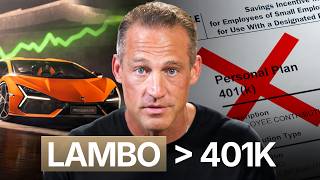
Mark Moss argues for liquid wealth over locked retirement accounts, proposing three alternatives: converted gold jewelry, sports cars financed by bitcoin borrowing, and trophy assets like watches and art. He frames this around a ROM system: Reclaim, Optimize, Multiply, emphasizing assets that store value, provide enjoyment, and stay liquid.
Chapters
Most people think buying jewelry or a sports car or Rolex is dumb. But what if I told you that I'd rather own all three of those than a maxed out 401k? Now, before you go and think I've lost my mind, let me ask you something. If you're making 250,000 or 500,000 or maybe a million dollars a year, why do you still feel broke, right? Because you. You work harder and harder. Harder for, you know, harder than almost anyone. You know, you make good money, you're doing everything your financial advisor tells you to do, but somehow you're still not getting wealthy. You're still not free. And the crazy part is probably that it's not because you're not making enough money. It's because the average investor's wealth is static. It just sits there. It's locked up for decades. But I want my investments to be liquid, right? I want my money to flow, and I want it to work in multiple ways at the same time, Reclaiming my time, optimizing every dollar, and then multiplying my wealth faster than I ever thought possible. And that's exactly what I'm going to show you today. So in this video, I'm going to walk through three sort of unknown investments I actually like more than my 401k. I want to show you why thinking about your investments as liquid instead of static will completely change the way you build wealth. Because you don't build wealth by locking money away. You build it by keeping it moving. All right, let's go. All right, let's start with the first one. And we're going to talk about jewelry. Now, I know how that sounds, but jewelry, Mark, seriously. And, you know, I don't even wear jewelry. But. But hear me out on this. Most people look at jewelry as an expense, but the wealthy, they look at it as a liquid asset doing multiple jobs. Now, I've been a gold bug for a long time. I've got gold sitting in the safe, gold bars, gold coins. And they're just sitting there. Now, at some point, I looked at it and I thought, hmm, what am I even doing with this stuff? I mean, it's just sitting there, right? So I thought, why not just take some of that gold that's sitting there and then turn it into jewelry for my wife and then let her wear it? I mean, seriously, I still own the gold. It's just in a different form. So instead of sitting in a dark vault collecting dust, now it's walking around. Now it's bringing joy, and it's still worth the same amount. That's what I mean when I say wealth is liquid, right? It's not stuck in a static bucket. It can move, it can flow. It can still serve you even as it holds its value. Now, here's where this starts to get a little bit more fun or interesting, right? This is just a very simple example, but it shows you one of the core principles we teach inside the wealth operating system. It's called optimization. Because most people trap their wealth in one place and let it do one job. But when you optimize, that same dollar can now hold value, right? Be a store of wealth. It can bring enjoyment, so it can increase the quality of my life. It can stay liquid. So it's available whenever I need it, right? And that's one asset doing three jobs. And when you start stacking these principles across your entire financial life, then things start to change. That's when wealth starts multiplying faster the than you ever thought possible. All right, but we're not even barely getting started yet. Let me show you how this works with something even a little bit bigger. Now, the second asset, we're going to throw in a sports car. Now, this one is actually kind of funny because if you know me, if you've been watching my videos for a while, I've never been really a sports car guy, right? I've had one supercar in my whole life, just one. I just drive a Ford Raptor around every day. In fact, I've driven a truck my entire life. Now, my biggest flex I've talked about before is that I can drive my golf cart to the office. But a few months ago, I saw this incredible car. It caught my eye. It was black and orange. It's my brand colors. So it caught my attention. And all of a sudden I just thought, that looks kind of fun. So the next day I told my wife, like, hey, I'm thinking about buying this sports car. And she goes, like, why would you do that? Like, where are you even going to drive it? She said, you only drive like three miles a week. And I said, yeah, but I like it. So I went to the dealer. I started looking, looking at the car. I was going to buy it. Well, I did buy it, and I was putting some clips up on social media, and I got all these comments telling me, why would you spend your money on that? What a waste of money. You should just buy more bitcoin. And here's the thing. I did buy more bitcoin. I bought more bitcoin and then I borrowed against the bitcoin. Using a loan, I unlocked some of that, the capital that was there, and I just paid cash for the car. Literally just got it zero down. And now I just have a monthly payment, and the interest payments are tax deductible through my business. So I get to enjoy the car. I. I get a tax write off. My bitcoin is there, growing, hopefully doubling this year. It's going to pay off the car completely if I want to. And then if I get tired of driving it, which I probably will, I don't know, nine to 12 months, I can just sell it, pay off the loan, But I still have the bitcoin doing its thing. All right, so that one move did three jobs. One, it kept my bitcoin invested, so it was still compounding. Two, it gave me a tax deduction, right? So it saved me money. Three, it gave me something fun to enjoy. It improved my quality of life today. All right, that's the difference between static and liquid wealth. Real leverage is accessing capital without selling appreciating assets. So I didn't have to choose between buying bitcoin or buying the car. I got the bitcoin and then I have to liquidate the bitcoin and trigger a taxable event. I just borrowed against it at a low rate. My bitcoin kept growing, it kept compounding, and I get to enjoy the car today. And if bitcoin doubles, cool, then the car basically is paid off, right? And I get the tax savings all along the way. That's the power of using leverage and arbitrage. When we put those two together, right, you're not just moving money around, you're making it do multiple jobs simultaneously. And when you understand how to layer these principles across your income, your business, and your investments, well, that's when you stop working harder for money and start making money work harder for you. All right, the third one. Let's talk about watches and trophy assets. Now, look, if you've got cash, let's say, sitting in the bank, right? That's static. It's losing value every single day to inflation. So watch. Why not move that same capital into something scarce like a rare Rolex or a Patik or something like that? I mean, the money's gotta sit somewhere, right? So why not let it sit on your wrist instead of a savings account, right? That way you could enjoy it and it probably holds value just as well, if not better. And the crazy part is that the data actually backs this up. You see, luxury watches, when you buy the right ones, have appreciated about 8 to 12% annually over the past few decades. That's basically the same performance. Maybe it even beats your 401k account, right? The difference is instead of sitting in a 401k account, you get to wear it, you get to enjoy it, and you can sell it tomorrow if you need to. The same money, but a better experience. Similar, not better returns. And the same idea. It applies to what I call trophy assets. What do I mean by that? Well, my buddy, he has two vintage Shelby Cobras, right? He bought them years ago, got them cheap, like 50 to $75,000 each. Now they're worth millions. One of them was actually signed by Carroll Shelby himself. I mean, he literally signed the glove box for him. Now, Ibody doesn't drive these. They're in his garage. They're up on lifts. Now, he can go out there, he can walk out there, he can check them out, he can start them up, he can touch them. But that's way more enjoyable than watching a number go up in a boring index fund. Now, most financial advisors would tell you that's a bad investment. But here's what they don't tell you. Classic cars tracked by the Knight Frank Luxury Investment index have returned 8 to 12% annually over over the past 20 years. That's better than the S&P 500's long term average of 9 to 10%. Except my buddy, he gets to walk into his garage and he gets to look at a piece of automobile history. Now, try doing that with your Vanguard account. Or take art, right? We can look at art as another example. Between 1995 and 2024, fine art appreciated at 11.4% per year. The S&P 500 over that same period, 10%. So art actually beat the stock market and you get to hang it on your wall. Contemporary art has done even better. It's been growing at over 12.6% annually from 1995 to 2022. And if you want something really wild, this is something I just learned about from my wife recently. The Hermes Birkin bags, you know, the luxury handbags, they're appreciating at 14.2% per year. That's crushes the S&P's historical 10.5% return. Now look, I'm not saying you should go buy a Birkin bag, right? That should not be your retirement plan. Although, honestly, it's not the worst idea. But what I am saying is that the wealthy know something most people don't. They know that you don't have to choose between enjoying your wealth Today and growing it for tomorrow, right? You can do both at the same time. This is the multiply piece of the wealth operating system. You've seen how we can optimize our assets, right? Getting it to do multiple jobs at the same time, like jewelry. We can then leverage our capital. So that's borrowing against bitcoin to buy the car. Then we can multiply it through appreciation. So that's like trophy assets that grow in value while you enjoy them. And when you start stacking these principles on top of each other across your entire wealth system, that's when things start moving fast. Your money isn't just sitting in a retirement account hoping to compound over 40 years. It's working today. It's bringing you joy today. It's building you wealth today. All right, that's what I call liquid wealth. That's the game that the 1% play. Okay? Now look, the point of this video isn't that you should just go run out and buy a Rolex or a Lamborghini or Birkin bag. I'm not trying to give you investment tips into that. I'm trying to give you a new frame, a new lens to start looking through. All right, so let's recap what we just learned. Example one, right? I took gold sitting in a safe and I turned it into jewelry that my wife can wear, right? The same asset. Now doing multiple jobs, a store value and enjoyment and liquidity. That's optimization. Example two, I borrowed against Bitcoin to buy a car. So I got the tax write offs and my bitcoin's still compounding. So Now I have $1 doing three jobs at once. That's leverage. Example three was I got trophy assets like watches or art or classic cars that are appreciating at a faster than the S&P 500. That means I can actually enjoy them. The wealth is growing while improving my life at the same time. That's multiplication. Now this is what I call the ROM system. R reclaim your time and freedom. O optimize every dollar and multiply your wealth. And when you stack these three principles together, that's when wealth starts moving exponentially. Now, as I said, most people's wealth is static. It just sits there. It's trapped in a retirement account. It's trapped in a savings fund. It's doing one job for 40 years. But real wealth is liquid. It moves. It flows through assets, through opportunities, through your life. And when it moves, it multiplies. You've heard me talk about stacking layers, investing through layers. And that means you're having your money do multiple jobs at the same time. Well, one of those jobs is improving the quality of your life. In fact, that's the one of the most important jobs. Your money shouldn't just grow to serve you in the future. It should buy you freedom, experiences, and enjoyment. Today, wealth isn't supposed to be punishment now for a payoff later. You don't have to scrimp, save. You don't have to suffer today just so maybe one day you can enjoy it. Now, when you understand how to stack these layers now, you can use leverage and arbitrage correctly. You can do both at the same time. And the point is that I'm not trying to tell you to put your money into a specific vehicle. What I want to do is show you the principles. Because once you understand the principle, you can start spotting them everywhere, right? You can start to choose the options that fit your values, that fit your goals. So what are some of those principles? One, you want assets that hold value and outpace inflation. Two, you want things that you can borrow against without triggering taxes. Three, you want to create velocity, because capital that moves through layers is faster, makes more money than it's sitting idly. And finally, four, you want to align your wealth with your purpose, not someone else's plan. So when you start thinking like that, you can say, here are a bunch of options that meet my requirements. And one of those just happens to be jewelry for my wife or a cool sports car for me. And so if there's one thing to take from this, stop trying to store your wealth. Start learning to circulate it. You don't get rich by locking money away in one static bucket for 40 years. You build wealth by keeping it liquid, moving it, multiplying it, and making your life better right now. Because wealth isn't just about the velocity of money. It's about the velocity of freedom, of fulfillment, and of impact. So keep it flowing. And if you're watching this and you're thinking, okay, Mark, I get the concept, but how do I actually apply this in my own situation? Well, that's exactly what I break down in the Wealth Operating System workshop. It's a free training where I walk you through the complete ROM framework, how to reclaim your time, optimize your dollar, multiply your wealth using the exact strategies that you saw today. So Whether you've got 50,000 or 5 million, the principles are the same, but the execution is custom to you. Now, if you want to stop storing wealth and start circulating it, go watch this next video right here and I'll see you over there.










