$625K to $5M in 10 Years: The Math Nobody Shows You
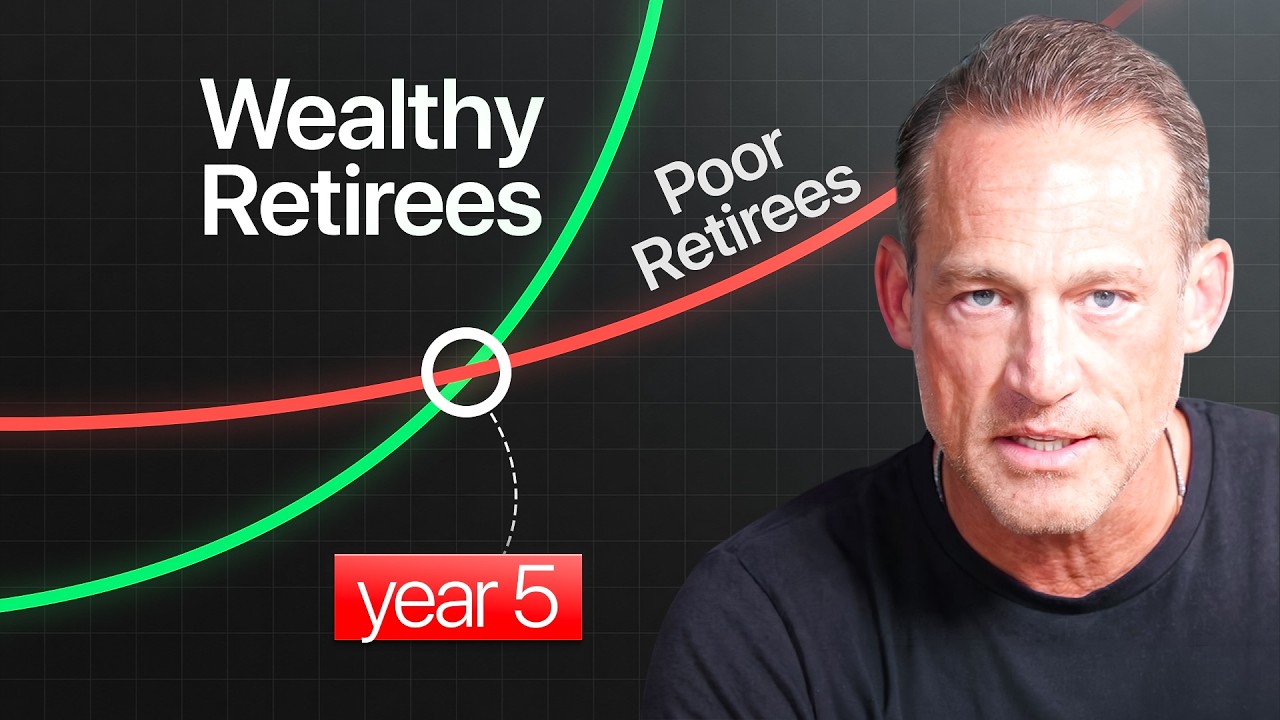
Mark Moss shows how to calculate the returns you actually need to hit your wealth target. A planning tool takes your current net worth and goal, then tells you the annual growth rate required to get there, like the 23% yearly returns needed to turn $625K into $5M in ten years.
Chapters
Let's imagine we have two people trying to build wealth, trying to get to their ultimate goal of living off of their assets in retirement one day. And they have the same amount of money, they have the same starting time, and they're trying to get to the same goal. The difference is that one person is using traditional financial methods, where they have a financial advisor putting them into traditional retirement accounts, and they are relying on, let's say, hoping and praying to get to their goal in time. But the question that they're probably asking is, Will they get to their goal? Have they actually measured that out? The other person, though, does something different. The other person builds a wealth operating system. The other person figures out exactly what their goal is and then what the return rate they need to get there, and then they engineer a plan to do that. That's what I want to show you today. I want to show you a way you can figure this out for yourself, and I'll show you a resource that you can use to help you get there so you can achieve your goals in the shortest amount of time. You ready? Let's go. Before I get in and show you the— show you this cool tool that I have that I'm going to show you how to use, again, like most people are sort of in this hope and run-pray scenario, right? Where every 2 weeks my paycheck comes in, a part of my paycheck goes out, and my financial advisor, my company 401, my pension, whatever, takes a chunk of that paycheck and puts it away. And I hope that one day that will be enough for me to retire off of, but I don't really know how much it is I need to retire off of. And I don't really know how much I'm putting away. And I don't know if that's going to work. The difference of how we should be doing it is we should be engineering the outcome that we want. We start with the end in mind. So what is the amount that I want or I need? Then what do I have now? And what is the run rate I need to get there? And then what do I need to do to achieve that? All right, let me walk you through this real quickly. So if you can see my screen here, so I have this tool that I'll show you how to get access to. It's completely free. Don't even have to give me your email address. Will your current path get you to an asset-funded freedom? Asset-funded freedom is, you know, where your assets continue to grow forever. I never spend them down and they pay for my life. So I have asset- funded freedom. So let's run this right here. So the first question is we need to know how much do I think I need or how much do I want and when do I think I need that? So you can put in whatever number you want here. It could be $2 million, $5 million, $10 million, $1 million, whatever the number you want. I'll just put it back to 5. Then what timeframe do I want this in? 20 years, 10 years, 5 years, 1 year, whatever. So put the amount of time that you have here. I'll go ahead and just put it at 10 years. Okay. Then I know my destination. I need $5 million in 10 years. So the first thing you need to know this. Now this goes into deeper questions I can't answer in this, in this video, but like, how much do I actually need? Is it $5 million? Is it $4 million? Is it $7 million? How much do I need? Well, I would start with how much do I need to live? And I would start with what does my ideal life look like? In order for me to live the life I want, not the one that my financial advisor tells me, your financial advisor tells you, yeah, but when you retire, your income goes down. Why? You want your quality of life to go down? What is the quality of life you want? What does your ideal life look like? And how much do you need to fund that? Do you take vacations? If so, how many? How long? Where do you go? How much do they cost? Do you go out to dinner ever? Once a week? Once a month? How often? How much do you spend? Do you get new cars? When? Every 3 years? What kind of car? So what does it cost me to live the life that I want in retirement? Number 1. Then how much assets do I need to support that lifestyle? I'm not going to go into all that math right here. And then of course, when do I want to achieve it? But hopefully you've done that math. You know the number. I want 5 million in 10 years to live my ideal life. Great. The next question you have to ask, it's sort of like Google Maps, by the way. Google Maps is not a guess. Google has done more research and spent more money and more time figuring out how the human psychology works, and they've created Google Maps a very specific way, and we use it the same way. First, where am I going? Then where am I at? And if you need help trying to figure out what number you need to figure out where you're going, let me know. We can talk about that. We can make another video on that. Leave in the comments down below. Okay. The next thing is, where's my starting point? I'll click that button here. So how much do I have? What do I have? What is my net asset value? So how much money do I have in my savings account? How much cash do I have? How much do I have in my retirement accounts, my 401s, my mutual funds, my IRAs, all those types of things? How much do I have that I'm investing on my own in my brokerage accounts, my investment accounts, things like that? Maybe I've put some into private equity or, you know, venture capital, or I own some, some equity in some businesses, whatever. And then I have a home, right? So, you know, I have a home, it's worth $1 million. I owe $800,000 on it. So I have $200,000 of home equity. Put that number there. And then I have some other productive assets, miscellaneous stuff, you know, whatever it is. I have some business equipment, whatever. Write that amount there. Okay. These are all, you just fill these things out and it gives me a total. I have $625,000 as my starting base. Great. So now I know just like Google Maps where I'm going and I know exactly where I'm at. Now the way the human brain works is with specificity, not I think I need about, that's like using Google Maps and going, take me somewhere cool. Take me somewhere fun. Doesn't know what fun or cool is, right? You have to put something very specific in there. And so we need specific numbers. So hopefully you take the time, get those numbers and put those in here. Okay. Now we need to know our current run rate. Just like Google Maps. If I know where I'm going and I know where I'm at, Google Maps gives me options. Do I want to go by plane, by train, by automobile? Do I want to ride a bike? Do I want to walk? How much time do I have to get there? How long will it take me to get there? If it's going to take me 5 hours to walk there, but I don't have 5 hours, then I probably need to take a train or get in a car. Okay, so now what is my estimate run rate? That means how fast are my assets growing? What is my compound annual growth rate or CAGR? Now, if you don't know what that is, hopefully you can figure it out. You should know that. But if you don't, you can pick a benchmark. So your typical 401 mutual fund mix. So if you have like a pension fund or a plan administrator or financial advisor, you might have just like a typical 401 mutual fund mix. You can just click this button here. If maybe your advisor probably put you in like a 60/40 portfolio, it's like the most common portfolio financial advisor will put you in there. That's 60% equities, 40% bonds, you can click that, get about 6% a year. Maybe you're a fan of like Ray Dalio and his all-weather portfolio. And so you want like 17 different, you know, uncorrelated assets, get about 5.5% per year, conservative diversified. Or, you know, if you're doing better than that, enter your own, and then you can just choose, you know, whatever rate of return you're getting here. Let's say that you're better than all of these. So we'll put it at 8%. Okay. Now we can see our path, just like Google Maps. We can see what out route options we have, show my current path. And this shows me right here at my current estimated growth rate of 8%, my starting base of $620,000. I'm projected to get to $1.3 million in 10 years. That's my trajectory. But, uh, shoot, my freedom target was $5 million and I'm only projected to get to $1.3. I'm off course. Hmm. Let me click on this, show my gap, and we can see it. I was projected $1.3. I wanted to get to $5 million. I have a gap of $3.7. I'm way off track. Okay, well, this is the better question. What return would I need to get to my goal? You see, most people don't think this way. They don't ask this question. I like to say that the quality of your life will come down to the quality of the questions that you ask. One of the most powerful questions that you can ever ask in your life is the question or the word, how? Not will I or can I, but how can I? It's not, will I get that return? It's how can I get the return? So before I can ask the question is I need to know what return rate would I need? Okay, well, based off of this right here, the required engineered rate would be 23% annualized. If my current path gets me to $1.3 million, but I want to get to $5 million, then as you can see, In order to achieve my goal, I'll need a 23% return rate. Now, before you go, that's impossible, I can't do that. The question is how, how could you do that? Now, I can tell you that a lot of people have been able to achieve that. Stanley Druckenmiller, the GOAT, managed to achieve way more than that for 30 years in a row. So it's not a question of is it physically possible or does physics prevent that from happening? Because people do. The better question to ask is how could I get to the 23%? Now maybe another question is, well, maybe I don't really need $5 million. Maybe I only need $3 million, $3.5 million. So I don't need 23%. I need 15%. But either way, you need to know the number because if you don't have a target, then you're going to hit it every single time. And if you aren't able to measure it, well, they say what gets measured gets managed. You can't manage to the number. So this is the first step to achieving your financial goals. Understanding where I'm trying to go, where I'm at, what my run rate is, and what I need that run rate to be to get there. So again, back to Google Maps. If I walk, I won't be able to get to my goal in time. But if I get on a bicycle, Well, I still won't, but if I get in a car, I can. But then in my car, it gives me 3 route options. And this route option, I won't make it in time. This one, I will have to take a toll road. And so only when you have this data can you make the appropriate moves in order to achieve your goal. Now, if you'd like to get access to this tool, as I said, it's free. You don't even need an email address. I'll put a link to it down below. We'll put a QR code right here on the screen if you want to access it, run your numbers, and then, you know, if you have any help, any more questions, drop in the comments down below. We'll make additional videos to help you out. That's what I got. If you want to go deeper into this and how you can accelerate this number on your own, you might want to watch this video right here, and I'll see you over there.










