Mark Moss reframes mortgage and home value worries as engineering problems. A 30-year mortgage isn't marked to market, so house price drops don't immediately hurt you; values historically recover in 5-10 years. For unaffordable payments, use positive-carry strategies: invest mortgage money in assets yielding more than your loan rate, like Strike at 11% against a 6-7% mortgage.
Chapters
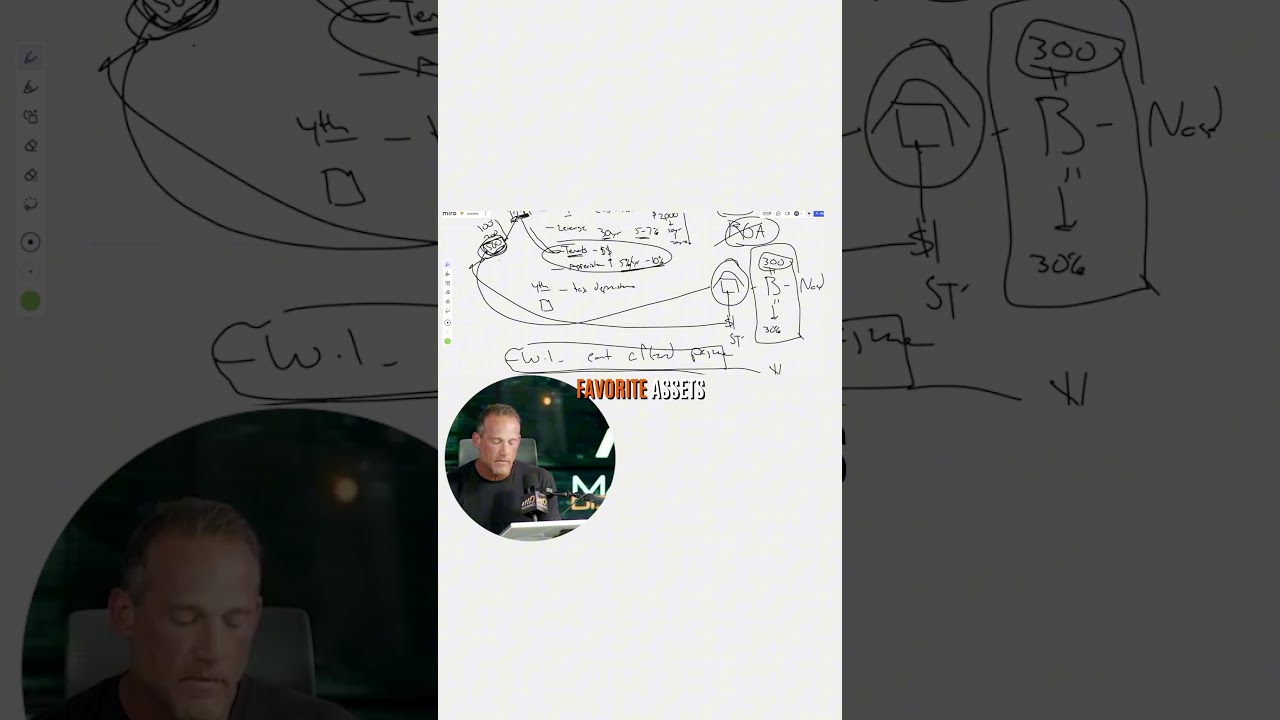
What if, what? What if I can't afford payment? What if my house drops? Well, let's think about that. So number 1, what if the house drops? Okay, well, first of all, if you bought the home with a long-term loan, your house is not being marked to market on a regular basis. So again, in America, we have a 30-year mortgage. If you're in another country, maybe it's only a 5-year mortgage or 10-year mortgage, but either way, that's still long-term debt. So if the house drops, how long will that recession last for? If you go back and study the past, you'll see that 5 years or 10 years is a pretty good time to see your house recover. So your house is not being marked to market. So, so what if it drops? It doesn't really affect things. Okay. What about if I can't afford the payments? Okay. Well, that's a good question to ask, but that's an engineering problem. That's an engineering question. Okay. So how much are the payments? Is it $500 a month? Is it $1,000 a month? Well, the main thing we want to do is we want to focus on putting money into something positive, a positive carry. All right. So we're not using this money out of our home equity to go on a vacation. We're not buying a depreciating asset like a, like a sports car. We're putting it into another productive asset. So for example, in this example, if I put it into another piece of real estate right here, hopefully this real estate would generate enough revenue to make the payment on the equity. I could put it into another asset. Let's say I put it into something like Strike, one of my favorite assets. Strike is going to pay me an 11% yield and I get the upside of it going up. So that 11% yield is going to make my payment because my payment here is only 6 or 7% and I get the upside. But Mark, I want to get the Bitcoin. How do I make the payment on Bitcoin? Okay, well, what you're going to probably do with Bitcoin, assuming you don't have any additional free capital, assuming you don't have the money to make the payment on it, what you could do is when you borrow, or when you buy some Bitcoin, you have, let's say, $300,000 that you borrowed. Maybe you only buy $200,000 of Bitcoin, and then $100,000 sits in what we call an interest reserve account. And this account is what makes the payments for me. So there's a bunch of ways we can do this. There's a bunch of ways we can attack this. I guess the point that I'm trying to make here is that all of these questions are good. All these questions are valid, But they're all engineering questions. They're all questions that we can understand, we can know, and then we can build risk mitigation strategies