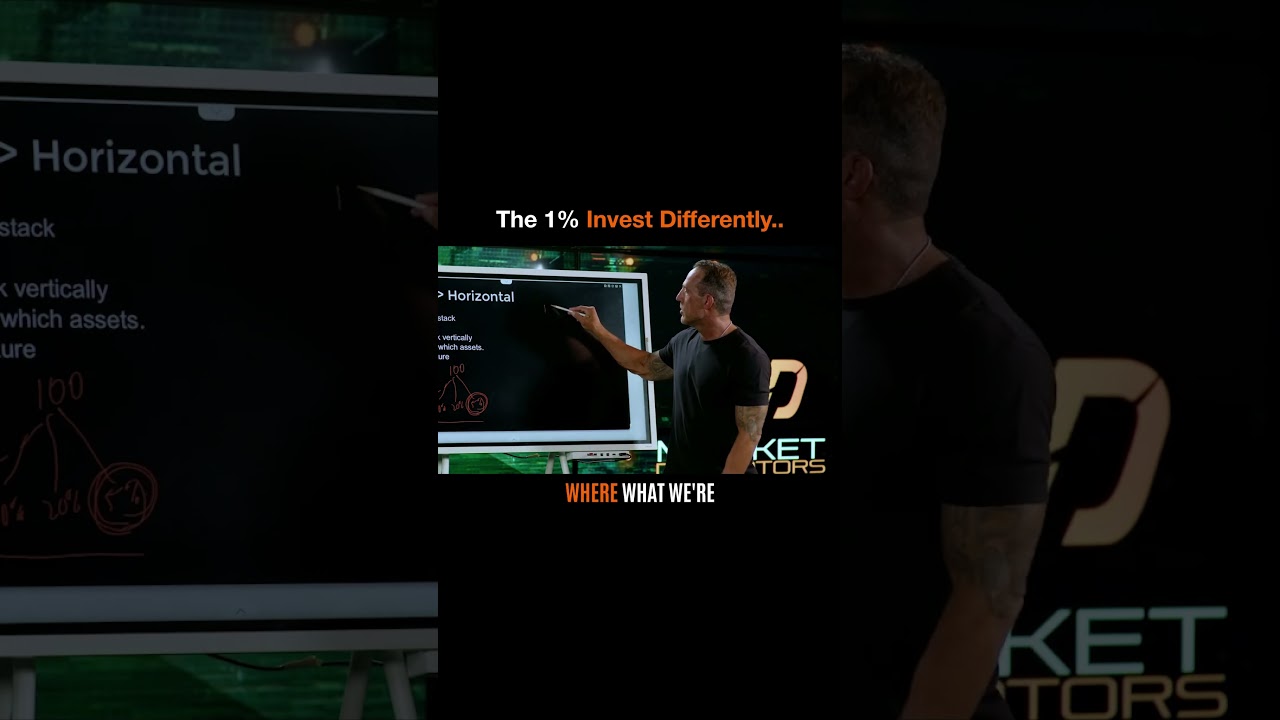
Mark Moss explains how wealthy investors deploy capital vertically, redeploying the same dollar repeatedly to multiply returns, rather than spreading money horizontally across diversified assets like most people do. The structure of your holdings, not which specific assets you pick, determines your outcomes.
Chapters
Most people— when I say most, I mean almost everybody except for the 1%. Let's call it the 99%. What they do is they invest horizontally. So they have their $100, and they're going to put their— they're going to put 30% into stocks, and they're going to put their 40% into bonds, and they're going to keep 20% of cash. And then maybe they'll take 5% of their portfolio, and they'll do some moonshots. So I'm going to get into the SpaceX IPO, which, by the way, is down like 50%. But I'm going to get into some of these moonshots right here. But even if those hit, even if you double this, it only increased this tiny little piece of your portfolio. And when you average out those returns, it barely moves your portfolio forward. The structure that we're talking about is different, where what we're doing is we're investing vertically. So now, $1 is being deployed over and over and over. So instead of averaging out, I get the benefit of multiplication. And so that's why it's not the asset, it's the structure in which you hold them. Just like real estate, break it down into the 4 parts and think about how you can apply it to every other asset you own. Because this is one of those things like once you see it, you can't unsee it.