How to Get Rich With Bitcoin (without getting lucky) - Mark Moss | EP 141
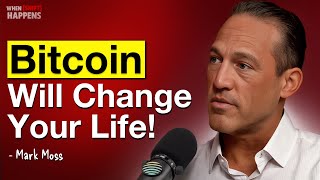
Mark Moss explains how to build wealth with Bitcoin through deliberate strategy rather than luck. He contrasts gambling with long-term investing, critiques fiat currency and inflation, and lays out his thesis for Bitcoin reaching million-plus valuations as adoption cycles play out.
Chapters
How can I get rich with bitcoin without getting lucky?
The best way to get rich today is gambling. Yolo. That's not the best way to get wealthy. It's a way to get lucky sometimes. 75% of lottery winners are bankrupt in five years. We have to build up the ability to hold it. And part of that you have to make it and lose it 100%. And if you just make it lucky, the one time.
Mark Moss, investor, entrepreneur and leading bitcoin commentator who breaks down finance on YouTube.
Podcasts and social media while pushing for decentralization and financial freedom.
You said once you buy some bitcoin, your life changes.
Yeah.
Why?
The fiat system is meant to turn us into consumers, but with bitcoin it's the opposite. Every bitcoin spend today or don't buy today, it'll be $15 million in 15 years. And that's why it changes our life. It starts to change our value system. It shows us what's important or not. And it will also change the world because in the world we have so much misallocation of capital. But when you start thinking about it in terms of bitcoin, it makes you much more selective and I think that's a good thing.
How quickly is my money in my bank account losing its value?
The money is losing value much faster than people think. It's the increase in the money supp applied. That's what's going on. The target is to steal only 2% of your wealth per year through inflation. If you think about the word inflation, it's like if I was going to blow up a balloon, I'm increasing the volume of air in that balloon. So inflation is increasing the volume of money in circulation.
The gentleman here was asking me yesterday, like, oh, Bitcoin is 100K or whatever, 120K, whatever 130K. Is it too late?
I think by 2060 it's.
Hi, everyone. This is the little bit that I know none of you like that can.
Help us make a huge difference for.
This show and we want to take it next. 71% of the people who regularly watch.
When Shift happens have not subscribed.
And so all I'd ask you if you want to make a huge difference is the following.
If you've seen this show before and you like it, help me help my.
Team hit the subscribe button and we'll.
Continue to build this show for you.
Thank you.
Do you bring this equipment or this is for the studio here.
See, this is all the studio equipment. I just bring all the Stickers and all this stuff there.
Yeah. Good job.
The gold card, everything.
What's the gold card? That's Solana.
It's a cast card. It's to spend your stable coins and it's actual real gold. You can melt it and I think it's. You can still get like 5k back.
Really?
Something like that.
Yeah, yeah.
It's just, I mean people do it through their Apple pay today, right? Obviously.
Yeah.
But yeah, just spend my stable coins all the time. I don't even use with cash anymore.
Yeah. Okay.
How about you?
I don't use any stable coins. I use dollar. Stable coins, not. I use dollars.
Okay. I mean you live in the US and you probably just stay there. So it works, right?
Yeah. So like, I mean I use my debit cards and credit cards everywhere, mostly. Credit cards everywhere.
Yeah.
And we use the dollar. So it's like a dollar stable coin. It's not, it's not a coin, it's a dollar. Right. So I don't need to go to a dollar. Stable coins. I have the dollar.
I mean for the businesses. I think it's amazing, these stable coins. If you have a business in crypto and probably all the businesses outside of crypto soon.
Yeah.
It's just the velocity is so crazy and it's so fast.
Well, I think the big thing with the stable coins for business is that businesses take either debit cards or credit cards and typically you're going to wait three to five days to get your money. So number one, the velocity to your point.
Right.
It takes three to five days to get the money. But number two, it's the fees. Right. So like I have mostly online, so I'm deemed like a high risk merchant. And so I'll Pay, you know, 4% of the transactions. Some high risk merchants might pay as much as 6 or 8% of the transactions. Right. So that's obviously super expensive. And then you have this potentially up to six months that the, that the customer could charge that back on you. So it's not actually final settlement until you're past that period. So three to five days settlement, you know, 4 to 8% fees and then really up to six months for final settlement. And stablecoins are like instant.
So you use stablecoins for that.
I don't, but that is coming. I think it's going to come really quick. Right. So like one of the biggest like online merchant processing companies is stripe.
Yeah, of course.
And they're working on putting their own stable coin in, for example, so we're not there yet most merchants, most people don't have stable coins. But that's where it's going for sure. I mean, think about if you do a million dollars a month, 4% or 6%, right to your bottom line. Yeah, yeah.
Especially if you pay U.S. taxes.
I mean, the taxes are the taxes, but that's another story.
Yeah, it's a bitcoin podcast, obviously, today, but we started by saying that we'll, I think, come out sooner or later to the realization that bitcoin is Bitcoin is bitcoin. Right. And you were mentioning.
Is one bitcoin.
Yeah. And you were mentioning that you run a newsletter. Actually, I was a subscriber many years ago of your.
Oh, really?
Newslet 2020. I think it was. I just. Scrap of 2019. I was watching your videos since 2019 and you were talking about this newsletter.
Yeah, right around 2019 is where I decided to walk away from crypto. And I went just bitcoin. And then the newsletter was like sort of like bitcoin and macro. So it was like a little bit more traditional. I think at the time, right around that transition, I think there was like some stable coins in there, but it was mostly just bitcoin and then like traditional assets as well, alternative assets. But yeah, that's. That's right around the point walked away from cryptocurrency.
Who are you?
So, Mark Moss. That's who I am a man of. Man of many words. I mean, currently, right now, I am the chief bitcoin strategist. If we're talking about money, I'm a father. I'm a husband.
Ah, that's.
That's a bit.
That's a better answer. That's more.
I'm a. I'm a. I'm a builder. I am a risk taker and that. That's who I am. The things that I do.
Right.
Are.
Are different, obviously. So we can go whichever direction you want to go with that you choose. I mean, it depends on which direction you want to take it. I mean, I've done many things. I'm doing. Doing many things currently right now, like I said. But yeah, so I'm, you know, I'm a person that has discovered what my core values are, and my goal is to maximize those core values in everything that I do. I'm certainly a creator, so I believe in creating more than we consume. So there is no retirement in my future because I'm doing what I want to do right now.
So there's no work right now.
I'm doing exactly what I Want to do? Yeah, the schedule gets a little ragged sometimes for sure. Right. But, I mean, I'm doing exactly what I want to do. I'm pushing myself every day.
Right.
We're learning, we're growing, we're trying new things. My. My three highest values are number one, freedom, above everything. And a lot of people think that they're also. That's like, one of their core values, but it's not for everybody. A lot of people want dependent, you know, dependability. A lot of people want consistency. A lot of people want to make sure that they get their rent paid, their paycheck in. Right. They want to know they can depend on people, and freedom's the opposite of that. Number two, my second highest value is growth. So I always have to be learning and trying something new. And so for me, I'm the guy who looks at a mountain, and I just have to go climb that mountain. I don't know why. I just have this. This draw to go climb the mountain. And when I say climb the mountain, I mean that both literally and figuratively. So it's like right now, I've just taken on the biggest mountain in my entire life, my Mount Everest. And we're launching. We just launched a publicly traded company in the uk, Satsuma. And this is the biggest mountain peak in my professional career. But I also mean it literally. So every April, I go to Alaska and I jump out of helicopters on the highest mountain peaks there possibly are and snowboard down them. Right. I lead dirt bike tours down in Mexico. We trav all over the world and do dirt bike tours, and I go climb the biggest mountains in the world on my dirt bike. So I mean it, both literally and figuratively. So growth above everything. I have to be growing, trying new things. And then my third highest value is helping others. And so for me, it's like, how do we put more value into the world? And so that's why I make YouTube videos. That's why I write newsletters. That's why I travel the world. Here we're in. Right now, we're in Asia at Bitcoin Asia. And I come. I did two. Two keynotes yesterday, and it's because I'm trying to share these lessons with the world and trying to help those people. So as long as I can live those core values with my family, with my friends, with my business life, my. My recreational life, then I'm happy, and I'm just trying to max out those areas.
You said when I see a mountain I climb, I don't know why. There's a common pattern across my guests. They have something that happened in their life that gave him a chip on the shoulder. If you think about it hard, or maybe you don't have to think hard about it, what happened in your life that could explain your huge fire in the belly?
Yeah. So I would a couple things. So like, I don't know if it necessarily has to be a chip on your shoulder. I think if you look at a lot of the greatest athletes and musicians, et cetera in the world, they had like a really rough childhood that they tried to escape from. And so they used sports or whatever to escape from that. And that wasn't me. I would say the probably. I think there's two main things and actually maybe, maybe there's a little chip on my shoulder. So I think first of all, I grew up in a squarely middle class family and my father was a contractor, so he's an entrepreneur. And I had to go work with my dad, dad since I was 10 years old. So we'd go bid the job, we get the materials, we do the job. And so basically I saw the model for me was how do we make money? It was never what job should I do? It was how do I make money? So that's how my brain works. How do I go make more money? So I've never the thought of going and getting a job, filling out an application, I've never done that. So that was the model. But being kind of middle class, my dad really strived to make sure that we could get into like private schools. So we were with a lot of wealthy kids in private schools, but we weren't wealthy. And so then it created that gap for me. And a lot of times they say middle class kids can do better because they've seen that world, but they didn't have it.
They have the hunger, of course, the.
Wealthy people, a lot of times they have that silver spoon. They don't really value what they have. And the poor people never saw it. Right. But I was around it. My friends had the brand new cars and I had the hooptie that could barely run. Right. So I think there was that. The other thing I would say though, actually there's two more things. So I believe that everything in life comes down to the law of compounding. Einstein called it the eighth wonder of the world. And those who know it receive it. Those who don't know it actually pay it. And so we typically think of that in financial terms, which obviously it's more. He meant it more in that terms. Compounding annual growth or whatever, but it's in every area of our life. And so what happens is, if I make a really good YouTube video, when someone sees my video, the next time, they're more likely to watch it. If I make a bad one, they're probably not gonna watch it. I mean, it compounds. Cause they're gonna tell their friends to watch it or tell their friends not to watch it, but it's in every area of life. And so what happens is, once we read a book or receive a new piece of information, and then we apply it, and we're like, whoa, I just improved my life. That was pretty cool. What if I go get a little bit more information? Oh, my gosh, I grew even more. Let me try it again. And what happens is people overlook the power of compounding because I think that growth happens linear. But compounding is where things go parabolic. And so what happens is when you start tweaking on your diet and you're like, oh my gosh, I have so much energy, I can think so clear. So, like, let me tweak on my diet even more, right? You start to manage your time better. Oh, my gosh, I optimize my schedule. Look how much more I get done. I do my daily self reflection. Oh, my gosh, look how clear I can think now. I can see things in the future. I optimize my relationships. Look how good my relationship is with my wife and my kid, right? And everything starts compounding. Now, after I've been doing this for decades, I think you start to see the benefit of all this optimization, all this growth. And I think that also just creates this massive desire to continue to optimize. And then finally, the last piece, I would say is sort of the story that I tell, which is my life story, is that early on, I just. How do we make money? I started investing into real estate right off the bat. I built a couple tech companies. I had some really big exits. I sold a high tech medical equipment company to a Fortune 500 company, the largest medical company in the world. I had a Internet business that I sold off. And in 2008, I tapped out. I sold a couple businesses, made a bunch of money, got married, had a kid, built this giant house overlooking the beach, elevator, six car garage. And then the 2008 great financial crash came. And in a blink of an eye, I had no money, I had no assets. I had a $2 million debt that I was in. And I had to figure out, like, where do I even move my family to? And so that's really what gave me the burning desire to go figure out the financial system. So I had done really well in business, but I wasn't paying attention to the global macroeconomic system. And getting wiped out, like that was obviously very difficult, as you can imagine. And at that point I basically vowed to my wife and vowed to myself, like, this is never going to happen again. I'm going to go figure this out. And so that sort of set me in a direction and back to the, you know, it's kind of in this, the fire in your belly, so to speak. I realized how quickly things can just turn.
Yeah.
And there is a little chip in my shoulder, on my shoulder, I suppose, this fire in my belly in a sense where like it can just change in an instant. And so, yeah, so maybe there's a little bit of fire in my belly to just like keep going, going, going because maybe it can, it can be taken away. I would say, though, it's probably more just because I just want to grow and I'm just like a growth maximalist.
Quick one. I want to thank our partners who help us make this show possible. I'd like to thank our friends at Jupiter, the most used decentralized trading platform on Solana and the largest DAO in the world. Thank you to our friends at Paradex. It's official perps Dex season and we've teamed up with Pardex, the leading perpetuals decentralized exchange with zero fees, deep liquidity and privacy. Their season two runs through the end of January, so you do not want to miss that one. In addition, their flagship NFT collection drops in Q4 this year and we're giving you a chance to get one. Supply is limited, so hurry up and use the link below to get on the waiting list. And last but not least, thank you to Mental, a pioneering on chain economy dedicated to revolutionizing the future of finance and blockchain scalability and that seamlessly bridges traditional finance and decentralized finance.
You said there's no retirement for me before. And it's completely part of that where you realize, I think we all have that moment in life where maybe you make a lot of money and then you just lose it all or you lose a lot and then you realize, oh, if I'm not paranoid all the time, that's what's gonna happen. Therefore there is no retirement. Right?
Yeah.
What people think is, oh, make that much money and then I'll just chill. Yeah, it's not gonna happen. If you do that, then you're probably gonna be surprised.
I Meant it though.
Right.
So like, I think for me it's, I think because growth is my second highest value.
Right.
So I always want to be growing. And I sort of look at the world as two different types of people. And so you have creators and you have consumers. And so what I, you know, the fiat monetary system has sort of brainwashed us, if you will. Most people are going through life in this pre programmed track where they've never really stopped to think about where they're going in the world or what the world's really about. And so, for example, everybody's on this track of go to school, get good grades, save for 30 years, hopefully. I retire one day and they have this dream of one day having enough savings where they can have a life of leisure and do nothing. So everybody's dreaming of this retirement one day. But what I ask people is like, why do you think all billionaires still work? They obviously have the money to not. Why did Warren Buffett just step down as chairman or CEO a few months ago at 93 years old? He's still, I believe the chairman. He just didn't move himself from the day to day. Why at 93 are you doing that? Because you're a creator. And so I think we, I think the world really has these two types of people. And creators create man. That's what we do. It's like the hunter's true purpose is not the kill. The hunter's true purpose is the hunt. It's the entire process that we're after.
Absolutely. That's what people don't understand. If you want to make it, you have to be the hunter. But if you're the hunter, you will never truly make it because you love the process, not the end. Right.
That's what we're after.
Absolutely.
Process.
Absolutely.
And so it's not, there's no dream of this life of leisure. As I said, I'm doing exactly what I want to do right now. You know, we just built this beautiful house in Cabo down in Mexico on the beach. And my kids are swimming in the pool, my wife's floating on the thing, and I'm chilling by the pool too. I'm, I'm loving it. But I have my laptop.
Right.
Because that's what I want to do.
Yeah. How should a 30 or 40 year old view the game of work, money and retirement in 2025?
Yeah.
So you talked about the creators and the kind of consumers. Right. But it is also something you introduced, which is kind of like the, the broken fiat system.
Yep.
And these People who want to retire. Not everyone is a, is a creator. Probably majority of people are not.
I want everybody to be okay. You know my worldview. I believe in God and I believe that every human was made in God's image and God's a creator. So I believe everyone's a creator. I think that the world wants you to be a consumer. But I believe that we should all be trying to push value into the world. We should all be trying to solve problems for other people. Imagine how much better the world would be if we all thought about solving other people's problems. And I think that's where the fulfillment comes from. But let's get back to the question. So I think the first thing that this 30 to 40 year old person should do is try to break free from this pre program track. And what does that mean? What that means is that, you know, I like to help people. I make YouTube videos, there's lots of YouTube videos on education and information and all these things. Obviously your podcast as well, bringing this information to people. And what happens is there's this entire movement of people that love this self help information, whether that's from diet or time management or how to invest or whatever it is. And they get this dopamine rush of like, I got this new information, I could improve my life, but they never do anything with it. And here's why. Because back to the pre programmed track, they're not actively trying to solve a problem. They don't even know the problem that they have. So what I Recommend for this 30 to 40 year old person is to break free from the track. And we do that by stopping and thinking, what do I want my life to look like? That's the question. You see, since we were kids and you almost baited me into it with the opening question, but since we were kids it was like, what do you want to be when you grow up? A fireman? A policeman? A doctor, A lawyer? Like that's me. I'm going to be that career, I'm going to be that person. And so then we work our whole life to be that, to have that career. And then we try to squeeze a little bit of life in here and there. I think we should do it the opposite. What do I want my life to look like? And when I say that, what do I mean is where would I be living? What kind of things would I be doing? Would I have, would I wake up with like family around me? Would I go to dinner at night with like friends? Do I have friends during the day? Would I be like learning and challenging myself or would I just be laying by the pool all day with drinks? Like what, what do I actually want my life to look like? Because most people have never thought through that. And then we want to reverse engineer that. So it's not about what should I do to make money, it's what do I want my life to look like first. And then what that does is it filters out all my potential options of what I should do for work or for money, where I should live, all these types of things. And so that 30 to 40 year old person should first do that. And yes, we'll get into the financial system and we're going to talk about the fiat monetary system. But what happens is none of this information about bitcoin or how to invest or how to retire or how to leverage my assets, none of that is clear. Clear. Until I've set my aim. So I do coaching. I have coaching programs where I do like small group masterminds. And I've had, I believe over 6,500 people have come through my coaching programs in like the last seven years. And I have them for different levels of people, but I do these like small grouping coaching programs for high net worth individuals. So these are people who have had big success, right? And we do these coaching programs and they're always like, mark, what should I do? Should I buy this business or sell this business? Should I buy this rental property or not? Should I get more bitcoin? And the reason why they can't make up their decision is they don't know where they're trying to go. They have no aim. Right? And so anyway, I think we should start there because then once I've set my aim, then I can start trying to figure out, okay, how do I get there? And then they can start going, oh, well, I should probably learn about the financial system. You see, that's going back to 2008 when the great financial crash happened and I got wiped out. I knew how to make money. That wasn't my problem. But I said, remember what I said? I said, I vowed to myself and my wife that this would never happen again. The problem that I set out to solve was to go figure out the financial system. So it never happened to me. That was the problem I was after. Right? So I quickly found out the reason why the market crashed was the fiat monetary system that we have. Then I quickly realized, oh, it's endless money printing. It's endless debasement. Huh? Okay. So then it builds up leverage in the system. Okay? The System got too over levered. Okay. The banks are weak. Okay, well what's the solution to that problem? Well, okay, that'd be sound money. Okay, look at gold. Okay, look at the history of gold. Okay, so the, okay, then I became a gold bug. So I found the problem, then I was able to find the solution. Then when, when I got into Bitcoin around 2015, Bitcoin was an obvious solution for me. I didn't need this whole like educational gap in this orange peeling because I already knew what the problem was. And so what happens is nobody's going to figure this out until first, what am I trying to do?
Solve for you don't own anything that you think you do.
Yeah, yeah. In the debt based monetary system that we're in, we don't own anything. I mean the goal is to not own anything. And when I say the goal, the powers that be want us to own nothing. Own nothing. Right? Be happy, own nothing. And so in this debt based monetary system, right, everything is basically owed to us. And so for example, the money in the bank, your money in your bank is not your money, not legally. So in this debt based system, legally, that money and your money in your bank, you think it's yours is owed to you. And that's, some people may argue that semantics, which it sort of is, but legally it's not. And so if the bank were to go under like in Cyprus, then that money belongs to them. The stocks that you own, Tesla, Apple, Google in your brokerage account, you don't actually own those stocks, they're owed to you by your broker. Right. And so these are big differences. Bitcoin is that first asset that we can actually have as a bear instrument against. I thought it was probably the number one attack vector to take away that right to self custody Bitcoin, because again, they don't want you to own anything.
Do you own the real estate that you buy?
Well, no, you're technically renting it from the landowner. Right? So you can own the, the building, you can own the building that's on the, on the real estate. But ultimately, you know, wherever you're at in the world, you're renting from that landowner. Now certainly in different areas, it's a little bit different. So for example, when I say renting from the landowner, you're paying property in the United States, where I'm at in California, it's about little over 1% of the value of the home is what you pay to the landowner. Right. The county. You know, on a two million dollar home, you're at 20 grand, about $22,000 a year. So even if you pay the house off free and clear, you owe 22,000 a year just, just to stay there. But in, in Mexico, where I have my beach house, it's worth much more than that. And it's like I don't even know 7, 800 bucks a year. So there's different rates and I don't know every country, right. I don't know what it is here, but, but it's always pretty much the same. You're gonna have to pay that quick one.
I want to thank our partners who help us make this show possible.
Thank you treasurer.
My favorite Cold wallet to store my crypto and make sure I sleep well at night. If you want to order a Treasure wallet and sleep well at night too, you can use my promo code WSH10 to get a 10% discount. Big thank you to Bitwise Asset Management for backing today's conversation. Bitwise is a crypto specialist asset manager with more than $15 billion in client assets across 30 plus crypto solutions, including ETFs, index funds, alpha Strategies, Staking and more. However you like to invest in crypto, Bitwise has something for you. Thank you to our friends at SUI for supporting this show. SUI is a scalable layer one blockchain that's fast, secure and affordable, built by previous Facebook developers and that delivers the benefits of Web3 with the ease of Web2. To support this show, please check the sponsor links in the description down below.
You're talking about the taxes but or.
Whatever you want to call it at.
Some point it might happen. It happened already depending on the country. But even in first kind of first world countries, right. Developed countries, it could happen that we will happen in the next couple of years. Property rights are at risk in general and therefore your house that you bought and on which you pay taxes might not be yours anymore. It's always a risk.
It's sort of what we'd call like in the bitcoin or crypto space, like counterparty risk. And that kind of even goes back to the stock in your account or the money in your account. So there's the counterparty. You could say, you know, in the real estate example that the county, the government is the counterparty in that. I don't think that's a big, I mean obviously depends on which country you're in in in America. Even in Mexico, where Mexico did nationalize all the property, I don't know, 150 years ago they did take all the land from Everybody. And then they redistributed. I don't see that as a big risk, but it, but it's something that you should be, you know, concerned about or think about at least.
Do you still invest in real estate?
I'm not really investing in real estate that much right now anymore. And let me, let me rephrase that. So a couple, couple things. Number one, I think I said earlier, I started my career sort of investing in real estate. I like real estate. If I won a billion dollars in the lottery tonight, I would probably go develop some giant pieces of marinas and golf courses in Mexico. That's probably what I would do. Not because it's the highest and best use of my time or highest return on my money, but that's just what I like. It's like tangible. You feel it. I love, as a creator, I love seeing a piece of land and then grow this development. So, so, so I like it from that perspective. I love buying real estate and seeing it come to life. I owned over 200 rental properties at once at one point. But I sold all my rental properties. I think I sold the last one in maybe 2021. So I sold all my rental properties because they weren't giving me enough return for the amount of work effort and risk I was taking. So I was better off taking all of that equity and putting it into bitcoin. So Bitcoin since 2021 has been compounding about 60% per year. Real estate is going to do 5 to 10.
And there's this thing that we call hurdle rate, right? Which is inflation plus money printing.
Right.
Which is about 12, 15%, where basically pretty much no asset class beats. So you would own real estate. People think, ah, I have real estate. I'm making money. No, you're not. Oh, I own S and P 500. I make money. No, you're not. Right?
Yeah.
And so at some point you start to understand. I think it was Wences Casares, the Silicon Valley patient number one in Bitcoin, who basically was telling, he was telling Raupal. I mean, actually Raul on this podcast told me that he was like Wences told me that he put whatever two or three million dollars in Bitcoin when it was like $3. And then ever since every investment decision he wants to make, he puts it versus bitcoin and realizes is it's never as good. So he doesn't do this investment decision.
Yeah, right.
And so then you get to the point where, which is my question for you. Why would you own anything else than Bitcoin Okay. A house, because you want to have your house for your family or a vacation home, but why would you own anything else?
Yeah, so the first thing I would say to this, it's a great question and it's a question that we get asked all the time. But there's levels to this game, right? So Michael Saylor, the biggest bitcoin maximalist that there is. His, his goal in life is to acquire as much bitcoin as he possibly can. I've been to his house, it's massive. He has three boats. Not one, three boats out there. Why does he own boats? Why does he own. And he owns multiple houses around the. Like, why does he own all these houses? Why does he own all these boats? So there's levels to this game. So I think certainly, you know, in the beginning, you're starting out and you're trying to really sort of think of it like Maslow's hierarchy of needs, right? Like, I need to take care of my base level of needs, so I need to build up enough wealth so I can start to secure my future. And so in the beginning, it's like yolo all in on bitcoin. Like, let's go. And you know, some people want to even go even more risky and they want to get into the memes or crypto because, like, I don't have much money. This is my shot. Like, let's just go and see what I can do. So that's sort of where you're at in the beginning. In the bitcoin space, there's like memes of like, sell your chairs, just put it all into bitcoin. But as you make more money, then you start wanting other things. And so there's levels to this game, right? And so eventually you start to realize that we don't want money. None of us want money. Humans don't want money. What we want are the things that money buys us. That's real wealth. That's the goods and services. So money is just a thing that we use to get the things that we want. It's the thing that we use to store our wealth, our energy, until we're ready to deploy it. And so we want to build that bitcoin up and to your point, want to maximize that return. But eventually we want other things. So for example, I told you I just built this beach house in Mexico. In Mexico, it's not like America. So we don't get like 30 year debt. We have to pay cash. And it was, it was expensive. I spent a lot of a Lot of cash on that, right? And a lot of people are like, mark, why would you do that? Don't you know that in five years that Bitcoin's going to be worth 10x and look how much bitcoin you have. And I said, so what? One day I can buy a beach house so one day I can get the. No, I want the beach house. I have my kids. I want my kids to grow up in the beach house. The time that we spend as a family in that beach house, the memories that we create, are worth more than any amount of money I can make. But I'm at a point in my life where I can make that decision. I wasn't always there. So if we rewind the clock back to 2008, I told you I'd sold two businesses. I had built the big. The big beach house as well. I had all the cars, the whole thing, and I had to start over. So for years, for. I think it was probably at least six or seven years, I have to add it up. But in that range, I didn't buy another house because all my money was going back into investments. It was just reinvesting. Reinvest and reinvested. I'm like, why would I take this money and put a down payment on a house? And then. And then to get the same payment, I could just rent for. I'm just gonna rent. And so I did. And so we built and we built. But I finally got my money. I got my capital base up enough where I'm like, okay, I can buy a house now. And the house is buying that house for my family. The home. The home was a terrible financial decision, but it wasn't a financial decision. You see what I'm saying? So it depends on where you're at. Certainly I sacrificed. I built my capital stack, and a lot of people need to do that. But eventually we realized it's not the money that we want, it's the relationships, it's the memories, it's the experiences. And so I want other things. And then we'll get those things.
You said once you buy some bitcoin, your life changes.
Yeah.
Why?
Well, bitcoin changes your life for a bunch of reasons, but I think ultimately it starts to shift your entire mindset to what we call a, you know, let's just call it long term time preference.
Right.
A low time preference. And so what. What happens is when you start to realize that fee, the fiat system is meant to turn us into consumers. Consume. Consume. One of the reasons why they have inflation is they want people to spend money. The government thinks they have to stimulate people to spend money. The reality is people should be stimulated to save. They don't need to stimulate people to buy, but they want to stimulate the economy. You talked about the velocity, I think, earlier about the money. And so, like in. During the COVID pandemic, everybody started hunkering down and saving money. That was terrible. So they injected trillions of dollars of stimulus to get people to start spending again. So humans just want to spend. And part of that is sort of ingrained into us being the consumers, but also because our money's losing value so fast. And once we get bitcoin, we realize that, oh, my money can actually buy me more goods and services in the future. And so if it can buy me more goods and services in the future, then maybe I should wait. You see, on a fiat system, my money's going to buy me less, so I should probably spend it as quick as I can, because if I wait, it's going to cost me more money in the future. But with bitcoin, it's the opposite, where it's like, oh, it'll be cheaper for me in the future. Maybe I could just wait. You talked about the hurdle rate. So the hurdle rate is that if bitcoin is going up at 50 or 60% per year, then why would I buy anything else that's going to cost me that? So what happens is it changes the cost of capital. So then it's like, do I really need that vacation? Do I really need that new house? Should I get that new car? Because I could just hold it in bitcoin and that bitcoin, whatever. It's 115,000 a day. I think it'll be a million dollars in five years from now. That's a 10x. If I just wait five years, it'll be a million dol. Bitcoin I saved or spend today or don't buy today would be a million dollars. It'll be $15 million in 15 years. Am I willing to spend that 100,000 a day? That could be 15 million in 15 years. Now, if it's the beach house for my kids, hell yeah, I am. I'll trade all that money in the world for that experience with my kids. Yes, I will. But if it's that vacation.
Because you have a lot of money already.
Because I've. Because, because I've gotten it, of course. But, but, but I. But. But what happens is we start to look at things through that lens, and it's like, do I really need that. And so what? We don't want the money, we want the things that buys us. But it helps us make better decisions. Right? And that's why it changes our life. It starts to show us, it changes our value system. It shows us what's important or not. And it'll also change the world because in the world we have so much misallocation of capital, so much mal investment. We're investing into all types of things that are never going to work. We're spending money on things that we probably shouldn't be working on, money chasing problems that don't need to be solved. But when you start thinking about it in terms of bitcoin, it makes you much more selective and I think that's a good thing.
You said my money is losing value very quickly.
Yeah.
How quickly is my money in my bank account losing its value?
Yeah, a lot faster than people think. The money is losing value much faster than people think. The government reports what the CPI or consumer price inflation is for us. And so basically they take a basket of goods, they track that basket it over time and they tell you how fast prices are going up. But that's not what's actually happening. That's the result of what's happened. Right. So it's the increase in the money supply, that's what's going on. And so rather than the CPI in the US it's 2 to 3%. The target's 2%. The target is to steal only 2% of your wealth per year through inflation. Jerome Powell, head of the Federal Reserve, just had their meeting and they basically said as much that they're going to abandon that 2% target. Target, I mean like let it run hot. But the real rate of inflation or debasement or the, the amount that you're losing in your bank account is really the rate of the increase in the money supply. So if you think about actually the word inflation, it's like if I was going to blow up a balloon, I'm going to inflate a balloon, I'm increasing the volume of air in that balloon. So inflation is increasing the volume of, of money in circulation. And so what happens is when they increase the money supply, prices changing as the result of that. So we're trying to track cpi, we're looking at the result, but we want to understand that. So what is that? So over the last five years globally the M2 money supply has gone up about 8% a year. In the US it's gone up a little bit faster. So it's somewhere in the 8 to 10% per year range is the amount that you're being debased or you're losing that purchasing power. Then you could add in say a 2% risk premium. So now you're 10, 12%, you know, somewhere in that range. But that's the rate that you're losing. That's back to the hurdle rate. That's your hurdle rate. So now if I'm going to lose 10% per year, then everything I do has to go make me more than 10% a year. And so I think once people realize that it starts to again, sort of like almost as I said earlier, once you, once you set your sight on what you want, it starts making your path much more clear. Once I realize that I need to beat 10% inflation, it starts making all my business decisions and my investments decisions much more clear. Because now you have this basket of things that you can invest into. If you're rad, Ali is going to tell you 17 things in your portfolio. Well, of those 17 things, 15 are not going to beat that number. So let me just go focus on these two things. And that's, that's, that's NASDAQ, that's tech, and that's Bitcoin.
And these 10 to 12% compound every year. That's another thing.
Right.
Even when you said before our goal is only to steal 2% a year.
Yeah.
Which sounds like it's not that bad. Just 2% a year compounded over a few years is a lot.
Yeah.
10 to 15% compounded over a couple of years is 40, 50%. It's a lot.
It's a lot. Yeah. That's back to the law of compounding. And what happens is a lot of times we overlook again. Right. We think of things linear and forget that it's compounding. And so, you know, some of the things that I also help on some of these coaching programs is help people think about wealth a little bit differently. And so if we could just keep 10% more of our money and invest that over 20 years, that could be life changing money. But it's like, ah, that's like 6,7000. It's not worth my time. You know, I'm focused on making money. But it's like again, you're overlooking the power of that six or seven thousand that you save and keep and can compound and how that could grow.
There's a question that every new person in bitcoin has themselves. How can I get rich with bitcoin without getting lucky and without falling from all the scams?
The get rich quick mentality, I think it's a symptom of the fiat monetary system. It's a symptom of the, the debt based system that's constantly stealing your wealth. Wealth and real wages don't keep up with the rate of cost increasing. And so what happens is then humans have to try to get more extreme, move further out of the risk curve to try to offset that. Vladimir Lenin told John Maynard Keynes, the father of the Keynesian economic system that we have, that the best way to destroy capitalism is to debouch the currency. And through a series of inflation, they can arbitrarily steal wealth. And they can continue to steal wealth until all relationship of that is lost. And the best way to get rich will be gambling and theft.
That's where we're at now.
And look at where we're at right now. Right. And so the best way to get rich today is gambling. Yolo. But let me put it all into, into a, into a meme, let me go to Vegas.
The best perceived way to get rich today.
The best. The best perceived way. Yes, thanks for the clarification. Or theft. And unfortunately we have a lot of theft, whether that's fraud on Wall street or that's, you know, theft, theft on the street. And so I think we're there, but I think that's not the best way to get wealthy. It's a way to get lucky sometimes. But the fact is that 75% of lottery winners end up bankrupt in less than five years. And, and so that proves to us that getting lucky, making that, making that big, the big gamble and, and winning that is not the way to wealth. 75% of lottery winners are bankrupt in five years. You see it all the time, musicians and pro athletes, 30, 40, 50, $100 million. And they end up bankrupt. And so you could certainly hit it lucky on a, on a meme stock or a crypto token or something like that, but the chance of you holding on to that is very slim. And in a lot of cases it destroys their life because we have to build up the muscles, we have to build up the ability to hold it. And part of that, unfortunately. Nobody wants to hear this. Part of it, unfortunately, is that you have to make it and lose it 100%. And you have to make it and lose it. And you have to make it and lose it. So you value it. So you built up the muscle. You talked about it earlier. It's like, I have to lose it. So I value it. And then I'm like, okay, I'm not going to do that again. And if you just make it lucky the one time you're going to lose it and you don't know how to make it back.
This is so underrated. You have to build the muscle. Absolutely. And I just look at my own life, it's the same. You just, you're not ready if it comes to too quick, you're not ready for it.
Yeah.
And even if you think that you understood investing principle and that stuff first, if it came too quick, there's probably a reason why it came too quick. Right.
Yeah.
And so that's the reason why you want to lose it also. And 100% you have to build the muscle. And, and this is so underrated. And it's so true.
Yeah.
And that's what people don't want to hear or don't want to. Basically. There's no get rich quick scheme. And crypto, Crypto or bitcoin in this case, case is a get rich slow scheme, get rich quick scheme.
I want to just challenge that though, for a second. Right. It's a get rich slow scheme, if you will. The stock market has been the best way to build wealth in the world. Obviously, the best way to build wealth is through a business. That's the best way to build wealth. And that goes back to what I said, being a creator, solving problems and pushing value in the world, that's the best way to get rich. All the wealthiest people in the world, Elon Musk, Jeff Bezos, Bill Gates, they've all built business, businesses that solve problems. That's the best way to get wealthy. But then we either put it into real estate or we put it in the stock market. So that's where wealth is made or multiplied after you've made it. So the real estate market has made more wealthy people in the world. And Also S&P 500, if you look at the return rate of those over 30 year period, they're 7, 8%. 7, 8%. So the wealthiest people in the world, the Warren Buffetts, the Ray Dalios of the world, have gotten wealthy in those markets, making Those types of returns 7, 70% now with Bitcoin per year and per year.
And, and I think Warren Buffett had like a million dollar at like 31 or 32. So it shows that with this you can still become multi billionaire.
Yeah.
Throughout whatever, 60 years. Right.
But I do want to point out with Buffett and Dalio, so what happens is I see a lot of people that come into this space and they want to quit their job and be A full time investor. And I'm going to get wealthy being a full time investor because look at Warren Buffett and look at Ray Dalio. But I want to remind people that Warren Buffett didn't just build his wealth investing, he built a business. The business is called Berkshire Hathaway. And he goes to work. Well, he did go to work there every single day. Ray Dalio didn't get wealthy investing. He created a business called Bridgewater Capital and he went to work at that company every single day. So it wasn't just that they're investors, they built a business. So we need both. But back to the point that they built us wealth in these markets. Real estate and S&P 500, but that are doing 7, 8% per year. Bitcoin in the last five years has done 85% per year. In the last three years. It's been averaging 60% a year. So when we go like, it's a way to build wealth slowly. Like what? Slowly. 65% a year when the markets are doing 8 completely.
But slowly. In this hyper gambling kind of mindset where they want everything in three weeks or three days.
Right. But people need to, need to, need to chill on that. People need to chill on that. So they, they've lost all perspective in life and they, they have no relation or no education or foundation of what wealth is and how wealth is built. Because I, of course, you're right. And I see people all the time. Bitcoin's too slow. I need something that can make money faster. I need to triple my money in, in 30 days.
And it's like you said, 10x in the next, you know, 500k to a million. 10x in the next five years.
Years.
Most people would come here and say, no way, 10x. No, they would say, they would say, I don't want a 10X. Right. It's a classic.
They want 100X.
Yeah, it's a classic. I didn't want a 3 to 5X, so I went for the 99 minus 99% instead. Yeah, it's this hypergamy mentality and it's really. Yeah, it's sad. Some call it financial death wish.
Yeah. And you know what, Michael Saylor said that in everyone's portfolio there's typically a little bit of room for risk. So kind of going back to that hierarchy of needs and the levels to the game, like get your foundation built, secure some capital. And if you want to gamble with some of the money, like go for it, but you compartmentalize it. Right. You take A small percentage of that. And what wealthy investors and professional investors understand is that we always think of things in terms of risk adjusted return returns. So things that are more risky have a higher return profile and we put less amount of capital in there. And things that are less risky and have a lower return profile, we put more money. So we don't put the same amount of money evenly across the board. We allocate it differently. And so if you want to take those 99, you know, 99, 99, or let's call them moonshots, if you want to take those moonshots, do it. If that's fun for you, do it. But just do it with a small percentage of your portfolio.
You said, I think bitcoin will be worth a million dollar by 20, 30. So in five years. Why?
Yeah. So there's a few ways that we can look at bitcoin. And what's really interesting about bitcoin is that almost everybody thinks that it's too late, it's too expensive. I missed it at $0.10 or $10, $10,000. So it's too late. But the, but the interesting thing with that is that people buy stocks based off of a future value value. So you're going to buy Tesla today at a, what is it, 80 times PE ratio. So that means it's going to take 80 years of profits to get the price that you're paying today. 80 years, you're going to buy. The Mag 7 is in around a 30 to 50 times PE ratio. Right. So I'm buying these companies based off of a value I think it'll be worth in the future. But for some reason you're looking at bitcoin in the past. So that, that makes no sense to me. So what we want to do with bitcoin is just like any other stock. What do we think it'll be worth in the future? Well, how do we back into that number? So stocks have earnings. And let's just think about the absurdity of this, because bitcoin's going to change all of this. The absurdity of this. So I'm going to buy this Mag 7 company based off what I think their earnings will be in 30, 40, 50 years. Their earnings. Not their capital base, not their assets. Assets. Their earnings. Okay, well, tech changes really fast. How do I know they'll be earning that in 30 years? Number one. So if we think about where will bitcoin be in five years, 10 years, 20 years? Well, we can look at it from a couple different angles. So there's a Couple ways that I look at this, so I can run you through some math. One way I look at it is sort of like through a venture capital lens. So I've been deploying venture capital for over a decade, five years, in just the Bitcoin space alone, to the Bitcoin Opportunity Fund. And when we're investing money into a venture capital, let's use an example most people would understand, like, let's say Uber. So whatever it was, now, 15 years ago in Silicon Valley, we sit down, I'm like, hey, I have this app, and you can call a ride anywhere in the world. And you're like, oh, like a cab? I'm like, yeah, it's like a cab, but it's better. It's an app and it's seamless and it takes all your payment in there. And you can get black cars and whatever. And you're like, okay, I guess. How much is it worth? I'm like 100 million. Like 100 million. Like, where'd you get that number? So what we would do is we'd say, well, the taxi industry is this big and the limo industry is this big, and the vans are this big. And if I could get 5% of each of those markets, then I would get this valuation. So Uber did that, right? Airbnb did that, right? They took a little bit of market share from hotels. Hotels are still there today, obviously, but they took a little bit. Uber and Airbnb both captured 10% of their markets in less than 10 years. Years, right. So that's how venture capital looks at that. So what we would do with Bitcoin through that lens is we'd say, okay, well, what markets is Bitcoin disrupting? Well, it's not. It's not competing against MasterCard or Visa. It kind of is, but it's not. It's really competing against value itself. So where do we store our value? Where do we store our wealth? Certainly we spend it, but at some point, the creators get more than they consume and they save it. And so typically, those are in what we call store value assets. And that'd be real estate, that'd be stocks, that'd be bonds, that'd be gold, that'd be collectibles, fine art, things like that. That basket of store value assets in globally is about 1000 trillion, $1,000,000,000 today. Now, just to put this into some terms people can understand, to understand the magnitude of this, in 2010, that was 300 trillion. Then it was about 800 trillion. In 2020, it's about a thousand trillion today. By 2030, that should be about 1.6 quadrant. How do. Where do we come up with that number? Well, we can look at, again, nobody wants money, so what happens is we want the goods and services. So what we have is the goods and services of the world are wealth, and money is what we use to get that. So it's all the goods and services of the world, all the wealth of the world, divided by all the money in the world. And as they increase the money, the asset price of the value goes up. So what we do is we look at the rate of the monetary increase. We talked about about 10% per year. Now in the United States, the Congressional budget office, the CBO, projects out for the next 30 years through 2054 what the debt will be, what the deficit will be, what the annual budget will be. So we know for the next 30 years what they project, and they're going to undershoot the target. But let's just go with the numbers that they project so we can see how much money they expect to inject in the system over the next five years. And then we can extrapolate that number to how much that store value. Assets should rise that basket. So I think it'll be worth about 1.6 quadrants. Brilliant. So how fast is gold going up in that? How fast is the bond market going? How fast are stocks going? Each one of them has a little bit of a different sensitivity to the global liquidity. So bitcoin is the most sensitive asset. It's going up faster than other assets in that basket because It's a limited supply, 21 million, etc. I believe that Bitcoin will capture 1.25% of that basket by 2030. 31.25% by 2030. Now, that's 20 years after Bitcoin came out, 1% of the basket. Uber and Airbnb got 10% in less than 10 years. So I think that number is extremely conservative. We've also looked at that. So bitcoin, again, as I said in the last three years, has been going about 60% a year. I think it'll continue the rest of the decade at about 50%. And so that puts it. If we capture the 1.25% of the basket, that puts it at 21 million million, which puts it on par with gold. So it'll be about the same size as gold at that point and divided by 21 million Bitcoin, that's. That's $1 million per Bitcoin. And then we can continue to extrapolate that number into 2030.
Why does BTC stop at 1 million? It's the next big kind of round number, but there's no reason for it to stop there if it doesn't. Everything we talked about is true, which. Yeah, it is true.
So the cbo projects through 2054. Hmm. So I've run the numbers all the way to 2050.
And tell me, tell me about store value.
Basket goes from 1.6 in 2030. So 1.6. I think it's 3.8 in 2040. And then it's like 8. Around 8 quadrillion by 2050. It's been a while since I looked at those numbers, but it's somewhere. So I think it's. Yeah. Oh, it's, yeah, around 3.5 in 2040 and about 8, 8 quadrillion in 2050, based off of what the CBO tells us. And again, I think it'll probably be more than that. So looking again at the rate, the sensitivity of each asset in that basket, the rate of growth of that basket, and how much bitcoin can capture by 2040, at the rate that bitcoin's going up, the CAGR will continue, probably slowing down. I think it'll accelerate a little bit, maybe slow down, maybe it averages in the next decade around 30%. And it would capture about 8% of the basket by 2040. 8%. So now we're 30 years in, it's only gotten 8% of the basket. Again, Uber Airbnb got 10%. 10 years. That would put it at $14 million per Bitcoin. By 2050, it would get, I believe it was up to about 20% of that basket. And that puts it at $45 million per Bitcoin.
Sounds crazy, but, you know, $45 million per Bitcoin. But actually, I had David Bailey the other day on this podcast, and he said 50 to $100 million per bitcoin is actually possible. Well, it's not once in the future, right?
It's not just possible. It' I think it's. Well, yeah, it's certainly possible. I think that's where it's going. I think, I think it.
The gentleman here was asking me yesterday, like, oh, Bitcoin is 100k, whatever, 120k, whatever, 130k. Is it too late?
I. I think. I think by 2060, it's. I think, what happens? So I do a lot of work on cycles, and so we can look at all four year, eight year and 40 year, 50 year, 200 year cycles. And we have these technological revolutions that happen every 50 years. And so we're on the sixth one right now. And what happens is when something happens two times or three times or four times, it's more happen to like likely to happen the fifth time, the sixth time. So now we're on the sixth time and they have this very dependable framework or this blueprint that they follow. And so Bitcoin falls into this technological revolution cycle, Bitcoin and AI together. And there's four distinct phases that it goes through in this. And so we can look at like an S curve to see the diffusion of innovation within that cycle. And so we're in this parabolic part of the S curve, but we can start to look at where it starts to get full scale adoption. And that should be somewhere around 2050. And we can look at also there's the evolution of money. So for thousands of years money has evolved. So typically it starts as a collectible. So it's like a feather, a rock, a seashell. And that collectible then becomes a store of value if enough people believe in it. So a lot of wealthy people store their value in collectible cars and art and things like that. But only if it has the right attributes. It could become a money money. If it's portable, durable, divisible, recognizable, fungible, it could become a form of money. And then if enough people use it, it becomes a store value or a unit account. That's the final phase. So we overlay this into this 50 year chart with the S curve and this four phase process. And I believe Bitcoin could become the unit of account of the world by 2050. And there's other reasons. We can look at this, but from a geopolitical lens we can understand that the dollar has been losing, losing its, its value, 99% of value in the last 110 years. And the world has been trying to de dollarize for a long time. And really what really pushed the world over the edge was when sort of the US and NATO decided to seize Russia's bank accounts when they invaded Ukraine a couple years ago. So there's three superpowers in the world, nuclear weapons, Russia being one of them, and they had their money seized. So every nation in the world was basically put on notice, like if it can happen to them, you stand no chance. And so you hear about the BRICS nations trying to start their own currency. You hear about with the BIS to create their own CBDC with this project Enbridge. And everyone's trying to figure out this Solution to get out of the dollar. And now we have this tariff war going on kind of a thing. And so all these nations are trying to figure out how do we work in this new world where we can't really trust each other, we can't trust the US dollar fiat system. We have to find another way. And really the only way that I think the world can continue is to find some sort of a neutral reserve asset. We have to go back to this neutral reserve asset like gold was. So under the Bretton woods Agreement in 1944, the world agree have a gold standard, the gold being this neutral reserve asset. And so the world needs this neutral reserve asset. And of course bitcoin is this asset that can fit that bill. So when you overlay the technical chart, the technological revolution chart, the s curve, the four phases, the geopolitical picture, I think by about 2050 to 2060, I think Bitcoin becomes the unit of account. Now what does that mean? What it means is that that store value basket I was just telling you about, that's now eight, $8.5 quadrillion. It's not eight and a half quadrillion dollars anymore. Now it's priced in bitcoin. That's what that means because it's the unit of account. You see right now we measure most things around the world in dollars. Obviously right now we're recording in Hong Kong, so they have their own currency here. But globally around the world with the petrodollar system, you know, the dollar is sort of this globally recognized unit of account. But I believe bitcoin becomes that unit of account. So then what happens when we take the dollar basket and reprice it in Bitcoin? 8.6 quadrillion divided by 21 million Bitcoin, I think that's like 4 or 500 million dollar Bitcoin. And I know that sounds crazy.
He's there like shit, I need to go buy some bitcoin.
And I know that sounds crazy, but bitcoin is programmatically designed to go up forever. And the reason, the reason why it's designed to go up forever is because we don't want money. The wealth is the good. And what happens is if I had a business, why do you have a business? I said let's say I have a million dollar business and you invest $100,000 and you now get 10% of my business and I turn that business from a million dollar business to a $10 million business and now your share in my business went up in value unless I diluted you unless I created more shares.
Right.
And so that's what happens. Basically your $1 equals a percentage of the wealth in the world. But every time the government's preparation print more dollars, you get diluted in your share of wealth of the world. But when you have bitcoin, you can't get diluted. So if I have one bitcoin, I own one 21 millionth of all the wealth in the world. Now we can't be diluted in that. And so what happens is the wealth of the world always continues going up because we invent new things and we solve new problems and we create new things. And so as that wealth of the world continues to go up forever, I never get diluted. So my share of the wealth of the world goes up in value or purchasing power forever.
You mentioned cycles before.
Yeah.
Have to ask you a question about the bitcoin cycles. David Bailey again, he thinks the bitcoin cycle are dead. These four year cycles. What do you think?
Well, first I would say that as I said, the more times a cycle repeats, the more likely it is to repeat. So I would say until proven otherwise, it's sort of an effect. It's still there until proven otherwise. So that's, that's my baseline case. But, but what will the cycle look like? How big will it be? So there's a couple things within that. Number one, I think that we've been looking at this bitcoin four year cycle, this halving cycle, and we sort of look at the having cycle as the trigger for that. And I don't think that's the ultimate trigger. What's really been going on is sort of that was the tail, but the dog wagging the tail is the four year global liquidity cycle. And so I think that's really what's been going on. And just so happens coincidentally that the four year bitcoin having cycle is the same time frame as the four year global liquidity cycle, which also just so happens to be the same as the four year US Presidential election cycle, which also just so happens to be like the four year business ism cycle. And so all of this just happens to be at the same time. So I think for me the bigger question is not whether bitcoin will go up or down. How far will it draw down in this year cycle. It's what's happened with the global liquidity. That's what we're looking at right now. Based off of that four year cycle, it should top out somewhere here. Q4 of this year, maybe Q1 of next year. But it looks like global liquidity is still ramping. And as a matter of fact, in the United States, which sort of drives this global liquidity narrative, they've still been sort of tightening. President Trump has been fighting with Jerome Powell at the Fed to loosen loose and loosen. He's calling them now too late. Like you're always too late to lower rates. One way or another, Trump is going to get rates down. Whether he gets Powell to do that. I think Trump said he wants him down three or three and a half points from here. And so that's going to be massive liquidity. That's going to increase the ma. The liquidity, you know, on a massive scale and loosen, loosen the monetary policy. So I think it's, it's possible that we could see the global liquidity start to accelerate through the end of this year and through next year and then that will change the, the, that four year cycle sort of outlook that we have.
Yeah, absolutely.
The other thing I would say about the four year cycle is, is a lot of, lot of times we look at it from a bitcoin lens that, because that because we cut the supply of new bitcoin issuance or the inflation rate of bitcoin, we cut it in half. Right. Every four years. And so what happens is economics 101, supply and demand. If the demand stays the same but you cut the supply in half, the price goes up. But what happens is that because the supply gets cut in half every year, it starts to get smaller and smaller and smaller. And right now with the ETFs, the Bitcoin treasury companies we see that they're buying depends somewhere between five to ten times more Bitcoin than is being created on a daily basis. And so the, the amount of new supply is so small in comparison to what's being, what's being purchased. If you cut that new supply in half, it's inconsequential. And so each cycle sort of gets diminished because that, that, that, that, you know, the reduction in new supply means less and less and less.
Absolutely. What's the one thing that people should remember from today's conversation?
I mean, my message to the world is that everybody should think about what do they want their life to look like so they can focus in on what they're actually trying to solve for themselves and then all of this stuff will start coming into play. It'll all start coming into peace for them.
Thank you so much, Mark, for doing that. That was awesome. And thank you for this amazing educational content you put out there that helped me a lot many years ago to understand bitcoin better and investing and these frameworks better.
Yeah. Good. Thank you.
As you probably know by now, I.
Host some of the biggest name in bitcoin and crypto on my podcast, but a lot of the best stuff never makes it on air. The Shift newsletter is where I share that raw behind the scene alpha. The insights, stories and lessons straight from my guests that you won't hear anywhere else. If you want the real ins take on bitcoin and crypto, join my newsletter the Shift in the description down below.










