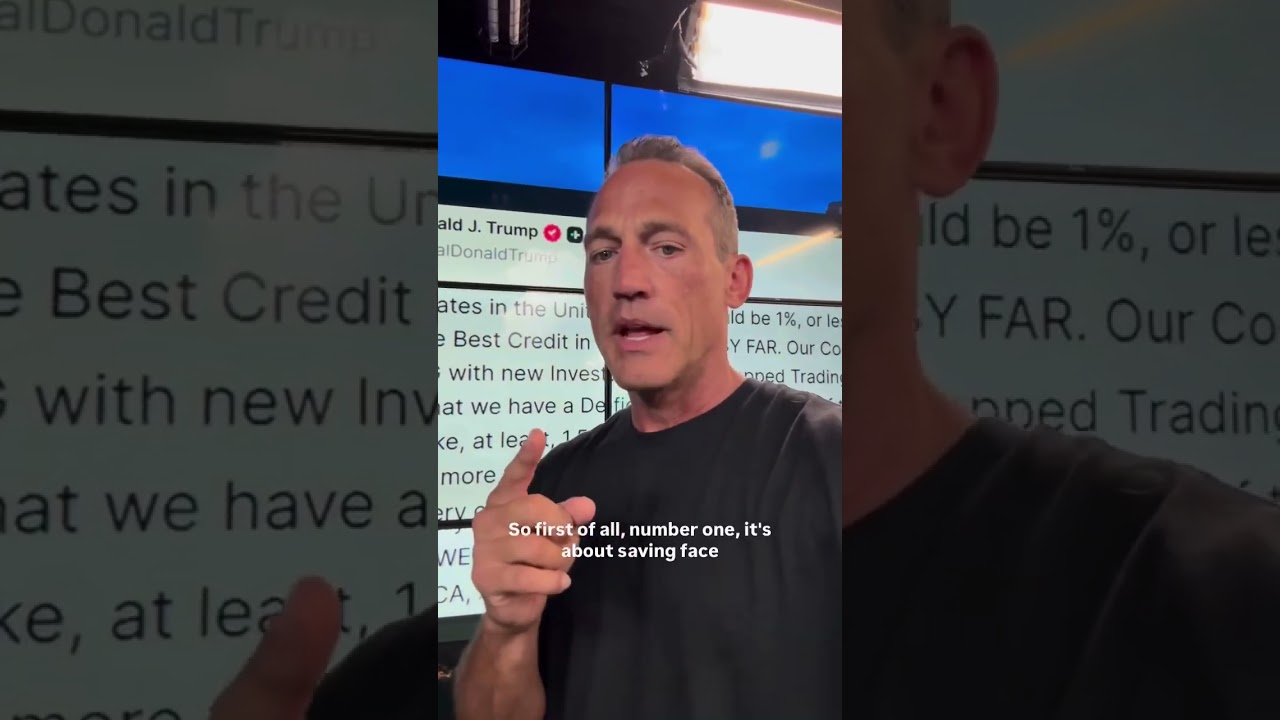
In this YouTube monologue, Mark Moss explains the Federal Reserve’s recent quarter‑point rate hike, contrasting the Fed’s ability to set the short‑term fed funds rate with its lack of control over longer‑term Treasury yields. He references a tweet from former President Donald Trump demanding a 1% interest rate, using it to illustrate political pressure on monetary policy. Moss then outlines the fiscal strain on the U.S. government: roughly $1.2 trillion in annual net interest payments on the national debt and a $1.9 trillion yearly budget deficit. He argues that higher rates increase interest expenses, forcing the government to borrow more and effectively “print” money, while lower rates make borrowing cheaper and also expand the money supply. This creates a self‑reinforcing “debt doom loop” where any rate move has adverse fiscal consequences. Moss ends by inviting viewers to share what rate they would charge if they were lenders, prompting audience engagement.
Chapters
The Fed did the unthinkable and they raised rates. What does that even mean and why does it even matter? Well, it certainly matters. Here we have a tweet coming out from the president. We're talking about Donald Trump right here, talking about interest rates specifically. He's responding to what the Fed just did and he says right here, the United States should be the best. They should be at 1%. So he's claiming 1%. So why are they raising rates? Well, he's saying right here that our country by far, by far is the best country in the world. Of course, making America great again. So why does the president care about interest rates so much? And what does it mean if the Fed increased the points by, by quarter point? So first of all, number one, it's about saving face. You see, the long end of the curve is being set and the Fed can set the Fed funds rate, but they can't control the 10-year, the 20-year, the 30-year. That's what the market is doing. And so the Fed is sort of trying to maintain relevance here because if they don't control the rates, then they're starting to lose face. So rather than saying, hey, we're trying to lower them, but the market's moving them back up and we don't have control, they're like, well, I guess we'll move along with it and we'll just raise the rates symbolically. But what does that mean for you and I? Well, it means a couple things. Number one, what it means is that the government is in this proverbial rock and a hard place, right? So the problem is that the government is spending about $1.2 trillion per year just on net interest for the debt. And what happens is the government is also spending about $1.9 trillion more than the money they bring in. And so that means that with interest rates going up, uh, interest expenses going up, that the government has to borrow more money, which means more money printing. Now, if they lower rates, then money gets cheaper, and then people borrow more money, which then means more money creation. This is the damned if you do, damned if you don't. This is the proverbial rock and a hard place, or the debt doom loop, as we like to call it. Trump can demand rates being at 1%, but the market is in control. How much would you want if you were lending money out? What rate would you charge? Let me know in the comments down below.