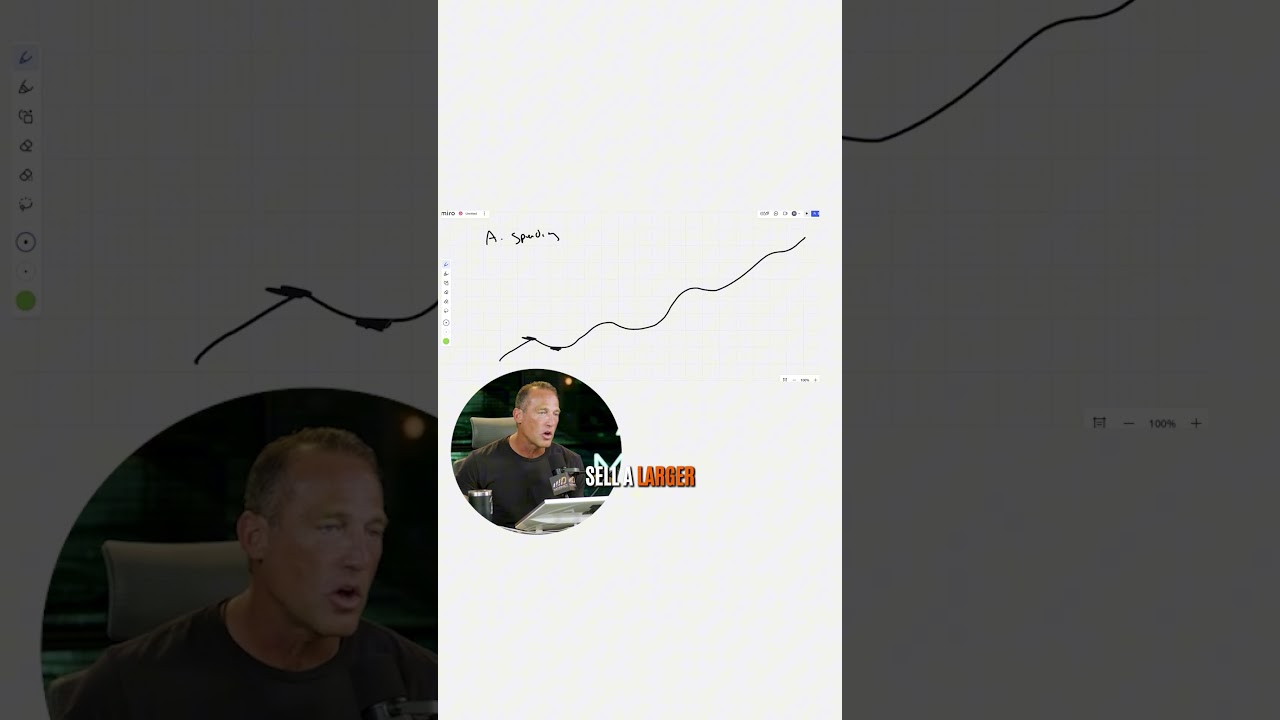
In this segment, Mark Moss illustrates how two retirees with identical starting assets, return expectations, spending levels, and time horizons can end up with dramatically different wealth outcomes—ranging from a few million to tens of millions—because of sequence‑of‑returns risk and the tax drag on portfolio withdrawals. He explains that when markets dip, retirees must sell a larger share of their holdings to meet spending needs, and each sale incurs a tax liability that can consume 20‑50% of the proceeds. The combined effect of selling more during down markets and losing a substantial portion to taxes erodes the portfolio faster, making a naïve spend‑down strategy virtually guaranteed to fail.
Chapters
Okay, so now that you can see how somebody, or actually 2 people, starting from the exact same place, the exact same return profile, with the exact same amount of monthly spending and the exact same timeframe, can end up in completely different universes. I mean, $5 million assets or less, or $84 million or more. It's insane. But let me show you why it's not even actually that. What I'm talking about is back to Person A. So Person A is again spending down their assets. And as I said, markets don't really move in straight lines. Markets sort of go like this. So, as I'm spending here, it's one thing, but when I spend here, I have to sell a larger percentage of my portfolio. It's easy to understand that, right? But the bigger problem is something even different. And what that is, is something called taxes. What do they say? The 2 things in life that are inevitable are death and taxes, right? So, taxes are one of the biggest losses of wealth, one of the biggest thefts of our wealth that we have. And what happens is, as I'm spending down my assets, so every time I sell, whether I'm lucky enough to sell at the top of the market or I sell at the bottom of the market, either way, every single time I sell, it could be 20% to maybe up to 50% of that wealth goes over to the government. And so, not only am I selling more of my, a larger percentage of my portfolio in the down years, in addition, I have to sell even more of my portfolio because 20% to 50% of it continues to go over the government over time. That's another reason why this strategy is guaranteed to be a loser.