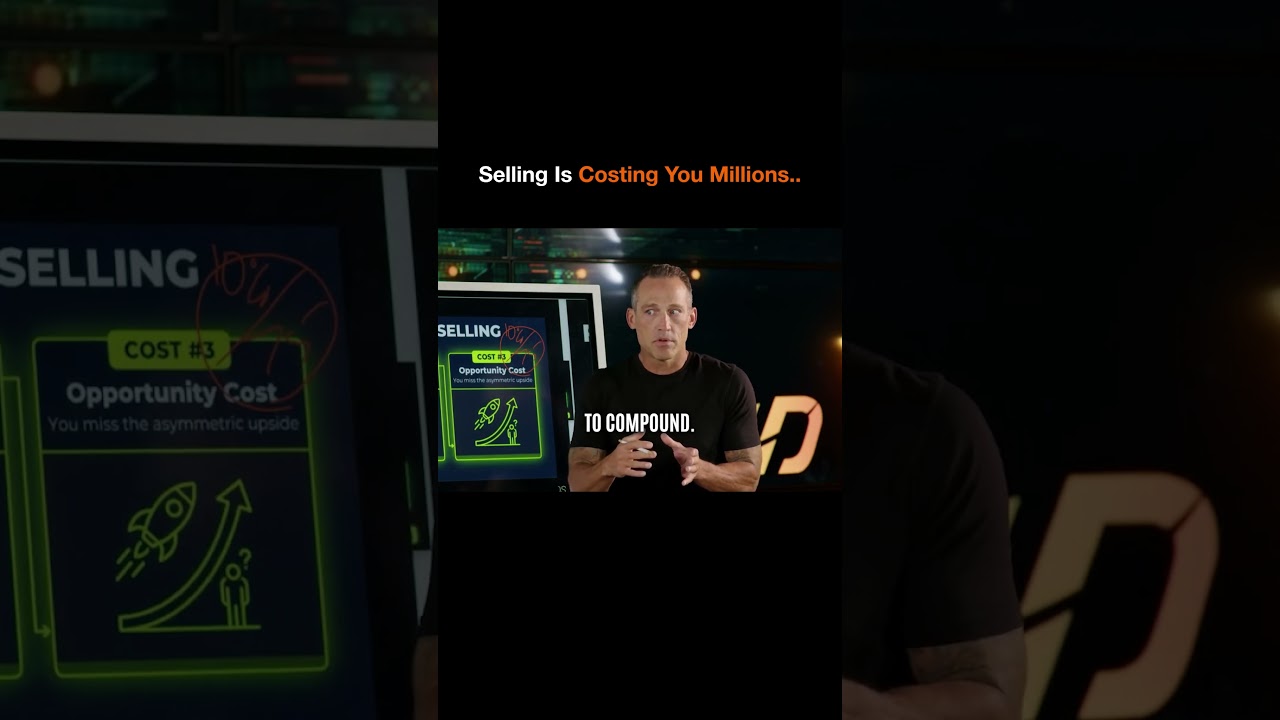
Mark Moss explains three costs of selling an appreciating asset: you stop compounding growth, capital gains taxes take 20-50% of proceeds, and you lose the ability to use it as collateral. Over 20 years, taxes alone could cost $200,000 in lost compounding gains.
Chapters
Here's the real hidden costs of selling. Number 1, the compounding stops. Remember, compound interest is the 8th wonder of the world. And so the asset is doubling. It's compounding on the compounding on the compounding. So the way it works, you could take a number, say if I'm making a 10% return, I divide it by 72, and that would give me how long it takes to double. So say at 10%, it's every 7 years. So it goes from, you know, $1 million to $2 million to $4 million $4 million to $8 million to $16 million. Those doubles get really big towards the end. But if I sell the asset, I compound— the compounding stops. I lock it in. It never grows anymore. Number 2, then I have massive tax drag. So on top of it, not only have I stopped the compounding, all that future growth potential is gone. On top of it, now I got to give 20% to 50% away to the government. And that's less capital to compound. I don't get to spend it. It doesn't get to compound. It goes to the government. Number 3, I lose opportunity cost. So I miss the asymmetric upside that I have and all the other opportunities I could have by using that asset as collateral to get me more assets to increase my lifestyle. So we lose it in 3 ways. If, if I want to quantify it just a little bit, On that hypothetical number I was showing you, we can see that over 20 years, I'm going to lose over $200,000 just to cap gains alone. Money that could be compounding and instead is now lost forever.