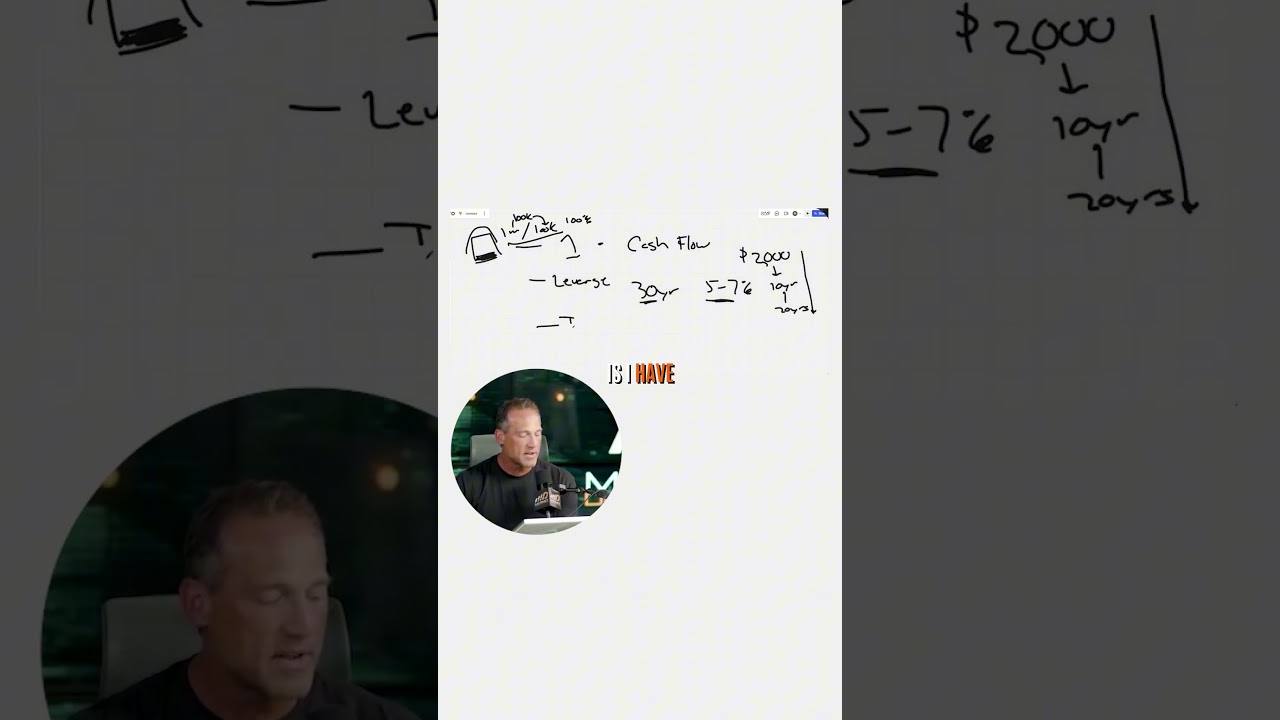
In this solo presentation, Mark Moss explains why most investors overlook the full value proposition of real estate. He breaks down four key mechanisms that together amplify investor returns: (1) leverage – using a small down‑payment to control a large asset, which magnifies appreciation gains; (2) inflation‑driven debt erosion – long‑term low‑rate mortgages become cheaper over time as inflation reduces the real value of monthly payments; (3) tenant cash flow – rent payments cover the mortgage, so each payment simultaneously builds the investor’s equity; and (4) property appreciation – typical U.S. rental assets rise 5‑10% annually, further boosting equity. Moss illustrates each point with concrete numbers (e.g., buying a $1 M property with $100 K down, a 10% appreciation yielding a 100% return on cash) and emphasizes that the combination of these forces creates outsized, compounding returns that many people fail to recognize.
Chapters
Let me break down what most people are missing with real estate. All right. So let's walk through this. So if I have, you know, my, my real estate here, as I said, most people think the main thing when it is for most people is the cash flow that comes in. But there's a lot of other ways we think about this. So first of all, with real estate, we get something called leverage, right? Or debt. So I can buy this home with, say, only 10% of the capital. So I can buy a $1 million property with with only $100,000 down. Now the beauty is that when the million-dollar property goes up by 5% or 10%, I made $100K, but I made $100K with only $100K in, which means that's 100% return on my money. So I get the leverage. That's great. But what does the leverage do for me? A couple of things. Number one, as I said, it increases my returns, but what it also does is that in America anyway, if you're watching this, we have the benefit of having 30-year loans at very low rates. They could be 5, 6, 7%, whatever we're getting right now. I expect those rates to come down quite a bit over the next couple of years. But what I'm getting is I'm locking in a 30-year rate at these low yields. And what happens is the reason why the government likes inflation so much is it makes debt cheaper. So let's just say hypothetically my payment is $2,000 a month on this property. Right now that's $2,000 a month, but in, let's say, 10 years from now, that $2,000 a month is a lot less because of inflation. In 20 years from now, that $2,000 a month is barely registering. That's how much money they're going to print. And so over time, that $2,000 a month gets cheaper and cheaper and cheaper. We call that inflation destruction of debt, right? That's what the government wants to do. The other thing that I get is I have tenants that make my payments. They're the ones that make my payments for me. And every single month they do that, my equity goes up. So not only am I getting the debt destroyed by inflation, my tenants build up my equity position for me. In the beginning, I have $100K equity because that's what I put in. But over time, I have $1 million of equity. Where did that $1 million of equity come from? It came from the tenants that have been paying that for me the entire time. Now, another thing that I love about the real estate is I get appreciation. So over time, the value of the property goes up. Now, the median appreciation on US rental or US real estate is about 5% per year. Now, depends on the area, depends on where you're at. Some properties might go up 10% a year. If I'm able to get into a hot area, maybe around a lake, around a beach, maybe I get it to go up much more than that. But let's say that I'm getting about 5 to 10% a year. So I'm getting leverage and the debt is being destroyed by inflation. The tenants are giving me equity in the property. And I'm getting appreciation. And I already talked about because of the leverage, if I get a 10% appreciation, $1 million, $100 grand, I get 100% return on my money.