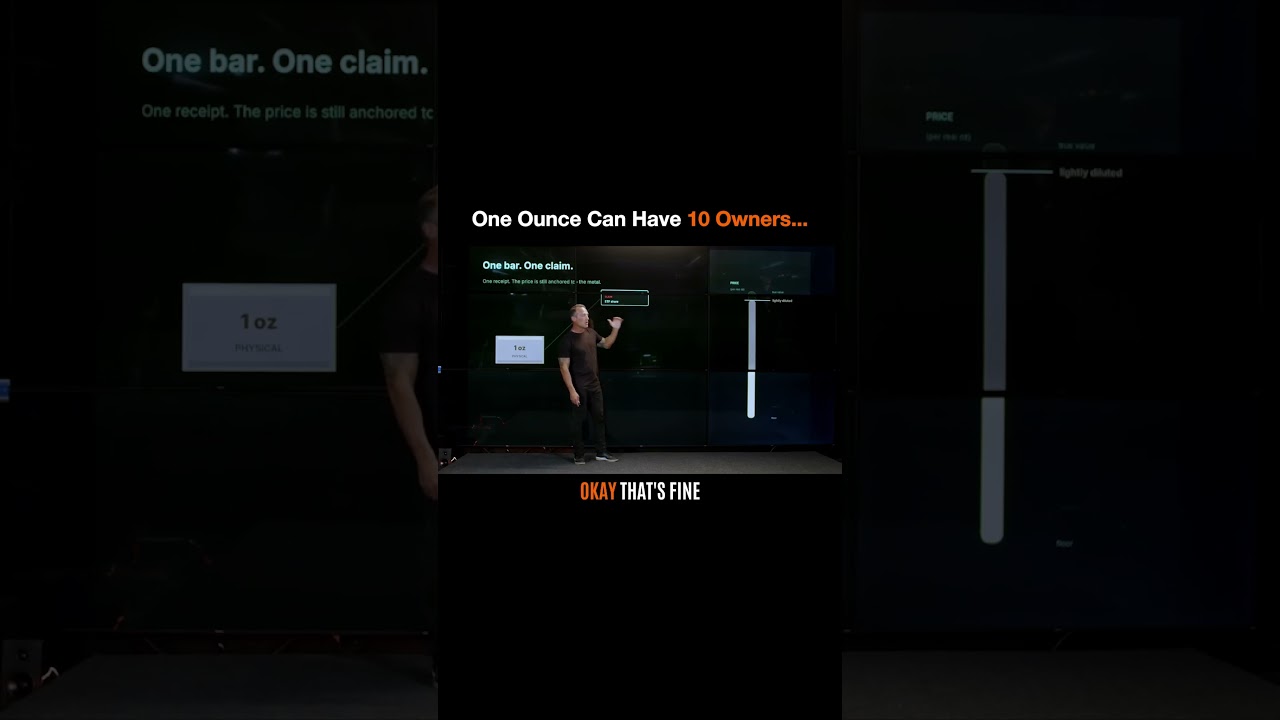
This content was created by Mark Moss. This content was uploaded by Mark Moss. This is a YouTube video titled "Who Really Sets the Price of Gold?" (created 2026-08-05T16:00:17Z) featuring Mark Moss delivering an explanatory talk about how gold prices are determined. In the excerpt Moss explains that most gold purchases are electronic claims or IOUs rather than physical metal, describes unallocated accounts, ETFs, vault receipts, futures and other derivative claims stacking on the same physical ounce, and discusses how those paper claims interact with supply and demand to influence price formation.
Chapters
You have to understand, how does the price of gold get set? When you look at the price of gold, where does that come from? Because when most people buy gold, no gold actually moves anywhere. Okay, so how does it work? So if I buy gold today, most likely I'm not going down to my local pawn shop and buying a gold coin. I'm probably going to my bank, I'm opening up an app, I'm on my brokerage accounts inside of a fund or something like that. And when I buy that gold, obviously it's online. Nobody hands me a physical bar of gold. So when I bought that, I didn't get one, and nobody moved one. It was all done on a ledger. So I'm sure somewhere there is a— there's an actual vault, and I'm sure there's actual metal there. But what I have is a claim to that. So what I really have is an IOU that says I'm owed gold. All right, so let's check this out. So if we start with, let's say, 1 ounce of physical gold. Now this is sitting in a vault somewhere, hopefully. It's part of 1 bar. I think a bar is 400 ounces of gold, and it's priced based off its worth, right? Pretty simple. But let's say that the vault sells a claim on that bar. So that's like an ETF, a gold ETF, right? Fine. Somebody now has a receipt saying that they own this ounce of gold. Okay, that's fine. But the price is still anchored to the metal. Nothing's broken here yet. But here's the thing: the seller that sold me this paper claim, they know that I'm never going to call for this I want this physical ounce to be delivered for me. I don't want to store it. I don't want to pay for the shipping, or I don't have to deal with the security of that. I don't want to insure it. So I'm just going to hold the claim. And then I want to sell the claim for more than I paid for it at some point, right? Buy low, sell high. Now, if nobody ever picks up the metal, then nothing stops the seller from selling more claims on the same ounce over and over again. So we can see all these claims start to stack up. This is vault receipts, structured notes, derivative claims, retail app balances, futures options, long leasing to counterparties. All these claims get started racked up on this 1 ounce, and that's fine, right? It's an unallocated account, a futures contract, like I said, a structured note, all of these things. And all of a sudden we have 10 different balance sheets are showing that they own the same piece of gold. But watch what it does to the price, because of course, price is made up— it's elementary— price is made up of supply and demand.