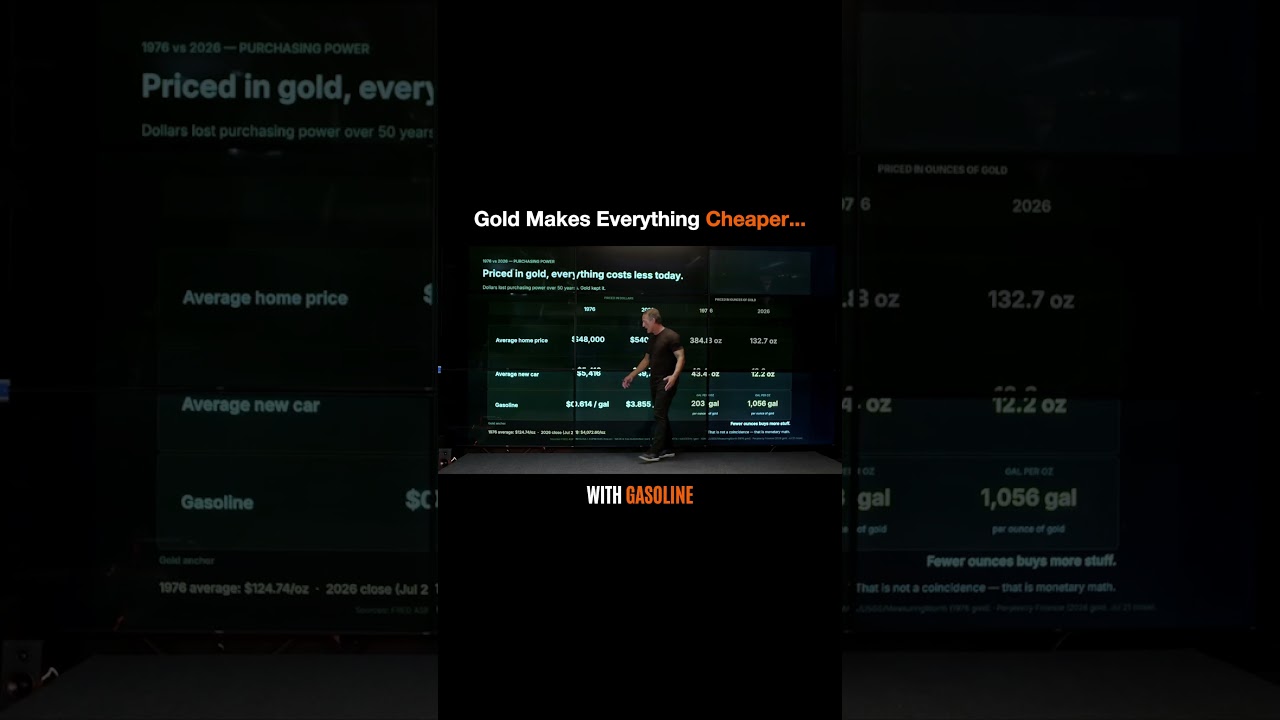
Mark Moss compares U.S. prices for houses, cars, and gas in dollars versus gold ounces since 1976. A house cost 384 ounces of gold then, 133 now. A car dropped from 43 ounces to 12. Gold reveals what dollars hide: most things got cheaper as productivity rose.
Chapters
In 1976, the average home price in the United States was $48,000. Today it's $540,000, up more than 10 times. Okay. But if you look at this, the price of the same house priced in gold in 1976, it was 384 ounces, about 385 ounces of gold. Today it's about 133 ounces of gold. So what does this show us? It shows the house didn't get cheaper. What you measure them in broke. If I measure them in dollars, they got more expensive. If I measure them in gold, they got way cheaper. Same story with a car. Look at this. The average new car was $5,000— how can you even buy a car for that?— $5,400. And then in 2006, it's now about $50,000, $49,000. That's in dollars. But if we go back to gold, we can see the same thing. In 1976, it was 43 ounces of gold. Today, it's 12 ounces of gold. We can see the same thing with gasoline. Look at this. Gasoline back in 1976 was $0.61. Today, it's about $4 a gallon. And in gold, we could get 200 gallons with an ounce. And today, we can get over 1,000 gallons with a single ounce. 5 times the gas. So as you can see, whether it's homes or cars or gasoline, if you measure them in dollars, they got more expensive. We measure them in gold. Everything else has gotten cheaper over time because that's what's supposed to happen. When productivity rises, things are supposed to get cheaper. Your money is supposed to buy you more things in the future and not less.