Why Smart Investors Ignore Profitable Investments
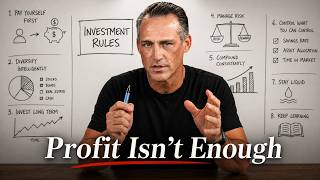
In this lecture Mark Moss argues that intelligence alone does not protect wealth; disciplined rules and a systematic operating system do. He critiques “smart” investors who drown in information and analysis paralysis, contrasting them with Warren Buffett’s rule‑based, capital‑efficient approach that excludes assets like gold and Bitcoin because they are not productive businesses. Moss outlines three psychological traps—emotions, premature opportunities, and pressure—that derail investors, and proposes building a "treasury doctrine" of hard constraints rather than soft, will‑power‑based suggestions. He emphasizes focusing on the balance sheet rather than income, avoiding forced sales, and investing in long‑duration, compounding assets (e.g., capital‑efficient equities, real estate, Bitcoin). The lecture introduces a 12‑week program where participants will create a constitutional set of financial rules, develop a balance‑sheet scorecard, and gradually implement leverage and credit tools to enable uninterrupted, multi‑generational compounding.
Chapters
Smart people destroy wealth, but it's not because they're dumb. The guy at the top of the mid work curve, it's not because he's dumb. It's because he got too much information and he stopped. But in our case, it's also because they're operating without rules. I'm so smart. I'm plugged in. I watch Kitco and I watch Stansberry and I subscribe to 5 different newsletters and I'm on Twitter for 3 hours per day. And I watch at least 7 YouTube videos per week. And like, I, I, Yeah, so you're so smart, you're so stuck in analysis paralysis, you're constantly trying to move but you don't have any rules. Warren Buffett has rules, right? He only invests into one type of asset. Uh, but Warren Buffett hates Bitcoin. Yeah, he also hates gold too. Why does he hate gold and Bitcoin? Anybody know? Because he only invests into one type of business, and gold and Bitcoin are not businesses. He doesn't invest into those things. Not because he's old. What about gold? Gold's even older than him. It's because he, he has what he calls his deal box. I only end up— no, it's not because he doesn't understand it. You guys are all missing the point. I'm trying to explain the point to you. Well, thanks for telling me. It's not because he's old. Gold's older than he is. It's not because he doesn't understand it. It's because he has rules. His fund has rules. There we go, Plato. He only invests into productive assets. But not just that, it's not that he only invests into productive assets. He only invests into businesses that are considered capital efficient. What does capital efficient mean? Well, there's classifications, and I'm not here to teach you about Warren Buffett, but what is even a capital efficient business? It's one, a company that's protected by a giant moat. It's one that has low to almost no, um, requirement for capital into R&D, for example. So what companies are those? Well, he's owned Coca-Cola for 70 years. Coca-Cola has a giant moat. No one's going to replace Coca-Cola. Number 2, it's extremely capital efficient. They're not creating new products. There's no R&D. They're selling the same syrup that they've been selling for 100 years. Number 3, they don't even have to pay to make it. They just own the patent. I don't know if you know this, but all the Coca-Cola bottlers, they're the ones that take the cost of having to come up with the bottles and make the soda and fill the soda and distribute. All Coca-Cola does is own the patent. So Warren Buffett only looks for businesses like that. And it's not about what Warren Buffett does. My point is he has rules. He's not going to gold even though gold's ripping this year, and he's not going to Bitcoin because it's too new, he doesn't understand. It's because he just goes right here. That's why he built wealth. The average person has no rules. They're chasing shiny objects all day, but that's not us. Or not anymore. Not after this. Okay. So intelligence doesn't protect the wealth. Rules protect the wealth. That's how Warren Buffett protects his wealth. There's 3 ways that it happens. One, emotional, uh, uh, our emotions override logic. So we're humans, we're emotional beings, which makes us terrible investors because humans, we want to rush to pleasure and we want to run from pain. So when the market's going up, oh, it's ripping to an all-time high. I want to buy it. I want the pleasure. Everyone's making money but me. And I buy the top. And then as soon as it goes down, it's painful. I run from pain. I want to get away and I sell the bottom. Every single time. So emotion overrides logic. Number 2, opportunity shows up before preparation. Oh, this deal popped up. Should I take it? I gotta close by tomorrow. I don't know. Things are going hot. I can do like, but the opportunity is there, but, but am I prepared for that opportunity? And then 3, the pressure. The pressure will then force us to make decisions that aren't the best decisions for us. Uh, I think I talked about this on a live, live stream, uh, when we did the live event. Um, but like I was using the example, like, uh, If, if any of you have ever gone to the grocery store when you're starving and like everything looks good versus go there when you're full, or specifically if I have a list, I'm only going there for these things. Even better if I made a list and I sent somebody else to the store with the list. So we're, we're creating rules, we're creating constraints. We're not allowing our emotions or the pressure to drive what we do. And if you don't have rules, you don't have a system. All right. So the main takeaway when we're gonna get to the homework, don't worry. Again, this is not a watch me on video. Uh, although the rest of the modules you will be watching my video, but you're gonna do the work. So the takeaway is here that if a rule requires willpower, it's not a rule. It's not a rule. So we're not building suggestions here. What we want to do is we want to build constraints, just like Warren Buffett. I invest into capital-efficient businesses. Is gold a capital-efficient business? No. I don't invest. Is Bitcoin? No, I don't invest. Is, is, is, uh, is, is Netflix? Is, is OpenAI? No. Then I don't invest in OpenAI. And I'm not saying that's our rules. What I'm saying is he has rules. We need to have them as well. We need to have constraints because intelligence doesn't protect our wealth. Systems do. And, and it's, and even if you're super intelligent and even if you have the best discipline and even if like, you don't really need to do this part because you're so good-looking and smart and wealthy and successful. And like, you're so disciplined forever and you're never going to slip up. Even if it's still not a plan, it's still not something somebody else can follow after you. How many of you guys have people that work under you in some capacity? Someone do your yard? Someone, someone help you with your books? Do you have employees at work? Like, I'm sure pretty much everybody here has that, right? You have somebody So you want to give them a plan. You want to give them structure so whatever's getting done can get done the way you want it to get done. Okay. Now we talked about balance sheet is greater than income. So in MicroStrategy's case, he couldn't grow their income. So instead he grew the balance sheet. That's the strategy. But what we want to do is we want to turn that into an operating system so this can operate without us. And we'll use a whole bunch of things and we'll get into all this terminology. Don't worry, don't worry, we'll get there. But like, Well, then where do we get the income and how do we pay our bills? And what do you mean by like harvesting appreciation? I don't even understand that. And you said something like renting liquidity. Oh, you're losing me here. Don't worry, we'll get there all step by step, step by step, week after week. At the end of 12 weeks, it's going to be up and running. Okay? Nothing in— as I've said before, nothing's an emergency. Nothing's going to happen in less time than that. We're going to create this operating system. Now, we went through the 4 key pieces to getting this part done. This is the spine. This is what everything is built on. Right? There's the treasury doctrine. This is what we're doing in this module. And so we're going to go through these each one by one. And this is the homework I'm going to give you. Like I said, I gave you one tool already. I'm going to give you 3 more by the end of this, and I'm going to walk you through that. Don't worry. And then at the end, instead of having like a budget that you're running off of, like trying to build your wealth off of a budget, like just save harder. I love that. You should just, you know, like, why can't you be wealthy like everybody else? You should just like work harder and you should just save harder. That's your problem. Like, come on. It's not going to work. So the budget is what sort of tells us what to do this month, but the Constitution is what set those laws in place. Right. It tells us what's forbidden for us to do and not just now, but forever, unless obviously we go back to change them. And so this is not about optimization. The budget is like, do I really need to pay that expense? Could I reduce my, um, you know, could I go from the pro account to the, you know, the lower account? Um, can I skip my coffee in the morning? That's like, the budget is about optimizing what I already have. What we're building is about constraining ourself, putting rules in there, constraining ourself. And I know this is, this is counter to what most people believe, but it's the structure and the discipline that gives us the freedom. The constraints give us the freedom. And so we want to move from that, from trying to optimize things, like how many ways can we like slice and dice our budget to like save our way to to wealth to what are the constraints. The goal here is creating these constraints so that our wealth can continue to grow uninterrupted, compounding forever, and we will never have to be a forced seller. Keyword forced. I'm not saying we never sell assets, but we never— we're never forced to. I think about like, we're, we're treasurers, we're running stuff on the balance sheet. So like, hopefully all of you guys have this and don't worry, we're going to be working on this through this module. But like, you should have like a balance sheet, right? Like, here's all the assets I have and here's all the liabilities I have. So I have a home, check, it's worth $1 million. I have a liability, I have a home loan, it's $750,000. So we need to know what all of our assets are. But when I think about my balance sheet, it's like my assets minus my liabilities. I, I like to think of my balance sheet as somewhat fluid. So if I want to sell an asset, as long as I buy another asset, my balance sheet kind of stays unchanged. So I'm thinking more about the balance sheet than the individual asset, cuz a lot of times we get caught up with this, like, oh, I shouldn't sell right now. You know, Mark said to never sell assets. I, I never said that. I don't want to be a forced seller of an asset, but I think of my balance sheet. I think about my assets as liquid. If I pull equity out here and buy this other asset here, I sell this asset and buy this asset here. It doesn't matter. But my goal is to get my balance sheet. I call it my scorecard. Uh, get my scorecard to go up. But the traditional model, as I said, is, is, is getting me to sell that. But we never want to be a forced seller. And, and, and I said this on the live. So a lot of, a lot of what I'm saying is repeating myself, but not everybody watched the live, but you know, uh, Warren Buffett said the first rule of investing is never lose money. And that's impossible. Even the best investors in the world, Stanley Druckenmiller, he's the GOAT, the greatest of all time. No one's had a better track record than Stanley Druckenmiller ever. 30 years without taking a loss, without having a losing year. He still only has like a 60% win ratio. He still loses 4 out of 10 positions he picks. So there's no such thing as taking a loss, but like over a big period, taking a loss. But I think the most important rule in investing is never be a forced seller, cuz the being a forced seller locks in the loss. If I can wait, if I have a good asset and I can wait, I don't have to take the loss. So that's the goal. Never be a forced seller. We, we want to, we want to buy long duration assets. These are ones that are designed to grow over decades. So these are obviously Bitcoin. I will keep talking about that. Equities, strong equities, tech-focused equities, real estate. Of course, I still like that. Businesses, I still invest into 'em through my venture fund personally. And of course I have businesses. And then what we wanna do is we wanna time shift our consumption so we're not forcing spending to happen now. And when we do those things, it allows our compounding to continue uninterrupted. The compounding is, uh, you know, you hear it all the time, but let's just, let's just, uh, think about this for a second. Einstein called it the 8th wonder of the world. And I love what he says is those who know it earn it and those who don't know it pay it. And so there is no standing still here. And this is a very important point because as we progress into the later modules, we're going to be talking about leverage and we're going to be talking about credit. And the very first thing people think is, isn't that dangerous? Isn't there risk? That's the very first thing that everybody thinks. And the key piece that I want to bring out— Einstein said you're either earning it or paying it. There's no like, you either earn it or you don't. No, no, no. You either earn it or you pay it. So what I, what I think of is there's no such thing as no risk. It's what type of risk do we want? So if I don't take on, if I, if I, if I don't try to grow faster, my risk is I'm gonna be old and broke. That's a risk. I'm guaranteeing that risk. I'm guaranteeing that if I don't, if I don't try to do the other side. And so what we want is we want that compound, that in that, that, that compounding to go interrupted because the way it works is that It depends on the rate of return. So it's a rule of 72, but, uh, the rate of return divided by 72 shows you how long it takes for something to, um, double. So if I can earn like a 10% yield, every 7 years my money doubles. Anybody ever seen, I'm, I'm sure you've all seen, uh, it's like if you had a penny a day and so I had 1 penny, 2 pennies, 4 pennies, 8 pennies, 16 pennies, 32 pennies, right? But like very quickly it's like a million, 2 million, 4 million, 8 million, 16 million, 32, right? Those doubles start getting really big. Really big. And so, uh, we want to allow that compounding to happen uninterrupted. And, and again, not just for our lifetime, we're thinking multiple generations out. And I have some of you are like, well, I don't have 36 years. Don't worry. We have options for you as well. But the key is, remember, we're thinking about building systems that can continue to compound for multiple generations. Like I want all of us, all of you to get the most out of it. Maybe you don't have 16 years left, but like, again, we're thinking longer term.










