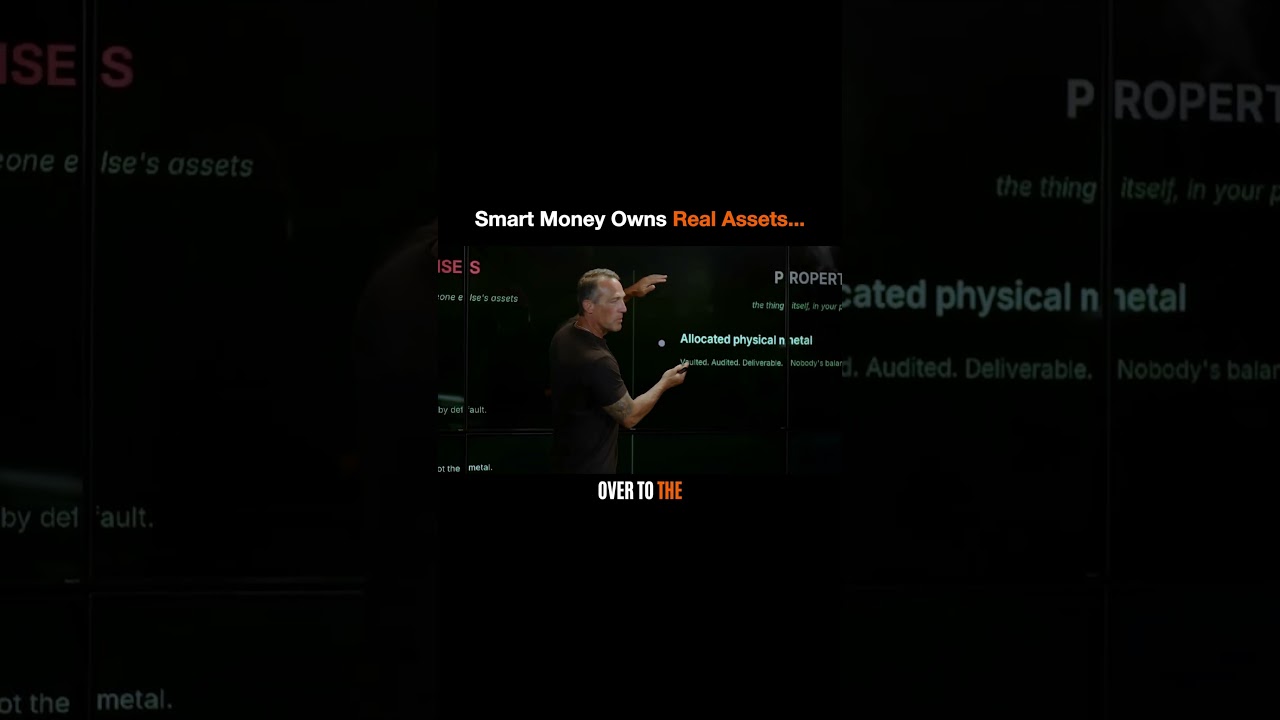
Mark Moss divides all assets into two categories: promises like ETFs and bonds, and physical property with no counterparty risk. Since 2022, central banks have been buying real assets instead of promises. Physical gold delivery keeps the market honest, but shipping, insurance, and storage make it slow and expensive.
Chapters
Everything that you own sits in one of these two columns. You either have promises, things that are promised to you, we call that debt, or you have physical property. All right? Debt, this is things that— these are paper claims. Someone else owns it, owes it to you. Unallocated accounts, futures contracts, ETF shares, government bonds, all these things are owed to you. OK, but then we have property. Like physical metal, things that are nobody's liability. When you have the metal, you have the metal. What China just did, what central banks have been doing since 2022, is moving from the promise column over to the property column. That means the most sophisticated balance sheets on Earth are all making the same trade. Now look, of course I can't end this video just talking about gold. I can't end this video without talking about my favorite asset, Bitcoin, because taking physical delivery of the gold is what keeps the market honest, right? Taking delivery of gold, especially if it's a big delivery of gold, right? It's slow. It's going to be really expensive to ship to you. You have to pay insurance. And then where do you even keep it? How do you protect it? And so because it's hard to transfer, because it's expensive, because it's hard to store and protect, a lot of people don't take physical delivery of the gold.