
1:45
Mary Wanless breaks down why "inside leg to outside rein" fails most riders. The problem: they try to bend the horse without controlling its shoulder first, which causes jackknifing at the wither. Steer the front end before you ask for bend.
Mary Wanless breaks down why "inside leg to outside rein" fails most riders. The problem: they try to bend the horse without controlling its shoulder first, which causes jackknifing at the wither. Steer the front end before you ask for bend.
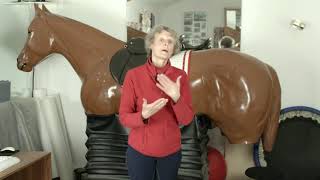
One of the things we hear most about steering and turning is the phrase inside leg to outside rein. Now, as far as I'm concerned, this is rather a do X way of talking about steering. So X will work for people when they can also do A, B, C, D, E and all the way through the Alphabet. And I think the truth of the matter is that inside leg to outside rein often fails for people because it's kind of assuming that, that you can make a bend in your horse's body without losing control of his shoulder. Very often what I see in that is the horse doing what I call jackknifing, where all the articulation in his body, or most of it, happens at the wither. With the wither acting as a hinge like that. The nose goes this way, the wither goes that way, and the horse falls out through his wither, which is then acting rather like the hinge in what we in England would call an articulated lorry and, and folks in the US would call an 18 wheeler. Now, that's not meant to happen. And actually, the number one ABC type way of thinking about steering is about can you steer the horse's wither in a way that stops it from becoming a hinge like this? So your horse either really falls out on a turn or, or really falls in on a turn. You need to be able to control the track along which his wither goes and his front legs go before you ever think about bend. So in other words, the first challenge is to steer the front legs and the wither rather than making a bend.










