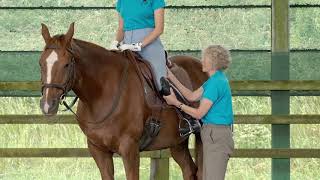
Transcript excerpt from a Rider Biomechanics Certification session (YouTube) focusing on seat bone positioning, torso shape, thigh engagement (A-frame), and training/feedback methods. Speakers describe exercises to sense seat bone orientation, differentiate ‘trying’ vs ‘noticing’ modes, and discuss submission of photos/videos for feedback. The content is instructional and multi-speaker.
I want you to understand more about the positioning of your seat bones, where they point and how that influences the shape of your torso. So you can feel your seat bones. Okay, I want you to hollow your back now. Now see if you can come to neutral, which will make your seat bones point down. Flashlights on your seat bones will point straight towards the ground and now round your back. What happens then? Where would they point? So a lot of people get talked to take their thighs off the saddle and have their lower leg on, and it tends to end up with them doing this. So here's line three, really lost it. Here's line two, losing it. Here's line one. With the muscle really snugged around the back. Thighs have to both rotate in and do what we call snugging in. And we're going to treat these as two different puzzle pieces, as it were. In the overall puzzle, that thigh makes what we also call an A frame. It's an A frame around your horse, putting him into that ideal hold.
At the end of each module, we'll be asking you to send us either.
Photographs or videos so you can get.
Feedback on your process.
So trying is not the same as doing. Doing involves getting yourself into what I call noticing mode. We could say that you've got trying, you've got tune out, and you've got the clear focus of noticing mode.
Here's a specific example of the way that language can be very misleading. I'm pretty certain you will have been told at some point in your riding career to relax. And most people, when they're told to.
Relax, do the equivalent of going from here to here.
That's not really what somebody means when.
They say be relaxed.
This is another really good exercise for demonstrating the dynamics of the rider horse interaction.