11:11 Media’s Krystal Hauserman on Paris Hilton, Creators & Brand Building
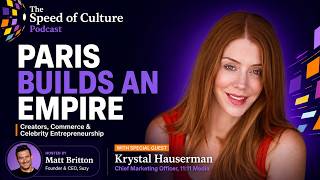
Krystal Hauserman, CMO of 11:11 Media, built Paris Hilton into a multibrand empire spanning podcasts, cookware, and metaverse experiences. She explains how the creator economy shifted to mobile-first platforms and niche influencers, and why brands succeed when they let creators own their own narrative instead of over-controlling campaigns.
Chapters
Hey, up today we're gonna be speaking with Crystal Hauserman, Chief Marketing Officer at 11:11 Media. Crystal was recently named to the 2023 Forbes Entrepreneurial CMO list. It's a pleasure to have you here. Thanks so much for taking the time.
Yeah, thank you so much for having me.
Absolutely. So Crystal, it's interesting, you got your start in your career, uh, you know, in the legal field as an entertainment attorney. Totally right. That's right. Yeah. So how did it, I don't know if it's random or sort of something that's predictive of where you are today. Probably a little bit of both. But what led you to that decision?
Yeah, you know, when you look back, it makes sense. But at the time, and that's, we'll get to that later. But yeah, you know, I grew up in Oklahoma and I always had an obsession with movies and storytelling and art. And I, I wanted a major in moviemaking when I was a kid. But of course I had the very practical parents who were like, what are you gonna do with that? Right, right. So I went to law school out in Los Angeles and graduated and, and got the big snack classy law firm job and worked, um, at, you know, kind of a blue-chip, uh, firm in Century City. And at the ripe age of 26, realized that's not what I wanted to do with my life. Can you, can you believe it? I think I always chalk it up, and this is probably indicative of my future career path, I said I wanted to make art, not war. And I think, you know, I was a trial lawyer, and while it gave me great training in terms of preparedness and results and measure with results and always come in with a plan. And I think those skills definitely show up in what I do now.
Sure.
I think I just didn't want on the daily basis to be arguing over who is gonna switch money between whom, right?
Right.
And so had that revelation that I really wanted to follow back to my original plan of a more creative and expressive endeavor and put fun things out in the world. And the rest is history.
Yeah, so then you moved over to, the entertainment world directly. Directly. And was working more in the, in the marketing and media side of things. So how was that transition? And did you know right away it was the right move for you?
Oh yeah. And I think, you know, it's one of the things I, I do a lot of mentorship, even as busy as I am, I always feel like spending that time to help those that are kind of where I was 15 years ago is so important. And look, it wasn't, the transition isn't always easy, right? Yeah. You kind of go in and talk to people and I had lots of connections across entertainment and that's studios and production companies. And these were the days before Zoom, Matt. Can you imagine? And so if you wanted to do a networking call, you had to get in your car, drive someplace, pay for parking that you probably couldn't afford.
You're in LA sitting in a lot of traffic.
Yes, sit in a lot of traffic, sit in their office to walk in and they'd be like, oh, you're a lawyer. What do you wanna do here at my studio? Right? Yeah. And so I did a lot of that for, you know, couple years, right? And I'll always credit who I was actually talking to this morning, Rosanna. She was over at a company called Fullscreen and a friend of a friend put me in touch and, you know, had a meeting with her. She was in the legal department. So it shows you, you can kind of make your entrée any way you can. And, you know, I said, look, I really, I wanna flex in marketing. That's what I studied in undergrad. It's what I'm really good at. Great with clients, great with creative. And she was like, ah, you know, there's a role. Let me introduce you to a friend of mine. He's hiring for his team. And the rest is history. So I went up, went up there, Bo Bryant, always give him credit for giving me my kind of break in that world and became the head of marketing at a company called Fullscreen, which was really one of the first creator-driven businesses started by founder George Trompolis, who was the architect of the YouTube monetization program for creators. So where we are, I always, all of us who were part of that Fullscreen ride kind of are looking where the market is now when everybody, that's all people are talking about. The creator economy. Creators, creator, the creator economy. And man, George, we were such a visionary. You know, he started that company 10, over 10 years ago. So we were kind of ahead, we were ahead of our time, a little early, but it was a great ride and I met some of the most brilliant people and we've all now gone on to different companies and it's just really a phenomenal, you know, springboard.
Yeah, and speaking of the creator economy, you know, where do you think we are today in that cycle? Because part of me feels like it's oversaturated. Everybody's a creator. And it's like there's more creators than consumers in some time. At some points when you look at it, at the same time, people are not watching linear television. They're staring at their phones all day. That's where the content comes from. You know, in terms of the adoption cycle, both by brands and by consumers, where do you think we are overall?
Yeah, Matt, you nailed it. Like Gen Z and even more Gen Alpha, they're not watching TV. You know, they're on those phones. They pick them up at the time they come out of the womb. I think knowing how to swipe and scroll and look, brands have gotten the memo. Okay. So if you go, go go on TikTok, go on, you know, IG and Snap even. Like, you know, the brands have gotten where the consumer is. And so I think we're, we're at the weight, we're at the top of it, right? I think, you know, look at Passable where we are today and a company like Influential who's here. And I was talking to Chris and Ryan yesterday who are the, you know, the founders of the company. And it's only blowing, it's only exploding, right? And the definition of who is influential or a creator is vast, right? It's not just that YouTuber. It is, you know, the niche, it's the person that's into fashion or social good or filmmaking.
Soon it could be a bot and not even a real person that's an influencer.
Those exist already. You know, I look at my, you know, my buddies at RedBrud who built Lil Miquela, like how many years ago now? The first digital influencer, I think. I don't know what her following's up to now.
Combine that with generative AI and it's pretty scary where it could all go.
Yes, we'll talk a little bit more about AI. I think there's beautiful applications and things that we can, that will open up doors, but it, with great power comes great responsibility.
For sure.
Is that a quote from Star Wars?
I think. Yeah, absolutely. Yeah. I mean, I agree with you and I do think that sometimes, you know, I think influencers and what that means could get ahead of itself. And yes, people try to cater to the masses and grow an audience and over time they take on every brand and they lose their actual community. So that's sort of the risk with all this.
Nailed it. Nailed it. I think, look, there's a, with every, as with everything in life, Matt, like, you know, there's a path you can go if you're just shilling out for brand on the planet. Gen Z and Gen Alpha are too flipping smart for that. Yeah. Right. And I think picking really—
they'll see right through it.
Yeah, they'll see right through it. And I think picking authentic collaborations that are true to the person that people are really passionate about, this isn't rocket science. Like, people really understand that. The brands that really get that and who also let creators create. You'd be surprised, you know, in my career over the last 15 years, you know, these big brands will go out And they say, we've gotta be working with creators and we'll go out and we'll cast the most perfect creators for, you know, whether it's a commercial spot or, or something else. And then they wanna give them scripts. Right. And they want to totally control the creative.
Well, they need to do this. Take away everything that got them there to begin with.
Exactly. Yeah. And so I think that's probably the key or that one of the big takeaways out of this is like, you know, and look, the most savvy brand marketers and a lot of my peers, like they totally get this, but it's like really stepping outta the way within our obviously brand safety limits of letting those creatives really fly and soar, I think is just the key to doing it, to doing it right.
Absolutely. So Fullscreen, as you mentioned, you worked there for 3 or 4 years and they were acquired by WarnerMedia.
Yep.
And then you stuck around at Warner for a little bit and then ultimately decided to leave. What was the experience of being at a, you know, startupy small company and all of a sudden seeing yourselves within Warner? How did that change the culture and, and your role overall?
It was cool. Look, we— yeah, we were part of the big merger back in 2020 at the height of the pandemic. So, man, there was a lot of stuff going on, right? We were going through, you know, restructuring and acquisitions and a gigantic merger that had been hung up for a couple of years. But, you know, finally coming to the table and being not just the scrappy digital startup, but then getting to work across the whole portfolio, right? Where it was like we were suddenly on calls with the folks from CNN, with the folks from HBO Max, rest in peace, a.k.a. now the— for the artist formerly known as HBO Max. I think we're Max now. And all these just amazing brands. And so we ended up like, look, you have more resources, you have more collaborators, you have more opportunity. And so we did some really, what the kids would say, banger activations and things for HBO, for really cool things at Sundance to celebrate a lot of the theatrical releases that were coming out. So it was really great to take what we knew and had learned over so many years at Fullscreen of taking the power of creators to really support business and drive commerce. And it was a heck of a ride.
Absolutely. Yeah. And then last year you joined the role that you're currently at, which is CMO of 11:11 Media. Tell us a little bit about 11:11 and what excites you about this opportunity.
Absolutely. So a friend of a friend knows, you know, it's funny that, as you mentioned, the Forbes Entrepreneurial CMO thing came out today and he was like, you're so entrepreneurial. Entrepreneurial and like you get to try these things. And he's like, you just love these environments where there's no rule book, right? And you just get to like, if you're let to go and play, like you could do like extraordinary stuff.
Not bound by the corporate shackles, so to speak.
Exactly. You see where I'm going with this, Matt? So he said you should go talk to Paris. And I was like, okay.
To Paris Hilton?
Yeah, to Paris Hilton. I was like, random. But I had been, you know, I'd been in Clubhouse kind of soared. Rest in peace, Clubhouse. No, I know Clubhouse is still around and I love the platform and it was so innovative at the time. I spent a hell of a much time there in the pandemic. Yeah, but that's kind of what I had started to notice about Paris. She was like hanging in Clubhouse and talking about her investments, talking about the metaverse and Web3. And so I kind of had my impression of her wasn't from 20 years ago. It was like this new modern Paris. And so when he said, I was like, well, that's really interesting. And so I went over and talked to You know, Bruce Gersh over there, who's the co-founder of 11:11 with Paris and eventually met Paris and just listening to their vision. And it's a big one, right? Taking— and it's actually what I'm speaking about at Possible tomorrow. How do you take such an iconic person and build it into this multifaceted brand? Now, she's done a heck of a good job over the past 20 years doing that herself, but really—
in ways that people don't even realize.
In ways that people don't even realize. And so I I think that's what I immediately got it when I went to go meet with her and just the breadth of everything that we do. You know, we're a full-fledged media and consumer products company. So film, television, audio through our deal with iHeart, 3 different podcasts that we're doing right now with a new one to be announced soon. I'm very excited. Consumer product, we had 19 different product lines last year. We're the number— What types of products? Oh my gosh, we're the number 1 new cookware, collection on Amazon, tracksuits, fragrance. She sold $4 billion in fragrance alone over the past 20 years. We're about to release— we'll release our 30th at the top of next year with more products coming. Obviously, her— all our forays into Roblox and Sandbox, a.k.a. the metaverse, our gaming platforms, and then all our brand partnerships. You know, we do really trailblazing work. And she was the first influencer. I like to call her not just an influencer, she's influential to understand, like, how to really come to the table and create things that resonate with an audience, that move and inspire them to engage and to purchase.
So when you talk about— I mean, the cookware example kind of surprised me a little bit. So when you talk about the number one cookware brand on Amazon, what goes into a decision like that? You know, what's the connection between that and 11.11? Is there like consumer research that goes into it first? And how do you produce and roll out a product like that? And is that part of your everyday role?
Absolutely. So look, the cookware, the cookware launch is really, really exciting. And I think you hit on something that's kind of the hallmark of 11.11 and that we test and learn a lot across all different use cases. You'd have to.
You can't just roll out a cookware brand and have it be number one, right?
You have to. Exactly. And so, look, we have a really great partner in Epica and they do all kinds of product launches all around the world. And so they are, you know, our partner in that endeavor, and they're fantastic, the team over there. And, you know, Paris has a lifelong passion for cooking, did a show called Cooking with Paris. And just based on the fan reaction and success of that show, became kind of a no-brainer. People were asking like, "Well, I want some Paris-style cookware," right? You know, you see the normal black and white steel potless pots and pans, and can we make some things that are quintessentially hers? So if you see the line, it's, you know, eggshell color and pink, of course, but really cool designs. And the EPICA team did such a great job in collaboration with Paris's vision for the line. And so it's constantly on display in the kitchen and it's just beautiful. It's beautiful stuff and it's high quality and it's at a really fair price point. I think it's right now sub-$100. And so when you can get a 5, 6-piece set, super functional and cute, like it just is a no-brainer.
Yeah, but that's a whole different business line than producing film or podcasts, et cetera. Yes. How does that manifest to your role? Because it sounds like essentially it's an entrepreneurial conglomerate where you're just churning out different business ideas. You know, that, that model is ripe with challenges because you're not going deep and focusing on one thing. You're doing many different things. So I'd imagine for you, you have to wear a lot of different hats. And, you know, how do you juggle that relative to maybe some roles you had in the past where it's far more focused?
Exactly. Look, we have a killer team, number one. Like, nobody is an island in these sorts of roles. And so, look, you're right. Right, we work with amazing licensing partners. That's number one, right? So there, the collaboration is there and, you know, our head of licensing. Brand partnerships, you know, it's, you know, we have a whole team that comes in and talks with all our partners, making sure we're understanding their goals and delivering for them. We have our head of Web3 and metaverse, right? She's a fantastic strategist, a former Deloitte who, you know, she's my right-hand Cynthia Miller brain on, you know, the brands like L'Oréal, Urban Decay, and others that come to us and say, We want to get into the metaverse and we want to do it in an authentic way. And you guys are there. So I think it's— look, it's entrepreneurial is absolutely what it is, right? It is testing. It's a bunch of different businesses and ideas. And this year, what you'll see in a couple of months is we're going hard into music. There'll be a big announcement, not to scoop ourselves, on Wednesday, but really going there, right? And there's nothing more at the epicenter of pop culture probably than music. And so we're going there. We just had our book released March 14th. It's now its 5th consecutive week on the New York Times bestseller list. So yeah, I mean, we're in everything, true media company, but multifaceted. But it's not an outlier, right? Look, you know, Rock the Bells, LL's company.
Kevin Hart, Heartbeat.
We have Kevin Hart, Heartbeat. Issa Rae. Yeah. You know, it is— this is, this is a model. I had a dinner last night.
You have LeBron James, Kevin, Kevin Durant has his own company, Boardroom.
I had dinner with Roberto last night from Pitbull 305.
Why is that? Do you think that's the future where— because, you know, I wrote about my book years ago, Youth Nation, where I talked about brands are people, people are brands. And Paris Hilton has definitely built herself as a brand. And now she's essentially parlaying or leveraging that brand into a conglomerate. Do you think this is the path moving forward where it's driven by individuals and their persona and that becomes essentially— since they have the audience and the platform, they can build from like— do you see this being something with staying power?
Absolutely. Look, I think stars that have reached—
Kim Kardashian is another one, obviously.
Exactly.
And Kylie and the whole thing.
Yeah, absolutely. Look, there are certain traditional Hollywood stars that kind of do their thing and they take their, you know, movie money and kind of go off into the sunset, right?
He doesn't have a platform. Exactly.
So, you know, but I think those who have, you know, different ambition to kind of grow a business out of that are following this kind of multifaceted path, whether it is, you know, media project, you know, Hello Sunshine, that's another, you know, Reese's company. Like it's another example of I think it's a natural progression to kind of an art, maybe an artist that starts out in their career and is kind of the center with the camera focused on them proverbially, who then want to turn it out. And based on, you know, the things that they've learned in terms of creativity, I think it's a natural progression to the next level. They have such savvy.
That's the thing that strikes me. But it's not for everyone.
No, but it's the thing that strikes me about Paris all the time is that she's so smart and she totally gets, like, we bring her to brand meetings and brainstorm. She knows, she knows, she knows the angle. You know, she knows how to break through and cut through and she has fantastic ideas. From a creative perspective. And I think one of the things you mentioned of all those people, the athletes included, is like this relentless focus for, you know, achievement and greatness and creativity. And so I think that they're entrepreneurs.
So I think it's natural that they're building entrepreneurs with a platform and with reach, which is the biggest difference.
Exactly.
And so it's kind of— how involved is Paris in day-to-day operations?
Incredibly, incredibly. Like, look, she— we were all hired by Paris, right? And, you know, I talk to her daily. You know, she's She's the prover. I call her the creative life force. I told her, you're the creative life force of this team. You know, she is the heart of what we do, who we do it with, and why. You know, she built this company with the vision of bringing— sparking joy and inspiration and really elevating women and girls. And that's a lot of the impact.
She does a great job of that. I can tell you firsthand, as a father of an 18-year-old, that she really inspires a lot of young women to want to be the bestsellers and to be entrepreneurs and, right. And, and feel like it's possible. Yeah. And if you compare that with the celebrity of 20 years ago, that certainly wasn't what was in people's minds. Exactly. So does she understand, I guess, that the responsibility that comes with that? Because I think it's pretty transformational.
Yeah. 100%. And you can look good while doing it. Yeah. I think that's the thing we talk about is, you know, early in her career, she talks about walking into rooms where she was in, you know, really male-dominated rooms and being underestimated. Right. You know, you're talking about an entrepreneur entrepreneur with multi-billion dollar company, the highest paid female DJ in the world, and a bazillion other— the ultimate multi-hyphenate. But because of the way she presents, you know, being underestimated.
Yeah.
And I think the world is now seeing, uh, thanks to the great work of 11:11 and really the memoir and then the documentary that came out a couple years ago, is kind of revealing the, the person behind the eye, the person behind the persona, or the, the real human behind the icon. Um, and You know, I'm really— we're just beyond elated. She actually is going to go to D.C., I believe it's next week, with our head of impact to introduce bipartisan federal legislation, really is the— to dismantle that troubled teen industry that was covered extensively both in the documentary and the book. And we've already changed laws in 7 states to really try to put a dent in that, in that industry. If you know much about it. Yeah. It's pretty horrific. And, you know, the victims of it, quite honestly, aren't always kids from an affluent background, but often they don't always have a voice. And it's also a huge funnel from the foster care system and, you know, people that are picked up at the border. And so we're really just proud. And that's something that really motivates her. So you talked about responsibility. She intimately knows the responsibility that rests on her shoulders to pave the way. Yeah.
I mean, I think it's interesting because there's two types of companies. There's companies that the large established, we'll call them sleepy legacy incumbents who really don't have a soul. Everyone there who's driving it, their whole goal is just not to get fired. Right. And those are the companies that kind of languish over time. Yeah. And then you have companies like this one where you have, you know, a powerful leader that has, you know, that has a platform. And then she surrounds herself with people like yourself that like have deep domain expertise. And it's really incredible in this day and age where you can have a manufacturing partner and you can create content relatively easily and you have distribution. What can be achieved. Right, right. So it's fascinating. So let's talk a little bit about what you're seeing specifically in the marketing space. You know, we're here in South Beach at the Possible conference talking about really the future of the consumer as it relates to advertising, marketing, media, etc. What are some things that you have your eye on here in 2023 that are opportunities for you to leverage for all the brands that you're working on?
Oh my gosh. Oh, I just— I love coming to these. I love coming to these events. And this is the first year and hat tip to Chris Chris and the other Chris and everybody else that put this extraordinary event together. It hasn't even really kicked off yet and it's already— I can just tell.
You're already sitting across from me.
I'm already sitting across from you. It's started. I'm in it. I think, gah, what am I really excited about? I know we're— live shopping is one area that I think is just going to explode this year.
You know, it's something that really took off in China and other markets.
Holy smokes. Really there. But I think we're— we've only seen the beginning of it here. We're really, really excited about it.
So on TikTok, allowing people to connect the content with a commerce opportunity.
Exactly. And not having to drive— I mean, a website feels so very Web 2.0, like putting people back to a website. And I think I love those advances in technology where, you know, you're just making it easier for people. And I think that's really cool.
Yeah. How many times does somebody watch a TV show or a movie and they're like, I like that couch, I like that lamp, I like that dress. Exactly. And it's just not even intuitive.
How do I find it?
Exactly.
Yeah, exactly. So that's something we're really excited about. And obviously, you know, continuing foray into the digital to the digital realm, you know, loyalty programs, token-based loyalty programs, I think is something really exciting. Exciting.
On the blockchain.
On the blockchain, right? So I think where, you know, NFT has kind of become a little bit of a scary word among marketers.
Well, it has, but you know what? So was dot-com when Pets.com imploded in 2000.
Exactly.
So, you know, I look at the traditional innovation curve where all the media is talking about it, it gets overhyped, the bubble bursts, then the real work begins. And then 10 years later it becomes part of, 'cause the, the consumer becomes ready, the applications meet where the consumer, they are. And then I think the blockchain that, and probably NFTs will be there. 100%. And it's the people who are gonna keep their head, put their head down, do the hard work. Yeah. That are gonna win on the other side.
I think we just, look, I say we, but I think we just made it a little scary of going to market with, you know, in the, in the relationship to crypto and things like that. And the consumer wasn't ready.
There's a financial bubble too. Yeah. Yeah. Consumers had too much money, didn't know what to do with it. They inflated the cost.
It was sort of like exactly the perfect storm for that. Yeah. But the technology is, is game-changing. I mean, look at what Starbucks has done with their program. And I think what— whereas, you know, in the past loyalty programs are about, you know, can I collect points and I redeem them for, you know, free coffee or something. I think the bounds of consumer experience and engagement, not only do you own the data, which is lovely. Yeah. But, you know, your ability to create really bespoke experiences, unlock content, unlock IRL, you know, engaging things with fans, which I absolutely love.
And Paris has been in that from the beginning, right?
From the beginning. From the beginning, you know, We have—
The Bored Ape. She was one of the first celebrities who adopted that.
Yeah. So we, you know, she was mapping her avatar like, I think like 8 years ago. Right. And really, really, she was one of the founding beneficia— donators for the LACMA's Female Digital Art Fund. And so has been really heavily involved. And I think, again, that's kind of one of the signatures of 11:11, what makes us so unique, because you have, you know, this this, this creative force at the helm who has never been afraid to try something new and always knew where the ball was going before anybody else. And so I just think it's so cool to be, you know, kind of, you know, helping her build towards the vision of what's new and next, because boy, does she know.
Absolutely. Absolutely. So let's shift gears here as we wrap up, uh, in terms of you and your career trajectory, because you obviously seen a very exciting career, um, starting at a law firm and now anywhere but, right? And although, as you said earlier, a lot of what you learned there is still applicable today, um, for some of our younger listeners on the Speed of Culture podcast, you talk about mentorship and how important that is. What's some wisdom that you would impart just based upon your learnings in your, uh, you know, nearly 20-year career thus far that you think other people would be, uh, well-served in embracing so they could end up in a place where they're equally as excited about what they're doing?
I love this question. So I, I gotta tell you, I, my first plug is for a fantastic organization called Monday Night Mentorship, started by Jabari Hearn and Julian Duncan a few years ago to help elevate early to mid-stage career marketers of color. And they invited me to come be part of it. And I kind of said, is this room for me?
Right.
And they said, we need you in this room because you are in a position of ability to make these changes. And I'll tell you, it's the most pivotal It's the most honest thing anybody's ever told me and the most life-changing thing. And so for the past 3 years, I probably meet at least 5 or 6 mentees from, from those I meet from that group a month. And some I've been doing this with for 3 years. Fantastic.
It's probably so rewarding.
Oh, I love it. I love it. And by the way, I take just as much away from it in those conversations because boy, boy, those are these early and mid-stage career marketers. They're so smart and they so get it. And I just wish— and so they ask me this often, like, What, you know, the one thing I tell them, a lot of them, I would say patience isn't necessarily their strong suit. I think in marketing people, particularly like even the youngest amongst them, gosh, man, they're like, well, how do I get to where you are? And you know, you're talking about people that are like late 20s. And I just say, man, you know, the ride is rarely a straight arrow. Look at my background.
And we hear that over and over again.
Oh my gosh.
But in this age of, of, you know, FOMO and everybody looking at everyone else on Instagram.
Stop it.
You have a lot of impatient people that want to happen right away and they don't understand it. That doesn't happen for anybody, right? Right. Not even Paris.
Exactly. Right. 100%. And so I think, look, taking, taking the ride, taking, taking as much as you can from the experience and giving back as much as you can from every place you land, every team you land. I mean, from me, from the law firm, met incredible people there that I still talk to to this day that are now all at entertainment companies and brands And I think being impeccable with your relationships, like the book says, you know, impeccable with your word, following through, doing the things, giving your time, I think is the most important thing. Never getting so, you know, to a place where you're like, I don't have time to talk to people. And I think going on and then just trusting, like when you're in the middle sometimes of that trajectory, you're looking back and you're like, this doesn't make sense. Or you might be in a role that's a a, it's a bridge role, right? It's something— it's, it's a friend of mine once said, you know, it's a stepping stone, not a tombstone. Yeah. And I love that, right? You know, it's trusting that you're on the path and there's something to be taken from absolutely every scenario. And then kind of when you look back, and I find this often in love and in life and relationships and everything, it makes a lot of sense when you look backwards. But sometimes it's hard to see it when you're in it. And I think, you know, do great work work, be a great human, have everybody speak highly of you when you show up until the day that you go. And I think that's just, that's the way I try to live life. Fantastic advice. But you know, is that that profound?
I'm not sure. It is to me. So I mean, to close out here, is there, just taking all that in mind, is there one mantra that you like to live by that you often find yourself saying?
Mantras, Matt, you know me too well. So I, guilty as charged, 12-year veteran Burning Man woman. So I love mantras, breathing, yoga. I think, look, it's similar to what we were just talking about, particularly amongst the younger gen that's coming, kind of coming behind. It was like, it's this impatience, like, what's next? What's next? How do I get there? And they've been in a job for a year and they're like, what do I do, man? Slow down, right? Because, you know, at the end, there's no there's not a huge prize at the end. Wait, this is— we're— you're on the journey, you're on the ride, you're learning this stuff as you go. And so I think the question of slowing down, breathing, and also not losing— you know, the work is fantastic. I'm inspired by the work. I'm inspired by the people I get to work with and the brands that come to the table and the amazing stuff we get to do. But I think always never lose yourself. Never lose time with your family and never lose time with your chosen family, a.k.a. your friends and your dog. Yeah, right. I just really think like well-rounded people are, are what is going to create breakthrough work.
Absolutely. That's amazing and great advice. I'm so appreciative of your time today. We had you on the podcast on behalf of Suzy and Edwige Keane. Thanks again to Crystal Hauserman, chief marketing officer at 11:11 Media. 11:11 Media for joining us today. We're here in South Beach live with much more to come. Be sure to subscribe, rate, and review the Speed of Culture podcast on your favorite podcast platform. Thanks again. I did it again. We're not live. Let me do it one more time. On behalf of Susie and the Adweek team, thanks again to Crystal Hauserman, Chief Marketing Officer at 11:11 Media, for joining us today. Be sure to subscribe, rate, and review the Speed of Culture podcast on your favorite podcast platform. Till next time, see you soon, everyone. Take care.
More from Matt




MikMak’s Rachel Tipograph on Consumer Spending, Retail Media & Holiday Shopping Trends



Jaguar Land Rover’s Charlotte Blank on Luxury, Purpose & Experiential Storytelling



